


They went on from there and passed through Galilee. He did not want anyone to know it, for he was teaching his disciples, saying to them, “The Son of Man is to be betrayed into human hands, and they will kill him, and three days after being killed, he will rise again.” But they did not understand what he was saying and were afraid to ask him.
Then they came to Capernaum, and when he was in the house he asked them, “What were you arguing about on the way?” But they were silent, for on the way they had argued with one another who was the greatest.
He sat down, called the twelve, and said to them, “Whoever wants to be first must be last of all and servant of all.” Then he took a little child and put it among them, and taking it in his arms he said to them, “Whoever welcomes one such child in my name welcomes me, and whoever welcomes me welcomes not me but the one who sent me.” (New Revised Standard Version)
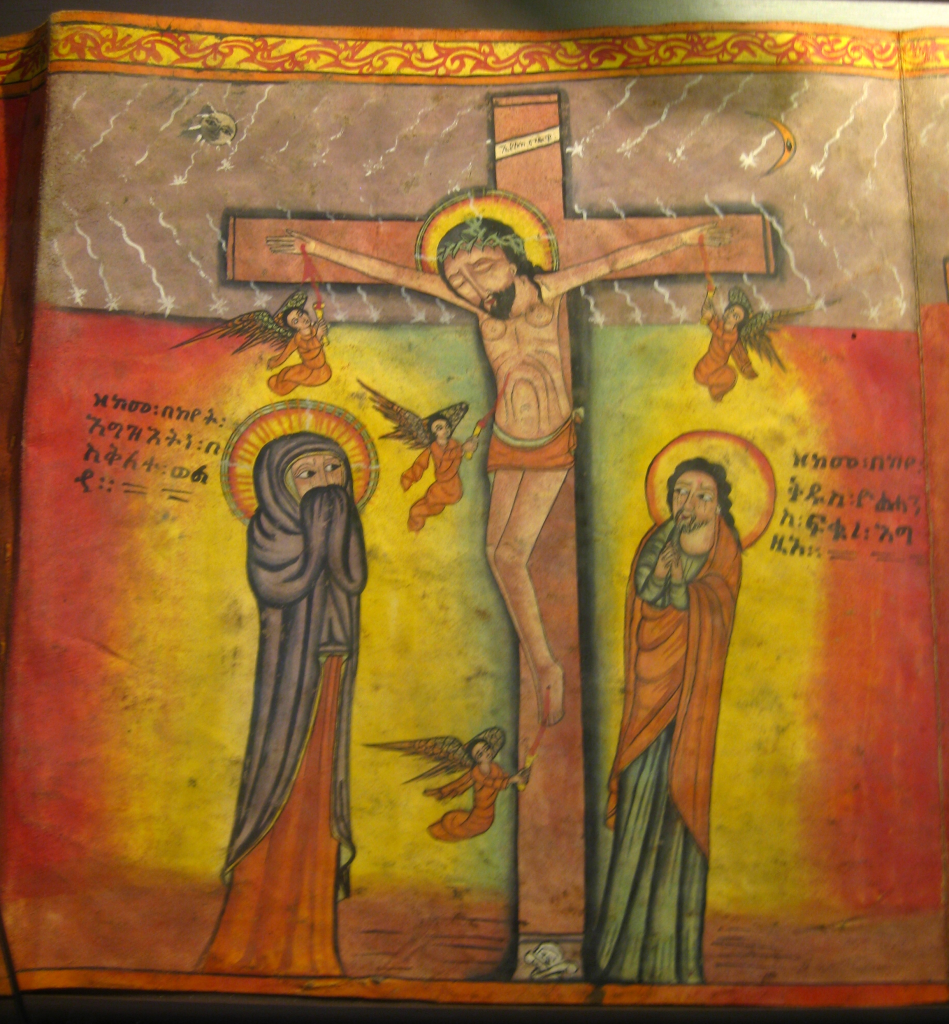
In the Gospel of Mark, especially, there is an inexorable movement toward the Cross. It’s as if Jesus gets right down to it, and has a clarity of purpose and thought toward the future which shaped his words and actions in the present.
Today’s Gospel lesson has Jesus being forthright about what’s really important. Christ predicted his resurrection; chastised his disciples for their petty arguing; and lifted up a child as the model for what Christian discipleship truly looks like.
Even though Jesus was talking to his disciples about things that matter, things which they needed to wrap their heads and hearts around, they were afraid to ask him about it. Just so you know, that’s not healthy.
Sometimes Christ’s disciples were tight-lipped about things they ought to be asking about and openly discussing; and flapping their tongues about things they should have kept to themselves.
The motley crew of disciples were afraid to ask Jesus about his own words on his own death; and yet, they had no problem freely voicing and asking about who’s the greatest disciple amongst them. *Sigh*
The text doesn’t tell us why the disciples were afraid to ask and talk. But if they were anything like us today, it’s likely they were concerned about looking stupid or not in the know.
The disciples didn’t understand Christ’s words, but wanted to look like they understood just fine. After all, they may have reasoned, why risk getting ribbed or made fun of? Why risk the disappointment of Jesus concerning my cluelessness?
Typically, our internal fears about how we look to others is often greater than our desire to understand and know the truth.
We choose the shame of ignorance and hide-out deep within the soul’s secret lounge, where it’s dark, musty, and smells of inexpensive wine and cheap cigars. The longer we dwell in that poorly lit basement lounge, the harder it is to walk out and up the stairs to the light of grace, freedom, and understanding.
Jesus isn’t like whatever relative who hurt you with their calloused words and flippant attitude about your feelings, hopes, or desires.
Christ isn’t the teacher who ridiculed you in front of the whole class. That’s because Jesus Christ has the class to be gracious when we come out and admit what’s really going on within us.
I suspect Jesus was hard on his disciples because they should have known better than to be afraid in his presence. It demonstrated a profound lack of faith and trust.
Inevitably, whenever we opt to remain in the shame lounge of our soul, we then begin considering how to take the offensive in order to demonstrate our greatness and worthiness. And usually, there’s no better way than to do that than have a competition, and size up one another.
If Jesus could just affirm this competitive game and judge me as the best, we reason within the emptiness of our inner shame lounge, then I’ll forever be able to hide under that ratty old blanket of shame, and feel safe in this smelly place.
Prayer is really nothing more than addressing God and talking to the Lord. Oftentimes, the lack of consistent daily prayer is a telltale sign of being afraid to ask for help, clarification, or anything of substance, at all.
When we don’t pray, foolishness and bad decisions are close behind. Spiritual growth is then absent. Spiritual maturity is non-existent. And worldly tactics fill the spiritual vacuum.
Rather than being open about their questions concerning Christ’s words, the disciples’ fear led them to wonder how they stood with Jesus. In order to feel secure through one’s own efforts, we easily harbor resentment toward each other, and compete with one another to gain Christ’s approval.
Worry and anxiety, when coddled for too long, brings out an inordinate focus on one’s reputation with others; and a concern to look better in front of other people than one actually feels on the inside.
But Jesus is not one to play favorites, or to play childish games of posturing for attention. That’s because the way to greatness is not through impressing Jesus, or by being the Rabbi’s pet, but through focusing outward on something other than oneself.
It turns out that true greatness lies in humbly welcoming all – especially the ones who are the least, lost, and lonely, on the fringes of society.
We are to welcome the children, who are on the bottom rung, who need the help and assistance of others, as Christ did. We are to value them as fellow humans who are worthy of our time, attention, and effort.
Jesus did it for us. He showed us that the true measure of greatness is through humility and willingly loving others to incredibly great degrees. His disciples can and must do no less.
O God, our teacher and guide, you draw us to yourself and welcome us as beloved children. Help us to lay aside our envy and selfish ambition, so that we may walk in your ways of wisdom and understanding as servants of your peace. Amen.

 Rev. Tim Ehrhardt