


Jacob sent messengers on ahead to Esau, who lived in the land of Seir, also known as Edom. Jacob told them to say to Esau, “Master, I am your servant! I have lived with Laban all this time, and now I own cattle, donkeys, and sheep, as well as many slaves. Master, I am sending these messengers in the hope that you will be kind to me.”
When the messengers returned, they told Jacob, “We went to your brother Esau, and now he is heading this way with 400 men.”
Jacob was so frightened that he divided his people, sheep, cattle, and camels into two groups. He thought, “If Esau attacks one group, perhaps the other can escape.”
Then Jacob prayed:
You, Lord, are the God who was worshiped by my grandfather Abraham and by my father Isaac. You told me to return home to my family, and you promised to be with me and make me successful. I don’t deserve all the good things you have done for me, your servant. When I first crossed the Jordan, I had only my walking stick, but now I have two large groups of people and animals. Please rescue me from my brother. I am afraid he will come and attack not only me, but my wives and children as well. But you have promised that I would be a success and that someday it will be as hard to count my descendants as it is to count the grains of sand along the seashore.
After Jacob had spent the night there, he chose some animals as gifts for Esau: 200 female goats and 20 males, 200 female sheep and 20 males, 30 female camels with their young, 40 cows and 10 bulls, and 20 female donkeys and 10 males.
Jacob put servants in charge of each herd and told them, “Go ahead of me and keep a space between each herd.” Then he said to the servant in charge of the first herd, “When Esau meets you, he will ask whose servant you are. He will want to know where you are going and who owns those animals in front of you. So tell him, ‘They belong to your servant Jacob, who is coming this way. He is sending them as a gift to his master Esau.’ ”
Jacob also told the men in charge of the second and third herds and those who followed to say the same thing when they met Esau. And Jacob told them to be sure to say that he was right behind them. Jacob hoped the gifts would make Esau friendly, so Esau would be glad to see him when they met. Jacob’s men took the gifts on ahead of him, but he spent the night in camp. (Contemporary English Version)
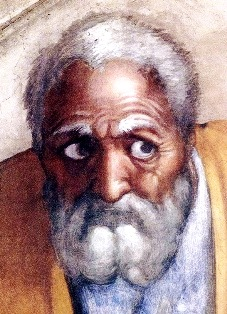
Anxiety’s a booger. It arises as an unwanted guest within our psyche, putting pressure on our chest, and becoming a squatter in the pit of our gut. To be anxious is to have a vague sense of dread, anticipating some upcoming threat.
Jacob knew the feeling well. His mind raced with thoughts of what might happen and how to placate Esau when he encountered his brother. Jacob left home two decades earlier to escape Esau’s vengeance. Now their meeting up was imminent. Jacob was scared spitless.
What do you do when distress and dread wrap you in a straitjacket of anxiety?
Avoid avoidance
The only way to deal with fear is to face it. Avoiding it prevents us from moving forward. It makes us anxious. One way of facing your fear and/or anxiety is to name it. When fear, anxiety, terror, apprehension, or distress arises, then name it. In naming our fears and anxieties, they become real and, thus, manageable.
“Every time your fear is invited up, every time you recognize it and smile at it, your fear will lose some of its strength.”
Thict Nhat Hanh (1926-2022)
Another way to face fear is to “sit with it” for a short while. Give yourself permission to feel the anxiety for a set amount of time without judgment or trying to get over it. Pay attention to where you are carrying your anxiety in your body.
Focus on what’s within your control
We cannot control other people. There’s no way Jacob was going to control or manipulate his brother Esau. Many circumstances are outside our control. And yet, we always have the choice of self-control. Giving into addictions, or not facing problems are ways of giving up control of ourselves. Taking good care of ourselves, and focusing on good attitudes are ways of strengthening personal control.
The Serenity Prayer is a good reminder in those times when we feel out of control:
God, grant me the serenity to accept the things I cannot change,
The courage to change the things I can,
And the wisdom to know the difference.
Promote a positive mindset
Positive attitudes help us widen our perspective on things – and with a broader view of things comes more awareness of choices. Making wise choices for ourselves now, builds resilience and fortifies us for difficult situations down the road – without succumbing to old unhealthy coping mechanisms.
Find purpose and meaning in life
Experiencing traumatic events might cause us to question whether our lives have meaning, or not. We may feel unnecessary or expendable, and see no meaning for the future.
So, it’s important to discover or reconnect with the spirituality within you. Take the time and energy to read Scripture, walk through nature, or discuss matters of the spirit with others. Just as our physical spine helps to support us and is not optional, so we also have a spiritual spine that needs attention for which we cannot live without.
Get support
Other people, like trusted friends and family, can help us make a realistic assessment of the fear and anxiety we are experiencing. With the support of others, we become more confident that we can deal with issues. Finding a church or some other religious gathering can be a fresh means of emotional support.
You are not alone. We are all in this life together. So, let’s rely upon one another and not believe that we just need to pull up ourselves out of impending trouble. There is a God (and God’s people) who are ready to help, if but we just ask.
O God, preserve us from faithless fears and worldly anxieties, and grant that no clouds of this mortal life may hide from us the light of that love which is immortal, and which you have manifested to us in your Son, Jesus Christ our Lord. Amen.

 Rev. Tim Ehrhardt