

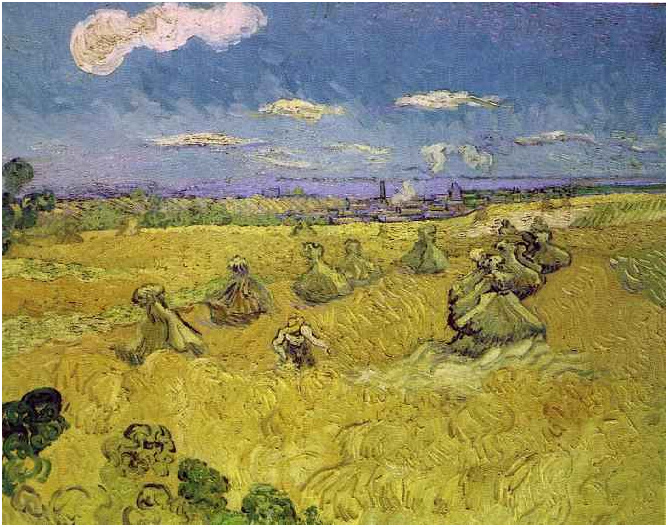
Jesus went through all the towns and villages, teaching in their synagogues, proclaiming the good news of the kingdom and healing every disease and sickness. When he saw the crowds, he had compassion on them, because they were harassed and helpless, like sheep without a shepherd. Then he said to his disciples, “The harvest is plentiful but the workers are few. Ask the Lord of the harvest, therefore, to send out workers into his harvest field.”
Jesus called his twelve disciples to him and gave them authority to drive out impure spirits and to heal every disease and sickness.
These are the names of the twelve apostles: first, Simon (who is called Peter) and his brother Andrew; James son of Zebedee, and his brother John; Philip and Bartholomew; Thomas and Matthew the tax collector; James son of Alphaeus, and Thaddaeus; Simon the Zealot and Judas Iscariot, who betrayed him.
These twelve Jesus sent out with the following instructions: “Do not go among the Gentiles or enter any town of the Samaritans. Go rather to the lost sheep of Israel. As you go, proclaim this message: ‘The kingdom of heaven has come near.’ Heal the sick, raise the dead, cleanse those who have leprosy, drive out demons. Freely you have received; freely give.
“Do not get any gold or silver or copper to take with you in your belts—no bag for the journey or extra shirt or sandals or a staff, for the worker is worth his keep. Whatever town or village you enter, search there for some worthy person and stay at their house until you leave. As you enter the home, give it your greeting. If the home is deserving, let your peace rest on it; if it is not, let your peace return to you. If anyone will not welcome you or listen to your words, leave that home or town and shake the dust off your feet. Truly I tell you, it will be more bearable for Sodom and Gomorrah on the day of judgment than for that town.
“I am sending you out like sheep among wolves. Therefore be as shrewd as snakes and as innocent as doves. Be on your guard; you will be handed over to the local councils and be flogged in the synagogues. On my account you will be brought before governors and kings as witnesses to them and to the Gentiles. But when they arrest you, do not worry about what to say or how to say it. At that time you will be given what to say, for it will not be you speaking, but the Spirit of your Father speaking through you.
“Brother will betray brother to death, and a father his child; children will rebel against their parents and have them put to death. You will be hated by everyone because of me, but the one who stands firm to the end will be saved. When you are persecuted in one place, flee to another. Truly I tell you, you will not finish going through the towns of Israel before the Son of Man comes. (New International Version)
Use your voice for kindness, your ears for compassion, your hands for charity, your mind for truth, and your heart for love.
We need compassion; humanity cannot survive without it.
Compassion is…
- a concern for the well-being of others
- the basis for altruism and the most virtuous motive one can possess
- activated within the human heart when witnessing another person’s suffering
- helping other people feel seen, heard, and known
- the bridge that connects us with another in need
- life
While on this earth, I believe Jesus was the very embodiment of compassion. To reflect on Christ’s compassion helps us to raise our own compassion quotient, and thus, avoid succumbing to the whims of indifference concerning human need.
Compassion responds to human need
In his earthly ministry of preaching, teaching, and healing, Jesus went through all the towns and villages. He neither waited for people to come to him nor wanted anyone to fall through the cracks. Doing this compassionate work, Jesus was moved by the depth of people’s needs.
The word for “compassion” in the Bible means “to be moved in the pit of your gut.” It is to be filled with pity and heartbroken over the unmet needs of people.
So, what moves and stirs compassion deep down in your gut?
Jesus went into towns and was broken-hearted over people who were harassed and helpless, locked into patterns of life that were harmful and damaging.
Jesus came to this earth to seek and save people, offering forgiveness and a new life. Jesus willingly brought compassion – and his motivation for doing so was neither from duty nor guilt. Compassion is the proper motivation for all things.
Just as Jesus went out and ministered, then was moved by what he saw, so our compassion is aroused whenever we go out and enter people’s lives, seeing first-hand the depth of human need.
Compassion results in prayer
Christ saw the masses of people and told his disciples to ask God to send workers because the harvest is plentiful. Jesus knows there are large numbers of people waiting to hear good news. So, he said to pray earnestly and compassionately.
Compassion brings us to prayer and impels us to pray that workers be sent to people who are ripe for hearing good news. We must not listen to the hellish lie: That certain people don’t really want the good news of the kingdom of God; that my neighbor, or co-worker, or family member is not spiritual and doesn’t care about forgiveness or grace – that there is nothing within them to respond to compassion.
The devil does not want us to have merciful compassion for them, to be moved to intercede for them in prayer, nor to become a harvester in the field of people. Jesus said the harvest is plentiful; and it is through compassionate prayer that the work will be done.
Compassion sends us out
The call to prayer is central, but it’s not everything. As faith without works is dead, so prayer without mission is empty.
The people Jesus authorized for ministry were a collection of twelve motley disciples who thought differently about a great many things. Yet, the compassion of Jesus changes lives and brings people together from diverse backgrounds and viewpoints.
The disciples were told, in their initial mission as followers of Jesus, to go only to the house of Israel. Israel’s house needed to be put in order first before they could ever think of going to Gentiles. We begin by reaching out to people in our own backyard.
“You will be my witnesses in Jerusalem, and in all Judea and Samaria, and to the ends of the earth.” Jesus (Acts 1:8, NIV)
Jesus told the disciples to do exactly what he had been doing: preaching and healing, proclaiming the message that “the kingdom of God is near.”
The kingdom is not only something in the future; the kingdom of God has already broken into the present time, and the evidence of it is the transformation of people’s lives now. The blessings and promises of kingdom life are presently available.
Jesus sent the disciples out and told them not to take anything with them. They were to leave all their baggage behind. The disciples were to be stripped of everything so that they had the ability to see people and their needs and be moved with compassion as Jesus was.
The kingdom of God was near to them, so they did not need to add anything for the mission. Jesus did not want his disciples assuming they already knew what people needed. Instead, they must be present to people and discover their needs without bias. As compassion is freely received, it is to be freely given.
Cultivating Compassion
Compassion is the appropriate response to human need. Yet, we do not always react with compassion. The following are a few approaches which prevent us from becoming compassionate, along with some ways of cultivating a compassionate life:
- A defeating and discouraging environment. Contempt, anger, hatred, and abuse drives out compassion. The environment around us makes a difference. If we find we must check our hearts at the door and avoid compassion to just make it, then we need a change of environment. Life is too short, and the world too compassion-starved, to maintain a situation that drags us down and hinders the kingdom of God within us.
- An unhealthy pace of life. A person cannot have a compassionate heart if they are running too fast to see other people’s needs. When spare moments are used to try and figure out how to keep all the balls in the air and all the plates spinning, there’s no way to dole out compassion to others. So, slow down. No one comes to the end of life and wishes they had logged more hours of work at their job. Develop a plan on how to slow down enough to tune into the needs of others and have emotional energy for them.
- Excessive caregiving. Compassion fatigue is a real thing. Resentment can build toward the very people we care for because of constant giving without receiving. When the emotional gas tank is empty, it is possible to become cold-hearted. Yet, some keep going anyway – and ruin their engine. Caring for others must be meticulously balanced with caring for self. There is a time for everything, including rest and recuperation. Jesus regularly practiced the disciplines of solitude and silence. If he needed those restorative practices, so do we.
- Objectifying people. Whenever we put adjectives in front of people, compassion is lacking. Referring to “those” people, “lesbian” neighbors, “black” folks at work, my “obnoxious” relative, or, the “poor” family down the street, are all examples of objectifying people and putting them at a distance from ourselves. Your neighbors are your neighbors, your family is your family, and the people in your life are just people, period. Compassion arises as we look for what is common among us, not different. Compassion brings solidarity with others, not separation and division.
May you allow God the time to form a compassionate heart within through being with Jesus. May compassion toward others be the defining characteristic of your life.

 Rev. Tim Ehrhardt