Matthew 12:38-42 – A Changed Life

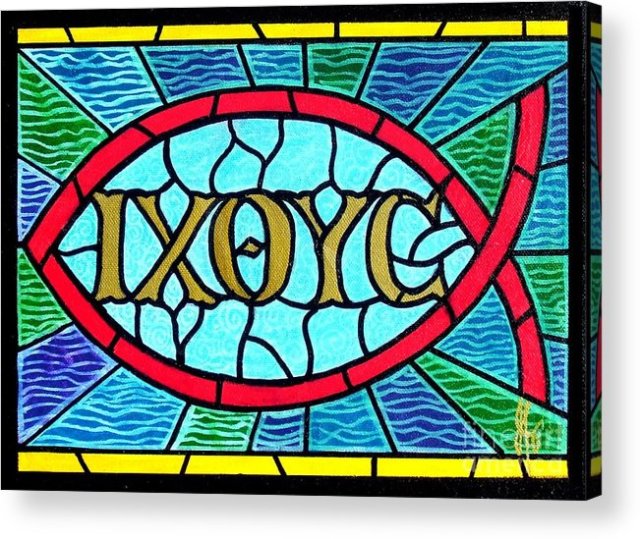
Ichthys
The ichthys (pronounced ick-thoos) is an early Christian symbol of new life in Jesus Christ.

Then some of the Pharisees and teachers of the law said to him, “Teacher, we want to see a sign from you.”

He answered, “A wicked and adulterous generation asks for a sign! But none will be given it except the sign of the prophet Jonah. For as Jonah was three days and three nights in the belly of a huge fish, so the Son of Man will be three days and three nights in the heart of the earth. The men of Nineveh will stand up at the judgment with this generation and condemn it; for they repented at the preaching of Jonah, and now something greater than Jonah is here. The Queen of the South will rise at the judgment with this generation and condemn it; for she came from the ends of the earth to listen to Solomon’s wisdom, and now something greater than Solomon is here. (NIV)

I say at the outset:

The greatest miracle, the best evidence of God’s work in the world, is a changed life.

Yes, both personal and corporate transformation – not a rearranging or a tweeking of habits – but a wholesale change of heart. New life is new life, and not a reconstituted life.

For many folks, when it comes to any discussion of change and transformation, it is a focus on others changing. Other people need to see things rightly; others who must bend their lives and organizations to how I believe things need to be. As you can tell, putting it in writing and laying it bear sounds an awful lot like pride and hubris. And, it is.

The need for repentance is for everyone, not just a select few or others for whom we believe need to change.

Jesus made waves with many people by hob-nobbing with the least, the lost, and the lowly. Christ actively sought such people out, and healed many of them from sickness, disease, and sin so that they would be united with God and no longer remain on the fringes of society.

Some within the religious establishment of the day did not take the healing ministry of Jesus into consideration because they were not in the transformation business. So, healing miracles which created new life did nothing for them. Jesus was not flexing any real Messiah muscle for them and improving their designs to see Gentiles get beat up and kicked out of Palestine. They even went so far as to ascribe Jesus’ healings as the work of the devil. They wanted a sign from heaven that would authenticate proper Messiah credentials.

Jesus responded by essentially saying there is already a sign that exists, the sign of Jonah. As Jonah was three days and three nights in the belly of a whale, so Jesus would be in the earth for three days and nights. The death and resurrection of Jesus is needed, and when faced with this information, the only appropriate response is repentance, a complete U-turn, to a changed life. Jesus brought up the Queen of the South to make the same point: When the ancient Ninevites, who were a sinful people, encountered the person of Jonah, they repented; when the Queen encountered the person of Solomon, she changed.

Therefore, how much more should we change when encountering the person of Christ?

Jesus himself is the sign. Jonah was in the belly of a whale. He was all but dead. But God caused the whale to belch up Jonah, and he went out as a changed man. The experience of having stomach fluids work on a person for three days and nights, some scholars point out that Jonah would have been both spiritually and physically different – bleached completely white and an incredible sight to see!

The whole point of bringing up this sign of Jonah was to communicate the great need for repentance when faced with Jesus, his life, his teaching, his ministry. The appropriate response to Jesus is a changed life.

Jesus was looking for status quo malcontents, and a desire for transformation and new life.

The process of change is hardwired into all creation – from seasons of the year to the seasons of people’s lives – all are designed for a sustained process of time to revolutionize us.

Jesus modeled this for us. He switched his address of heaven and moved into our neighborhood in order to bring us new life. As the Master of conversion, Jesus always extends the invitation to change. All he asks is to let God do the work of change within us, be patient with the construction of the soul he is doing and persist with daily routines of faith individually and with one another.

It pleases Jesus and it is the heart of God to realize new life. Change for change’s sake is not the point. Change that reflects the values of God is the point. And in order to know that, we must hear the Scriptures, and we must pray to seek the mind and heart of God.

God Almighty, we desire to be transformed by you and allow the life of Jesus to be expressed through us. We desire to walk in the light of your spirit. Reveal to us those things in our life that need to be made anew. Allow us to discern between flesh and spirit so that we can choose a healthy holy path. Continue to give us spiritual awareness. Transform us into something new altogether. May our old life and way disappear, and our new life emerge for the blessing of the world, through Jesus Christ our Lord in the power of the Holy Spirit. Amen.

Click I Will Rise by Chris Tomlin as we continue in this season of Eastertide with its focus on new life.

1 Peter 1:3-9 – Joy and Suffering

This is the day the Lord has made.  Let us rejoice and be glad in it!

Simply click the video below for a message from God’s Word.

Here are a few links for you:

You can click TimEhrhardtYouTube to view this message on YouTube.

Click Les Miserables to watch the scene described at the beginning of the message.

And, click I Am Not Alone by Kari Jobe to be encouraged that God is with us.

Grace to you always, my friends.

Joy and Suffering

BishopSavesJeanValjean
“Jean Valjean, my brother, you no longer belong to what is evil but to what is good. I have bought your soul to save it from black thoughts and the spirit of perdition, and I give it to God.” ― Victor Hugo, Les Misérables

One of my favorite stories is Victor Hugo’s Les Miserables.  It’s primarily a story of grace and new life.  The main character, Jean Valjean, spends nineteen years in jail for stealing a loaf of bread for his starving family.  The experience in prison caused him to become a bitter man.  By the time he is released, he is hard, angry, cynical, with nowhere to go.  In desperation, he seeks lodging one night at the home of a Catholic bishop, who treats him with genuine kindness, which Valjean sees only as an opportunity to exploit.  In the middle of the night he steals the bishop’s silver and runs.  The next day, however, he is caught by the police.  When they bring Jean back to the bishop’s house for identification, the police are surprised when the bishop hands two silver candlesticks to Valjean, implying that he had given the stolen silver to him, saying, “You forgot these.”  After dismissing the police, the bishop turns to Jean Valjean and says, “I have bought your soul for God.”  In that moment, by the bishop’s act of mercy, Valjean’s bitterness is broken.

Jean Valjean’s forgiveness is the beginning of a new life.  The bulk of Victor Hugo’s novel demonstrates the utter power of a regenerated and redeemed life.  Jean chooses the way of mercy, as the bishop did.  Valjean raises an orphan, spares the life of a parole officer who spent fifteen years hunting him, and saves his future son-in-law from death, even though it nearly cost him his own life.  There are trials and temptations for Valjean throughout his life.  What keeps him pursuing his new life is mercy.  Whereas before, Valjean responded to mercy with a brooding melancholy and inner anger, now – after being shown grace – Valjean responds to each case of unjust suffering with both mercy and joy, deeply thankful for the chance to live a new life full of grace.

JoySuffering
Followers of Jesus imitate their Savior through walking the way of suffering.

Suffering and joy.  Those two words, at first glance, may seem to be opposites.  Yet, Christianity views suffering as an occasion for joy, and not as empty meaningless grief.  Followers of Jesus imitate their Savior through walking the way of suffering.  We are told in Holy Scripture that these sufferings are trials to our faith, that is, they are the means by which our faith is developed, used, and strengthened.  Just as gold is refined by being put through fire, so our faith is refined and proven genuine through the purging fires of life’s trials and troubles.  Walking in the way of our Lord Jesus, adversity becomes our Teacher, helping us to know Christ better and appreciate the great salvation we possess in Jesus. (1 Peter 1:3-9)

Back in the first century, the Apostle Peter wrote a letter to Jewish Christians living in a Gentile society.  They were strangers and aliens in the ancient world.  These were people who responded to the preaching of Peter at Pentecost and gave their lives to the risen Christ.  When persecution broke out after the stoning of Stephen, the church was scattered, and many Jewish Christians went to live in Gentile nations very different from their home in Jerusalem.  In that Gentile environment, they were often looked down upon simply because they were Jewish.  What’s more, they were alienated from their families because of their commitment to Jesus.  They were alone and faced both the social and economic hardships that came with being Jewish Christians.  So, Peter wrote to encourage these suffering believers in their hardship.  He reminded them of what they possess and to use that precious possession rather than focus solely on their poverty and difficulty.  Peter let them know that their adversity has the positive effect of making their faith genuine.

Every generation of Christians needs to see that their faith is not only a matter of confession with the lips; faith is also proven primarily through suffering.  Faith is much like a new car – it is meant to be used.  It’s not just something we own and possess – to only sit in the garage and be admired.  A car is meant to be on the road, and if it does not perform well, we say it’s a lemon and we get another car.  Cars are the vehicles that get us from point A to point B.  And, hopefully, we enjoy the ride without being frustrated and having road rage.  It is unrealistic, as drivers, to believe we will never have to drive in adverse road conditions.  We recognize that it is silly to believe the weather must always conform to our driving habits.  We will have to drive through snow and thunderstorms.  We will need to deal with traffic and road construction.  We will have to drive defensively and continually be vigilant to the other drivers on the road.  We might always have a plan for how to get from point A to point B, yet, we must deal with whatever conditions we find along the way.  This isn’t optional, unless we decide to let the car sit in the garage and never use it.

The winter road with car
Mature Christians allow their faith to take them places, and have seen all kinds of adversity and suffering along the road of life.

Good drivers are good drivers because they drive a lot and have driven in nearly every type of road condition.  Mature Christians are those followers of Jesus who allow their faith to take them places, have seen all kinds of adversity, trials, and suffering along the road of life.  What makes them mature is that they have learned through all their troubles and trials to enjoy what God is doing in their lives instead of being frustrated and have faith-fury.  Such Christians have the confidence that they are receiving the goal of their faith, the salvation of their souls.  They understand that their faith grows and develops as they face the challenges of life every day with a firm commitment to their Lord Jesus.

The most miserable people are those who have not been taught by mercy, and, therefore, do not know the joy of extending mercy to others.  Peter could praise God because his life was transformed by the grace and mercy of Jesus.  Peter went from an impulsive and fearful fisherman who denied the Lord three times, to a confident and courageous witness of Christ because he was regenerated, restored, and renewed by grace.  He joyfully endured suffering and opposition because his faith was precious to him.

There is a tendency for many Christians to show a stoic attitude through the trials of life.  We try and keep a stiff upper lip and simply endure.  Taking the approach of “It is what it is” only works for so long.  Eventually “My God, my God, why have you forsaken me” is a more appropriate response to trouble. It is precisely during those times when human hope fades that we rejoice – even though the rejoicing is through tears – in the living hope kept for us. This gracious inheritance of hope is imperishable, undefiled, and unfading. That means we can live through a difficult day or week or month or even, dear God, a year or longer with spiritual endurance. We can do this, friends.  We can persevere through our worldwide trial of pandemic.  We can even do more than survive – we can thrive through having our faith muscle stretched and strengthened.  We are not alone.  We all suffer together.

MotherTeresa
“Suffering, if it is accepted together, borne together, is joy.” –Mother Teresa

Our shared value of the risen Christ is the fuel that keeps our car of faith running.  It is what transcends the stoic attitude of unfeeling endurance to a joyful flourishing of faith.  Suffering is central to living for Jesus Christ.  Suffering is not something to continually avoid, go around, or bemoan because it is God’s means of forming us spiritually to be like Jesus.  I can say that the sufferings I’ve experienced in my own life I never want to go through again. I can also say that I would not change those experiences for anything because they have formed and shaped me in ways that would probably not have happened apart from adversity.

Our goal in this life is not to escape the world.  There is a time coming when our salvation will be consummated, heaven comes down to earth, and both are joined forever.

“Then I saw a new heaven and a new earth, for the first heaven and the first earth had passed away, and there was no longer any sea.  I saw the Holy City, the New Jerusalem, coming down out of heaven from God, prepared as a bride beautifully dressed for her husband.  And I heard a loud voice from the throne saying, ‘Now the dwelling of god is with men, and he will live with them.  They will be his people, and God himself will be with them and be their God.  He will wipe every tear from their eyes.  There will be no more death or mourning or crying or pain, for the old order of things has passed away” (Revelation 21:1-4). 

This is our inheritance in Christ.  First, however, we must come prepared for the future by undergoing grief in all kinds of sufferings in the present.  These trials to our faith are a sort of pre-marital session that prepare us for our marriage with Jesus.

Eventually, suffering will have done its work and we will be with Christ forever.  Until that day, let’s not stay in the garage of life.  Let us explore all that God has for us, embracing both the meaning and the mystery of faith.  Since our salvation is assured, let us live with confidence and run the race marked out for us.  Let us not be complacent or slow in doing the will of God, but work for God’s kingdom purposes on this earth.  And let us allow our trials to do their work in us, responding to them with joy knowing that our faith is being strengthened for the benefit of blessing the world.  Even in suffering, God is good all the time; and, all the time, God is good.  To him be the glory.

Colossians 3:12-17 – A New Set of Clothes

White Shirts

Therefore, as God’s chosen people, holy and dearly loved, clothe yourselves with compassion, kindness, humility, gentleness and patience. Bear with each other and forgive one another if any of you has a grievance against someone. Forgive as the Lord forgave you. And over all these virtues put on love, which binds them all together in perfect unity.

Let the peace of Christ rule in your hearts, since as members of one body you were called to peace. And be thankful.  Let the message of Christ dwell among you richly as you teach and admonish one another with all wisdom through psalms, hymns, and songs from the Spirit, singing to God with gratitude in your hearts. And whatever you do, whether in word or deed, do it all in the name of the Lord Jesus, giving thanks to God the Father through him. (NIV)

Easter is to live forever in our hearts.  The great message of the Resurrection is: We now have opportunity to experience new life, free from sin, death, and hell.  Oh, it isn’t that we never need to deal with evil; we very much do.  The difference is that we now have a new awareness of our spirituality.  And with awareness comes choices.  If we aren’t aware of our feelings, our spirit, and/or old nature, well, then, it’s as if we operate on auto-pilot – losing altitude in an immanent descent into tragedy.  When we are aware of our inner selves, then we mindfully ascend through the clouds to join Christ.

We can make choices about what to wear.  With awareness, we look in the mirror and see that the grave clothes need to come off.  The old raggedy garments of pride and hubris, greed and immorality, selfish lust, jealous envy, spiritual gluttony, unholy anger, and complacency get taken off and tossed in the garbage.  We then go to God’s expansive walk-in closet and choose the bright raiment of compassion, kindness, humility, gentleness, patience, forgiveness, and grab the beautiful coat of love which covers it all with such dignity and honor.

It would be super weird to try and put the new clothes over the old raggedy grave clothes.  That’s not only gross, it’s downright wrongheaded.  Practical Christianity always involves two actions: taking-off and putting-on.  Human willpower and/or ingenuity tries to live a virtuous life while ignoring the vices.  This will not do for the Christian.  The endearing qualities we so desire to possess cannot be obtained without first dealing with the crud of sin which clings to us like so many stinky dirty clothes.  To put this in theological terms: the cross and resurrection go together.  Sin must be put to death before a victorious life is put on.

Once we have acknowledged sin, let Christ take it all off, and put on the new clothes.  Then we’re ready to hit the town in style.  We walk out the door with a tremendous sense of peace, knowing God in Christ has cleaned us up.  We stroll into the world with lips whistling and a song in our hearts – singing with gratitude for what the risen Christ has accomplished on our behalf.  After all, we just put on very expensive clothes and it didn’t cost us a dime.  In fact, we’re so darned thankful that we don’t just talk to others, we sing our words to them – even though we can’t carry a tune.  It doesn’t matter.  Our coat of love compels us.  Easter is bursting forth from the tomb.

Almighty and everlasting God, you willed that our Savior should take upon him our clothing of death upon the cross so that all humanity would have the privilege of wearing humility, gratitude, and love.  Mercifully grant that we may both follow the example of Christ’s life, and, also be made aware of our participation in his glorious resurrection, in the power of your Holy Spirit.  Amen.

Click Easter Song which was written by Annie Herring in 1974 and made famous by Keith Green a few years later.  The California Baptist University choir and orchestra perform this version.  May your Easter blessings multiply.