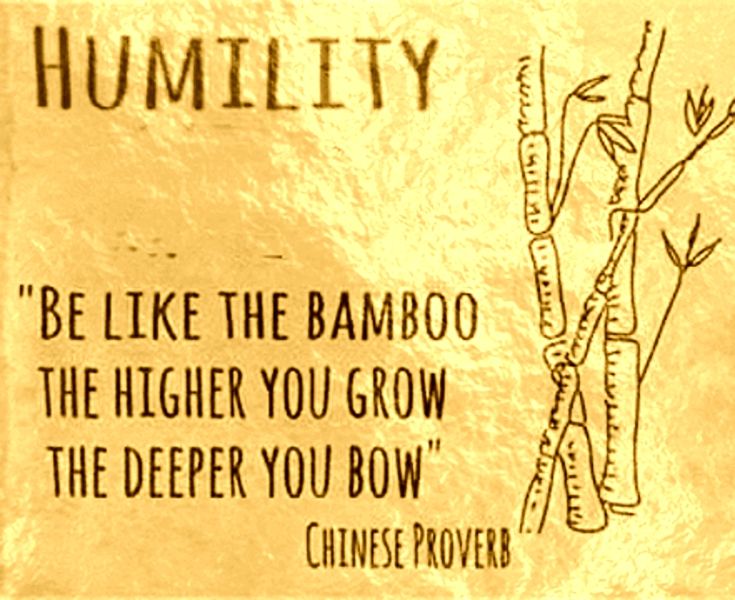
Matthew 18:1-5 – On Humility

At that time, the disciples came to Jesus and asked, “Who, then, is the greatest in the kingdom of heaven?”He called a little child to him and placed the child among them. And he said: “Truly I tell you, unless you change and become like little children, you will never enter the kingdom of heaven. Therefore, whoever takes the lowly position of this child is the greatest in the kingdom of heaven. And whoever welcomes one such child in my name welcomes me. (NIV)

God’s benevolent, gracious, and ethical realm is accessed and rests upon humility. Wherever there are humble hearts, there is change, transformation, and new life. Where there is the presence of pride, there you will find posturing, positioning, and peacocking – nothing changes.

Humility enables a person to see beyond the end of their nose. A humble posture allows an individual to observe the wounds and pains of those with little power and low societal status. A preoccupation with being great and believing we are indispensable is to amble down a blind path.

In the ancient world, children were on the lowest rung of society’s ladder. They were mostly looked upon as potential adults – little people who would someday contribute to the welfare of the family business and the community. Until then, kids were expected to begin learning their future trade with full submission and obedience. They had no power or leverage over others.

So, when Jesus told his disciples to take the lowly position of a child, he was not talking about innocence or cuteness. Christ meant for his followers to divest themselves of prideful positioning for greatness and embrace the helplessness and vulnerability of children. For Jesus, a child was closer to God’s rule and reign because they existed in truly humble circumstances, whereas an adult had too much concern with looking good and seeking every advantage possible.

Life is more upside-down than we sometimes realize. Adults have more to learn from kids than kids do from adults. To listen to a child is about as near to hearing the voice of God as you will get.

Let us consider how pride and humility work out in our daily lives. For example, when down and hurting, maybe you have had the experience of another person trying to one-up your pain, as if what they experienced was worse than you. In their pride, they ignore that pain is personal, as if it’s a one-size-fits-all. 

Invalidating a person’s state of being or feelings does no one any good.  It happens because of pride and a lack of humility. Imagine going to see a doctor who turns out to be arrogant in his approach. He fails to really listen to you. He just gives a quick exam and offers his diagnosis with a regimen of more pills to take. You are left sitting there while he is off to another patient, colonizing another person’s mind and emotions with his expertise.

I am not giving doctors a hard knock. I work in a hospital and have great respect for medical professionals who provide wise care plans. Yet, it is likely that you, like me, have had that occasional experience of the doctor full of him/herself with all the right answers on your pain and situation.

You may have also had the unfortunate experience of having a pastor, therapist, or counselor assess your situation with little information and even smaller compassion.  Like writing a script for pills, they give you a few Bible verses and tell you to quit sinning and live obediently.

If pride and arrogance are the original sin, then the remedy to that malady is humility. No matter who we are – whether doctors, pastors, laypersons, patients, or whomever – we are meant and designed by our Creator God to live a humble life.  That means we are to both give and receive humility-based care.

Humility is the cornerstone to every good thing in this life.  Jesus said:

“Blessed are the poor in spirit, for theirs is the kingdom of heaven.” (Matthew 5:3, NIV)

The door of God’s kingdom swings-open on the hinges of humility.

The Apostle Paul, seeking to follow his Master Jesus in his teaching and humility said:

“Since God chose you to be the holy people he loves, you must clothe yourselves with tenderhearted mercy, kindness, humility, gentleness, and patience.” (Colossians 3:12, NLT)

Basic human interaction with one another is grounded in humility. The old prophet made his expectations clear:

“He has told you, O mortal, what is good; and what does the Lord require of you but to do justice, and to love kindness, and to walk humbly with your God?” (Micah 6:8, NRSV)

Life is truly life when it is humility-based.

Therefore, caring for another person is not a simple linear matter of offering your opinion or expertise; it is believing that the one needing care is the expert on herself.  The caregiver has as much to learn from the care-seeker. The beauty of humility-based care is that two people discover together how to grow, thrive, and flourish in a situation where it is not currently happening.

Breakthroughs occur in the soil of humility when the care-seeker comes out of the darkness and into the light through mutual discovery and insight.

We live with the confidence of the Psalmist:

“God leads humble people to do what is right and teaches them the way.” (Psalm 25:9, GW)

In the end, God saves and heals, not you or me.  That God chooses to use us to bring care to others ought to elicit the utmost of humility within us.

Lord God let me have too deep a sense of humor to be proud. Let me know my absurdity before I act absurdly. Let me realize that when I am humble, I am most human, most truthful, and most worthy of your serious consideration. Amen.

Exodus 3:16-25 – A Great Reversal

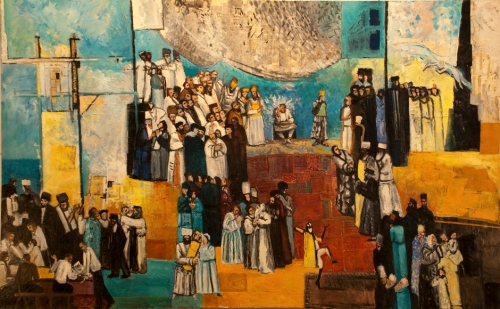
Moses and the Children of Israel by Richard McBee
“Moses and the Children of Israel” by Richard McBee

“Go, assemble the elders of Israel and say to them, ‘The Lord, the God of your fathers—the God of Abraham, Isaac and Jacob—appeared to me and said: I have watched over you and have seen what has been done to you in Egypt. And I have promised to bring you up out of your misery in Egypt into the land of the Canaanites, Hittites, Amorites, Perizzites, Hivites and Jebusites—a land flowing with milk and honey.’ 

“The elders of Israel will listen to you. Then you and the elders are to go to the king of Egypt and say to him, ‘The Lord, the God of the Hebrews, has met with us. Let us take a three-day journey into the wilderness to offer sacrifices to the Lord our God.’ But I know that the king of Egypt will not let you go unless a mighty hand compels him. So, I will stretch out my hand and strike the Egyptians with all the wonders that I will perform among them. After that, he will let you go. 

“And I will make the Egyptians favorably disposed toward this people, so that when you leave you will not go empty-handed. Every woman is to ask her neighbor and any woman living in her house for articles of silver and gold and for clothing, which you will put on your sons and daughters. And so, you will plunder the Egyptians.” (NIV) 

Moses spent forty years in the back side of the desert tending sheep. The first forty years were lived in the most powerful place on earth at the time, Egypt. Although Moses had a privileged position, he forsook his place to be in solidarity with the enslaved Israelites. With a skewed sense of timing and method, he slew a cruel Egyptian, and was forced to flee into the desert. 

The time eventually became ripe, and God was on the move. At eighty years old, God called Moses out of the desert and back to Egypt. The deliverance was going to be accomplished according to God’s designs and purposes, and not from the impetuous actions of a younger Moses. God knew exactly what he was doing and put Moses on a course which would strike at the heart of imperial Egypt and bring freedom to millions of slaves. 

Today’s story is laced thick with divine promises. After all, it is the promises of God which give people hope and a future. Referring to himself as the God of Abraham, Isaac, and Jacob, the Lord connects the generations-long covenant promise to the Israelites and reminded them they are not forgotten. God’s covenant has neither disappeared nor changed; it still exists. While the Jews were languishing in slavery, God was not aloof but watching – carefully inspecting, caring, and paying close attention. 

The inheritance of the Promised Land was coming, and it would be realized. God affirmed the covenant, knowing the plans he has for them – plans to give them abundance and joy. And God knew full well that dislodging the Israelites from Egypt would take some work, since Pharaoh relied so heavily on slave labor to support his massive imperial state. 

You, like me, have likely noticed that God tends to move rather slow by our standards. We might question and wonder about so much injustice going unabated for so long. Yet, that is our perspective of things, not God’s. Whereas we often have our own self-interest at mind, the Lord has the concern of an entire world. God is patient and long-suffering, providing full opportunity for both individual and national repentance. The Lord is on the lookout for people to amend their errant ways and return to their true purpose for living. He only judges at the proper time. 

And when that time comes, look out! Nothing can stand in the way of God’s good plans for the earth. The ancient Egyptians had built an empire on the backs of slavery, and everything went into supporting the power and wealth of the state. God was not okay with this situation. As he had done many times before, the Lord would thoroughly dismantle and destroy the powerful system of oppression. God is the expert at flip-flopping the status of people – the slaves become free, and the free are bound; the hated become favored, and those who enjoyed all the perks of power and privilege become the despised. 

Embracing God’s upside-down kingdom means advocating for justice, righteousness, and holiness for all people, not just a select few whom I like. Jesus, over 1,500 years after Moses and the exodus from Egypt, had this to say: 

“Those who are last now will someday be first, and those who are first now will someday be last.” (Matthew 20:16, NCV) 

“Blessed are you who are poor, 
    for yours is the kingdom of God. 
“Blessed are you who are hungry now, 
    for you will be filled. 
“Blessed are you who weep now, 
    for you will laugh. 

“Blessed are you when people hate you, and when they exclude you, revile you, and defame you on account of the Son of Man. Rejoice in that day and leap for joy, for surely your reward is great in heaven; for that is what their ancestors did to the prophets. 

“But woe to you who are rich, 
    for you have received your consolation. 
“Woe to you who are full now, 
    for you will be hungry. 
“Woe to you who are laughing now, 
    for you will mourn and weep. 

“Woe to you when all speak well of you, for that is what their ancestors did to the false prophets. (Luke 6:20-26, NRSV) 

And the Apostle Paul said to the Church: 

“For our present troubles are small and won’t last very long. Yet they produce for us a glory that vastly outweighs them and will last forever!” (2 Corinthians 4:17, NLT) 

The New Testament references are not meant to sanitize or put a positive spin on the very real suffering that so many people have endured both past and present. It is, however, meant to lift-up the reality that we have a sure and certain hope. Our trust in the promises and presence of God will eventually be realized and gives shape to how we live today in persistent prayers with patience and perseverance. 

So, may the Lord of all creation bless and protect you. May the Lord show you mercy and kindness in your affliction. And, may the Lord be good to you and give you peace. Amen. 

Strong as an Oak

oak tree

I like oak trees.  In one of my many jobs I’ve had in my life, I was once a delivery driver with a mostly rural route to cover.  I enjoyed those times when I had to deliver to someone way out in the sticks on a faraway gravel road.  Early mornings were the best.  On a cool summer morning I would begin to smell the distinctive odor of a woodworker in his shop, as I drove along.  Entering the woods, untouched by the farmer’s plow, with small creeks winding through the trees, there was enormous oaks.  Yes, even in this day-and-age, there are remote untouched places of pristine beauty – you just need to know where to find them.  I delivered my package, wanting to linger for as long as I could in the celebration of senses.  Off I went, hoping that another day would bring another package to the faraway woods.

Oak trees are majestic.  Strong root systems, thick trunks, unique twisted branches, and beautiful leaves become home for all kinds of bugs, squirrels, birds, and the occasional possum and raccoon.  To have an oak piece of furniture is to have something of permanence.  The wood from an oak is heavy, attesting to its great strength.

Those who seek, discover, and respond to Jesus Christ are much like an oak tree.  Strong, lasting, giving life and shelter to all kinds of creatures.  Read carefully these words from the prophet Isaiah and take note of who the prophecy is directed toward, and what they shall be called:

The spirit of the Lord God is upon me,
because the Lord has anointed me;
he has sent me to bring good news to the oppressed,
to bind up the brokenhearted,
to proclaim liberty to the captives,
and release to the prisoners;
to proclaim the year of the Lord’s favor,
and the day of vengeance of our God;
to comfort all who mourn;
to provide for those who mourn in Zion—
to give them a garland instead of ashes,
the oil of gladness instead of mourning,
the mantle of praise instead of a faint spirit.
They will be called oaks of righteousness,
the planting of the Lord, to display his glory. (Isaiah 61:1-3, New Revised Standard Version)

You might quickly observe that these are the words the Lord Jesus quoted in the temple at the beginning of his ministry (Luke 4:18).  Our Lord Christ is the one who fulfills these words and gives them their greatest meaning.  Remember those to whom Jesus directed his ministry toward, the very people mentioned in these verses: the oppressed; the brokenhearted; the captives; the prisoners; and, those who mourn.

Jesus clearly discerned that the kingdom of God is flip-flopped from how many people think about it.  God’s kingdom is not made up of the rich and powerful, that is, those who don’t think they need a Savior.  The kingdom is populated with the financially least, the socially lowest, the spiritually lost, the emotionally as well as the physically lame.  While others might believe these are the people who are weak, the prophet and the Lord have something different to say about it.

It is those for whom the bulk of society would consider incapable and/or unworthy of strength and position who are the truly strong in God’s upside-down kingdom.  The weak are incredibly strong, and the strong are woefully weak; the poor are wildly rich, and the rich are pathetically poor; the lost are joyfully found, and the found are slack-jawed in their lostness; the lame are more than able, and the able are laughingly lame.  In short, all these marginal people are described by God as “oaks of righteousness.”

oak tree 2

These people for whom are seemingly forgotten by so many are the ones God will use to display his glory to the world.  God does not choose the wise, the learned, and those with prestige and power.  God pursues those who are discarded by others; who seem useless to the rest of society; and, who appear worthless as emissaries of the King of Kings (1 Corinthians 1:18-25).

Maybe oak trees have such an appeal to me because they are a reminder that the truly strong and majestic of this world are made up of people just like you and me – common ordinary sinners and saints who just want to know Jesus better.  To be rooted and established in Christ gives us a quiet strength the world can’t touch (Colossians 2:6-13).

Most of us will never win an Oscar.  None of us will ever be an Arnold Schwarzenegger (whose nickname back in the day was the “Austrian Oak”).  We’ll never play in a Super Bowl; command a Fortune 500 company; or, wow millions of fans with our superior talents.  Instead, we have something better.  We are growing and developing, straining and struggling to become a mighty oak of righteousness.  Perhaps no one will ever notice, but that’s okay.  We are giving life and happiness to all those woodland creatures who need us.

The world is not changed through the power which comes with position, prestige, and pedigree.  This old broken world is mended, repaired, and set right again by the God who uses oaks of righteousness – the quiet enduring strength of you and me – in a kingdom which will never end.  So, may you be encouraged today and every day with the God who is growing you into someone who is mighty and strong.

Matthew 6:19-24

            There is a reason why we now have laws about texting and driving.  Trying to do those two things at once has ended in far too many accidental deaths.  A text is not worth a life.  When it comes to Christianity, pursuing earthly wealth does not compare to the significance of heavenly wealth.  Trying to live in both worlds of amassing two different kinds of wealth at the same time doesn’t work well in the end.  We cannot practice God’s will and at the same time have a moonlighting job with the world.
 
            In order to communicate this principle, Jesus let us know that we must have an unswerving loyalty, a singular commitment, toward the kingdom of God.  The earthly treasures of power, position, pedigree, and professional acumen, not to mention our personal portfolios, are things that do not necessarily advance God’s kingdom.  We will not take them with us.  But using all the things of this world to nurture and build relationships is a good thing because only relationships are permanent.  We will take people with us.
 
            If we are genuinely committed to God’s kingdom, our most cherished values will be established by God.  How we use our possessions and our influence will be informed and determined by those values.  Maintaining a kingdom-orientation to our earthly lives doesn’t just happen – we must aim for it and pursue it.  Choose today which master you will serve:  God, or money.  Don’t be found texting and driving, and don’t be found trying to have ultimate allegiance to two different gods – they both lead to accidental deaths.


            Lord Jesus, you are the Master of the universe.  My entire life is yours.  Help me to use all that you have given me in this life toward kingdom ethics so that your merciful rule will extend to all kinds of people.  Amen.