Leave and Go (Genesis 8:13-19)

In the six-hundred-first year of Noah’s life, on the first day of the first month, the flood had dried up. Noah opened the hatch of the ship and saw dry ground. By the twenty-seventh day of the second month, the Earth was completely dry.

God spoke to Noah: “Leave the ship, you and your wife and your sons and your sons’ wives. And take all the animals with you, the whole menagerie of birds and mammals and crawling creatures, all that swarming extravagance of life, so they can reproduce and flourish on the Earth.”

Noah disembarked with his sons and wife and his sons’ wives. Then all the animals, crawling creatures, birds—every creature on the face of the Earth—left the ship family by family. (The Message)

The ancient story of Noah recounts a devastating universal flood—a story that began with problems akin to those in our present contemporary world. (Genesis 6:5-7:24)

Violence, in the days of Noah, had become so common and widespread, that the very heart of God was pained.

The Lord saw how evil humans had become on the earth. All day long their deepest thoughts were nothing but evil. The Lord was sorry that he had made humans on the earth, and he was heartbroken. (Genesis 6:5-6, GW)

So, God decided to bring judgment, and laid plans to rid the earth of humanity. To start over, God instructed Noah to build an ark to preserve his family and a few of every animal species.

And then, it rained, day and night, for weeks on end. The flood destroyed everything. Yet, God remembered Noah and all the animals, and the waters eventually receded. Noah sent out a raven, and then a dove, to see if they could find land.

Finally, the day came when they could step out of the ark, and the Lord told Noah to step off the big ark of a ship, set the animals free, and start repopulating the Earth.

There are, indeed, a lot of ethical questions that bubble up for us as readers about the entire flood narrative. Why kill everyone, including children too young to know better, and animals who apparently weren’t the problem to begin with? And, if things are so bad, why spare anyone or anything? After all, people started the violence, and they don’t seem very changed after the flood. What’s up with that?

Yet, honestly, just asking those questions puts us on some supposed high ground of morality – something we cannot claim – as if we know better than God.

Perhaps we humans still do not yet have a collective sense of our depravity, that is, of our awful potential for acts of violence (both physical and psychological) as well as our penchant for saying and doing nothing in the face of such evil. We keep offloading the issue onto God, as if the Lord is the problem.

Keep in mind, that by God’s grace, the Lord promised to never again destroy the Earth, as in the days of Noah, and still preserved a remnant of humanity. Yet sadly, that hasn’t stopped us humans from keeping up our violent and destructive ways. Throughout the whole of human history, we seem to have to keep learning the same lesson over and over again: that our actions (and in-actions) have far-reaching consequences for both us and all the rest of creation.

The violence humans do to one another and the violence we do to the natural world come from the same place in the human heart. A good and wise God created us good. And although we are capable of great evil, as the flood story says, and as we know every day, God means for us to be transformed.

God promised not to destroy the world. Now it’s our turn to promise the same.

How can we keep such a promise? I believe we can do it by being obedient to leave the ship and step off the ark. In other words, it’s important that we leave where we presently are, and go where God calls us.

Realizing a better world, a changed life, and a blessed Earth involves our movement to leave something behind, and go to a place we’ve not been before.

The Lord said to Abraham:

Leave your country, your family, and your relatives and go to the land that I will show you.” (Genesis 12:1, CEV)

God said to Moses:

“I have heard the cry of the people of Israel. I have seen how the Egyptians are oppressing them. Now, go! I am sending you to Pharaoh so that you can bring my people Israel out of Egypt.” (Exodus 3:9-10, GW)

And, as a result of Moses obeying God, Pharaoh (eventually) said to the Israelites:

“Get out, you and your Israelites! Leave my country; go and worship the Lord, as you asked.” (Exodus 12:31, GNT)

Later, God clarified the instructions for heading to the Promised Land:

“Leave this place, you and the people you brought out of Egypt, and go to the land that I promised to give to Abraham, Isaac, and Jacob and to their descendants.” (Exodus 33:1, GNT)

Jesus instructed:

“So, what if you are offering your gift at the altar and remember that someone has something against you? Leave your gift there and go make peace with that person. Then come and offer your gift.” (Matthew 5:23-24, ERV)

Jesus said to his disciples:

“All authority in heaven and on earth has been given to me. Therefore go and make disciples of all nations, baptizing them in the name of the Father and of the Son and of the Holy Spirit, and teaching them to obey everything I have commanded you. And surely I am with you always, to the very end of the age.” (Matthew 28:18-20, NIV)

Why does God repeatedly tell us to leave and go? Because we tend to hunker down in our entrenched ways of bigotry and idolatry, which are the fodder for human violence, and refuse to see other people created in the image and likeness of God.

Leaving and going opens us to the possibility of connection, and thus, love. And love is the heat source which melts the polar ice cap of hate and violence.

Almighty Father, who gave your only Son to die for our sins and to rise for our justification: Give me grace to leave malice and wickedness behind, so that I may go and serve you in truth and holiness, through Jesus Christ, your Son, my Lord, who lives and reigns with you and the Holy Spirit, one God, now and forever. Amen.

Who Is Running from God? (Jonah 1:1-17)

The Lord gave this message to Jonah son of Amittai: “Get up and go to the great city of Nineveh. Announce my judgment against it because I have seen how wicked its people are.”

But Jonah got up and went in the opposite direction to get away from the Lord. He went down to the port of Joppa, where he found a ship leaving for Tarshish. He bought a ticket and went on board, hoping to escape from the Lord by sailing to Tarshish.

But the Lord hurled a powerful wind over the sea, causing a violent storm that threatened to break the ship apart. Fearing for their lives, the desperate sailors shouted to their gods for help and threw the cargo overboard to lighten the ship.

But all this time Jonah was sound asleep down in the hold. So the captain went down after him. “How can you sleep at a time like this?” he shouted. “Get up and pray to your god! Maybe he will pay attention to us and spare our lives.”

Then the crew cast lots to see which of them had offended the gods and caused the terrible storm. When they did this, the lots identified Jonah as the culprit. “Why has this awful storm come down on us?” they demanded. “Who are you? What is your line of work? What country are you from? What is your nationality?”

Jonah answered, “I am a Hebrew, and I worship the Lord, the God of heaven, who made the sea and the land.”

The sailors were terrified when they heard this, for he had already told them he was running away from the Lord. “Oh, why did you do it?” they groaned. And since the storm was getting worse all the time, they asked him, “What should we do to you to stop this storm?”

“Throw me into the sea,” Jonah said, “and it will become calm again. I know that this terrible storm is all my fault.”

Instead, the sailors rowed even harder to get the ship to the land. But the stormy sea was too violent for them, and they couldn’t make it. Then they cried out to the Lord, Jonah’s God. “O Lord,” they pleaded, “don’t make us die for this man’s sin. And don’t hold us responsible for his death. O Lord, you have sent this storm upon him for your own good reasons.”

Then the sailors picked Jonah up and threw him into the raging sea, and the storm stopped at once! The sailors were awestruck by the Lord’s great power, and they offered him a sacrifice and vowed to serve him.

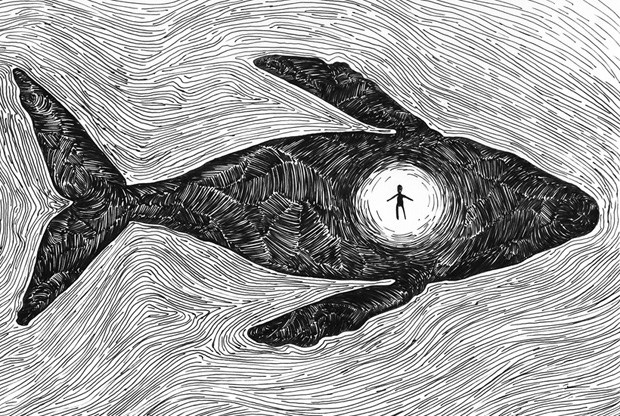
Now the Lord had arranged for a great fish to swallow Jonah. And Jonah was inside the fish for three days and three nights. (New Living Translation)

God said, “Go!”

Jonah said, “No!”

And, God said, “Oh!?”

Jonah did a complete turn-and-run from God’s clear instructions to go to the city of Nineveh. That doesn’t sound like a good idea. So, why did Jonah run? And why do we run?

Who were the Assyrians?

Nineveh was a large city in the ancient world, and the capital of Assyria. The Assyrians had a reputation as fierce soldiers and conquered the Middle East. They are mentioned many times in the Old Testament. It was Assyria that God used to judge the northern kingdom of Israel.

The typical military practice of the Assyrians was to attack a city and completely subjugate it by deporting most of the people and repopulating it with some of their own people. They did this so that the conquered people could not mount a revolt or resistance to their rule.

The Assyrians, the Ninevites, were notorious in the ancient world for their brutality toward conquered peoples. Many forms of torture that we are aware of today were invented by the Assyrians. Their methods were awful and inhumane. The Assyrians were experts at thinking up and executing extreme forms of torture on everyone who resisted their power. It was a very violent culture.

Who is God?

God isn’t at all like the Ninevites. The ways of the Assyrians caught the notice of God, who was ready to pronounce judgment on the heart of the Assyrian Empire, the capital city of Nineveh. So, as God typically did in the Old Testament, he told one of his prophets to go and give a message.

The message was simple: “Go to the great city of Nineveh and preach against it, because its wickedness has come up before me.” Lest we think God was determined to wipe Nineveh off the map, think again. Jonah confesses later in the book, “I knew that you are a gracious and compassionate God, slow to anger and abounding in love, a God who relents from sending calamity.” (Jonah 4:2)

Who was Jonah?

Jonah did not like the Assyrians. More than that, he hated their guts. They killed, maimed, executed, and deported Jonah’s fellow Israelites. The last thing Jonah wanted was to have effective preaching and see Nineveh repent of their violent ways. Jonah wanted judgment, not grace.

In this little four-chapter prophetic book of the Old Testament, it is Jonah who needs divine deliverance as much as the Ninevites do. In fact, Jonah’s need for rescue gets more attention than the evil Assyrians. The message of Jonah comes down to this:

Racism and hatred, however much perceived to be legitimate, have no part whatsoever in the kingdom of God.

Who are we?

Christians are the community of the redeemed. New life in Jesus Christ involves a wholesale jettison of bigotry and the manure pile of hatred directed toward any ethnic and/or religious group of people, period. New life means adopting the love of God. It involves becoming a dispenser of grace and mercy with all people, not just the ones we feel deserve it.

What does God want us to learn?

To share the same heart as God has – a heart that beats for people to know and live by a better way – a heart that has grace and compassion even in the face of flat-out evil. We are meant to think twice about pointing the finger at others. Instead, we are to take the plank out of our own eye before we address the splinter in another’s eye.

It wasn’t the Assyrians who were running from God; it was Jonah. In God’s upside-down realm, the wicked become the righteous, and the righteous are exposed as wicked. The unrighteous run to God, whereas the religious run from God. Nineveh eventually turned from their evil ways.

So, let’s keep to the side of mercy, not judgment.

O God, you created all people in your image. We thank you for the astonishing variety of races and cultures in this world. Enrich our lives by ever-widening circles of friendship, and show us your presence in those who differ most from us, until our knowledge of your love is made perfect in our love for all your children; through your Son, Jesus Christ our Lord. Amen.

Impatience and Grumbling Are Poisonous (Numbers 21:4-9)

Moses and the Serpent on the Rod

The Israelites left Mount Hor and went on the road toward the Red Sea, in order to go around the country of Edom. But the people became impatient on the way and grumbled at God and Moses. They said, “Why did you bring us out of Egypt to die in this desert? There is no bread and no water, and we hate this terrible food!”

So the Lord sent them poisonous snakes; they bit the people, and many of the Israelites died. The people came to Moses and said, “We sinned when we grumbled at you and the Lord. Pray that the Lord will take away these snakes.” So Moses prayed for the people.

The Lord said to Moses, “Make a bronze snake, and put it on a pole. When anyone who is bitten looks at it, that person will live.” So Moses made a bronze snake and put it on a pole. Then when a snake bit anyone, that person looked at the bronze snake and lived. (New Century Version)

Impatience and irritability. Grumbling and complaining. Show me a person with ants-in-their-pants and I will show you a person who bellyaches and squawks like an old chicken. The antsy person sticks their hand in the glove of criticism, loudly griping about missed expectations for all to hear. Little do they realize that venomous snakes are slithering toward them, attracted by the continual vibrations of complaint.

The ancient Israelites were miraculously delivered from Egyptian bondage by the mighty hand of God. But the celebration soon turned sour. Millions of people were out in the desert, discovering they had no food or water.

There is no account of the people using their spiritual connection with God to ask for help. Instead, their reflexive response was to grumble against God and God’s appointed leader Moses.

God had enough of their constant complaints. The Lord had repeatedly shown mercy and committed love to the people over-and-over again. Yet, they kept putting on their grumpy faces any time something didn’t go their way.

God kept showing patience toward the people, but the people kept demonstrating impatience toward God.

A mosaic of the serpent in the desert in All Saints Church, London, England, by Matthew Digby Wyatt (1820-1877)

If you stop and think about the pathology of our own impatience and complaining (which we all do – come on, admit it) you’ll likely discover that at the heart of it all is a picture in your mind of how you think circumstances ought to go for you to be happy. 

The Israelites expected a nice clean break from Egypt with a smooth transition into the Promised Land. They didn’t sign up for hard circumstances and a bunch of adversity and trouble getting there.

We aren’t so different. Believers go to faith gatherings expecting to be fed and encouraged. Students expect that school will be enjoyable and that they’ll get a good paying job after graduation. Employees expect to go to work and have healthy working relationships and a good boss. Parents expect their kids to listen and obey. You expect your friend or spouse to give you focused attention, the weather to be better, the drivers on the road to be respectful, the little plastic things on the end of your shoelaces to last for the life of your shoes….

And it doesn’t happen, or at least fails to go as planned. So, what happens when all those expectations aren’t realized? 

In a perfect world, we would always respond in a reasoned, wise, and healthy manner. But if we’re feeling like we’re in an emotional place of insecurity out in the desert, our response is more likely to be an impatient and complaint-filled litany about how things are all screwed up.

A great deal of disobedience, bad behavior, angry speech, and poor decision-making has its origins in impatience.

The minute you become impatient, take a long deep breath before you make your next mental decision. Check-in with yourself. Be mindful of what your real expectations are for the circumstance or person in the present moment of becoming upset. Make the decision, from the very beginning, not to complain or argue. Instead, choose to say what you want without grumbling.

It is truly possible to stand for holiness, live for righteousness, and uphold the words and ways of Jesus without being a jerk about it through impatient sighs, annoying facial expressions, and terse words of carping at another person who is made in God’s image.

Monitor yourself throughout the day today. Notice the times you become annoyed. Stop and take a minute to analyze what you are expecting to unfold throughout the day. Instead of grumbling, ask God to strengthen your faith through your upcoming events and encounters. 

God is there to help you, and not to pick on you. If you find yourself having made a poor decision and are suffering the consequences of it, the way of dealing with it isn’t to avoid it. One of the reasons God instructed Moses to make a snake is to clearly demonstrate to the people that they must go through their problems and not try and get around them.

Fortunately, in Christianity, Jesus becomes our bronze snake of deliverance:

In the same way that Moses lifted the serpent in the desert so people could have something to see and then believe, it is necessary for the Son of Man to be lifted up—and everyone who looks up to him, trusting and expectant, will gain a real life, eternal life. (John 3:14-15, MSG)

Holy God, your patience is incredible in the face of human impatience. Yet, your boundaries are firm, and you will not put up with our petulant ways forever. Help me to live into the model of your Son, the Lord Jesus, who with you and the Holy Spirit are attentive to come alongside me to your own glory and honor. Amen.

Get a Different Perspective (Isaiah 29:1-12)

Woe to you, Ariel, Ariel,
    the city where David settled!
Add year to year
    and let your cycle of festivals go on.
Yet I will besiege Ariel;
    she will mourn and lament,
    she will be to me like an altar hearth.
I will encamp against you on all sides;
    I will encircle you with towers
    and set up my siege works against you.
Brought low, you will speak from the ground;
    your speech will mumble out of the dust.
Your voice will come ghostlike from the earth;
    out of the dust your speech will whisper.

But your many enemies will become like fine dust,
    the ruthless hordes like blown chaff.
Suddenly, in an instant,
    the Lord Almighty will come
with thunder and earthquake and great noise,
    with windstorm and tempest and flames of a devouring fire.
Then the hordes of all the nations that fight against Ariel,
    that attack her and her fortress and besiege her,
will be as it is with a dream,
    with a vision in the night—
as when a hungry person dreams of eating,
    but awakens hungry still;
as when a thirsty person dreams of drinking,
    but awakens faint and thirsty still.
So will it be with the hordes of all the nations
    that fight against Mount Zion.

Be stunned and amazed,
    blind yourselves and be sightless;
be drunk, but not from wine,
    stagger, but not from beer.
The Lord has brought over you a deep sleep:
    He has sealed your eyes (the prophets);
    he has covered your heads (the seers).

For you this whole vision is nothing but words sealed in a scroll. And if you give the scroll to someone who can read, and say, “Read this, please,” they will answer, “I can’t; it is sealed.” Or if you give the scroll to someone who cannot read, and say, “Read this, please,” they will answer, “I don’t know how to read.” (New International Version)

Reading the Bible may sometimes feel like a weird Catch-22. We’re supposed to read, observe, and obey the contents of Holy Scripture; yet there is so much within it that we often just plain don’t understand – and even are not going to understand, at least on this side of heaven.

For many people, this is maddening. It may even cause them to throw up their hands and say that God is some mad scientist who merely tinkers and experiments with people like mice in laboratory.

I understand how some could think that way. The Lord comes along and does a mysterious dance of proclaiming judgment, then pivoting quickly around to assure deliverance. Reading through any prophetic book of the Old Testament is likely to make our heads spin with questions and our hearts to reel. No matter how you slice it, there are a lot of difficult passages in Holy Scripture.

So, I invite you to take a few differing perspectives.

First, if God is a Being who is infinitely higher and greater – the Creator who has made all things – then we are the creatures who are neither privy to all God’s reasonings nor even able to understand such a Being who is other than us.

Second, it seems we rarely even attempt to try and see things from God’s angle. We see our own situations, many of them confusing, and we wonder why the Lord doesn’t just step in and fix all the crud. However, none of us has the full picture, as God does – which is why we are continually invited to pray for wisdom, to see our life, relationships, and circumstances from a divine perspective. (James 1:2-5)

The prophet Isaiah, along with the other prophets, proclaims a double message of judgment and deliverance. Indeed, it appears there is a continual rhythm of identifying guilt and giving grace throughout a large chunk of the Old Testament.

And that is perhaps where we need to pay attention. People have a great predilection for saying and doing things (or failing to say and do things) which bring guilt. Our guilty actions and inactions are not okay; they cannot simply be dismissed as stuff that people do, as if we were just silly folks who don’t know any better.

Maybe we would like to view God as some geriatric grandfather who lets everyone do what they want, but that’s not the God we get in the Bible.

No, our words and actions have real impact and consequences for others. And the Lord is a real force to contend with, for whom we cannot escape nor ignore for long.

In Isaiah’s day, the people were called to account for their abject callousness toward their fellow humanity. God’s commands all have to do with living in harmony with creation. Chaos, disorder, and systemic evil result whenever the creature rebels against the Creator by trying to be a little god of their own making – taking the perspective of using people rather than serving them.

The Lord will have none of it; God will intervene. Hence, the judgment portions of Scripture. Yet, because God is gracious and loving, the judgment doesn’t last forever; mercy takes hold and overwhelms the guilty sinner.

If we could understand everything God does or doesn’t do, then God wouldn’t be God. But the very fact that God is mysterious, and in some ways unknowable, tells us that there is indeed a God.

Our task is not to take over God’s job because the Lord isn’t doing what we want. Our mandate is to reflect the image of God placed within us by loving the Lord and loving our neighbor as ourselves.

Yes, we are all guilty of a great many things. Yet, grace always has the last word, and not judgment. This, then, gives way to a life of gratitude that has learned to sync one’s heart with the heart of God.

Catch-22’s are certainly maddening… if we are truly in one to begin with. It could be that we just haven’t yet gained a different perspective on our situation, learned to accept it, and made the choice to live in harmony with the world as it is, rather than the world as we think it ought to be.

Most merciful God, we confess that we have sinned against you in thought, word, and deed, by what we have done, and by what we have left undone. We have not loved you with our whole heart; we have not loved our neighbors as ourselves. We are truly sorry and we humbly repent. For the sake of your Son Jesus Christ, have mercy on us and forgive us; that we may delight in your will, and walk in your ways, to the glory of your Name. Amen.