
Matthew 19:16-22 – An Intervention by Jesus

Armenian Orthodox depiction of Jesus and the rich young man.

Just then a man came up to Jesus and asked, “Teacher, what good thing must I do to get eternal life?”

“Why do you ask me about what is good?” Jesus replied. “There is only One who is good. If you want to enter life, keep the commandments.”

“Which ones?” he inquired.

Jesus replied, “‘You shall not murder, you shall not commit adultery, you shall not steal, you shall not give false testimony, honor your father and mother,’ and ‘love your neighbor as yourself.’”

“All these I have kept,” the young man said. “What do I still lack?”

Jesus answered, “If you want to be perfect, go, sell your possessions and give to the poor, and you will have treasure in heaven. Then come, follow me.”

When the young man heard this, he went away sad, because he had great wealth. (NIV)

Sin is addictive. Since we are all sinners, we are therefore all addicts. We do not all struggle with the same sin but we all have some besetting sin(s) we must be weaned off of, whether it is what we typically think of as addiction (alcohol, substance abuse, smoking, pornography, gambling) or things we don’t readily notice as addictive (gossip, food, shopping, social media, Netflix). The most pervasive and addictive sin found in Holy Scripture is the addiction to wealth and money.

It would be easy to think of others rather than we ourselves when it comes to the topic of money. “I don’t have as much money as…” or, “So and so really has a problem with this…” perhaps betrays our own denial of having an inordinate concern with wealth. The truth be told, it is likely that all of us are in some sort of denial about how much we really trust in paychecks, bank accounts, and stuff. Even people who truly have little money and few resources can compulsively think about wealth and wish for riches to an unhealthy degree, as if possessing more is the thing that will make them happy.

Persons in denial rarely realize how much they are hurting others, themselves, and God. In fact, the consistent witness of the early church fathers is that the sheer accumulation of stuff is the same as stealing from the poor. The great preacher from antiquity, St. John Chrysostom, plainly declared:

“Not to share our own wealth with the poor is theft from the poor and deprivation of their means of life; we do not possess our own wealth, but theirs.”

Sometimes, because of denial, people need an intervention – to be jolted back to their senses. Intervention is a gift.  Someone cares enough to intervene. Yet, interventions do not always work. The person may walk away and refuse to see themselves as they are.

Jesus performed an intervention with a rich young man (literally, a twenty-something). The man was addicted to wealth and money, but he failed to see it. In fact, he thought of himself as godly and spiritual. It is a sad story because the man walked away untransformed by his encounter with Jesus and did not follow him.

Because of his riches, the young man did not see himself as hopeless and desperately needing to change, and so, held to his denial.

Today’s Gospel lesson is not merely an ancient story. It is our story, as well. Whereas I would get all excited about being asked a question like, “What good thing must I do to get eternal life?” and launch into proclaiming the good news, Jesus, however, immediately picked up on the attitude and thought behind the question. 
What must I do to get?  It is almost as if the man wants to acquire eternal life like he would acquire wealth.  “I am a successful businessman, and respected citizen,” the young man might have reasoned, “and now I want to be a success with God, as well.” However sincere the question may have been, it is misguided. Eternal life is not spiritual real estate for an upwardly mobile twenty-something to acquire and possess. It seems he believed he could purchase eternal life, as if everyone has their price, even God.

Jesus questioned the question by going after the underlying assumption that the man could do something good to obtain eternal life. He could not because only God is good. So, Jesus changed the action from getting to entering; and changed the language from a market acquisition to entering a journey. In short, Jesus was inviting the man to walk with him.

Eternal life is a journey of faith in the God who is good, and not a transaction to leverage obtaining what I want.

We must be careful to avoid the topic of eternal life as if it were a contractual arrangement, as if getting a person to sign on the dotted line through a “sinner’s prayer” or some other formula will seal the deal. Because life with God is a walk of obedience to divine commands.

The rich guy wanted to know which commands to obey. Jesus then quoted the second table of the Ten Commandments, the ones which focus on human relationships. Jesus wanted him to see that the entrance to God’s kingdom goes through and not around how we treat our fellow human beings.

Simple straightforward observance of commands has its limits; it cannot provide genuine life. The rich man seemed to be looking for some extraordinary command. After all, he could do it, no matter what the price was.  The man, in his materialistic worldview, was confused. “What resources could I possibly lack?” he wondered.  So, Jesus straight up told him: Sell everything. Give to the poor. Then, come, follow me.

The young twenty-something needed to shift how he thought about being godly. Jesus is a person, not a commodity one can simply add to a portfolio.

Jesus mercifully offered the man a new way of being, not doing.

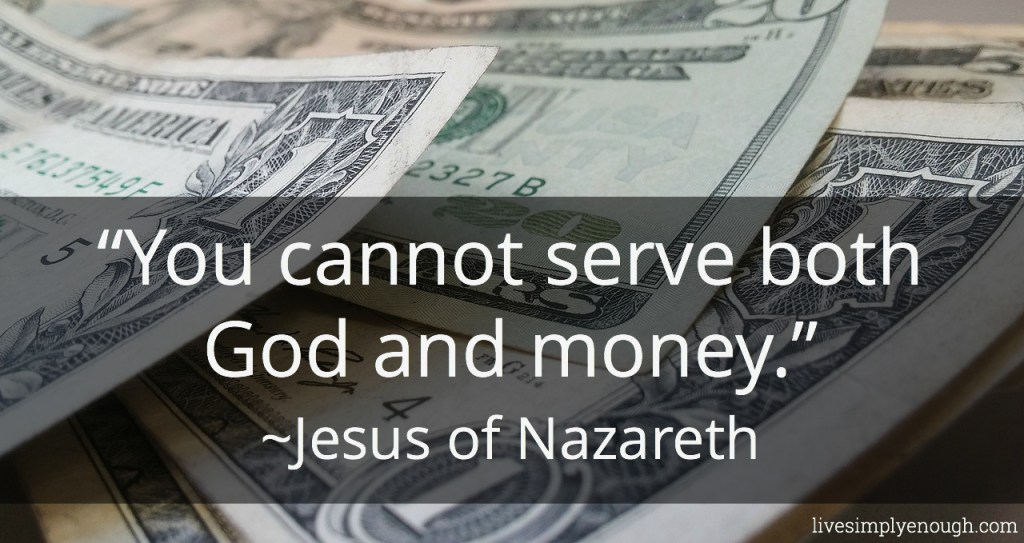
Through the conversational back and forth, Jesus exposed the rich man’s divided loyalties of trying to serve both God and money. He would have to choose between the two. And, I will add, this is our choice, as well. The issue is not whether we are completely devoted to money, or not. The question is: Are we trying to serve God while maintaining a moonlighting job with the world? 

God wants an undivided heart with complete allegiance. Jesus is scouting for the poor in spirit, who recognize their great need for God – spiritual beggars who understand their desperate situation and do not sugar-coat their spiritual state.

Like an alcoholic who needs sobriety, or a sex addict who needs purity, or a workaholic who needs to stop and go home, the rich young man needed to give up his inordinate love for money and possessions. So, Jesus did an intervention. Keep in mind that Jesus did not ask every rich person to do exactly as he called this young man to do, i.e. Zacchaeus to give everything away, or for Peter to sell his fishing business.

We must face our own compulsions, obsessions, and addictions surrounding money and wealth. Perhaps the best way to grow our faith is to tell a trusted person that you compulsively work in order to feel better, or that you are afraid to give because you worry about the future, or that you love to buy things you don’t really need.

I also want to do a check-in with you right now. With your self-awareness regarding money and stuff, do you feel horrible about yourself?  Do you beat yourself up for screwing up and succumbing to the money master? Grace is the final word on everything. God has unlimited patience with us and never tires of inviting us to follow him. Praise the Lord that divine love and acceptance is not based on our screw-ups but on the cross of Christ.

Camels cannot pass through the eye of a needle through dieting, concentrating harder, or getting lucky. Yet, it can happen, not because the camel can squeeze through the narrowness of the needle’s eye but because there is a wideness in God’s mercy.

Grace will pull you through. And unlike the rich young man, once you hear and understand that piece of delightful news, you do not walk away sad. You bound away with eternal joy.

O Lord, giver of life and source of freedom, I know that all I have received is from your hand. You call us to be stewards of your abundance, the caretakers of all you have entrusted to us. Help us to always use your gifts wisely and teach us to share them generously. May our faithful stewardship bear witness to the love of Jesus Christ in our lives. Amen.

2 Thessalonians 2:13-3:5 – A Life-Giving Message

OakTreeUnknownArtist
“Grow in the grace and knowledge of our Lord and Savior Jesus Christ.” (2 Peter 3:18)

We ought always to thank God for you, brothers and sisters loved by the Lord, because God chose you as first-fruits to be saved through the sanctifying work of the Spirit and through belief in the truth. He called you to this through our gospel, that you might share in the glory of our Lord Jesus Christ.

So then, brothers and sisters, stand firm and hold fast to the teachings we passed on to you, whether by word of mouth or by letter.

May our Lord Jesus Christ himself and God our Father, who loved us and by his grace gave us eternal encouragement and good hope, encourage your hearts, and strengthen you in every good deed and word.

As for other matters brothers and sisters, pray for us that the message of the Lord may spread rapidly and be honored, just as it was with you. And pray that we may be delivered from wicked and evil people, for not everyone has faith. But the Lord is faithful, and he will strengthen you and protect you from the evil one. We have confidence in the Lord that you are doing and will continue to do the things we command. May the Lord direct your hearts into God’s love and Christ’s perseverance. (NIV)

As with most sections of Holy Scripture, if we merely focus on this singular passage from the Bible and seek daily to live into its message, it is likely we would live a consistently rich and full spiritual life. As the Apostle Paul said to the Thessalonians, and indeed to us, standing firm and holding a solid grip on apostolic teaching will mean a daily life of loving words and actions.

Notice the many elements of this Scripture for us to spotlight for our spiritual lives: gratitude; salvation; sanctification; truth; spiritual calling; sharing in God’s glory; love; grace; hope; encouragement; prayer; faithfulness; perseverance; and, deliverance. We could even highlight just one of these words and, if seeking to do a deep dive with it, could spend unending days learning and living into its multi-faceted dimensions.

I want to pause here and do a bit of a check-in with you. How we approach this passage of Scripture, as well as any other verses which encourage us to hold onto sound teaching and living, will likely determine our level of joy, satisfaction, confidence, and success. It all begins with our view of self. If we come at the Christian life and Holy Scripture with a view of self as a mere tool or object for God’s use – then we are truly objectifying ourselves.

The key point of awareness to realizing whether we have such an objectifying view is if we continually “should” ourselves. The word “should,” brings self-hatred. We primarily see only shortcomings and original sin – and are blind to the majesty of being in God’s image. In such a view there is typically boat loads of shame for not living up to the ideal form of a devoted Christian. Belittling ourselves inwardly only transfers outwardly to looking down on others for their failures. Any exhortation from me or anybody else would be seen in this view as a demanding duty.

OakTreeTomBrown
“The gospel is bearing fruit and growing throughout the whole world—just as it has been doing among you since the day you heard it and truly understood God’s grace.” (Colossians 1:6)

Instead, we can come to Scripture’s admonitions, encouragements, and exhortations with the glasses of grace. After all, our text for today says that God loved us and by his grace gave us this teaching. The dense amount of Christian living in such a few verses, when viewed through the lenses of grace, are merciful words communicating support. God wants to strengthen us with grace just because he loves us. God does not objectify us by seeing us as pawns in some twisted divine game for his own cosmic pleasure. Rather, God is looking to direct our hearts toward a delight in his love. Because it is only with love and grace that we can really persevere throughout our Christian lives.

Not everyone has faith, and that saddens the heart of God. It also puts us, at times, in awkward situations. Again, the love of God does not leave us alone. Divine love will strengthen and protect us. The Apostle Paul never wags his finger and levels the “should” on us like some uptight legalist. Paul expresses confidence, knowing that we most certainly have the capacity to live the will of God. The Scriptures are given to engender strengthening of faith and spiritual growth rather than self-hatred, which has a nasty tendency to come out sideways in a lack of compassion and grace toward others.

This letter was written by Paul to the church because they were finding it difficult to endure their hard circumstances. The Thessalonian Christians began longing for heaven to such a degree that they were losing their grip on living presently in the moment of now. This is part of the reason why Paul encouraged them to pray for him and his colleagues. The people needed to put some focus on the now of spreading the message of God’s grace.

To be rather frank, truth be told, the chief reason I write these daily reflections on Scripture is because I need God’s Word. Yes, I do write for the reader. I want to contribute to people’s growth in grace and I have a deep desire to make the message known. Yet, honestly, I write more for myself. This is a way for me to remind myself of God’s love and grace and utilize it every day.

When I hear Paul talking in biblical texts like these, I detect some of the same reason – Paul himself wants to continue growing in grace, and when writing to and for others he is very much writing to himself. The reading of the Bible and the dedication to living its message is meant to be life-giving, or rather, eternally life-giving.

So, today, I leave with this blessing:

May you take refuge in the wondrous grace of God, and all the little miracles of mercy which he bestows each day.

May you always be inclined to rush into God’s Holy Word and discover its life working within you.

May you imitate the flower as it opens to the day’s sunshine in receiving all that God has for you this day.

May you be in solidarity with brother stone, who sits in silence, calm and secure, and be excessively gentle with yourself.

May you wisely steer clear of those vexed in spirit with only God knows what; and, when in that space of others walking all over your boundaries, may your confidence surge and God’s protection deliver you.

May you return to the glory that is yourself, learning a new respect for your heart, and the joy that has always been there, given graciously to you by a God who has invited you to share in Jesus Christ.

Amen.

1 John 5:1-5, 13-21

            In a world that is constantly changing, the need for people to experience meaning and stability in their lives is more pronounced than ever.  Whether someone wonders if he will have his job tomorrow; whether someone worries about the state of the economy and if her investments will be secure; whether someone is anxious about what kind of world her kids will have when they grow up; whether someone feels adrift in an information age, glutted with so much stuff and not knowing what is real or true; whether someone becomes discouraged when difficulty seemingly has no end to it; whether someone is concerned about the church’s future; no matter what we are experiencing, there are some bedrock certainties that the Christian can hang his/her hat on:
 
            “I have written to let you know that you have eternal life.”
“We are certainthat God will hear our prayers when we ask for what pleases him.”
“If we know that God listens when we pray, we are sure that our prayers have already been answered.”
“We are sure that God’s children do not keep on sinning.  God’s own Son protects them, and the devil cannot harm them.”
            “We are certainthat we come from God.”
            “We know that Jesus Christ the Son of God has come and has shown us the true God.”
 
            Knowing God through loving and obeying Him is the sacred pathway to personal and corporate peace.  When the supreme ethic of love takes place in the believer’s life, through receiving it from God and giving it to others, it brings a sense of divine assurance in a sea of worldly uncertainty.  Security in God will always trump the insecurities of life.


            Loving God, I know that you listen to me.  I pray that your love and assurance will fill me to such a place that I have peace amidst the vicissitudes of this life.  May I rest in Jesus Christ through the work of your Holy Spirit.  Amen.

2 Corinthians 4:16-5:5

            One of the first visits I had in my current place of ministry was an elderly woman toward the end of her life.  She had lived a full and blessed existence.  But her body was tired and at its end.  She knew what it meant to have her outer-self waste away.  But she also knew the experience of her inner-self being renewed day-by-day.  As she struggled to even speak to me, I came close to her in order to listen well:  “I am ready to go home to my Lord,” she said, “but I will wait my turn.”
 
            Things we can see are temporary; things which are unseen are eternal.  One simply cannot put a price on the value of the soul.  In this life we groan with all the sufferings that go with living in a fallen world.  But God is preparing for us a dwelling that makes our existence now look like a rustic camping trip.  When we have our minds set on the eternal it gives us the endurance we need to wait our turn until God calls us to our permanent home.
 
            Seen from this perspective, it is truly foolish to put all our eggs in the earthly basket.  If there is really a home beyond the grave, then it only makes spiritual sense to spend our time here on earth getting ready for eternity.  Knowing that we have a heavenly dwelling awaiting us ought to cause us to lay aside our personal pettiness about every little thing, our snide snotty-ness toward others, and our indifference toward lost people who need to hear that there is deliverance from sin, death, and hell through the cross of Christ.  Are you ready to go home?


            Eternal God, you have seen countless people come and go on this old earth.  I am only one of billions, yet you are preparing a place for me.  Thank you for the gift of life through Jesus Christ my Lord, in whose name I am bold to pray.  Amen.