


“But if I were you, I would appeal to God;
I would lay my cause before him.
He performs wonders that cannot be fathomed,
miracles that cannot be counted.
He provides rain for the earth;
he sends water on the countryside.
The lowly he sets on high,
and those who mourn are lifted to safety.
He thwarts the plans of the crafty,
so that their hands achieve no success.
He catches the wise in their craftiness,
and the schemes of the wily are swept away.
Darkness comes upon them in the daytime;
at noon they grope as in the night.
He saves the needy from the sword in their mouth;
he saves them from the clutches of the powerful.
So the poor have hope,
and injustice shuts its mouth.
“Blessed is the one whom God corrects;
so do not despise the discipline of the Almighty.
For he wounds, but he also binds up;
he injures, but his hands also heal.
From six calamities he will rescue you;
in seven no harm will touch you.
In famine he will deliver you from death,
and in battle from the stroke of the sword.
You will be protected from the lash of the tongue,
and need not fear when destruction comes.
You will laugh at destruction and famine,
and need not fear the wild animals.
For you will have a covenant with the stones of the field,
and the wild animals will be at peace with you.
You will know that your tent is secure;
you will take stock of your property and find nothing missing.
You will know that your children will be many,
and your descendants like the grass of the earth.
You will come to the grave in full vigor,
like sheaves gathered in season.
“We have examined this, and it is true.
So hear it and apply it to yourself.” (New International Version)
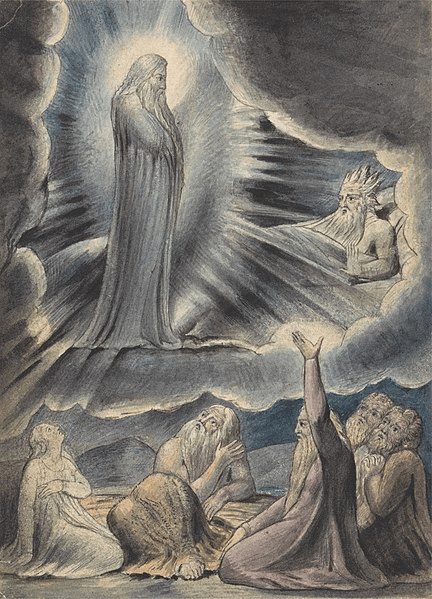
I personally find it rather annoying whenever someone gives me unsolicited advice. It is especially loathsome when it comes with a lot of useless verbiage which is offered as gospel truth.
Eliphaz was a “friend” of Job – which brings to mind the old adage, “With a friend like that, you don’t need any enemies!” Eliphaz was also full of himself, believing that he had all the answers to Job’s terrible suffering.
The unhelpful speech of Eliphaz became harmful words that cut into Job’s spirit. You see, Job knew with a settled confidence that his personal integrity was intact. Yet, his trouble abounded. We need not, like Eliphaz, rush to the conclusion that something is wrong with the suffering person. It may be the Spirit of God thrusting us into a desert experience to test and approve our faith.
Eliphaz offered one of those tired age-old arguments that bad things only happen to bad people. He came at Job with the inexperience and absurdity of making misguided assumptions. He rhetorically asked if there were ever innocent people who were trashed with trouble, or upright folks who ever got cut off from God?
The concluding judgment of Eliphaz was bound to be off the mark – believing that some sort of secret sin must surely be the culprit behind Job’s awful misfortune. Certainly, Eliphaz thinks, Job cannot possibly go through such terrible suffering without having done something to anger God.
Times change, but the basic nature of people, not so much. In today’s church and world, the same notions still endure. If I had a quarter for every time I heard crazy comments, like the following, I would be a rich man:
- “He’s poor because he is lazy and doesn’t want to work.”
- “She keeps having chronic health issues. God is punishing her.”
- “The pandemic is God’s judgment on us for not having the Ten Commandments in our courthouses.”
- “If you just confess your sin and have faith, you’ll be healed.”
- “They’re in big trouble. They obviously did something evil.”
On and on the wrong-headed statements continue, ad nauseum.
The Apostle Peter understood how to view trouble in a healthy way. He said we all suffer – both the good person and the wicked. It’s just a matter of whether we will suffer for doing the good and right thing, or suffer because of saying shallow, illogical, and stupid comments that offend God and hurt others. (1 Peter 3:17-18)
Even Christ suffered. And it wasn’t because of his own sin. It was because of ours. Jesus suffered once for sins, the righteous for the unrighteous, that he might bring us to God.
Since Jesus suffered, the follower of Jesus will suffer. There is a big picture only God sees. Whenever we suffer, there is something going on behind the spiritual scene. We must allow God to do divine work, and then, trust that the Lord bends all human suffering for good and redemptive purposes.
“Where there is no love, pour love in, and you will draw love out.”
St. John of the Cross
So, let’s change the rhetoric. Instead of jumping to judgment, reflexively hop to grace with comments like these:
- “He has poverty of spirit. He’s blessed and will inherit the kingdom of God.”
- “She’s in chronic pain. God has allowed her the privilege of suffering in solidarity with her Lord.”
- “We’re in a pandemic. Here’s a chance for us to live out the Ten Commandments.”
- “If we confess the world’s sins of pride, hate, and injustice, perhaps God’s mercy will deliver us.”
- “We’re in a big pickle. No better time than now to grow in grace.”
Where is God? Beside you, quietly and confidently holding you up in your suffering. For me, that’s one of the best ways to interpret hard suffering.
Lord God, I entrust myself to you because you know what you are doing. Thank you for the trials of life which humbles my heart to pray. Do your work in me so that my faith is fortified for a lifetime of service in the church and the world, through Jesus Christ, my Lord. Amen.

 Rev. Tim Ehrhardt
