The Penitent Soul Changes the World (Hosea 5:15-6:6)

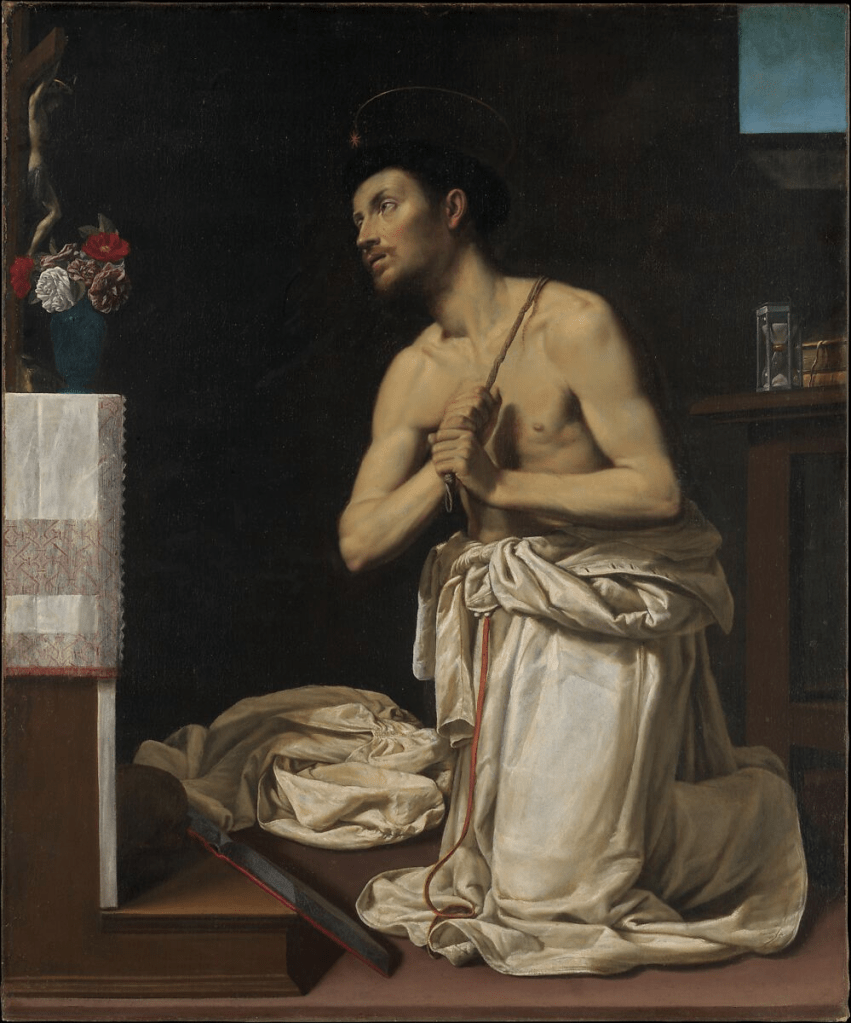
Saint Dominic in Penitence, by Filippo Tarchiani, c.1607

I will return again to my place
    until they acknowledge their guilt and seek my face.
    In their distress they will beg my favor:

“Come, let us return to the Lord,
    for it is he who has torn, and he will heal us;
    he has struck down, and he will bind us up.
After two days he will revive us;
    on the third day he will raise us up,
    that we may live before him.
Let us know, let us press on to know the Lord;
    his appearing is as sure as the dawn;
he will come to us like the showers,
    like the spring rains that water the earth.”

What shall I do with you, O Ephraim?
    What shall I do with you, O Judah?
Your love is like a morning cloud,
    like the dew that goes away early.
Therefore I have hewn them by the prophets;
    I have killed them by the words of my mouth,
    and my judgment goes forth as the light.
For I desire steadfast love and not sacrifice,
    the knowledge of God rather than burnt offerings. (New Revised Standard Version Update Edition)

We are meant for righteousness, not wickedness. So, whenever we fail to do what is right, we will suffer pain. This is because wicked attitudes, words, and behavior go against how we were designed and created as humans.

There are times when we all transgress what is right by either doing outright wrong, or by failing to do what is good, right, and just when we have the opportunity to do so. Therefore, repentance is vital and necessary. That is, to practice something that seems to be lost in our contemporary language: penitence.

Penitence simply means to have regret over wrongdoing. When we are penitent, we seek to repent (turn from what is wrong and do what is right). God has no interest in those who offer the forms of repentance without any penitence. That’s why God told the ancient Israelites that love and knowledge are what’s important, more than sacrifices and offerings.

What’s more, penitence is necessary for spiritual maturation and growth. The penitent soul finds that one’s faults and wrongs can be transformed into assets – such is the power of God through one’s penitent repentance.

And even more, the individual who experiences penitence and repents of wrongdoing, is forgiven, leading the whole world to be forgiven along with them.

Just one penitent and repentant person will intercede and confess the sins of the world; and that can change everything. So, imagine when a community of forgiven persons are motivated to bring about humanity’s greatness and nobility through penitent prayer.

I want you to think this thought: Any sort of moral misdeed committed by an individual weakens the soul of the entire community, and indeed, all the world.

Every attitude and action has a consequence, whether good or bad. Penitence, repentance, and forgiveness are the mandatory practices to restoring and renewing a life-giving dynamic to everyone.

Thus, penitence brings healing to the world; the individual who repents is forgiven; and the whole world is forgiven with him.

The powers of evil want to keep us ignorant of such things – which is why knowledge of God is so very important. Ignorance inevitably leads to sin and to the construction of a false self, which then encrusts itself upon the soul.

Penitence and repentance remain as lights deep within a person, even if they are buried beneath all sorts of arrogance and bravado of the ego.

Change of our world and transformation of our lives will not come apart from a vigorous and popular education of God and God’s Word. With so much ignorance all around us, it is imperative that individuals and communities become familiar with how spiritual realities work.

Although it appears that sinister darkness is spreading across the world and into the depths of humanity, the hope and promise of light discerns that evil can and will be overcome.

Penitence is the key to the healing presence this world needs.

For those who have experienced the renewal and reformation of a forgiven life, the steadfast love of God’s grace is very much needed for those still stuck in the mud of wickedness.

In truth, the meanness of a person betrays how much anguish of soul they are actually experiencing. Their estrangement of God is such that they are in great spiritual pain.

So, every situation designed by God to evoke penitence and repentance within such a mean person leads not only to a struggle in the soul, but also to outward conflicts with others in the forms of bullying, arrogance, and hardness of heart.

Not only do we suffer because of another’s grotesque sin, so does God. The pain of the wicked person unfortunately works to bring others pain, including God.

The Lord observed the extent of human wickedness on the earth, and he saw that everything they thought or imagined was consistently and totally evil. So the Lord was sorry he had ever made them and put them on the earth. It broke his heart. (Genesis 6:5-6, NLT)

Both humanity and God are in anguish when the dark powers take hold within an individual, and in the community.

We must have the grace to bear with others and hold our ground, giving the Spirit of God time to bring about penitence and repentance. For our part, continual learning of divine things and a commitment to steadfast love becomes the hands and feet of our prayers.

When one suffers, we all suffer, because there is an inextricable connection between all people.

Regret, remorse, and sorrow over wrongdoing are the prerequisites for goodness to become ensconced in the world. Penitence serves both the individual and the community, preventing any poisonous root of bitterness to grow up and corrupt many people.

See to it that no one falls short of the grace of God and that no bitter root grows up to cause trouble and defile many. (Hebrews 12:15, NIV)

God and humanity are meant to be united. And the Lord will create whatever conditions are necessary for divisions to be healed, and for people to love one another and love God will all their hearts, souls, minds, and energy.

Almighty God, my heavenly Father: I have sinned against you, through my own fault, in thought, and word, and deed, and in what I have left undone. For the sake of your Son our Lord Jesus Christ, forgive me all my offenses; and grant that I may serve you in newness of life, to the glory of your Name. Amen.

A Calling Is a Sacred Responsibility (2 Kings 9:1-13)

King Jehu

The prophet Elisha called to a member of the group of prophets, “Get ready, take this jug of oil with you, and go to Ramoth-Gilead. When you arrive there, look for Jehu, Jehoshaphat’s son and Nimshi’s grandson. Go to him, then pull him away from his associates, taking him to a private room. Take the jug of oil and pour it on his head. Then say, ‘This is what the Lord has said: I anoint you king of Israel.’ Then open the door, and run out of there without stopping.”

So the young prophet went to Ramoth-Gilead. He came in, and the military commanders were sitting right there. He said, “Commander, I have a word for you.”

“For which one of us?” Jehu asked.

The young prophet said, “For you, Commander.”

So Jehu got up and went inside. The prophet then poured oil on his head and said to him, “This is what the Lord, Israel’s God, says: I anoint you king over the Lord’s people, over Israel. You will strike down your master Ahab’s family. In this way I will take revenge for the violence done by Jezebel to my servants the prophets and to all the Lord’s servants. Ahab’s whole family will die. I will eliminate from Ahab everyone who urinates on a wall, whether slave or free, in Israel. I will make Ahab’s dynasty like the dynasty of Jeroboam, Nebat’s son, and like the dynasty of Baasha, Ahijah’s son. And as for Jezebel: The dogs will devour her in the area of Jezreel. No one will bury her.” Then the young prophet opened the door and ran.

Jehu went out to his master’s officers. They said to him, “Is everything okay?

Why did this fanatic come to you?”

Jehu said to them, “You know the man and the nonsense he talks.”

“That’s a lie!” they said. “Come on, tell us!”

Jehu replied, “This is what he said to me: ‘This is what the Lord says: I anoint you king of Israel.’”

Then each man quickly took his cloak and put it beneath Jehu on the paved steps. They blew a trumpet and said, “Jehu has become king!” (Common English Bible)

The biblical books of 1 & 2 Kings (originally one book of Kings) tells of the kingdoms of Israel and Judah over a five-hundred year period from c.960-586 B.C.E. The dynasties of the house of Omri and the house of Jehu were the longest lasting in Israel.

The books of First and Second Kings are primarily concerned with an evaluation of the 20 kings of Judah and the 19 kings of Israel. Of greatest concern was whether the particular king was loyal to God, or not. If the king tolerated worship of other gods besides Yahweh, and established sacrifices outside of Jerusalem, then that king was evaluated as doing evil in the eyes of the Lord.

This judgment of the kings is consistent with Deuteronomic laws of sole loyalty to God, and the importance of a central location for all Jewish people to worship (in Jerusalem).

To understand why it was so important for Jehu to be anointed with a mission is to know something of the house of Omri, and in particular, the king Ahab and his queen Jezebel. They are both conveyed to us in the biblical text as a power couple who want what they want, without a lot of concern about the subjects of their kingdom.

Jezebel was a follower of Baal and Asherah, not Yahweh. She provided for hundreds of their prophets. Her husband the king was fine with this situation. Jezebel was a clear enemy of God’s prophets, and killed hundreds of them, so that there were only a few left, including Elijah and Elisha (1 Kings 18:13).

Ahab and Jezebel’s powerful misuse of authority is relayed in the story of Naboth (1 Kings 21). Ahab wanted to buy Naboth’s vineyard, which was adjacent to his own land. But Naboth refused to sell, mainly because the land was his family’s ancient generational inheritance.

Jezebel went to work and arranged false witnesses to claim that Naboth had cursed both God and King (which was the ultimate sign of treason in Israel). As a result, Naboth was wrongly stoned to death; and Ahab unjustly confiscated his property.

Elijah prophesied that Ahab’s descendants would die, his dynasty will perish, and that Jezebel would be eaten by dogs (1 Kings 21:17-24). In our story for today, this is alluded to in the reference of God eliminating all that belong to Ahab who “urinate on a wall,” that is, unjustly marking the territory of another as their own property.

Indeed, it all shook-out according to prophecy. Ahab died in battle. Then, Ahab and Jezebel’s son Ahaziah succeeded him as king. Young Ahaziah died two years into his reign, and his brother Jehoram became king. Jehoram was then killed by Jehu. After this, some of Jezebel’s own palace officials tossed her out a window to her death, and dogs descended on her carcass – all to Elijah’s earlier prophecy.

Injustice, unrighteousness, abuse of power, and selfish concerns are ugly nasty business. These sorts of attitudes and behaviors ruin people, and keep others locked into patterns of poverty and powerlessness. God is not okay with any of it.

Whenever we are in the middle of oppression and/or authoritative people abusing their power for their own benefit, its hard to maintain our sense of rightness and goodness. Yet, we must. In such times, patience and perseverance is needed without resorting to attempts of paying back evil with evil.

What’s more, we can find ways of tapping into the spiritual power of God within us, in order to resist and subvert unjust authority with righteousness. To some degree, everyone can do something by employing nonviolent resistance tactics like networking, protest, persuasion, non-cooperation, and speaking out through either speech or writing.

Only those who possess nothing can be entrusted with everything. Systemic evil isn’t changed from the top, because those at the top benefit from the system. Rather, structural evil is transformed through grass roots efforts from the bottom up. What’s more, individuals rarely change from the outside-in, but rather from the inside-out.

A ruling establishment is not always necessarily wrong. Yet, it takes a lot of willing accountability and plenty of intentional soul searching for administrations to remain on the straight and narrow.

Such realities characterized Jehu. He was a non-descript military man. There was nothing, in particular, which distinguished him as having a special calling from God.

Yet, although Jehu fulfilled his calling, he added to the call; the Lord was not pleased with Jehu’s form of violent bloodshed, and so, put an end to Jehu’s house, just as Omri’s house had been purged from Israel.

Power and authority will do that to a person – which is why leaders must be continuously vigilant to guard against developing a thick ego and following their pride.

And so do we. Anyone who receives a call from God has a sacred responsibility and trust to fulfill that calling with competence, care, and conscientiousness.

Almighty God, direct me in all my activity with Your grace, wisdom, and help, so that in all I do and say may glorify Your holy Name; through Jesus Christ our Lord, in the power of the Holy Spirit. Amen.

Advent Is Coming (Zechariah 13:1-9)

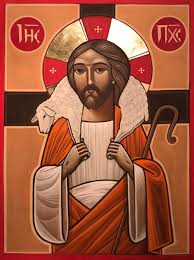
Coptic Church icon of Jesus the Good Shepherd

“On that day a fountain will be opened to the house of David and the inhabitants of Jerusalem, to cleanse them from sin and impurity.

“On that day, I will banish the names of the idols from the land, and they will be remembered no more,” declares the Lord Almighty. “I will remove both the prophets and the spirit of impurity from the land. And if anyone still prophesies, their father and mother, to whom they were born, will say to them, ‘You must die, because you have told lies in the Lord’s name.’ Then their own parents will stab the one who prophesies.

“On that day every prophet will be ashamed of their prophetic vision. They will not put on a prophet’s garment of hair in order to deceive. Each will say, ‘I am not a prophet. I am a farmer; the land has been my livelihood since my youth.’ If someone asks, ‘What are these wounds on your body?’ they will answer, ‘The wounds I was given at the house of my friends.’

“Awake, sword, against my shepherd,
    against the man who is close to me!”
    declares the Lord Almighty.
“Strike the shepherd,
    and the sheep will be scattered,
    and I will turn my hand against the little ones.
In the whole land,” declares the Lord,
    “two-thirds will be struck down and perish;
    yet one-third will be left in it.
This third I will put into the fire;
    I will refine them like silver
    and test them like gold.
They will call on my name
    and I will answer them;
I will say, ‘They are my people,’
    and they will say, ‘The Lord is our God.’” (New International Version)

There’s likely a reason why so many Bible-readers have barely considered, or just never read, the minor prophets of the Old Testament: It’s difficult reading, on several levels.

Yet, the twelve books of the minor prophets, along with the four books of the major prophets, account for a lot of material within Holy Scripture. If we are to understand the whole of the Bible, as well as know God better, we need to contend with what the prophets have to say.

Impurity and cleansing, grace and judgment, idolatry and stabbing, prophets and visions, sheep and shepherds, faith and apostasy, are all part of what seems, on the surface, to be a confusing hodge-podge of verbiage from the prophet Zechariah. Yet, we can still observe the things God cares about.

The Lord promised to rid the land of idols (false gods), (false) prophets, and the spirit of impurity (false righteousness). If God takes out the false prophets, then the people can say good riddance to a false message of leading others toward idolatry and impurity.

The spirit and the message behind false prophets, unholy leaders, and unrighteous teachers, has to do with propagating lies and suppressing truth, so that they can deceive people and manipulate others for their own benefit – leading groups of people away from reality, and into commitments that go nowhere.

This insidious stuff is meant to be taken quite seriously – because it leads to a breakdown in community, a proliferation of injustice, and oppressive spiritual bondage. That’s why we have a rather dramatic picture of parents stabbing a child – not because God likes violence – but to demonstrate that false prophets and their message will damage and destroy a nation, if indulged.

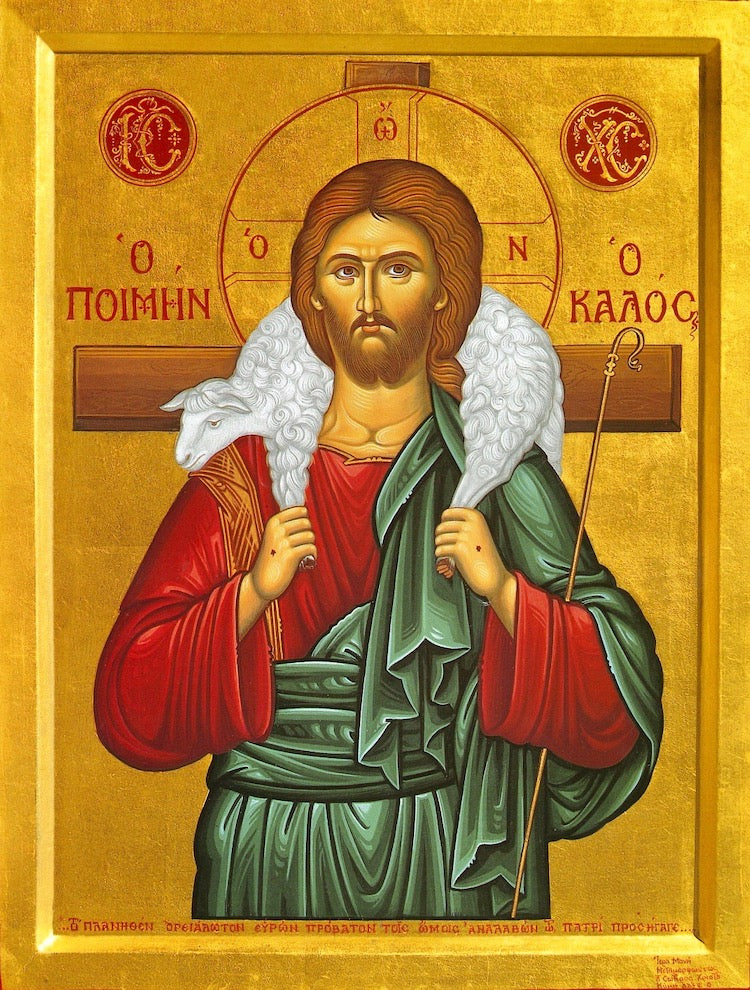
Orthodox icon of Jesus the Good Shepherd

We must always keep in mind and remember that injustice and unrighteousness must always be nipped in the bud (Deuteronomy 13:6-11). Sin, that is, those things which deceive and make false promises that result in a downward spiral toward death, is to be confronted. In the New Testament, Jesus put the matter this way:

If your right eye causes you to stumble, gouge it out and throw it away. It is better for you to lose one part of your body than for your whole body to be thrown into hell. And if your right hand causes you to stumble, cut it off and throw it away. It is better for you to lose one part of your body than for your whole body to go into hell. (Matthew 5:29-30, NIV)

Christ was not advocating a physical maiming of oneself, but rather for us to separate ourself from sin by whatever means necessary. In other words, Jesus was saying that sin isn’t something to be managed, but instead something to eradicate altogether.

Truth matters. Truth brings reality and beauty to light. Falsehood is terrible. To promote that which is false, and perhaps even worse, tolerate it, gives hate and injustice a platform from which to crawl out of the darkness and make the world blind. It would take an awful lot to undo error’s presence.

This is why the shepherd, or maybe, from the Christian perspective, the Christ, is stricken. The Good Shepherd, the one who is truth incarnate, would have to suffer. The injustice and unrighteousness is so foul and degrading that only the pure can undo the impure. And it is all set in motion, not by the forces of darkness, but by God.

God strikes the shepherd, and the sheep scatter. He is not struck because he deserves it – far from it – but because he assumes responsibility for the wrongdoing of others. Father God is the parent who stabs a spear in the side of God the Son.

The ultimate good shepherd of the sheep will die as a heinous offender; and God is the executioner.

In Christ, God put the wrong on him who never did anything wrong, so we could be put right with God.

2 Corinthians 5:21, MSG

This same great shepherd of the sheep, who became the Lamb of God that takes away the sin of the world, is coming again. And he will bring the refining and purifying fire of divine judgment upon the earth.

In this upcoming Advent season, we remember not only that Jesus has come to save the world. We also are reminded that there is yet a second Advent, in which Jesus will come to judge the living and the dead.

Behold, He is coming with clouds, and every eye will see Him, even they who pierced Him. And all the tribes of the earth will mourn because of Him. Even so, Amen.

“I am the Alpha and the Omega, the Beginning and the End,” says the Lord, “who is and who was and who is to come, the Almighty.” (Revelation 1:7-8, NKJV)

Blessed God and Father of our Lord Jesus Christ, preserve us from our own madness. Direct us away from dealing destruction to others; help us to steer clear of paths which lead to the ruin of ourselves and our world.

Protect us. Enable us to hear you. Beloved Jesus, show us your precious face in all others – you in us, and we in each other, from all places. Amen.

1 Samuel 31:1-13 – Warning Signs from a Tragic Life

The Philistines made war on Israel. The men of Israel were in full retreat from the Philistines, falling left and right, wounded on Mount Gilboa. The Philistines caught up with Saul and his sons. They killed Jonathan, Abinadab, and Malki-Shua, Saul’s sons.

The battle was hot and heavy around Saul. The archers got his range and wounded him badly. Saul said to his weapon bearer, “Draw your sword and put me out of my misery, lest these pagan pigs come and make a game out of killing me.”

But his weapon bearer wouldn’t do it. He was terrified. So, Saul took the sword himself and fell on it. When the weapon bearer saw that Saul was dead, he too fell on his sword and died with him. So, Saul, his three sons, and his weapon bearer—the men closest to him—died together that day.

When the Israelites in the valley opposite and those on the other side of the Jordan saw that their army was in full retreat and that Saul and his sons were dead, they left their cities and ran for their lives. The Philistines moved in and occupied the sites.

The next day, when the Philistines came to rob the dead, they found Saul and his three sons dead on Mount Gilboa. They cut off Saul’s head and stripped off his armor. Then they spread the good news all through Philistine country in the shrines of their idols and among the people. They displayed his armor in the shrine of the Ashtoreth. They nailed his corpse to the wall at Beth Shan.

The people of Jabesh Gilead heard what the Philistines had done to Saul. Their valiant men sprang into action. They traveled all night, took the corpses of Saul and his three sons from the wall at Beth Shan, and carried them back to Jabesh and burned off the flesh. They then buried the bones under the tamarisk tree in Jabesh and fasted in mourning for seven days. (The Message)

Life is a process. Rarely does anything happen instantly. Human growth, maturation, life, and death unfold over years. So, a major life issue is attending to what process are we given to – a process which allows for human thriving – or a process that causes a failure to thrive.

King Saul sadly gave himself to a downward spiral of jealousy, paranoia, and poor decisions. His end was tragic. Yet perhaps we might learn some lessons in the form of warnings. Let’s consider the life of Saul as a cautionary tale, heeding us to avoid his foibles and pitfalls.

Unfortunately, Saul made deliberate choices in his life which led to his ignominious death. In fact, Scripture makes it plain that Saul died because of unfaithfulness:

Saul died because he was unfaithful to the Lord; he did not keep the word of the Lord and even consulted a medium for guidance and did not inquire of the Lord. So, the Lord put him to death and turned the kingdom over to David son of Jesse. (1 Chronicles 10:13-14, NIV)

Premeditated, deliberate, conscious wrongdoing can only expect a predictable process of moral failure and divine judgment. Consider some observations from Saul’s life so that we will be kept from going down his path of destruction:

  • Saul made decisions which solely benefited himself, and not the entire community. He deliberately disobeyed orders from the prophet Samuel and tried to justify his behavior with a godly veneer (1 Samuel 13:1-14; 15:1-26). Later, King David engaged in some deliberate acts of sin and disobedience. Yet, David did not share Saul’s outcome because he humbled himself before God, admitted his guilt, and turned away from disobedience (2 Samuel 12:1-13). There always remains the opportunity to turn to God, as long as we are alive.
  • Saul never owned his bad decisions, and it led to his paranoia and warped thinking. Saul kept believing he was okay – and that everyone else was wrong or against him. If we ever get to the point of living with our sin as if it’s acceptable, then we need a prophet to come along and show us the error of our ways and beliefs. Saul had a prophet in his life: Samuel, who was one of the best. Yet, Saul often altered Samuel’s advice or dispensed with it altogether.
  • Saul’s wrongdoing did not always lead to immediate negative consequences. That is the typical nature of sin. It bites, but the pain isn’t felt until later. Saul was rejected by God as king. In reality, this rejection did not occur until Saul’s death. Whenever Saul made poor decisions, he felt gratification in the immediate moment. Later, however, he was tormented by an evil spirit (1 Samuel 16:14). Conversely, the righteous person understands the principle of delayed gratification.
  • It wasn’t just Saul who suffered because of his own jealousy and paranoia. Other people suffered, as well. David clearly suffered emotional and spiritual duress because of Saul’s jealousy. The priests and the people of Nob were mercilessly murdered because of Saul’s paranoia (1 Samuel 22:6-19). We must be quite careful to avoid being shortsighted about our decisions. Just because we might neither anticipate nor see any negative consequences to others doesn’t mean there aren’t any. Sin destroys, period, whether we know it, or not.
  • Saul’s identity and worth as a person was dependent on his title and position as king. So, when that position was threatened, Saul thought his very personhood was in grave danger. The truth is that our worth as humans is not tied to whether we have a lofty position, or a particular pedigree. Our dignity as people is forever tethered to bearing the divine image.

A healthy life process of decision-making which includes consulting wise voices and collaborating with people of integrity will surely result in good things, not bad. So, let us walk in the narrow path of wisdom, while continually forsaking the broad road that leads to destruction.

Gracious God, our sins are too heavy to carry, too real to hide, and too deep to undo. Forgive what our lips tremble to name, what our hearts can no longer bear, and what has become for us a consuming fire of judgment. Set us free from a past that we cannot change; open to us a future in which we can be changed; and grant us grace to grow more and more in your likeness and image, through Jesus Christ, the light of the world. Amen.

*Above: woodcut of King Saul’s death by George Wigland, 1860