Psalm 42 – Sadness and Hope

As a deer gets thirsty 
    for streams of water, 
    I truly am thirsty 
    for you, my God. 
In my heart, I am thirsty 
for you, the living God. 
    When will I see your face? 
Day and night my tears 
    are my only food, 
    as everyone keeps asking, 
    “Where is your God?” 

Sorrow floods my heart, 
    when I remember 
leading the worshipers 
    to your house.  
    I can still hear them shout 
    their joyful praises. 
Why am I discouraged? 
Why am I restless? 
    I trust you! 
And I will praise you again 
    because you help me, 
    and you are my God. 

I am deeply discouraged 
    as I think about you 
from where the Jordan begins 
at Mount Hermon 
    and from Mount Mizar.  
Your vicious waves 
    have swept over me 
    like an angry ocean 
    or a roaring waterfall. 

Every day, you are kind, 
    and at night 
you give me a song 
    as my prayer to you, 
    the living Lord God. 

You are my mighty rock.  
    Why have you forgotten me? 
    Why must enemies mistreat me 
    and make me sad? 
Even my bones are in pain, 
    while all day long 
my enemies sneer and ask, 
    “Where is your God?” 

Why am I discouraged? 
Why am I restless? 
    I trust you! 
And I will praise you again 
    because you help me, 
    and you are my God. (CEV) 

Sadness. Every human on planet earth knows the feeling. Since we are emotional creatures, profound sadness even to the point of depression and/or despondency will happen. Yet, despite the universal nature of discouragement and tears, many Christians buck the sadness.

Far too many believers focus so exclusively on victory in Jesus through his resurrection, ascension, and glorification that they use religion as their denial when unwanted emotions like sadness come banging at the doorstep of their soul. 

So, I most emphatically say: Depression is not sin. To be discouraged is not the Enemy. Experiencing sadness is neither wrong nor selfish. Quite the opposite, in fact. It is necessary to sit with our emotions and feel the breadth and depth of them. Both our spiritual and emotional health come through an awareness and robust engagement with our feelings. To refuse to feel is to put the stiff arm to God.  

The psalmist does anything but deny his feelings. He brings them before the Lord and spreads them out before the Divine. Why am I discouraged? Why am I restless? Why the sadness? Could it be that God has forgotten me? Where is the Lord? Is God angry with me? Are my troubles the result of divine wrath? 

To blandly say we have never uttered or thought such questions is a telltale sign of denial. The bottom line for many folks is that they do not want to feel because such emotions complicate their lives. Besides, discouragement and sadness hurt. “Why feel,” we reason, “when it only brings pain?” 

Ah, yes, the avoidance of pain. And there is no pain quite like emotional and spiritual pain. Much like an open wound which needs a liberal application of painful peroxide, so our spiritual wounds must sting with the salve of emotional feeling. Healing is neither cheap, easy, nor painless. It typically hurts like hell. 

The psalmist’s own pain revolved around feelings of alienation from God, being cut off from fellow worshipers, and harassed by others around him. Understandably, he experienced despondency and loneliness. The psalmist wondered if anyone, including God, even cared what he was going through. In other words, he is desperate for God to show up. 

I am going to make a simple observation about this psalm: The psalmist did not get any answers to the several questions he posed. He even repeated them, to no avail. The only form of comfort the psalmist received was to remember what God had done in the past. Somehow, someway, this will help with the difficulties of the present. 

There are times in life when we must recall what we know about God, ourselves, and others. If the Lord has delivered in the past, God can do it again. If others helped before, perhaps they will be present in the here and now. And just maybe, even likely, you and I will discover a resilient spirit within. We already possess everything we need to not only survive but to grow and thrive in life. 

Hope arises from holding the big picture of the past, present, and future together at the same time. When present circumstances are difficult, and it appears we are about to swallowed up into the now, we must hold the past and future along with it, in careful tension. Then, we shall find the ennoblement to keep going. 

Trust in the future, a confident expectation of hope, is born from the trustworthiness of the past. A prayerful song in our heart will carry us through till our hope is realized. 

Psalm 121 – My Help

Mountain landscape

I lift up my eyes to the hills—
    from where will my help come?
My help comes from the Lord,
    who made heaven and earth.

He will not let your foot be moved;
he who keeps you will not slumber.
He who keeps Israel
will neither slumber nor sleep.

The Lord is your keeper;
the Lord is your shade at your right hand.
The sun shall not strike you by day,
nor the moon by night.

The Lord will keep you from all evil;
he will keep your life.
The Lord will keep
your going out and your coming in
from this time on and forevermore. (NRSV)

This is my favorite psalm.  I have read and mulled it over so many times that it is almost second nature for me to draw from its rich theological statement about God when times are difficult.  This is a psalm designed for worship – to be used by God’s people through song and prayer.  A community without Psalm 121 near to its heart is a group of people in danger. Yet, with it, there is a continual sense of security, confidence, and hope.

Psalms are meant to be spoken aloud and repeated. So, here is another version:

I look to the hills!
Where will I find help?
It will come from the Lord,
who created the heavens
and the earth.

The Lord is your protector,
and he won’t go to sleep
or let you stumble.
The protector of Israel
doesn’t doze
or ever get drowsy.

The Lord is your protector,
there at your right side
to shade you from the sun.
You won’t be harmed
by the sun during the day
or by the moon at night.

The Lord will protect you
and keep you safe
from all dangers.
The Lord will protect you
now and always
wherever you go. (CEV)

This beautiful majestic psalm can be used for any and every occasion.  So, I often use it within hospital visits, counseling in a wide array of situations, and for my own personal edification.  It seems to me that one cannot possibly overuse this psalm.  The psalm was originally used for ascending the hill into Jerusalem, anticipating meeting with God.  Just like a lover who looks forward to meeting his beloved and thinking about how wonderful she is, so the psalmist looks with adoring affection on the God he is about to encounter.

I Lift My Eyes to the Hills

Here is yet another version of this wonderful psalm:

I look up to the mountains—
does my help come from there?
My help comes from the Lord,
who made heaven and earth!

He will not let you stumble;
the one who watches over you will not slumber.
Indeed, he who watches over Israel
never slumbers or sleeps.

The Lord himself watches over you!
The Lord stands beside you as your protective shade.
The sun will not harm you by day,
nor the moon at night.

The Lord keeps you from all harm
and watches over your life.
The Lord keeps watch over you as you come and go,
both now and forever. (NLT)

The psalm is rich with a theology of grace, watch care, and loving attention.  This is a God who is powerful and merciful, a God able to help and desiring to do so.  In a world which seems so often distant and unaffected by the divine, this is a psalm to utter repeatedly in every situation of life so that the truth of the Lord is grafted deep into the soul.  In each unwanted circumstance the psalm can be spontaneously used as an immediate prayer, and with every anticipated event it can provide the words to address the most pressing of needs.  Let the words resonate within you as people created in the image of God, connecting with him on both the cerebral and visceral levels of your life in this last version:

I will lift up my eyes to the hills—
From whence comes my help?
My help comes from the Lord,
Who made heaven and earth.

He will not allow your foot to be moved;
He who keeps you will not slumber.
Behold, He who keeps Israel
Shall neither slumber nor sleep.

The Lord is your keeper;
The Lord is your shade at your right hand.
The sun shall not strike you by day,
Nor the moon by night.

The Lord shall preserve you from all evil;
He shall preserve your soul.
The Lord shall preserve your going out and your coming in
From this time forth, and even forevermore. (NKJV)

 Amen.

RCA Worship Service

Hello, friends! As an ordained Minister in the Reformed Church in America (RCA) I am pleased that we can virtually worship together as both denominational friends, and with brothers and sisters from all places.

The preamble of the RCA’s Book of Church Order states that the purpose of the denomination “together with all other churches of Christ, is to minister to the total life of all people by preaching, teaching, and proclamation of the gospel of Jesus Christ, the Son of God, and by all Christian good works.”

May we all be built up in our common faith and life together today as God’s people. Simply click the video below and let us worship Father, Son, and Holy Spirit, one God, now and forever. Amen.

I pray that the Lord Jesus Christ will bless you and be kind to you! May God bless you with his love, and may the Holy Spirit join all your hearts together. Amen.

Romans 12:1-8 – Healthy Group Dynamics

Transformed

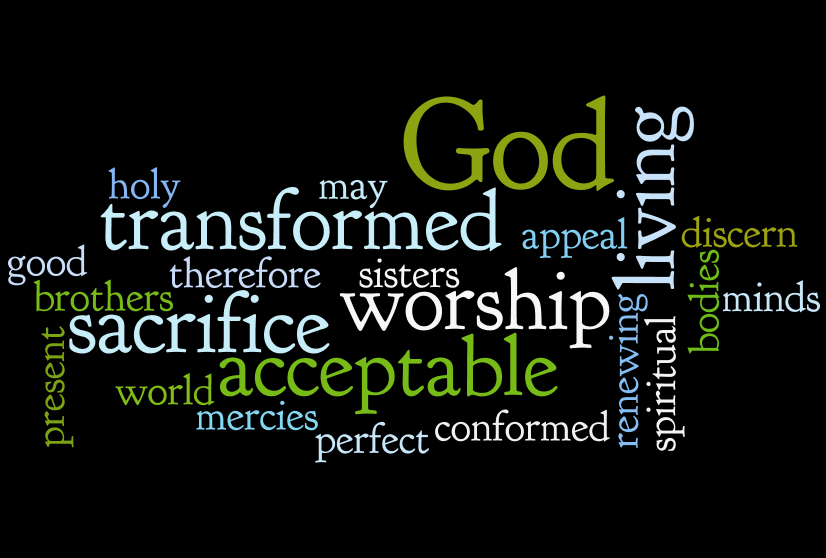
Therefore, I urge you, brothers, and sisters, in view of God’s mercy, to offer your bodies as a living sacrifice, holy and pleasing to God—this is your true and proper worship. Do not conform to the pattern of this world but be transformed by the renewing of your mind. Then you will be able to test and approve what God’s will is—his good, pleasing, and perfect will. 

For by the grace given me I say to every one of you: Do not think of yourself more highly than you ought, but rather think of yourself with sober judgment, in accordance with the faith God has distributed to each of you. For just as each of us has one body with many members, and these members do not all have the same function, so in Christ we, though many, form one body, and each member belongs to all the others. We have different gifts, according to the grace given to each of us. If your gift is prophesying, then prophesy in accordance with your faith; if it is serving, then serve; if it is teaching, then teach; if it is to encourage, then give encouragement; if it is giving, then give generously; if it is to lead, do it diligently; if it is to show mercy, do it cheerfully. (NIV) 

Every person is important. Everyone is needed. Each one, according to this New Testament lesson, is to offer their entire lives to God through worship and the exercise of their spiritual giftsPeople are designed to be active in building up one another. 

When I was growing up, we had a fine china set that my parents kept in a beautiful china cabinet.  The set and the cabinet are old and were a prominent part of our living room. However, we almost never used it. I can only remember once or twice that my Mom got the china out to use. God is not looking for fine china that sits unused. He is looking for rough-and-tumble clay pots—the kind that can be used every day. God wants ordinary table-wear that can be handled in a crash-and-bang world.  

Followers of Jesus Christ were never meant to be a china cabinet, where precious pieces are safely stowed out of harm’s way. Instead, humanity is to be like a working kitchen, where well-worn pots are filled again and again to dispense their life-giving contents to a thirsty world; and, where common plates and cups are used again and again to provide a hungry population with the Bread of Life. 
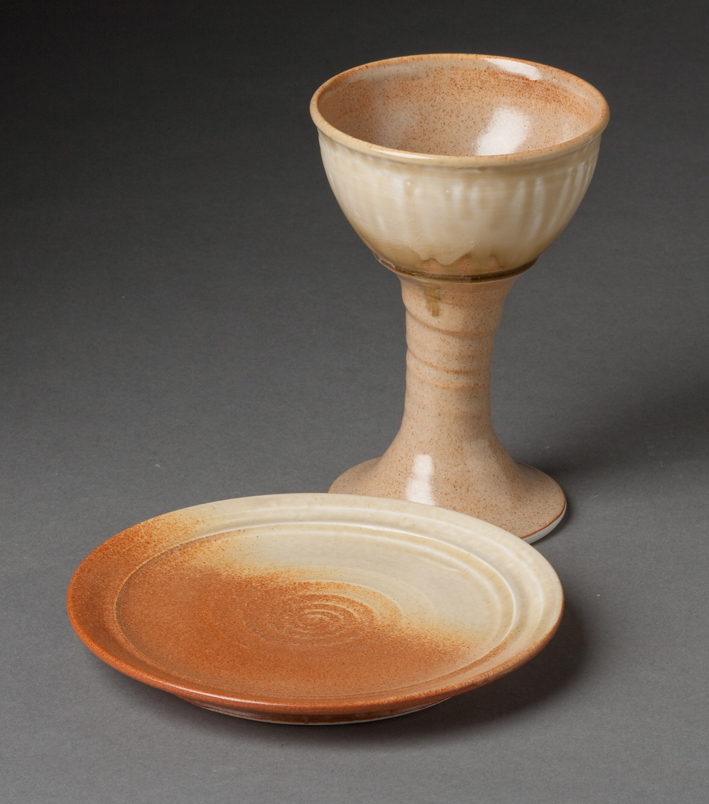
Cup and Plate

Within the ancient Roman Church were both Jews and Gentiles – two groups vastly different from each other.  They tended to keep to themselves and only operate within their familiar and comfortable circles of friends and relatives.  But the Apostle Paul wanted them to be united by exercising their spiritual gifts for the benefit of the entire congregation, and not just certain persons. 

We are strongly encouraged to give ourselves in service to one another because of God’s mercy in Christ.  Since God has saved us from sin, we are to gratefully respond to him in worship that is dedicated to serving everyone.  The word “worship” in today’s text is where we get the word “liturgy.”  That is, Paul’s vision for the church was to have a daily liturgical rhythm of spiritual worship, not just on Sunday when we might pull out the fine china and impress people. 

Paul’s appeal was not to guilt people into serving but is an exhortation for all Christians to appropriately respond to God’s grace by offering their lives in sacrificial service. This is a form of saying “thanks” to God. To be oriented in a sacred liturgy that is fit for the daily will of God, our minds must be renewed. Through saturation in Scripture we discern our spiritual gifts, know what God wants us to do with those gifts, and use them effectively in the church and the world.   

Grace has been given to every believer in Jesus, not just a select few. We all have different gifts and have been graced with abilities for the benefit of others. When everyone collectively uses these spiritual gifts, there is the ability to know the will of God in any situation for any group of people. All the pronouns used in today’s verses are plural. There is to be a group dynamic which seeks to give minds and bodies completely to God in worship, using our spiritual gifts for building up one another, and discovering the will of God together. 

All believers in Jesus must share and work together by utilizing God’s grace, instead of getting burned-out because others are not serving. Grumbling about what others are not doing begs the question of whether we are over-functioning, or not. It could be that we have succumbed to the danger the Apostle Paul warned us about: thinking so highly of ourselves that we believe our gifts are superior to others, so we need to maintain our control and hegemony in the group. This is a terribly misguided notion.   

Body of Christ

We belong to one another.  Therefore, one major way of giving to God is through offering ourselves to each other with equity and without favoritism.  We must not separate Christ from his church.  To say that we need God, but do not need the church is to really say that we do not need God because the two are inseparable. Nowhere in Holy Scripture do we find individual Christians doing their own thing, isolated from a committed group of people, the church.  

When Jesus called people to follow him in service to God and a world in need, some gave him excuses that they were busy and had other pressing matters to attend to before they could follow him. Jesus simply left them and told them they were not fit for the kingdom of God. (Luke 9:57-62) 

When people were preoccupied with building wealth, or gaining power, or jockeying for influence, Jesus told them to stop it, exercise some faith, and seek first the kingdom of God.  Build your treasure in heaven, Jesus said, because it will be permanent; and, not on earth where it is temporary. (Matthew 6:19-34)  

We are graced by God with abilities which God fully expects us to use. “Cheap grace” is merely embracing Christ as a personal Savior but not welcoming him as the Lord in whom we must sacrificially give our lives to service in the church and the world. Spiritual health and vitality cannot exist apart from every person using God’s given grace to contribute to the functioning of the Body of Christ.   

spiritual gifts

The list of spiritual gifts Paul provided is not exhaustive but represents a combination of speaking and serving gifts necessary to bless humanity. Paul exhorted the church to not restrain people’s exercise of gifts but let them go at it, full bore:  

  • “Prophesying” is not foretelling the future but a word meaning “inspired speech” from God that addresses what God’s people are to do considering his Word.   
  • “Serving” is a generic word referring to all types of hands-on service.   
  • “Teaching” is needed to instruct the faithful in all the revealed will of God.   
  • “Encouraging” involves both speaking and serving, as the one gifted in encouragement comes alongside others and helps them to do something with both verbal coaching and tangible help.   
  • Giving” specifically refers to the person who lives a simple life to be able to give generously and contribute to the needs of others.   
  • “Leading” is the ability to get out in front and show the way in obtaining the will of God.   
  • “Mercy” is the much-needed ability to see down-and-out hurting people and be a conduit of God’s grace to them. 

Here is a simple observation: There is no one person who possesses all these gifts. That is why everyone must work together to have a spiritually healthy community.  A spiritually toxic community is the inevitable result of only a few people using their gifts. 

The Apostle Paul communicated some important truth about what faithful Christians must do to be transformed by a renewal of the mind: exercise godly sacrifice; commitment to worship; intentional unity; and, an awareness of our spiritual gifts. The following are some thoughts on becoming aware of our spiritual gifts:   

  1. Pay attention.  Every spiritual gift reflects God’s grace and character, and so, you will find joy and satisfaction in expressing it. Your spiritual gift will be a place of deep spiritual formation and growth in your life, as God uses it both to powerfully connect you to him and to expose areas of your soul that need his forgiveness and redemption.   
  2. Try.  Give it a whirl.  Take the step to connect with a service or ministry, or just try doing what you feel might be something God wants you to do.  Gifts are discovered more from others observing and affirming your gift and less than going through a research process.  The encouragers among us will be happy to affirm the gifts of others. 
  3. Develop.  All spiritual gifts must be cultivated and developed.  Paul told his young protégé, Timothy, to fan into flame the gift of God.  Put yourself in a position to be taught and mentored. 

We were designed by God for worship and service. We will find our greatest delight in life through engaging those two activities. The result is a spiritually healthy and thriving Christian community that loves God, loves one another, and loves the world. 

God of grace, I come before you today praying for your Holy Spirit to stir up the gifts already placed inside your people. God Almighty, I pray that whatever gifts your Holy Spirit has decided to give and put within me and those around me that those gifts be activated and used for your glory and the edification of others.  I pray for peace and joy in the community, that no one will be jealous or covetous about anyone else’s gifts. Lord God, I pray also as these gifts grow and develop that the fruit of the Spirit will be manifested, to ensure the gifts are ministered in love. May you receive all praise honor and glory from the gifts you give, through Jesus Christ, our Lord.  Amen.
