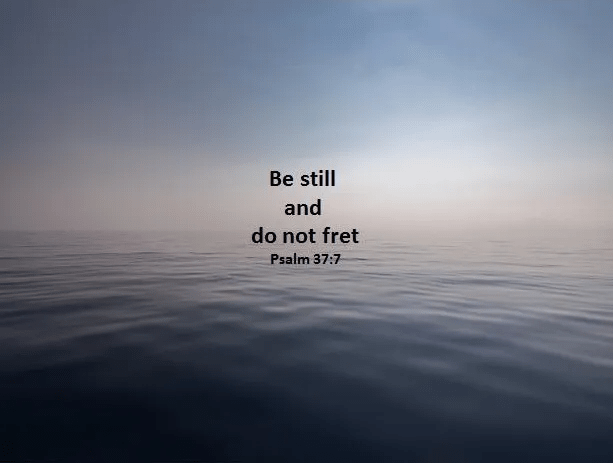
Distressed (Psalm 77)

I cry aloud to God;
    I cry aloud, and he hears me.
In times of trouble I pray to the Lord;
    all night long I lift my hands in prayer,
    but I cannot find comfort.
When I think of God, I sigh;
    when I meditate, I feel discouraged.

He keeps me awake all night;
    I am so worried that I cannot speak.
I think of days gone by
    and remember years of long ago.
I spend the night in deep thought;
    I meditate, and this is what I ask myself:
“Will the Lord always reject us?
    Will he never again be pleased with us?
Has he stopped loving us?
    Does his promise no longer stand?
Has God forgotten to be merciful?
    Has anger taken the place of his compassion?”
Then I said, “What hurts me most is this—
    that God is no longer powerful.”

I will remember your great deeds, Lord;
    I will recall the wonders you did in the past.
I will think about all that you have done;
    I will meditate on all your mighty acts.

Everything you do, O God, is holy.
    No god is as great as you.
You are the God who works miracles;
    you showed your might among the nations.
By your power you saved your people,
    the descendants of Jacob and of Joseph.

When the waters saw you, O God, they were afraid,
    and the depths of the sea trembled.
The clouds poured down rain;
    thunder crashed from the sky,
    and lightning flashed in all directions.
The crash of your thunder rolled out,
    and flashes of lightning lit up the world;
    the earth trembled and shook.
You walked through the waves;
    you crossed the deep sea,
    but your footprints could not be seen.
You led your people like a shepherd,
    with Moses and Aaron in charge. (Good News Translation)

Psalm 77, by Jeremy Grant

I Worry

You and I know what it feels like to be in trouble. We understand the sense, at times, of having our prayers bounce off the ceiling, as if our cries are not heard by heaven. Loneliness and discouragement are palpable. Sleep is elusive. Worries and racing thoughts go round and round in our heads, like some sort of demented NASCAR event.

Swirling around us like a black cloud are all the questions asked without any answers:

  • Has God walked off the job? Is the Lord ever coming back? Is God even there? Did the Lord retire from being God?
  • Is God angry at me? What have I done to piss him off? Is the Lord fed up with us?
  • Is the Lord really a God of love? Did grace run out of steam? Does God hate me?

Then, when the questions go unanswered without any replies, we begin to remember the good old days… when God was a mover and shaker in this messed up world… when the Lord delivered the people from Egyptian bondage… when God pulled people out of the worst kind of troubles….

We continue to reminisce, even recalling that the very elements of the earth were moved by the command of an almighty God: setting aside the Red Sea so that the people were delivered from impending doom… congealing the Jordan River so that the people could cross over into the Promised Land… causing clouds to form and belch out buckets of rain to end droughts in the land… and so much more….

Like a concerned and compassionate shepherd, protecting the sheep and caring for them, God had led the people out of slavery and into freedom, speaking to Moses, delivering people, moving mountains…. Yet, here I lay, hearing and experiencing bupkis from God. *Sigh*

So, what’s a spiritually sensitive person to do?

I and Thou

In 1937, the Jewish philosopher, Martin Buber wrote an insightful book entitled “I and Thou.” Buber postulated how people exist in the world and how they actualize that existence. We engage the world through both monologue and dialogue. For Buber, “all real living is meeting.” In other words, to exist, to live, is to encounter another and relate to a “Thou.” We only have meaning in relationships. We only have our being in God.

The psalmist acknowledges there is a “Thou” besides his distressed “I” – that this Thou will hear, make a difference, and open a way of deliverance… even if it might not happen right away. There are four actions the psalmist decides to do in his distress, actions which put him in a vital dialogue with the divine “Thou”… even if it seems like nothing is happening.

I Pray

Prayer, at its heart, is a dialogue with God. From the place of our spiritual poverty and bankruptcy, we beg; and God gives us the kingdom. To be a spiritual beggar, pleading for our needs to be met, knowing we have no way to repay, is a posture which God delights in.

You’re blessed when you’re at the end of your rope. With less of you there is more of God and his rule. (Matthew 5:3, MSG)

I Search

In the I and Thou relationship, the search works both ways.

You have searched me, Lord,
    and you know me.
You know when I sit and when I rise;
    you perceive my thoughts from afar.
You discern my going out and my lying down;
    you are familiar with all my ways….

Search me, God, and know my heart;
    test me and know my anxious thoughts.
See if there is any offensive way in me,
    and lead me in the way everlasting. (Psalm 139:1-2, 23-24, NIV)

I Remember

The psalmist intentionally sought to recall the mighty works of God, especially in delivering the people from slavery and bringing them to the Promised Land. In our forgetfulness, we get lost in our troubles and our perspective becomes skewed. We cannot see beyond the end of our nose. Remembering, however, grants us a fuller picture of what is happening in light of the past. It brings us out of the lonely “I” and into the relationship of “I and Thou.”

Remember those earlier days after you had received the light, when you endured in a great conflict full of suffering. 

Sometimes you were publicly exposed to insult and persecution; at other times you stood side by side with those who were so treated. You suffered along with those in prison and joyfully accepted the confiscation of your property, because you knew that you yourselves had better and lasting possessions. 

So do not throw away your confidence; it will be richly rewarded. You need to persevere so that when you have done the will of God, you will receive what he has promised. (Hebrews 10:32-36, NIV)

I Meditate

Pondering and thinking upon God’s deeds enables praise to arise from us. It fosters the I and Thou relationship, bolstering and buoying our faith through life-events which produce our distress.

I lie awake thinking of you,
    meditating on you through the night.
Because you are my helper,
    I sing for joy in the shadow of your wings. (Psalm 63:6-7, NLT)

Thou Art Worthy

The psalm ends with no resolution to the personal distress of the psalmist. Whether there is a happy ending, or not, isn’t the point. It’s about the process.

The journey of moving through our troubles causes us to learn as much (or more) from God’s absence than of God’s presence. We learn how to pray, search, remember, and meditate because of and despite our troubles. We learn to relate to God and eventually proclaim that Thou art worthy.

Thou art worthy, O Lord, to receive glory and honor and power: for thou hast created all things, and for thy pleasure they are and were created. (Revelation 4:11, KJV)

Amen.

Some Well-Ordered Wisdom (Psalm 37:1-17)

Don’t be worried on account of the wicked;
    don’t be jealous of those who do wrong.
They will soon disappear like grass that dries up;
    they will die like plants that wither.

Trust in the Lord and do good;
    live in the land and be safe.
Seek your happiness in the Lord,
    and he will give you your heart’s desire.

Give yourself to the Lord;
    trust in him, and he will help you;
he will make your righteousness shine like the noonday sun.

Be patient and wait for the Lord to act;
    don’t be worried about those who prosper
    or those who succeed in their evil plans.

Don’t give in to worry or anger;
    it only leads to trouble.
Those who trust in the Lord will possess the land,
    but the wicked will be driven out.

Soon the wicked will disappear;
    you may look for them, but you won’t find them;
but the humble will possess the land
    and enjoy prosperity and peace.

The wicked plot against good people
    and glare at them with hate.
But the Lord laughs at wicked people,
    because he knows they will soon be destroyed.

The wicked draw their swords and bend their bows
    to kill the poor and needy,
    to slaughter those who do what is right;
but they will be killed by their own swords,
    and their bows will be smashed.

The little that a good person owns
    is worth more than the wealth of all the wicked,
because the Lord will take away the strength of the wicked,
    but protect those who are good. (Good News Translation)

Today’s Psalm feels as if it could be in the book of Proverbs; it’s chocked full of wisdom sayings. And wisdom is most definitely something you, me, and the entire world needs. Indeed, we have enough fools around us running their mouths with a bunch of gobbledygook that’s nonsensical and meaningless.

We need helpful language and well-ordered words which reflect our ordered creation.

The underlying assumption of all biblical wisdom literature is that our world has been created by God with a material and moral order built into it.

That means that to buck this order is stupid and foolish. Somebody who walks off the roof of their house because they don’t believe in gravity will experience the harsh reality of that belief. Likewise, anyone who walks any old way they want in this world, without regard to the divine force operating within it, is going to experience a broken spirit.

Our human well-being depends on knowing the ordered creation we inhabit. There are social expectations which need to be realized in order to conform and be in sync with the natural (and supernatural!) universal rhythms all around us. Those expectations are framed for us as wisdom sayings.

Our actions and inactions have consequences. It’s our task to gain experiential knowledge as we move about this earth and interact with others. Notice I did not say we need to be perfect. No, instead, we are continually in a mode of improvement – seeking and learning to be better and do better.

And one of the things we all must discover is that our own personal actions and attitudes effects the entire surrounding community.

Biblical wisdom literature communicates how we receive blessing and how we hold onto it. True wisdom is to live in a responsible awareness of both Creator and creation – and then to make appropriate choices which will bless God and others.

So, in our Psalm for today, we have some wise choices to make that put us in the groove of how things are ordered and established:

  • Don’t worry about the evil simpletons around you. Why? Because in the Lord’s well-ordered world, the wicked cannot and will not survive; their end is certain, just as sure as death and taxes.

Those who are evil—
they are like straw
    blown by the wind.
Sinners won’t have an excuse
    on the day of judgment,
and they won’t have a place
    with the people of God.
The Lord protects everyone
    who follows him,
but the wicked follow a road
    that leads to ruin. (Psalm 1:4-6, CEV)

  • Trust the Lord. Everything changes. Everyone is fickle. Why trust? Because God, unlike everything and everyone else, is consistent, stable, and always true to character.

Trust God from the bottom of your heart;
    don’t try to figure out everything on your own.
Listen for God’s voice in everything you do, everywhere you go;
    he’s the one who will keep you on track. (Proverbs 3:5-6, MSG)

  • Be patient and wait on the Lord. Why? Because God is good, all the time, and has only good plans in mind for you and me. We short circuit what God is doing whenever we fail to have patience.

Be patient, then, brothers and sisters, until the Lord’s coming. See how the farmer waits for the land to yield its valuable crop, patiently waiting for the autumn and spring rains. You too, be patient and stand firm, because the Lord’s coming is near. (James 5:7-8, NIV)

The best things in life are internal, not external. One’s inner well-being, peace of mind, emotional awareness, and spiritual health are worth infinitely more than any title, position, wealth, or delusions of control.

A well-ordered life comes from tapping into the divine resources available to us.

Grant us patience, O Lord, to follow the road you have taken. Let our confidence not rest in our own understanding but in your guiding hand; let our desires not be for our own comfort, but for the joy of your kingdom; for your cross is our hope and our joy now and unto the day of eternity. Amen.

– A Prayer of St. Augustine

The Shepherds’ Candle of Joy (Luke 2:8-20)

The Shepherds by Malaysian artist Hanna Varghese (1938-2009)

And there were shepherds living out in the fields nearby, keeping watch over their flocks at night. An angel of the Lord appeared to them, and the glory of the Lord shone around them, and they were terrified. But the angel said to them, “Do not be afraid. I bring you good news that will cause great joy for all the people. Today in the town of David a Savior has been born to you; he is the Messiah, the Lord. This will be a sign to you: You will find a baby wrapped in cloths and lying in a manger.”

Suddenly a great company of the heavenly host appeared with the angel, praising God and saying,

“Glory to God in the highest heaven,
    and on earth peace to those on whom his favor rests.”

When the angels had left them and gone into heaven, the shepherds said to one another, “Let’s go to Bethlehem and see this thing that has happened, which the Lord has told us about.”

So they hurried off and found Mary and Joseph, and the baby, who was lying in the manger. When they had seen him, they spread the word concerning what had been told them about this child, and all who heard it were amazed at what the shepherds said to them. But Mary treasured up all these things and pondered them in her heart. The shepherds returned, glorifying and praising God for all the things they had heard and seen, which were just as they had been told. (New International Version)

We Are Meant For Joy

The past 10-20 years have seen an explosion of understanding concerning the brain. Even though there is so much we still do not know, what we do know is that our brains cannot survive, let alone thrive, without emotions like joy. The frontal lobe of the brain monitors our emotional state, while the thalamus (the information center that regulates consciousness) helps determine how to express our feelings.

We feel joy in our bodies because of the release of the neurotransmitters dopamine and serotonin in the brain. Both of these chemicals are associated with happiness (in fact, people with clinical depression often have lower levels of serotonin).

So, simple activities like going for a walk in nature, petting a dog or cat, kissing a loved one, standing and sitting in a worship service, and yes, even forcing yourself to smile, can help those neurotransmitters do their job and raise your mood.

Neurologists and scientists have also discovered that practices of mindfulness, silence, contemplation, and meditation stimulate the brain’s cortex and create a state of happiness, contentment, and joy. And those practices also enable individuals to become more self-aware, more aware of others and what is happening around them, as well as a heightened awareness of unseen realities, like God and angels.

God with Us

The way that God has wired us means that joy does not come from getting all the presents we want for Christmas or having everything go our way. Instead,  joy is the fruit of meaningful movement of the body and relational interactions with God and others. We do not need to look for joy in a store because joy comes being with God, God’s creation, and God’s people.

The good news of a Savior coming to this earth means God is coming to be with us. This is good news of great joy! We are loved because God is good, not because we are good. And because God is good, and we are a mess of humanity, there is joy that the Lord is coming to save us!

Seeing Shepherds by American painter Daniel Bonnell

The Shepherds

The reason Christ’s birth was good news of great joy to the shepherds is that they were shepherds.  Shepherds in the ancient world were generally looked on with contempt. In fact, the ancient Egyptians refused to eat with Jews because they were mostly shepherds (Genesis 46:31-34). 

  • Shepherds spent most of their time living with their sheep outdoors, to protect the flock. 
  • Shepherds were not dressed well, not culturally refined, and smelled like sheep poop. 
  • Shepherds also had the notoriety of being drinkers. Because they slept with the sheep, many shepherds would pass the time and deal with the chilly air by taking a nip of alcohol. We do not really know whether most shepherds were drunkards, or not; but we do know they had a bad reputation.

So, becoming a shepherd was not a profession any young person aspired to. Nobody took out a student loan to major in shepherding at the University of Jerusalem. King David started out as a shepherd. He was the runt in his family and got stuck with the job nobody else wanted. Out of all the persons and people-groups the heavenly angels could have come to announce the birth of Christ, it was shepherds.

Grace

The good news of great joy for all the people is truly a gospel of grace. The announcement to a bunch of stinky shepherds is profoundly significant and cannot be overstated. It is important because grace is being shown to the lowliest of society. A lowly Savior, born to a lowly family, and placed in a lowly feeding trough, came to reach the lowly, common, ordinary person.

To have this kind of attention from the sovereign almighty God is like the owner of a dog coming home at the end of the day. We, as the common, ordinary mutts of society, are beside ourselves with joy, feeling privileged to be in the same room as Jesus.

It is only the lowly and humble in heart who will see God and enjoy the Lord’s presence. That is because God opposes the proud but gives grace to the humble. It is why the angels came to the shepherds and not the religious leaders. It is good news of great joy for all the people. The gospel is not limited to those who are the most educated, the wealthiest, or from the most prominent of families – it is for everyone.

Worry and Anxiety

Yet, many people still live their lives primarily in fear, worry, and anxiety, instead of joy, not getting the message of joy firmly pressed into their minds and hearts. Even though a Savior is born, we still experience the harshness of a world under the dominion of darkness.  We worry about constant disease, financial difficulties, and the daily stresses of life.  We fret about dealing with ornery people, hard circumstances, family members who go astray, and the little plastic things on our shoelaces coming off leaving the shoestrings frayed! 

Sometimes, we strain to see much joy. Jesus is the son of David, born in the town of David – both were anointed as kings but had to go through a lot of hardship before realizing their kingships. We live in the time between the two advents of Christ in which the kingdom is already here but not yet here. It is a time characterized by a weird mix of sinners and saints, despair and joy, adversity, and comfort.

Joy is not found in having every circumstance go our way and having everyone like us all the time. Joy comes from the gospel of grace, from God coming down and being with us.  Being in the presence of the Master makes all the difference. If joy comes from being with God in Christ, then cultivating and practicing the presence of Jesus in our daily lives is important.

Solitude and Silence

Another reason the angels came to the shepherds is that the shepherds were away from the growing crowd that was swelling in Bethlehem due to the Roman census. The shepherds were out in the sticks, by themselves, experiencing a silent night. And so, they were able to hear the message of God when it came.

Noise comes in various forms, both around us and within us. Sometimes we even create noise on the outside so that the noisy racing thoughts on the inside will get drowned. To be quiet is to be able to listen. To listen is to receive another’s voice. And receiving the voice of the angels, their message, and their praise to God, is the pathway to joy and the way out of unhappy inner noise.

Freedom

We need deliverance primarily from ourselves, from our own brokenness, and from unhealthy ways of coping with hard circumstances. There is far too much unhappiness in this world. For example:

  • One in every two-hundred teenage American girls cut themselves on a regular basis.
  • More than half of people in the United States with serious depression do not receive or will not get adequate help. 
  • Anxiety disorders affect nearly sixty million adults in the United States. 

The coming of Jesus into this world makes a difference. Christ’s incarnation means that God has come to meet the deepest needs of our lives. Our deliverance is realized by eagerly anticipating the Lord, spending time with him, and allowing his loving presence and compassionate voice to transform our hearts, changing us from the inside-out. 

Christianity is not a magic happy pill to swallow; it is a relationship with God that is to be cultivated and which grows over time.

Joy is relational. No amount of positive thinking, buying new stuff, or good situations will create it or sustain it. Christianity offers joy in Jesus – not a cheap sentimental happiness of having every prayer answered or each situation go our way – but the settled joy of God with us.

Neither worry nor fret. Do not be afraid. I bring you good news of great joy that will be for all the people. In the town of David, a Savior has been born to you. He is Christ the Lord. 

What can I give him, poor as I am? If I were a shepherd, I would bring a lamb. If I were a wise man, I would give him frankincense or gold.

Yet, what can I give him? I can give him my heart.

On the Need for Humble Leaders (1 Peter 5:1-11)

I appeal to your spiritual leaders. I make this appeal as a spiritual leader who also witnessed Christ’s sufferings and will share in the glory that will be revealed. Be shepherds over the flock God has entrusted to you. Watch over it as God does: Don’t do this because you have to, but because you want to. Don’t do it out of greed, but out of a desire to serve. Don’t be rulers over the people entrusted to you but be examples for the flock to follow. Then, when the chief shepherd appears, you will receive the crown of glory that will never fade away.

Young people, in a similar way, place yourselves under the authority of spiritual leaders.

Furthermore, all of you must serve each other with humility because God opposes the arrogant but favors the humble. Be humbled by God’s power so that when the right time comes he will honor you.

Turn all your anxiety over to God because he cares for you. Keep your mind clear and be alert. Your opponent the devil is prowling around like a roaring lion as he looks for someone to devour. Be firm in the faith and resist him, knowing that other believers throughout the world are going through the same kind of suffering. God, who shows you his kindness  and who has called you through Christ Jesus to his eternal glory, will restore you, strengthen you, make you strong, and support you as you suffer for a little while. Power belongs to him forever. Amen. (God’s Word Translation)

“The most powerful weapon to conquer evil is humility. For evil does not know at all how to employ it, nor does it know how to defend itself against it.”

St. Vincent DePaul

The real mettle of a person, especially a leader, is not seen in their very visible public service. Rather, solid spiritual leadership is forged in the invisible places, in the daily mundane tasks which no one ever sees.

It is in our most unguarded times that we really demonstrate who we are. This is the sacred space where humility is learned and developed. Therefore, to know a genuinely humble leader, one must follow that person in the common course of daily life.

Leaders without such a foundation of daily and consistent faithfulness will eventually crack. Ministry gradually becomes more duty than delight. Service to others is eventually measured by church attendance, monetary offerings, and public image. The soul shrinks over a long stretch of time, almost imperceptibly.

In a slow drift, faith fades, and anxiety fills the emptiness; glory grows dim, and greed grows destructively. Safety and security are ensconced as primary values to mitigate the nagging sense of worry. The original adventure of confident faith, conviction of purpose, and compassionate ministry becomes a bygone era.

Thus, it is most necessary to return to the queen of all virtues, the ideal Christian ethic for all followers of Christ: humility.

God opposes the proud but gives grace to the humble (Proverbs 3:34; James 4:6-7). With humility, our eyes are filled with spiritual sight, seeing and honoring the larger realities of the universe. Without humility, there is blindness, an inability to recognize the need for God’s grace.

The sinister approach of sinful pride is revealed in the wrongheaded thought, “I’m fine. I can do it on my own. I don’t need you, thank you very much.” 

So, how’s that been working for you lately? Are you frustrated, worried, despondent? 

“Do you wish to rise? Begin by descending. Do you plan a tower that will pierce the clouds? Lay first the foundation of humility.”

St. Augustine

Humility opens to us the wide vistas of God’s love and mercy. It is neither weakness nor a cenobite self-abnegation into denying my personhood. Instead, a humble spirit:

  • Renews hope. Spiritually and emotionally healthy leaders make for spiritually and emotionally healthy congregations. Humility discerns that all Christian ministry rests with the sufficiency of Christ, not me, thus kindling a future hope in realities bigger than me.
  • Relieves anxiety. Humility knows and rests in the hands of a good and merciful God, rather than a perceived need to “look out for number one.”
  • Resists the devil. A robust faith always has a strong foundation of humility, helping us see that Satan has nothing we want. 
  • Remains steady. Humility is willing and privileged to share in the sufferings of Christ, and so, can persevere through both bad circumstances and boredom.

As individuals, we all need to gain and maintain a humble spirit. Humility really is the virtue to which everyone must aspire. It delivers what we need the most: To rest secure in the merciful arms of God. 

In this old fallen world, every family, neighborhood, organization, institution, corporation, and government is in desperate need of humility. We’ve already made quite enough mess of things with our human pride.

Within the church, and inside of every religious community, it is most necessary to reinforce all leadership appointments and staffing with humility. No amount of human intelligence, skill, and hard work can make up for a lack of humility. 

God is sovereign and in control. So, the sooner we sync our lives with this truth, the better off we will be.

Sovereign God, you cause people and nations to rise and to fall. I place my complete trust and devotion in you. With all the humility I can muster, I bow to you and submit to your gracious work in my life and in the life of the world. 

Shoo all sinful pride far from me, create in me a pure and humble heart, and let me share in your sufferings so that I might share in your glory, through Jesus Christ, your Son, my Lord, who with you and the Holy Spirit are one God, now and forever. Amen.