Leviticus 23:1-8 – There’s More to Life Than Work

The Lord said to Moses: Speak to the Israelites and say to them: These are my appointed times, the Lord’s appointed times, which you will declare to be holy occasions: Work can be done for six days, but the seventh day is a Sabbath of special rest, a holy occasion. You must not do any work on it; wherever you live, it is a Sabbath to the Lord. These are the Lord’s appointed times, holy occasions, which you will celebrate at their appointed times:

The Lord’s Passover is on the fourteenth day of the first month at twilight. The Lord’s Festival of Unleavened Bread is on the fifteenth day of the same month. You must eat unleavened bread for seven days. On the first day you will hold a holy occasion and must not do any job-related work. You will offer food gifts to the Lord for seven days. The seventh day will be a holy occasion; you must not do any job-related work. (Common English Bible)

When I was kid, watching the cartoon The Jetsons was a Saturday morning ritual. The futuristic family featured George the husband and father, an employee of Spacely Sprockets. 

In one episode, George comes home and is met by his dog, Astro, and wife, Jane, looking tired and haggard from a day’s work. George’s comment when he entered on the treadmill through the door was, “Jane, these 3-hour work-days are killing me!”

Indeed, the technological progress of post-World War II America had led to the common belief among many that with so many advancements, workdays would become smaller, with leisure time growing. In the 1960’s, it seemed a foregone conclusion that technology would provide the masses with unprecedented amounts of discretionary time for whatever they would want to do.

Sixty years removed from The Jetsons, and we now know what Americans and people across the world would do with time-saving devices: We simply work a lot more. 

Just the opposite has occurred from having loads of leisure time. People discovered that greater efficiency with technology has brought an equal competition for business and making more money. Time saved has translated into accomplishing more work, and not in taking vacations or indulging in new hobbies and ventures.

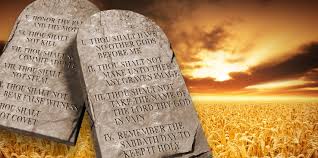
The fourth command of God’s Ten Commandments is needed today more than ever. It is high time that we come back to this basic instruction of the Lord and engraft its wise counsel into our lives. 

The point of God’s command for a Sabbath-rest is neither to squash commerce, nor to be a curmudgeon about fencing one day a week of doing nothing. Instead, the Sabbath command is designed to be a life-giving day where we discover that: There is more to life than work.

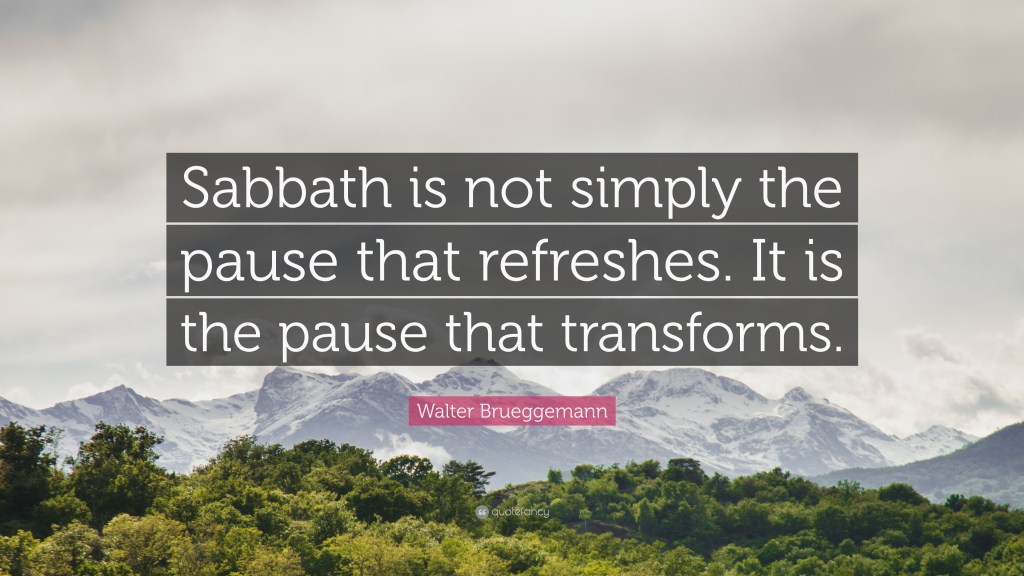
The word “Sabbath” literally means “to rest.” God built into creation a rhythm of rest and work. God rested, not because of being tired but so that there was enjoyment of the earth and everything in it. 

Everything in life is done in rhythm. We walk in rhythm, talk in rhythm, and our hearts beat in a rhythm. The earth cycles in rhythmic seasons of the year, and the animal kingdom mates and lives in annual rhythms. All creation is rhythmic.

Whenever we keep going and do not live according to the rhythm laid out for all of God’s creatures, we break. Therefore: Rest from work is needed.

Even machinery needs a break. I find it more than ironic that we treat our cars and vehicles with the regular maintenance and care that we don’t even extend to ourselves. We care for our cars because we don’t want to experience a breakdown on the highway. Yet, much more important is the care of our souls and our bodies. 

Without regular intervals of work and rest, in a consistent rhythmic pattern, we breakdown, burnout, and, like little children who have missed a nap, we have epic meltdowns of anger, frustration, and passive-aggressive behavior because we simply ignored God’s fourth command.

“Each person deserves a day away in which no problems are confronted, no solutions searched for. Each of us needs to withdraw from the cares which will not withdraw from us.”

Maya Angelou

Legalistic observances of the Sabbath miss the point through a continual, “Don’t do this, don’t do that, can’t do anything fun on Sunday,” as if God were some divine curmudgeon who frowns with a deeply furrowed brow at anything happy on the Sabbath. (Mark 2:23-3:6) 

To rest means to have a change of pace from the regular weekday activity of work. To rest and enjoy the difference of a Sabbath’s day is avoided by so many people because it brings this question to the forefront of our minds: Who am I if I’m not working?

Our identities can be so tied to our jobs that we compulsively check our multiple e-mail accounts on a day off; tie ourselves to our smart phones and iPhones on vacation; and allow work to bleed into our time away from the job. 

God has wisely placed loving boundaries around us. But like Adam and Eve, who were not content with enjoying the entire garden, we obsessively pluck the forbidden fruit from the one tree that is off limits.

Work brings money, influence, power, relationships, industry, and a host of good things. The problem is not work; the problem is that we humans can create an idol of it.

Whenever work and all that comes with it, consumes our attention, we are on a one-way road to nowhere. I have heard many deathbed confessions. I’ve yet to hear anyone wish they had worked more.

No, the confessions typically involve something out of rhythm and out of whack – that they let their jobs and their ambitions surrounding work call the shots in life, without stopping to enjoy the vast creation, the gifts of God, and the emotional wealth that can come from relationships.

“If we only stop when we are finished with all our work, we will never stop, because our work is never completely done… Sabbath… liberates us from the need to be finished.”

Wayne Muller

Because we aren’t sure who we are if we’re not working, we just keep working. If we feel bad, we work harder.  If things are tough at home, we just put more hours in at work. If we need more money, we pick up a part-time job. 

When work becomes the catch-all answer to our many problems, it has become our god and we will worship at the altar of money and activity… until we can learn to stop and rest. 

One day out of seven. Just one-seventh of your life is needed to allow a divine rhythm into your existence. 

The temptation, however, is to take a day off from work so that you can do other work at home. So, the challenge, for many people, is to allow the one day of the weekend to be the time you get stuff done, and another day to truly rest.

This is not easy. For me, it is terribly hard. I can easily slide into working seven days a week for weeks, even months, at a time. Few people bat an eye at my constant working, except my wife and a few friends. In fact, many people seem impressed when I work all the time. But what gets lost in all this is God’s grace to us through rest.

God wants enjoyment, not avoidance – for us to be still and know God. The Lord longs for us to connect with the Divine. This means we must plan and prepare for it. Maybe we need to put God on our calendars, to make an appointment with God like we would anyone else. That will often involve being out in God’s big creation.

Whenever we get down to practicing the Sabbath, we find that the world didn’t stop. Then, when we return to work, we discover that the earth is still spinning on its axis. 

Life doesn’t cease when we submit to a Sabbath rest; it’s just that we cease from participating in it for a short time. Our delusions of grandeur dissipate and disappear when we finally come around to consistently obeying a good old Sabbath rest.

Work is noble. But there is nothing noble about working without rest. 

We are still human beings when we aren’t making money, and still valuable when we don’t have jobs. Folks in healthcare facilities aren’t any less important because they no longer hold a job. Work doesn’t define us – God’s image within us does. 

It’s unlikely that we’ll ever see a George Jetson 3-hour workday, and that’s probably a good thing. Work’s inherent goodness can only be truly appreciated when we plan and prepare to live and enjoy a Sabbath’s day rest. 

Because I belong to you, God, and not to myself,
I will rest from worrying about the future
and rest in your never-ending divine presence;
I will rest from frustration at things not working out as I want them to;
I will rest from fear
and rest in my experience of courage when days are hard.
I will rest from complaining
and rest in the beauty and pleasure all around me.
For the Lord’s yoke is easy and his burden is light,
and I will find rest for my soul. Amen.


Leviticus 25:1-19 – Your Well-Being Is a Priority to God

And the Lord spoke to Moses on Mount Sinai, saying, “Speak to the children of Israel, and say to them: ‘When you come into the land which I give you, then the land shall keep a sabbath to the Lord. Six years you shall sow your field, and six years you shall prune your vineyard, and gather its fruit; but in the seventh year there shall be a sabbath of solemn rest for the land, a sabbath to the Lord. You shall neither sow your field nor prune your vineyard. What grows of its own accord of your harvest you shall not reap, nor gather the grapes of your untended vine, for it is a year of rest for the land. And the sabbath produce of the land shall be food for you: for you, your male and female servants, your hired man, and the stranger who dwells with you, for your livestock and the beasts that are in your land—all its produce shall be for food.

‘And you shall count seven sabbaths of years for yourself, seven times seven years; and the time of the seven sabbaths of years shall be to you forty-nine years. Then you shall cause the trumpet of the Jubilee to sound on the tenth day of the seventh month; on the Day of Atonement, you shall make the trumpet to sound throughout all your land. And you shall consecrate the fiftieth year and proclaim liberty throughout all the land to all its inhabitants. It shall be a Jubilee for you; and each of you shall return to his possession, and each of you shall return to his family. That fiftieth year shall be a Jubilee to you; in it you shall neither sow nor reap what grows of its own accord, nor gather the grapes of your untended vine. For it is the Jubilee; it shall be holy to you; you shall eat its produce from the field.

‘In this Year of Jubilee, each of you shall return to his possession. And if you sell anything to your neighbor or buy from your neighbor’s hand, you shall not oppress one another. According to the number of years after the Jubilee you shall buy from your neighbor, and according to the number of years of crops he shall sell to you. According to the multitude of years you shall increase its price, and according to the fewer number of years you shall diminish its price; for he sells to you according to the number of the years of the crops. Therefore, you shall not oppress one another, but you shall fear your God; for I am the Lord your God.

‘So, you shall observe My statutes, keep My judgments, and perform them; and you will dwell in the land in safety. Then the land will yield its fruit, and you will eat your fill, and dwell there in safety. (New King James Version)

Our continual well-being and rest are not optional; it is absolutely essential.

If a car is driven day-after-day and never gets an oil change, the engine will eventually seize and die. And if a person insists on driving their life every day with continual work, and never practices a Sabbath rest, that person will inevitably burn-out and die an early death. 

In this busy world, far too many persons are putting the pedal-to-the-metal with no thought to the consequences, and no plan for any kind of Sabbath rest. Many people throughout the modern world are slowly draining their souls, causing themselves physical harm, and are on the precipice of emotional and spiritual death.

Perhaps you raise a Mr. Spock eyebrow and wonder if I am being too dramatic. Yet, if we are to take today’s Old Testament lesson seriously, we will see that all of life is to be governed by a healthy rhythm of life which benefits both the individual and the community.

Yes, I fully understand that neither the contemporary person nor the Christian is currently living under ancient Israelite law. However, every single law in the Old Testament is grounded in the character of God. 

This means that, although we may not be obliged to hold the detailed specifics of the seven years system and a year of Jubilee, we are still beholden to observe a Sabbath rhythm of rest because God rested. And we ignore this built-in rhythm to our own peril.

Sometimes I watch the news, see all the upset people at one another and think, “Dude, you really need to sit down, relax, and have a sandwich. Just take a breath, man!” I sometimes wonder if God looks down from heaven at all the world’s conflicts and sees the people involved as a bunch of toddlers who simply need a snack and a nap.

Just as God loves, we are to love. As God is holy, so we are to be holy. And the same holds true for a Sabbath rest. Just as God rested from all the work of creating the world, so we, too, are to rest from our work. Laboring 24/7 will only give us regrets, not results.

If I haven’t been explicit enough, I will say it plainly: We are commanded by God to rest.

It is high time we begin building into our weekly planners, smartphone calendars, and long-range goals, a deliberate and purposeful inclusion of Sabbath rest. 

That means not just doing this biblical rest thing once-in-a-while, that is, if I can fit it in somewhere. A complete Sabbath rest entails making it a real actual event on a regular basis in our life, on our calendars. No excuses, no fudging of appointments, and no lame *sigh* about how busy we are. 

Set aside time today to build a Sabbath into your schedule for the rest of the year, and maybe beyond. I’m not saying this is at all easy; in fact, it is terribly hard for me to get this practice into my own life. 

Because I am a church pastor, hospital chaplain, husband, father, and grandfather, my times of scheduling meetings, events, and visits looks more like a Sudoku puzzle than a calendar. Engrafting some serious biblical rest into my life sometimes feels like hacking through a jungle, looking frenetically for some time.

But, without that rest, I am much less the person I need to be for all the people and responsibilities I care for. The people in my life deserve better than that. They don’t need my leftovers. And I suspect the people in your life want you to rest, too, because you matter to them.

Creator God, you formed the earth in six days and then rested on the seventh. Help me not to put Sabbath on some wish list of things to do someday but enable me to practice it with courage and without apology, through the name of Jesus, I live and pray. Amen.

Psalm 127 – How to View Our Work

Psalm 127:1 by Stushie Art

Unless the Lord builds the house,
    those who build it labor in vain.
Unless the Lord guards the city,
    the guard keeps watch in vain.
It is in vain that you rise up early
    and go late to rest,
eating the bread of anxious toil;
    for he gives sleep to his beloved.

Sons are indeed a heritage from the Lord,
    the fruit of the womb a reward.
Like arrows in the hand of a warrior
    are the sons of one’s youth.
Happy is the man who has
    his quiver full of them.
He shall not be put to shame
    when he speaks with his enemies in the gate. (New Revised Standard Version)

When my wife was growing up, her family had a prominent portrait of John Wayne in the living room above the television. That picture spoke volumes about the family ethos. They had horses and loved to ride and enjoy the outdoors. Hard work was a daily reality of life, as well as a rugged individualism that often suppressed all else in order to engage in work. 

Doing your best, striving for excellence, and learning responsibility are good things that mature people do every day. Yet, there is a fine line between hard work that provides and enriches, and lonely work that is frenetic and fueled by anxiety about the future.

Today’s psalm gives us a wake-up call. All our work is useless, in vain, unless it is connected to the G-d who gives strength and sweet sleep.

The motives that lie behind why we burn the candle at both ends are just as important to the Lord as the work itself. 

If we independently believe that our life is in our own hands, and we work with worry animating our every job, then we have lost touch with the understanding that it is G-d who ultimately provides us with every good thing in life. 

However, if we begin to relax and let go of our stubborn independent streak, then we work hard with the strength G-d gives and let the Lord watch over us.

Trusting G-d in our work is connected to children being a heritage from the Lord. Children worked with their parents in the ancient world. Fathers and mothers did not go it alone – it was a family affair, as well a community endeavor. 

Whenever we slip into a groove of worshiping individualism rather than simply taking personal responsibility, then we must come back to the inter-dependence that we were designed for as people. 

The ethos the psalmist is looking for is trust in God, reliance on others, and working together for the common good of all. 

Here are a few ways of working together and not carrying the load of work on our own:

Ask for what you want and need to accomplish the task. Whenever we don’t ask, we inevitably go the route of hustling for help through manipulation, guilt, and shaming others.

If someone says, “no,” simply ask another person or persons. Asking once just won’t do. And neither is commanding others to get things done. We have the ability to ask calmly, confidently, and compassionately. Accept the “no” which you might get without retreating back to manipulation. This is especially necessary when it comes to asking family members.

Ask God to help you in your work. Each day as I enter the hospital for which I am a Chaplain, I say a prayer, “God almighty, blessed Father, Son, and Spirit, please go before me, with me, and after me to each patient, their family members, and every team member I encounter today, with the love and compassion of Jesus Christ.”

Delegate, if possible. This is not the same thing as barking orders. It is a realization that we are finite creatures with limitations of time, energy, and resources. It’s okay to share the load with others. In fact, most people are more than willing to help, if you and I will just ask. It enables them to feel needed and important.

Be vulnerable and gracious. We all mess up our work, at times. And it’s important that we are own our mistakes without heaping unnecessary criticism on ourselves, or others. Offering an apology, recognizing that you’ve bit off more than you can chew, and admitting your lack of energy are healthy, not sinful. Also, whenever others fall short of their responsibilities, it’s our job to handle it with grace – seeking to understand and help rather than criticize and judge.

Working together, consulting, collaborating, and engaging in fellowship enable us to speak with those who may oppose, misunderstand, or misinterpret us. It’s also a more joyful way to live.

Sovereign God, you created all things and in you everything holds together. Preserve me with your mighty power that I may not fall into disconnection with you and others, nor be overcome by anxiety. In all I do direct me to the fulfilling of your purposes, through Jesus Christ my Lord. Amen.

Hebrews 4:1-11 – Enter God’s Rest

Therefore, since the promise of entering his rest still stands, let us be careful that none of you be found to have fallen short of it. For we also have had the good news proclaimed to us, just as they did; but the message they heard was of no value to them, because they did not share the faith of those who obeyed. Now we who have believed enter that rest, just as God has said,

“So I declared on oath in my anger,
   ‘They shall never enter my rest.’”

And yet his works have been finished since the creation of the world. For somewhere he has spoken about the seventh day in these words: “On the seventh day God rested from all his works.” And again, in the passage above he says, “They shall never enter my rest.”

Therefore, since it still remains for some to enter that rest, and since those who formerly had the good news proclaimed to them did not go in because of their disobedience, God again set a certain day, calling it “Today.” This he did when a long time later he spoke through David, as in the passage already quoted:

“Today, if you hear his voice,
    do not harden your hearts.”

For if Joshua had given them rest, God would not have spoken later about another day. There remains, then, a Sabbath-rest for the people of God; for anyone who enters God’s rest also rests from their works, just as God did from his. Let us, therefore, make every effort to enter that rest, so that no one will perish by following their example of disobedience. (New International Version)

“I’ll rest when I die” was a phrase one of my congregants used to say whenever he was encouraged to stop moving for a while and rest. He is now gone, having died at a relatively young age. It is common in American culture to define rest as almost optional. Many people feel guilt when they sit still, living with the belief that unless they are constantly busy and doing something that they are lazy or selfish.

The kind of rest the author of Hebrews was talking about was not just a future time of finally sitting in some kind of celestial recliner after a life of constant work. Rest is available now; and it’s encouraged.

Today we have the opportunity to enter into God’s rest for us. The ones who had the good news preached to them before didn’t enter rest because of disobedience. It is not just contemporary people who have a problem with Sabbath; rest itself has had a rather unrestful history.

It seems to me we need to ask ourselves why we have this tendency to interpret “rest” as only occurring after a lot of hard work has happened. 

If Sabbath rest has relevance to us now, perhaps our cultural model of work-is-greater-than-rest is really to be reversed as rest-is-greater-than-work. Consider this: God created humans on the sixth day. God rested on the seventh day. So did Adam and Eve. That means the first people rested before they even had a chance to begin working the garden God created.

Maybe instead of inventing new ways to overfill our schedules and erase any margin from our day to day existence, we ought to create ways of ruthlessly eliminating hurry from our lives. 

It could be that our world’s many ills and woes come more from our inability to rest than anything else. God not only calls us to an active Christian life; God calls us to rest, too.

In our daily work-a-day world we poke, prod, push, cajole, and finagle to move forward and get our way on all kinds of things. To separate ourselves from our typical routine is akin to an addict’s withdrawal. Some folks are tired, cranky, and negative all the time. Methinks it is because we find all kinds of reasons to not rest, and even when we do we’re still trying to impose our will on God.

What Christians need most is simply Jesus – to know Christ, be with him, and experience the depths of our wondrous and gracious union with the Lord. And that cannot happen, at least not fully, unless we practice rest.  To rest means to relinquish all our plans and agendas to God for a time and just come into the divine presence and enjoy one another.

Our compulsions for performance and perfection are the real culprits to rest. We want to do everything right.  We long to pray right, talk right, be right and live right instead of coming to Jesus like a little child who needs him. 

Perhaps we are so profoundly discontent with so many things because we are not really content in Christ. Maybe the best or right prayer to pray is that we all be content together no matter the circumstances. Only then might we find our burdens are light.

Jesus modeled the life of rest for us. If there was anyone who did not need to pull away and rest, it was Jesus, and yet, he continually did so. So, if Jesus created a sacred space to commune and enjoy the Father, then how much more do we need a Sabbath rest and a place to do it? 

Jesus rested to connect with his heavenly Father. There was no multi-tasking or juggling other responsibilities. There was simply the radical pursuit of intimate rest.

If we do not rest and intentionally practice times of Sabbath, then we are expressing our confidence that money, hard work, and individual talent are really all we need, rather than God.

Rest is only secondarily about refueling our depleted resources; it is primarily about connecting intimately with Jesus and a good gracious Father. Just as we need a special room and a certain bed for sleep, so we need a particular place and a certain time set aside to pray and enjoy God.

Real spiritual and biblical rest only “works” when we realize we don’t have it all together – that we are helpless and need Jesus. Apart from Jesus, the blind man cannot see, Lazarus remains dead, and I am lost in my sin. I cannot “do” life without Christ in me and with me.

As long as we try and manufacture results instead of relying on the Lord for refreshment and renewal, rest will be elusive. Enjoy Jesus today, my friend, and leave the results to God.

God of the Sabbath rest, just as you rested on the seventh day, help me to alter my life in such a way as to engraft new avenues of rest into my busy schedule. In doing so, may I connect with you more deeply and find greater health and fulfillment in myself and my relationships. To the glory of Jesus Christ, I pray. Amen.