Some Wise Warnings (Proverbs 6:6-23)

Go to the ant, you sluggard!
    Consider her ways and be wise.
Which, having no guide,
    overseer, or ruler,
provides her bread in the summer,
    and gathers her food in the harvest.

How long will you sleep, O sluggard?
    When will you arise out of your sleep?
Yet a little sleep, a little slumber,
    a little folding of the hands to sleep—
so will your poverty come upon you like a stalker,
    and your need as an armed man.

A wayward person, a wicked man,
    walks with a perverse mouth.
    He winks with his eyes,
    he signals with his feet,
    he motions with his fingers;
    perversity is in his heart,
    he devises mischief continually, he sows discord.
Therefore his calamity will come suddenly;
    in a moment he will be broken without remedy.

These six things the Lord hates,
    yes, seven are an abomination to him:
        a proud look,
        a lying tongue,
        and hands that shed innocent blood,
        a heart that devises wicked imaginations,
        feet that are swift in running to mischief,
        a false witness who speaks lies,
        and he who sows discord among brethren.

My son, keep your father’s commandment,
    and do not forsake the instruction of your mother.
Bind them continually upon your heart,
    and tie them around your neck.
When you go, they will lead you;
    when you sleep, they will keep you;
    and when you awake, they will speak with you.
For the commandment is a lamp, and the law is light;
    and reproofs of instruction are the way of life. (Modern English Version)

A proverb is a short, pithy statement of experiential truth. In life, all things being equal, there are some predictable consequences to each decision and action we take.

To make idle, wicked, or adulterous decisions will result in disastrous outcomes – and the proverbial writer wants to help us steer clear of calamity. So, we have some sound and sage instruction which is meant for us to realize contentment and fulfillment in life and avoid the pitfalls of laziness, evil, and infidelity.

The Sluggard

We may typically think of the sluggard as a lazy person who just doesn’t want to work. That’s true, yet it runs even deeper and broader than that. A sluggard is someone always looking for the easy way out. Instead of persevering and being diligent in accomplishing large projects and demanding responsibilities, the sluggard tries to use their ingenuity to get the job done quickly.

The student who wants to take shortcuts, and doesn’t do the busywork of citing sources, or doing their due diligence in research, is a sluggard. The worker who cuts corners in order to move to another job they’d rather do, is a sluggard. The spouse who hastily buys some cheap flowers for their loved one from a street vendor, without even getting out of the car, is a sluggard. The minister who cuts and pastes some information from Google the night before teaching a lesson, is a sluggard.

And the results will likely be quite predictable: an “F” on the term paper; a punitive citation from the building inspector; the disappointment and anger from a wife; and the rebuke from a church. There’s no one to blame. All these sluggards will be out of a job and poverty will cozy up to them sooner than later.

What to do? Get some humility. Bend down and look at the busy ants. They work steadily, consistently, and carefully – and never lack.

The Wicked

The truly evil person enjoys creating chaos and upsetting folks through running their mouth off like a canon.

They get a kick out of poking the bear, sticking a hornets’ nest, and stirring the pot. And their chief means of doing it is their tongue. Damaging words are thrown about. Gaslighting, arguing, backbiting, slandering, and lying are the tools of their trade.

The wicked person might get what they want, in the short term; but in the long term, their end is sure. Brokenness and calamity will eventually catch up to them. They, like the sluggard, will have no one to blame for the consequences which overtake them; the ire of God will consume them.

What to do? Repent! Do a complete 180-degree turn from hubris to humility, lying to honesty, violent speech to encouraging words, disunity to harmony, separating to connecting, and from selfish behavior to working for the common good.

The Adulterer

The adulterer is one who is unfaithful. They make commitments and renege on them. The classic adulterer is one who cheats on their spouse and breaks their vow of marriage. Yet, there are various sorts of adultery that happen in this old fallen world.

The spiritual adulterer says they are committed to God, yet keep up a moonlighting affair with the world. The mental adulterer might never sleep with another, yet is committing deviant acts in their mind with others. The emotional adulterer gives a smooth line, yet is only trying to manipulate another into something the other person doesn’t want to do.

What to do? Come back to what you learned in childhood. Most parents, even if they fail to live up to their own instruction for their children, want what’s best for their kids. To nearly every adulterer, we can say, “I know your mama taught you better than that!”

Conclusion

An idle life, an evil tongue, and adulterous behavior will ultimately result in disaster, if left unchecked. The compiler of Proverbs is checking-in with us, making sure that we keep in sync with the good and beautiful way to live; and letting us know that the alternative to right living is some very calamitous consequences.

So, what will you choose?

Blessed and almighty God, take me to the place where I am saved from my pride and arrogance; where Christ’s humility becomes center-stage in my life; and where I’m lifting up clean hands and a pure heart in prayer. God and Parent of all, I bend my knee to receive truth; and I open my ears to receive counsel, and my heart to receive wisdom. Amen.

Don’t Be Stupid (2 Timothy 2:14-26)

Keep reminding God’s people of these things. Warn them before God against quarreling about words; it is of no value, and only ruins those who listen. Do your best to present yourself to God as one approved, a worker who does not need to be ashamed and who correctly handles the word of truth. 

Avoid godless chatter because those who indulge in it will become more and more ungodly. Their teaching will spread like gangrene. Among them are Hymenaeus and Philetus, who have departed from the truth. They say that the resurrection has already taken place, and they destroy the faith of some. Nevertheless, God’s solid foundation stands firm, sealed with this inscription: “The Lord knows those who are his,” and, “Everyone who confesses the name of the Lord must turn away from wickedness.”

In a large house there are articles not only of gold and silver, but also of wood and clay; some are for special purposes and some for common use. Those who cleanse themselves from the latter will be instruments for special purposes, made holy, useful to the Master and prepared to do any good work.

Flee the evil desires of youth and pursue righteousness, faith, love and peace, along with those who call on the Lord out of a pure heart. Don’t have anything to do with foolish and stupid arguments because you know they produce quarrels. And the Lord’s servant must not be quarrelsome but must be kind to everyone, able to teach, not resentful. 

Opponents must be gently instructed, in the hope that God will grant them repentance leading them to a knowledge of the truth, and that they will come to their senses and escape from the trap of the devil, who has taken them captive to do his will. (New International Version)

Stupidity doesn’t have to do with intellect; it is a matter of character. A fool is stupid. A wise person is smart. One can be a “genius” yet still be as dumb as a bowling ball. And someone who never gets a “A” in school just might be the most knowledgeable person in the room.

Whoever loves discipline loves knowledge, but whoever hates correction is stupid.

Proverbs 12:1, NIV

The Apostle Paul understood this – which is why he put the focus on cultivating and communicating character instead of sheer intelligence. Anytime we purposefully neglect and forget this, we land into Paul’s “stupid” category of people.

Much of church ministry needs to be a memory care unit experience. That’s because too much spiritual dementia happens. There must be continual reminders about the importance of Christian character. It seems believers in Jesus too easily forget their identity and what they are supposed to be doing. This is most certainly not a new issue; it is one that has been endemic throughout the ages. It’s a problem as old as sin itself.

In the Gospels, Jesus miraculously fed a great crowd of people not once, but twice. The second time he called his disciples to remember what had happened the first time in order to understand the second. 

In the Epistles, Paul kept on reminding the Jewish believers to remember the ancient covenant; and he called the Gentile believers to keep in mind that they were once estranged from that very same covenant. Both Jews and Gentiles together needed to collectively remember the death of Christ that unites them into a new covenant community. And much like them, we are to remember Jesus Christ, raised from the dead, descended from David. (2 Timothy 2:8)

Whenever we forget who we are, whose we are, and what it is we are really all about, we get downright stupid. We get lost majoring on the minors and wagging our tongues like a bunch of foolish simpletons.

It’s stupid to say bad things
    about your neighbors.
If you are sensible,
    you will keep quiet.
A gossip tells everything,
but a true friend
    will keep a secret. (Proverbs 11:12-13, CEV)

Christians are blood-bought people of God, belonging to Jesus Christ, and given a mission to make disciples and participate with God in the redemption of all creation through remembering the poor, seeking justice, and being peacemakers in the church and the world. 

And what’s more, we are not to put up with letting others stand around and endlessly argue about lesser things, making every doctrine and dogma a battleground – as if the fine China and paper plates were exactly the same.

“Remember the height from which you have fallen!  Repent and do the things you did at first.” (Revelation 2:5, NIV)

There is a difference between the brains of dementia patients and Christian folk – the mind overtaken by dementia will only worsen, yet the church can recover its collective memory by listening again to the ancient Word of God; any and every congregation can be constantly refreshed with the promises and covenant of God. 

We must neither rely on mere pragmatism nor doing things the way we always have done them without any understanding of why we do it. 

Yet, we must understand that even when we point out what to remember and why we are to remember it to others, they aren’t always going to respond like we want them to – which is why instruction needs to be gentle so that another does not stumble on the messenger instead of the message.

A person of great understanding is patient, but a short temper is the height of stupidity. (Proverbs 14:29, GW)

It takes no effort to be stupid; but it takes a great deal of will and energy to keep learning and growing in the Christian life. Too many persons have unwittingly fallen into the trap of the devil, believing themselves to be godly because of their defense of the faith. Sadly, they’ve been defending their own interpretation of faith instead of the actual faith itself.

Please, don’t do that. Don’t be stupid. Better to focus on having a pure heart of your own rather than always pointing out the impurities of others.

Almighty God, to you all hearts are open, all desires known, and from you no secrets are hid. Cleanse the thoughts of our hearts by the inspiration of your Holy Spirit, that we may perfectly love you, and worthily magnify your holy Name, through Jesus Christ our Lord. Amen.

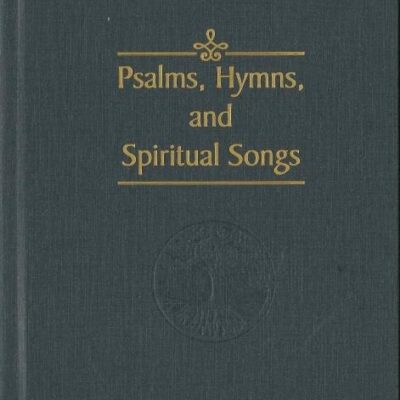
Ephesians 5:15-20 – Speak to One Another with Psalms, Hymns, and Spiritual Songs

Be very careful, then, how you live—not as unwise but as wise, making the most of every opportunity, because the days are evil. Therefore, do not be foolish, but understand what the Lord’s will is. Do not get drunk on wine, which leads to debauchery. Instead, be filled with the Spirit, speaking to one another with psalms, hymns, and songs from the Spirit. Sing and make music from your heart to the Lord, always giving thanks to God the Father for everything, in the name of our Lord Jesus Christ. (New International Version)

As you likely well know, an inebriated person tends to say and do things that they do not typically say or do when they’re sober. The Apostle Paul’s point about being filled with the Spirit is that, instead of doing and saying stupid things, we are so filled with God that we do things and say things that we would not typically do and say if we were not filled with God – that is, good things. 

Apart from being full of God’s Spirit, we tend toward mumbling, not singing; worry, not making music in our hearts; and complaining and arguing, not giving thanks. Half-filled Christians practice a half-hearted Christianity. They’re only half-baked in their service and devotion to Christ.

Why sing? 

Because singing is part of being filled with the Spirit of God. Singing happens when we experience God’s overflowing grace in our lives through the blessings of being chosen, adopted, and redeemed into God’s new community. (Ephesians 1:3-11)

Music is powerful. It’s not only a means of expressing praise and commitment to Christ and each other, it is also a powerful means of being impressed. For example, when we first teach kids the alphabet, we teach it in a song. Trying to teach letters in a rote fashion typically doesn’t work well for pre-school kids. Words set to music is why we still remember words from old TV shows, because those words were set to a catchy tune.  Music is why an Alzheimer’s patient cannot remember her daughter’s name but can flawlessly sing all four verses of Amazing Grace.

Singing is an offering and a sacrifice of praise to God (Hebrews 13:15). And singing is also a vehicle whereby we are taught, encouraged, and built up in the community of believers. We sing to God, one another, and even ourselves.

Church music, then, is to be both a means of praising God and a practice of encouraging each other. We do it through psalms, hymns, and spiritual songs.

Psalms

The word “psalm” helps us rightly think of the biblical book of Psalms. Singing the psalms is an ancient practice, going all the way back to the Israelites singing psalms in the temple and synagogue. The early church maintained this practice, especially as a means of being faithful to praying without ceasing. 

However, over time, medieval congregations began neglecting the practice. In fact, the congregations eventually gave up most singing altogether. Almost all the singing was done by church choirs and professional musicians employed by the state (no separation of church and state) to write, compose, and perform in worship services. 

Five-hundred years ago, with the Reformation, Martin Luther reinstituted congregational singing. He gave music back to the people. One of the results of this change was putting the book of psalms to song – the Psalter.  For many Protestant denominations, the Psalter became the primary means of singing. The Psalter chiefly set prayers to song. It was both a means of expressing prayer to God and learning Scripture.


Hymns

There have always been hymns in the church. Yet, it was not until the Reformation that hymns began to be written and sung by congregations. For the Reformers, hymns were used to teach sound doctrine and theology, as well as a means of confessing the faith together

Spiritual Songs

Spiritual songs are the present day equivalent of praise and worship choruses, or what some refer to as contemporary songs. These are songs purposefully designed to be emotional expressions of praise to God and to give powerful testimony for what God has done or is doing.

So, what?

Quick review:

  • Psalms are used to pray and learn Scripture.
  • Hymns are used to teach us sound doctrine and confess the faith together.  
  • Spiritual songs are an important way of expressing praise to God and being encouraged in the faith. 

Therefore, church music is to serve as both a revelation from God, and as a response from God’s people.

There are two important deductions from this verse:

  1. A variety of songs is inferred and expected.
  2. Paul commanded their use.

The reason worship style is such a hot topic in a lot of churches is because we all have our personal preferences.  And yet, if we are to be faithful to today’s New Testament lesson, we will not just lock in on what I want. 

Truth be told, we are selfish people when it comes to music. We want what we want, and we don’t care what somebody else wants. And we will persist in that self-absorbed spirit until somebody calls us on it. That somebody is the Apostle Paul. The Word of God calls us to encompass psalms, hymns, and spiritual songs – all three of them – in our worship.

I have a good friend who is an accomplished church musician and worship pastor. I once asked him how I can lead a worship service among such a variety of preferences concerning music. He answered my question with a question: “How highly do people, including and especially your musicians, value the unity of the church?  Do they love each other so much that they can allow for a wider range of style, and do so without vocally complaining about it?”

My friend went on to say, “When I arrived at one church as their pastor, some people were in a rather bad habit of saying very openly, ‘Oh I hate that song,’ or, ‘If I hear this song one more time I’m walking out.’ What I tried to do was teach people that this is not the most loving or mature approach and does little to build up the rest of the Body of Christ.”

If a group of people are being faithful to Scripture, and doing their best musically, then – if the music seems lifeless, dull, or strange to us – the real issue isn’t style but our hearts.       

Is that heart filled with the Spirit of God? If it is, then we will speak to one another using the Psalter, using time-honored hymns, and utilizing fresh contemporary praise songs. And the result will be the Body of Christ, the Church, built up in the faith.

Gracious God, give us grace to take to heart the great dangers we are in by our unhappy divisions about music.  Take away all hatred and prejudice, and whatever else may hinder us from godly union and concord; that, as there is but one body and one Spirit, one hope of our calling, one Lord, one faith, one baptism, one God and Father of us all, so we may from this time forward be all of one heart and of one soul, united in one holy bond of peace, and may with one mind and one mouth glorify you, through Jesus Christ our Lord. Amen.

2 Chronicles 1:7-13 – Ask for Wisdom

“Dream of Solomon” by Luca Giordano, 1693

God appeared to Solomon that night in a dream and said, “Solomon, ask for anything you want, and I will give it to you.”

Solomon answered:

Lord God, you were always loyal to my father David, and now you have made me king of Israel. I am supposed to rule these people, but there are as many of them as there are specks of dust on the ground. So, keep the promise you made to my father and make me wise. Give me the knowledge I’ll need to be the king of this great nation of yours.

God replied:

Solomon, you could have asked me to make you rich or famous or to let you live a long time. Or you could have asked for your enemies to be destroyed. Instead, you asked for wisdom and knowledge to rule my people. So, I will make you wise and intelligent. But I will also make you richer and more famous than any king before or after you.

Solomon then left Gibeon and returned to Jerusalem, the capital city of Israel. (Contemporary English Version)

Maybe it’s just me but I don’t often hear the word “wisdom” used in normal conversation.

I certainly don’t hear wisdom mentioned in talking about politicians, corporate executives, or even church leaders. “Oh, the Congressman is so wise!” “Isn’t that CEO a wonderfully sage person?” “My Pastor is full of wisdom!” You might even be laughing at this point because those kinds of statements just aren’t part of our daily interactions with others. 

We are more likely to say that somebody is full of something else other than wisdom. Yet, all the aforementioned statements could be said about King Solomon. The guy was wise, in fact, the wisest person that ever lived.

“Wise men talk because they have something to say; Fools , because they have to say something.”

Plato (424-348 B.C.E.)

Wisdom is the ability to put truth into practice. It is to see everything and everyone from God’s perspective. Wisdom is to have a solid base of knowledge, along with the skill set to use it for godly and constructive purposes. 

Solomon had a load of it. The really important thing to note from today’s Old Testament lesson is how Solomon obtained such wisdom. It came from God. Solomon asked for it, and he got it.

Anyone who needs wisdom should ask God, whose very nature is to give to everyone without a second thought, without keeping score. Wisdom will certainly be given to those who ask. (James 1:5, CEB)

Maybe the reason why so many people today are not characterized as wise is because they rely on their own ingenuity and hard work. Asking for wisdom may not even on their mind. Their radical independence prevents them from obtaining the wisdom needed.

In a world of dire straits, where significant problems often overshadow effective solutions, wisdom is needed more than ever. So, like Solomon of old, ask for wisdom and knowledge from God. 

We all are in some position of governing or overseeing others, whether it is being a parent, a faith community leader, or in charge of something at work. Everyone needs wisdom. 

Just ask. Be free to seek. Go ahead and knock on the door. Jesus said:

“Keep on asking, and you will receive what you ask for. Keep on seeking, and you will find. Keep on knocking, and the door will be opened to you. For everyone who asks, receives. Everyone who seeks, finds. And to everyone who knocks, the door will be opened.” (Matthew 7:7-8, NLT)

For all people everywhere, and in every circumstance, ask God for the ability to know the truth and put it into practice. Wisdom isn’t optional; it’s absolutely necessary to living a good life.

Get wisdom, get understanding;
    do not forget my words or turn away from them.
Do not forsake wisdom, and she will protect you;
    love her, and she will watch over you.
The beginning of wisdom is this: Get wisdom.
    Though it cost all you have, get understanding. (Proverbs 4:5-7, NIV)

Wise God, you know all things and how everything works. Give me wisdom and knowledge so that your purposes and plans might be accomplished in and through me for every situation to the glory of Jesus Christ in the power of your Holy Spirit. Amen.