The Seven Deadly Sins (Proverbs 12:10-21)

A 14th century personification of the Seven Deadly Sins, by Unknown artist

The righteous care for the needs of their animals,
    but the kindest acts of the wicked are cruel.

Those who work their land will have abundant food,
    but those who chase fantasies have no sense.

The wicked desire the stronghold of evildoers,
    but the root of the righteous endures.

Evildoers are trapped by their sinful talk,
    and so the innocent escape trouble.

From the fruit of their lips people are filled with good things,
    and the work of their hands brings them reward.

The way of fools seems right to them,
    but the wise listen to advice.

Fools show their annoyance at once,
    but the prudent overlook an insult.

An honest witness tells the truth,
    but a false witness tells lies.

The words of the reckless pierce like swords,
    but the tongue of the wise brings healing.

Truthful lips endure forever,
    but a lying tongue lasts only a moment.

Deceit is in the hearts of those who plot evil,
    but those who promote peace have joy.

No harm overtakes the righteous,
    but the wicked have their fill of trouble. (New International Version)

Many of the biblical proverbs are set as contrasts between the way of righteousness and the way of wickedness.

Being aware of both vice and virtue in our personal lives, the workplace, neighborhood, family, and faith communities can create an environment of trust, love, fellowship, and enjoyment. Intentionally pursuing the good, while identifying and forsaking the bad, contributes to a thriving community who intentionally cultivates righteousness.

It’s likely that you have heard of “the seven deadly sins.” In medieval Christianity, these were vices to avoid at all costs, because they eroded personal integrity and poisoned the social community. A “vice” is a bad habit which corrupts character and debases society.

The early church eventually formed a short list of the most corrosive vices, the seven deadly sins, which were considered the most heinous desires/actions of all. We find them in our proverbs for today.

The wicked covet the proceeds of wickedness. Desiring evil is a trap for them. They chase after sinister fantasies.

Lust is an intense desire, coupled with a lack of mental self-control, which is manifested in pursuing that desire in the heart. It is to have a passion for someone (or something) that is neither yours, nor meant for you. Lust leers at and indulges in selfish daydreams, without any concern for another person.

Do not desire to possess anything that belongs to another person—not a house, a wife, a husband, a slave, an ox, a donkey, or anything else. (Exodus 20:17, CEV)

The wicked have their fill of trouble. They’ve gobbled up evil as if dining at an all-you-can-eat buffet.

Whereas lust and covetousness is mostly a lack of mental self-control, gluttony is the lack of bodily self-control.

So, whether you eat or drink or whatever you do, you should do it all for God’s glory. (1 Corinthians 10:31, CEB)

Gluttony doesn’t stop eating, buying, talking, drinking, or binging. It only excessively indulges to the point of physical and/or relational sickness. Addictions and workaholism are some modern-day forms of gluttony – it consumes to the point where it cannot control the consumption any more. The thing desired and indulged becomes the master.

Observe the Sabbath and keep it holy. You have six days in which to do your work, but the seventh day is a day of rest dedicated to me. On that day no one is to work—neither you, your children, your slaves, your animals, nor the foreigners who live in your country. (Exodus 20:8-10, GNT)

The tools of greed are deceit and lies; the greedy person goes to just about any lengths to obtain more wealth. They will misrepresent another and spread gossip and slander to get what they want.

Do not tell lies about others.

The Ninth Commandment (Exodus 20:16, CEV)

Money. More money – is the mantra of the greedy person. It is to have an inordinate desire and pursuit of wealth. Just as sex and food are good, but have their proper boundaries, so money is both good and necessary. 

But money is powerful in more ways than one. It can take over a person’s life in such a way that charging exorbitant interest, rent, or price gouging is justified by satisfying the greed. The greedy person lives every waking moment for leveraging wealth to get more wealth.

People who want to be rich fall into all sorts of temptations and traps. They are caught by foolish and harmful desires that drag them down and destroy them. The love of money causes all kinds of trouble. Some people want money so much that they have given up their faith and caused themselves a lot of pain. (1 Timothy 6:9-10, CEV)

The sloth much prefers get-rich-quick schemes to actual hard work. They spend their time in worthless projects, and are easily annoyed at others.

Sloth is more than laziness. It is also failing to do good when it is in your power and ability to do so. To be slothful is to be indifferent to the great need of the world. 

Whereas the previous sins have a more active pursuit of some desire, the sloth is passive, not wanting to get involved in making a difference. The slothful person always has an excuse why they can’t participate; they expect everyone else to do the work. 

Do your work willingly, as though you were serving the Lord himself, and not just your earthly master.

Colossians 3:23, CEV

The irony is that for all of Ebenezer Scrooge’s hard work and thrift, he was really a sloth who had no intention of improving the condition of humanity; he depended on poor houses and work farms to do all the work. It took supernatural means to get him to think differently. It typically takes a lot for the sloth to go out of their way to honor, respect, and bless another.

You must honor and respect your father and your mother. Do this so that you will have a full life in the land that the Lord your God gives you. (Exodus 20:12, ERV)

A wicked person is often an angry person – so full of anger that they abuse their pets and animals who have done nothing against them. And they let their tongues wag and fly off the handle anytime they are perturbed.

Stop being angry!  Turn from your rage!  Do not lose your temper— it only leads to harm. (Psalm 37:8, NLT)

That doesn’t mean that anger itself is a bad thing. As with most things in life, anger has its proper place. For example, we ought to be angry in the face of evil perpetrators. Anger motivates us to not be slothful, but helpful. 

But excessive selfish anger is a vice. Whereas righteous anger seeks to help a victimized person or group, sinful anger is fueled by hatred. Whether it’s a violent verbal decapitation of another, or a deep seated bitterness, such anger destroys relationships – and even life itself.

No murder.

The Sixth Commandment (Exodus 20:13, MSG)

Envy and lust are kissing cousins. They both traffic in excessive desire for what they don’t possess. 

Envy rots the bones.

Proverbs 14:30, NIV

The subtle difference has more to do with the object of the affection. Lust leers at, longs for, a person who belongs to someone else. Envy fixes its gaze on a material possession or a respected position which someone else has. It is to have a passionate pursuit of taking over someone else’s job or keeping up with Jones’s.

For where there is envy and selfish ambition, there will also be disorder and wickedness of every kind. (James 3:16, NRSV)

The wicked and the proud share a table together for lunch every day. They don’t listen to anybody else, because they believe they already have the answers and know what is best.

Pride is an over-inflated view of one’s opinions, thoughts, and self. Proud persons have an overestimation of themselves. They seem to actually believe that if only others followed their thinking and advice, the world would be a better place.  

Every antagonist in the movies, comics, and classic literature are full of themselves. They justify stepping on others to achieve what they think is the greater good of imposing their agenda in the situation. It’s no wonder that in the Bible, Satan is the ultimate antagonist.

The proud must eventually contend with God. And the Lord has no allowance for the foolishness and idolatry of any human believing they know better.

“No other gods, only me.”

First Commandment (Exodus 20:3, MSG)

Consider the following questions:

How will you respond to the seven deadly sins?

In what ways and/or behaviors do you see these vices being manifested in both the church and the world?

What can the book of Proverbs bring to such a discussion?

Peace Be Upon Us (Psalm 125)

Those who trust in the Lord are like Mount Zion,
    which cannot be moved but abides forever.
As the mountains surround Jerusalem,
    so the Lord surrounds his people
    from this time on and forevermore.
For the scepter of wickedness shall not rest
    on the land allotted to the righteous,
so that the righteous might not stretch out
    their hands to do wrong.
Do good, O Lord, to those who are good
    and to those who are upright in their hearts.
But those who turn aside to their own crooked ways,
    the Lord will lead away with evildoers.
    Peace be upon Israel! (New Revised Standard Version)

I am profoundly grateful that God is a rock solid mountain who is strong. The Lord is never altered in the basic divine character of merciful grace, steadfast love, and abiding security. The main reason I so deeply appreciate this about God is that this old fallen world is awfully fickle, terribly unreliable, and forever changing.

So, to trust in God is to tether oneself to the ultimate anchor for life. Relationships come and go. People have their own agendas and listen to other people who, in turn, have their own agendas. But God’s plan is purely good, always right, and consistently just. The divine agenda has our best interests at mind.

Being linked to the Lord in faith establishes divine protection, provision, and presence. It’s as if the righteous believer has an invisible security blanket wrapped around them at all times. We are kept in the gracious arms of a loving God.

None of this, however, means that we shall never face grueling circumstances that might even feel like a hellish existence. If the Christian’s Lord Jesus had to undergo suffering before experiencing glory, then how much more do his followers need to expect the same?

Having injustice and wrongdoing in this world is one thing; but having it come from those close to you is quite another thing altogether. Again, the Lord Jesus endured wicked betrayal from Judas Iscariot, one who was within the inner circle of disciples. Yet, the heavenly Father was continually there, surrounding Jesus like the mountain chain, even though it may not have felt like it at many points, especially in the final week of Christ’s life on this earth.

God is good, all the time. Therefore, God knows who is truly good, and who is not. The Lord sees the heart, and clearly discerns the intents and motivations of each person and every group of people on this planet. And since God understands the real nature of a person’s life, the Lord is not fooled by pious sounding and slick talking persons with darkness in their hearts.

The wicked will not endure. God shall eventually lead them away. Like a shepherd separating the sheep from the goats, the Divine Judge will divide the righteous from the wicked. Those who think they can have a secret agenda of crookedness will find out that it’s not so secret after all.

This world, with all it’s inhabitants and systems and societies, needs peace. Sometimes, it seems to me that everyone right now in our contemporary world is upset about something; and they have the rudeness to back it up.

Nations fight nations. People groups attack other people groups. One ethnicity accuses another, and vice versa. Family members are estranged. Lawsuits abound. The judicial courts are beyond full. Unethical practices masquerade within ethical systems and thrive in the shadows. And persons are harmed – lots of them. Lives are destroyed.

I once came home from a day of interacting with patients at the hospital and said to my wife, “You could never dream up the atrocities that one person can do to another.” The short of it is that there is no harmony, no mutual understanding, and thus, no peace, no fulfillment or wholesome way of life for so many.

In the New Testament, the Apostle Paul once cried out concerning the muck of sin, “Who will rescue me from this body of death?” He then went on to answer his own question by saying a simple phrase, “Thanks be to God through Jesus Christ our Lord.” (Romans 7:24)

Yes, for me it’s Jesus. And, for me, that is what this very season of the year is all about. I anticipate the birth of the Christ Child, who came willingly to save us from this manure pile of a situation that is without peace. He became the Prince of Peace, so that we might have the light of life. It was the Apostle John who let us know:

The Word became flesh and blood,
    and moved into the neighborhood.
We saw the glory with our own eyes,
    the one-of-a-kind glory,
    like Father, like Son,
Generous inside and out,
    true from start to finish. (John 1:14, MSG)

Humility, meekness, righteousness, purity, mercy, love, and peace-making – yes, peacemaking – were the hallmarks of Christ’s ministry. These characteristics surrounded him like the divine mountains and shaped every word and each action of Jesus.

It is the time for peace. In fact, it’s high time for it! We have gone long enough provoking others and being provoked. There is a way – the way of peace. And for me, peace is achieved through the ultimate Peacemaker, Jesus Christ, my Lord.

He came and preached peace to you who were far away and peace to those who were near. For through him we both have access to the Father by one Spirit. (Ephesians 2:17-18, NIV)

May you find peace this season because you have discovered the Peacemaker. Peace be upon Israel, and peace to all.

Soli Deo Gloria

The Day of the Lord (Zechariah 14:1-9)

Art by Larissa Lando

A day of the Lord is coming, Jerusalem, when your possessions will be plundered and divided up within your very walls.

I will gather all the nations to Jerusalem to fight against it; the city will be captured, the houses ransacked, and the women raped. Half of the city will go into exile, but the rest of the people will not be taken from the city. Then the Lord will go out and fight against those nations, as he fights on a day of battle. On that day his feet will stand on the Mount of Olives, east of Jerusalem, and the Mount of Olives will be split in two from east to west, forming a great valley, with half of the mountain moving north and half moving south.You will flee by my mountain valley, for it will extend to Azel. You will flee as you fled from the earthquake in the days of Uzziah king of Judah. Then the Lord my God will come, and all the holy ones with him.

On that day there will be neither sunlight nor cold, frosty darkness. It will be a unique day—a day known only to the Lord—with no distinction between day and night. When evening comes, there will be light.

On that day living water will flow out from Jerusalem, half of it east to the Dead Sea and half of it west to the Mediterranean Sea, in summer and in winter.

The Lord will be king over the whole earth. On that day there will be one Lord, and his name the only name. (New International Version)

Even though people are polarized politically, not on the same page spiritually, and with as many diverse opinions as the grains of sand on a beach, we all seem to agree on one thing: The world is a messed up place.

Indeed, our world in fundamentally broken. There is injustice everywhere. You don’t have to go very far to find corruption. Selfishness abounds. Wars and violence and death proliferate in every corner of the globe. Just watching the evening news can give a person secondary trauma.

The Bible is not aloof to the injustice and human suffering of this old fallen world. Ancient peoples saw their share of hard circumstances and horror. We have difficult passages in Holy Scripture, like today’s Old Testament lesson, because we live in a difficult world.

There is, however, an end to it all. The prophet Zechariah communicated that God shall intervene and personally hold to account the world’s systems, institutions, organizations, communities, nations, and individuals. Because God is Love, the Lord will not put up with systemic evil and wicked hearts forever.

We people are both victims and perpetrators. By God’s grace, whenever we perpetrate injustice, we will become aware of it and seek to make it right through spiritual repentance and personal restitution. And if we don’t, may the Lord have mercy on us.

The Day of the Lord is a phrase referring to God’s divine judgment on this world. The Lord will personally come, according to the prophet Zechariah, to judge the world and establish a gracious and benevolent rule forever. On that day, events shall unfold which have never happened before.

Zechariah, of course, is not the only prophet to foresee the great Day of the Lord coming in power and glory. Notice what a few of the other prophets say:

Wail, for the day of the Lord is near;
    it will come like destruction from the Almighty.
Because of this, all hands will go limp,
    every heart will melt with fear.
Terror will seize them,
    pain and anguish will grip them;
    they will writhe like a woman in labor.
They will look aghast at each other,
    their faces aflame.

See, the day of the Lord is coming
    —a cruel day, with wrath and fierce anger—
to make the land desolate
    and destroy the sinners within it.
The stars of heaven and their constellations
    will not show their light.
The rising sun will be darkened
    and the moon will not give its light.
I will punish the world for its evil,
    the wicked for their sins.
I will put an end to the arrogance of the haughty
    and will humble the pride of the ruthless.
I will make people scarcer than pure gold,
    more rare than the gold of Ophir.
Therefore I will make the heavens tremble;
    and the earth will shake from its place
at the wrath of the Lord Almighty,
    in the day of his burning anger. (Isaiah 13:6-13, NIV)

Alas for that day!
    For the day of the Lord is near;
    it will come like destruction from the Almighty…

The Lord thunders
    at the head of his army;
his forces are beyond number,
    and mighty is the army that obeys his command.
The day of the Lord is great;
    it is dreadful.
    Who can endure it? (Joel 1:15; 2:11, NIV)

“The day of the Lord is near
    for all nations.
As you have done, it will be done to you;
    your deeds will return upon your own head.” (Obadiah 15, NIV)

The great day of the Lord is near—
    near and coming quickly.
The cry on the day of the Lord is bitter;
    the Mighty Warrior shouts his battle cry.
That day will be a day of wrath—
    a day of distress and anguish,
        a day of trouble and ruin,
    a day of darkness and gloom,
        a day of clouds and blackness—
    a day of trumpet and battle cry
against the fortified cities
    and against the corner towers. (Zephaniah 1:14-16, NIV)

The Day of the Lord is the final day of reckoning for those who have stubbornly held to their unjust ways and failed to acknowledge there are better and righteous ways to live and operate in the world. God shall purge the earth of evil.

Just because suffering and wickedness have endured for several millennia, does not mean that God is absent, uncaring, or will do nothing. And just because people (supposedly) get away with being self-centered and calloused toward their fellow humanity, does not mean they won’t have to face the Judge someday.

If you have suffered from a harsh leader, or endured an unjust situation, or seen others you care about crushed by an oppressive system, please understand that God does see it all – and God will vindicate the godly, while holding the ungodly accountable for their wickedness.

It is frustrating, even maddening, to have to put up with injustice day after day. Take heart to neither give up nor give in, because the Lord your God has your back. There is support for today, and justice for tomorrow.

Almighty God, who created humanity in your own image: Grant us grace to fearlessly contend against evil, and to make no peace with oppression. Help us to use our freedom, and employ it in the maintenance of justice among individuals and nations, to the glory of your holy Name, through Jesus Christ our Lord. Amen.

Advent Is Coming (Zechariah 13:1-9)

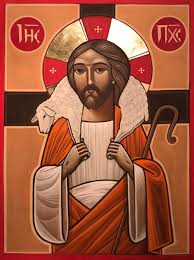
Coptic Church icon of Jesus the Good Shepherd

“On that day a fountain will be opened to the house of David and the inhabitants of Jerusalem, to cleanse them from sin and impurity.

“On that day, I will banish the names of the idols from the land, and they will be remembered no more,” declares the Lord Almighty. “I will remove both the prophets and the spirit of impurity from the land. And if anyone still prophesies, their father and mother, to whom they were born, will say to them, ‘You must die, because you have told lies in the Lord’s name.’ Then their own parents will stab the one who prophesies.

“On that day every prophet will be ashamed of their prophetic vision. They will not put on a prophet’s garment of hair in order to deceive. Each will say, ‘I am not a prophet. I am a farmer; the land has been my livelihood since my youth.’ If someone asks, ‘What are these wounds on your body?’ they will answer, ‘The wounds I was given at the house of my friends.’

“Awake, sword, against my shepherd,
    against the man who is close to me!”
    declares the Lord Almighty.
“Strike the shepherd,
    and the sheep will be scattered,
    and I will turn my hand against the little ones.
In the whole land,” declares the Lord,
    “two-thirds will be struck down and perish;
    yet one-third will be left in it.
This third I will put into the fire;
    I will refine them like silver
    and test them like gold.
They will call on my name
    and I will answer them;
I will say, ‘They are my people,’
    and they will say, ‘The Lord is our God.’” (New International Version)

There’s likely a reason why so many Bible-readers have barely considered, or just never read, the minor prophets of the Old Testament: It’s difficult reading, on several levels.

Yet, the twelve books of the minor prophets, along with the four books of the major prophets, account for a lot of material within Holy Scripture. If we are to understand the whole of the Bible, as well as know God better, we need to contend with what the prophets have to say.

Impurity and cleansing, grace and judgment, idolatry and stabbing, prophets and visions, sheep and shepherds, faith and apostasy, are all part of what seems, on the surface, to be a confusing hodge-podge of verbiage from the prophet Zechariah. Yet, we can still observe the things God cares about.

The Lord promised to rid the land of idols (false gods), (false) prophets, and the spirit of impurity (false righteousness). If God takes out the false prophets, then the people can say good riddance to a false message of leading others toward idolatry and impurity.

The spirit and the message behind false prophets, unholy leaders, and unrighteous teachers, has to do with propagating lies and suppressing truth, so that they can deceive people and manipulate others for their own benefit – leading groups of people away from reality, and into commitments that go nowhere.

This insidious stuff is meant to be taken quite seriously – because it leads to a breakdown in community, a proliferation of injustice, and oppressive spiritual bondage. That’s why we have a rather dramatic picture of parents stabbing a child – not because God likes violence – but to demonstrate that false prophets and their message will damage and destroy a nation, if indulged.

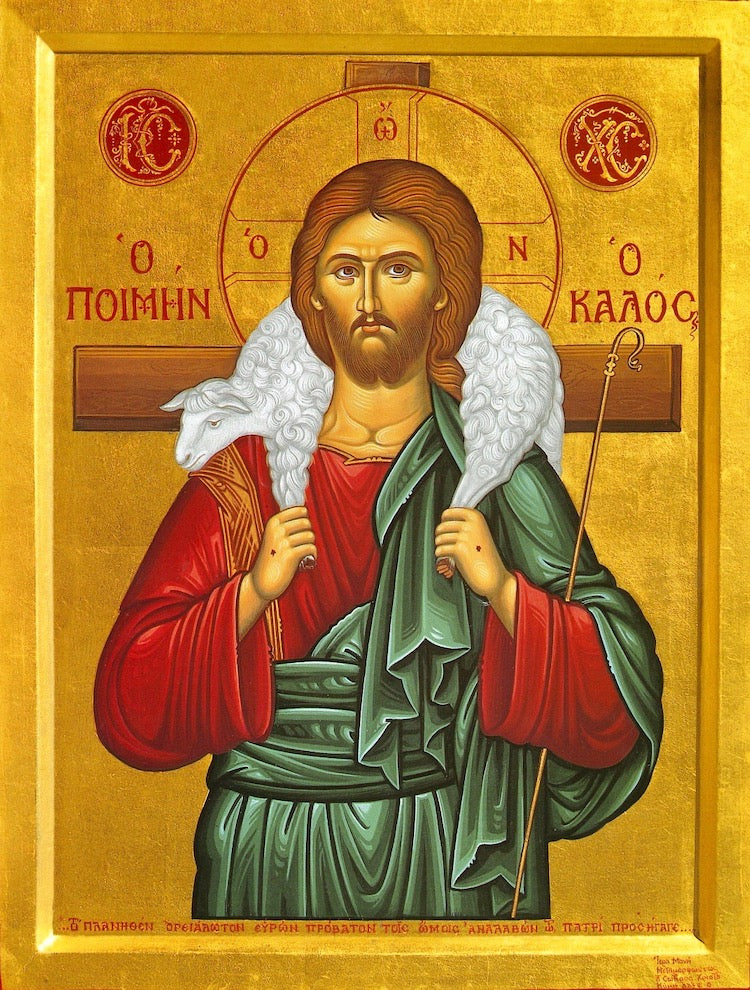
Orthodox icon of Jesus the Good Shepherd

We must always keep in mind and remember that injustice and unrighteousness must always be nipped in the bud (Deuteronomy 13:6-11). Sin, that is, those things which deceive and make false promises that result in a downward spiral toward death, is to be confronted. In the New Testament, Jesus put the matter this way:

If your right eye causes you to stumble, gouge it out and throw it away. It is better for you to lose one part of your body than for your whole body to be thrown into hell. And if your right hand causes you to stumble, cut it off and throw it away. It is better for you to lose one part of your body than for your whole body to go into hell. (Matthew 5:29-30, NIV)

Christ was not advocating a physical maiming of oneself, but rather for us to separate ourself from sin by whatever means necessary. In other words, Jesus was saying that sin isn’t something to be managed, but instead something to eradicate altogether.

Truth matters. Truth brings reality and beauty to light. Falsehood is terrible. To promote that which is false, and perhaps even worse, tolerate it, gives hate and injustice a platform from which to crawl out of the darkness and make the world blind. It would take an awful lot to undo error’s presence.

This is why the shepherd, or maybe, from the Christian perspective, the Christ, is stricken. The Good Shepherd, the one who is truth incarnate, would have to suffer. The injustice and unrighteousness is so foul and degrading that only the pure can undo the impure. And it is all set in motion, not by the forces of darkness, but by God.

God strikes the shepherd, and the sheep scatter. He is not struck because he deserves it – far from it – but because he assumes responsibility for the wrongdoing of others. Father God is the parent who stabs a spear in the side of God the Son.

The ultimate good shepherd of the sheep will die as a heinous offender; and God is the executioner.

In Christ, God put the wrong on him who never did anything wrong, so we could be put right with God.

2 Corinthians 5:21, MSG

This same great shepherd of the sheep, who became the Lamb of God that takes away the sin of the world, is coming again. And he will bring the refining and purifying fire of divine judgment upon the earth.

In this upcoming Advent season, we remember not only that Jesus has come to save the world. We also are reminded that there is yet a second Advent, in which Jesus will come to judge the living and the dead.

Behold, He is coming with clouds, and every eye will see Him, even they who pierced Him. And all the tribes of the earth will mourn because of Him. Even so, Amen.

“I am the Alpha and the Omega, the Beginning and the End,” says the Lord, “who is and who was and who is to come, the Almighty.” (Revelation 1:7-8, NKJV)

Blessed God and Father of our Lord Jesus Christ, preserve us from our own madness. Direct us away from dealing destruction to others; help us to steer clear of paths which lead to the ruin of ourselves and our world.

Protect us. Enable us to hear you. Beloved Jesus, show us your precious face in all others – you in us, and we in each other, from all places. Amen.