The Righteous and the Wicked (Malachi 3:13-18)

“You have spoken arrogantly against me,” says the Lord.

“Yet you ask, ‘What have we said against you?’

“You have said, ‘It is futile to serve God. What do we gain by carrying out his requirements and going about like mourners before the Lord Almighty? But now we call the arrogant blessed. Certainly evildoers prosper, and even when they put God to the test, they get away with it.’”

Then those who feared the Lord talked with each other, and the Lord listened and heard. A scroll of remembrance was written in his presence concerning those who feared the Lord and honored his name.

“On the day when I act,” says the Lord Almighty, “they will be my treasured possession. I will spare them, just as a father has compassion and spares his son who serves him. And you will again see the distinction between the righteous and the wicked, between those who serve God and those who do not. (New International Version)

The righteous and the wicked. Depending upon what sort of faith tradition you grew up in as a child; or by what belief system you currently adhere to, this may likely determine your understanding of those two words.

The terms “righteous” and “wicked” vary amongst differing groups of people. But however you understand those words, I want us to notice how the prophet Malachi understands them.

To be “righteous” means to have a right relationship with both God and others. It is to be close enough to knowing God to carry out what is important to God.

Righteous folk actually listen and talk to one another. They consult and collaborate with each other. They enjoy good relations because the righteous understand that relationships are a high value. They discern that people are important.

And so, God’s justice is very important to the righteous, because God wants everyone’s basic needs met. The Lord desires people to be treated well, with respect and dignity, in order to make a living and enjoy life.

To be “wicked” means to be arrogant, proud, and boastful. It is to have a string of messed up relationships with both God and others because they insist on their own way.

The wicked are far from God, and do whatever they want to do, regardless of how it may affect others. They view justice and righteousness as dispensable, and unnecessary, unless it can be used as leverage for selfish desires. Even though the wicked might be rich and powerful in this life, they will not be spared from God’s judgment.

Wicked persons – those who carry out injustice and seek to care only for themselves – are called to repent, to change, to amend their evil ways. Their negative statements about God, and their mistreatment of others, has not gone unnoticed.

A typical tactic of wicked persons is to blame others. In Malachi’s day, they were blaming God, and ironically, accusing the Lord of injustice. That’s because the wicked person’s understanding of God is that the Lord exists for their personal benefit.

So, if the wicked person is not receiving some benefit from God, then God isn’t being God, and then is accused and blamed as being the problem to any sort of adverse situation.

But in reality, the righteous are God’s treasured possession, because they consistently serve the Lord, no matter the circumstances. The righteous are faithful, and so, they will be spared on the day of God’s judgment.

So far, I have made this all seem quite black and white. But that was only to make clear the contrast between righteousness and wickedness. The truth is that all of us are a bit of both. We are not always completely right, nor are we always wrong.

We are in the middle of things. Most folks have not rejected God through a lack of belief. Yet, they also have not fully accepted God’s intentions for this world and are not fully living into them.

The prophet Malachi calls such persons (which is perhaps all of us?) to a day when trying circumstances will make the distinction between the wicked and the righteous much more clear.

Then, we will be able to change, fully convinced and knowing the difference between right and wrong, truth and error, faith and fear.

Charlatans will eventually be found out and known. And the consistently faithful people will eventually be noticed and held up by God for others to see and know.

If everything presently appears murky, shadowy, and unclear, please know that it will not always be this way for you.

I am assuming that there very few “wicked” persons actually reading or listening to this. Simply because they see no value in doing so. It doesn’t get them anywhere they want to go.

The wicked may seem to know what they’re doing, but they don’t. Life for them is very nebulous and unclear. They’re only spit-balling through life, trying to look out for number one, that is, themselves.

But you who are reading or listening to this likely want nothing to do with wickedness. You want to stay away from evil.

You are looking to make a difference on this earth, and to improve your little corner of the world. You desire good things for yourself and others. You seek to live as justly and rightly as you can.

Good for you! The Lord is noticing your faith and patience.

So do not throw away your confidence; it will be richly rewarded.

You need to persevere so that when you have done the will of God, you will receive what he has promised. For,

“In just a little while,
    he who is coming will come
    and will not delay.”

And,

“But my righteous one will live by faith.
    And I take no pleasure
    in the one who shrinks back.”

But we do not belong to those who shrink back and are destroyed, but to those who have faith and are saved. (Hebrews 10:35-39, NIV)

Eternal God, in whose perfect kingdom no sword is drawn but the sword of righteousness, no strength known but the strength of love: So mightily spread abroad your Spirit, that all peoples may be gathered under the banner of the Prince of Peace, as children of one Father; to whom be dominion and glory, now and forever. Amen.

I Am Responsible and Accountable (Ezekiel 18:1-32)

The word of the Lord came to me: “What do you people mean by quoting this proverb about the land of Israel:

“‘The parents eat sour grapes,
    and the children’s teeth are set on edge’?

“As surely as I live, declares the Sovereign Lord, you will no longer quote this proverb in Israel. For everyone belongs to me, the parent as well as the child—both alike belong to me. The one who sins is the one who will die.

“Suppose there is a righteous man
    who does what is just and right.
He does not eat at the mountain shrines
    or look to the idols of Israel.
He does not defile his neighbor’s wife
    or have sexual relations with a woman during her period.
He does not oppress anyone,
    but returns what he took in pledge for a loan.
He does not commit robbery
    but gives his food to the hungry
    and provides clothing for the naked.
He does not lend to them at interest
    or take a profit from them.
He withholds his hand from doing wrong
    and judges fairly between two parties.
He follows my decrees
    and faithfully keeps my laws.
That man is righteous;
    he will surely live,
declares the Sovereign Lord.

“Suppose he has a violent son, who sheds blood or does any of these other things (though the father has done none of them):

“He eats at the mountain shrines.
He defiles his neighbor’s wife.
He oppresses the poor and needy.
He commits robbery.
He does not return what he took in pledge.
He looks to the idols.
He does detestable things.
He lends at interest and takes a profit.

Will such a man live? He will not! Because he has done all these detestable things, he is to be put to death; his blood will be on his own head.

“But suppose this son has a son who sees all the sins his father commits, and though he sees them, he does not do such things:

“He does not eat at the mountain shrines
    or look to the idols of Israel.
He does not defile his neighbor’s wife.
He does not oppress anyone
    or require a pledge for a loan.
He does not commit robbery
    but gives his food to the hungry
    and provides clothing for the naked.
He withholds his hand from mistreating the poor
    and takes no interest or profit from them.
He keeps my laws and follows my decrees.

He will not die for his father’s sin; he will surely live. But his father will die for his own sin, because he practiced extortion, robbed his brother and did what was wrong among his people.

“Yet you ask, ‘Why does the son not share the guilt of his father?’ Since the son has done what is just and right and has been careful to keep all my decrees, he will surely live. The one who sins is the one who will die. The child will not share the guilt of the parent, nor will the parent share the guilt of the child. The righteousness of the righteous will be credited to them, and the wickedness of the wicked will be charged against them.

“But if a wicked person turns away from all the sins they have committed and keeps all my decrees and does what is just and right, that person will surely live; they will not die. None of the offenses they have committed will be remembered against them. Because of the righteous things they have done, they will live. Do I take any pleasure in the death of the wicked? declares the Sovereign Lord. Rather, am I not pleased when they turn from their ways and live?

“But if a righteous person turns from their righteousness and commits sin and does the same detestable things the wicked person does, will they live? None of the righteous things that person has done will be remembered. Because of the unfaithfulness they are guilty of and because of the sins they have committed, they will die.

“Yet you say, ‘The way of the Lord is not just.’ Hear, you Israelites: Is my way unjust? Is it not your ways that are unjust? If a righteous person turns from their righteousness and commits sin, they will die for it; because of the sin they have committed they will die. But if a wicked person turns away from the wickedness they have committed and does what is just, and right, they will save their life. Because they consider all the offenses they have committed and turn away from them, that person will surely live; they will not die. Yet the Israelites say, ‘The way of the Lord is not just.’ Are my ways unjust, people of Israel? Is it not your ways that are unjust?

“Therefore, you Israelites, I will judge each of you according to your own ways, declares the Sovereign Lord. Repent! Turn away from all your offenses; then sin will not be your downfall. Rid yourselves of all the offenses you have committed, and get a new heart and a new spirit. Why will you die, people of Israel? For I take no pleasure in the death of anyone, declares the Sovereign Lord. Repent and live! (New International Version)

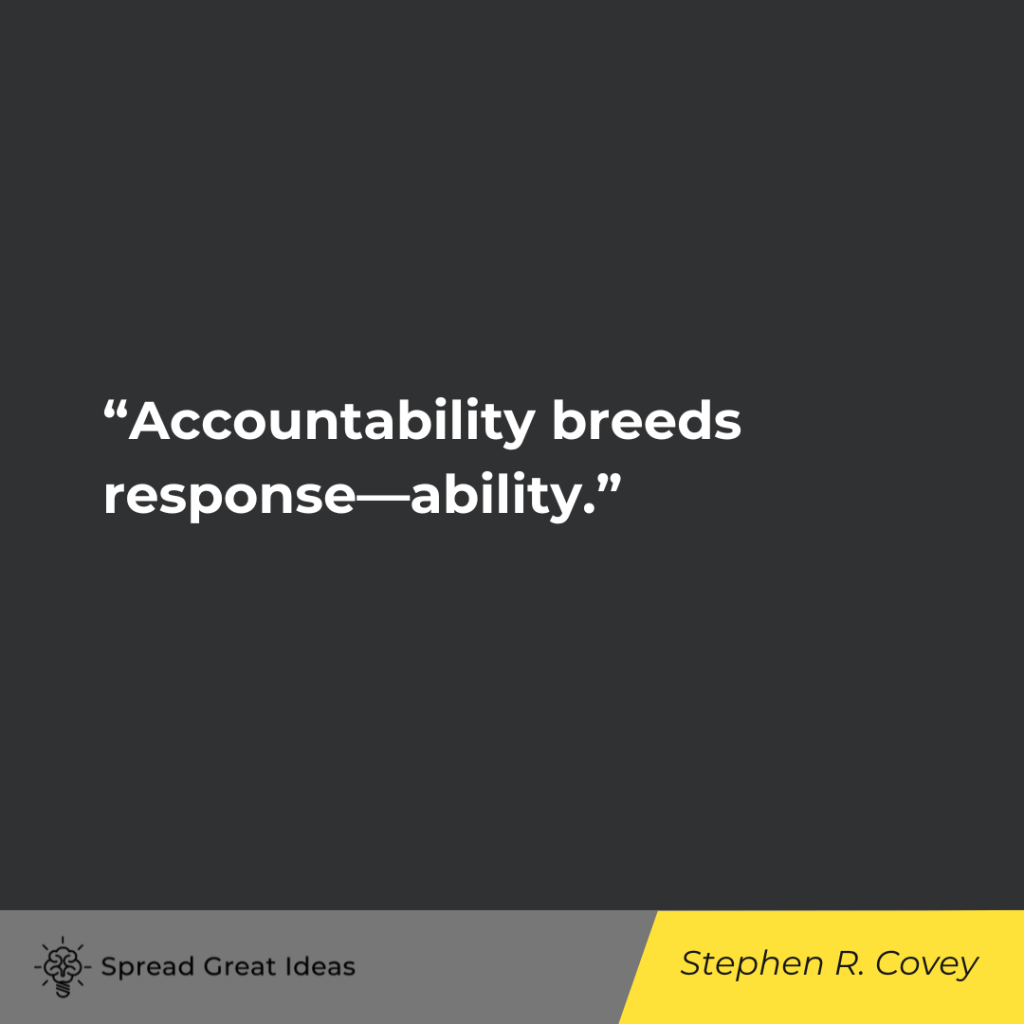
Every single one of us is accountable to one another for what we say and how we conduct ourselves. Above all, we are accountable to God for our motives, words, and actions in this life.

The flipside to stating that we are accountable, is saying that none of us are responsible for another person’s intentions, words, or actions.

Other people may influence us. We may be either participants in or victims of another’s actions. Some folks might take credit for something another person said or did. Yet, ultimately, we are responsible for our own life.

Whatever I think, say, or do is on me, period.

What’s more, one’s past actions do not replace our current actions. The prophet Ezekiel emphasized individual responsibility and accountability. All of the other Old Testament prophets addressed whole nations, and not individuals. They denounced the social, economic, and political systems and institutions, upholding communal ideals of justice.

Ezekiel communicated that children shall not be punished for their parent’s sins. Only the person who sins will face judgment.

A person ought only to pay for their own sins; punishment should not carry forward to future generations. The prophet also insisted that each individual person has the opportunity to change their behavior, and so, avoid their deserved penalty.

Every individual has the opportunity to change their personal ways of injustice or unrighteousness. For those who refuse, there is a and right and just Judge who knows how to dispense what is needed for each person – whether it is judgment to the arrogant, comfort to a victim, or justice for the underprivileged.

God cares that every person on earth receives what they need to thrive and flourish in this life. And to those who don’t give a wit about others, the Lord gives an opportunity to turn from arrogance and change.

Refusing to change, however, will end badly for the stubborn person.

The prophet Ezekiel calls on individuals to speak and act in ways that are helpful, not harmful. And whenever one harms another, that one must acknowledge the irresponsibility, because I am held accountable for what I say and do.

All words and actions come with consequences. It would do us a lot of good to consider how what we say and do (or fail to say and do) impacts the next generation of people. Everyone leaves a legacy of some sort – whether good or bad – so we need to be aware of how we live.

Each person must take up the mantle to do good, not evil; and to live righteously, not wickedly. Living selfishly with impunity leads to divine judgment. Yet, mercy is always there, if we seek to amend our ways.

Conversely, living righteously, and then resting on my laurels and living however I want, does not inoculate me from divine judgment.

You and I must live one day at a time, trusting God and seeking the welfare of others. And when I mess up, I am to keep a short account with God by admitting my fault and receiving grace.

We humans have quite enough responsibility in our lives without taking on the extra job of exacting judgment on another person. If we live a righteous life to begin with, then there is no need for a new heart and life.

Yet, if I need it, a new existence is there, through a change of direction which humility grants us.

Almighty God, help me to prioritize your values, and put my faith into action. Enable me to use the talents, resources, and time with which I have been blessed. Empower me to serve my community and my world. May I serve you always, and pray with a joyful spirit. Amen.

Why? (Job 18:1-21)

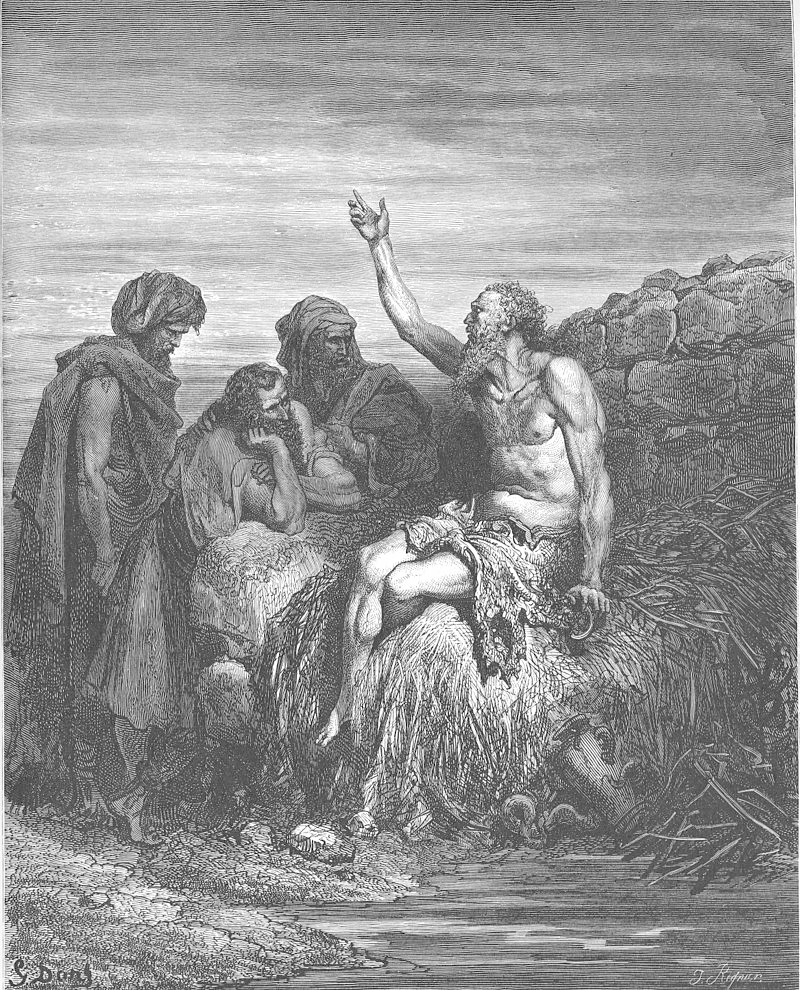
Job speaks with his friends, by Gustave Doré, 1866

Then Bildad the Shuhite replied:

“When will you end these speeches?
    Be sensible, and then we can talk.
Why are we regarded as cattle
    and considered stupid in your sight?
You who tear yourself to pieces in your anger,
    is the earth to be abandoned for your sake?
    Or must the rocks be moved from their place?

“The lamp of a wicked man is snuffed out;
    the flame of his fire stops burning.
The light in his tent becomes dark;
    the lamp beside him goes out.
The vigor of his step is weakened;
    his own schemes throw him down.
His feet thrust him into a net;
    he wanders into its mesh.
A trap seizes him by the heel;
    a snare holds him fast.
A noose is hidden for him on the ground;
    a trap lies in his path.
Terrors startle him on every side
    and dog his every step.
Calamity is hungry for him;
    disaster is ready for him when he falls.
It eats away parts of his skin;
    death’s firstborn devours his limbs.
He is torn from the security of his tent
    and marched off to the king of terrors.
Fire resides in his tent;
    burning sulfur is scattered over his dwelling.
His roots dry up below
    and his branches wither above.
The memory of him perishes from the earth;
    he has no name in the land.
He is driven from light into the realm of darkness
    and is banished from the world.
He has no offspring or descendants among his people,
    no survivor where once he lived.
People of the west are appalled at his fate;
    those of the east are seized with horror.
Surely such is the dwelling of an evil man;
    such is the place of one who does not know God.” (New International Version)

It only makes sense that Bildad was expecting a sensible discussion with Job.

But it was not going to happen.

Why?

Because grief doesn’t make sense; it’s nonsensical, whimsical, and fractal.

If you’ve ever been in a discussion with someone in which the person speaks illogically, it’s likely that you tried to talk sensibly and logically, pointing out the thought process.

And if you have ever done that, it’s also likely that the person did not change one iota of what they said.

Why?

Because people are not primarily thinking creatures who happen to have emotions. Instead, people are emotional creatures who happen to think.

Why do people ask, “Why?”

Because they’re angry. It’s not a cerebral question; it’s an emotional question.

Bildad, a “friend” of Job, was exasperated with his carrying on about being innocent, contending with God, and expressing anger – which is rather funny, because Bildad himself was angry.

Why?

Because supposedly logical and controlled people have illogical and emotional issues, too.

Welcome to the human race, all of you who pride yourselves on your flawless logic and neatly formed theology.

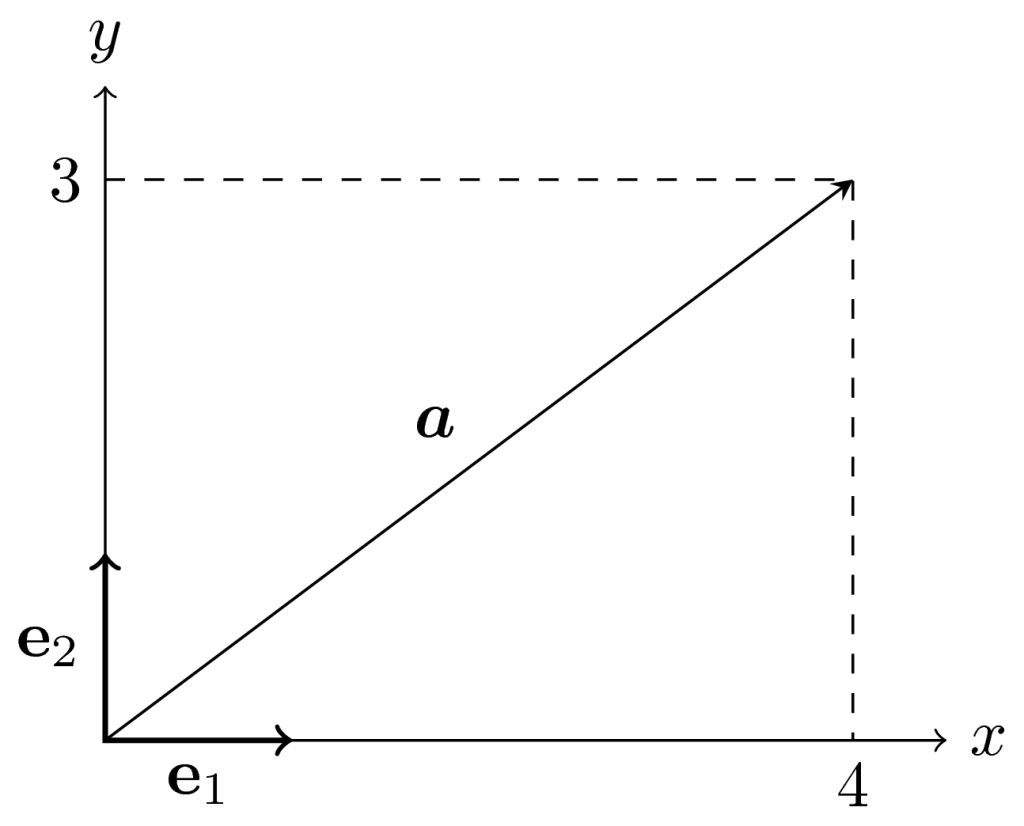
There is a chunk of people in this world who think that everything either works, or ought to work, according to Cartesian coordinates.

A Cartesian coordinate system describes the position of points in space using perpendicular axis lines that meet at a point called the origin. Any given point’s position can be described based on its distance from the origin along each axis. In other words, Cartesian coordinates allow one to specify the location of a point.

So, why am I talking about Cartesian coordinates?

Because that is what Bildad the Shuhite was trying to do with Job, to fix him on a plane that he could understand.

Because in Bildad’s theological world, the wicked are punished by God with bad circumstances and suffering. In the Cartesian world, as the wickedness increases, so does the pain and suffering.

Hence, one is being punished by God… But does the world really operate according to Bildad’s conception of it?

Hell no! (apparently wicked people say that sort of thing when not in the Cartesian world; they should probably get right with God; and, by the way, sarcastic people are wicked, too)

Bildad went so far as to suggest that perhaps Job doesn’t know God at all.

After all, that’s where one goes in a conversation with someone who doesn’t conform to clear and tidy Cartesian-style theology.

They can preach hellfire and damnation to others, yet when another even uses the word “hell” in a phrase, that is where they’re going to go.

It seems that Bildad isn’t really making sense.

Why?

Because he’s stuck. He cannot imagine life outside of his theological bubble.

The difference between Bildad and Job is that Job will admit that he is stuck, confused, messed-up, angry, and has no decent answer to what is going on in his life.

Whereas Bildad would never admit such a thing, even though he is so far stuck in the mud that it would take a divine miracle to get him out.

In fact, it appears we all need a divine miracle.

But God is silent.

Why?

I don’t know. But I do know that it won’t be for long.

Everyone might want to brace themselves for what’s coming.

Why?

Because we will receive precisely what we’re looking for: A word from God. But it’s probably not going to be what we expect.

After all, we aren’t living in a world of Cartesian coordinates.

O Lord God almighty, Creator of heaven and earth: I admit that these people you created drive me nuts! And I’m one of them! I can barely live with myself, let alone others.

In my wondering and confusion and pain, it’s hard to focus on anything. I don’t know why everything is upside-down and topsy-turvy. Yet, somehow I know, and am convinced, that you are present with me, and that you love me.

How in the world could I accept good from you, and not bad? If you love me, and are present with me, then I believe that whatever happens from this point forward, I shall not be forsaken by you.

Contend with those who contend against me. Help me with today, for tomorrow has enough worries of its own. Amen.

Making Sense of Faith and Trouble? (Job 15:1-35)

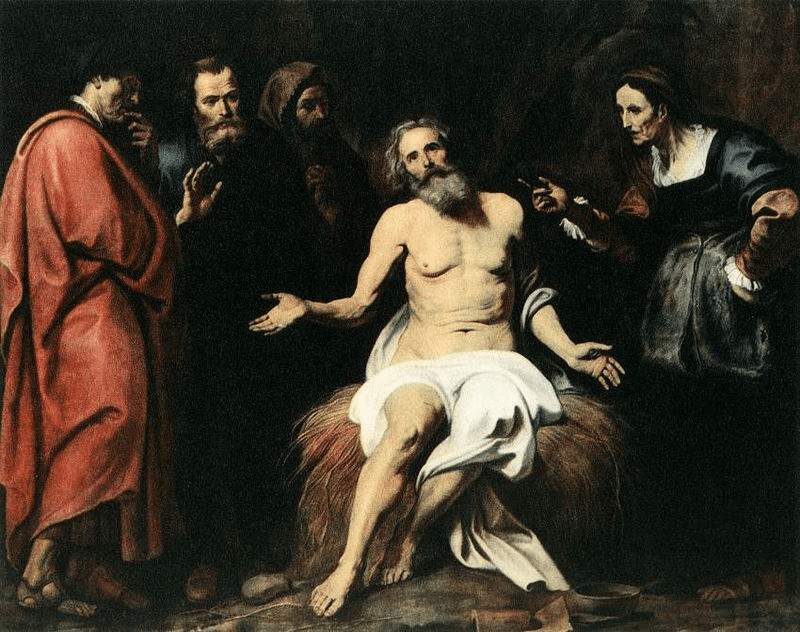
Job with his friends, by Gerard Seghers (1591-1651)

Then Eliphaz the Temanite replied:

“Would a wise person answer with empty notions
    or fill their belly with the hot east wind?
Would they argue with useless words,
    with speeches that have no value?
But you even undermine piety
    and hinder devotion to God.
Your sin prompts your mouth;
    you adopt the tongue of the crafty.
Your own mouth condemns you, not mine;
    your own lips testify against you.

“Are you the first man ever born?
    Were you brought forth before the hills?
Do you listen in on God’s council?
    Do you have a monopoly on wisdom?
What do you know that we do not know?
    What insights do you have that we do not have?
The gray-haired and the aged are on our side,
    men even older than your father.
Are God’s consolations not enough for you,
    words spoken gently to you?
Why has your heart carried you away,
    and why do your eyes flash,
so that you vent your rage against God
    and pour out such words from your mouth?

“What are mortals, that they could be pure,
    or those born of woman, that they could be righteous?
If God places no trust in his holy ones,
    if even the heavens are not pure in his eyes,
how much less mortals, who are vile and corrupt,
    who drink up evil like water!

“Listen to me and I will explain to you;
    let me tell you what I have seen,
what the wise have declared,
    hiding nothing received from their ancestors
(to whom alone the land was given
    when no foreigners moved among them):
All his days the wicked man suffers torment,
    the ruthless man through all the years stored up for him.
Terrifying sounds fill his ears;
    when all seems well, marauders attack him.
He despairs of escaping the realm of darkness;
    he is marked for the sword.
He wanders about for food like a vulture;
    he knows the day of darkness is at hand.
Distress and anguish fill him with terror;
    troubles overwhelm him, like a king poised to attack,
because he shakes his fist at God
    and vaunts himself against the Almighty,
defiantly charging against him
    with a thick, strong shield.

“Though his face is covered with fat
    and his waist bulges with flesh,
he will inhabit ruined towns
    and houses where no one lives,
    houses crumbling to rubble.
He will no longer be rich and his wealth will not endure,
    nor will his possessions spread over the land.
He will not escape the darkness;
    a flame will wither his shoots,
    and the breath of God’s mouth will carry him away.
Let him not deceive himself by trusting what is worthless,
    for he will get nothing in return.
Before his time he will wither,
    and his branches will not flourish.
He will be like a vine stripped of its unripe grapes,
    like an olive tree shedding its blossoms.
For the company of the godless will be barren,
    and fire will consume the tents of those who love bribes.
They conceive trouble and give birth to evil;
    their womb fashions deceit.” (New International Version)

The biblical character of Job had asked the friends to hear him out on his case against God. But they did not stay quiet and listen. Instead, they got irritated with Job and accused him of sin.

One of the three friends, Eliphaz, went from exhortation to an outright rebuke of Job. He took him to task on what he was saying, and gave Job a hellfire sermon designed to get him right with God.

Eliphaz had a problem with Job’s approach to God. Yet, we as readers know that none of this suffering was Job’s fault. In reality, it was Eliphaz who had the problem: He was stuck in a particular way of thinking to the point of not being able to entertain another’s point of view.

Each of the three friends did not distinguish between their assumptions and the truth. They had such engrained habits of thinking and living, that their minds were not open to the experience of Job being anything but sinful.

The major presupposition that Eliphaz held is that anyone who experiences such extreme hardship and suffering as Job is being punished by God. And that was a false presupposition.

There is a tragic irony with the story of Job and his friends. Eliphaz assessed Job’s situation and words as wicked. What’s more, Eliphaz believed that Job added to that sin by contending with God and insisting on his own personal innocence.

Yet, what Eliphaz said about Job was actually true about himself. Eliphaz was the one speaking out of ignorance and pride, as if he knew how the universe really works. In truth, Eliphaz was talking about himself, without knowing it.

Eliphaz presupposed, assumed, and believed that wicked persons are the ones who experience a life of pain, terror, illness, and deprivation. Thus, Job is wicked. And therefore, believed Eliphaz, Job’s future destiny was in jeopardy.

Is crying out in pain and giving a vulnerable yell toward God sin? Is it a sign of wickedness? Will it lead one to hell?

In the view of Eliphaz, yes. Because to challenge God is to rebel against God. To experience extreme suffering is a sign of personal wickedness against God.

By taking a good hard look at the entirety of the Book of Job, I can say with confidence that Eliphaz was, at best, ignorant; and, at worst, hurtful. He had no idea how off target he really was. The sinner in the room was not Job; it was Eliphaz.

The friends had too simple and easy of a theology of suffering. They equated Job’s suffering with God’s punishment. Reading the story of Job, however, challenges that simplistic theology.

Job insisted that his supposed punishment was undeserved. And he was right. Terrible misfortune is not necessarily a result of personal sin or wickedness.

The piety of Job was strong enough to accept the misfortune that fell upon him, without rebelling against God (Job 1:10). Yet, Job’s faithfulness to God could not make sense between his agonizing suffering, the loss of property and family, and God’s silence and purpose in it all.

And maybe that is, in part, the point of the Book of Job – that there are people all over the world who undergo hard circumstances and grinding loss, without knowing why they are going through it.

Hopefully, this awakening to the suffering of others will kindle within us a more compassionate spirit and empathetic presence with those feeling the nonsensical situations of their lives.

Almighty God, I bring to you all those who suffer in body, mind, spirit or with grief. May your loving kindness and divine presence sustain them in the midst of their pain. May those who are stretched beyond their capacity to cope and remain hopeful gain a sense of coherence, comfort and strength in the Lord. Amen.