Proverbs 3:5-12 – Choose Wisely

fork in the road
“The choice to make good choices is the best choice you can choose. Fail to make that choice and on most choices you will lose.” ― Ryan Lilly

Trust in the Lord with all your heart
and lean not on your own understanding;
in all your ways submit to him,
and he will make your paths straight.

Do not be wise in your own eyes;
fear the Lord and shun evil.
This will bring health to your body
and nourishment to your bones.

Honor the Lord with your wealth,
with the first fruits of all your crops;
then your barns will be filled to overflowing,
and your vats will brim over with new wine.

My son, do not despise the Lord’s discipline,
and do not resent his rebuke,
because the Lord disciplines those he loves,
as a father the son he delights in. (NIV)

The book of Proverbs is a collection of short pithy statements based in experiential truth. In other words, they are wisdom sayings. Wisdom is a gradual accumulation of understanding over time with a combination of observation and practice. The Teacher highlights the wisdom needed to navigate life. It is a bit like learning the basic laws of the universe such as: Respect the force of gravity by not walking off the roof of your house. Wisdom pays attention and applies understanding to reality. Otherwise, you will find you have a broken life.

Notice the realities we need to respect from today’s verses: God, God’s guidance, God’s honor, God’s discipline. The wise response to the existence of these realities is trust, submission, reverence, and acceptance. In contrast, a foolish response to reality is pride, avarice, and hate.

Both wisdom and foolishness are seen for what they are through their consequences.

The wise person, having been taught a respect for God and the ways of grace, will most likely have an experience of guidance, health, abundance, and love. The fool who ignores divine counsel will probably experience misplaced trust, health issues, short-sighted financial decisions, and cruddy attitudes. All things being equal, the wise person who deliberately and carefully applies knowledge and understanding to life will have an abundant spirit full of satisfaction – whereas the fool who improvises everything will struggle to live in a small world of holistic poverty and want.

“You can’t choose your potential, but you can choose to fulfill it.” – Theodore Roosevelt  

The gist of the Old Testament lesson for today is that one cannot live as an island. We all need to practice consultation and collaboration to achieve a good life. Being both instructed and corrected are necessary elements to obtaining the good life. To spurn both divine and human connections in favor of radical personal independence is plain old foolish and leads to a lousy life. In short, the fool incessantly airs opinions with useless sophistry to an empty room; and, the sage is an observant student to universal rhythms and has learned the timing of proper words and of silence.

I am going to state this all in a different way:

Relying on God and others through making and keeping promises to one another is the basis of a solid community and a gratifying personal life.

Relying merely on one’s self is a one-way road to spiritual pain and emotional damage, not to mention physical illness and financial scarcity. Fools always think they know best. Sages always know better than that.

The book of Proverbs is a presentation, a dialectic, a contrast and a setting forth of two ways of approaching how to live in the world: foolishness or wisdom; independence or interdependence; cognitive pride or mental humility; negligence of evidence-based research or consultation through books, literature, and reading; exploitation of resources or submission to the natural laws and rhythms of the land; holding-on with clenched fist or generosity with open hand; Grinch-like attitudes or God-like dispositions; incessant criticism or heartfelt tribute; blame-shifts or recognition of other’s contributions; shame or vulnerability; resistance to correction or acceptance of discipline; hate or love; judgment or grace – there is a fork in the road and we must choose which way to go.

Choose wisely, my friend.

Almighty God, in Christ you make all things new: Transform the poverty of our nature by the riches of your grace; and, in the renewal of our lives make known your heavenly glory; through Jesus Christ our Lord. Amen.


Psalm 23 – Trust and Rest

Rest

In this sacred season of Eastertide on the Church Calendar, Christians deliberately spotlight on what new life is and how it can bring transformation from fearing adversity to believing God through the adversity; from wondering where the heck my needs are going to be met to trusting in God’s willingness to provide; from worrying about the future to resting in the present.  Psalm 23 is just the right message for both the season and our world circumstances of pandemic and hardship.

Because of the psalm’s familiarity, some might only associate it with funerals and miss its relevance for the here-and-now. That would be quite unfortunate because this is a beautiful poem of trust which is prescient for us to face the vicissitudes of faith and life on this earth and be able to rest in the field of God’s benevolent kingdom.

Therefore, I am offering here my contemporary version of this most famous of psalms for the Church:

Jesus is my Pastor, and I lack absolutely nothing because of it.

My merciful overseer is watching me while I rest secure on a nice soft bed of grace;

             he leads me into an unhurried life; he is thawing out my cold anxious soul.

He leads me in all the right ways for the sake of his great name.

Even though I get lost and find myself in a dark alley,

             I really have no fear of evil;

for I know God is with me,

             his Word and Sacrament – they are more than sufficient to comfort me.

I have a big ol’ appetite and hunger for you, God,

             and you satisfy it,

             even though I have enemies within arm’s length;

you encourage my mind with joyous thoughts,

             so that my heart overflows with hope.

I am quite sure that goodness and mercy will follow me for a lifetime,

             and I will live in peace despite any adverse circumstances my whole life long. Amen.

Click The Lord’s My Shepherd by Stuart Townsend as we find rest for our souls.

Psalm 16 – I Trust in You

Help One Another

In days of change, uncertainty, and wondering about the future we are in good company with the psalmist.  Today’s psalm expresses an unflagging trust despite hard circumstances.  In such times it is both helpful and important to write and announce your faith.  The biblical psalms are prayers that are meant to be adopted as our own, to be spoken with flavor.  I encourage you to read the psalm aloud, more than once, using it as a declaration of prayerful trust.

So, as I often do, here is my own translation of the psalm:

Protect me, God, because I run to you for safety.
I say repeatedly to the Lord, “You are my God.
    There is none above you. Without you, I’ve got nothing good.”
Now as for the high-mucky-mucks in charge,
    the folks I can get so excited about helping me;
     they’ve got some big hurt coming to them
        because they rush to ignore you, thus, ignoring me.
There’s no way I’m participating in anything with them;
    I won’t even dignify them by saying their names.
You, Lord, are the cup I choose to drink from;
    you have me secure in your good strong hands.
With you, Lord, everything shakes-out beautifully;
    yes, indeed, I have a lovely home in you.

I will bless the Lord who gives me good counsel;
    even at night I am instructed
    in the depths of my mind.
I always put the Lord smack in front of me;
    there’s no way I’m going to stumble because God is right here beside me.
That’s why everything within me rejoices and my spirit celebrates;
    yes, my whole body will sleep well tonight in divine confidence
     because you won’t abandon my life to the grave; you won’t let your faithful follower see the pit of hell.

You will keep me on the right path.
    In your presence is satisfying joy.
Beauty continually surrounds you, forever and ever.  Amen.

Click In Christ Alone by Stuart Townsend and beautifully arranged by David Wesley.

You Are What You Eat

O fear the Lord, you his holy ones,
    for those who fear him have no want.
The young lions suffer want and hunger,
    but those who seek the Lord lack no good thing.

Come, O children, listen to me;
    I will teach you the fear of the Lord.
Which of you desires life,
    and covets many days to enjoy good?
Keep your tongue from evil,
    and your lips from speaking deceit.
Depart from evil, and do good;
    seek peace, and pursue it.

(Psalm 34:9-14, New Revised Standard Version)

you are what you eat 2 

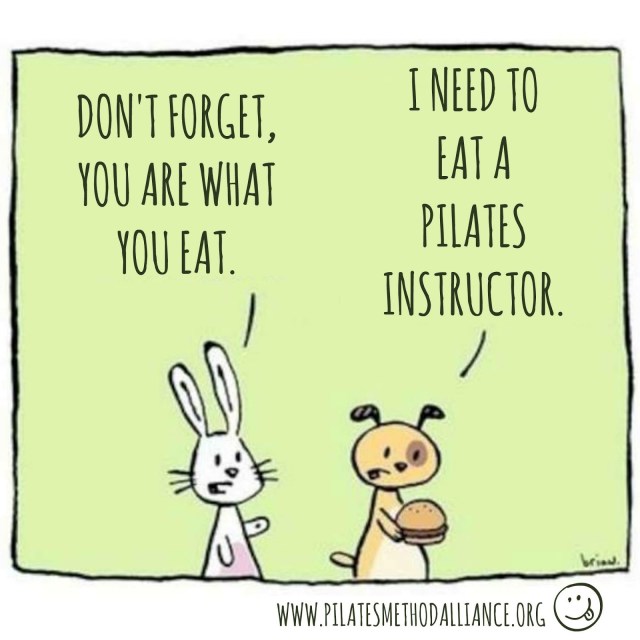
You’ve likely heard the phrase “you are what you eat.”  Of course, this doesn’t mean that when you look at me you see a delicious strip of bacon.  Rather, it’s meant to convey that the kind of food we ingest, whether it is physical groceries or spiritual sustenance, is of great importance and significance.  Eating unhealthy stuff makes you unhealthy.  Conversely, ingesting healthy things helps one to maintain proper health and vitality for functioning and thriving in life.

The psalmist encourages us to seek the LORD because in going after God we will be filled with goodness.  Using our tongues for good and not evil; our words for encouragement and not for forming lies; our constant verbiage for uplift and support and not with the poison phrases of evil; and, our voices for pursuing peaceful relations and not for disharmony; are all beautiful buffet foods of health and goodness to fortify our souls.

Back when I was in seminary (in a galaxy far, far away) it was difficult to keep up with the bills.  Finances were tight in our young family.  Despite working sometimes up to three jobs at a time, our budget had no budge to it.  In one unusually and particularly hard month, we were down to our last groceries.  In fact, on one summer evening we all had a bowl of Wheaties for supper.  The refrigerator was empty.  In our bedtime prayers with our girls, my wife and I voiced and expressed our need to God.

As Mary and I readied ourselves for bed, it was raining cats and dogs outside.  At 10pm, we heard a knock on our back patio door.  We looked at each other as if the other would know that we’re expecting someone.  We weren’t.  As I pulled back the curtain, there stood a sweet little Puerto Rican neighbor holding two large bags.  I quickly ushered her into our little apartment.  Her next words to us I will never forget:

“I went to bed at 9:00 and quickly fell fast asleep.  At 9:30 the Holy Spirit woke me up and told me to fill two bags with as many groceries as I could get in them; then, go and give them to the Ehrhardt’s.  So, here I am.”

All my wife and I could do was look at her and each other slack-jawed and simply say, “Thank you.”  No one knew our need.  We told no one about it; only God.

My family learned an invaluable lesson that stormy night, one you can’t learn any other way but being in a place of desperation.  The spiritual food that we eat is so important that Jesus put it this way:

One does not live by bread alone, but by every word that comes from the mouth of God” (Matthew 4:4).

Many years later after that rich spiritual feast, I told this same story in a congregation on a Sunday morning.  Afterwards, a middle-aged man came up to me and said something that initially took me aback: “So, how do you justify being in such a state of deprivation and not taking care of your family?”  After gathering my thoughts, I gave him this retort:

“You have asked me an honest question.  I will ask you one before I answer yours: Have your teenage kids, you, and your wife ever been in a situation where you needed God and cried out to him for something?”  Long pause…. “Well, no, not really.”  “Then, sir,” I replied, “I like the lessons my encounter with want and privation taught my kids better than the lessons your kids have never learned.”

You see, my friends, you are what you eat.  This obsession we have with being independent, self-sufficient, and our compulsions about money has spawned an entire generation of folks who just don’t know they need God.  Then, parents wonder why their kids abandon God.  God is simply irrelevant to them.  After all, why serve a God who has never touched my life in any significant way?  If we eat from a table of our own making, then the Table of the Lord becomes only a dusty piece of furniture in an empty church.

When we come and eat the bread which the Lord offers us we find satisfaction and fulfillment.  When we allow God to serve up a delicious spiritual meal we discover hospitality and joy.  When we accept the invitation to seek the Lord we find that little is much when God is in it.  In God’s upside-down kingdom, the poor are rich, and the rich are poor.

Good days of plenty don’t come because we ingeniously orchestrate it all.  Yes, of course, planning is both necessary and important.  Yet, all of our best laid plans are just that.  The outcomes belong to God, not us.  We have because God gives, and not because we figured out how to work harder, or smarter, or better.

you are what you eat

The one who truly fears the Lord has learned to first receive from Him.  Open-handed reception can only result from a heart posture of humility and need.  Close-fisted folks only know how to figure things out on their own and are not in the position to receive anything.

Whichever way you slice the Old Testament bread of poverty and the New Testament teaching on being poor in spirit, the rich are typically not in the best place – the poor are.  Being a spiritual beggar who recognizes his/her need for God, and who is desperate for Jesus is the one who has found the narrow entrance to where the Lord dwells.  And, upon entering, finds a lavish spread that is worthy of the marriage supper of the Lamb.