All of you who revere the Lord—praise him! All of you who are Jacob’s descendants—honor him! All of you who are all Israel’s offspring— stand in awe of him! Because he didn’t despise or detest the suffering of the one who suffered— he didn’t hide his face from me. No, he listened when I cried out to him for help.
I offer praise in the great congregation because of you; I will fulfill my promises in the presence of those who honor God. Let all those who are suffering eat and be full! Let all who seek the Lord praise him! I pray your hearts live forever! Every part of the earth will remember and come back to the Lord; every family among all the nations will worship you. Because the right to rule belongs to the Lord, he rules all nations. Indeed, all the earth’s powerful will worship him; all who are descending to the dust will kneel before him; my being also lives for him. Future descendants will serve him; generations to come will be told about my Lord. They will proclaim God’s righteousness to those not yet born, telling them what God has done. (CEB)
“Faith must be tested, because it can only become your intimate possession through conflict.”
oswald chambers
“Suffering” is a word we would like to avoid. Simply saying or reading the word might make us cringe. Suffering? No thanks. I think I’ll pass on that. Yet, something inside of us instinctively knows we cannot get around it. Everyone suffers in some way. It is endemic to the human condition that at times we will suffer physically, financially, mentally, emotionally, and spiritually.
That’s why I believe there is so much talk within some Christian circles about miracles. It’s more than understandable. A chronic pain sufferer wants relief; she prays for a miracle of health. A small business owner is bleeding financially; he looks to God for an immediate miracle of wealthy clients. A beloved senior saint knows she is afflicted with Alzheimer’s; she prays for the miracle of deliverance, even to be taken home to be with the Lord. A young adult finds himself in the throes of depression and has tried everything to cope and get out of it; he petitions God for a miracle out of the deep black hole. The believer in Jesus keeps experiencing a besetting sin and cannot get over it; she looks to God for the miracle of not struggling any more with it.
These scenarios and a thousand other maladies afflict people everywhere. There are a multitude of stories out there. Folks who have experienced a miracle tell of their wonderful deliverance. But what about the rest? Those without the miracle? Do they have a lack of faith? Has God forgotten them?
Oh, my, no! God sees, and God knows. God is acquainted with suffering. Jesus knows it first-hand. Remember, it was Jesus who said, “My God, my God, why have you forsaken me?” Even Jesus cried out in his suffering. But there was no deliverance coming for him. There was, instead, deliverance coming for us.
Sometimes the greatest miracle and deliverance of all is to be freed from the need for a miracle. The reason God doesn’t just offer immediate relief from everyone’s suffering and bring a miracle is that he is doing something else: Walking with us through our suffering. God oftentimes has plans and purposes for us well beyond our understanding. We simply are not privy to everything in God’s mind.
We may not get the miracle we desire. However, what we will get without fail is God’s provision and steadfast love all the way through the suffering. Where is God in your suffering? Jesus is suffering with you. You are not crying alone; Christ weeps with you.
Let, then, those who suffer, eat and be full. Let them be satisfied with the portion God has given them. What’s more, let them offer praise to the God who is squarely beside them in every affliction and each trouble.
God Almighty, you are the One who knows suffering and affliction better than anyone. I admit I don’t often understand what in the world you are doing or not doing in my life and in the lives of those I love. Yet, I admit that I have found in you the comfort, encouragement, and strength to live another day in my trouble. For this, I praise you, in the Name of Jesus Christ, in the power of the Holy Spirit. Amen.
Raise Up by Hank Willis Johnson in the Nova Southeastern University Art Museum, Fort Lauderdale, Florida
Our God, foreign nations have taken your land, disgraced your temple, and left Jerusalem in ruins. They have fed the bodies of your servants to flesh-eating birds; your loyal people are food for savage animals. All Jerusalem is covered with their blood, and there is no one left to bury them. Every nation around us sneers and makes fun.
Our Lord, will you keep on being angry? Will your angry feelings keep flaming up like fire? Get angry with those nations that don’t know you and won’t worship you! They have gobbled down Jacob’s descendants and left the land in ruins.
Don’t make us pay for the sins of our ancestors. Have pity and come quickly! We are completely helpless. Our God, you keep us safe. Now help us! Rescue us. Forgive our sins and bring honor to yourself.
Why should nations ask us, “Where is your God?” Let us and the other nations see you take revenge for your servants who died a violent death.
Listen to the prisoners groan! Let your mighty power save all who are sentenced to die. Each of those nations sneered at you, our Lord. Now let others sneer at them, seven times as much. Then we, your people, will always thank you. We are like sheep with you as our shepherd, and all generations will hear us praise you. (CEV)
Yes, you are in the right place. No, this is not yesterday’s post. The Revised Common Lectionary Daily Scripture readings include a psalm reading every day. What is more, the same psalm is read three days in a row. This is because psalms are designed to be repeatedly used. So, today, I continue reflecting on this psalm….
The psalmist was full of emotion as he crafted his words. Reflecting on the tragic and horrific takeover of Jerusalem and its destruction, he cried out in spiritual and emotional pain concerning the trashing of God’s temple and Name, and the physical and verbal violence executed on the people. The psalmist wanted the victimization to stop and the victimizers to feel God’s wrath.
This psalm is raw and real, an expression of the true self. Here there is no pie-in-the-sky positive thinking with singing about always looking on the bright side of life. It is agonizing grief in all its misery and disgrace. Thus, therein lies the path to healing: To connect with the true self, refusing the pretensions of the false self, expressing the real lived feelings and thoughts of honest wounds.
Illumination by American sculptor Paige Bradley
The alternative only presses further pain into the soul. The false self, seeking to takeover and make one feel better, engages in a devil’s pact by ignoring the aching spiritual doubt and emotional injury within to have temporary reprieve from the troubled spirit. The road to renewed and lasting happiness comes not through the false self but the true self’s recognition of the event(s) in all their foulness and degradation. It is a hard road to walk, yet we must travel it if we are to live in the light of truth, joy, and peace.
You and I will not find God in the false self. One of the great tragedies of the human condition is that, when having experienced trauma, we hustle to obtain something we already possess. We might believe God is not there, or simply does not care. As one becomes alienated from the Lord, there increasingly becomes self-distancing. Disconnected from life-giving divinity, self-loathing gradually replaces self-awareness, and thus, self-compassion.
If at any point, we begin to associate and then fuse self with our traumatic experience(s) then the inner person weakens and becomes detached from the spiritual resources needed to heal. We are not our events. We are people created in God’s image and inherently worthy of love, compassion, kindness, goodness, and healing. We were not made for death and destruction but for life and connection.
The demonic termites of contempt might eat away at our humanity, yet there is always a way to exterminate them – through telling our story, as the psalmist did, with emotional flavor and full honesty. The true self is there; we just might need to dig a little deeper to find her.
So, if you notice that you tend to avoid planning for self-care; engage regularly in self-pity; or, swear at yourself under your breath with self-hatred; then it is high time for the false self to quit calling the shots and to bring up the true self. Internal conflict is not resolved through avoidance; it comes through external voicing of one’s story to another who listens with care.
The psalmist spoke to both God and God’s people. His story came from the gut, the place where both deep loathing and deep compassion come from. If one has already been tortured by a traumatic experience, the torture will continue from the false self unless the true self asserts herself and seeks awareness, mercy, and healing.
Stories are meant to be told. And they need to be uttered when the storyteller is ready and not when the listener is. Through the voicing of their ordeal, victims of human-inflicted suffering need to hear that God is just and will right the wrong things in this world. They need some hope of healing and some assurance that their injury will not go unanswered.
This can be tricky business because the act of proclaiming one’s story and the reception of that message by another might easily become a vengeful justification for intolerance and malicious retribution. Therefore, the psalmist appealed to God, not fellow humans, for justice. We are to leave room for God’s wrath without taking matters into our own hands. (Romans 12:17-21)
So, avoid isolation from God, others, even yourself. Seek help, both divine and human. Tell your story when you are ready. Face the terrible pain. These are the things the psalmist did to deal with his own trauma. The true self acknowledges this and, with full awareness, steps into the future with faith.
Lord Christ, you came into the world as one of us, and suffered as we do. As I go through the trials of life, help me to realize that you are with me at all times and in all things; that I have no secrets from you; and that your loving grace enfolds me for eternity. In the security of your embrace I pray. Amen.
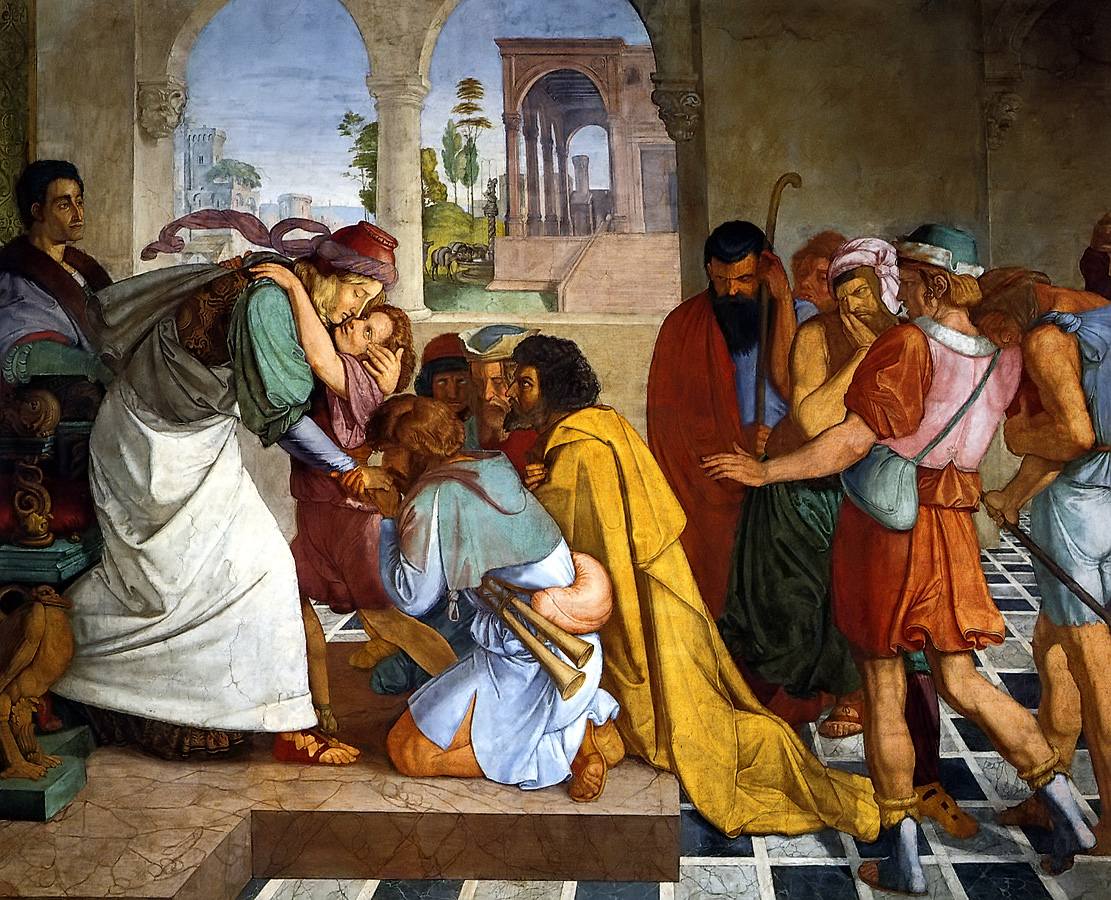
The biblical character, Joseph, went through a lot. While growing up, his brothers misunderstood and ridiculed him as “that dreamer.” Their jealousy and hatred of Joseph led them to throw him into a well and leave him for dead. Then, they turned around and pulled him out only to sell him into slavery. Joseph served as a household slave, until he was again misunderstood and wrongly accused by his master’s wife.
So, Joseph languished in a prison for years, suffering injustice. Yet, the awkward liminal space in between his family of origin and becoming the administrator over all Egypt was not a waste of time. Rather, it gave Joseph a divine perspective on his life and shaped him for his rise to power.
Likely believing he would never see his brothers and father again Joseph went about the immense work of overseeing Egypt. One day, during a severe famine, lo and behold, his brothers show up in his court looking to purchase some food for their large families! Joseph immediately recognized them. The brothers, however, did not have a clue that this was their long-lost brother.
Joseph, understandably guarded, kept his identity to himself and toyed with his brothers to discover how Jacob his father was doing. Eventually, through a labyrinthine experience of a few journeys of the brothers back and forth from Palestine to Egypt, Joseph could take it no longer; he just had to reveal his identity to his brothers. (Genesis 45:1-15)
Yet, the ultimate unveiling is much more a glimpse of what God was up to. Joseph provided a commentary on his life, why he endured hardship, and how he came to be the administrator over all Egypt. Joseph wisely discerned that God sent him to Egypt to save many lives.
It is mostly in retrospect we see what God has been doing all along. A good chunk of our lives is a mystery that is concealed, only revealed with time and patience on our part. While we exist in the strange space of the great unknowing and may struggle to understand our hardships, God is working behind the scenes, bending all our life events to his purposes. And that is the key to understanding the entire narrative of Joseph (Genesis 37-50).
Joseph’s brothers, despite being stinkers, were the means God used to send Joseph to Egypt. Furthermore, all of Joseph’s experiences in Potiphar’s house, and in the prison where he was unjustly sent were the training ground for him to lead all Egypt, second only to Pharaoh himself.
The Reconciliation of Joseph and His Brothers by Peter Cornelius, 1817
Therefore, trust and faith are imperative for God’s people. Faith is placed where the object is trustworthy. In other words, we trust God if we believe God is good and has our best interests at mind. Conversely, if we view God as sometimes fickle or inattentive, then placing faith in him becomes a gamble and we might be hesitant, hedging our bets and relying more on ourselves and our own ingenuity to get through a hard circumstance.
Don’t be deceived, my dear brothers. Every good and perfect gift is from above, coming down from the father of the heavenly lights, who does not change like shifting shadows. He chose to give us birth through the word of truth, that we might be a kind of first fruits of all he created. (James 1:16-18, NIV)
We all face times and seasons in our lives where we wonder if the Lord is sitting in his Lazy-God recliner sleeping while we wither in some miserable situation, believing that God has better things to do, or has simply lost interest in my puny life. Yet, it could be that the Lord is providentially shaping our circumstances in preparation for us to accomplish a significant godly purpose.
Although hindsight can help us see the superintendence of God, the relationship between divine sovereignty and human responsibility is still largely a mystery. Many times, we can only affirm paradoxical truths. For example:
It was ordained before the foundation of the world that Jesus would be our Savior.
Jesus chose to willingly face the cross for our sake.
Both statements are equally true at the same time, all the time.
Christ’s betrayal by Judas was foreordained and foretold in the Old Testament centuries before Judas Iscariot was born.
Judas deliberately chose to betray Jesus with a kiss for thirty pieces of silver.
Both are equally true.
Joseph was meant by God to go through all kinds of hardship for a purpose.
Joseph willingly submitted to his hardship, choosing not to become angry, bitter, or vindictive.
Both of those realities are equally true.
It is not so much what happens to us that is the issue or problem. Rather, it is how we interpret what happens to us that is the critical issue. The way Joseph interpreted his difficult circumstances and his brothers’ calloused behavior toward him was to see the big picture of what God was doing in the world, instead of merely viewing events from a narrow perspective of painful personal adversity and becoming hateful.
Just as Joseph saw his suffering, hardship, and persecution as the means to saving lives, so Jesus viewed his suffering on the cross as the means to save our lives and bring us reconciliation. And, in the same way, we too, will undergo suffering and hardship for the purpose of saving lives through peacemaking efforts.
My dear wife and I have endured our share of hardship in our lives. I choose to interpret the reason we have gone through it all just as the Apostle Paul discerned his own adversity by saying to the Corinthian Church:
Praise be to the God and Father of our Lord Jesus Christ, the Father of compassion and the God of all comfort, who comforts us in all our troubles, so that we can comfort those in any trouble with the comfort we ourselves have received from God. For just as the sufferings of Christ flow over into our lives, so also through Christ our comfort overflows. If we are distressed, it is for your comfort and salvation; if we are comforted, it is for your comfort, which produces within you a patient endurance of the same sufferings we suffer. And our hope for you is firm because we know that just as you share in our sufferings, so also you share in our comfort. (2 Corinthians 1:3-7, NIV)
Whatever you are going through, or have gone through, even if it has been many years ago, God wants to use your difficulties and troubles for both your personal strengthening of faith, and for empathic and compassionate ministry for the sake of others.
We all need to practice patience and perseverance through hard times, if we are going to realize better days and gain a better interpretation of our difficult circumstances. Here are a few ways to do just that:
Write It Out
When suffering an upsetting event, writing about it can make us feel better as well as helping us make some sense of it. The act of writing organizes our thoughts, which then makes the experience feel less chaotic. Writing also provides an emotional release, along with insight and awareness into yourself. And with awareness, we have conscious choices.
Guard your heart more than anything else because the source of your life flows from it. (Proverbs 4:23, GW)
Some thoughts to get started writing:
Set aside 10-15 minutes a day for several days to write about the event and how it made you feel.
Don’t worry about grammar or creativity. This is just for you.
Stick with it. At first writing about an upsetting experience might be painful. However, over time it can help you get past the upset. Keep in mind, though, that if it is an especially disturbing event, you might want to do this work along with a trained professional.
Tackle Your Problem(s)
When distressed, it is unhelpful to stew in self-pity or to waste energy in blame shifting. Instead, be assertive.
Make every effort to present yourself to God as a tried-and-true worker, who does not need to be ashamed but is one who interprets the message of truth correctly. (2 Timothy 2:15, CEB)
Take charge of your trouble:
Write down the problem. On paper it seems more manageable than when it is swirling inside your head.
List as many solutions as possible. You can reject options later.
Assess the list. Ask yourself how you would like this situation to end. Which of the written options likely will get you there? Weigh the pros and the cons.
Accept a reasonable solution, without searching for the perfect one. Focusing on perfection only breeds disappointment.
Form a concrete workable plan. Set some realistic and specific deadlines.
Avoid discouragement if the first solution does not pan out – just try another one on your list.
Get Support
We as people are hard-wired by God for community and needing one another.
Help each other with your troubles. When you do this, you are obeying the law of Christ. (Galatians 6:2, ERV)
Ask someone to give you a hand if you are overwhelmed.
Do not be afraid to ask for advice. Consulting and collaborating with others are always the way of wisdom.
Get emotional support. Crying, sharing our frustrations, or otherwise venting helps release tension, relieve stress, and helps us move on.
So, may we choose to have the eyes of faith and trust, discerning that God is good and sovereignly works out his will through our troubles.
Then some Jews came from Antioch and Iconium and persuaded the people to turn against Paul. So, they threw stones at him and dragged him out of the town. They thought they had killed him. But when the followers of Jesus gathered around him, he got up and went back into the town. The next day he and Barnabas left and went to the city of Derbe.
They also told the Good News in the city of Derbe, and many people became followers of Jesus. Then Paul and Barnabas returned to the cities of Lystra, Iconium, and Antioch. In those cities they helped the followers grow stronger in their faith and encouraged them to continue trusting God. They told them, “We must suffer many things on our way into God’s kingdom.” They also chose elders for each church and stopped eating for a period of time to pray for them. These elders were men who had put their trust in the Lord Jesus, so Paul and Barnabas put them in his care.
Paul and Barnabas went through the country of Pisidia. Then they came to the country of Pamphylia. They told people the message of God in the city of Perga, and then they went down to the city of Attalia. And from there they sailed away to Antioch in Syria. This is the city where the believers had put them into God’s care and sent them to do this work. Now they had finished it.
When Paul and Barnabas arrived, they gathered the church together. They told them everything God had used them to do. They said, “God opened a door for the non-Jewish people to believe!” And they stayed there a long time with the Lord’s followers. (ERV)
The Apostle Paul and his traveling companions went on three missionary journeys in the New Testament book of Acts. “Mission” is more than an activity the church does; it is an expression of the church’s identity. To be the community of the redeemed is to embrace and embody the grace and love of Jesus in proclaiming in both word and deed the good news of restoration to God in Christ.
What is good news for many is bad news for others, that is, those for whom are ensconced in power and take advantage of their position to maintain the status quo. Paul was much too radical for them, as he persistently spoke truth to power when needed – not to mention that his effectiveness as a missionary caused a religious, social, and economic impact wherever he went.
It only takes a few rabble-rousers to gin up an angry mob, and Paul saw his share of them. He sometimes escaped unscathed. Yet, in other situations, Paul was beaten or stoned, sometimes being left for dead. So, how does that square with a God who sees all and is able to protect all, especially his own devoted followers?
Paul and his missionary coterie were forthcoming about the nature of following Jesus. Here are a few various translations of their words to new believers (Acts 14:22):
Through many tribulations we must enter into the kingdom of God. (ASV)
If we are to enter God’s kingdom, we must pass through many troubles. (CEB)
We have to suffer a lot before we can get into God’s kingdom. (CEV)
We must go through many hardships to enter the kingdom of God. (NIV)
It is through many persecutions that we must enter the kingdom of God. (NRSV)
Through many afflictions we must enter into God’s Kingdom. (WEB)
The various English words used to translate the original Greek word accurately depict what Paul was talking about. My own translation of the verse is:
It is through a lot of varied stressful adversity that we must enter the rule and reign of God.
Paul was doing so much more than explaining his own suffering. He saw his experience as paradigmatic for all who would follow Jesus. For it was Christ himself who exhorted people to count the cost of discipleship:
“Whoever does not carry their cross and follow me cannot be my disciple…. Those of you who do not give up everything you have cannot be my disciples.” (Luke 14:27, 33, NIV)
In doing the very thing which Jesus asks, the Christian life becomes pressurized from those who do not wish to see us:
Proclaim good news to the poor, freedom for the prisoners and recovery of sight for the blind, to set the oppressed free, to proclaim the year of the Lord’s favor. (Luke 4:18, NIV)
Yet, we also have words from the Lord Jesus about how it all shakes-out for us when we deliberately and unflaggingly follow him with steadfast commitment:
“Blessed are you when people hate you, avoid you, insult you, and slander you because you are committed to the Son of Man. Rejoice then, and be very happy! You have a great reward in heaven. That’s the way their ancestors treated the prophets.” (Luke 6:22-23, GW)
Late in Paul’s life as he reflected on his missionary journey experiences, he said to his young protégé Timothy:
You know about my persecutions and my sufferings. You know all the things that happened to me in Antioch, Iconium, and Lystra—the persecution I suffered in those places. But the Lord saved me from all of it. Everyone who wants to show true devotion to God in Christ Jesus will be persecuted. (2 Timothy 3:11-12, ERV)
Christian faith is strengthened through the stress, pressure, and adversity of facing hardship through utilizing the words and ways of Jesus. So, receive these blessings from the Apostle Paul today:
And God’s peace, which is so great we cannot understand it, will keep your hearts and minds in Christ Jesus. (Philippians 4:7, NCV)
And now may God, who gives us his peace, be with you all. Amen. (Romans 15:33, NLT)
May the grace of our Lord Jesus Christ be with your spirit, brothers and sisters. Amen. (Galatians 6:18, NRSV)








 Rev. Tim Ehrhardt