Psalm 30 – Mourning Has Turned to Joy

I will exalt you, Lord, for you rescued me.
    You refused to let my enemies triumph over me.
O Lord my God, I cried to you for help,
    and you restored my health.
You brought me up from the grave, O Lord.
    You kept me from falling into the pit of death.

Sing to the Lord, all you godly ones!
    Praise his holy name.
For his anger lasts only a moment,
    but his favor lasts a lifetime!
Weeping may last through the night,
    but joy comes with the morning.

When I was prosperous, I said,
    “Nothing can stop me now!”
Your favor, O Lord, made me as secure as a mountain.
    Then you turned away from me, and I was shattered.

I cried out to you, O Lord.
    I begged the Lord for mercy, saying,
“What will you gain if I die,
    if I sink into the grave?
Can my dust praise you?
    Can it tell of your faithfulness?
Hear me, Lord, and have mercy on me.
    Help me, O Lord.”

You have turned my mourning into joyful dancing.
    You have taken away my clothes of mourning and clothed me with joy,
that I might sing praises to you and not be silent.
    O Lord my God, I will give you thanks forever! (New Living Translation)

Life is not only full of the tears which give way to joy; a great deal of life is learning to move through our grief and transform the pain into something beautiful.

Hard circumstances make us either better or bitter.

The psalmist, King David, had his share of adversity, difficulty, and distress. The youngest of seven sons, David was something like the runt of the litter. He was given the grunt work that nobody else wanted to do, since he was the lowest person in the household.

So, off to the fields he went, shepherding the sheep, dealing with hot days and cold nights, fighting off predators, and keeping the sheep healthy and safe. Yet out there where no one was looking, God was watching. And the Lord was developing within David the very qualities needed to one day rule over all Israel and Judah.

Even in-between becoming a member of the king’s court and becoming king himself, David’s life was mostly characterized by misunderstanding and being victimized. In other words, David had intimate first-hand experience of terrible sorrow, buckets of tears, and stress-filled anxiety. Through it all, he did not become bitter. Instead, David learned to transform his mourning to joy.

Many persons, having experienced the sort of things David of old did, come through their difficulties and adversity with a hard heart. They end up hurting people, just like they were hurt. Their verbal and physical acts of violence betray their inability to turn pain into something useful.

So, what makes the difference between those who experience the same sorts of painful events, yet go in the different directions of caring or harming?

I believe the twentieth-century Trappist monk, Thomas Merton, understood the true source of violence and non-violence…

“There is a pervasive form of contemporary violence to which the idealist most easily succumbs: activism and overwork. The rush and pressure of modern life are a form, perhaps the most common form, of its innate violence. To allow oneself to be carried away by a multitude of conflicting concerns, to surrender to too many demands, to commit oneself to too many projects, to want to help everyone in everything, is to succumb to violence. The frenzy of our activism neutralizes our work for peace. It destroys our own inner capacity for peace. It destroys the fruitfulness of our own work, because it kills the root of inner wisdom which makes work fruitful.”

Thomas Merton, Conjectures of a Guilty Bystander

Merton rightly discerned that the false self (the self we project to others and try to maintain as real) is in fact the source of violence – specifically, the false self’s need to gratify impulses for power and control, affection and esteem, security and safety, at all costs.

However, we do not find ourselves in those ways. The cultivation of solitude, silence, and contemplation are non-violent practices which organically produce non-violent ways of being in the world. Those were the very practices which characterized David’s early life as a shepherd.

It’s what we do when no one is watching, and nobody is around, that makes the difference. Our way of being in the world is determined by the way we are with ourselves when we are alone.

How you are, matters.

“If we do not transform our pain, we will most assuredly transmit it.”

Richard Rohr

We need to be present to our pain, to pay attention to it. Our hurts don’t simply vanish if we ignore them, try to go around them, or seek quick fixes to them. The pain is still there, and over time, becomes gangrene of the soul.

Instead, we must dare to go to the unexplored territory of the inner person, to confront and contend with our inner turmoil and be open to hearing from it.

“The endurance of darkness is the preparation for great light.”

St. John of the Cross

Today, like every day, we have the opportunity and even responsibility to bring our whole selves, pain included, to the relationships we have, the work we do, and everywhere we go. The world not only needs our skills and abilities; it needs us.

The path to joy isn’t through perfect circumstances and having all our wants satisfied; joy comes after a season of darkness with all it’s sobbing, tears, and wondering. As we become more comfortable with the shadowy places of our lives, the more open we become to transforming our pain to a beauty which blesses the world.

O God, you are my God, and I will praise you, whether at night’s inky blackness, or in the day’s bright sunshine of happiness. As I endure each difficult situation, help me to see it’s transformative power and it’s potential to make me a better and more godly person, through Jesus Christ my Lord, in the enablement of the Holy Spirit. Amen.

Romans 7:14-25 – Our Existential Angst

We know that the law is spiritual; but I am unspiritual, sold as a slave to sin. I do not understand what I do. For what I want to do I do not do, but what I hate I do. And if I do what I do not want to do, I agree that the law is good. As it is, it is no longer I myself who do it, but it is sin living in me. For I know that good itself does not dwell in me, that is, in my sinful nature. For I have the desire to do what is good, but I cannot carry it out. For I do not do the good I want to do, but the evil I do not want to do—this I keep on doing. Now if I do what I do not want to do, it is no longer I who do it, but it is sin living in me that does it.
 
So, I find this law at work: Although I want to do good, evil is right there with me. For in my inner being I delight in God’s law; but I see another law at work in me, waging war against the law of my mind and making me a prisoner of the law of sin at work within me. What a wretched man I am! Who will rescue me from this body that is subject to death? Thanks be to God, who delivers me through Jesus Christ our Lord!
 
So then, I myself in my mind am a slave to God’s law, but in my sinful nature a slave to the law of sin. (New International Version)
 
We can relate to the Apostle Paul. We, along with him, have many times said to ourselves, “I don’t understand why I act the way I do. I don’t do what I know is right. I do the things I hate.” 
 
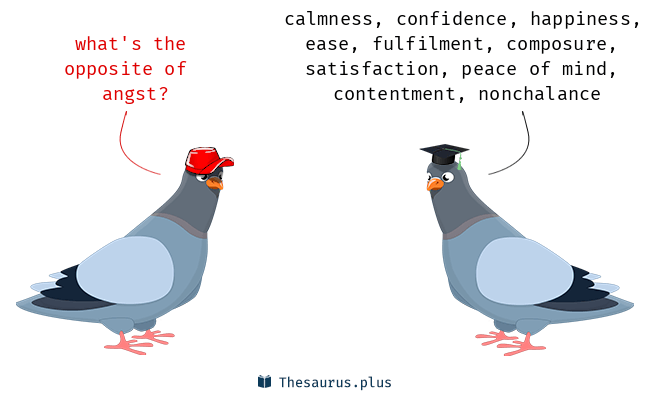
Paul’s existential angst is a timeless description of our common human condition. There are times we seem completely unable to follow our conscience and do what’s right. It can be maddening, even to the point of experiencing a continual low-level discouragement and/or depression which underlies almost everything we do.
 
The prescription for dealing with this mental, emotional, and spiritual malady does not include the law. That’s right. Putting our willpower and effort into obeying commands gets us nowhere. Even if we obey laws and rules and commands for a time, our efforts eventually break down. We fail to do what we want and do just the opposite.
 
The law isn’t bad. It just doesn’t have the capacity to transform us. The law’s purpose is to show us how bad off we really are in this world, to give us an awareness of our true condition so that we will seek help. 
 
We humans are a bundle of contradictions, doing good, then bad, and flip-flopping back and forth – all with great frustration.
 
In our abject misery, what then, shall we do? Who will help us? Is there anyone to save us from our plight?
 
Sheer willpower and obedience will not help us; it won’t work. It will only give us a false hope. Any success in using such willpower only deludes one into believing they have the answer… until they yet fall again into the abyss of their own inner darkness.
 
The good news is that there is a Savior, a Redeemer, a Rescuer who has the will and the power to deliver us from our predicament.
 
The grace of God in Christ is the operative power that changes lives, not the law. Freedom from the tyranny of our “should’s” and our misplaced desires comes from Christ’s forgiveness through the cross. 
 
Like a lover enamored with his beloved, our desires become oriented toward Jesus for his indescribable gift to us. That is the strength of grace. Transformation is relational; it is found in a person, not a program. And the only person and relationship which has the ability to change us is, I believe with all my heart and mind, the Lord Jesus Christ.
 
Why? Because I myself have been transformed and changed by such a relationship with Christ. I, along with the hymn writer John Newton, can say, “I once was lost but now am found, was blind but now I see.”
 
“Self-help” for all the good it really can do, is in many ways an oxymoron. There is no Bible verse which states that God helps those who help themselves.
 
Yes, we have an incredible capacity for good and vast internal resources within us which we lack awareness of for which we can tap into. Yet, when it comes to an outright metamorphosis, we need a new heart – and we can no more simply decide to change our lives any more than we can perform heart transplant surgery on ourselves.
 
People need the Lord.
 
Whenever the foundation of a house is about to crumble, it won’t do to rearrange the living room furniture and do a bit of spruce up painting. And we deceive ourselves if we believe that all our efforts at landscaping the property and having a great curb appeal will do the trick.
 
If the foundation crumbles, the house implodes, and nothing else will matter.
 
Jesus is our cornerstone. Without him, we are at risk, about to fall and without hope. With him, true restoration and renewal happens. And then, when the house is repaired and in order, we set about the task of being good stewards and maintaining and caring for the wonderful changes which were made.
 
If we want freedom from self-loathing and to experience peace and contentment, calmness and confidence, satisfaction and settled peace, then we will grow ever closer to the Savior who exudes all those qualities, and more.
 
For the Lord not only saves and delivers; he also sanctifies and encourages. And the existential angst becomes forgotten.
 
Saving God, I thank you for delivering me from sin, death, and hell through your Son, the Lord Jesus. May your Holy Spirit apply the work of grace to my life every day so that I can realize practical freedom from all that is damaging and destructive in my soul. Amen.

Ezekiel 11:1-25 – A New Heart

Then the Spirit lifted me up and brought me to the gate of the house of the Lord that faces east. There at the entrance of the gate were twenty-five men, and I saw among them Jaazaniah son of Azzur and Pelatiah son of Benaiah, leaders of the people. The Lord said to me, “Son of man, these are the men who are plotting evil and giving wicked advice in this city. They say, ‘Haven’t our houses been recently rebuilt? This city is a pot, and we are the meat in it.’ Therefore, prophesy against them; prophesy, son of man.”

Then the Spirit of the Lord came on me, and he told me to say: “This is what the Lord says: That is what you are saying, you leaders in Israel, but I know what is going through your mind. You have killed many people in this city and filled its streets with the dead.

“Therefore, this is what the Sovereign Lord says: The bodies you have thrown there are the meat, and this city is the pot, but I will drive you out of it. You fear the sword, and the sword is what I will bring against you, declares the Sovereign Lord. I will drive you out of the city and deliver you into the hands of foreigners and inflict punishment on you. You will fall by the sword, and I will execute judgment on you at the borders of Israel. Then you will know that I am the Lord. This city will not be a pot for you, nor will you be the meat in it; I will execute judgment on you at the borders of Israel. And you will know that I am the Lord, for you have not followed my decrees or kept my laws but have conformed to the standards of the nations around you.”

Now as I was prophesying, Pelatiah son of Benaiah died. Then I fell face down and cried out in a loud voice, “Alas, Sovereign Lord! Will you completely destroy the remnant of Israel?”

The word of the Lord came to me: “Son of man, the people of Jerusalem have said of your fellow exiles and all the other Israelites, ‘They are far away from the Lord; this land was given to us as our possession.’

“Therefore say: ‘This is what the Sovereign Lord says: Although I sent them far away among the nations and scattered them among the countries, yet for a little while I have been a sanctuary for them in the countries where they have gone.’

“Therefore say: ‘This is what the Sovereign Lord says: I will gather you from the nations and bring you back from the countries where you have been scattered, and I will give you back the land of Israel again.’

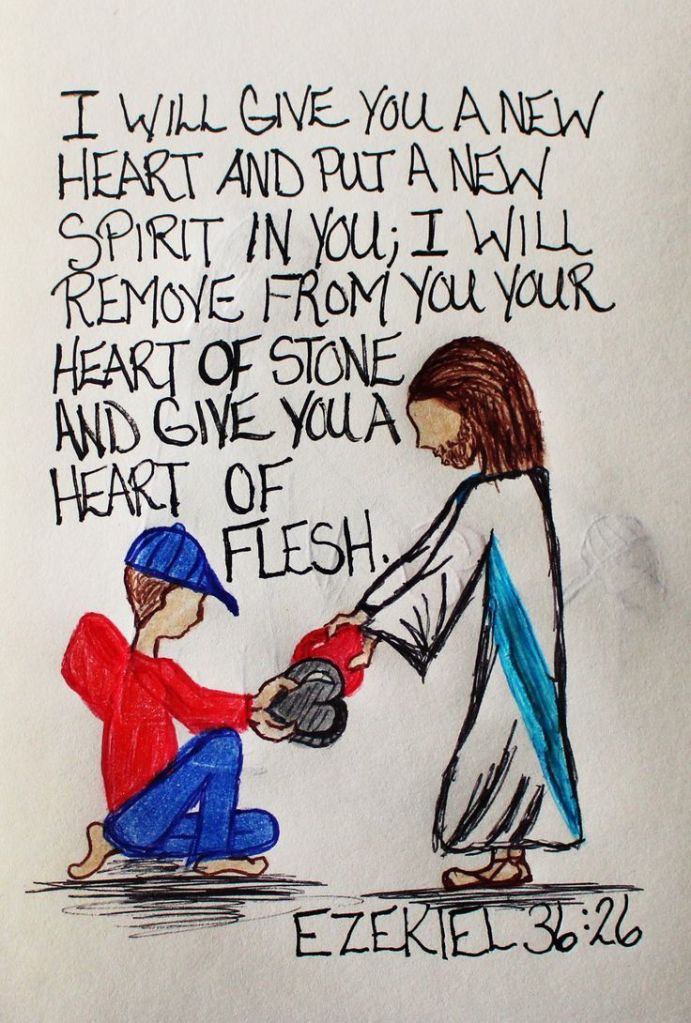
“They will return to it and remove all its vile images and detestable idols. I will give them an undivided heart and put a new spirit in them; I will remove from them their heart of stone and give them a heart of flesh. Then they will follow my decrees and be careful to keep my laws. They will be my people, and I will be their God. But as for those whose hearts are devoted to their vile images and detestable idols, I will bring down on their own heads what they have done, declares the Sovereign Lord.”

Then the cherubim, with the wheels beside them, spread their wings, and the glory of the God of Israel was above them. The glory of the Lord went up from within the city and stopped above the mountain east of it. The Spirit lifted me up and brought me to the exiles in Babylonia in the vision given by the Spirit of God.

Then the vision I had seen went up from me, and I told the exiles everything the Lord had shown me. (New International Version)

God’s heart is a heart of justice. The Lord abhors unrighteousness, injustice, and oppression. Thankfully, God will not sit idle and put up with systemic evil for long.

Ezekiel is one of those Old Testament prophets that thoroughly uncovered the true state things, especially of the human heart. Through a series of visions given to Ezekiel for the Israelite exiles, one of the main messages of the prophet is that God would give them a new heart. 

There is hope for the exile, for the one in captivity because of sin’s destructive, demeaning, and deluding power. Conversely, for those conforming to such ways, for the ones who caused the exile of others, the high Judge of the universe will deal with them according to their errant and rascally ways.

Dark shadows exist within the human heart. Although humanity has a great potential for altruistic good, people also have a large capacity for evil. Arrogant pride, self-centered behavior, and sheer ignorance can take such root within a person’s heart, as well as the heart of an organization or institution, that oppression becomes the norm, with fat cats ruling over an indigent people.

At best, the heart apart from God contains a miniscule vestige of its ancient Creator’s image; at worst, the heart is desperately wicked and on a highway to hell. 

The issue, then, is whether the heart only needs to be modified, or whether there is needed a complete heart transplant. The prophet makes it quite clear which option must be done.

Jesus Christ sacrificed himself on the cross so that we could be transformed into new people. He did not come to tweak a few things in life and improve upon it – he came to bring wholesale change and transform the heart. 

If all we needed was a motivational speaker who would inspire our hearts to live better and reach our personal goals, then we would have not needed an incarnation, a crucifixion, a resurrection and ascension. Jesus is the risen Lord and Savior who replaces our hard stubborn hearts with a soft new heart of flesh. 

We need transformation of life, not life modification.

Awesome God, you have graciously and surgically removed my old heart, which was bound for destruction, and replaced it with a new heart, oriented toward living and loving like the Lord Jesus. May my heart always be inclined to the doing of your will, in the power of your Holy Spirit. Amen.

Isaiah 61:1-7 – Better Days Ahead

The Spirit of the Sovereign Lord is on me,
    because the Lord has anointed me
    to proclaim good news to the poor.
He has sent me to bind up the brokenhearted,
    to proclaim freedom for the captives
    and release from darkness for the prisoners,
to proclaim the year of the Lord’s favor
    and the day of vengeance of our God,
to comfort all who mourn,
    and provide for those who grieve in Zion—
to bestow on them a crown of beauty
    instead of ashes,
the oil of joy
    instead of mourning,
and a garment of praise
    instead of a spirit of despair.
They will be called oaks of righteousness,
    a planting of the Lord
    for the display of his splendor.

They will rebuild the ancient ruins
    and restore the places long devastated;
they will renew the ruined cities
    that have been devastated for generations.
Strangers will shepherd your flocks;
    foreigners will work your fields and vineyards.
And you will be called priests of the Lord,
    you will be named ministers of our God.
You will feed on the wealth of nations,
    and in their riches you will boast.

Instead of your shame
    you will receive a double portion,
and instead of disgrace
    you will rejoice in your inheritance.
And so you will inherit a double portion in your land,
    and everlasting joy will be yours. (New International Version)

The message of better days ahead was a breath of fresh air to a beaten down people.

Just today I was speaking with an intensive care nurse who said, “It’s one thing to have a hard day, or know a few weeks will be difficult. It’s altogether another thing when it seems there’s no end to the hard deaths we experience.” Whenever things have gone sideways for so long, we find our lives needing restoration and renewal.

That was the situation for the ancient Israelites. They needed deliverance from their awful predicament. They longed for healing, freedom, and comfort from their grief. After centuries of a downward spiral into disobedience and going their own way, the people found themselves bereft of resources.

After you have suffered for a little while, the God of all grace, the one who called you into his eternal glory in Christ Jesus, will himself restore, empower, strengthen, and establish you.

1 Peter 5:10, CEB

The people needed the year of the Lord’s favor – the year of Jubilee. The Jubilee was supposed to occur every fiftieth year of Israel’s existence in the Promised Land. For forty-nine years there were individuals and families who either incurred debt, indentured themselves into servitude for survival, landed in prison, or ended up laboring in the fields they once owned.

According to the Law, after the forty-nine years, on the fiftieth year, the debts were erased, slaves were freed, fields allowed to rest, and the land restored back to its original owners. God’s deliverance is meant to be not only spiritual, but also very tangible and real.

Salvation is not just otherworldly – it’s also a transformation of the world we inhabit in the here and now.

The need for good news presupposes there’s been some bad news happening. The Lord deliberately gives attention to the oppressed, the brokenhearted, the captives, the prisoners, those who mourn, and the faint of heart. God is concerned for the lowly and the weak. 

It’s significant to note that Israel found themselves in such need not necessarily because they were always victims of adverse situations, but also because they failed to obey the stipulations of their covenant with God. 

We have no actual evidence the Israelites even practiced the Jubilee. After entering the Promised Land, by the time fifty years came down the pike, they had slid so far down the spiritual drain, it was completely off their radar to practice a Jubilee.

It seems no one had any intention of forgiving debts, freeing their indentured servants, giving back the land to original owners, or providing the land itself with a Sabbath rest. 

To not practice the Jubilee was to rob people of their land and practice injustice. But God loves justice and hates robbery. God pays attention to those who are not receiving very real and tangible needs for their lives. So, God speaks words of hope and deliverance for those in circumstances beyond their ability to cope.

The first few verses of today’s Old Testament lesson were the words Jesus read in the synagogue when he began his earthly ministry. Christianity observes that Jesus Christ is the ultimate fulfillment of this promise for deliverance and provision. He came to establish a Jubilee celebration that would never end.

It might be easy for some folks to overlook these verses as pertaining to them. After all, they are blessed, both materially and spiritually. They can always identify people who are in much more need than they are. But we must recognize that the maladies of our hearts are very real. There are specific conditions in our lives that leave us, not just them,in bondage and in need of restoration, renewal, and revitalization, just like the Israelites of old. 

We must name those maladies which are stuffed away in a closet of our heart, such as: the love of things and money; severed relationships; old grudges; hidden addictions; domestic violence; denial of depression; secret affairs; cutting; fear; anger; greed; and hatred. Outward smiles and small talk may hide the truth from others, but they do nothing to hide from a God for whom everything is laid bare.

It’s okay to be a glowstick, sometimes we need to break before we shine.

The good news is not just something for someone else who has “obvious” needs. The gospel must touch our lives and bring us freedom so that we can pass on that very real good news to the legion of social ills that make our world sick. 

There are people all around us who need spiritual, emotional, and material help. Yet, we will not have eyes to see them, or have hearts to help, if we are stuffing our burdens so deep within that we are blind to others.

On the other hand, we may too easily read today’s lesson in a manner it was not meant to be heard, as if we are more in need than we actually are, hearing it something like this: The Spirit of consumer choices is upon me, because the Lord has anointed me to preach good news to the middle-class. He has sent me to bind up the half-hearted, to proclaim more options for the limited, and release from Black Friday for the buyers, to proclaim the year of the Cyber-Monday. 

Perhaps we may not be so crass as to say that out loud, but we might have the tendency to misinterpret Bible passages so as to avoid our own great poverty of heart.

Whichever lens we tend to look at Isaiah’s prophecy, when we become experts at ignoring our needs and emotions, we fail to see the year of Jubilee. The stark reality is that no matter who we are, we need a biblical Jubilee.

Many people are either one paycheck, one prodigal kid, one mental health diagnosis, one serious illness, one drink, one affair, or one bad decision away from being the people we typically identify as in need – the ones that bad things happen to – the ones we do not want as next door neighbors.

We may not yet be vulnerable enough to admit our situation. So, we keep practicing the denial of our spiritual poverty. But everyone knows what a broken heart is. Everybody has a bondage they don’t want to admit. All people need renewal and restoration.

If we believe that tomorrow will be better, we can bear a hardship today.

How, then, shall we live?

Turn from the things which cause us poverty and bondage and turn toward delighting in the Lord your God. Rejoice, because God will make a sprout come up. God will cause us to grow. God will rebuild our ruined souls. God will restore the places of our lives that have been devastated. God will even renew the places that haven’t seen renewal for generations. It begins with you and me allowing the justice of God to work within us.

God can neither bring comfort to those who don’t mourn, nor turn grief into joy unless there is an acknowledgment of a dire situation. If we want to be an oak of righteousness, then there must be a confession of despair and an allowance of God’s justice through Jesus Christ to work its way in us.

Let us envision Jesus coming into our lives and replacing a tattered hat of grief with a crown of beauty. Picture the Lord placing on us a garment of praise to replace those stinky clothes of grumbling. Allow your life to display the grace of God in Christ, since we have been profoundly touched by the justice of God.

Lord Jesus, Carpenter and King, be merciful to the multitudes who today bear the indignities of injustice everywhere. Raise up leaders in every land dedicated to your righteous standards of order, equity, and justice. Grant to us the grace to fulfill our vocation of being loyal to kingdom ethics. Sharpen our intellects to pierce the pettiness of prejudice; to perceive the beauty of human fellowship. Guide our minds to a meaningful understanding of the problems of the poor, the oppressed, the unemployed, and the needy. Incline our hearts toward them, as is your heart, O Lord. May we hunger and thirst after justice always and do it in the power of the Holy Spirit. Amen.