Remember and Listen to History (Deuteronomy 32:1-10)

Listen, heaven, and I will speak.

Earth, hear the words from my mouth.

Let my teachings come down like raindrops.
Let my words drip like dew,
like gentle rain on grass,
like showers on green plants.
I will proclaim the name of the Lord.
Give our God the greatness he deserves!
He is a rock.
What he does is perfect.
All his ways are fair.
He is a faithful God, who does no wrong.
He is honorable and reliable.

He recognizes that his people are corrupt.
To their shame they are no longer his children.
They are devious and scheming.
Is this how you repay the Lord,
you foolish and silly people?
Isn’t he your Father and Owner,
who made you and formed you?

Remember a time long ago.
Think about all the past generations.
Ask your fathers to remind you,
and your leaders to tell you.
When the Most High gave nations their land,
when he divided the descendants of Adam,
he set up borders for the tribes
corresponding to the number of the sons of Israel.

But the Lord’s people were his property.
Jacob was his own possession.
He found his people in a desert land,
in a barren place where animals howl.
He guarded them, took care of them,
and protected them because they were helpless. (God’s Word Translation)

In addition to being a church pastor and a hospital chaplain, I hold two academic history degrees. I firmly believe the past is important. Having an historical perspective on just about everything is helpful in order to negotiate present circumstances.

Another way of saying this is that it’s imperative that we remember times from long ago, and think about all the past generations – what they faced, why they faced it, and how they dealt with it – because it all influences us right now, whether we are aware of it, or not.

Listening to others is important. Hearing and responding to the voice of God is necessary. And listening to voices of the past is just as crucial. After all, Holy Scripture is ancient, containing the voices of hundreds of people, as well as the voice of the Lord. The faithful throughout the ages have encountered all sorts of situations related to their religious tradition; and they remain as a great cloud of witnesses testifying to us and encouraging us in the way we ought to go.

In today’s Old Testament lesson, the Lord exhorted the people to remember, simply because they had forgotten. And whenever a people forget where they have come from, they forget who they are; and if they forget who they are, their very identity is in jeopardy of being hijacked by corruption, guilt, and shame.

Israel needed to recall their own history, because they were in danger of failing to tell their stories to the next generation, who in turn, would not then have anything to remember.

The great redemptive events of God in calling their father, Abraham, out of Chaldea, promising divine presence and property to the descendants of Abraham, Isaac, and Jacob; the miraculous deliverance from Egyptian slavery; and the wandering in the wilderness had to be lifted up and recognized, not forgotten.

In fact, every generation of believers needs to not only affirm their faith, but also restate that faith for the next generation.

And that is precisely what Moses did for the people. He restated Israel’s history and the giving of God’s Law for a new generation about to enter the Promised Land. Only with this collective memory of divine help and revelation would the people be able to make it in in the place they were going.

There is, I believe, a great collective ignorance of history. Many Westerners know very little of their own genealogy beyond a generation or two. Folks have little to no recollection of seminal events which have shaped the places where they live and work. It’s as if there is no foundation under their feet from which to stand firm.

For example, this is one reason why so many people of color get treated as if they do not belong – because the white folk in the room don’t even know their own history, let alone the background and challenges of those who look different than them.

“Every true history must force us to remember that the past was once as real as the present and as uncertain as the future.”

George Macaulay Trevelyan, Professor of History, Cambridge University, 1898-1943

History is about people, and not so much about dates and facts. And so, to be indifferent about history is to be disinterested, even calloused, toward other people. Conversely, to engage history and learn from it is to be transformed by it.

Historians are people tasked with describing and interpreting the past. They take the many historical facts and responsibly interpret those facts and events in a coherent narrative for the benefit of those in the present. That’s exactly what Moses did. He told Israel’s story.

Moses recalled the past, then retold it and revised it for his contemporary generation. All history is revisionist – and that’s a good thing. It just means that we faithfully tell the story of our past by clearly understanding that history within the historical actors own time and terms, as well as possessing an equally discerning grasp of the people who hear it.

An attention to history can guide us, and help heal us of our narcissistic ways. It can help dethrone us from the misguided belief that we are the center of the universe. History provides us with the tools necessary to hear and understand the other, enabling us to reconcile with one another. 

As we learn from reading and listening to historical narratives, we find resources that can bring transformation of our own lives and the communities in which we live. So, what are you waiting for? Read the Bible. Read history. Read the contemporary culture. Perhaps you will have a compelling, challenging, and coherent voice that will rise above all the other competing contemporary voices of contempt and corruption.

Great God of all history, thank you for the many faithful people who, through the centuries, have made a positive impact in this world.

Thank you for the godly men and women who, by your grace, have rewritten history books by their actions; who have heard your call to go into the world. We praise you for the good example they have shown and the difference they have made.

May you enable each of us to leave an imprint and legacy of your love and mercy in our spheres of influence, so that those who come after us will look back one day and say, “They made a difference.” Amen.


The Struggle Within (Romans 7:15-25)

I do not understand what I do. For what I want to do I do not do, but what I hate I do. And if I do what I do not want to do, I agree that the law is good. As it is, it is no longer I myself who do it, but it is sin living in me. For I know that good itself does not dwell in me, that is, in my sinful nature. For I have the desire to do what is good, but I cannot carry it out. For I do not do the good I want to do, but the evil I do not want to do—this I keep on doing. Now if I do what I do not want to do, it is no longer I who do it, but it is sin living in me that does it.

So I find this law at work: Although I want to do good, evil is right there with me. For in my inner being I delight in God’s law; but I see another law at work in me, waging war against the law of my mind and making me a prisoner of the law of sin at work within me. What a wretched man I am! Who will rescue me from this body that is subject to death? Thanks be to God, who delivers me through Jesus Christ our Lord! So then, I myself in my mind am a slave to God’s law, but in my sinful nature a slave to the law of sin. (New International Version)

We can relate to the Apostle Paul. We, along with him, have said to ourselves many times, “I don’t understand why I act the way I do. I don’t do what I know is right. I do the things I hate.” 

Paul’s experience of uneasiness, his existential angst because of the struggle within, is a timeless description of our common human condition. There are times we seem completely unable to follow our conscience and do what’s right. It can be maddening, even to the point of experiencing a continual low-level discouragement or depression which underlies almost everything we do.

The prescription for dealing with this mental, emotional, and spiritual malady does not include the law. That’s right. Putting our willpower and effort into obeying commands gets us nowhere. Even if we obey laws and rules and commands for a time, our efforts eventually break down. We fail to do what we want, and end up doing just the opposite.

In all fairness, the law is good, not bad; it just doesn’t have the capacity to transform us. The law’s purpose is to show us how bad off we really are in this world, to give us an awareness of our true condition, so that we will seek help. 

We humans are a bundle of contradictions, doing good, then bad, and flip-flopping back and forth – all with great frustration. In such a miserable condition, what then shall we do? Who will help us? Is there anyone to save us from our plight?

Sheer willpower and obedience will not help us; it won’t work. It will only give us a false hope. Any success in using willpower only deludes one into believing they have the answer… until they yet fall again into the pit of their own inner darkness. But the good news is that there is a Savior, a Redeemer, a Rescuer who has the will and the power to deliver us from our predicament.

The grace of God in Christ is the operative power that changes lives, not the law. Freedom from the tyranny of our “should’s” and our misplaced desires comes from Christ’s forgiveness through the cross. 

Like a lover enamored with his beloved, our desires become oriented toward Jesus for his indescribable gift to us. That is the strength of grace. Transformation is relational; it is found in a person, not a program. And the only person and relationship which has the ability to change us is, I believe with all my heart and mind, the Lord Jesus Christ.

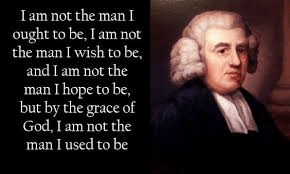
Why? Because I myself have been transformed and changed by such a relationship with Christ. I, along with the hymn writer John Newton, can say, “I once was lost but now am found, was blind but now I see.”

“Self-help” for all the good it really can do, is in many ways an oxymoron. We need a Savior to help us, and we need a community of people who encourage us. And even if we can do it ourselves today, that may not (and eventually will not) be true of us tomorrow. None of you got this far in life on your own – and you will continue to need God and others going forward.

Love must be completely sincere. Hate what is evil, hold on to what is good.Love one another warmly as Christians, and be eager to show respect for one another. Work hard and do not be lazy. Serve the Lord with a heart full of devotion. Let your hope keep you joyful, be patient in your troubles, and pray at all times. Share your belongings with your needy fellow Christians, and open your homes to strangers. (Romans 12:9-13, GNT)

We have an incredible capacity for good and vast internal resources within us. And yet, we too often lack awareness of this reality, for which we can tap into. When it comes to an outright metamorphosis, we need a new heart – and we can no more simply decide to change our lives any more than we can perform heart transplant surgery on ourselves.

People need the Lord.

Whenever the foundation of a house is about to crumble, it won’t do to rearrange the living room furniture and do a bit of spruce up painting. We deceive ourselves if we believe that all our efforts at landscaping the property and having a great curb appeal will do the trick. If the foundation crumbles, and the house implodes, all efforts at curb appeal won’t matter.

Jesus is our cornerstone. Without him, we are at risk, about to fall and without hope. With him, true restoration and renewal happens. And then, when the house is repaired and in order, we set about the task of being good stewards and maintaining and caring for the wonderful changes which were made.

Freedom from a dilapidated soul and misplaced energies to consistent times of peace and contentment, calmness and confidence, satisfaction and settled peace, comes by growing ever closer to the Savior who exudes all those qualities, and more. For the Lord not only saves and delivers; he also sanctifies and encourages.

In Christ, the uneasiness and unsettling experience – the existential angst – becomes a thing of the past because of the grace of merciful deliverance and continual help.

Saving God, I thank you for delivering me from sin, death, and hell through your Son, the Lord Jesus. May your Holy Spirit apply the work of grace to my life every day so that I can realize practical freedom from all that is damaging and destructive in my soul. Amen.

How Can the World Change? (Philippians 1:21-30)

For to me, living is Christ and dying is gain. If I am to live in the flesh, that means fruitful labor for me, yet I cannot say which I will choose. I am hard pressed between the two: my desire is to depart and be with Christ, for that is far better, but to remain in the flesh is more necessary for you. Since I am convinced of this, I know that I will remain and continue with all of you for your progress and joy in faith, so that, by my presence again with you, your boast might abound in Christ Jesus because of me.

Only, live your life in a manner worthy of the gospel of Christ, so that, whether I come and see you or am absent and hear about you, I will know that you are standing firm in one spirit, striving side by side with one mind for the faith of the gospel and in no way frightened by those opposing you. For them, this is evidence of their destruction but of your salvation. And this is God’s doing. For he has graciously granted you the privilege not only of believing in Christ but of suffering for him as well, since you are having the same struggle that you saw I had and now hear that I still have. (New Revised Standard Version)

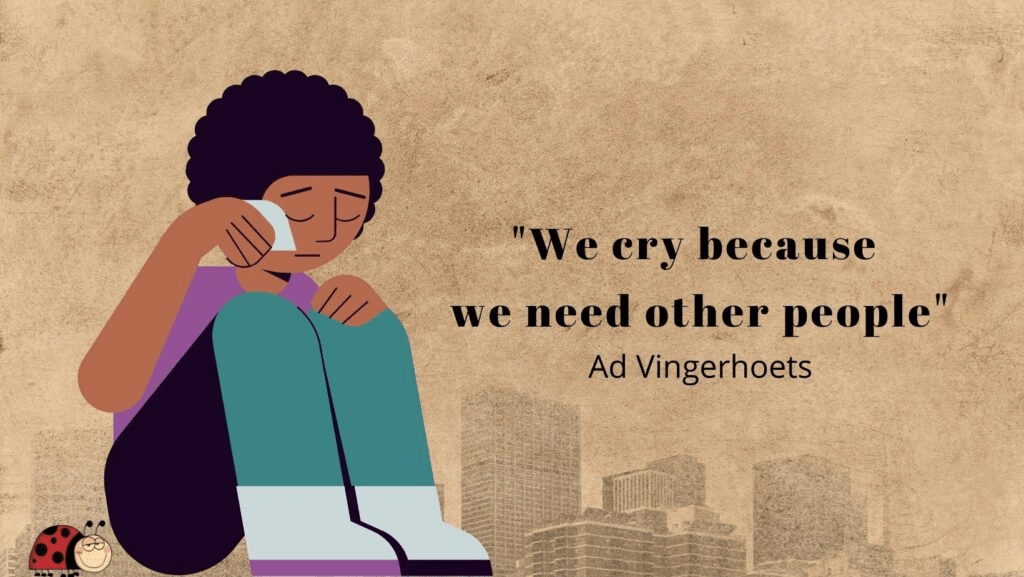
I believe that one of the greatest tragedies of this contemporary age is that millions of people suffer in silence, alone, with nobody knowing what they’re going through. Countless others cry by themselves, even in public. It’s as if someone who is suffering or sad is a pariah whom we cannot get close to.

It is not supposed to be this way. Suffering by oneself is a tragedy. Suffering with others is a privilege. We are not only meant to be one in spirit when things are going well and it’s a joyous occasion; we’re also to maintain that close unity when the world seems to be falling apart and there are those who are profoundly hurting in either mind, spirit, or emotion.

A few years ago, I stood amongst a gathered group of people, most of whom I did not know.  I was there for a memorial service of a fellow colleague. She received the kind of news that no one wants to hear. In a matter of weeks, she was gone. Not every funeral I attend (or even officiate) is beautiful. This one was, and here’s why: It was a collective experience of both joy and sorrow.

I walked away from my friend’s remembrance with a clear conviction – one that had been percolating and forming within me for quite some time.

This conviction might seem exaggerated, yet it by no means is meant to be. It’s just what I have come to believe about the universal human experience.  It comes from the confidence and experience of a lifetime of observation and ministry.

It is neither merely a heartfelt sentiment nor a passing feeling. No, it really is a conviction, a firm principle or persuasion. It is this:

Crying with strangers in person has the power to change the world.

I think I’ve always known this. It just crystalized for me through that experience. After all, I have watched with awe the privilege of walking into a dying patient’s room, full of tearful family, and be with them in their pain.  The sharing of stories is powerful, eliciting both great joy, reminiscent laughter, and profound gratitude; as well as tremendous sorrow, grinding grief, and sad lament. 

Tears and celebration mix in a sacred alchemy producing a kind of care which transcends description.

It’s one thing to observe other’s joy and sorrow on the evening news, or even from afar. It is altogether a different reality to participate up close and personal. It’s something akin to watching a travel documentary on Yellowstone Park versus visiting the place in person; there’s just no comparison. 

Shared human experiences of suffering will nearly always translate into new and emerging capacities for empathy. And where empathy exists, there is hope for all humanity. 

Being with another person or group of people in their suffering creates a Grinch-like transformation in which our hearts suddenly enlarge. A single tear from a singular small little Who girl in Whoville had the power to penetrate years of hardness of heart and change what everyone thought was a shriveled soul full of garlic and gunk.

Said a different way: The spiritual and emotional heart of a human being is able to shrink or expand. It shrinks from spending far too much time alone and/or holding others at bay, at arms-length, while playing the armchair critic to those who are out rubbing shoulders with real flesh and blood people. 

The Grinch never went back to his isolation. Instead, he did what Whoville thought was the unbelievable: The Grinch fully participated in the joy of the community, up close and personal.  It was a full-bore holding of hands, singing, and eating – which illustrates a conviction I’ve held for a long time:

Hospitality, that is, showing love to outright strangers through celebrative participation with food and drink, has the power to change the world.

Hospitality cannot happen from afar. Sitting around the table with strangers and interacting with them is needed. It alters our perspectives so that we live our shared humanity. It is rather difficult to hate someone when you get to know them and discover their loves and joys, hurts and wounds.

This all leads toward asking one of the most fundamental and basic biblical questions that must be asked by every generation and considered by everyone who respects God and/or the Christian Scriptures:

Am I able to see the image of God in someone very different from myself?

The Christian doesn’t have to go very far to answer this one, at least from an objective cerebral perspective.  Jesus saw the humanity in everyone he encountered, from Jew to Gentile, from sinner to saint.  In fact, Jesus saw this image so deeply within another that he sat around the table and ate with people whom others saw as not worthy to eat with.  Jesus’ willingness to participate in the hospitality of strangers was downright scandalous.  It isn’t a stretch to say that it got him killed.

What’s more, Jesus wept. He cried in public with strangers. For followers of Christ who seek to emulate him in his practical ministry, that point ought to be noticed. After all, we choose to remember and participate in the life of Christ through the elements of bread and wine at the Table. God’s radical hospitality toward us is truly meant to translate to an open heart toward those who look and act differently than me.

The great fourteenth century mystic, Julian of Norwich, a female devotee of Christ and an influential theologian in her own right amongst a world of men who tended to see the image of God in women as flawed, understood what it would take to reawake image-bearing humanity. She stated:

“All that is contrary to peace and love — is in us and not in God. God’s saving work in Jesus of Nazareth and in the gift of God’s spirit, is to lessen our wrath in the power of his merciful and compassionate love.”

Julian of Norwich

Don’t think for a minute that suffering with and crying with strangers is an easy thing for me. Truth is, crying is not something I typically do, or even like to do. Yet, constrained by the love of God in Christ, and putting myself in a position to feel with the emotions of others in front of me, I allow those tears to come.

Yes, collective experiences of emotion have the power to change the world. Yet, this occurs only if we show up.  Perhaps that was the reason for the Christian doctrine of the incarnation: Jesus is our Immanuel, God with us, the One who is present.  He showed up, and salvation happened.

And that is what the Philippian Church needed to remember, tap into, and live as one Body of Christ for the life of the world.

Learn to Live Well (Micah 7:18-20)

The Prophet Micah exhorting the Israelites to repent by Gustave Doré (1832-1883)

Who is a God like you, pardoning iniquity
    and passing over the transgression
    of the remnant of his possession?
He does not retain his anger forever
    because he delights in showing steadfast love.
He will again have compassion upon us;
    he will tread our iniquities under foot.
You will cast all our sins
    into the depths of the sea.
You will show faithfulness to Jacob
    and steadfast love to Abraham,
as you have sworn to our ancestors
    from the days of old. (New Revised Standard Version)

In a world obsessed with constant and rapid change, it is refreshing to know that there is a God whose essential character, attributes, and way of being in the world never changes.

The Lord is a God who is faithful, always keeping divine promises to people. God is pleased to show steadfast love and kindness through extending forgiveness. And because the Lord values pardoning human transgressions, God always looks sin square in the eye – not ever sugarcoating iniquities – and puts it down like a rabid animal.

In the prophet Micah’s day, the social and communal sins of the people were legion, leading to a great deal of injustice. Wealthy landowners creatively and unjustly seized property in order to feed their continual greed for more; false prophets went about preaching a positive future of peace, even though the poor became poorer through no fault of their own; and the nation’s leaders abused their power by fleecing the people of what little they had to begin with.

In short, dishonest business practices, dressed up by leadership as the path to prosperity, stirred up the just and right indignation of God. An assurance of pardon comes, yet only after there is confession of sin.

In this present contemporary era, we have our own legion of social sins which must be identified, confronted, confessed, expiated, and replaced with virtues that foster life and happiness.

Today’s way of doing business – whether in the corporate world and even in many faith communities – is to embrace an unholy ethic of more, faster, and better.

“Wait,” you may push back, “that doesn’t sound to me like anything bad.” And I would respond by saying that this is evidence of how far into our sin we have become, that we cannot distinguish our unjust practices from legitimate just practices.

Behind many contemporary business “ethics” are compulsions to beat the competition at all cost, obsessions with more money, and a lust for power and control. These are not practices helping people to live well.

More

In ancient Egypt, Pharaoh’s massive industrial complex was built on more – more pyramids and buildings, more wealth, more power and influence. Behind the “more” is usually old-fashioned greed. We want more market share, more numbers, more options and opportunities, more control.

Yet, what if the people doing the “more” are already tired, weary, and have given what they can? Like the Israelite slaves in Egypt, making more bricks translated to more wealth. And if it takes a literal whip to make them do more, then so be it.

Many modern workers put up with the “more” mantra only because they need their jobs and fear losing them if they don’t keep a ridiculously high level of production. And if anybody complains about it, they immediately get labeled (by the people in power) as not being grateful.

Faster

I once worked a job where a manager would occasionally and literally stand over my shoulder and time me with a stopwatch… sheesh… and I worked another job in which there was a quota for every day; we had to keep pace because production was king.

You don’t need to be in a factory for the clock to be the taskmaster. I don’t know of anyone who is hounded by a boss about time to experience contentment, peace, and rest. Speeding up to meet a quota or deadline only promises to create the necessity for more change, done faster.

None of this makes for a good life; and I would argue that it doesn’t make for good business either. It only produces empty and vacuous people who sacrifice themselves on the altar of work.

We are finite creatures with finite time and resources. We are not inanimate machines without a soul.

Better

One of the manifestations of valuing speed and productivity is also expecting fewer mistakes – because imperfection slows the wheels of progress. This is where people begin to be treated like machines instead of humans. And they become expendable; if they don’t do better, they get replaced with someone else.

Furthermore, this push to do better is often why workers are told to keep their problems at home and not bring them to the job. This has had a terrible impact on individuals, their families, and their relationships.

Forced compartmentalization has the effect of breaking down integrity and creating disparities. People’s very normal struggles cannot be shared with anyone but a professional counselor, therapist, or pastor. Their feelings and emotions become privatized.

Giving someone a list of resources might make management feel better, but it does little to actually help a grieving person who is right under their nose. Depression sets in because the person’s experience and emotions have been implicitly invalidated, leaving them with a sense that they’re meaningless and are a burden on others.

More, faster, and better – continually pumped into society’s bloodstream – is only making the world anxious, depressed, and with no energy to keep being yourself, that is, if you even know who you are anymore after such a pace of work.

What If?

Instead of more, faster, better, what if we…

  1. Embrace an unforced rhythm of life which recognizes the values of slowness, simplicity, and satisfaction?

2. Ask people to be themselves, to live life at a pace that’s doable and enjoyable?

3. Expect workers and people everywhere are to rest and adopt Christ’s easy yoke?

4. Take up the mantle as God’s people to be a counter-cultural movement of relationships which emphasize grace, love, mercy, patience, peace, joy, and spiritual support?

5. Put our energies into the careful construction of souls, instead of draining the spirits of people through unrealistic expectations?

6. Sought to live a simple life, without the need for more?

7. Learn to be satisfied with what we already have?

8. Rid ourselves of financial language to communicate with one another? (e.g. “invest in eternity,” “be an asset, not a liability,” “pay your debt to society,” etc.)

For the Christian, transformation isn’t dependent upon praying more, reading more, giving more, or serving more. Spiritual growth isn’t realized overnight; it takes time, in fact, a lifetime. And change isn’t about trying to be better, since our identity is already firmly in Christ.

My friends, you and I are enough. Transformation of life is the result of becoming open and receiving the grace of God in Christ. If we want forgiveness, we must face the sin of our world in all of its deceit, degradation, and damage.

Let’s not find ourselves on the other end of God’s ire because of unsound practices which dehumanize others. But let us accept and adopt rhythms of life that are consistent with being human and caring for others. That’s what the prophet Micah was looking for.

May it be so, to the glory of God.