
Galatians 6:1-16 – Fulfill the Law of Christ

Brothers and sisters, if someone is caught in a sin, you who live by the Spirit should restore that person gently. But watch yourselves, or you also may be tempted. Carry each other’s burdens, and in this way you will fulfill the law of Christ. If anyone thinks they are something when they are not, they deceive themselves. Each one should test their own actions. Then they can take pride in themselves alone, without comparing themselves to someone else, for each one should carry their own load. Nevertheless, the one who receives instruction in the word should share all good things with their instructor.

Do not be deceived: God cannot be mocked. A man reaps what he sows. Whoever sows to please their flesh, from the flesh will reap destruction; whoever sows to please the Spirit, from the Spirit will reap eternal life. Let us not become weary in doing good, for at the proper time we will reap a harvest if we do not give up. Therefore, as we have opportunity, let us do good to all people, especially to those who belong to the family of believers.

See what large letters I use as I write to you with my own hand!

Those who want to impress people by means of the flesh are trying to compel you to be circumcised. The only reason they do this is to avoid being persecuted for the cross of Christ. Not even those who are circumcised keep the law, yet they want you to be circumcised that they may boast about your circumcision in the flesh. May I never boast except in the cross of our Lord Jesus Christ, through which the world has been crucified to me, and I to the world. Neither circumcision nor uncircumcision means anything; what counts is the new creation. Peace and mercy to all who follow this rule—to the Israel of God. (New International Version)

It’s all about grace. God’s grace. Not rules. Not a list of principles to live by. Not judgment. Not punishment or penance. Grace – amazing, wonderful, scandalous grace.

The Law of Christ is to help each other in our troubles, no matter what.

Overwhelming physical, mental, emotional, and spiritual burdens can become even more heavy through failing to live up to someone’s or some group’s unwritten list of rules. “Keep a stiff upper lip.” “Everything is possible for those who love God.” “Stay positive.” “Just have faith and trust God.” Or someone’s silence…. These and hundred other phrases communicate to people with crushing spiritual and emotional loads that they will have to carry them alone.

The letter to the Galatian believers spells out what is to truly characterize Christian interactions, and what it means to walk in the Spirit. Believers in Jesus are to emulate the behavior of Christ, the ultimate burden-bearer, who came to restore sinners, not condemn them. We have a responsibility to rescue, renew, and revitalize persons who have lost their way. We are our brother’s and our sister’s keeper.

Someone caught in the crosshairs of a bad decision, or ensnared by making a wrong step, who is now in over their heads, needs help. In such a case, we are to restore, not punish. The person’s wound needs spiritual cauterizing. The broken spirit needs to be set back into place to heal properly.

The tone and the attitude which we do this important work of restoring people is through gentleness (meekness). We are to have a mindset and a heart stance which understands there is no moral superiority with me. I could easily be that person in need of restoration.

With a gentle spirit, we discern no one is above falling into the same trouble. We, too, are ethically and morally vulnerable. So, the church has a corporate responsibility to bear one another’s burdens.

There are other people who, through no fault of their own, find themselves in over their heads, too. Their physical struggles, mental health challenges, the emotional weight of hard circumstances, and their broken spirits require others to help shoulder the load so that the weighted-down person is not crushed.

Burden-bearing is the work of everyone and not a select few. You and I are to take responsibility for our own backpack of stuff – our own actions and attitudes. A mature spiritual community of people are able to distinguish those loads which individuals must bear for themselves, and those burdens where help is sorely needed. We are accountable to carry our own backpack. And we are also accountable before Christ to share our load with others when it becomes too heavy to carry.

If we choose not to allow others to assist us when we need it, then we will reap what we sow – we’ll feel the full weight and consequences of our silence. The planting and harvesting metaphor isn’t just for those who have engaged in wrongdoing. It is also for those who don’t put any seeds in the ground to begin with. They shouldn’t expect a harvest, at all.

Grace lived out in real experiences knows when to get under a load and help carry it. And grace also knows when to be kind to self and share the heavy burden with others who can help shoulder it for a bit. This is a Christianity which relies on the enablement of the Spirit, made possible by Christ, who carried our crushing weight of guilt and shame for us.

“Come to me, all you who are weary and burdened, and I will give you rest. Take my yoke upon you and learn from me, for I am gentle and humble in heart, and you will find rest for your souls. For my yoke is easy and my burden is light.”

Jesus (Matthew 11:28-30, NIV)

Motives matter. The interior life of a person is important. Life is neither a mere getting things done nor doing what is needed on the exterior. A house may be beautiful and orderly on the outside, with careful landscaping, a manicured lawn, and attractive appearance – yet on the inside it might be disorderly, full of relational discord, and completely discombobulated.

The exterior life of a person is also important. But it’s only half the person. And, unlike God who sees the heart, we aren’t always privy to what’s going on inside someone. Folks who are enamored with outward displays of spirituality and righteousness tend to be compulsive about maintaining appearances – for both themselves, and everyone else.

Policing outward forms of righteousness through clear identifiable means is really nothing more than old fashioned judging of one another. It’s antithetical to grace. And it smacks of the snooty superiority of Star-Bellied Sneetches.

Rather than a star on the belly, in the Apostle Paul’s day it was circumcision. Those who had it were “in” and those without it were “out.” Never mind the interior life. A hard outward boundary of righteousness was established by false teachers who made the Christian life easy by simply holding to readily observable forms, like circumcision.

It wasn’t that circumcision was a bad thing. The issue was making it a necessary part of the Christian life. Not circumcised? Not a Christian, insisted the false teachers. In other words, one had to become Jewish before becoming a Christian. I can picture the Apostle Paul doing a  face palm, saying, “Oy vey.”

For the Christian, one must be vigilant not to exaggerate baptism. On the one hand, I would argue far too many believers underestimate the significance and importance of baptism. Flippantly making it a personal choice, as if the individual is in complete control of one’s own salvation, is not only wrongheaded – it’s downright blasphemous.

Yet, on the other hand, a preoccupation with getting a person, especially a child, baptized, as if the world might end if it doesn’t happen, betrays the same problem as Paul faced with circumcision in the first century.

The proper approach, it seems to me, is to embrace the full spectrum of Christianity – both outward and inward – the whole person. And Paul addresses this by anticipating a question of the Galatian congregation: What, then, is of central importance?

The answer is: a new creation. To be transformed by the power of the Spirit is what really counts. The grace of God in Christ, applied to a person, brings a change to inner motives and attitudes, as well as outer behavior through loving actions.

We must always keep in mind that the sign points to the substance. It would be weird if I were traveling to Milwaukee on I-94 and pulled over on the interstate next to the sign marking the city is ahead, crawl all over it, and say, “I’m here!”

The overall thrust of Paul’s letter to the Galatians is that they were debasing the true worship of God into an outward show, honoring Christ with their lips but not holding him in their hearts through carrying one another’s burdens.

Christianity is fundamentally not about what we do for God but what God has done for us in Jesus Christ. It is divine grace which saves people. We belong to God. Just as we neither chose our own parents nor the time when we were born, so also, before we chose God, God chose us. We don’t “born again” ourselves; God does the rebirthing.

Since salvation is solely the work of God in us, there is zero reason to boast about the circumstances of our new birth and becoming a new creation in Christ. We didn’t save ourselves. It would be like getting a COVID-19 vaccine and then bragging about how we personally stopped the pandemic.

Instead, we are to bear the spiritual marks of Christ’s crucifixion on our inner selves. No one is saved because they deserve it but simply because they need saving. That’s what grace truly is – and that’s how we are to live toward one another.

Merciful God, you are our Burden-Bearer. Awaken our hearts to remember your love. Open our eyes to see your grace. Stir up hope in those who are overwhelmed with sorrow and fear. Teach them to place their burdens at your feet as an offering — a sacrifice well-pleasing to you. Teach us all to allow others to help us in our time of need, through Jesus Christ our Lord, who with you and the Holy Spirit are one God, now and forever. Amen.

Romans 7:14-25 – Our Existential Angst

We know that the law is spiritual; but I am unspiritual, sold as a slave to sin. I do not understand what I do. For what I want to do I do not do, but what I hate I do. And if I do what I do not want to do, I agree that the law is good. As it is, it is no longer I myself who do it, but it is sin living in me. For I know that good itself does not dwell in me, that is, in my sinful nature. For I have the desire to do what is good, but I cannot carry it out. For I do not do the good I want to do, but the evil I do not want to do—this I keep on doing. Now if I do what I do not want to do, it is no longer I who do it, but it is sin living in me that does it.
 
So, I find this law at work: Although I want to do good, evil is right there with me. For in my inner being I delight in God’s law; but I see another law at work in me, waging war against the law of my mind and making me a prisoner of the law of sin at work within me. What a wretched man I am! Who will rescue me from this body that is subject to death? Thanks be to God, who delivers me through Jesus Christ our Lord!
 
So then, I myself in my mind am a slave to God’s law, but in my sinful nature a slave to the law of sin. (New International Version)
 
We can relate to the Apostle Paul. We, along with him, have many times said to ourselves, “I don’t understand why I act the way I do. I don’t do what I know is right. I do the things I hate.” 
 
Paul’s existential angst is a timeless description of our common human condition. There are times we seem completely unable to follow our conscience and do what’s right. It can be maddening, even to the point of experiencing a continual low-level discouragement and/or depression which underlies almost everything we do.
 
The prescription for dealing with this mental, emotional, and spiritual malady does not include the law. That’s right. Putting our willpower and effort into obeying commands gets us nowhere. Even if we obey laws and rules and commands for a time, our efforts eventually break down. We fail to do what we want and do just the opposite.
 
The law isn’t bad. It just doesn’t have the capacity to transform us. The law’s purpose is to show us how bad off we really are in this world, to give us an awareness of our true condition so that we will seek help. 
 
We humans are a bundle of contradictions, doing good, then bad, and flip-flopping back and forth – all with great frustration.
 
In our abject misery, what then, shall we do? Who will help us? Is there anyone to save us from our plight?
 
Sheer willpower and obedience will not help us; it won’t work. It will only give us a false hope. Any success in using such willpower only deludes one into believing they have the answer… until they yet fall again into the abyss of their own inner darkness.
 
The good news is that there is a Savior, a Redeemer, a Rescuer who has the will and the power to deliver us from our predicament.
 
The grace of God in Christ is the operative power that changes lives, not the law. Freedom from the tyranny of our “should’s” and our misplaced desires comes from Christ’s forgiveness through the cross. 
 
Like a lover enamored with his beloved, our desires become oriented toward Jesus for his indescribable gift to us. That is the strength of grace. Transformation is relational; it is found in a person, not a program. And the only person and relationship which has the ability to change us is, I believe with all my heart and mind, the Lord Jesus Christ.
 
Why? Because I myself have been transformed and changed by such a relationship with Christ. I, along with the hymn writer John Newton, can say, “I once was lost but now am found, was blind but now I see.”
 
“Self-help” for all the good it really can do, is in many ways an oxymoron. There is no Bible verse which states that God helps those who help themselves.
 
Yes, we have an incredible capacity for good and vast internal resources within us which we lack awareness of for which we can tap into. Yet, when it comes to an outright metamorphosis, we need a new heart – and we can no more simply decide to change our lives any more than we can perform heart transplant surgery on ourselves.
 
People need the Lord.
 
Whenever the foundation of a house is about to crumble, it won’t do to rearrange the living room furniture and do a bit of spruce up painting. And we deceive ourselves if we believe that all our efforts at landscaping the property and having a great curb appeal will do the trick.
 
If the foundation crumbles, the house implodes, and nothing else will matter.
 
Jesus is our cornerstone. Without him, we are at risk, about to fall and without hope. With him, true restoration and renewal happens. And then, when the house is repaired and in order, we set about the task of being good stewards and maintaining and caring for the wonderful changes which were made.
 
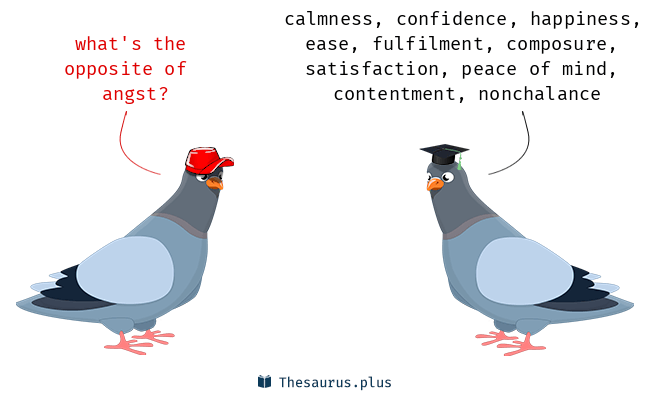
If we want freedom from self-loathing and to experience peace and contentment, calmness and confidence, satisfaction and settled peace, then we will grow ever closer to the Savior who exudes all those qualities, and more.
 
For the Lord not only saves and delivers; he also sanctifies and encourages. And the existential angst becomes forgotten.
 
Saving God, I thank you for delivering me from sin, death, and hell through your Son, the Lord Jesus. May your Holy Spirit apply the work of grace to my life every day so that I can realize practical freedom from all that is damaging and destructive in my soul. Amen.

Galatians 4:8-20 – It’s All About Grace

A mosaic of the Apostle Paul in St Isaac’s Cathedral, St. Petersburg, Russia

Formerly, when you did not know God, you were slaves to those who by nature are not gods. But now that you know God—or rather are known by God—how is it that you are turning back to those weak and miserable forces? Do you wish to be enslaved by them all over again? You are observing special days and months and seasons and years!I fear for you, that somehow I have wasted my efforts on you.

I plead with you, brothers and sisters, become like me, for I became like you. You did me no wrong. As you know, it was because of an illness that I first preached the gospel to you, and even though my illness was a trial to you, you did not treat me with contempt or scorn. Instead, you welcomed me as if I were an angel of God, as if I were Christ Jesus himself. Where, then, is your blessing of me now? I can testify that, if you could have done so, you would have torn out your eyes and given them to me. Have I now become your enemy by telling you the truth?

Those people are zealous to win you over, but for no good. What they want is to alienate you from us, so that you may have zeal for them. It is fine to be zealous, provided the purpose is good, and to be so always, not just when I am with you. My dear children, for whom I am again in the pains of childbirth until Christ is formed in you, how I wish I could be with you now and change my tone, because I am perplexed about you! (New International Version)

Grace is the most wonderful spiritual reality of all. It is forgiveness, freedom, faith, acceptance, and love all rolled up in a package given specially to you and me.

Grace is also terribly hard for a lot of folks to wrap both their heads and their hearts around. It is scandalous, subversive, and stupefying.

It was hard for the Galatian Church. Having embraced the grace of God in Christ for their deliverance from guilt and a shameful past, they then set their lives on the law to work out their sanctification. In other words, the Galatian believers did a sort of half-repentance; they turned from useless ways and were saved by grace, then turned around and decided, like a dog returning to it’s vomit, to go back to the law for the governing rule of their Christian lives.

If grace was good enough for salvation (which it was) it’s also good enough for sanctification, to be the chief operating force of the Christian’s life and ministry (which it is).

“Grace fills empty spaces but it can only enter where there is a void to receive it, and it is grace itself which makes this void.”

Simone Weil

A life filled with endless rules and regulations is unable to receive the life-flowing life-giving stream of grace. Grace is even so wondrously powerful that it is the force which breaks all other lesser forces and takes over.

This was the Apostle Paul’s experience. Having been the ultimate rule-keeper and law-abider, he was completely overtaken by a tsunami of grace. It stripped him of all the laws which kept him from Christ and the gospel. Grace changed his mind, his heart, and his life. He would never be the same again.

So, with the confidence of grace behind him, Paul could implore the Galatians to be just like him. I wonder if any of us could say the same.

Paul was a committed follower of Jesus – so much so that he ached and longed for others to embrace a life of grace, just as he had. It was actually painful for Paul to see others held by the cold grip of the law and not the warm embrace of grace. Like a mother about to give birth, he was laboring and working hard to give spiritual birth to those that would become like Jesus.

If you have experienced a transformed life in Jesus Christ, as if you have been born again by grace through the Spirit, then you likely feel and resonate with the travail of Paul. Knowing the elixir of grace, you want everyone to drink it in and be inebriated with its effects. You want it so bad that it hurts. You desire it to the point of exclaiming, “I beg you to be like me!”

You may spend many of your days with family, friends, neighbors, or co-worders who are strangers to grace. Either they are stuck in the clutches of the law and are fearful stick-in-the-muds because of it, or they simply do not know what they are missing. 

It is good to regularly ask ourselves, “What am I afraid of? Will this thing matter in the end? Is it worth holding on to?”

Grace will lead us into our fears and emptiness, and grace alone can fill them up, that is, if we are willing to stay in the void. We must become comfortable with asking questions for which we might never get answers.

People of deep faith develop a high tolerance for ambiguity and find less and less a need for the certainty of rules and regulations. Grace teaches us to swim in the river of mystery and find our home in faith.

Gracious God, may you weave your way into the lives of those who need you the most, so that mercy will be more than a theological idea. Work in me in such a way that I can stand with Paul and encourage others to be like me, through Jesus Christ, in the power of the Holy Spirit. Amen.

Ephesians 2:11-22 – Included

Therefore, remember that formerly you who are Gentiles by birth and called “uncircumcised” by those who call themselves “the circumcision” (which is done in the body by human hands)—remember that at that time you were separate from Christ, excluded from citizenship in Israel and foreigners to the covenants of the promise, without hope and without God in the world. But now in Christ Jesus you who once were far away have been brought near by the blood of Christ.

For he himself is our peace, who has made the two groups one and has destroyed the barrier, the dividing wall of hostility, by setting aside in his flesh the law with its commands and regulations. His purpose was to create in himself one new humanity out of the two, thus making peace, and in one body to reconcile both of them to God through the cross, by which he put to death their hostility. He came and preached peace to you who were far away and peace to those who were near.For through him we both have access to the Father by one Spirit.

Consequently, you are no longer foreigners and strangers, but fellow citizens with God’s people and also members of his household, built on the foundation of the apostles and prophets, with Christ Jesus himself as the chief cornerstone. In him the whole building is joined together and rises to become a holy temple in the Lord. And in him you too are being built together to become a dwelling in which God lives by his Spirit. (New International Version)

There is perhaps no better explanation in the entire New Testament about what the Church truly is than here in today’s lesson.

The redemptive events of Jesus – especially the crucifixion of Christ – has completely changed everything. The cross is the mid-point of history, the fulcrum in which all things in heaven and on earth hinge.

The cross has totally transformed our status from being:

  • in Adam (fallen and separated from God) to being in Christ (now lifted and in union with God)
  • in the flesh (driven by our immoral and unethical impulses) to being in the Spirit (now driven by moral and ethical desires)
  • a Jew or a Gentile (defined by race, ethnicity, etc.) to being one people of God, a new egalitarian society, the community of the redeemed, the Church.

We were once far from God. Now we are brought near through the blood of Christ.

We are included, not excluded; graced and loved, not shamed and shunned.

And our status isn’t based on physical circumcision but on circumcision of the heart, that is, by faith.

There was a time when we were estranged from God, as if we were migrants from another country, or aliens from another world. We were strangers with no visible hope in anything or anyone.

But now, because of Christ’s cross, we have become near to God, gained an inheritance in Christ, and are seated in the heavens as royalty. Everything has mercifully changed. All is incredibly different – a good different.

Jesus Christ himself is our peace. He is the superglue who has bonded us to God and to one another as the one people of God. Because of this gracious union, there is no more anger and malice toward each other. There is, instead, peace.

The Lord Jesus has torn down the walls of separation between people, stripped the armor off of those who used it to keep a distance, and obliterated all obstacles to genuine relational connection – including the obstacle of the Law.

By his crucifixion, death, and resurrection, Christ Jesus fulfilled all the demands of the Law. Therefore, the Law of Moses is no longer needed. Those who love one another and carry one another’s burdens are the ones who fulfill the Law of Christ.

The reason for abolishing all the laws and layers of separation is so that Christ could create one new people from the disparate groups – thus making peace through the cross.

Just as two people come together in marriage and create an entirely new relationship – one new person from the two – so Christ has joined Jew and Gentile together and formed an entirely new society of unity and one-ness.

We are, then, on equal footing with one another. One group is no longer privileged over another. There is no such thing as an underprivileged people-group in God’s new society.

The Church is to be the one place on earth where all are privileged, all are included, and none are left behind.

There is reconciliation. The situation isn’t of people simply not fighting with each other, not at one another’s throats and sitting with a grumpy affect and arms folded. Quite the opposite. It is a restored relationship, harmonious interactions, and working together in loving fellowship.

Christianity is distinct from all other religions and all other ethical systems because everything is based, tethered, and moored in Christ’s crucifixion and resurrection. In Christianity, enmity, hate, and rage aren’t managed; they’re put to death – nailed to the cross and done away with.

Unfettered access to God, through Christ and the Spirit, means that we have an open channel to receiving the faith, hope, and love needed to address the darkness of this world and those still stuck in chaos, disconnection, and shame.

Christ himself is the cornerstone to the superstructure of peace and love which has been erected – the very things we have longed for throughout our personal lives and throughout history.

Jesus is the King who brought radical amnesty and hospitality to the entire country by making us all fellow citizens, enjoying all the rights and privileges thereof.

The Lord Jesus Christ is the Son who welcomed us into God’s family, embracing our adoption and making us full-blooded brothers and sisters, and giving us a prominent place at the Table.

All of these things about Christians and the Church aren’t ideals; they’re reality.

Anytime we are spiteful, ignorant, prejudiced, or unkind, we are not living in reality – we’re living in an old evil world that isn’t ours.

Therefore, we are called to fully live into God’s new society – a community of equals – loving and leading like Jesus, living into his words and ways, embracing our new status as children of God, offering radical mercy and grace because that’s exactly what our Lord did for us.

Creator God, who made us different from one another in myriad ways, yet all made in your image: Fill our hearts with your love and our minds with your wisdom so that we may truly become brothers and sisters of your only Son, our Savior Jesus Christ our Lord; who lives and reigns with you in the unity of the Holy Spirit, one God, now and forever. Amen.