
Romans 7:14-25 – Our Existential Angst

We know that the law is spiritual; but I am unspiritual, sold as a slave to sin. I do not understand what I do. For what I want to do I do not do, but what I hate I do. And if I do what I do not want to do, I agree that the law is good. As it is, it is no longer I myself who do it, but it is sin living in me. For I know that good itself does not dwell in me, that is, in my sinful nature. For I have the desire to do what is good, but I cannot carry it out. For I do not do the good I want to do, but the evil I do not want to do—this I keep on doing. Now if I do what I do not want to do, it is no longer I who do it, but it is sin living in me that does it.
 
So, I find this law at work: Although I want to do good, evil is right there with me. For in my inner being I delight in God’s law; but I see another law at work in me, waging war against the law of my mind and making me a prisoner of the law of sin at work within me. What a wretched man I am! Who will rescue me from this body that is subject to death? Thanks be to God, who delivers me through Jesus Christ our Lord!
 
So then, I myself in my mind am a slave to God’s law, but in my sinful nature a slave to the law of sin. (New International Version)
 
We can relate to the Apostle Paul. We, along with him, have many times said to ourselves, “I don’t understand why I act the way I do. I don’t do what I know is right. I do the things I hate.” 
 
Paul’s existential angst is a timeless description of our common human condition. There are times we seem completely unable to follow our conscience and do what’s right. It can be maddening, even to the point of experiencing a continual low-level discouragement and/or depression which underlies almost everything we do.
 
The prescription for dealing with this mental, emotional, and spiritual malady does not include the law. That’s right. Putting our willpower and effort into obeying commands gets us nowhere. Even if we obey laws and rules and commands for a time, our efforts eventually break down. We fail to do what we want and do just the opposite.
 
The law isn’t bad. It just doesn’t have the capacity to transform us. The law’s purpose is to show us how bad off we really are in this world, to give us an awareness of our true condition so that we will seek help. 
 
We humans are a bundle of contradictions, doing good, then bad, and flip-flopping back and forth – all with great frustration.
 
In our abject misery, what then, shall we do? Who will help us? Is there anyone to save us from our plight?
 
Sheer willpower and obedience will not help us; it won’t work. It will only give us a false hope. Any success in using such willpower only deludes one into believing they have the answer… until they yet fall again into the abyss of their own inner darkness.
 
The good news is that there is a Savior, a Redeemer, a Rescuer who has the will and the power to deliver us from our predicament.
 
The grace of God in Christ is the operative power that changes lives, not the law. Freedom from the tyranny of our “should’s” and our misplaced desires comes from Christ’s forgiveness through the cross. 
 
Like a lover enamored with his beloved, our desires become oriented toward Jesus for his indescribable gift to us. That is the strength of grace. Transformation is relational; it is found in a person, not a program. And the only person and relationship which has the ability to change us is, I believe with all my heart and mind, the Lord Jesus Christ.
 
Why? Because I myself have been transformed and changed by such a relationship with Christ. I, along with the hymn writer John Newton, can say, “I once was lost but now am found, was blind but now I see.”
 
“Self-help” for all the good it really can do, is in many ways an oxymoron. There is no Bible verse which states that God helps those who help themselves.
 
Yes, we have an incredible capacity for good and vast internal resources within us which we lack awareness of for which we can tap into. Yet, when it comes to an outright metamorphosis, we need a new heart – and we can no more simply decide to change our lives any more than we can perform heart transplant surgery on ourselves.
 
People need the Lord.
 
Whenever the foundation of a house is about to crumble, it won’t do to rearrange the living room furniture and do a bit of spruce up painting. And we deceive ourselves if we believe that all our efforts at landscaping the property and having a great curb appeal will do the trick.
 
If the foundation crumbles, the house implodes, and nothing else will matter.
 
Jesus is our cornerstone. Without him, we are at risk, about to fall and without hope. With him, true restoration and renewal happens. And then, when the house is repaired and in order, we set about the task of being good stewards and maintaining and caring for the wonderful changes which were made.
 
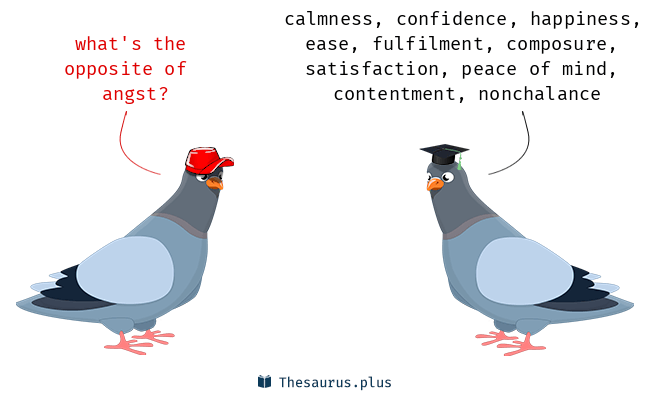
If we want freedom from self-loathing and to experience peace and contentment, calmness and confidence, satisfaction and settled peace, then we will grow ever closer to the Savior who exudes all those qualities, and more.
 
For the Lord not only saves and delivers; he also sanctifies and encourages. And the existential angst becomes forgotten.
 
Saving God, I thank you for delivering me from sin, death, and hell through your Son, the Lord Jesus. May your Holy Spirit apply the work of grace to my life every day so that I can realize practical freedom from all that is damaging and destructive in my soul. Amen.

Galatians 4:8-20 – It’s All About Grace

A mosaic of the Apostle Paul in St Isaac’s Cathedral, St. Petersburg, Russia

Formerly, when you did not know God, you were slaves to those who by nature are not gods. But now that you know God—or rather are known by God—how is it that you are turning back to those weak and miserable forces? Do you wish to be enslaved by them all over again? You are observing special days and months and seasons and years!I fear for you, that somehow I have wasted my efforts on you.

I plead with you, brothers and sisters, become like me, for I became like you. You did me no wrong. As you know, it was because of an illness that I first preached the gospel to you, and even though my illness was a trial to you, you did not treat me with contempt or scorn. Instead, you welcomed me as if I were an angel of God, as if I were Christ Jesus himself. Where, then, is your blessing of me now? I can testify that, if you could have done so, you would have torn out your eyes and given them to me. Have I now become your enemy by telling you the truth?

Those people are zealous to win you over, but for no good. What they want is to alienate you from us, so that you may have zeal for them. It is fine to be zealous, provided the purpose is good, and to be so always, not just when I am with you. My dear children, for whom I am again in the pains of childbirth until Christ is formed in you, how I wish I could be with you now and change my tone, because I am perplexed about you! (New International Version)

Grace is the most wonderful spiritual reality of all. It is forgiveness, freedom, faith, acceptance, and love all rolled up in a package given specially to you and me.

Grace is also terribly hard for a lot of folks to wrap both their heads and their hearts around. It is scandalous, subversive, and stupefying.

It was hard for the Galatian Church. Having embraced the grace of God in Christ for their deliverance from guilt and a shameful past, they then set their lives on the law to work out their sanctification. In other words, the Galatian believers did a sort of half-repentance; they turned from useless ways and were saved by grace, then turned around and decided, like a dog returning to it’s vomit, to go back to the law for the governing rule of their Christian lives.

If grace was good enough for salvation (which it was) it’s also good enough for sanctification, to be the chief operating force of the Christian’s life and ministry (which it is).

“Grace fills empty spaces but it can only enter where there is a void to receive it, and it is grace itself which makes this void.”

Simone Weil

A life filled with endless rules and regulations is unable to receive the life-flowing life-giving stream of grace. Grace is even so wondrously powerful that it is the force which breaks all other lesser forces and takes over.

This was the Apostle Paul’s experience. Having been the ultimate rule-keeper and law-abider, he was completely overtaken by a tsunami of grace. It stripped him of all the laws which kept him from Christ and the gospel. Grace changed his mind, his heart, and his life. He would never be the same again.

So, with the confidence of grace behind him, Paul could implore the Galatians to be just like him. I wonder if any of us could say the same.

Paul was a committed follower of Jesus – so much so that he ached and longed for others to embrace a life of grace, just as he had. It was actually painful for Paul to see others held by the cold grip of the law and not the warm embrace of grace. Like a mother about to give birth, he was laboring and working hard to give spiritual birth to those that would become like Jesus.

If you have experienced a transformed life in Jesus Christ, as if you have been born again by grace through the Spirit, then you likely feel and resonate with the travail of Paul. Knowing the elixir of grace, you want everyone to drink it in and be inebriated with its effects. You want it so bad that it hurts. You desire it to the point of exclaiming, “I beg you to be like me!”

You may spend many of your days with family, friends, neighbors, or co-worders who are strangers to grace. Either they are stuck in the clutches of the law and are fearful stick-in-the-muds because of it, or they simply do not know what they are missing. 

It is good to regularly ask ourselves, “What am I afraid of? Will this thing matter in the end? Is it worth holding on to?”

Grace will lead us into our fears and emptiness, and grace alone can fill them up, that is, if we are willing to stay in the void. We must become comfortable with asking questions for which we might never get answers.

People of deep faith develop a high tolerance for ambiguity and find less and less a need for the certainty of rules and regulations. Grace teaches us to swim in the river of mystery and find our home in faith.

Gracious God, may you weave your way into the lives of those who need you the most, so that mercy will be more than a theological idea. Work in me in such a way that I can stand with Paul and encourage others to be like me, through Jesus Christ, in the power of the Holy Spirit. Amen.

Ephesians 2:11-22 – Included

Therefore, remember that formerly you who are Gentiles by birth and called “uncircumcised” by those who call themselves “the circumcision” (which is done in the body by human hands)—remember that at that time you were separate from Christ, excluded from citizenship in Israel and foreigners to the covenants of the promise, without hope and without God in the world. But now in Christ Jesus you who once were far away have been brought near by the blood of Christ.

For he himself is our peace, who has made the two groups one and has destroyed the barrier, the dividing wall of hostility, by setting aside in his flesh the law with its commands and regulations. His purpose was to create in himself one new humanity out of the two, thus making peace, and in one body to reconcile both of them to God through the cross, by which he put to death their hostility. He came and preached peace to you who were far away and peace to those who were near.For through him we both have access to the Father by one Spirit.

Consequently, you are no longer foreigners and strangers, but fellow citizens with God’s people and also members of his household, built on the foundation of the apostles and prophets, with Christ Jesus himself as the chief cornerstone. In him the whole building is joined together and rises to become a holy temple in the Lord. And in him you too are being built together to become a dwelling in which God lives by his Spirit. (New International Version)

There is perhaps no better explanation in the entire New Testament about what the Church truly is than here in today’s lesson.

The redemptive events of Jesus – especially the crucifixion of Christ – has completely changed everything. The cross is the mid-point of history, the fulcrum in which all things in heaven and on earth hinge.

The cross has totally transformed our status from being:

  • in Adam (fallen and separated from God) to being in Christ (now lifted and in union with God)
  • in the flesh (driven by our immoral and unethical impulses) to being in the Spirit (now driven by moral and ethical desires)
  • a Jew or a Gentile (defined by race, ethnicity, etc.) to being one people of God, a new egalitarian society, the community of the redeemed, the Church.

We were once far from God. Now we are brought near through the blood of Christ.

We are included, not excluded; graced and loved, not shamed and shunned.

And our status isn’t based on physical circumcision but on circumcision of the heart, that is, by faith.

There was a time when we were estranged from God, as if we were migrants from another country, or aliens from another world. We were strangers with no visible hope in anything or anyone.

But now, because of Christ’s cross, we have become near to God, gained an inheritance in Christ, and are seated in the heavens as royalty. Everything has mercifully changed. All is incredibly different – a good different.

Jesus Christ himself is our peace. He is the superglue who has bonded us to God and to one another as the one people of God. Because of this gracious union, there is no more anger and malice toward each other. There is, instead, peace.

The Lord Jesus has torn down the walls of separation between people, stripped the armor off of those who used it to keep a distance, and obliterated all obstacles to genuine relational connection – including the obstacle of the Law.

By his crucifixion, death, and resurrection, Christ Jesus fulfilled all the demands of the Law. Therefore, the Law of Moses is no longer needed. Those who love one another and carry one another’s burdens are the ones who fulfill the Law of Christ.

The reason for abolishing all the laws and layers of separation is so that Christ could create one new people from the disparate groups – thus making peace through the cross.

Just as two people come together in marriage and create an entirely new relationship – one new person from the two – so Christ has joined Jew and Gentile together and formed an entirely new society of unity and one-ness.

We are, then, on equal footing with one another. One group is no longer privileged over another. There is no such thing as an underprivileged people-group in God’s new society.

The Church is to be the one place on earth where all are privileged, all are included, and none are left behind.

There is reconciliation. The situation isn’t of people simply not fighting with each other, not at one another’s throats and sitting with a grumpy affect and arms folded. Quite the opposite. It is a restored relationship, harmonious interactions, and working together in loving fellowship.

Christianity is distinct from all other religions and all other ethical systems because everything is based, tethered, and moored in Christ’s crucifixion and resurrection. In Christianity, enmity, hate, and rage aren’t managed; they’re put to death – nailed to the cross and done away with.

Unfettered access to God, through Christ and the Spirit, means that we have an open channel to receiving the faith, hope, and love needed to address the darkness of this world and those still stuck in chaos, disconnection, and shame.

Christ himself is the cornerstone to the superstructure of peace and love which has been erected – the very things we have longed for throughout our personal lives and throughout history.

Jesus is the King who brought radical amnesty and hospitality to the entire country by making us all fellow citizens, enjoying all the rights and privileges thereof.

The Lord Jesus Christ is the Son who welcomed us into God’s family, embracing our adoption and making us full-blooded brothers and sisters, and giving us a prominent place at the Table.

All of these things about Christians and the Church aren’t ideals; they’re reality.

Anytime we are spiteful, ignorant, prejudiced, or unkind, we are not living in reality – we’re living in an old evil world that isn’t ours.

Therefore, we are called to fully live into God’s new society – a community of equals – loving and leading like Jesus, living into his words and ways, embracing our new status as children of God, offering radical mercy and grace because that’s exactly what our Lord did for us.

Creator God, who made us different from one another in myriad ways, yet all made in your image: Fill our hearts with your love and our minds with your wisdom so that we may truly become brothers and sisters of your only Son, our Savior Jesus Christ our Lord; who lives and reigns with you in the unity of the Holy Spirit, one God, now and forever. Amen.

Luke 11:37-52 – Calling Them Out

Pharisees by German painter Karl Schmidt-Rottluff, 1912

When Jesus had finished speaking, a Pharisee invited him to eat with him; so, he went in and reclined at the table. But the Pharisee was surprised when he noticed that Jesus did not first wash before the meal.

Then the Lord said to him, “Now then, you Pharisees clean the outside of the cup and dish, but inside you are full of greed and wickedness. You foolish people! Did not the one who made the outside make the inside also? But now as for what is inside you—be generous to the poor, and everything will be clean for you.

“Woe to you Pharisees, because you give God a tenth of your mint, rue and all other kinds of garden herbs, but you neglect justice and the love of God. You should have practiced the latter without leaving the former undone.

“Woe to you Pharisees, because you love the most important seats in the synagogues and respectful greetings in the marketplaces.

“Woe to you, because you are like unmarked graves, which people walk over without knowing it.”

One of the experts in the law answered him, “Teacher, when you say these things, you insult us also.”

Jesus replied, “And you experts in the law, woe to you, because you load people down with burdens they can hardly carry, and you yourselves will not lift one finger to help them.

“Woe to you, because you build tombs for the prophets, and it was your ancestors who killed them. So, you testify that you approve of what your ancestors did; they killed the prophets, and you build their tombs. Because of this, God in his wisdom said, ‘I will send them prophets and apostles, some of whom they will kill and others they will persecute.’ Therefore, this generation will be held responsible for the blood of all the prophets that has been shed since the beginning of the world, from the blood of Abel to the blood of Zechariah, who was killed between the altar and the sanctuary. Yes, I tell you, this generation will be held responsible for it all.

“Woe to you experts in the law because you have taken away the key to knowledge. You yourselves have not entered, and you have hindered those who were entering.” (New International Version)

“The greatest way to live with honor in this world is to be what we pretend to be.”

Socrates

An outward showy spirituality means little to nothing – and it actually results in injustice and a lack of concern for others. Conversely, paying attention to the inner person has the effect of making our outer actions helpful and healing.

As you can tell from today’s Gospel lesson, Jesus had no use for the showy kind of spirituality. He was looking for a generous spirit of love and justice, willing to share with others from altruistic and benevolent motives. Instead, he got bupkis.

The woes Jesus pronounced on the showy spiritual charlatans were a kind of grieving and lamenting of how far astray the religious were from genuine heartfelt spirituality.

Unfortunately, there are pious people today who claim the name of Christ and slam the door of God’s kingdom in the faces of others by:

  • Saying God’s grace is for all, then turning around and avoiding certain people, calling them “sinners.”
  • Having explicit written statements or rules that exclude people from serving God.
  • Binding people to human traditions and practices instead of Holy Scripture. 
  • Declaring the seven deadly words of the Church: “We’ve never done it that way before.” 

Jesus called the religious leaders out. And rather than listening and changing, the leaders just felt insulted and offended. They refused to hear that their nit-picking religious obsessions and criticizing judgments of others kept people from accessing God’s love and justice.

The Lord’s words are pointed and hard. Jesus talked to them this way, it seems to me, because they probably wouldn’t have heard it any other way. In other words, Christ talked their language so they could hear him.

The Pharisees often get a bad rap. But they were faithful givers. They rightly and deservedly gave a tenth of everything they had. However, the problem was that they did it so they could feel really good about themselves, thereby feeling justified in neglecting the weightier matters of the law, the stuff they really didn’t want to do. 

This is the kind of mental gymnastics which is still done today, by saying, “Hey, man, I do my part. I give,” but all the while having no intention of focusing on weightier matters of justice, mercy, and faithfulness. It is essentially using money and stuff to buy off God. It is focusing on the minutia of pennies and dimes, instead of saving lives.

The weighty matters of the Law were there in the Old Testament. They just got ignored….

“This is what the Lord All-Powerful said:
‘You must do what is right and fair.
    You must be kind and
    show mercy to each other.
Don’t hurt widows and orphans,
    strangers, or poor people.
Don’t even think of doing bad things to each other!’”

But they refused to listen
    and refused to do what he wanted.
They closed their ears so that they
    could not hear what God said.
They were very stubborn
    and would not obey the law.
The Lord All-Powerful used his Spirit
    and sent messages to his people through the prophets.
But the people would not listen,
    so the Lord All-Powerful became very angry. (Zechariah 7:9-12, ERV)

Righteousness is profoundly social. It has to do with pursuing right relationships with people, not just people I like or who I feel deserve it. Jesus mentioned justice and love because these terms really have to do with our neighbors, not only our buddies and cronies. 

Any evil person can love those who love him; but the one who loves Jesus, loves the people for whom no one else cares or loves.

As God’s people, we are meant by the Lord to be forthright, frank, genuine, honest, humble, open, real, truthful, authentic, just, righteous, sincere, and upright in all our relations with others. To do otherwise is to be hypocritical.

Hypocrisy does not practice what it preaches, keeps people out of God’s kingdom, focuses on externals, and majors on the minors. Jesus loved the Pharisees enough to call them out and call them back to the true worship of God.

Because anything less than a deep concern for all humanity is not true religion.

Blessed God and Father of the universe, I am not above you and I am not the master of all things. Instead, I am your servant and your child. Help me be quick to look at myself when I am prone to look over to others. Thank you that you have wild and abundant grace for me that will never end nor let me go. Teach me your ways and help me be receptive to them, so I will not fall. I submit to your rule and reign over all things, including all my thoughts, opinions, perceptions, decisions, beliefs, and actions, through Jesus Christ my Lord. Amen.