The Finite and the Infinite (Psalm 65)

God of Zion, to you even silence is praise.
    Promises made to you are kept—
    you listen to prayer—
    and all living things come to you.
When wrongdoings become too much for me,
    you forgive our sins.
How happy is the one you choose to bring close,
    the one who lives in your courtyards!
We are filled full by the goodness of your house,
    by the holiness of your temple.

In righteousness you answer us,
    by your awesome deeds,
    God of our salvation—
    you, who are the security
        of all the far edges of the earth,
        even the distant seas.
    You establish the mountains by your strength;
    you are dressed in raw power.
    You calm the roaring seas;
        calm the roaring waves,
        calm the noise of the nations.
Those who dwell on the far edges
        stand in awe of your acts.
    You make the gateways
        of morning and evening sing for joy.
You visit the earth and make it abundant,
    enriching it greatly
        by God’s stream, full of water.
You provide people with grain
    because that is what you’ve decided.
Drenching the earth’s furrows,
        leveling its ridges,
    you soften it with rain showers;
        you bless its growth.
You crown the year with your goodness;
    your paths overflow with rich food.
Even the desert pastures drip with it,
    and the hills are dressed in pure joy.
The meadowlands are covered with flocks,
    the valleys decked out in grain—
        they shout for joy;
        they break out in song! (Common English Bible)

The biblical psalms present God as sovereign over all creation. Today’s psalm extols the Lord of the universe as God of both temple and terra, of people and the earth.

God of the temple

Praise is the appropriate offering to God – because it is the Lord who listens, forgives, and chooses to fill persons with the holiness and goodness of God’s presence, exemplified in the temple.

Infinite righteousness cannot be fulfilled by finite beings. In other words, we need God.

The nineteenth century philosopher and theologian, Søren Kierkegaard (1813-1855) insisted that the humans did not established themselves; therefore, no one can simply exercise their will toward better and brighter circumstances.

Kierkegaard argued that humanity, at its core, is a synthesis of the infinite and the finite, the temporal and the eternal. A finite human is not a self; only when connected and aware of the infinite is someone a self. (The Sickness Unto Death)

Creatures can never lift themselves above anxiety, worry, distress, or hardship with only finite resources; we need infinite supplies and divine capital, to tap into the image of God within us, to realize that our true identity is inextricably dependent upon our Creator.

“Prayers” by Yoram Raanan

We are more than bodies and brain synapses; we are also souls. And as souls, we shall never realize our true selves through the temporary means of possessions, prestige, and power. A person cannot construct a self, by themselves, to bear the weight of who we really are. That’s because our real identity is hidden with Christ in God. (Colossians 3:3)

Just as the temple in Jerusalem was much more than a physical structure, so we, as the people of God, are so much more than tangible beings.

Do you not know that you are God’s temple and that God’s Spirit dwells in you? (1 Corinthians 3:16, NRSV)

Praise, prayer, and worship are practices designed to connect with the infinite God. Indeed, the kingdom of God is much nearer than we know.

Jesus said, “The kingdom of God is not coming with things that can be observed, nor will they say, ‘Look, here it is!’ or ‘There it is!’ For, in fact, the kingdom of God is among you.” (Luke 17:20-21, NRSV)

God of terra

We walk upon and inhabit this present terra firma, this earth. The earth, and all that is in it, belongs to the Lord. God is something of a cosmic farmer, taking care of the earth, watching over it, tending to its needs.

All that takes place on this celestial ball we live upon is under the gracious and loving eye of God. It is the Lord who brings the seasons and the rains, calming the storms of the seas, as well as the storms of our lives.

One of the reasons we find ourselves in such an impending climate debacle on this earth, is that we continue to utilize all the finite resources we can muster and fail to acknowledge and become aware of the grand infinite wherewithal we have with our Creator and Sustainer.

“I am the Lord, your savior;
I am the one who created you.
I am the Lord, the Creator of all things.
    I alone stretched out the heavens;
    when I made the earth, no one helped me. (Isaiah 44:24, GNT)

The earth is beautiful. Yet, in our insistence upon merely using the temporal and physical, ugliness has come upon the earth, obscuring the true nature of God’s good creation. Distancing ourselves from the Creator only builds bigger obstacles to solving the earth’s most significant issues.

Self-imposed and ensconced impediments need to be cleared away. The weeds have overtaken the garden; we can no longer see the good plants that are supposed to grow and produce a harvest. And yet, as any farmer or gardener knows, you cannot simply yank such weeds from the ground without also pulling up what you are trying to preserve.

The Lord will provide – but if we keep to our stubborn independence from God, the process of weeding the garden will take much longer to accomplish. Yet, God is patient, not wanting any to perish but all to come around to the infinite. (2 Peter 3:9)

Conclusion

Let us come to God in our neediness and failure. We must see ourselves as infinite souls with finite solutions who can cry out to the God who hears and forgives. We need to connect with the Lord who hears our prayers. It is imperative that we rely upon the infinite Creator who is concerned to cultivate justice and righteousness upon an earth which is full of plenty for everyone.

Praise, pray, give thanks, and be connected to the infinite One whom we need for life and godliness in this present, evil, and finite age.

Stay joined to me and I will stay joined to you. No branch can produce fruit alone. It must stay connected to the vine. It is the same with you. You cannot produce fruit alone. You must stay joined to me. (John 15:4, ERV)

Blessed God and Father of all, yours is the kingdom, the power, and the glory forever. To you belongs the heavens and the earth. It is you who made all that is – sun, moon, stars, rivers, forests, minerals, birds, animals, fish, and us – and pronounced it all “good.” We seek your divine mercy and help so that our work and our worship may curb the sin that so easily entangles and bring your intended shalom to the earth. Amen.

Matthew 17:22-27 – Because We Can

When they came together in Galilee, Jesus said to them, “The Son of Man is going to be delivered into the hands of men. They will kill him, and on the third day he will be raised to life.” And the disciples were filled with grief.

After Jesus and his disciples arrived in Capernaum, the collectors of the two-drachma temple tax came to Peter and asked, “Doesn’t your teacher pay the temple tax?”

“Yes, he does,” he replied.

When Peter came into the house, Jesus was the first to speak. “What do you think, Simon?” he asked. “From whom do the kings of the earth collect duty and taxes—from their own children or from others?”

“From others,” Peter answered.

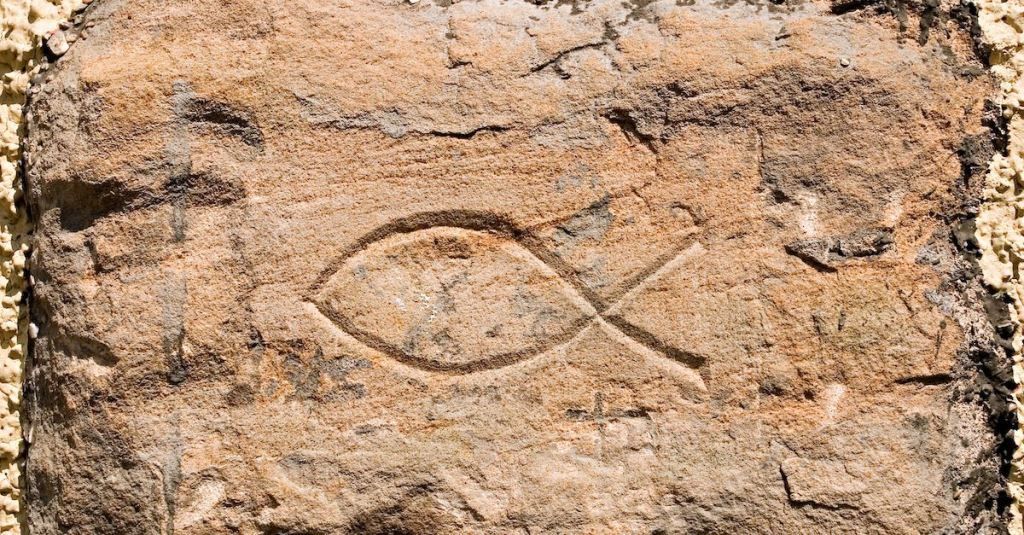
“Then the children are exempt,” Jesus said to him. “But so that we may not cause offense, go to the lake and throw out your line. Take the first fish you catch; open its mouth and you will find a four-drachma coin. Take it and give it to them for my tax and yours.” (NIV)

In ancient times, the Jerusalem Temple was designed to serve as the bridge between God and humanity. It was the place where God “came down” and accepted the offerings of the priests on behalf of the people. In Christian theology, Jesus came to this world to become the permanent bridge and the eternal temple.

Jesus saw himself as the ultimate connector who spans the great expanse between God and people. Christ ascended to heaven and gave the Spirit to his people, the Body of Christ. Basic Christian ecclesiology recognizes the Church (both individual Christians and the Church universal) as the Temple of the Holy Spirit. The Spirit is the continuing presence of Jesus on this earth. Jesus, Spirit, and Church are inextricably bonded with divine superglue to engage in the mission of being God’s Temple – the place of connection between the human and the divine.

Jesus used the situation of a question asked about taxes and the Temple to speak and illustrate the value and import of connecting with both God and others.

Why did Jesus pay the temple tax?

A “drachma” was about a day’s wage. In the time of Christ, there was a two-drachma tax which was levied by the Jewish authorities on every male Jew between the ages of 20-50. The tax was implemented to support the temple building and all the services that went into it.

The temple tax was not compulsory, so typically, the tax collectors did not impose it on the poor – which is why the collectors asked Peter whether Jesus pays the tax or not, because Jesus was poor. Jesus paid the temple tax out of humility, even though he was exempt, so to not offend and cause unnecessary scandal. Said another way, Jesus and his disciples did not have to pay the tax but instead chose to use their freedom for the benefit of others.

There is freedom in Christ. Yet, because of love, and a focus on need instead of rights, we can choose to use our freedom to serve larger purposes than just our own interests. The Apostle Paul later framed it this way:

It is necessary to submit to the authorities, not only because of possible punishment but also as a matter of conscience. This is also why you pay taxes, for the authorities are God’s servants, who give their full time to governing. Give to everyone what you owe them: If you owe taxes, pay taxes; if revenue, then revenue; if respect, then respect; if honor, then honor. (Romans 13:5-8, NIV)  

We exist to serve more than ourselves. God has purchased and adopted us through the death of Christ; we are now the Temple of the Spirit. We can emulate the Savior and choose humility to serve others. A logical question arises about all this: If I do this and focus on responsible service instead of rights, then how am I going to make ends meet?  Is any of this realistic or practical?

How did Jesus pay the temple tax?

Jesus cares about supplying needs. Jesus can and does take care of people who choose to give for the benefit of others. Jesus told Peter the fisherman to go out and fish. A crazy thing happened – Peter found not only a two-drachma coin to cover the annual tax but a four-drachma coin to cover both Jesus and Peter’s tax!  This was a powerful lesson about God’s abundant grace. 

As God’s people, we not only believe in the miraculous; we depend on miracles. We can bank on Jesus supplying our need. This is not a health and wealth gospel. Jesus was monetarily poor, so I am not sure how anyone can justify that God wants all believers to be financially rich.

There was once a man I knew who only had $100 to his name. He got to know another man who needed a suit for his job. The man with a $100 gave it all to the man who needed the suit. That man is alive and well today with all his needs met. He is not rich. However, he is quite happy. If we never need a miracle, we have never given of ourselves enough to need one.

Peter was a fisherman, so Jesus told him to fish and there was a miracle. Sometimes we might get the wrongheaded notion we must do something way outside of our given giftedness. God created each person with a unique intellect, abilities, and strengths and so, we are to use them to affect a miracle – just as Peter did.

We can have a big picture view of our shared humanity without narrow provincial views which are unable to see the vast scope of human need. And so, we can trust God to use us for divine purposes. We can exercise faith in the miraculous for both ourselves and others. We can embrace Christ’s mission in this world to such a degree that we would never consider living any other way. May we do it because we can.

God of all abundance and grace, help us to find firm ground in a shaky economy. Provide jobs for the unemployed; give us strength and peace when anxiety and worry come knocking; grant us patience when things look bleak; and, bring us the serenity of your presence so that we can do your will for the salvation of others through Jesus Christ our Lord in the power of your Holy Spirit. Amen.

1 Corinthians 3:10-23 – We Are God’s Temple

you are god's temple

“Do you not know that you are God’s temple and that God’s Spirit dwells in you? If anyone destroys God’s temple, God will destroy that person. For God’s temple is holy, and you are that temple.” (NRSV)

You have an incredibly special position and status which no one can ever take away.

We were made by and for God.  In the beginning, the creative activity of God achieved its pinnacle in the formation of a man and a woman.  Only humanity carries within them the image and likeness of God.  People are unique, special, and set apart as the creatures who can enjoy a close relational fellowship with their creator.

But humanity fell into disobedience, which introduced sin and death into God’s world.  Ever since that time, God has been on a rescue mission.  The Holy Scriptures are an unfolding drama of redemption in which a heart-stricken God goes out of his way to make and keep promises to a sinful people.  The Israelites, a people set apart from all other people, were meant to be devoted to God in such a way that the world would be drawn to their relationship with him and with the created order.

Yet again, even with an impressive temple where people met God in sacred rituals and activities, the people went astray and followed their ancestors into worshiping other gods.  God, ever the gracious one who does not forget his covenant of love, sent his Son, Jesus, as the ultimate fulfillment of all his good promises.  Through the redemptive events of Christ’s cross, resurrection, and ascension the deliverance from all that is wrong and broken in this world is reversed.  We are blessed with pardon and redemption from the slavery of sin.  We are given a renewed status as God’s people.

If this were not enough, God has given us his Spirit to help us.  As Christians, followers of Jesus Christ, we are never alone.  God, in his great mercy, makes us his people and the temple where he dwells by his Spirit.  In the Old Testament, the sacred space of worship was a physical building.  Approaching the holy God meant entering a holy temple, set apart for connection between the divine and the human.  But the midpoint of history in which all events hinge, is the cross of Christ.  His redeeming work has transformed the world.

god's people

Now, we are the temple of God, the sacred place where God meets with us.  The glory of God is to be found, once again, in the apex of his creation: human beings.  It is in this rich understanding of God’s activity and humanity’s new status that the Apostle Paul appeals with a pointed rhetorical question: “Do you not know that you are God’s temple and that God’s Spirit dwells in you?”

The Corinthian church was in grave danger of doing the thing that all lost humanity had done through the ages.  They were breaking down into divisions and conflicts and were not thinking of others as God’s special people.  Paul names them collectively as God’s temple.  They were not individual temples but one holy sacred temple together.  This theology and anthropology was meant to teach, persuade, chastise, and encourage the Christians that there was no place for special-interest groups in the church; no room for following pet teachers and preachers; and, no reason to ostracize others who didn’t agree exactly as you do.

As believers in Jesus Christ, we are all together the people of God, the temple in which God dwells.  This makes us a holy people, set apart for the exclusive worship of our triune God.  We are to live up, not down, to who we are in Christ, in the Spirit, in the realm of God’s kingdom.

We are meant to return to the foundation of the temple.  If the foundational works of this great temple of God are the redemptive events of Jesus, with Christ himself as the chief cornerstone of the structure, then we are meant to return in this great season of Lent to Jesus.  With meekness and humility, we are to come to God in Christ by the Spirit and confess our many sins, repent of them all, and return to God as the special, holy, and loved people we are as the temple.

god's people 2

For far too long these few verses in the letter to the Corinthians have been used as the argument for not smoking or drinking too much or generally not caring for our physical bodies.  I’m not saying none of that is in view, but this was not Paul’s understanding of it.  He was thinking much more along the lines of church unity, harmony, mutual love, grace, encouragement, and making decisions which are best for the common good of all.  To break Paul’s instruction down to individual habits which harm the body is a woefully truncated view of his teaching.

Instead, we are to have a high view of one another.  We, together, are the people of God.  We, together, are meant for holy worship of the triune God.  We, together, are the complex expression of God’s creative action – a temple set in the middle of a watching world.

Therefore, we are to be concerned for one another.  We are to act as one holy people of God.  We are to reflect the love, unity, and fellowship of the Holy Trinity in our life together.  Let us then encourage each other toward love and good deeds; upholding the common good; and, extending grace in all circumstances.  For this is what temple living looks like.

Holy God, you have set us apart together as your holy people.  Help so to live up to our status as your beloved creatures that we are continually mindful of you, one another, and the grace you give for all circumstances.  May our foundation be strong in the person and work of Jesus Christ, your Son and our Savior, as the Spirit dwells in us together.  Amen.

John 2:13-22 – Sacred Space

jesus and the moneychangers

“Not long before the Jewish festival of Passover, Jesus went to Jerusalem.  There he found people selling cattle, sheep, and doves in the temple. He also saw money-changers sitting at their tables.  So he took some rope and made a whip. Then he chased everyone out of the temple, together with their sheep and cattle. He turned over the tables of the money-changers and scattered their coins.  Jesus said to the people who had been selling doves, ‘Get those doves out of here! Don’t make my Father’s house a marketplace.’  The disciples then remembered that the Scriptures say, ‘My love for your house burns in me like a fire.’” (CEV)

Jesus, the human which he is, has a complexity to him.  Our Lord is not one-dimensional.  Christ not only extends grace and mercy, healing the least and the lost of society; he also turns his burning love for the Father on those who would treat the sacred with sacrilege.  There is a time for gentleness and meekness, and there is a time for zeal and action, done with flavor!

Jesus had a zero-tolerance policy toward using the representation of God, the temple, as the means to make money.  As people from all over the Middle East poured into Jerusalem for the Passover, savvy marketers set up their wares.  Knowing that not everyone could bring animals for sacrifice, the money-changers were more than ready to take advantage of the situation by providing sheep and cattle at inflated prices.  The temple looked more like a marketplace than a worship space, and Jesus would have none of it.

Christ the Lord was consumed with zeal for his Father’s house.  Jesus single-handedly took on the businessmen and drove them out of the temple courts with a homemade whip.  Whereas the people seemed to settle for the status quo of secular Passover protocol, Jesus restored worship to its rightful place in the life of God’s people.

Jesus still has zeal for proper worship.  As he did in the temple all those centuries ago, Christ rearranges the furniture and upsets how things have become.  Like an extreme makeover, the Lord overturns tables designed for selfish gain and re-establishes a connection between us and God.  He upholds holiness and righteousness so that you and I will have a clean and clear path of relationship with the sovereign God of the universe.

Sacred space is important, both as a physical room or building as well as in our own spiritual hearts.  That space becomes the meeting place between us and God.  The Lord wants a meaningful dialogue with us, and he will guard that place of connection with great zeal.

Christ Jesus, the one who zealously loves, you have gone before me and cleared the way for me to enter God’s presence.  Thank you for your movement toward me, and your careful guarding of our relationship.  May my time with you on this Lord’s day be an offering of praise and thanksgiving.  Amen.