Psalm 79 – Facing Trauma

Raise Up by Hank Willis Johnson in the Nova Southeastern University Art Museum, Fort Lauderdale, Florida

Our God, foreign nations
    have taken your land,
    disgraced your temple,
    and left Jerusalem in ruins.
They have fed the bodies
of your servants
    to flesh-eating birds;
    your loyal people are food
    for savage animals.
All Jerusalem is covered
    with their blood,
    and there is no one left
    to bury them.
Every nation around us
    sneers and makes fun.

Our Lord, will you keep on
    being angry?
    Will your angry feelings
    keep flaming up like fire?
Get angry with those nations
that don’t know you
    and won’t worship you!
They have gobbled down
Jacob’s descendants
    and left the land in ruins.

Don’t make us pay for the sins
    of our ancestors.
    Have pity and come quickly!
    We are completely helpless.
Our God, you keep us safe.
    Now help us! Rescue us.
    Forgive our sins
    and bring honor to yourself.

Why should nations ask us,
    “Where is your God?”
Let us and the other nations
    see you take revenge
    for your servants who died
    a violent death.

Listen to the prisoners groan!
Let your mighty power save all
    who are sentenced to die.
    Each of those nations sneered
    at you, our Lord.
Now let others sneer at them,
    seven times as much.
    Then we, your people,
    will always thank you.
We are like sheep
    with you as our shepherd,
    and all generations
    will hear us praise you. (CEV)

Yes, you are in the right place. No, this is not yesterday’s post. The Revised Common Lectionary Daily Scripture readings include a psalm reading every day. What is more, the same psalm is read three days in a row. This is because psalms are designed to be repeatedly used. So, today, I continue reflecting on this psalm….

The psalmist was full of emotion as he crafted his words. Reflecting on the tragic and horrific takeover of Jerusalem and its destruction, he cried out in spiritual and emotional pain concerning the trashing of God’s temple and Name, and the physical and verbal violence executed on the people. The psalmist wanted the victimization to stop and the victimizers to feel God’s wrath.

This psalm is raw and real, an expression of the true self. Here there is no pie-in-the-sky positive thinking with singing about always looking on the bright side of life. It is agonizing grief in all its misery and disgrace. Thus, therein lies the path to healing: To connect with the true self, refusing the pretensions of the false self, expressing the real lived feelings and thoughts of honest wounds.

Illumination by American sculptor Paige Bradley

The alternative only presses further pain into the soul. The false self, seeking to takeover and make one feel better, engages in a devil’s pact by ignoring the aching spiritual doubt and emotional injury within to have temporary reprieve from the troubled spirit. The road to renewed and lasting happiness comes not through the false self but the true self’s recognition of the event(s) in all their foulness and degradation. It is a hard road to walk, yet we must travel it if we are to live in the light of truth, joy, and peace.

You and I will not find God in the false self. One of the great tragedies of the human condition is that, when having experienced trauma, we hustle to obtain something we already possess. We might believe God is not there, or simply does not care. As one becomes alienated from the Lord, there increasingly becomes self-distancing. Disconnected from life-giving divinity, self-loathing gradually replaces self-awareness, and thus, self-compassion.

If at any point, we begin to associate and then fuse self with our traumatic experience(s) then the inner person weakens and becomes detached from the spiritual resources needed to heal. We are not our events. We are people created in God’s image and inherently worthy of love, compassion, kindness, goodness, and healing. We were not made for death and destruction but for life and connection.

The demonic termites of contempt might eat away at our humanity, yet there is always a way to exterminate them – through telling our story, as the psalmist did, with emotional flavor and full honesty. The true self is there; we just might need to dig a little deeper to find her.

So, if you notice that you tend to avoid planning for self-care; engage regularly in self-pity; or, swear at yourself under your breath with self-hatred; then it is high time for the false self to quit calling the shots and to bring up the true self. Internal conflict is not resolved through avoidance; it comes through external voicing of one’s story to another who listens with care.

The psalmist spoke to both God and God’s people. His story came from the gut, the place where both deep loathing and deep compassion come from. If one has already been tortured by a traumatic experience, the torture will continue from the false self unless the true self asserts herself and seeks awareness, mercy, and healing.

Stories are meant to be told. And they need to be uttered when the storyteller is ready and not when the listener is. Through the voicing of their ordeal, victims of human-inflicted suffering need to hear that God is just and will right the wrong things in this world. They need some hope of healing and some assurance that their injury will not go unanswered.

This can be tricky business because the act of proclaiming one’s story and the reception of that message by another might easily become a vengeful justification for intolerance and malicious retribution. Therefore, the psalmist appealed to God, not fellow humans, for justice. We are to leave room for God’s wrath without taking matters into our own hands. (Romans 12:17-21)

So, avoid isolation from God, others, even yourself. Seek help, both divine and human. Tell your story when you are ready. Face the terrible pain. These are the things the psalmist did to deal with his own trauma. The true self acknowledges this and, with full awareness, steps into the future with faith.

Lord Christ, you came into the world as one of us, and suffered as we do. As I go through the trials of life, help me to realize that you are with me at all times and in all things; that I have no secrets from you; and that your loving grace enfolds me for eternity. In the security of your embrace I pray. Amen.

On Knowing Christ

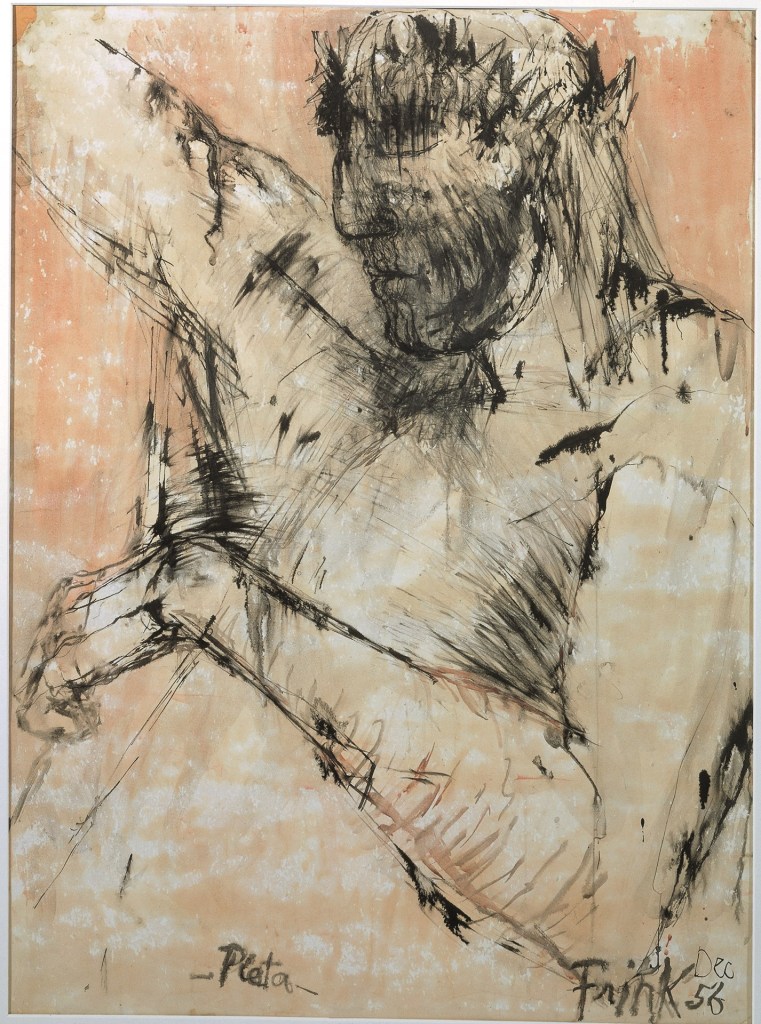
Pietà by Elisabeth Frink

The ancient Philippian church had lost sight of their purpose, of what is the primary reason for their being in existence. Simply put, they needed to unify around what is the central and most valuable core of Christianity: knowing Jesus Christ. For the Apostle Paul, in his letter to the Church at Philippi, Jesus was so valuable that he literally gave up everything to become a Christian and follow Jesus. (Philippians 3:4-14)

It was no little thing that Paul did, converting in such a completely life-altering way to Christ. Paul had everything going for him. He was the up and coming star in Judaism. Paul had the Jewish pedigree, the intelligence, the personality, and the drive to become one of the greatest Pharisees of all time. And yet he forsook it all to pursue and know Christ. 

It might be hard for us to imagine just how significant Paul’s turn around was. On a much smaller scale, it would be like Green Bay Packer quarterback, Aaron Rodgers, at the height of his career, leaving football altogether to become a missionary to some remote place few people have ever heard of. Most might likely think he lost his marbles and was throwing away (pun intended) something valuable and important. So, it was with Paul.  Everyone thought he was nuts for becoming a Christian.

However, this would be to misunderstand what is really of greatest value. There are plenty of people in our society telling us what we need. With all the noisy rhetoric, from political pundits to commercial marketers, the person and work of Jesus can easily get lost in an ocean of competing voices. On a practical level, it can be far too easy to simply toss Christian discipleship on the smorgasbord of good ideas we get handed each day. Jesus might get misplaced and forgotten on our plate of life because of the mass of other food that is piled alongside him.

World Communion Sunday (always the first Sunday in October each year) reminds Christians that Jesus is our surpassing greatness, the highest and most worthy asset we possess. When we come to the Lord’s Table, there is nothing else to feast upon except Jesus, and Jesus alone. In the act of receiving the common elements of bread and cup, we proclaim that we need no one else and no other thing to make us happy in this life. Jesus is enough for us. What is more, we stand united with our brothers and sisters in Christ throughout the world in a common purpose and value of knowing Jesus Christ, and him crucified.

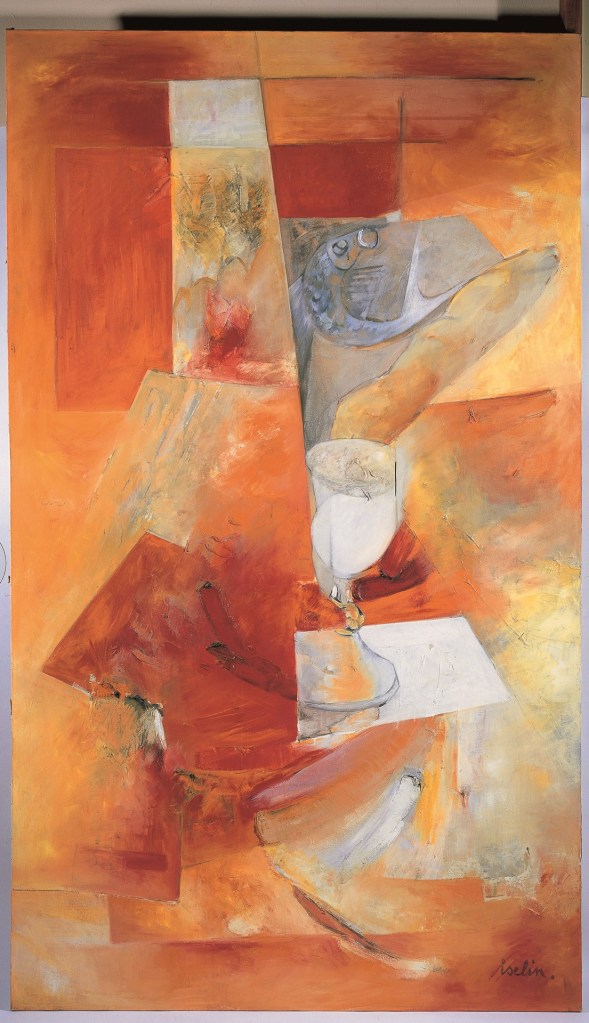
The Elements of Holy Communion by Jacques Iselin

The core value and heart of Christianity is a faith and love relationship with Jesus, to know him. This was the heartfelt cry of the Apostle Paul, and it was so meaningful to him that he gave up everything to pursue Christ and follow Jesus.  If we ever strip Christianity of this core value and stray from knowing Christ, the vacuum will be quickly filled with all kinds of other stuff, like the sheer duty of perfunctory prayers, clean living, and dispassionate robotic service. 

Paul longed to know Christ better. There are two words in the Greek language for “know.” One word refers to information; the other refers to an experiential knowledge – and that is the word Paul used with the Philippians. He deeply desired an intimate experience of Jesus. And Paul craved this so much that literally everything, when compared to Jesus, was “rubbish” to him. 

In the ancient world there were no landfills and dumps – the street served as the place people threw their garbage. The trash then got trampled into the ground, along with the generous amounts of animal dung. That is how Paul thought of even the best things in life as compared to knowing Jesus. 

There is no comparison between a freshly grilled T-bone steak and microwaved liverwurst. There is no comparison between a billion dollars and a penny. There is no comparison between the Green Bay Packers and the Chicago Bears (sorry Chi-Town). And there is no comparison between Jesus and anyone or anything else, no matter whom or what it is. 

Saint Augustine, Bishop of Hippo, in the fifth century, described life apart from Jesus as “disordered love.” By that he meant we pursue whatever our affections are set upon. One might love family, friends, job, and hobbies, yet if Jesus is absent or must compete for our affections in the middle of those things, then it is a disordered love. The solution, for Augustine, is to rightly order our love by having Jesus as the premier object of our affection. The New Testament frames it this way: Repent and believe the gospel.

To have “disordered love” is a nicer way of saying “spiritual adultery.” Using this metaphor, the appropriate response is to return to our first love. “You have forsaken your first love,” said Jesus to the church in Ephesus.  “Remember the height from which you have fallen!  Repent and do the things you did at first” (Revelation 2:4-5). 

Christianity is not some religion in which we strike a deal with God to go to heaven if we accept Jesus. Rather, Christianity centers all of life in the person and work of Jesus. The Lord is a jealous God, feeling slighted when Christians moonlight with the world at night while acknowledging Jesus during the day.

Specifically, Paul wanted to know the power of Christ’s resurrection. He yearned to experience a supernatural change from the inside-out – to be a new person in Christ. Paul did not simply turn over a new leaf; he did a dramatic 180 degree turn and went hard after Jesus. A desire and/or decision to know Christ is to be more than a milquetoast “I’ll try to do better.” Christianity, at its core, is dying to self and being reborn in Jesus with new life.

Furthermore, Paul wanted to know Christ and the fellowship of sharing in his sufferings. Paul ached to know Jesus so much that he embraced suffering, just as his Lord did. Paul was not some spiritual masochist; he rightly recognized that spiritual growth and intimacy with Jesus largely comes from the harsh realities of life’s trials and difficulties, as faith is stretched.  We would not know Christ the healer if we were not broken; Christ the provider if we were not in want; and, Jesus Christ and him crucified unless we were aware of sin in the world along with our own personal sin.

Each time a Christian approaches the Lord’s Table, they set aside competing voices and forsake rival gods to have Jesus. For us who believe, let the ingesting of the elements be an act of fellowship with God. May we, along with Paul, Augustine, and all past saints desire to have Jesus completely take over our lives because he is so valuable to us. We never need to be perfect to partake of bread and cup. Instead, we only need to strive toward what is ahead and decide that today we will press on toward the higher goal of knowing Christ.

Hebrews 11:23-29 – Taking the Long View

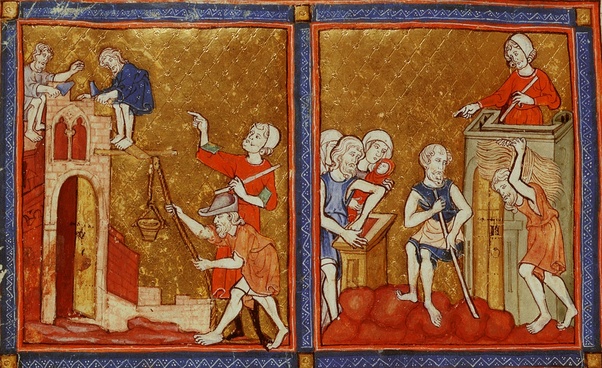
Enslavement of the Israelites

By faith Moses’ parents hid him for three months after he was born, because they saw he was no ordinary child, and they were not afraid of the king’s edict.

By faith Moses, when he had grown up, refused to be known as the son of Pharaoh’s daughter. He chose to be mistreated along with the people of God rather than to enjoy the fleeting pleasures of sin. He regarded disgrace for the sake of Christ as of greater value than the treasures of Egypt because he was looking ahead to his reward. By faith he left Egypt, not fearing the king’s anger; he persevered because he saw him who is invisible. By faith he kept the Passover and the application of blood, so that the destroyer of the firstborn would not touch the firstborn of Israel.

By faith the people passed through the Red Sea as on dry land; but when the Egyptians tried to do so, they were drowned. (NIV)

Faith looks ahead and sees as clearly as is right now in front of your face. Taking the long view of life, the mature person of faith can set aside temporary pleasure to attain a future hope. Moses, held up as such an example, refused to identify himself as the daughter of Pharaoh. He chose to be mistreated in solidarity with his fellow Israelites, instead of having a good time with his high position in the most powerful empire of its day. Moses knew that the treasures of Egypt were not as wonderful as what he would receive from suffering for the Messiah, and he looked forward to his reward.

It is an understatement to say that our contemporary society assumes practicing instant gratification. We want to feel good, and we want it now. Impulse control may just be one of the best life skills that kids (and adults!) need to learn today. A Psychology Today article effectively demonstrates through some classic and current research that “one of the most effective ways to distract ourselves from a tempting pleasure we don’t want to indulge is by focusing on another pleasure.”

For the Christian who desires to follow Jesus in all things, looking ahead to a future heavenly reward which will be shared along with all God’s people needs to be kept at the forefront of our thinking. If we only consider today, there are scant resources for responding to the temptations and fluctuations of life. However, if we will put some energy into clarifying and embracing our most cherished values, we will then let those values inform everything we do, or not do. In the scope of eternity, suffering a bit now is nothing compared to what Christ has yet in store for his people.

Deferred gratification causes us to live differently. In a twist of irony, folks who orient themselves toward the next world are able to effectively impact and change the world they currently reside within – whereas those who focus solely on this present world find themselves falling woefully short with their short view of life. We need the wisdom which faith provides us:

We are always confident, because we know that while we are living in the body, we are away from our home with the Lord. We live by faith and not by sight. We are confident, and we would prefer to leave the body and to be at home with the Lord. So, our goal is to be acceptable to him, whether we are at home or away from home. We all must appear before Christ in court so that each person can be paid back for the things that were done while in the body, whether they were good or bad. (2 Corinthians 5:6-10, CEB)

Future hope, fueled by faith, gives shape to how we live today. It enables us to live in solidarity with those who suffer and are mistreated. It ennobles us to live above short-sighted desires and act on behalf of the common good of all persons in the here-and-now.

Lord God Almighty, the One who is and was and is to come, may we, along with your servant Moses, see the plight of all those who suffer in our midst. Give us courage and compassion to live in solidarity with the poor, the oppressed, the forgotten, and all who live with misfortune and misery. May our hearts, burning with love, bear the burdens of all in our care. And may our loving example ignite the hearts of others to accompany the vulnerable in their affliction. We ask this in the gracious name of Jesus through the power of your Holy Spirit. Amen.

Matthew 16:21-28 – The Need for Sacrifice

Welcome, friends. Simply click the video below and let us consider together the words of Jesus.

You may also view this video at TimEhrhardtYouTube

For a response in song, click Take My Life and Let It Be arranged by Hymn Charts.

And, also click Jesus, I My Cross Have Taken sung by RYM Worship.

May the Lord bless you
    and keep you.
May the Lord smile down on you
    and show you his kindness.
May the Lord answer your prayers
    and give you peace. Amen.