

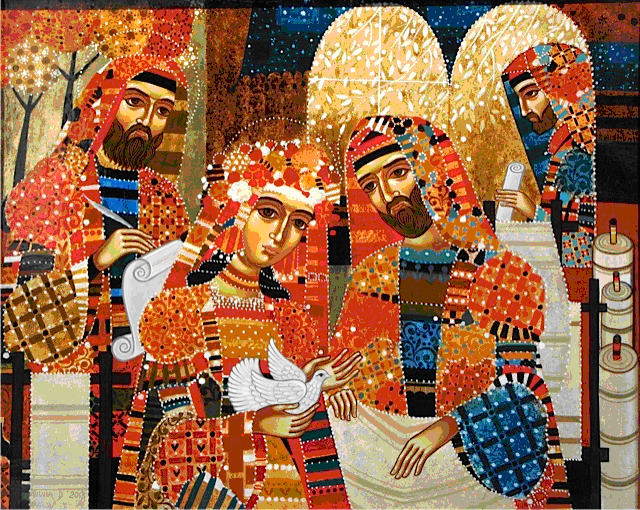
Meanwhile a Jew named Apollos, a native of Alexandria, came to Ephesus. He was a learned man, with a thorough knowledge of the Scriptures. He had been instructed in the way of the Lord, and he spoke with great fervor and taught about Jesus accurately, though he knew only the baptism of John. He began to speak boldly in the synagogue. When Priscilla and Aquila heard him, they invited him to their home and explained to him the way of God more adequately.
When Apollos wanted to go to Achaia, the brothers and sisters encouraged him and wrote to the disciples there to welcome him. When he arrived, he was a great help to those who by grace had believed. For he vigorously refuted his Jewish opponents in public debate, proving from the Scriptures that Jesus was the Messiah. (New International Version)
I really like this story. I like it for two reasons:
- Apollos, although a very learned and gifted guy, nonetheless had the humility to listen and accept the counsel of the couple, Priscilla and Aquila. He had a teachable spirit and a submissive heart.
- Priscilla and Aquila, a woman and a man, wife and husband, shared equally in taking the initiative to practice hospitality and make a significant contribution to the learning of Apollos. They had teachers’ spirits and caring hearts.
An intelligent mind doesn’t do much good if it isn’t accompanied by humility – a willingness to be taught, and a heart that is open to receive.
And instructing others accomplishes nothing if it isn’t directed by an egalitarian mindset – a desire to love strangers of all backgrounds and walks of life, and give, in any sort of way that is helpful to the other.
Who was Apollos?
Apollos was an educated man from the city of Alexandria in Egypt. He was well acquainted with Old Testament Scripture and familiar with John the Baptist’s teachings. In the middle of the first century C.E. he came to the city of Ephesus in Asia Minor (present day Turkey) where he began to teach in the Jewish synagogue.
Priscilla, and her husband Aquila, were followers of Jesus in Ephesus and they heard Apollos speaking. They hospitably took him aside and told him the rest of the story. After this, Apollos went to preach in Achaia, having been highly recommended by the Ephesian Christians. His effectiveness was unprecedented.
Apollos was in Corinth (Acts 19:1) where he was useful in watering the spiritual seed which the Apostle Paul had planted (1 Corinthians 3:6). He was such a skilled teacher and so much appreciated by the believers there that, unfortunately, many of the Corinthian believers became attached to him in an unhealthy way, creating schisms within the church, much to the chagrin of Apollos (and Paul). (1 Corinthians 1:12, 16:12)
Who were Priscilla and Aquila?
Priscilla and Aquila were tentmakers native to Rome. After the persecution of the Jewish people under the Emperor Claudius, they made their way to Greece, where they encountered the Apostle Paul and tutored Apollos. Their impact on these Christian leaders – and the bravery they demonstrated within the early church—became legendary, and Priscilla and Aquila are referenced in four different New Testament books.
What’s interesting about the references to this couple in Holy Scripture is the order in which their names are mentioned. In the seven references to the married couple, the wife is mentioned before the husband five times. This is somewhat uncharacteristic of the naming conventions in the Bible and suggests that Priscilla played a leading role in their ministry work.
It was in Corinth that Priscilla and Aquila first encountered the Apostle Paul. They welcomed him into their workplace, providing him with meaningful employment that facilitated his missionary activities. When Paul determined to return to Syria, they accompanied him across the Aegean Sea to Ephesus, where their ministry continued – and it was there that Priscilla and Aquila met Apollos.
In his catalog of greetings to the Roman church, Paul sent his regards to Priscilla and Aquila, indicating that they eventually returned to Rome – which was quite a risky thing to do considering the political climate of the time. Paul notes that Priscilla and Aquila stuck out their necks for him. (Romans16:3)
What do we learn from Priscilla, Aquila, and Apollos?
The story of Priscilla and Aquila holds out a cache of important truths. For one, it demonstrates the added value of men and women partnering over the long term for the cause of Christ. It’s important to collaborate and be willing to consult each other and accept instruction and even correction.
The interaction of these early believers points to the importance of true Christian hospitality. When Paul arrived in their community, they gathered in a worn-out traveler. They provided shelter, company, and income for him, advancing his missionary ventures.
In Ephesus, they followed the same template with Apollos, perhaps sharing what they had learned from Paul to strengthen the witness of this remarkable young preacher. Their table and living room became sources of encouragement and instruction for those who would teach the church at large.
Priscilla, Aquila, and Apollos are good models for all men and women called to Christian mission and service. They longed to serve Christ and the Church in whatever ways they could. They sought to help the next generations of believers in their walk with Christ. And they displayed the sort of qualities needed for the burgeoning church to work together and reach the world with good news.
God of grace and might, who gave to your servants Apollos, Priscilla, and Aquila gifts of zeal and eloquence to make known the truth of the Gospel: Raise up, we pray, in every country, heralds and evangelists of your kingdom, so that the world may know the immeasurable riches of our Savior Jesus Christ; who lives and reigns with you and the Holy Spirit, one God, now and forever. Amen.








 Rev. Tim Ehrhardt