Spiritual Strength (Daniel 10:2-19)

At that time I, Daniel, mourned for three weeks. I ate no choice food; no meat or wine touched my lips; and I used no lotions at all until the three weeks were over.

On the twenty-fourth day of the first month, as I was standing on the bank of the great river, the Tigris, I looked up and there before me was a man dressed in linen, with a belt of fine gold from Uphaz around his waist. His body was like topaz, his face like lightning, his eyes like flaming torches, his arms and legs like the gleam of burnished bronze, and his voice like the sound of a multitude.

I, Daniel, was the only one who saw the vision; those who were with me did not see it, but such terror overwhelmed them that they fled and hid themselves. So I was left alone, gazing at this great vision; I had no strength left, my face turned deathly pale and I was helpless. Then I heard him speaking, and as I listened to him, I fell into a deep sleep, my face to the ground.

A hand touched me and set me trembling on my hands and knees. He said, “Daniel, you who are highly esteemed, consider carefully the words I am about to speak to you, and stand up, for I have now been sent to you.” And when he said this to me, I stood up trembling.

Then he continued, “Do not be afraid, Daniel. Since the first day that you set your mind to gain understanding and to humble yourself before your God, your words were heard, and I have come in response to them. But the prince of the Persian kingdom resisted me twenty-one days. Then Michael, one of the chief princes, came to help me, because I was detained there with the king of Persia. Now I have come to explain to you what will happen to your people in the future, for the vision concerns a time yet to come.”

While he was saying this to me, I bowed with my face toward the ground and was speechless. Then one who looked like a man touched my lips, and I opened my mouth and began to speak. I said to the one standing before me, “I am overcome with anguish because of the vision, my lord, and I feel very weak. How can I, your servant, talk with you, my lord? My strength is gone and I can hardly breathe.”

Again the one who looked like a man touched me and gave me strength. “Do not be afraid, you who are highly esteemed,” he said. “Peace! Be strong now; be strong.”

When he spoke to me, I was strengthened and said, “Speak, my lord, since you have given me strength.” (New International Version)
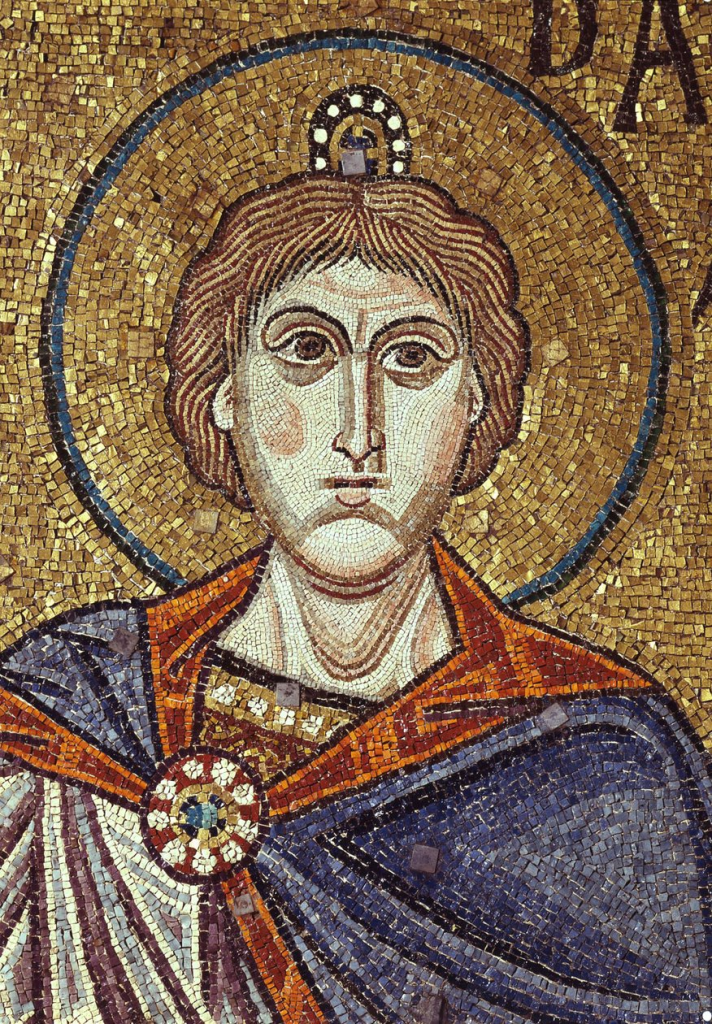
Byzantine mosaic of the prophet Daniel, 12th century, in St. Mark’s Basilica, Venice, Italy

Perhaps you, like me, have had the experience of praying, and feeling as if those prayers were only bouncing off the ceiling and never heard by God. But the Lord has been watching and listening all along. Although we may not get an immediate response, we will most certainly receive an answer to our prayers.

I am encouraged that God listened and was attentive to Daniel. The prophet had put himself in a position to hear God, so that when the Lord responded, Daniel was able to receive what was given to him.

The spiritual disciplines which Daniel was practicing almost seems like the guy was observing Lent. For three weeks, he gave up certain foods, did not eat meat, drank no wine; and he didn’t take a bath. He did all of this because he was troubled in spirit.

Daniel’s outward practices were congruent with his inward disposition. This is a far cry from our modern predilection for keeping up appearances, even though we are dying inside. But Daniel was not like us. He stopped his normal routines in order to give himself to prayer and a partial fast.

The Jews had been in exile for 70 years, and there was no sign of them going back to Jerusalem. And that troubled Daniel to no end – because the prophet Jeremiah had said the people would be in captivity for that long (Jeremiah 29:10). Daniel knew that fulfillment of the Lord’s promises would come by living in Palestine, and not by being exiled in Babylon.

While Daniel and his friends were together in a prayer meeting, Daniel experienced a vision; it was as if the veil separating this three-dimensional space from the spiritual dimension was lifted, and Daniel could see what was happening in the invisible realm.

Daniel’s prayers were being heard; they were not bouncing off the ceiling. And they were heard, I believe, because Daniel prayed according to his understanding of what God wants. He desired to participate in what God wanted, and not what he himself necessarily wanted.

And that is essentially what the Lord Jesus taught his followers in how to pray. We need not try and persuade God, as if we must be spiritual lawyers advocating for what we want. The Lord does not operate by twisting arms or harassing people; and neither ought we to try and treat God that way.

Prayer puts us in sync with what God wants. And as we desire to do God’s will, our prayers will reflect that desire. We only then need to ask. (Matthew 6:5-15; James 4:1-3)

Although God answers prayer, those responses are not always immediately put into effect. Daniel’s vision allowed him to see that there are other forces at work – dark forces – that oppose what God is doing. Sinister monkey wrenches are thrown into good plans and responses for people.

Behind the scenes of our lives, there are invisible powers which are influencing people. This is why our ultimate struggle is not on this visible realm; it is, instead, against the invisible demonic spirits of this present evil age.

Daniel saw and heard that behind the affairs of this world is a hierarchy of evil which seeks to control us for purposes contrary to God’s justice, peace, and goodness. Yet there is also an angelic host who are involved in ensuring that the Lord’s will is accomplished on this earth as it is always done in heaven.

Therefore, sometimes our delays in answered prayer have nothing to do with us; it may be because there is a great conflict happening in a dimension that you and I don’t see. In fact, if we do not have immediate answers to prayer, this is precisely the best time to persevere in prayer and not give up.

Through our perseverance in prayer, like Daniel, we are strengthened in faith. Our connection with God brings us peace and courage, emboldening us for continued wrestling in prayer and dealing with the structural and systemic evil that exists everywhere.

Faith is a belief in things we cannot see. Hope is the confidence of things which can happen. Love is a culmination of faith and hope coming together in order to make a difference in this fallen world. The Lord provides all the strength we need for the struggle. And there is perhaps no better model of how to deal with things and gain spiritual power than the prophet Daniel.

Strengthen us, O Lord, by your grace, so that we may overcome all spiritual enemies; and with pure hearts serve you; through Jesus Christ our Lord, who lives and reigns with you and the Holy Spirit, one God, for ever and ever. Amen.


Life Through Death (John 12:20-33)

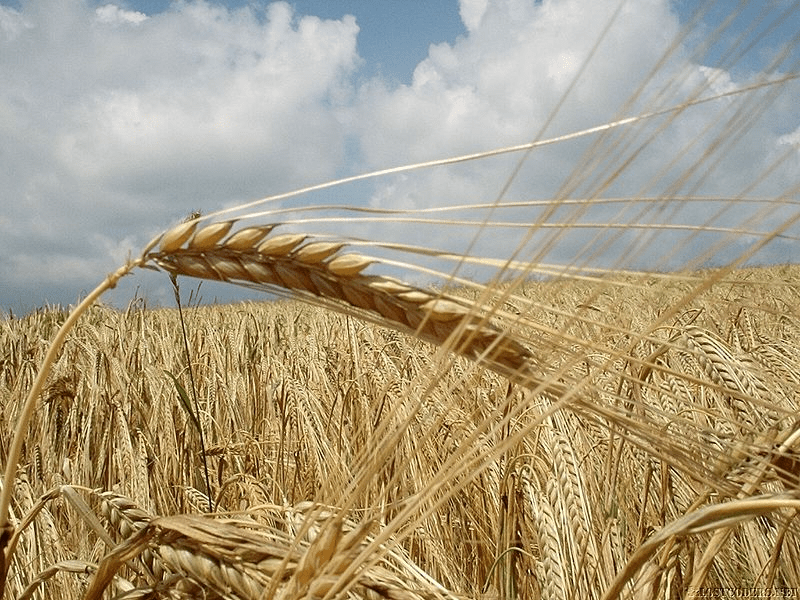
Now among those who went up to worship at the festival were some Greeks. They came to Philip, who was from Bethsaida in Galilee, and said to him, “Sir, we wish to see Jesus.” Philip went and told Andrew, then Andrew and Philip went and told Jesus. Jesus answered them, “The hour has come for the Son of Man to be glorified. Very truly, I tell you, unless a grain of wheat falls into the earth and dies, it remains just a single grain, but if it dies it bears much fruit. Those who love their life lose it, and those who hate their life in this world will keep it for eternal life. Whoever serves me must follow me, and where I am, there will my servant be also. Whoever serves me, the Father will honor.

“Now my soul is troubled. And what should I say: ‘Father, save me from this hour’? No, it is for this reason that I have come to this hour. Father, glorify your name.” Then a voice came from heaven, “I have glorified it, and I will glorify it again.” The crowd standing there heard it and said that it was thunder. Others said, “An angel has spoken to him.” Jesus answered, “This voice has come for your sake, not for mine. Now is the judgment of this world; now the ruler of this world will be driven out. And I, when I am lifted up from the earth, will draw all people to myself.” He said this to indicate the kind of death he was to die. (New Revised Standard Version)

The fifth Sunday in Lent is now here. We are quickly approaching Jerusalem. Holy Week will be here before you know it. 

Why is this all significant? Because Jesus is important. By taking advantage of Lent with its focus on spiritual discipline, prayer, and repentance, we come face-to-face with the shadowy parts of our selves. We discover that within us there is the pull to hold-on to unhealthy rhythms and habits of life, as well as a push to arrange our lives with the fragmentation of disordered love.

Perhaps our reflexive response to things we do not like about ourselves is to either use sheer willpower to change or try to somehow manage our brokenness, as if we could boss our way out of darkness. The problem and the solution are much more radical than we often would like to admit.

We must die. 

Yes, you heard that right. This is the teaching of Jesus – to die to ourselves. Sin cannot be managed or willed away – it must be eradicated and completely cut out, like the cancer it is. Transformation can only occur through death. 

Jesus used the familiar example of a seed to communicate his point. A tiny little seed can grow, break the ground, and develop into something which provides sustenance for others. It does no good to remain a seed in the ground.

Christ was only telling others to do, what he himself was willing to do. Jesus is the ultimate example of the one who died to himself, and literally died for us. Through suffering and death, he secured deliverance for us from guilt and shame. 

By his wounds we are healed. Through his tortuous death a resurrection became possible – and we must always remember that there must be a death if there is to be a resurrection. Death always precedes life. There is suffering before glory.

Through dying to self, and following Jesus, there is the hope of transformative change which the world so desperately needs. If we persist in making puny attempts at trying to straddle the fence in dual/rival kingdoms, we will be spiritually schizophrenic and left with a divided soul. 

Following Jesus – leaving all to walk with him – is true repentance and authentic discipleship. The act of journeying with Christ is the means to a new life. Change is possible by letting Jesus Christ be the center from which all of life springs.

Maybe you think I’m being too forceful, too insistent about this Jesus stuff. 

Yes, you have perceived well. I am being quite single-minded about the need for dying to self and living for Christ. 

Somehow, within many corners of Christianity, this wrongheaded notion that suffering is not God’s will has made it into the life of the church. But I’m here to say, on the authority of God’s Holy Word (not to mention your own internal gut and conscience) that dying to ourselves is necessary. And it hurts. The epistle reading for today bears this out:

In the days of his flesh, Jesus offered up prayers and supplications, with loud cries and tears, to the one who was able to save him from death, and he was heard because of his reverent submission.  Although he was a Son, he learned obedience through what he suffered; and having been made perfect, he became the source of eternal salvation for all who obey him. (Hebrews 5:7-9, NRSV)

Christians are not above their Master. Even Christ’s life on this earth, before his death and resurrection, was marked with suffering. Even Jesus learned obedience through struggle and adversity. Jesus Christ did what he now asks of us. 

The Son gave up himself to do the Father’s will. So, we must give up ourselves in submission to King Jesus.  Jesus offered loud cries and tears, and submitted to what the Father wanted. His followers must do no less. 

We don’t get to choose which parts of Christ’s life and teaching we will adhere to, and which ones we won’t, as if Jesus were some spiritual buffet line. All who live for Jesus, follow him into the path of suffering, of death to self, and of new life through the power of his resurrection.

Those who love their life lose it, and those who hate their life in this world will keep it for eternal life.

How do we follow Jesus through dying to self? What does that mean for you and me on a practical daily basis?

Surrender

Every moment of every day is an opportunity for giving ourselves to Jesus. We have hundreds, maybe thousands, of small daily decisions with the use of our time, money, energy, and relationships. 

If we have tried to fix what is broken inside of us, we will likely just try to hastily fix the problems and the people in our lives – and then move on with getting things done on our to do list. 

Instead, there is a need to surrender ourselves – to create the sacred space for solitude and silence, prayer and repentance. 

Take the time to sit with a person in pain and listen. Reflect on how to use your money in a way which mirrors kingdom values. Begin to see your life as a holy rhythm of hearing God and responding to what he says. It takes intentional surrender to do that.

Sacrifice

Holding-on to our precious stuff and time is the opposite of sacrifice. 

Are we truly willing to give-up everything to follow Jesus? 

It is more than true that we are not Jesus. Our sacrifice and suffering are not efficacious, that is, it doesn’t deliver other people from sin. Only Christ’s death does that. Yet, we are still called to sacrifice. The Apostle Paul understood this, with a statement that I’ll let you wrestle with and mull over without comment on my part:

I am now rejoicing in my sufferings for your sake, and in my flesh I am completing what is lacking in Christ’s afflictions for the sake of his body, that is, the church. (Colossians 1:24, NRSV)

Happiness is important; but it isn’t the summum bonum of life. There is more to life than living for self. Jesus calls us to see our communities, neighborhoods, and families as a mission field of grace to a world who needs him. That takes sacrificial love on our part.

Christianity is not really a religion that’s for people who have put neat theological answers and tidy packaged certainties to all of life’s questions. 

Rather, Christianity is a dynamic religion of learning to follow Jesus, discovering how to die to self, and struggling to put Christ’s teaching and example into practice. 

Those who don’t struggle are in big trouble. But those who go through the pain of dying to themselves for the sake of their Lord, find that the fruit they harvest leads to eternal life.

May you struggle well, my friend.

Where Is God in My Suffering? (Psalm 22:23-31)

“Praise him, you servants of the Lord!
    Honor him, you descendants of Jacob!
    Worship him, you people of Israel!
He does not neglect the poor or ignore their suffering;
    he does not turn away from them,
    but answers when they call for help.”

In the full assembly I will praise you for what you have done;
    in the presence of those who worship you
    I will offer the sacrifices I promised.
The poor will eat as much as they want;
    those who come to the Lord will praise him.
May they prosper forever!

All nations will remember the Lord.
    From every part of the world they will turn to him;
    all races will worship him.
The Lord is king,
    and he rules the nations.

All proud people will bow down to him;
    all mortals will bow down before him.
Future generations will serve him;
    they will speak of the Lord to the coming generation.
People not yet born will be told:
    “The Lord saved his people.” (Good News Translation)

I find that a great deal of truth and reality in this world is something of a mystery and a paradox. Christianity, especially, is a religion of paradox, in my opinion. For example, God is Three – Father, Son, and Spirit – but God is One. Jesus Christ is fully human and fully divine, at the same time, all the time. And when it comes to the spiritual life, suffering exists, and God is sovereign and in control of all things.

This then, is what prompts many people to question if there is really a God – since so much suffering exists throughout the world. Yet, it’s necessary to maintain the tension that hard circumstances, adversity, and difficulty in the form of awful suffering, and the preeminence of the Lord God almighty, both exist without taking anything away from either of them.

The severity of suffering, nor the supreme majesty of God, need to be watered down in any way in order to try and make sense of our existential situations.

“Suffering” is a word we would like to avoid. Even saying or reading the word might make some folks cringe. Suffering? No thanks. I think I’ll pass on that. Yet, something inside of us instinctively knows we cannot get around it. Everyone suffers in some way. It is endemic to the human condition that at times we will suffer physically, financially, mentally, emotionally, and spiritually. 

That’s why I believe there is so much talk within some Christian circles about miracles. It’s more than understandable:

  • a chronic pain sufferer wants relief, so she prays for a miracle of health
  • a small business owner is bleeding financially, and looks to God for an immediate miracle of wealthy clients
  • a beloved senior saint knows she is afflicted with Alzheimer’s, so she prays for the miracle of deliverance, even to be taken home to be with the Lord
  • a young adult finds himself in the throes of depression and has tried everything to cope and get out of it, so he petitions God for a miracle out of the deep black hole
  • a believer in Jesus keeps experiencing a besetting sin and cannot get over it, so she looks to God for the miracle of not struggling any more with it

These scenarios and a thousand other maladies afflict people everywhere. There are a multitude of stories out there. Folks who have experienced a miracle tell of their wonderful deliverance. But what about the rest? Those without the miracle? Do they have a lack of faith? Has God forgotten them?

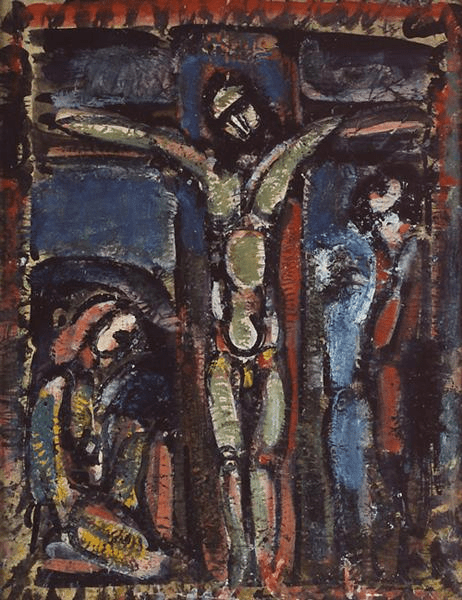
Oh, my, no! God sees, and God knows. God is acquainted with suffering. Jesus knows it first-hand. Remember that it was Jesus who said, “My God, my God, why have you forsaken me?” (Psalm 22:1; Mark 15:34; Matthew 27:46)

Even Jesus cried out in his suffering. But there was no deliverance coming for him.  There was, however, deliverance coming for us.

Sometimes the greatest miracle and deliverance of all is to be freed from the need for a miracle. The reason God doesn’t just offer immediate relief from everyone’s suffering and bring a divine miracle is that the Lord is doing something else: Walking with us through our suffering. God oftentimes has plans and purposes for us that are well beyond our understanding. 

We simply are not privy to everything in God’s mind.

We may not get the miracle we desire. Yet, what we will get without fail, is God’s provision and steadfast love all the way through the suffering.

Where is God in your suffering? Right beside you. Jesus is suffering with you. You are not crying alone; Christ weeps with you.

Let, then, those who suffer, eat and be full. Let them be satisfied with the portion God has given them. And, what’s more, let them offer praise to the God who is squarely beside them in every affliction and each trouble.

God Almighty, you are the One who knows suffering and affliction better than anyone. I admit I don’t often understand what in the world you are doing or not doing in my life and in the lives of those I love. Yet, I admit that I have found in you the comfort, encouragement, and strength to live another day in my trouble. For this, I praise you, in the Name of Jesus Christ, in the power of the Holy Spirit. Amen.

The Struggle Within (Romans 7:15-25)

I do not understand what I do. For what I want to do I do not do, but what I hate I do. And if I do what I do not want to do, I agree that the law is good. As it is, it is no longer I myself who do it, but it is sin living in me. For I know that good itself does not dwell in me, that is, in my sinful nature. For I have the desire to do what is good, but I cannot carry it out. For I do not do the good I want to do, but the evil I do not want to do—this I keep on doing. Now if I do what I do not want to do, it is no longer I who do it, but it is sin living in me that does it.

So I find this law at work: Although I want to do good, evil is right there with me. For in my inner being I delight in God’s law; but I see another law at work in me, waging war against the law of my mind and making me a prisoner of the law of sin at work within me. What a wretched man I am! Who will rescue me from this body that is subject to death? Thanks be to God, who delivers me through Jesus Christ our Lord! So then, I myself in my mind am a slave to God’s law, but in my sinful nature a slave to the law of sin. (New International Version)

We can relate to the Apostle Paul. We, along with him, have said to ourselves many times, “I don’t understand why I act the way I do. I don’t do what I know is right. I do the things I hate.” 

Paul’s experience of uneasiness, his existential angst because of the struggle within, is a timeless description of our common human condition. There are times we seem completely unable to follow our conscience and do what’s right. It can be maddening, even to the point of experiencing a continual low-level discouragement or depression which underlies almost everything we do.

The prescription for dealing with this mental, emotional, and spiritual malady does not include the law. That’s right. Putting our willpower and effort into obeying commands gets us nowhere. Even if we obey laws and rules and commands for a time, our efforts eventually break down. We fail to do what we want, and end up doing just the opposite.

In all fairness, the law is good, not bad; it just doesn’t have the capacity to transform us. The law’s purpose is to show us how bad off we really are in this world, to give us an awareness of our true condition, so that we will seek help. 

We humans are a bundle of contradictions, doing good, then bad, and flip-flopping back and forth – all with great frustration. In such a miserable condition, what then shall we do? Who will help us? Is there anyone to save us from our plight?

Sheer willpower and obedience will not help us; it won’t work. It will only give us a false hope. Any success in using willpower only deludes one into believing they have the answer… until they yet fall again into the pit of their own inner darkness. But the good news is that there is a Savior, a Redeemer, a Rescuer who has the will and the power to deliver us from our predicament.

The grace of God in Christ is the operative power that changes lives, not the law. Freedom from the tyranny of our “should’s” and our misplaced desires comes from Christ’s forgiveness through the cross. 

Like a lover enamored with his beloved, our desires become oriented toward Jesus for his indescribable gift to us. That is the strength of grace. Transformation is relational; it is found in a person, not a program. And the only person and relationship which has the ability to change us is, I believe with all my heart and mind, the Lord Jesus Christ.

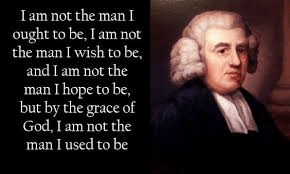
Why? Because I myself have been transformed and changed by such a relationship with Christ. I, along with the hymn writer John Newton, can say, “I once was lost but now am found, was blind but now I see.”

“Self-help” for all the good it really can do, is in many ways an oxymoron. We need a Savior to help us, and we need a community of people who encourage us. And even if we can do it ourselves today, that may not (and eventually will not) be true of us tomorrow. None of you got this far in life on your own – and you will continue to need God and others going forward.

Love must be completely sincere. Hate what is evil, hold on to what is good.Love one another warmly as Christians, and be eager to show respect for one another. Work hard and do not be lazy. Serve the Lord with a heart full of devotion. Let your hope keep you joyful, be patient in your troubles, and pray at all times. Share your belongings with your needy fellow Christians, and open your homes to strangers. (Romans 12:9-13, GNT)

We have an incredible capacity for good and vast internal resources within us. And yet, we too often lack awareness of this reality, for which we can tap into. When it comes to an outright metamorphosis, we need a new heart – and we can no more simply decide to change our lives any more than we can perform heart transplant surgery on ourselves.

People need the Lord.

Whenever the foundation of a house is about to crumble, it won’t do to rearrange the living room furniture and do a bit of spruce up painting. We deceive ourselves if we believe that all our efforts at landscaping the property and having a great curb appeal will do the trick. If the foundation crumbles, and the house implodes, all efforts at curb appeal won’t matter.

Jesus is our cornerstone. Without him, we are at risk, about to fall and without hope. With him, true restoration and renewal happens. And then, when the house is repaired and in order, we set about the task of being good stewards and maintaining and caring for the wonderful changes which were made.

Freedom from a dilapidated soul and misplaced energies to consistent times of peace and contentment, calmness and confidence, satisfaction and settled peace, comes by growing ever closer to the Savior who exudes all those qualities, and more. For the Lord not only saves and delivers; he also sanctifies and encourages.

In Christ, the uneasiness and unsettling experience – the existential angst – becomes a thing of the past because of the grace of merciful deliverance and continual help.

Saving God, I thank you for delivering me from sin, death, and hell through your Son, the Lord Jesus. May your Holy Spirit apply the work of grace to my life every day so that I can realize practical freedom from all that is damaging and destructive in my soul. Amen.