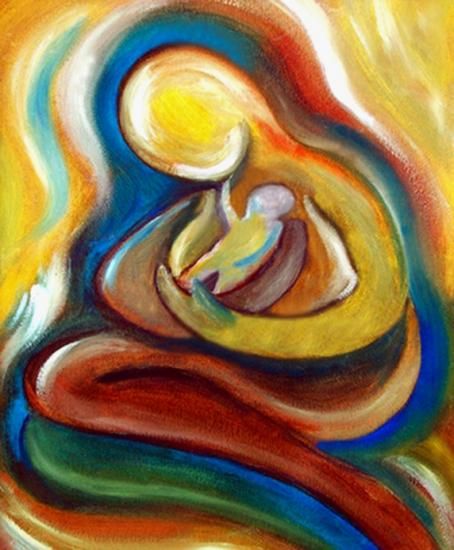
Spiritual Renewal (Isaiah 30:19-26)

People of Zion, who live in Jerusalem, you will weep no more. How gracious he will be when you cry for help! As soon as he hears, he will answer you. Although the Lord gives you the bread of adversity and the water of affliction, your teachers will be hidden no more; with your own eyes you will see them. Whether you turn to the right or to the left, your ears will hear a voice behind you, saying, “This is the way; walk in it.” Then you will desecrate your idols overlaid with silver and your images covered with gold; you will throw them away like a menstrual cloth and say to them, “Away with you!”

He will also send you rain for the seed you sow in the ground, and the food that comes from the land will be rich and plentiful. In that day your cattle will graze in broad meadows. The oxen and donkeys that work the soil will eat fodder and mash, spread out with fork and shovel. In the day of great slaughter, when the towers fall, streams of water will flow on every high mountain and every lofty hill. The moon will shine like the sun, and the sunlight will be seven times brighter, like the light of seven full days, when the Lord binds up the bruises of his people and heals the wounds he inflicted. (New International Version)

Better days are ahead.

In this time of year, there are many people who simply don’t have to think twice about purchasing and giving gifts for Christmas. They have blessings, both material and spiritual. And they can always identify other persons who are in much more need than them. Some of them may even believe that those in need are in that position because of unwise individual choices. 

But we must maintain a focus on our own lives. We need to recognize the maladies of our hearts. The state of our lives is as important, and is just as real and needy, as someone else’s life who is in more humble circumstances. 

There are specific conditions in our lives that leave us in bondage and in need of restoration, renewal, and revitalization, just like all kinds of other people. 

Being a vital part of a local church does not automatically immune one from having serious needs. And having a good steady income doesn’t inoculate one from need or privation.

We must not suppress those realities and needs, but instead, name the conditions which are packed away in a closet of our heart deep inside us – such things as the love of possessions and money; broken relationships; old grudges; hidden addictions; domestic violence; denial of depression; secret affairs; cutting; fear; anger; greed; hatred; and much more. 

Outward smiles and small talk conversations may hide the truth from others, but they do nothing to hide from a God for whom everything is laid bare.

The good news is not just something for someone else who has “obvious” needs; the gospel must touch our lives and bring us freedom.

Only then can we pass on the good news to the legion of social ills that make our world sick. There are people all around us who need spiritual, emotional, and material help. Yet, we will not have eyes to see them, or have hearts to help, if we are stuffing our own burdens so deep within that we are blind to others.

Far too many Christians, especially the church-going kind, have become expert emotional stuffers and deniers of need. 

We may believe “those other people” need ministries of justice and help. But the truth is: Many of us are one paycheck, one prodigal kid, one mental health diagnosis, one serious illness, one drink, one affair, or one bad decision away from being one of “those people” – the people we typically identify as in need – the ones that bad things happen to – the ones we do not want next door to us.

We may not yet be vulnerable enough to admit our situation; and so, we keep practicing the denial of our spiritual poverty. 

What to do? Turn from the things that have caused us to be in poverty and be prisoners (not just secretly!) and hope in the Lord’s restorative grace. God takes all sorts of seemingly impossible situations of destruction and death, creating fresh new growth in the form of a little green sprout. 

God will rebuild our ruined souls; restore the places of our lives that have been devastated; and renew the places that have not seen renewal for generations. 

It begins with you and me allowing the justice of God to work within us, not just others. 

If we want comfort, we need to mourn. If we desire joy, then there needs to be some lamenting of a dire situation. If we hope for an oak of righteousness, there must be a confession of despair. For there to be a resurrection, there has to be a death.

What is your real situation and the true realities of your life that need to be named? 

Where will you go to address those needs and truths? 

Will you keep stuffing them, or will you become able to voice your inner personal needs? 

How might you be vulnerable enough to allow others to minister grace to your needy soul?

Let us have a vision of Jesus coming into our lives and replacing a tattered hat of grief with a crown of beauty. 

Let us picture the Lord placing on us a garment of praise to replace our stinky clothes of grumbling. 

Let us allow our lives to display the grace of God in Christ because we have been profoundly touched by the justice of God. 

Let us herald the coming of the Christ child as the hope of us all.

Soli Deo Gloria

The Effects of the Fall (Genesis 6:11-22)

The Flood of Noah by Majd Ramadan, 2014

In God’s sight, the earth had become corrupt and was filled with violence. God saw that the earth was corrupt because all creatures behaved corruptly on the earth.

God said to Noah, “The end has come for all creatures, since they have filled the earth with violence. I am now about to destroy them along with the earth, so make a wooden ark. Make the ark with nesting places and cover it inside and out with tar. This is how you should make it: four hundred fifty feet long, seventy-five feet wide, and forty-five feet high. Make a roof for the ark and complete it one foot from the top. Put a door in its side. In the hold below, make the second and third decks.

“I am now bringing the floodwaters over the earth to destroy everything under the sky that breathes. Everything on earth is about to take its last breath. But I will set up my covenant with you. You will go into the ark together with your sons, your wife, and your sons’ wives. From all living things—from all creatures—you are to bring a pair, male and female, into the ark with you to keep them alive. From each kind of bird, from each kind of livestock, and from each kind of everything that crawls on the ground—a pair from each will go in with you to stay alive. Take some from every kind of food and stow it as food for you and for the animals.”

Noah did everything exactly as God commanded him. (Common English Bible)

The entire world is profoundly broken. 

Everywhere, people are messed-up. In one breath they can tell you they’re sorry for another’s abuse or violence against you, then turn right around and say some irrational nonsense and terribly insensitive things to you.

It doesn’t matter where you go – whether school, work, home and even church, there is institutional brokenness. Individual persons, and the human structures and systems they put in place, all contain elements of bondage instead of freedom. It doesn’t take a religious person to observe that there’s such a thing as sin.

Holy Scripture’s description of this sad reality goes all the way back to a story about the fall of humanity into sin and rebellion. Satan, the devil, led the original persons, Adam and Eve, into disobedience of God. Satan tempted Eve to doubt whether God really had her best interests at mind; to question the truthfulness of God’s Word; and, to wonder about the wisdom of listening to God (Genesis 3:1-5). Adam just flat out chose to disobey God, and, so, the entire world changed (Genesis 3:16-17). 

Immediately, everything was different in the world and with people. The choice to disobey God brought feelings of fear and shame; a loss of fellowship with God; hiding from God; a bent to pervert the truth; the propensity for the genders to try and dominate each other; expulsion from the garden; and physical death (Genesis 3:7-24). 

And the unholy tools people used against one another were violent and corrupt. People thought nothing of oppressing each other, abusing one another, attacking others – both verbally and physically. Rape, assault, theft, and murder became daily experiences. That’s some downright icky stuff. 

No wonder the world is messed up.

God saw that human evil was out of control. People thought evil, imagined evil—evil, evil, evil from morning to night. God was sorry that he had made the human race in the first place; it broke his heart. God said, “I’ll get rid of my ruined creation, make a clean sweep: people, animals, snakes and bugs, birds—the works. I’m sorry I made them.” (Genesis 6:5-7, MSG)

Noah was the only guy on the face of the earth for whom the Lord saw any good. And it was enough good worth saving. Yet, people are still in the nasty habit of turning on each other, like a bunch of sharks with blood in the water.

Unfortunately, the fall of humanity still affects us all. It has brought not only physical death, but spiritual death. That means we are alienated from God, in rebellion, and enslaved to our own passions and desires (Isaiah 1:2-6; Romans 2:14-15; Ephesians 2:1-3). 

We are also alienated from one another by having continual bents toward discord, suspicion, and jealousy instead of love and trust (Romans 1:29-31; James 3:14-16). 

We are even alienated and totally out of touch with ourselves by either loving ourselves as gods or hating ourselves with an inordinate emotional masochism (Philippians 2:21; 2 Timothy 3:2-4). In short, we are selfish people who experience separation from God, others, and self.

If this is the true reality of humanity, then it is awfully depressing, discouraging, and damaging. And we know it’s true because we’ve all been both victims and victimizers. So, who then, will rescue us from this horrific death? 

Thanks be to God who has given us the victory through our Lord Jesus Christ (Romans 7:24-25; 1 Corinthians 15:57). 

The good news is that, through the death and resurrection of Jesus, the curse has been reversed. Christ has restored us to our original place of fellowship with God. He is the way, the truth, and the life. In Christ, there is hope for humanity (John 14:6). 

To live in freedom, therefore, involves knowledge, honesty, and sincere decisions of faith and love whereby truth is applied to life.

Just as the world needed a thorough purging of evil through a cleansing worldwide flood, so we need a bath of grace, to be completely awash with the love of God in Christ, to have all the crud of evil scrubbed from our soul. And this is precisely what Christian baptism symbolizes.

Jesus offered himself for us so that we might live without violence and no longer be separated from God, others, and self. He has brought us reconciliation. In him we have been blessed with every spiritual blessing (2 Corinthians 5:16-19; Ephesians 1:3; 2 Peter 1:3).

In Christianity, the purpose of ministry is to come alongside people trapped in their awful cycles of brokenness and communicate good news of grace and forgiveness with both words and actions.

Although the world is terribly askew, God has demonstrated his love for us in that, while we were still violent and corrupt sinners, Christ died for us (Romans 5:8). 

We needed a Savior. God provided One. 

Are you in touch with the ways you are separated from God, others, and self? 

Are you aware of the ways in which your church or faith community has an unhealthy separation from the world? 

In what ways can you apply the love of God to broken people and systems in your community? What will it take to reach them?

Sin, guilt, shame, rebellion, disobedience, and violence need not define us. We can do better.

Almighty God, we have sinned against you, through our own fault, in thought, and word, and deed, and in what we have left undone. For the sake of your Son, our Lord Jesus Christ, forgive us all our offenses; and grant that we may serve you in newness of life, to the glory of your Name. Amen.

Isaiah 9:18-10:4 – The Reality in Front of Us

Surely wickedness burns like a fire;
    it consumes briers and thorns,
it sets the forest thickets ablaze,
    so that it rolls upward in a column of smoke.
By the wrath of the Lord Almighty
    the land will be scorched
and the people will be fuel for the fire;
    they will not spare one another.
On the right they will devour,
    but still be hungry;
on the left they will eat,
    but not be satisfied.
Each will feed on the flesh of their own offspring:
    Manasseh will feed on Ephraim, and Ephraim on Manasseh;
    together they will turn against Judah.

Yet for all this, his anger is not turned away,
    his hand is still upraised.

Woe to those who make unjust laws,
    to those who issue oppressive decrees,
to deprive the poor of their rights
    and withhold justice from the oppressed of my people,
making widows their prey
    and robbing the fatherless.
What will you do on the day of reckoning,
    when disaster comes from afar?
To whom will you run for help?
    Where will you leave your riches?
Nothing will remain but to cringe among the captives
    or fall among the slain.

Yet for all this, his anger is not turned away,
    his hand is still upraised. (New International Version)

There are times when God has some very hard things to say.

The Lord does get angry. And that’s a good thing.

The Love/Anger Reality of God

God’s anger and wrath are a form of God’s love. A heartless unloving god is fickle and unconcerned for much of the evil which happens in the world. Conversely, a loving God is not okay with wicked persons having their way. A loving God’s anger is kindled against injustice. A loving God doesn’t long put up with people oppressing other people, and taking advantage of them.

So, this is what the Old Testament prophets are all about – communicating and calling people to change their ways because they are harming others. And when the harming and the hurting is done purposefully and callously, then the ire of a holy God is raised. The Lord will not contend with this sort of attitude and action.

The language of judgment, in today’s Old Testament prophetic lesson, is an invitation for us to take a very hard look at the reality which was responsible for such an angry response from God.

The Social/Economic Reality of Both the Prophet’s World and Today’s World

God expects justice, to have people helping one another thrive and flourish in this life, to be concerned for the common good of all persons, not just some. In Isaiah’s day, all that God saw was greed and selfishness, injustice and corruption. And God was not okay with it. The unjust systems and practices were a failure of the people to live up to the Lord’s expectations for righteous living.

Sadly, issues of justice and righteousness are still relevant in our world today. Throughout the earth, this very day, the powerless are being exploited; the rich get wealthier at the cost of the poor; greed, corruption, outsourcing, and unjust legal systems are the norm and not the exception.

Much of the world gloomily faces racism, poverty, gender injustice, violence, famine, health disparities and inequities. And so called “religious” folk are at the forefront of ensuring that these evils continue to persist. So, why would not a holy God become infuriated at such a situation!?

A 12th century German depiction of Isaiah the prophet

The Religious Reality of Isaiah’s Day and Our Day

The religious reality of Isaiah’s day is not so far off from our own today. People were, and are, engaging in forms of spiritual and/or religious activity while being completely devoid of justice. Folks attend religious gatherings and believe in God – and treat others unjustly. They talk of faith in the Lord, while trusting in wealth and assets.

It was, and is, a world where people bow before their own works and ingenuity, focusing their attention on money and power. It’s a world with no room for the God of the Bible and true divine justice.

Far too many “believers” espouse unethical leaders and turn a blind eye to morally bankrupt leadership. Far too many religious folk want what they want, with no regard for the needs of others.

The Divine Reality of God’s Pathos

We as people need to contend with a God who is a profoundly emotional Being.

God is moved and affected by what happens in the world. The Lord’s anger and judgment is aroused because of God’s love and compassion.

God both binds up the injuries of people, as well as inflicts wounds. This ought not be surprising. After all, we readily understand, through our extensive healthcare systems, that medical interventions and surgeries are needed, and that they hurt.

A God of justice is, of course, angered by ethical violations. The Lord is rightly upset that the world often falls so woefully short of instituting a just social, economic, and political order for all citizens to enjoy.

Everyone must deal with the God who is not a brain-on-a-stick but has a deep heart for people everywhere to experience truth, justice, righteousness, salvation, and love.

Conclusion

Yes, there is a coming reality in which a new world will emerge. For the Christian, this occurs when Christ returns to judge the living and the dead. Complete deliverance from sin, death, and hell shall be realized.

But we aren’t there yet. We still need to cope with the world as it is today, and deal with it’s failures, shortcomings, and sins.

There is currently a massive need to be attentive to the needy, to proclaim the gospel to all nations, and to be involved in reforming unjust systems in our cities, communities, and countries. Salvation is meant for the whole person, not just the spiritual part.

Therefore, we have a choice as to how we will approach the world.

Will we withdraw from it? Will we engage it, only to take advantage of others within it? Or will we participate with God in transforming it?

  • Will we hear the cries of the oppressed?
  • Will we live out God’s commitment to the poor, the weak, and the sick?
  • Will we work for economic and social equity?
  • Will we break the bonds of injustice?
  • Will we help people to reach their full potential?
  • Will we preach good news?
  • Will we suffer with those who suffer and show solidarity with the weak?
  • Will we be truly spiritual folk who invest in the concerns of humanity?
  • Will we take up our cross and follow the Lord in being suffering servants for a lost world in need of God and God’s justice?

The reality in front of us is one which demands confrontation, participation, and reformation. Will you do it?

Blessed and holy God and Father of all, it is your will that all people be gathered together as one family in yourself. Fill the hearts of humanity with the fire of your love and with the desire to ensure justice for all. By sharing the good gifts that you give us, may we secure an equality for all our brothers and sisters throughout the world. May there be an end to division, strife and war. May there be a dawning of a just society built on love and peace. We ask this in the name of Jesus, our Lord. Amen.

1 Corinthians 1:18-31 – The Sixth Sense of Spirituality

For the message of the cross is foolishness to those who are perishing, but to us who are being saved it is the power of God. For it is written:

“I will destroy the wisdom of the wise;
    the intelligence of the intelligent I will frustrate.”

Where is the wise person? Where is the teacher of the law? Where is the philosopher of this age? Has not God made foolish the wisdom of the world? For since in the wisdom of God the world through its wisdom did not know him, God was pleased through the foolishness of what was preached to save those who believe. Jews demand signs and Greeks look for wisdom, but we preach Christ crucified: a stumbling block to Jews and foolishness to Gentiles, but to those whom God has called, both Jews and Greeks, Christ the power of God and the wisdom of God. For the foolishness of God is wiser than human wisdom, and the weakness of God is stronger than human strength.

Brothers and sisters, think of what you were when you were called. Not many of you were wise by human standards; not many were influential; not many were of noble birth. But God chose the foolish things of the world to shame the wise; God chose the weak things of the world to shame the strong. God chose the lowly things of this world and the despised things—and the things that are not—to nullify the things that are, so that no one may boast before him. It is because of him that you are in Christ Jesus, who has become for us wisdom from God—that is, our righteousness, holiness and redemption. Therefore, as it is written: “Let the one who boasts boast in the Lord.” (New International Version)

Although a lot of people are not religious, I believe every person on planet earth is spiritual. By that I mean we all intuitively know deep in our gut that there are bigger things going on in this world beyond our own existence – that there is a transcendent Someone who is higher than us whom we can connect to and helps us connect with one another as humans.

If our epistemology (the study of how we as humans know things) doesn’t allow for transcendent reality, then it is a deficient and truncated philosophy (the study of truth, knowledge, and conduct); it will not be able to accommodate spiritual realities.

There are times you have no explanation for what is happening – no words to describe the experience you went through. That’s because your five senses (taste, sight, touch, smell, and sound), although alert and reliable with taking-in all kinds of sensory data, are simply inadequate to explain the transcendent situation.

I was once talking with an agnostic (a person who denies that ultimate knowledge can be found, or that knowledge can be located ultimately with a god). This particular guy became a father for the first time. He was fresh off the incredible experience of being in the room with his wife when she gave birth to their son. 

Bill (not his real name) was flush with enthusiasm. He took in the sight of his newborn baby boy, held him and touched him for the first time, and joyfully listened to his very first screams of new life in this great big world.  Bill described it all to me with such awe and reverence. 

Then, Bill said something to me that I haven’t forgotten: “I don’t know how to explain it, Tim. Something spiritual happened when my son was born, something I can’t put into words. All I can say is that I experienced something that was not of this world.”

Something not of this world. That was Bill’s way of saying that he had no mental categories from which to draw from to give him any kind of sensory explanation to the awesome reality of being there at childbirth. 

Our five senses are vital, critical, and significant; yet they do not tell the whole story. As important as our ability to taste, see, touch, smell, and hear is, there are other ways of knowing and experiencing life.

Faith and spirituality are the sixth sense which enable us to discern and know things about ourselves, this world, and God – things that we would not know with only our five senses. 

There is a spiritual reality which transcends the physical. The soul, whether we acknowledge we have one or not, is the place of communion with this unseen reality. The inner person is where we meet-up with God and find a vast world of spiritual resources which boggle the five senses. Somehow, we know this is true, even if we have no language to explain it.

Jesus once said that it is the Spirit who gives life; human strength isn’t even a factor (John 6:63). In other words, God is Spirit, and the One who gives meaning, connection, relationship, and even physical life. Human abilities cannot ultimately do this. Yes, we do have biological explanations for human attraction, marriage, and where babies come from; yet this is not the whole story. 

There is a transcendent reality behind it all that gives life meaning and purpose. There are times, once-in-awhile, when the unique, the astonishing, and the beautiful grab us.

Our souls spring to life. We “see” the transcendent and get an awesome glimpse of this place where the physical and the spiritual “touch.”

We “taste” that the Lord is good, and “hear” the call to a deeper experience of recognizing the care and compassion of Christ. 

We take in a deep breath and “smell” the aroma of him who created us in his image and likeness.

Let your senses draw in all the wonderful information it can. And don’t stop there. Allow your soul to drink in the spiritual dimension of wisdom, and feed your inner person with Jesus Christ, who saves us from the sinful and the mundane, and lifts us to the world of the Spirit where there is life, hope, and infinite love.

Holy God, your knowledge of me exceeds what I grasp or see in any moment; you know me better than I know myself. Now, help me to trust in your mercy, to see myself in the light of your holiness, and grant me the grace that I may have true contrition, make an honest confession, and find in you forgiveness and perfect remission. Amen. – A prayer of St. Augustine