Waiting Patiently For God (Psalm 40:1-11)

I waited patiently for the Lord;
    he inclined to me and heard my cry.
He drew me up from the desolate pit,
    out of the miry bog,
and set my feet upon a rock,
    making my steps secure.
He put a new song in my mouth,
    a song of praise to our God.
Many will see and fear
    and put their trust in the Lord.

Happy are those who make
    the Lord their trust,
who do not turn to the proud,
    to those who go astray after false gods.
You have multiplied, O Lord my God,
    your wondrous deeds and your thoughts toward us;
    none can compare with you.
Were I to proclaim and tell of them,
    they would be more than can be counted.

Sacrifice and offering you do not desire,
    but you have given me an open ear.
Burnt offering and sin offering
    you have not required.
Then I said, “Here I am;
    in the scroll of the book it is written of me.
I delight to do your will, O my God;
    your law is within my heart.”

I have told the glad news of deliverance
    in the great congregation;
see, I have not restrained my lips,
    as you know, O Lord.
I have not hidden your saving help within my heart;
    I have spoken of your faithfulness and your salvation;
I have not concealed your steadfast love and your faithfulness
    from the great congregation.

Do not, O Lord, withhold
    your mercy from me;
let your steadfast love and your faithfulness
    keep me safe forever. (New Revised Standard Version)

Some of the greatest gifts any of us could ever receive are God’s steadfast love, faithfulness, and mercy. These are no problem for the Lord to bestow, because they are all a part of God’s very character.

Since, according to Holy Scripture, people are created in the image and likeness of God, every single one of us contains a divine reflection of faith, love, and mercy inside our very souls.

So, why aren’t these gifts and character virtues more evident in humanity?

Why does it seem to so many that love, faith, and mercy are in short supply today?

I believe today’s psalm gives us a clue to the answer. Virtuous character only really arises out of us through the practices of patience and gratitude. Another way of looking at this is: Our waiting and our thanksgiving help us become aware and in-touch with love, faith, and mercy.

Waiting Patiently

The Psalter is replete with encouragements to wait. The ability to be patient is connected to our character’s integrity.

May integrity and uprightness preserve me,
    for I wait for you. (Psalm 25:21, NRSV)

Our patience is an expression of our trust and reliance upon God.

Wait for the Lord;
    be strong, and let your heart take courage;
    wait for the Lord! (Psalm 27:14, NRSV)

Throughout the psalms, faithful and patient waiting leads to God’s deliverance.

Wait for the Lord and keep to his way,
    and he will exalt you to inherit the land;
    you will look on the destruction of the wicked. (Psalm 37:34, NRSV)

We can wait because we have the hope that God is good for promises given.

And now, O Lord, what do I wait for?
    My hope is in you. (Psalm 39:7, NRSV)

It would be great if love and mercy were always right there, embedded clearly within every human community, family, group of people, and nation. But, as you well know, virtuous character is not always there for us.

This is why there are times in life in which we must wait for others’ love and faithfulness. We can do that through active patience, that is, by purposely loving others and being committed to them despite their unloving and uncommitted behaviors.

I’m not saying this is easy. In fact, it is downright hard. Yet, our persevering patience, expressed in mercy, will eventually win the day. What’s more, the Lord Jesus made it plain that we are to love others whether they are nice to us, or mean to us. (Matthew 5:43-48)

Giving Praise and Thanks

When God gives us deliverance from whatever or whomever is oppressing us, a new song arises in our hearts. The song declares and testifies to God’s goodness toward us. A song provides witness to our experience of God’s steadfast love, faithfulness, and divine mercy. Through singing, we show others the path toward deliverance.

O sing to the Lord a new song;
    sing to the Lord, all the earth.
Sing to the Lord; bless his name;
    tell of his salvation from day to day.
Declare his glory among the nations,
    his marvelous works among all the peoples. (Psalm 96:1-3, NRSV)

I admit that there are many times I don’t feel like singing. Yet, even using my voice to sing a lament is a way of expressing thanks to God for being present with me in my grief, and for what God will do in my life.

For he will hide me in his shelter
    in the day of trouble;
he will conceal me under the cover of his tent;
    he will set me high on a rock.

Now my head is lifted up
    above my enemies all around me,
and I will offer in his tent
    sacrifices with shouts of joy;
I will sing and make melody to the Lord.

Hear, O Lord, when I cry aloud;
    be gracious to me and answer me! (Psalm 27:5-7, NRSV)

Monetary sacrificial giving and offering is needed, yet this is not so much what God truly desires from us. God delights in our delight to do God’s will. So then, our sacrifice can look more like the exhortation of the Apostle Paul in the New Testament:

Therefore, I urge you, brothers and sisters, in view of God’s mercy, to offer your bodies as a living sacrifice, holy and pleasing to God—this is your true and proper worship. 

Do not conform to the pattern of this world, but be transformed by the renewing of your mind. Then you will be able to test and approve what God’s will is—his good, pleasing and perfect will. (Romans 12:1-2, NIV)

Petitioning God For Mercy

In today’s psalm, the psalmist makes a shift from offering thanks to asking God for mercy. Mercy in the form of God’s steadfast love and faithfulness is what the psalmist needed. And it is likely what you and I need, as well.

Any sort of deliverance we experience in this mortal life seems to have a temporary element to it. There is really no final deliverance until Jesus returns to judge the living and the dead. In the meantime, we need a lot of mercy.

I don’t know if you have ever had that feeling of deliverance from a slimy pit, and having your feet set on firm solid ground. Thankfully, I have.

My own deliverance(s) were never experienced because of any superior character on my part. No, deliverance is realized through asking. And asking requires some humility which admits need, and knows how much we cannot simply save ourselves from trouble.

But we must brace ourselves for the reality that we might do a lot asking over a seemingly long period of time. It’s one thing to ask; it’s another to keep asking day in and day out, week after week, month after month, even year after year, or decade after decade.

Yet this is the nature of patient waiting. There is no deliverance apart from perseverance in prayer. I’m not talking about a vain repetition of trying to get God’s attention – that’s because you and I already have it. I’m talking about the reality that we ourselves are not in control of anything except ourselves. And even our own self-control doesn’t often go so well.

A song of thanksgiving to God always understands that there will be ongoing trouble in this old world; and a continual need for deliverance.

I humbly ask that you join me in getting on your knees every day and asking for deliverance from the injustice and unrighteousness of our current world and national troubles. They are legion.

It isn’t easy watching friends live in fear, and neighbors becoming victims of oppression and abuse. But here we are, all of us in need of seeing God’s kingdom come to earth and God’s will be done on this planet, as it is always done in God’s heaven.

Soli Deo Gloria

May it be so, to the glory of God.

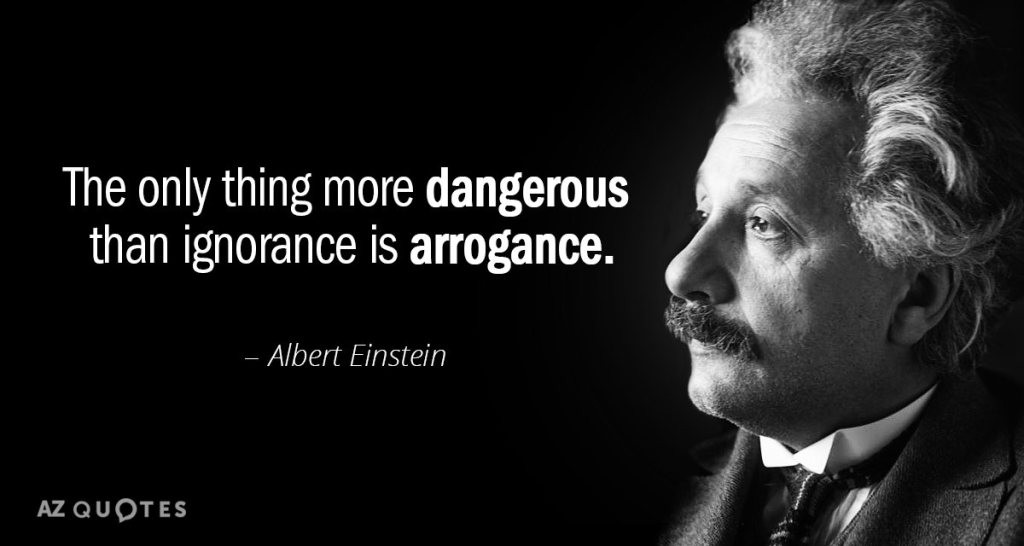
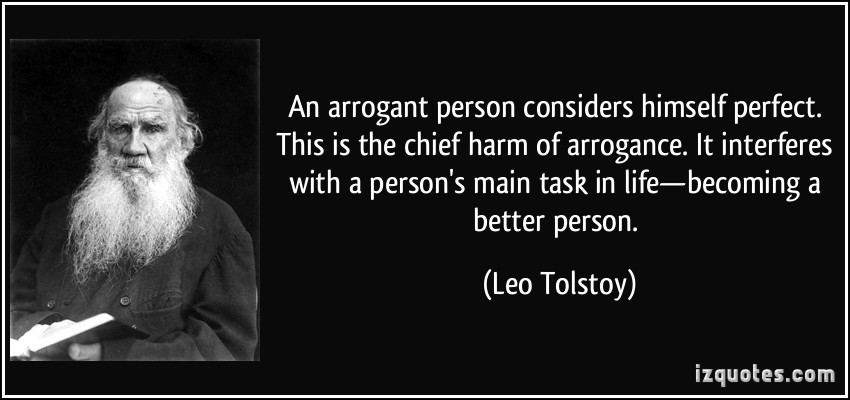
The Arrogant Leader Will Be Deposed (Isaiah 22:15-25)

This is what the Lord, the Lord Almighty, says:

“Go, say to this steward,
    to Shebna the palace administrator:
What are you doing here and who gave you permission
    to cut out a grave for yourself here,
hewing your grave on the height
    and chiseling your resting place in the rock?

“Beware, the Lord is about to take firm hold of you
    and hurl you away, you mighty man.
He will roll you up tightly like a ball
    and throw you into a large country.
There you will die
    and there the chariots you were so proud of
    will become a disgrace to your master’s house.
I will depose you from your office,
    and you will be ousted from your position.

“In that day I will summon my servant, Eliakim son of Hilkiah. I will clothe him with your robe and fasten your sash around him and hand your authority over to him. He will be a father to those who live in Jerusalem and to the people of Judah. I will place on his shoulder the key to the house of David; what he opens no one can shut, and what he shuts no one can open. I will drive him like a peg into a firm place; he will become a seat of honor for the house of his father. All the glory of his family will hang on him: its offspring and offshoots—all its lesser vessels, from the bowls to all the jars.

“In that day,” declares the Lord Almighty, “the peg driven into the firm place will give way; it will be sheared off and will fall, and the load hanging on it will be cut down.” The Lord has spoken. (New International Version)

The nation of Judah was in a pickle. The Babylonian Empire loomed over them to the East as a mighty army about to swallow them whole. What’s more, the prophets were proclaiming judgment against Judah, with Babylon as the instrument.

Although we don’t always know why hard circumstances come about, in the case of ancient Judah, the prophet Isaiah made it clear what was going on. Isaiah wasn’t afraid to name the names of those responsible for Judah’s situation. Particular government officials were the objects of blame, as well as punishment.

Shebna, the palace administrator or master of the household, held a position somewhat like the prime minister of today. He had a great deal of power, and was second only to King Hezekiah. Isaiah identified and called out Shebna for misusing his administrative office.

The specific offense Isaiah spoke of was that Shebna made arrangements to ensure his personal grave-sight would have all of the grandeur of a royal tomb. Shebna – the conniving rascal that he was – arrogantly put himself on the same level of the royal king, Hezekiah, who was a righteous man.

The God of Judah, the Lord God Almighty, observed what was happening. And God was not okay with what Shebna was doing, and how he was going about his duties. Shebna was failing to discharge his responsibilities. Instead, he was finagling to make sure his own name would be remembered as great.

Shebna was a disgrace to his king, Hezekiah. So, the Lord would have him violently dislodged from his position, and exiled. In that place he would die and never see his country again. Because Shebna was so taken up with selfish concerns, he failed to do the job of preparing his nation for the growing threat of Babylon.

In place of Shebna, Eliakim son of Hilkiah would become the administrator, the prime minister. He would use his authority for the common good of the nation, and not for making his own name significant, and his own tomb big.

God promised security and honor for Eliakim and his family. Yet, even Eliakim would feel the weight of severe consequences along with the entire nation of Judah.

Although a change in leadership brought hope for peace and prosperity, it never materialized. Future leaders would sink lower than Shebna. And future kings would go to the lowest depths of depravity. All of it anticipated the Babylonian army’s invasion and the people’s exile.

Does any of today’s Old Testament lesson sound familiar in today’s governmental workings in the world, including and especially in the United States?

Being concerned and enamored with putting one’s name on places one does not deserve; being unconcerned with the plight of the poor, the immigrant, and the powerless; and being unprepared to use authority for just and right purposes, puts one in the legacy of Shebna, not Eliakim. The selfish politician ought only to expect eventual divine judgment, and not any sort of praise from neither the people, nor God.

If the God of the universe takes notice of a prime minister’s intended creation of a permanent mausoleum, then how much more will the Lord take note of a president’s abuse of authority and the tearing down and erecting of buildings which benefit his own name, and not the concerns of the needy in the land?

Whenever talk of compassion and practice of humility is replaced with petty arrogance and unmerciful arrest of citizens, then we really ought to expect nothing less than what happened to the selfish persons and governmental officials of old who came to an ignominious end.

Most merciful God, we confess that we have sinned against you in thought, word, and deed, by what we have done, and by what we have left undone. We have not loved you with our whole heart; we have not loved our neighbors as ourselves. We are truly sorry and we humbly repent. For the sake of your Son Jesus Christ, have mercy on us and forgive us; that we may delight in your will, and walk in your ways, to the glory of your Name. Amen.

Called To a Way of Being – Fourth Sunday of Advent (Romans 1:1-7)

Paul, a servant of Christ Jesus, called to be an apostle, set apart for the gospel of God, which he promised beforehand through his prophets in the holy scriptures, the gospel concerning his Son, who was descended from David according to the flesh and was declared to be Son of God with power according to the spirit of holiness by resurrection from the dead, Jesus Christ our Lord, through whom we have received grace and apostleship to bring about the obedience of faith among all the gentiles for the sake of his name, including you who are called to belong to Jesus Christ,

To all God’s beloved in Rome, who are called to be saints:

Grace to you and peace from God our Father and the Lord Jesus Christ. (New Revised Standard Version)

To be a Christian is to be a servant of Jesus, called to a specific way of being in the world, and set apart for the gospel of God.

Concerning this gospel, this good news, it is all about God the Son, Jesus Christ, who is also fully human. Jesus is the singular person – both God and human at the same time, all the time. His human credentials are linked to the genealogy of the ancient King David, who was promised by God that one of his descendants would sit on throne forever. And as for Christ’s divinity, it was confirmed and established through his resurrection from death.

It is through Christ that we are called to belong to him; we have received the grace to be called children of God; and we are called to holiness for God. We all, therefore, have a calling. Every one of us is important. All of us receive the grace of God to fulfill that calling in this world.

In our contemporary society, we put a lot of stock into what we do, to the point of identifying ourselves primarily by our job titles and positions. But in God’s society, our primary identification is that we belong to God, and specifically to Jesus Christ.

Belonging to Christ means we are to have a certain way of being – not just doing – on this earth. We are first and foremost human beings, and not human doings. What we do is to flow from our being, and not the other way around. We do not gain identity through actions and accomplishments.

Our way of being has a lot to do with the Advent season. Christ’s coming into this world as a vulnerable baby was a deliberate way of being for Jesus in this world. He would go through all the human travails and trials that we do. He would know both joy and suffering, and would know them as coming together into one:

For the joy set before him he endured the cross, scorning its shame, and sat down at the right hand of the throne of God. (Hebrews 12:2, NIV)

It’s normal for us to wonder about the nature of our own personal sufferings. Its hard for us to make sense out of all the nonsensical things in this world, especially when it pertains to us personally.

Indeed, it is hard for us to accept the reality that humble suffering is not only a part of living in this world, but is also an important part of being a Christian who belongs to Jesus.

Whenever we lose something or someone important to us, we struggle with why. We may wonder where God was. We might think there is something wrong with us, as if God is punishing us for some unknown sin we’ve done in the past.

But we would be barking up the wrong tree. Methinks we wrestle so much with adversity and hardship because of our predilection for doing instead of being.

Perhaps our life situations are more about our way of being in this world, rather than what we do on this earth.

Maybe my life is meant primarily to be about being a person who is always loving, kind, compassionate, just, good, righteous, and holy – a saint, set apart as one who belongs to God.

Maybe it has a lot less to do with our vocations and only seeing things through what I’m able to do, or not do.

It could be that I am meant to see God’s grace operating through me by means of love, not hate; kindness, not meanness; compassion and comfort, not indifference and annoyance; justice, not injustice; goodness, not bad attitudes; and holiness, not unrighteousness.

It is quite possible that today (and every day) my Christian life has been about, is about, and will continue to be about my suffering for the sake of Jesus, who suffered for me.

“Why be disturbed of things that do not succeed according to your plans and desires? Who gets everything according to his likes? Neither I, nor you, nor anyone else on this earth. No one in this world is without some trial or illness or affliction, not even a king or a pope. Who, then, has it the best? The one who is willing to suffer for God’s sake.” Thomas à Kempis, The Imitation of Christ

The believers in the Roman Church, for whom the Apostle Paul wrote his letter, were focused primarily on what they had and what they did as Jews and as Gentiles. Because of their understanding of identity, they kept wrangling with each other and looking down on one another – namely, because they failed to each other as belonging equally to God as the one people of God. Jews were too hung up on how they kept the Law for centuries without any Gentiles. And Gentiles were too myopic to see that they were not replacing Jews out of some superior activity.

To love one another, and to simply love, is to suffer. Apart from love there is no suffering. Without love, there is no peace, no grace; and there is no belonging to God and having a way of being in the world which pleases God.

Furthermore, one can never have possessions or wealth without a great deal of anxiety and apprehension. Our happiness does not consist in temporal things, but in the permanence of relationships, because relationships are the only things we take with us in the end.

In the spirit and practice of the Lord Jesus whom the Christian serves, we must pass through the fire before we arrive at redemption and be at peace with God and humanity.

To reach the joy of Christmas, we must endure the weeks of Advent, of anticipating the hope to come, of waiting to see the Christ child who humbly comes into the world for us and for our salvation. And that means we may likely have to endure any current adverse and hard circumstances.

We are called – not for selfish gain, and not to look down on others who are different – but for a way of being in this world which emulates the Lord whom we serve, Jesus Christ our Savior.

Shepherd of Israel: May Jesus, Emmanuel and son of Mary, be more than just a dream in our hearts. With the apostles, prophets, and saints, save us, restore us, and lead us in the way of grace and peace, so that we may bear your promise into the world. Amen.

Be Patient – Third Sunday of Advent (James 5:7-10)

Sunset in Montmartre, by Vincent Van Gogh, 1887

Be patient, therefore, brothers and sisters, until the coming of the Lord.

The farmer waits for the precious crop from the earth, being patient with it until it receives the early and the late rains. You also must be patient.

Strengthen your hearts, for the coming of the Lord is near.

Brothers and sisters, do not grumble against one another, so that you may not be judged. See, the Judge is standing at the doors! 

As an example of suffering and patience, brothers and sisters, take the prophets who spoke in the name of the Lord. (New Revised Standard Version)

Patience is a wonderful virtue… unless you’re smack in the middle of circumstances you neither want nor asked for. Then, patience feels a whole lot more like a vice.

It’s easy to be impatient; it takes little to no effort at all. And praying for patience doesn’t help, because you’re prayer actually gets answered; God puts you in one of those unwanted situations.

The Jewish Christians for whom the Epistle of James was addressed were in that weird life-place of enduring hard circumstances. They were struggling with impatience, so much that the believers began cozying up to the rich and powerful to meet their ever-increasing needs. In their misery, they were looking to the very people who were using them and withholding wages from them. (James 2:1-7; 5:1-6)

It seemed as if God was shuffling his divine feet and not getting around to helping the Christians in their difficulty. They gave everything to Jesus and following him, to the point of being willing to suffer for the Name.

Their suffering led to outright persecution. The believers had to flee Judea for Gentile lands to the West (Acts 8:1-3). In their new homes they got double-trouble. Because they were Jews, they were looked at with suspicion. And because they were Christians, the Jewish community didn’t accept them. The believers were truly alone. All they had was Jesus.

It was enough, at least for a while. But it’s one thing to face difficulty, and quite another thing for the trouble to bleed into next week, next month, next year… When is this ever going to end?

Impatience doesn’t help. In fact, it only exacerbates an already agonizing situation. Grumbling and arguing and verbal fights begin to occur. The community starts to fracture. Blaming and shaming slowly replace the love and encouragement they once had together.

Every good thing in life takes time – lots of time! And the best things in life require a lifetime of endurance, perseverance, and patience. In order to keep going and hold onto our spiritual commitment, we need solid examples of patience, and reasonable ways to think about our situations.

I admit that it has been hard for me to be patient, as of late. I’m weary of American politics and the current administration. I’m tired of seeing my family members struggle with health issues day after day – many of them having to endure debilitating and heart-wrenching trials.

And there are some days when I’ve just had it with my own limitations. I can’t do many of the things I used to do, and it’s frustrating to tears to try and do some things that others do effortlessly.

Yet the Scripture reminds me of my days growing up on the farm. Planting and harvesting never happened in a week; it takes months to realize a return on all the hard work done through the Spring and Summer to get to Fall’s mature crop.

Peasants Planting Potatoes, by Vincent Van Gogh, 1884

I’m also reminded of the biblical prophets who suffered much for their message to the people. Lately, I’ve been reading the prophecy of Ezekiel in the Old Testament. If you have never read Ezekiel, or only read bits of it, you may not realize how incredibly difficult Ezekiel’s life was in serving Yahweh.

The prophet kept up a steady stream of very challenging situations to illustrate the message of judgment he was continually giving. Needless to say, Ezekiel was not always a popular guy. Proclaiming gloom, doom, and death all day every day tends to do that. In one encounter, for month after month, the prophet laid on his side and had to use excrement to light a fire and cook his food every day. God told him to, so that the people would see what was about to happen to them. (Ezekiel 4:1-17)

We have no record of Ezekiel grumbling or talking back to God. He faithfully did all that the Lord commanded him to say and do. He endured all the grumblers around him, and all the grieving people who had been displaced from their homes in Jerusalem.

In every generation, there are people in this world that undergo difficulties and troubles which others could never even imagine. And it’s been going on for millennia. Furthermore, terrible adversity will keep happening… until Christ returns.

Yes, there will be an end to all the suffering. But we may have to persevere to the end of our lives, remaining faithful to our spiritual commitment, and keeping up our love for one another. It won’t be easy to do.

I would be nothing but a hack preacher if I told you that everything will be bunnies and butterflies if you only look to Jesus and have faith. Although there can be joy, even in our mourning, there will always be the need for an agonizing form of patience that continually watches for help, healing, and hope in the return of Christ.

This is why it is so important not to let your own family, church, and faith community break down into fissures of impatience and grumbling.

We must keep our hearts strong. Ironically and paradoxically, that happens through our weakness.

In some ways, I’m weaker than I’ve ever been in my life. Yet, in other ways, I’ve never been stronger. The Trump administration can break me down and mess with my healthcare and my finances… my illness can keep me from ministry that I long to do… and the daily crud of life may redirect me in ways I don’t like… but I can truly say that God is good; God is the strength of my life.

I know that Christmas is coming. I’m looking for the birth of the Savior. I expect to see the angels rejoicing in the sky. I fully look forward to stepping in a few cow pies and horse apples in order to get a glimpse at the baby who changes the world.

Every good thing in life comes with a bit of manure on the shoes. And the best things in life are worth all the hardship one goes through in order to see the glory and majesty of the Divine.

I may not know you, my friend, but please know that I am praying for you. No matter what happens, I can always pray, always watch, always hope, always believe, and always love my neighbor, despite all the hate in this old fallen world.

Be safe. Be strong. Be spiritual. We are all in this life together.

God of joy and exultation, you strengthen what is weak; you enrich the poor and give hope to those who live in fear. Look upon our needs this day. Make us grateful for the good news of salvation and keep us faithful in your service until the coming of our Lord Jesus Christ, who lives forever and ever. Amen.