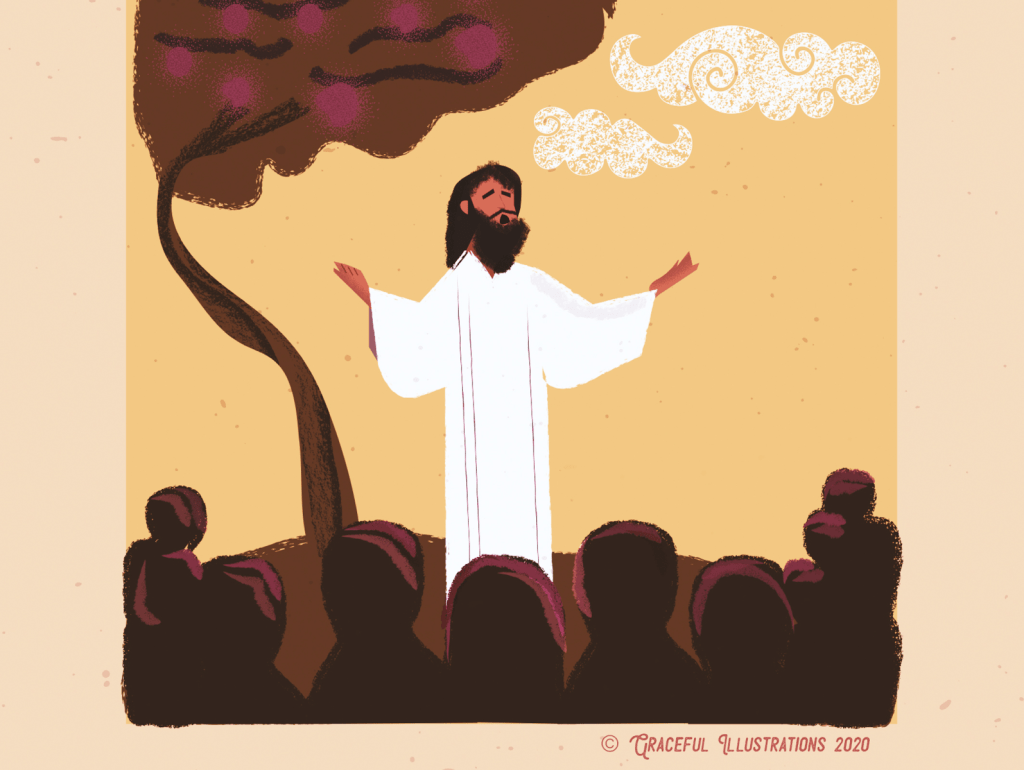
Have a Healthy Spiritual Heart (Matthew 12:9-14)

Going on from that place, he went into their synagogue, and a man with a shriveled hand was there. Looking for a reason to bring charges against Jesus, they asked him, “Is it lawful to heal on the Sabbath?”

He said to them, “If any of you has a sheep and it falls into a pit on the Sabbath, will you not take hold of it and lift it out? How much more valuable is a person than a sheep! Therefore it is lawful to do good on the Sabbath.”

Then he said to the man, “Stretch out your hand.” So he stretched it out and it was completely restored, just as sound as the other. But the Pharisees went out and plotted how they might kill Jesus. (New International Version)

The juxtaposition of this story is pronounced: A man with a shriveled hand stretched it out and is healed by Jesus in full view of everyone in the synagogue; and the synagogue leaders with shriveled hearts withhold their hearts from Jesus, and are not healed of their paralyzed beliefs.

Asking questions out of a desire to make a point, instead of asking out of sincere curiosity, is a telltale sign of the small and shriveled heart. And the surefire signal that the heart is wadded-up like a crumpled piece of paper, is the concern for policy and procedure over people.

There was, of course, an allowance for life-threatening medical situations to be attended to on the Sabbath. The man’s shriveled hand, however, didn’t fall into this category. Jesus could have handled the question of healing by stating that he would do it the next day. That certainly would have protected him and quelled any concerns of his orthodoxy.

But Jesus didn’t go there.

Jesus heals the man with a withered hand, from a 17th century Arabic copy of the Gospels

Instead, he deliberately made a stink in front of everyone. Why? Because the whole situation already stunk to high heaven. The ensconced handling of the law by the religious authorities was calloused to real human need. In other words, such a view of the law was ungodly.

Somewhere along the line, the command of a Sabbath day’s rest had turned from a devoted time for community renewal to an opportunity for showing off one’s religiosity and personal piety.

And the height of offense for Jesus was that God was used as the justification for the peacocking to happen. It is to place the supreme spirituality of a holy person above the hard reality of human need and pain. Jesus wanted nothing to do with such a charade of law.

The divine purpose of the Sabbath command was the health of the entire community – even including animals. It’s meant to be a day of mercy, and not a day of restrictions to the point of perpetuating or even causing ill health.

In truth, to not heal on the Sabbath is a travesty of God’s law.

This isn’t only an ancient problem, but also a contemporary issue, as well. One reason so many modern people today believe that Christianity (and, in some cases, all religion) is nothing but a bunch of goofiness, is that there are far too many Christians and churches who espouse a reading of Scripture that is unhealthy instead of healthy.

Whenever Holy Scripture is used a weapon to keep women in check, existing power structures in place, and people different from one’s religious tradition out of congregational life, then such a practice will eventually be challenged by Jesus. And, ironically, all the nice religious folk will turn on Christ and plot how to be rid of him altogether.

And who, pray tell, wants to be a part of that sort of goofiness?

The bottom line, for many people, is their wealth, money, property, and resources. And if someone happens to get in the way of those economic resources, well then, we’ll simply reinterpret existing biblical commands to protect and maintain our stuff.

For Jesus, the whole point of the banter in the synagogue was to actually help the man right in front of him – to do the right thing on the Sabbath day, and not the hard-hearted thing of nothing.

Sabbath is intended to give everyone, without exception, an opportunity to “be” instead of “do.” The Sabbath is designed for the interests and betterment of all creation, all humanity, and not the other way around. The very fact that the upstanding religious folk even have to be told this, signals that they have drifted very far from the actual commands of God.

“If Jesus had been more diplomatic, he may have reformed Judaism, but he would not have won the world. He would not have give us a gospel that serves the depth intention of the law by freeing us from a slavish service to its surfaces.”

Frederick Dale Bruner

In short, Jesus healed the man’s shriveled hand. But the pious religious persons were not healed of their shriveled hearts. Instead, they were mad as hell. They held an after-church meeting in the parking lot about how to do away Jesus, once and for all.

They did this because the entire movement of maintaining religious power and authority was being threatened to the core.

There are those who hate the one who upholds justice in court and detest the one who tells the truth. (Amos 5:10, NIV)

Therefore, I strongly urge every believer in Jesus Christ to be completely devoted to the Scriptures of the Old and New Testaments, by actually reading them every day; instead of relying upon slick preachers who tell you what you like to hear.

Be discerning and wise in the reading, hearing, and study of God’s Holy Word. It’s a matter of health and illness, hope and despair, life and death. Don’t have a shriveled heart; have a healthy heart, my friend.

Almighty God, to you all hearts are open, all desires known, and from you no secrets are hid: Cleanse the thoughts of our hearts by the inspiration of your Holy Spirit, that we may perfectly love you, and worthily magnify your holy Name; through Christ our Lord. Amen.

Facing Our Sadness (Psalm 42)

As a deer longs for a stream of cool water,
    so I long for you, O God.
I thirst for you, the living God.
    When can I go and worship in your presence?
Day and night I cry,
    and tears are my only food;
all the time my enemies ask me,
    “Where is your God?”

My heart breaks when I remember the past,
    when I went with the crowds to the house of God
    and led them as they walked along,
    a happy crowd, singing and shouting praise to God.
Why am I so sad?
    Why am I so troubled?
I will put my hope in God,
    and once again I will praise him,
    my savior and my God.

Here in exile my heart is breaking,
    and so I turn my thoughts to him.
He has sent waves of sorrow over my soul;
    chaos roars at me like a flood,
    like waterfalls thundering down to the Jordan
    from Mount Hermon and Mount Mizar.
May the Lord show his constant love during the day,
    so that I may have a song at night,
    a prayer to the God of my life.

To God, my defender, I say,
    “Why have you forgotten me?
Why must I go on suffering
    from the cruelty of my enemies?”
I am crushed by their insults,
    as they keep on asking me,
    “Where is your God?”

Why am I so sad?
    Why am I so troubled?
I will put my hope in God,
    and once again I will praise him,
    my savior and my God. (Good News Translation)

Sadness. Every human on planet earth knows the feeling. Since we are emotional creatures, profound sadness – even to the point of depression and/or despondency – will happen.

Despite the universal nature of discouragement and tears, many Christians buck the sadness. Far too many believers focus so exclusively on victory in Jesus through his resurrection, ascension, and glorification that they use religion as their denial when unwanted emotions like sadness come banging at the doorstep of their soul.

So, I most emphatically say: Depression is not sin. To be discouraged is not the Enemy. Experiencing sadness is neither wrong nor selfish. Quite the opposite, in fact.

It is necessary to sit with our emotions and feel the breadth and depth of them. Both our spiritual and emotional health come through an awareness and robust engagement with our feelings. To refuse to feel is to put the stiff arm to God.

The psalmist does anything but deny his feelings. He brings them before the Lord and spreads them out before the Divine. Why am I discouraged? Why am I restless? Why the sadness? Could it be that God has forgotten me? Where is the Lord? Is God angry with me? Are my troubles the result of divine wrath?

To blandly say we have never uttered or thought such questions is a telltale sign of denial. The bottom line for many folks is that they do not want to feel these emotions because it complicates their lives. Besides, discouragement and sadness hurt. “Why feel,” we reason, “when it only brings pain?”

Oh my, the avoidance of pain. And there is no pain quite like emotional and spiritual pain. Much like an open wound which needs a liberal application of painful peroxide, our spiritual wounds must sting with the salve of emotional feeling. Healing is neither cheap, easy, nor painless. It typically hurts like hell.

The psalmist’s own pain revolved around feelings of alienation from God, being cut off from fellow worshipers, and harassed by others around him. Understandably, he experienced despondency and loneliness. The psalmist wondered if anyone, including God, even cared what he was going through. In other words, he is desperate for God to show up.

Here’s a simple observation about this psalm: The psalmist did not get any answers to the several questions he posed. He even repeated them, to no avail. The only form of comfort the psalmist received was to remember what God had done in the past. Somehow, someway, this will help with the difficulties of the present.

There are times in life when we must recall what we know about God, ourselves, and others. If the Lord has delivered in the past, God can do it again. If others helped before, perhaps they will be present in the here and now. And just maybe, even likely, you and I will discover a resilient spirit within. We already possess everything we need to not only survive but to grow and thrive in life.

Hope arises from holding the big picture of the past, present, and future together at the same time. When present circumstances are difficult, and it appears we are about to be swallowed up into the now, we must hold the past and future along with it, in careful tension. Then, we shall find the enablement to keep going.

Trust in the future, and a confident expectation of hope is born from the trustworthiness of the past. A prayerful song in our heart will carry us through till our hope is realized.

Almighty and merciful God, you heal the broken-hearted, and turn the sadness of the sorrowful to joy. Let your fatherly goodness be upon all whom you have made. Remember in pity all those who are this day destitute, homeless, elderly, infirm, or forgotten. Bless the multitude of your poor. Lift up those who are cast down.

Mightily befriend innocent sufferers and sanctify to them the endurance of their wrongs. Cheer with hope all who are discouraged and downcast, and by your heavenly grace preserve from falling those whose poverty tempts them to sin. Though they are troubled on every side, suffer them not to be distressed; though they are perplexed, save them from despair. Grant this, O Lord, for the love of him who for our sakes became poor, your Son our Savior Jesus Christ.

The Divine Teacher and Leader (Isaiah 48:17-21)

Thus says the Lord,
    your Redeemer, the Holy One of Israel:
I am the Lord your God,
    who teaches you how to succeed,
    who leads you in the way you should go.
O that you had paid attention to my commandments!
    Then your prosperity would have been like a river
    and your success like the waves of the sea;
your offspring would have been like the sand
    and your descendants like its grains;
their name would never be cut off
    or destroyed from before me.

Go out from Babylon; flee from Chaldea;
    declare this with a shout of joy; proclaim it;
send it forth to the end of the earth;
    say, “The Lord has redeemed his servant Jacob!”
They did not thirst when he led them through the deserts;
    he made water flow for them from the rock;
    he split open the rock, and the water gushed out. (New Revised Standard Version)

A presupposition is something that is assumed in advance or taken for granted. In my own life, I live with the following basic presupposition: Christianity works. It stands behind my faith and confidence, informing everything I do.

I believe in a good God, who genuinely wants people to succeed in life, and will do whatever it takes to help us, doing what is best for us, for our own good.

God is our divine teacher and leader. The Lord is the One who gave Israel the Ten Words (commandments) and the Law to live by. Yahweh is the One who mercifully delivered the ancient Israelites out of Egyptian slavery, protected them in the desert, and led them into the Promised Land.

Furthermore, for the Christian, God the Father is the One who sent God the Son, Jesus, to be with us and amongst us as Teacher and Lord, leading us and saving us. God the Father and God the Son together sent God the Holy Spirit to be with us always – continually teaching us all things, reminding us of Christ’s teaching, and providing needed leadership for our earthly spiritual journey.

Every provision has been given for us to live into a successful life. Yet, in the case of both the Jews who originally heard Isaiah’s prophecy, as well as for many of us as contemporary believers, we have paid scant attention to the divine commandments – nor have we submitted to the divine leadership.

God is teaching and God is leading. We, however, are having difficulty in heeding the instruction and the guidance.

“Hear, O my people, and I will speak,
    O Israel, I will testify against you.
    I am God, your God…

You give your mouth free rein for evil,
    and your tongue frames deceit.
You sit and speak against your kin;
    you slander your own mother’s child.” (Psalm 50:7, 19-20, NRSV)

And God has furthermore stated:

“Hear, O my people, while I admonish you;
    O Israel, if you would but listen to me!…

But my people did not listen to my voice;
    Israel would not submit to me…

O that my people would listen to me,
    that Israel would walk in my ways!” (Psalm 81:8, 11, 13, NRSV)

God desires the best for us and our welfare. The Lord wants us to experience happiness, prosperity, abundance, and blessing. Christianity works. Attention to the spiritual life brings success. Yet we keep working against ourselves through our ignorance of divine teaching and leading.

We could move freely and powerfully like a river – yet we continue to dam up the flow.

We could grow and gain strength like the waves of the ocean – yet we refuse to go out and set sail.

We could reproduce ourselves by making more disciples than the sand on the seashore – yet we are impotent.

We could endure by remembering the name of the Lord – yet there is no future without listening.

What must we do? Go out!

Just as the ancient Israelites went out of Egypt and left their bondage behind, so we are to go out and experience the redemption we have in Jesus Christ.

God is leading us to freedom. The Lord is teaching us how to live in this world as free people. But we must take the step of going out, of leaving, of walking the way of the pilgrim and sojourning into the successful life.

God has our backs. Just as the Israelites were taken care of in the desert with the sustenance of manna and with even water gushing out of a rock, so the Lord will care for you and me out in this scary world of ours.

God does what God does, not based upon what humanity does or doesn’t do, but because of God’s own decision and will. Since the Lord is always good, right, just, and loving, God acts in ways consistent with the divine nature.

Another way of putting the matter is that the spiritual life works, and Christianity works, because it is grounded in nature of God. When we reflect the image of God within us by using our words and our deeds toward mercy, grace, justice, and love, then we are synced with how the universe operates. And success in life is realized.

Even more than that, we are connected with the Creator – which makes all the difference as we try to continually navigate through this earthly life in ways that are right and redemptive.

O God, you made us in your own image and redeemed us through Jesus your Son: Look with compassion on the whole human family; take away the arrogance and hatred which infect our hearts; break down the walls that separate us; unite us in bonds of love; and work through our struggle and confusion to accomplish your purposes on earth; that, in your good time, all nations and races may serve you in harmony around your heavenly throne; through Jesus Christ our Lord. Amen.

A Spiritual Check-Up (2 Corinthians 13:5-10)

Examine yourselves to see if your faith is genuine. Test yourselves. Surely you know that Jesus Christ is among you; if not, you have failed the test of genuine faith. As you test yourselves, I hope you will recognize that we have not failed the test of apostolic authority.

We pray to God that you will not do what is wrong by refusing our correction. I hope we won’t need to demonstrate our authority when we arrive. Do the right thing before we come—even if that makes it look like we have failed to demonstrate our authority. For we cannot oppose the truth, but must always stand for the truth. We are glad to seem weak if it helps show that you are actually strong. We pray that you will become mature.

I am writing this to you before I come, hoping that I won’t need to deal severely with you when I do come. For I want to use the authority the Lord has given me to strengthen you, not to tear you down. (New Living Translation)

God is concerned about our spiritual health and vitality. And so, it’s important that we have regular spiritual check-ups and tests to evaluate the vitality of our faith. If we are spiritually sick or debilitated, the Lord seeks to restore us back to health.

In the Gospels, whenever Jesus miraculously healed a person, it was for far more than taking away a disease or correcting a disability. The Lord sought to make them well in order to restore a person’s life by including them in the community. For example:

  • Leprosy put a person on the outside, both literally and relationally. Ceasing to be a leper meant that a person now had no obstacles to full participation in communal life.
  • Blindness reduced a person to being a beggar in order to survive. Having sight restored meant that the person can now work with others, make a living, and contribute to the needs of others.
  • Incarceration was (and still is) a complete removal of a person from society. Being in prison severs many human connections. Release from jail opens the way to reconnection and an opportunity to have a different way of being with others.
  • Poverty encumbers a person and weighs them down so heavily that it limits their ability to function socially and relationally. Without poverty, a person is able to establish healthy patterns of giving and receiving within the community.

Those who are physically whole, mentally sharp, emotionally satisfied, and spiritually redeemed are free of obstacles and impediments to communal life.

So, it is a travesty whenever the people who enjoy full inclusion in the community, turn around and separate themselves, keeping relational distance from certain persons, and do not participate in the common good of all. They makes themselves sick and weaken their faith because of their lifestyle.

The type of spiritual examination of faith the Apostle Paul was talking about was not to obsess over whether one is a true believer, or not. He was referring to the person who claims faith yet maintains separation from others. In other words, to exclude others is the kind of behavior that unbelievers do, not Christians.

Yet, there are many sections of Christianity and entire Protestant denominations who pride themselves on such separation. They believe they’re being holy and keeping themselves from impurity. However, far too many of them are really putting a sanctified spin on their own sinful predilections to avoid people they don’t like.

Paul has no tolerance for calling exclusion of others “holiness” and naming the maintenance of an insider/outsider status as “sanctification.” The Apostle knew this was all poppycock and wanted nothing to do with it.

Christ didn’t die on a cruel cross, take away the obstacles to faith, open the way to know God, and create peace through his blood for a pack of so-called “Christians” to then erect imaginary concrete border walls to keep others out of Christian community and fellowship.

In God’s upside-down kingdom, the privileged insiders are really the outsiders; and the underprivileged outsiders are actually the insiders.

The privileged believers are just as sick as the leper, the blind, the poor, and the prisoner; and just as much in need of restoration. The path to their inclusion is solidarity with the entire community of the redeemed – rather than picking and choosing who is in and who is out.

All this, of course, is another way of stating that Christianity is as beset with cliques as anywhere else – with individual believers, local churches, and particular traditions following their pet theologians and pastors and not associating with others who follow a different set of folks.

The ancient Corinthian church was a train wreck of opposing groups and cliques. The Apostle Paul had had enough of it and called the people to do some serious self-examination. And he was careful not to degrade or discourage them but to try and encourage the church to tap into the Christ which dwells within them.

Spiritual health and restoration, for Paul, meant specific behaviors which intentionally include people. To be inclusive means we actively work toward grafting people into community, as well as discourage behaviors that create division, and thus, spiritual illness. Here are three ways of including others:

  • Practice hospitality. The word hospitality literally means, “love of stranger.” A hospitable believer goes out of their way to invite another into their life, to give them the gift of relationship and fellowship.

Take care of God’s needy people and welcome strangers into your home. (Romans 12:13, CEV)

Above all, show sincere love to each other, because love brings about the forgiveness of many sins. Open your homes to each other without complaining. And serve each other according to the gift each person has received, as good managers of God’s diverse gifts. (1 Peter 4:8-10, CEB)

  • Nip bitterness in the bud. In an ideal world, everyone holds hands and sings kumbaya together. We live, however, in a fallen world. Harmony, unity, and peace take copious amounts of energy. Like an attentive gardener, we must do the work of identifying weeds and uprooting them, so they don’t take over the garden.

Make every effort to live in peace with everyone and to be holy; without holiness no one will see the Lord. See to it that no one falls short of the grace of God and that no bitter root grows up to cause trouble and defile many. (Hebrews 12:14-15, NIV)

  • Seek to encourage others, and learn how to do it. Encouragement is both a gift and a skill to be developed. To encourage another is to come alongside and help someone with both affirming words and willing hands. It’s what Jesus did (and does) for us.

Christ died for us so that, whether we are dead or alive when he returns, we can live with him forever. So, encourage each other and build each other up, just as you are already doing. (1 Thessalonians 5:10-11, NLT)

Hospitality, harmony, and help are all forms of love. And love is to be the guiding principle and practice of church and community. Love is always the prescription for a healthy spiritual life and a restored community of faith. It prevents truth decay.

Lord, make me an instrument of your peace:
where there is hatred, let me sow love;
where there is injury, pardon;
where there is doubt, faith;
where there is despair, hope;
where there is darkness, light;
where there is sadness, joy.

O divine Master, grant that I may not so much seek
to be consoled as to console,
to be understood as to understand,
to be loved as to love.
For it is in giving that we receive,
it is in pardoning that we are pardoned,
and it is in dying that we are born to eternal life.
Amen.