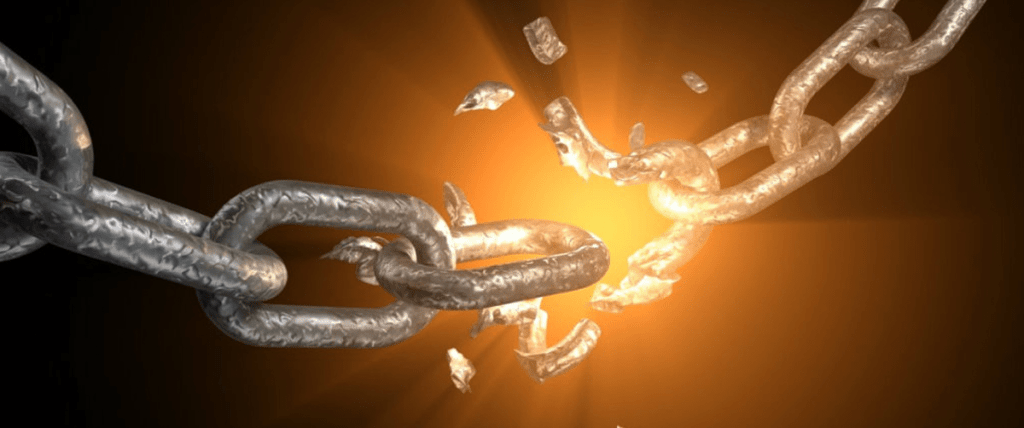
Accountability Is Real, and It Matters (Ezekiel 14:12-23)

The word of the Lord came to me: “Son of man, if a country sins against me by being unfaithful and I stretch out my hand against it to cut off its food supply and send famine upon it and kill its people and their animals, even if these three men—Noah, Daniel and Job—were in it, they could save only themselves by their righteousness, declares the Sovereign Lord.

“Or if I send wild beasts through that country and they leave it childless and it becomes desolate so that no one can pass through it because of the beasts, as surely as I live, declares the Sovereign Lord, even if these three men were in it, they could not save their own sons or daughters. They alone would be saved, but the land would be desolate.

“Or if I bring a sword against that country and say, ‘Let the sword pass throughout the land,’ and I kill its people and their animals, as surely as I live, declares the Sovereign Lord, even if these three men were in it, they could not save their own sons or daughters. They alone would be saved.

“Or if I send a plague into that land and pour out my wrath on it through bloodshed, killing its people and their animals, as surely as I live, declares the Sovereign Lord, even if Noah, Daniel and Job were in it, they could save neither son nor daughter. They would save only themselves by their righteousness.

“For this is what the Sovereign Lord says: How much worse will it be when I send against Jerusalem my four dreadful judgments—sword and famine and wild beasts and plague—to kill its men and their animals! 

“Yet there will be some survivors—sons and daughters who will be brought out of it. They will come to you, and when you see their conduct and their actions, you will be consoled regarding the disaster I have brought on Jerusalem—every disaster I have brought on it. You will be consoled when you see their conduct and their actions, for you will know that I have done nothing in it without cause, declares the Sovereign Lord.” (New International Version)
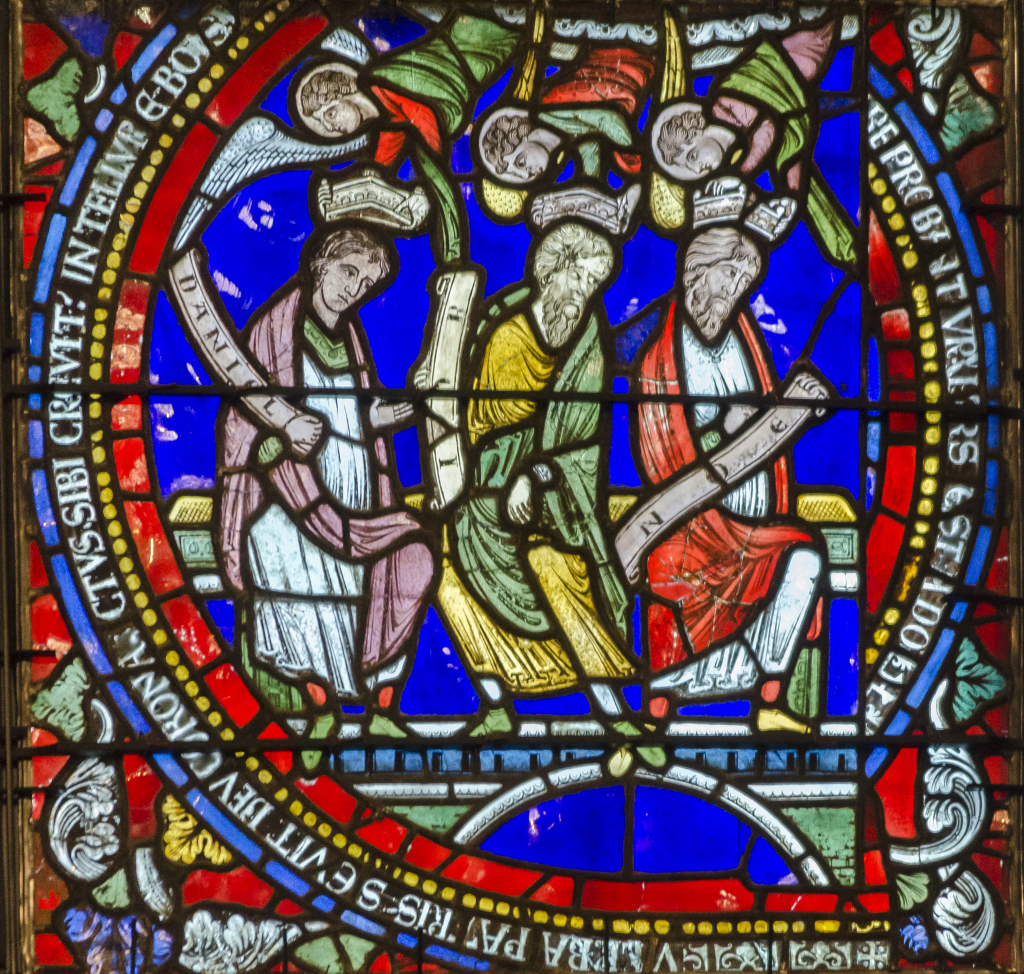
Stained glass of the three righteous men: Daniel, Job, and Noah

No person, group, institution, or nation can act unjustly forever. The prophet Ezekiel made it clear that everyone will be held accountable for injustice and wickedness, for crimes against humanity and against God.

Furthermore, there is no nation or group which can rely on a few persons who do right, while the rest of the people swim in injustice and unrighteousness. Righteous persons save only themselves; they cannot make decisions and take over the life of another person.

Ezekiel wanted to make sure his listeners got the message of individuals only saving themselves, and not riding on the coattails of others. The prophet went out of his way to communicate that each individual person will be held responsible for their own actions; they will be judged on what they themselves have done, and not what another has or has not done.

Even the family of a righteous person will not be spared divine judgment because of that individual’s righteousness. One shall be held accountable for what that one has done, period.

Specifically, in the text, God was ready to execute judgment on Jerusalem. War, wild animals, famine, and disease would come upon them because of unfaithfulness, injustice, and unrighteousness.

Just because the city had the temple, this would not save them. Just because there are a few righteous persons in the city, they would not save it. Just because a close loved one is faithful and righteous, will not mean that God would spare the city.

A few good works of a few people, do not cancel out pervasive and consistent evil which is perpetrated by many people. Each person is responsible for their own behavior. No one gets a pass, simply because they know certain people and are well-connected.

Evil is evil, no matter whether it is perpetrated by believers or unbelievers. No nation, and no person, is off the hook; all persons will be held accountable for doing justice, loving mercy, and walking humbly with God.

Even if three of the most righteous persons show up – Noah, Daniel, and Job, who were famous for their moral integrity – their combined righteousness and faithfulness would not keep away divine judgment from happening in an immoral and unethical society. Only those three alone would be delivered.

There is no such thing as salvation by proxy. Each individual person must work on themselves, without blaming others, inordinately depending on others, nor ignoring God and wishing God did not see, or does not exist at all.

Evil persons do not get any preferential treatment from God, just because they have a prominent position or are famous. The Lord, as Sovereign of the universe, has every right to exact divine retribution. And God will do it without showing favoritism.

Just as God shows mercy without prejudice, so will God extend judgment without any prejudice.

The presence of great light means that there is also the presence of great darkness. If we want a great God of love and mercy, then we must also accept the God of wrath and judgment; and vice versa.

We are made in God’s image, and not the other way around. It is our task to submit to the high, holy, and sovereign Lord of all. It is not God’s job to be the divine Santa Claus who submits to us. The Lord is no divine genie who we can keep in a bottle, and summon whenever we so desire.

No matter one’s theology or spirituality, everyone discerns that they are to be responsible in this life, and are accountable to forces greater than themselves.

This is one of those universal realities that all of us need to sync our lives with – or suffer the consequences.

Almighty God and Sovereign Lord of all, I embrace my accountability to you. Forgive me for when I live as though I need not give an account of what I said and did. I affirm that I am accountable for how I treat others; and I realize that what I do to others, positive or negative, I am doing to you, their Creator. Sustain me in faith and patience, I pray. Amen.

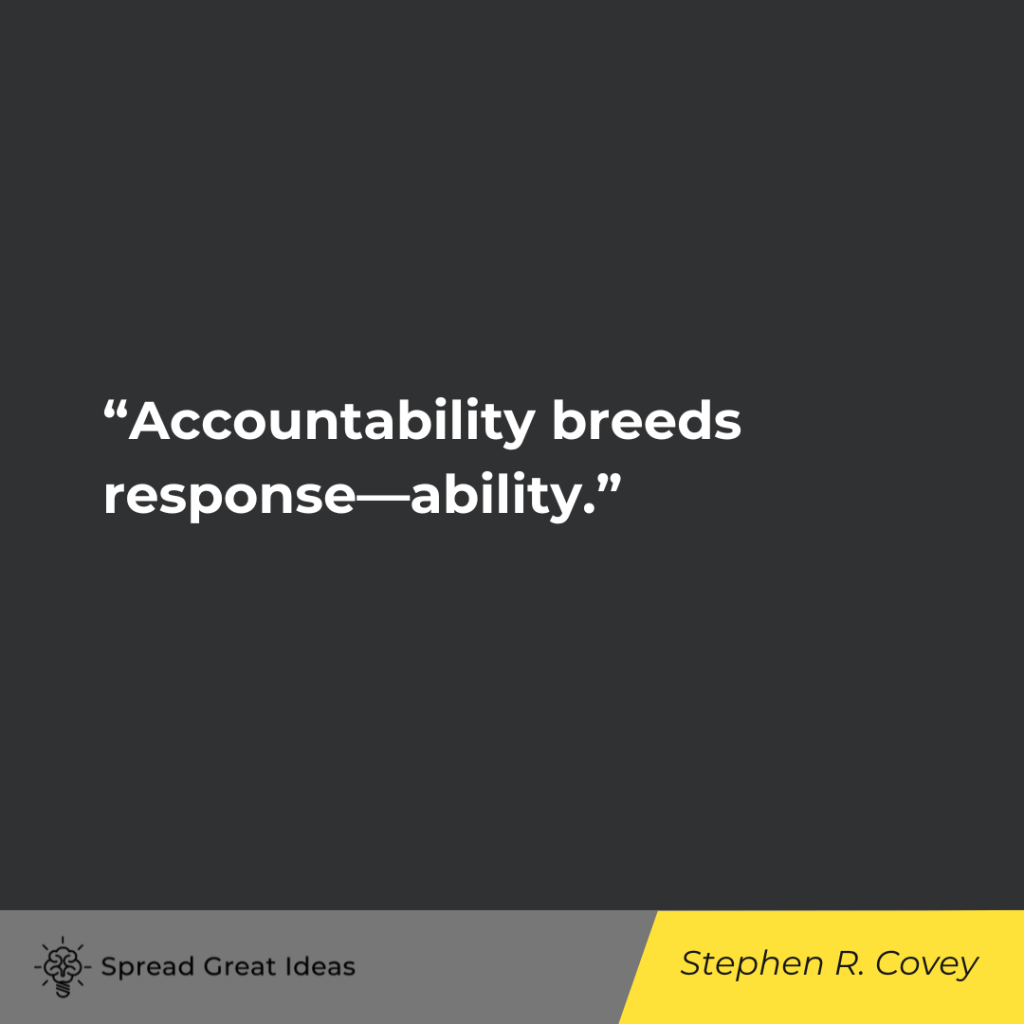
I Am Responsible and Accountable (Ezekiel 18:1-32)

The word of the Lord came to me: “What do you people mean by quoting this proverb about the land of Israel:

“‘The parents eat sour grapes,
    and the children’s teeth are set on edge’?

“As surely as I live, declares the Sovereign Lord, you will no longer quote this proverb in Israel. For everyone belongs to me, the parent as well as the child—both alike belong to me. The one who sins is the one who will die.

“Suppose there is a righteous man
    who does what is just and right.
He does not eat at the mountain shrines
    or look to the idols of Israel.
He does not defile his neighbor’s wife
    or have sexual relations with a woman during her period.
He does not oppress anyone,
    but returns what he took in pledge for a loan.
He does not commit robbery
    but gives his food to the hungry
    and provides clothing for the naked.
He does not lend to them at interest
    or take a profit from them.
He withholds his hand from doing wrong
    and judges fairly between two parties.
He follows my decrees
    and faithfully keeps my laws.
That man is righteous;
    he will surely live,
declares the Sovereign Lord.

“Suppose he has a violent son, who sheds blood or does any of these other things (though the father has done none of them):

“He eats at the mountain shrines.
He defiles his neighbor’s wife.
He oppresses the poor and needy.
He commits robbery.
He does not return what he took in pledge.
He looks to the idols.
He does detestable things.
He lends at interest and takes a profit.

Will such a man live? He will not! Because he has done all these detestable things, he is to be put to death; his blood will be on his own head.

“But suppose this son has a son who sees all the sins his father commits, and though he sees them, he does not do such things:

“He does not eat at the mountain shrines
    or look to the idols of Israel.
He does not defile his neighbor’s wife.
He does not oppress anyone
    or require a pledge for a loan.
He does not commit robbery
    but gives his food to the hungry
    and provides clothing for the naked.
He withholds his hand from mistreating the poor
    and takes no interest or profit from them.
He keeps my laws and follows my decrees.

He will not die for his father’s sin; he will surely live. But his father will die for his own sin, because he practiced extortion, robbed his brother and did what was wrong among his people.

“Yet you ask, ‘Why does the son not share the guilt of his father?’ Since the son has done what is just and right and has been careful to keep all my decrees, he will surely live. The one who sins is the one who will die. The child will not share the guilt of the parent, nor will the parent share the guilt of the child. The righteousness of the righteous will be credited to them, and the wickedness of the wicked will be charged against them.

“But if a wicked person turns away from all the sins they have committed and keeps all my decrees and does what is just and right, that person will surely live; they will not die. None of the offenses they have committed will be remembered against them. Because of the righteous things they have done, they will live. Do I take any pleasure in the death of the wicked? declares the Sovereign Lord. Rather, am I not pleased when they turn from their ways and live?

“But if a righteous person turns from their righteousness and commits sin and does the same detestable things the wicked person does, will they live? None of the righteous things that person has done will be remembered. Because of the unfaithfulness they are guilty of and because of the sins they have committed, they will die.

“Yet you say, ‘The way of the Lord is not just.’ Hear, you Israelites: Is my way unjust? Is it not your ways that are unjust? If a righteous person turns from their righteousness and commits sin, they will die for it; because of the sin they have committed they will die. But if a wicked person turns away from the wickedness they have committed and does what is just, and right, they will save their life. Because they consider all the offenses they have committed and turn away from them, that person will surely live; they will not die. Yet the Israelites say, ‘The way of the Lord is not just.’ Are my ways unjust, people of Israel? Is it not your ways that are unjust?

“Therefore, you Israelites, I will judge each of you according to your own ways, declares the Sovereign Lord. Repent! Turn away from all your offenses; then sin will not be your downfall. Rid yourselves of all the offenses you have committed, and get a new heart and a new spirit. Why will you die, people of Israel? For I take no pleasure in the death of anyone, declares the Sovereign Lord. Repent and live! (New International Version)

Every single one of us is accountable to one another for what we say and how we conduct ourselves. Above all, we are accountable to God for our motives, words, and actions in this life.

The flipside to stating that we are accountable, is saying that none of us are responsible for another person’s intentions, words, or actions.

Other people may influence us. We may be either participants in or victims of another’s actions. Some folks might take credit for something another person said or did. Yet, ultimately, we are responsible for our own life.

Whatever I think, say, or do is on me, period.

What’s more, one’s past actions do not replace our current actions. The prophet Ezekiel emphasized individual responsibility and accountability. All of the other Old Testament prophets addressed whole nations, and not individuals. They denounced the social, economic, and political systems and institutions, upholding communal ideals of justice.

Ezekiel communicated that children shall not be punished for their parent’s sins. Only the person who sins will face judgment.

A person ought only to pay for their own sins; punishment should not carry forward to future generations. The prophet also insisted that each individual person has the opportunity to change their behavior, and so, avoid their deserved penalty.

Every individual has the opportunity to change their personal ways of injustice or unrighteousness. For those who refuse, there is a and right and just Judge who knows how to dispense what is needed for each person – whether it is judgment to the arrogant, comfort to a victim, or justice for the underprivileged.

God cares that every person on earth receives what they need to thrive and flourish in this life. And to those who don’t give a wit about others, the Lord gives an opportunity to turn from arrogance and change.

Refusing to change, however, will end badly for the stubborn person.

The prophet Ezekiel calls on individuals to speak and act in ways that are helpful, not harmful. And whenever one harms another, that one must acknowledge the irresponsibility, because I am held accountable for what I say and do.

All words and actions come with consequences. It would do us a lot of good to consider how what we say and do (or fail to say and do) impacts the next generation of people. Everyone leaves a legacy of some sort – whether good or bad – so we need to be aware of how we live.

Each person must take up the mantle to do good, not evil; and to live righteously, not wickedly. Living selfishly with impunity leads to divine judgment. Yet, mercy is always there, if we seek to amend our ways.

Conversely, living righteously, and then resting on my laurels and living however I want, does not inoculate me from divine judgment.

You and I must live one day at a time, trusting God and seeking the welfare of others. And when I mess up, I am to keep a short account with God by admitting my fault and receiving grace.

We humans have quite enough responsibility in our lives without taking on the extra job of exacting judgment on another person. If we live a righteous life to begin with, then there is no need for a new heart and life.

Yet, if I need it, a new existence is there, through a change of direction which humility grants us.

Almighty God, help me to prioritize your values, and put my faith into action. Enable me to use the talents, resources, and time with which I have been blessed. Empower me to serve my community and my world. May I serve you always, and pray with a joyful spirit. Amen.

Freedom from Sin (Romans 6:12-23)

Therefore do not let sin reign in your mortal body so that you obey its evil desires. Do not offer any part of yourself to sin as an instrument of wickedness, but rather offer yourselves to God as those who have been brought from death to life; and offer every part of yourself to him as an instrument of righteousness. For sin shall no longer be your master because you are not under the law, but under grace.

What then? Shall we sin because we are not under the law but under grace? By no means! Don’t you know that when you offer yourselves to someone as obedient slaves, you are slaves of the one you obey—whether you are slaves to sin, which leads to death, or to obedience, which leads to righteousness? But thanks be to God that, though you used to be slaves to sin, you have come to obey from your heart the pattern of teaching that has now claimed your allegiance. You have been set free from sin and have become slaves to righteousness.

I am using an example from everyday life because of your human limitations. Just as you used to offer yourselves as slaves to impurity and to ever-increasing wickedness, so now offer yourselves as slaves to righteousness leading to holiness. When you were slaves to sin, you were free from the control of righteousness. What benefit did you reap at that time from the things you are now ashamed of? Those things result in death! But now that you have been set free from sin and have become slaves of God, the benefit you reap leads to holiness, and the result is eternal life. For the wages of sin is death, but the gift of God is eternal life in Christ Jesus our Lord. (New International Version)

The word “sin” is mentioned 10 times in these 12 verses of Scripture. It’s an important word, and so, we need to understand something of it. Discerning the concept of sin in the Bible is crucial to our spiritual growth and development as believers in Jesus. A better grasp of sin’s nature and power will help us to better understand and appreciate God’s grace and how to live the Christian life.

Sin Is Everywhere

We see the evidence of living in a broken world every day. Disaster, disease, and death are realities we all must deal with. The presence and power of sin is everywhere – in our hearts, our world, our institutions, and our families. It’s on television, the internet, social media, and moves in-and-out of smartphones. If it takes one to know one, we are all experts on being sinners.

Definitions of Sin

From the Bible’s vantage, sin is things we do (1 John 3:4) as well as things we leave undone (James 4:17). Sin is both actively breaking of God’s commands, and passively avoiding them. 

Christians throughout the ages have generally understood that the Ten Commandments (Exodus 20:1-17) and Christ’s law of love (Luke 10:27) constitute a brief summary of God’s holy and moral instruction for humanity.  These laws are based in the character of God as a holy and loving Being.

Sin, then, may be defined as anything in a person, group of people, an institution or a system, which does not express, or is contrary to, the basic character of God. In short, sin is a pervasive force which exists everywhere, defined in the following acrostics:

Sinful actionsSinful thoughtsSinful inaction
StressStupidSpiritual
InducedInwardInsidious
NarcissismNoodlingNarcolepsy

Sin Is Contrary to God’s Character      

All sin, whether active or passive, is self-centered and lacks self-awareness. Sin exists wherever a person, group, or organization thinks more about itself than of God and God’s love and justice. Sinful attitudes bring consequences such as:

  • Obsession with lust (1 John 8:34; Galatians 5:16) Lust is the stance of having to possess something, instead of appreciating it without ownership.
  • Broken relationships (Romans 3:23; Galatians 5:17) Wanting something without any concern for it’s cost leaves a trail of broken relationships with God and others.
  • Bondage to Satan (1 Timothy 3:6-7; 2 Timothy 2:26) Obtaining the object of our lust brings slavery, not freedom
  • Spiritual death (Romans 6:23; 8:6) Death is separation from God and estrangement from others
  • Hardening of the heart (Hebrews 3:13) A hard heart happens by stubbornly holding on to what we want, irrespective of what God wants
  • Deception (1 Corinthians 3:18; James 1:22, 26) To be deceived is to believe that other people, even God, are the problem whenever things go sideways

This may all sound like a total Debbie-Downer. Actually, it’s total depravity. Being depraved does not mean we are never capable of doing good; it means that sin has profoundly touched everything in our lives, without exception.

Sin Is Not the Last Word

Paradoxically, experiencing true joy and comfort comes through knowing how great our sin is. We live above sin by being set free from it by the grace of God in Jesus Christ. To be redeemed from sin, a provision is needed. In Christianity, sin has been dealt with once and for all through the person and work of Jesus. Christ is our representative, taking our place and delivering us from sin (Galatians 4:4-5; Ephesians 2:5-6; Colossians 2:9-15; Hebrews 2:17-18; 1 John 2:1).

Jesus Christ is our ultimate substitute (Romans 5:8)…

Which resulted in our redemption (Galatians 5:13)…

Leading to a satisfaction of all justice (Romans 3:25)…

Bringing reconciliation with God (Romans 5:10)… 

And putting sin to death, making us complete in Christ (Colossians 2:10).      

Although sin destroys everything it touches and leaves terrible consequences in its wake, sin does not have the last word: grace does.

Words for Sin

There are 33 different words for “sin” in the original Greek language of the New Testament. Only one of them is used in the verses from Romans: ἁμαρτία (“HA-mar-tee-ah”) literally means “to miss the mark,” or to “fall short.” (Romans 5:12-21; 1 John 1:8-10; 2 Corinthians 5:21)

The concept of missing the mark gets to the heart of why persons, groups, institutions, and systems fall short of God’s standard. We fail to see who we truly are and what God has truly done for us in Christ. And so, sin deceives us into believing that our needs can be met outside of God.

Metaphors for Sin

  • Obstacle. Sin obstructs a truly good and beautiful life. It’s like a blockade that prevents us from entering the kingdom of God; or like large hurdles we have to jump to move forward. Sin is like a bear on our back which slows us down to a crawl.

Let us rid ourselves of everything that gets in the way, and of the sin which holds on to us so tightly, and let us run with determination the race that lies before us. (Hebrews 12:1, GNT)

  • Addiction. The word “sin” is an attempt to meet a legitimate need in an illegitimate way. Sin is an energy which we become fixated on in order to meet our needs for love and acceptance. If unchecked, the sinful method for meeting the need becomes the need itself.

We are tempted by our own desires that drag us off and trap us. Our desires make us sin, and when sin is finished with us, it leaves us dead. (James 1:14-15, CEV)

“Seek what you are seeking – but don’t seek it where you are seeking it!”

St. Augustine
  • Marketing scam. Sin is misleading. It’s a scam or a branding which looks good but the product is all wrong. Sin is a deception, and it leads us to deceive others in order to make ourselves look better than we really are.

When you give to the poor, don’t blow a loud horn. That’s what show-offs do in the synagogues and on the street corners because they are always looking for praise. I can assure you that they already have their reward. (Matthew 6:2, CEV)

Overcoming Sin

Victory over sin and the dark force of this world comes through faith. Believe that you have been set free from sin.

For everyone born of God overcomes the world. This is the victory that has overcome the world, even our faith. Who is it that overcomes the world? Only the one who believes that Jesus is the Son of God. (1 John 5:4-5, NIV)

We need our ultimate faith to rest in God, and not in anyone or anything else. The Scripture says:

Trust in the Lord with all your heart,
    and do not rely on your own insight.
In all your ways acknowledge him,
    and he will make straight your paths. (Proverbs 3:5-6, NRSV)

Eternal God, in whom we live and move and have our being, whose face is hidden from us by our sins, and whose mercy we forget in the blindness of our hearts: cleanse us from all our offenses, and deliver us from proud thoughts and vain desires, that with reverent and humble hearts we may draw near to you, confessing our faults, confiding in your grace, and finding in you our refuge and strength; through Jesus Christ your Son. Amen.

Romans 8:1-11 – Life in the Spirit

Therefore, there is now no condemnation for those who are in Christ Jesus, because through Christ Jesus the law of the Spirit who gives life has set you free from the law of sin and death. For what the law was powerless to do because it was weakened by the flesh, God did by sending his own Son in the likeness of sinful flesh to be a sin offering. And so he condemned sin in the flesh, in order that the righteous requirement of the law might be fully met in us, who do not live according to the flesh but according to the Spirit.

Those who live according to the flesh have their minds set on what the flesh desires; but those who live in accordance with the Spirit have their minds set on what the Spirit desires. The mind governed by the flesh is death, but the mind governed by the Spirit is life and peace. The mind governed by the flesh is hostile to God; it does not submit to God’s law, nor can it do so. Those who are in the realm of the flesh cannot please God.

You, however, are not in the realm of the flesh but are in the realm of the Spirit, if indeed the Spirit of God lives in you. And if anyone does not have the Spirit of Christ, they do not belong to Christ. But if Christ is in you, then even though your body is subject to death because of sin, the Spirit gives life because of righteousness. And if the Spirit of him who raised Jesus from the dead is living in you, he who raised Christ from the dead will also give life to your mortal bodies because of his Spirit who lives in you. (New International Version)

I feel tremendously privileged to be a Christian and enjoy the very Spirit of God. The people of God are spiritual people, possessing God’s own Spirit. The Apostle Paul wanted Christians to know what they truly have as believers in Jesus.

No Condemnation

There is now no condemnation, no judgment, for those who are in Christ. God has pronounced a verdict, and that decision is final. We have been united to Christ by means of God’s Spirit. Since God condemns neither you nor I, there is no need whatsoever to condemn ourselves or other believers.

Since no condemnation is our reality as Christians, we are to believe this promise of God and swim in its wonderful privilege. 

Believe that the sin issue has been taken care of once for all through the life and death of Christ. If you do not feel forgiven, then put yourself in a position to believe. 

It would be silly to go into the bathroom, turn on the shower, and then just stand in the middle of the bathroom without getting under the showerhead. It would be silly because you did not put yourself in a position to actually become clean. You may believe that a shower and using soap and shampoo will make you clean, but if you do not actually avail yourself of the privilege of actually taking the shower but just stand there and look at it, you will not really be clean. 

We must put ourselves in a position to experience the privilege of knowing our wonderful state of cleanliness and no condemnation by actually reading the Word of God on a regular basis; praying in the Spirit on all occasions; and practicing the silence and solitude necessary to receive the cleansing work of the Holy Spirit.

Two people are declared “married” in a formal wedding ceremony. The couple then works out their shared union together over a lifetime. The minister does not pronounce condemnation at the ceremony; he declares a blessing. Yet, from that point forward, the two people must work on their marriage. They must believe their relationship is important enough to warrant putting themselves in a position to grow together. They will intentionally create date nights and conversations on the couch. They’ll seek to learn, appreciate, and participate in the other’s interests and life. 

“Grace is not opposed to effort; it is opposed to earning. Earning is an attitude. Effort is an action. Grace, you know, does not just have to do with forgiveness of sins alone.”

Dallas Willard, The Great Omission

Just as we do not marry ourselves and pronounce ourselves a married couple, so we do not save ourselves. However, having a marriage license does not mean there is no effort to be done in the relationship. A marriage is both a legal reality, and a kind of mystical union between two married persons.

It is a beautiful thing to be in a relationship where there is no condemnation. Because of Jesus Christ we are free to be the people God created us to be – forgiven and no longer burdened by sin’s condemnation.

Freedom from Sin and Death

In Holy Scripture, sin is not only a personal struggle but a present ubiquitous reality in the world. The power and presence of sin is found everywhere. There is personal, institutional, and systemic sin. Because sin is everywhere, death is everywhere. Biblically, death doesn’t only refer to physical death but is also a relational term referring to spiritual death. Death means relational separation from God. Conversely, life is relational connection with God. 

God did all the action necessary to make the union possible. God sent the Son. God became incarnate. God’s Son became a sin-offering, an atoning sacrifice for our sins. God condemned sin in sinful humanity. God met the righteous requirements of the law. God effects holiness in us by means of the Spirit. 

Rather than saving us from sin then simply telling us to live a holy upright life, God the Father and Son sent God the Holy Spirit to indwell us so that we can live like Jesus. 

Therefore, we must put ourselves in a position to experience life through dwelling in the Scriptures and letting the Spirit and the Word work together to effect practical change in our lives. 

Having the Mind of Christ

A problem we all face is that we inhabit a fallen world. Our mindset can easily get screwy. If we want life and peace, we need the mind of Christ and the Spirit. Whatever our minds are occupied with, that’s what determines whether we will have life and peace, or not. 

If the objects of our thoughts, interests, and affections are continually away from Christ and the Spirit, we will experience death, not life. If we put ourselves in a position to indulge the sinful nature, we will miss real life. A loose mind only leads to relational separation.

The addict knows very well that there are two choices, life or death. The first of twelve steps in Alcoholics Anonymous is to admit that I am powerless over alcohol and that my life has become unmanageable. The second step is to believe that a Power greater than myself can restore me to sanity. The third step is to turn my life and my will over to that Power. So, it is the same for us. 

We are powerless over sin, which will, if left unchecked, lead to death. But in the Spirit (and not in the alcoholic spirits) we have life. Sin, like alcohol, is a daily possibility, even after giving my life and my will to God. Yet, there is also the possibility of life. And that hope of life comes with possessing the mind of Christ and the Spirit. 

We have hope that through the Spirit’s power that we will overcome the power of choices that lead to death, and instead, embrace choices that lead to life. So, whatever we put into our minds is vitally important. 

The Spirit Indwelling Us

The Spirit is the sine qua non of the Christian life, that is, the distinguishing mark of the believer in Jesus. The Spirit opposes the sinful nature and expects us to do the same. There’s no need to try and live the Christian life on our own power when we possess spiritual power.

Pentecost by Edgardo De Guzman

There exists an internal struggle within us that desires to do right but has a compulsion to do otherwise. Yet, the indwelling Spirit gives us victory. Jesus lived the life for us that we could not live. His life, as much as his death, achieved salvation from sin for us. 

The very same Spirit that helped Jesus live his life, and raised him from death, is the same Spirit whom we possess.

When I was a kid, I remember my grandmother canning preserves. I would sit on a stool in the kitchen and watch her, looking forward to having some grape preserves on my next piece of toast. I once asked her, “Why are you always melting that wax over the fruit?” I didn’t understand how wax could make my toast taste any better. 

Grandma answered, “The wax seals the jar tightly so the fruit can’t be contaminated. If I didn’t seal it, the fruit would eventually rot.” As an amateur in the canning business, I could see the importance of picking grapes, boiling them, and canning them. But I now know how important sealing and preserving are.

You and I are God’s preserves. God not only chose us, redeemed us, and called us to life in the Son – God also had a plan for preserving us as heirs of eternal life. God gave us the indwelling Spirit so that we can live as we ought, free from sin and doing the will of God through spiritual power working within us. 

I hope today that you have a deep appreciation for the privileges of no condemnation, freedom from sin, possessing the mind of Christ and the power of the indwelling Spirit. And more than that, that you will avail yourselves of this tremendous gift of the Spirit and experience life and peace.

Gracious God, fill us with the knowledge of your will through all spiritual wisdom and understanding. May we live lives worthy of the Lord Jesus and please him in every way; bearing fruit in every good work, growing in the knowledge of God; being strengthened with all power according to your glorious might so that we may have great endurance and patience, joyfully giving thanks to you.  For you have rescued us from the dominion of darkness and have brought us into the kingdom of the Son you love, in whom we have redemption, the forgiveness of sins. Amen.