“Follow Me” (John 21:19b-24)

By Unknown Artist

Then he [Jesus] said to him [Peter], “Follow me!”

Peter turned and saw that the disciple whom Jesus loved [John] was following them. (This was the one who had leaned back against Jesus at the supper and had said, “Lord, who is going to betray you?”) When Peter saw him, he asked, “Lord, what about him?”

Jesus answered, “If I want him to remain alive until I return, what is that to you? You must follow me.” Because of this, the rumor spread among the believers that this disciple would not die. But Jesus did not say that he would not die; he only said, “If I want him to remain alive until I return, what is that to you?”

This is the disciple who testifies to these things and who wrote them down. We know that his testimony is true. (New International Version)

To actually follow Jesus around during his earthly ministry on this planet was amazing; yet singular, for just a few years of time. But to be called to follow Jesus in a post-resurrection world is, obviously, going to look different. It’s not the same.

It seems to me that the command from Jesus to “follow me” in such a world would take anyone a bit of time to wrap their head around. After all, Jesus had risen from death, and was about to ascend to heaven. How do you follow someone who is here, but not here?

Maybe Peter needed some space to try and make sense of it all by deflecting the command onto what’s going to happen with his fellow disciple John, who was hanging around following the two of them.

Jesus, undeterred by Peter trying to get Jesus on another subject, kept his focus on Peter. Again, Christ reiterated the command to Peter: “You follow me.”

It’s far too easy to look at others and wonder about their following, and to be overly concerned about somebody else’s Christian discipleship. If we are honest, oftentimes by doing that approach, we don’t have to deal with our own relationship with Jesus, and what he is saying specifically to me.

The beginning of Christ’s earthly ministry involved the command to “follow me.” And here, at the end of that phase of his ministry, he came back to the disciples, and to Peter, saying the very same thing: “Follow me.”

Even though so much had changed from the first time the disciples were called to follow Jesus, the basic nature of Christian discipleship had not really changed at all. In fact, even today, it still hasn’t much changed. The call still remains from the Lord Jesus to “follow me.”

“Whoever wants to be my disciple must deny themselves and take up their cross and follow me. For whoever wants to save their life will lose it, but whoever loses their life for me will find it.” (Matthew 16:24-25, NIV)

“I am the light of the world. Whoever follows me will never walk in darkness, but will have the light of life.” (John 8:12, NIV)

Anyone who loves their life will lose it, while anyone who hates their life in this world will keep it for eternal life. Whoever serves me must follow me; and where I am, my servant also will be. My Father will honor the one who serves me.” (John 12:25-27, NIV)

Unlike Christ’s earthly ministry, in this post-resurrection world, the call of discipleship and apprenticeship to Jesus, goes out into all the world. It’s for everyone, and not just a select few persons to follow Jesus physically as their rabbi and teacher.

Yet, what is similar, concerning the call to follow Christ, is that we can still today get sidetracked by rumors about other followers. Believers can become enamored with what is happening, or going to happen, with particular Christians and about whether Jesus is going to return today or tomorrow.

But our singular focus, as Christians, as people who embrace the name of Christ, is to follow Jesus. “Follow me” is just as relevant now as it was two millennia ago.

What is important for each of us is to actually focus on our own part in following Jesus. The Good Shepherd is perfectly capable of properly sorting the sheep and the goats. That’s not our job.

We have quite enough on our spiritual plate in dealing with our own Christian discipleship, without sticking our nose in another’s Christian walk with Jesus. There is a fine line between holding another accountable, and just plain old being a no-good spiritual busybody.

So, when it comes to Christian discipleship and following Jesus, we are to mind our own business. Butt out of other people’s walk of faith, and concentrate on your own special calling from God.

We are not to compare our discipleship with others, namely because we each have our place and particular set of spiritual gifts to edify the community. And if we will put our focus on our own specific call to follow, then the Body of Christ is healthy and works together in unity, harmony, and love. (1 Corinthians 12:4-11)

If we concentrate on Jesus, we will be fine. If we choose, however, to be a spiritual busybody, or the self-appointed spiritual police, then we are going to have Judge Jesus to contend with in a way you probably won’t like.

So, what is you calling? How will you relate to Jesus? Will you take up the command from Jesus to “follow me?”

Merciful Lord, give me the courage to take up my cross and follow you, even if it means sacrificing my own comfort and desires. Help me to be obedient to your commandments, to live a life of love, and to serve others with humility.

Thank you, Lord, for your faithfulness and your endless grace. Help me to follow you with all my heart and to live out your teachings in my daily life. Amen.

A New Outlook on Life (2 Corinthians 5:17-22)

Therefore, if anyone is in Christ, the new creation has come: The old has gone, the new is here! All this is from God, who reconciled us to himself through Christ and gave us the ministry of reconciliation: that God was reconciling the world to himself in Christ, not counting people’s sins against them. And he has committed to us the message of reconciliation. We are therefore Christ’s ambassadors, as though God were making his appeal through us. We implore you on Christ’s behalf: Be reconciled to God. God made him who had no sin to be sin for us, so that in him we might become the righteousness of God. (New International Version)

Everyone sees things (and people) only in part. We all have our own unique perspective and take on life. And we interpret life from that particular angle.

God has brought us new life, and with it, a new outlook on life, made possible by the person and work of Jesus Christ.

The Apostle Paul gained a new orientation on his life because he encountered God’s love through Jesus Christ. And his experience of love caused Paul to live for Christ and not for himself. He gained a new perspective.

Conversion to Christ and following Jesus brings a new outlook on life that enables us to live a good and beautiful existence on this earth for the sake of the church and the world.

God brings a new outlook to us in three major ways. The way we look at ourselves, others, and God:

  • No longer do we need to compulsively demean ourselves, nor think of ourselves as better than we really are. Instead, encountering a new life in Christ, we see that we are truly loved by God and worthy of giving and receiving love. See what great love the Father has lavished on us, that we should be called children of God! And that is what we are!… This is how we know what love is: Jesus Christ laid down his life for us. (1 John 3:1, 16, NIV)
  • No longer do we view others as tools to take advantage of; and neither do we look merely at one’s outward appearance. Instead, experiencing new life helps us to see other people as spiritual persons, important to God and needing divine love, just like us. This is love: not that we loved God, but that he loved us and sent his Son as an atoning sacrifice for our sins. Dear friends, since God so loved us, we also ought to love one another. No one has ever seen God; but if we love one another, God lives in us and his love is made complete in us. (1 John 4:10-12, NIV)
  • No longer do we view Christ as merely a good teacher or a moral man. Instead, our new life gives us the lenses of seeing Jesus as Savior and Lord. This is how we know that we live in him and he in us: He has given us of his Spirit. And we have seen and testify that the Father has sent his Son to be the Savior of the world. If anyone acknowledges that Jesus is the Son of God, God lives in them and they in God. And so we know and rely on the love God has for us. God is love. Whoever lives in love lives in God, and God in them. This is how love is made complete among us so that we will have confidence on the day of judgment: In this world we are like Jesus. There is no fear in love. But perfect love drives out fear because fear has to do with punishment. The one who fears is not made perfect in love. (1 John 4:13-18, NIV)

With new life comes a new perspective that results in a new way of life. I was once walking with my late mother-in-law through an art museum. We came upon a piece of art that didn’t necessarily speak to me; and I really didn’t understand it. But my mother-in-law happened to know the artist who painted the picture. And she told me about the person, why she painted it, and what she was trying to convey with her art. This information completely changed the way I saw the painting.

As we progressively get to know God, it really ought to transform how we view the Lord and look at Holy Scripture. And when we discover God in Christ, we see a caring Lord who went out of the way to become one of us, become the pioneer of our salvation, and bring about redemption and reconciliation through an ignominious death on a cross.

God has deliberately sought us and brought us back into the divine dance through Christ – which is why we celebrate. And the highest form of celebration is imitation, that is, becoming ambassadors representing who Jesus is by being just like him.

We imitate Christ through our relationships. Whenever we act with humility, mourn over the world’s sin, deal with others according to grace and gentleness, seek right relationships and keep everything above board, are pure, merciful, and peacemaking in all our dealings, and love and pray for our enemies – then we are encountering God, imitating Christ, and living a new life from a new vantagepoint.

Because Christians have been reconciled to God through Jesus, it transforms how we see people and our desires in our relationships with them; and it changes our stance and perspective on the God who initiated and brought salvation and reconciliation to us. I want to:

  • Grow in a relationship with God through worship, prayer, and scripture reading
  • Grow in relationships with other Christians in fellowship, service, and love
  • Grow in relationships with my neighbors and everyone I encounter, to be an ambassador for Jesus, as if God were working through me to accomplish the compassionate loving of the world and demonstrating how to live a blessed and peaceful life.

In finding our true spiritual home, we find life. There’s nothing quite like being able to live a peaceful existence because of God’s reconciling work in Christ on our behalf.

Lord God, bring us together as one, reconciled with you and reconciled with each other. You made us in your likeness, and you gave us your Son, Jesus Christ. Enable us to know you and one another in the spirit of grace and love. Amen.

Be Open-Minded (Acts 17:10-15)

That same night the believers sent Paul and Silas to another city named Berea. When they arrived there, they went to the Jewish synagogue. The people in Berea were more open-minded than those in Thessalonica. They were so glad to hear the message Paul told them. They studied the Scriptures every day to make sure that what they heard was true. The result was that many of them believed, including many important Greek women and men.

But when the Jews in Thessalonica learned that Paul was telling people God’s message in Berea, they came there too. They upset the people and made trouble. So, the believers immediately sent Paul away to the coast, but Silas and Timothy stayed in Berea. Those who went with Paul took him to the city of Athens. They returned with a message for Silas and Timothy to come and join him as soon as they could. (Easy-to-Read Verson)

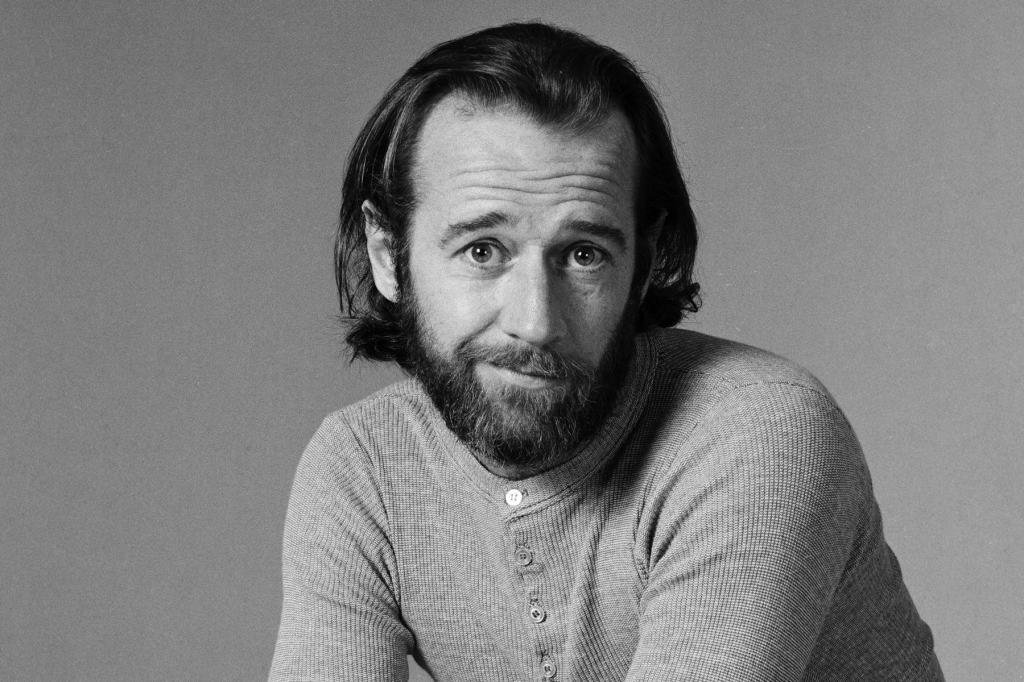
Sometimes it’s not you but the audience. The Apostle Paul was, at times, treated like Rodney Dangerfield (getting no respect) and, at other times, like George Carlin (causing people to think and listen without even knowing it).

Everywhere Paul went on his missionary journeys he experienced both acceptance and opposition. Determined to spread the good news of Christ’s redeeming work, Paul found a receptive audience and was able to establish churches.

Yet, Paul also upset the religious status quo wherever he went. As a result, there were times when he and his colleagues needed to steal out of town before an angry mob could get their hands on him. Sometimes, the furious cabal got ahold of Paul; and he forever carried the scars of those beatings on his body. Talk about no respect!

So, it must have been a refreshing experience for Paul to arrive in the city of Berea (located at the base of the Olympian Mountains in southwestern Macedonia) and discover a different spirit than he typically found in other places – a willingness to investigate, scrutinize, and grapple with the message presented. A receptive audience is a beautiful thing.

To spiritually thrive and flourish in this life we all must embrace the noble character of remaining open-minded with a teachable spirit. Just as the body grows, changes, and matures over time, so the human spirit does the same, and needs continual spiritual development. To become closed-minded and believe all questions are answered and settled, is to cut off oneself from truth and reality.

The Apostle Paul, I believe, is a good model of what it takes to be open-minded and a lifelong learner. The following are some ways he kept alive to spiritual truth:

Paul found his motivation. He went on missionary journeys because he wanted to make Christ known in places where he wasn’t. “It doesn’t matter if people are civilized and educated, or if they are uncivilized and uneducated. I must tell the good news to everyone. That’s why I am eager….” (Romans 1:13-14, CEB)

Paul went to new places and met new people. Getting stuck in a rut comes from never doing anything new or going to new places. We don’t have to be missionaries like Paul to do some movement and discover personally unexplored places, both literally and spiritually. Habits and routines are good. Sometimes we just need to create new ones so that we see a different perspective and have new experiences. The inability to see another’s viewpoint comes from an unwillingness to entertain any kind of change.

Paul avoided speculation. He did not superimpose his own experiences onto others. Paul was remarkably open to people everywhere he went, instead of being afraid and expecting trouble and/or abuse. The Bereans were open to Paul because Paul was open to them. Paul avoided looking at them as Thessalonians or Philippians; both were places where he got into loads of trouble just before coming to Berea. A contemporary way of stating Paul’s attitude and practice is that he was free of prejudice and discrimination.

Furthermore, notice the intellectual characteristics of the Berean people:

  • They were curious to hear what Paul thought.
  • They were able to have their ideas challenged.
  • They didn’t get angry when new ideas were presented.
  • They practiced both intellectual humility and mental empathy.
  • They believed Paul had a right to share his arguments, beliefs, and thoughts.

Today, in our intellectually and politically polarized world, far too many people are uncomfortable with uncertainty and ambiguity. So, they are unwilling to wrestle with spirituality by eliminating all mystery from their religion. When that happens, oppression is born. Those were the folks who could not tolerate Paul’s ideas and gave him such a hard time.

By rejecting alternative ideas that might challenge the status quo, people may be able to minimize uncertainty and risk – or at least their perception of risk – yet, the closing of their minds to other’s thoughts opens them to abusing the bodies of those same people.

When people are intellectually and spiritually proud, they wrongheadedly believe that they already know all there is to know, and so, they refuse to listen. At best, this limits the potential for learning; at worst, it forms a cognitive bias which blinds them to their own ignorance and blunts their ability for compassion.

It is, therefore, imperative that we be humble about our knowledge, understanding that there is always more to learn.

Almighty God, in you are hidden all the treasures of wisdom and knowledge. Open our eyes that we may see the wonders of your Word; and give us grace that we may clearly understand and freely choose the way of your wisdom. As the source of all light, enlighten our spirits. Pour out on us the spirit of understanding so that our hearts and minds may be opened. Amen.

It’s Time for a Change (Matthew 12:38-42)

Later a few religion scholars and Pharisees cornered him. “Teacher, we want to see your credentials. Give us some hard evidence that God is in this. How about a miracle?”

Jesus said, “You’re looking for proof, but you’re looking for the wrong kind. All you want is something to titillate your curiosity, satisfy your lust for miracles. The only proof you’re going to get is what looks like the absence of proof: Jonah-evidence. Like Jonah, three days and nights in the fish’s belly, the Son of Man will be gone three days and nights in a deep grave.

“On Judgment Day, the Ninevites will stand up and give evidence that will condemn this generation, because when Jonah preached to them they changed their lives. A far greater preacher than Jonah is here, and you squabble about ‘proofs.’ On Judgment Day, the Queen of Sheba will come forward and bring evidence that will condemn this generation, because she traveled from a far corner of the earth to listen to wise Solomon. Wisdom far greater than Solomon’s is right in front of you, and you quibble over ‘evidence.’ (The Message)

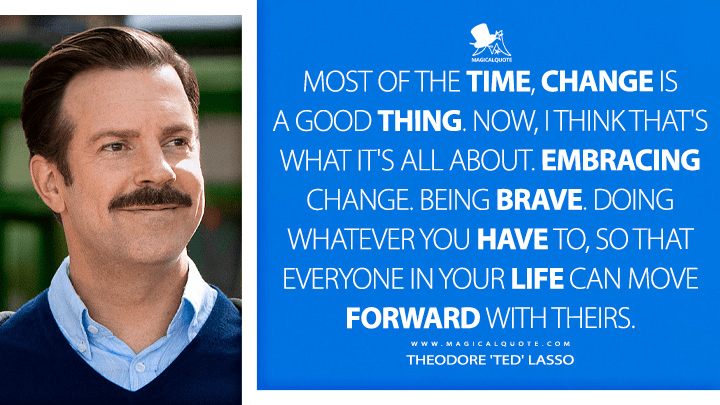
I believe the greatest miracle and the best evidence of God’s work in the world is a changed life.

I’m not talking about rearranging a few things or tweaking some habits – but a wholesale renovation of the heart. A transformed life is a new life, and not a reconstituted life.

Far too many people put their focus on others changing. They’ve bought into the belief that other people need to see things how they seem them – that everyone else must bend their lives to how they believe things ought to be. But this is really nothing more than sinful pride and hubris, as if the world revolves around me.

Change is for everyone, not just a select few, or for others for whom we believe need to get right or get left. Jesus made a lot of waves with the religious establishment by hobnobbing with the least, the lost, and the lowly of society.

Christ actively sought out the marginal folks, healing many of them from sickness, disease, and sin so that they could be united with God and no longer remain on the fringes of society.

If you’re not in the transformation business, then healing a bunch of low-life people means nothing to you. For the religious leaders of Christ’s day, Jesus was not flexing any real Messiah muscle for them; he was not beating up Roman gentiles and kicking them out of Palestine. So, they wanted a sign from heaven that would authenticate the proper Messiah credentials of Jesus.

But a sign already exists: The sign of Jonah. As Jonah was three days and three nights in the belly of a big fish, so Jesus would be in the earth for three days and nights. The death and resurrection of Jesus is needed, and when faced with this information, the only appropriate response is to change, to do a complete U-turn in life.

Jonah was all but dead. But God caused the great fish to belch up Jonah onto the land. He went forth a changed man. The experience of having stomach fluids work on a person for three days and nights will certainly change you! Jonah was spiritually and physically different – bleached completely white and an incredible sight to see.

Yet another sign exists: The Queen of Sheba’s sign. When she encountered King Solomon, she was overwhelmed with the experience. It changed her. So therefore, how much more ought we to change when encountering Jesus?

The appropriate response to Jesus is a changed life. Jesus was looking for status quo malcontents, for a desire to change. The process of change is hardwired into creation – from seasons of the year to the seasons of people’s lives – all are designed for a sustained process of time to revolutionize us.

Jesus modeled this for us. He switched his address of heaven and moved into our neighborhood in order to bring us new life. Jesus continually extends the invitation to change. All he asks is to let God do the work of change within us, to be patient with the construction of the soul he is doing, and to persist with daily routines of faith.

Yes, it’s time for a change. But change for change’s sake is not the point. Change that reflects godly values is the point. And in order to realize this good sort of change, we must be attentive and hear Holy Scripture, seek the mind and heart of God, and be willing to let Jesus come and have the run of the house.

We must unlearn before we learn. We need to let go so that we can take up. Change involves the humility to admit when we are lost, ask for help, and go in a different direction. New life is not rebranding oneself but is akin to being born again.

Almighty God, we desire to be transformed by you and allow the life of Jesus to be expressed in and through us. We desire to walk in the light of your Spirit. Reveal to us those things in our lives that need to change. Allow us to discern between flesh and spirit so that we can choose a healthy holy path.

Continue to give us spiritual awareness. Transform us into something new altogether. May our old life and old ways disappear, and may new life emerge that will bless both the church and the world, through Jesus Christ our Lord, in the power of the Holy Spirit. Amen.