Anyone Can Change (Jonah 3:1-10)

Print of Jonah preaching to the Ninevites and their repenting, by Philip Galle 1547–1612 

The Lord’s word came to Jonah a second time: “Get up and go to Nineveh, that great city, and declare against it the proclamation that I am commanding you.” And Jonah got up and went to Nineveh, according to the Lord’s word. (Now Nineveh was indeed an enormous city, a three days’ walk across.)

Jonah started into the city, walking one day, and he cried out, “Just forty days more and Nineveh will be overthrown!” And the people of Nineveh believed God. They proclaimed a fast and put on mourning clothes, from the greatest of them to the least significant.

When word of it reached the king of Nineveh, he got up from his throne, stripped himself of his robe, covered himself with mourning clothes, and sat in ashes. Then he announced, “In Nineveh, by decree of the king and his officials: Neither human nor animal, cattle nor flock, will taste anything! No grazing and no drinking water! Let humans and animals alike put on mourning clothes, and let them call upon God forcefully! And let all persons stop their evil behavior and the violence that’s under their control!” He thought, Who knows? God may see this and turn from his wrath, so that we might not perish.

God saw what they were doing—that they had ceased their evil behavior. So God stopped planning to destroy them, and he didn’t do it. (Common English Bible)

Anyone can turn around, even the nastiest of people.

Lent (the Christian season lasting six weeks from Ash Wednesday to Easter Sunday) is the ideal time of year to change, to turn around, to repent — to return to God and re-focus our lives.

The season of Lent is something like a forty-day trial run in changing your lifestyle and letting God change your heart. Repentance is the key that unlocks the soul’s ability to connect with God. To repent means to stop going in one direction and start going in another one. It makes all the difference in the orientation of our souls. 

Repentance leads to a real change of direction, a complete re-orientation of life. The evidence of such a change is this:

  • Owning up to the problem and confronting it
  • An eagerness to make things right
  • Indignation over what has been done or said
  • A desire and energy to do what is best for those we have wronged
  • A willingness to accept whatever consequences that might result from the offense

There’s nothing romantic about repentance; it’s typically messy, usually ugly, and often painful. Yet, there must be suffering before glory. Trying to take repentance out of the equation is to eviscerate life and leave our souls vacuous and empty.

Sometimes, we may not even realize we need to repent because we get caught up in the drama of whatever we’re doing – school, relationships, family, church, or work. Our lives can become filled with distractions that take us away from the spiritual life and the need to change.

But our soul knows it’s empty. And so, often unaware, we try to fill the vacuum with meaningless stuff, busywork, and mindless activities. What we’re really doing is running from real life and from God. 

We need to connect with the Divine; we need repentance. The Ninevites instinctively knew what to do; they fasted, prayed, and changed their ways. If a group of people who were experts at human torture and abuse could know this and intentionally pay attention to God, then how much more ought we to connect with what is most important?

Godly sorrow brings repentance that leads to salvation and leaves no regret.

2 Corinthians 7:10, NIV

Throughout Holy Scripture, whenever people were confronted with divine realities, they were completely undone; they began to see their own sin for what it truly is. 

When the Apostle Peter saw the Lord Jesus in his immensity and power through a miraculous catch of fish he fell at Jesus’ knees and said, “Go away from me, Lord; I am a sinful man.” (Luke 5:8) 

When the Apostle John had a vision of Jesus Christ in all his glory, and heard his voice, he fell at the Lord’s feet as though dead. (Revelation 1:12-17)

When the prophet Ezekiel had a vision of God and saw the appearance of God’s glory, he fell facedown. (Ezekiel 1:25-28) 

Even Daniel, perhaps the most righteous prophet and person of all time, saw a vision of God in all his glory, he fell prostrate with his face to the ground, totally overwhelmed with God’s holiness and human sinfulness. (Daniel 8:15-18)

We must put ourselves in a position to hear God so that we can turn from all the obstacles that prevents us from experiencing life as it is meant to be lived. And the all the things which hinder us from repenting are legion:

  • inattention to God’s words and God’s creation
  • constant and prolonged preoccupations and daydreams that prevents availability to God
  • lack of sleep and good health habits that dulls the spiritual senses and prevents awareness of God
  • a paucity of spiritual practices and disciplines that would put us in a position to experience God

Let us, then, take a lesson from the repenting Ninevites and pay attention to God. For God is calling, yet we do not hear him. So, let’s put ourselves in a position to hear the message of God; identify the things that grieve God’s heart; and repent.

God has gone out of the way to reach us so that we can change for the better. And anyone, no matter who they are, can experience it – even a terribly sinful nation of people.

What will you do with this grace?

Almighty and everlasting God, the One who freely pardons all who repent: Redeem and renew every penitent heart with your infinite mercy and grace, forgiving all our sins, and cleansing us from an evil conscience. Amen.

Psalm 30 – Mourning Has Turned to Joy

I will exalt you, Lord, for you rescued me.
    You refused to let my enemies triumph over me.
O Lord my God, I cried to you for help,
    and you restored my health.
You brought me up from the grave, O Lord.
    You kept me from falling into the pit of death.

Sing to the Lord, all you godly ones!
    Praise his holy name.
For his anger lasts only a moment,
    but his favor lasts a lifetime!
Weeping may last through the night,
    but joy comes with the morning.

When I was prosperous, I said,
    “Nothing can stop me now!”
Your favor, O Lord, made me as secure as a mountain.
    Then you turned away from me, and I was shattered.

I cried out to you, O Lord.
    I begged the Lord for mercy, saying,
“What will you gain if I die,
    if I sink into the grave?
Can my dust praise you?
    Can it tell of your faithfulness?
Hear me, Lord, and have mercy on me.
    Help me, O Lord.”

You have turned my mourning into joyful dancing.
    You have taken away my clothes of mourning and clothed me with joy,
that I might sing praises to you and not be silent.
    O Lord my God, I will give you thanks forever! (New Living Translation)

Life is not only full of the tears which give way to joy; a great deal of life is learning to move through our grief and transform the pain into something beautiful.

Hard circumstances make us either better or bitter.

The psalmist, King David, had his share of adversity, difficulty, and distress. The youngest of seven sons, David was something like the runt of the litter. He was given the grunt work that nobody else wanted to do, since he was the lowest person in the household.

So, off to the fields he went, shepherding the sheep, dealing with hot days and cold nights, fighting off predators, and keeping the sheep healthy and safe. Yet out there where no one was looking, God was watching. And the Lord was developing within David the very qualities needed to one day rule over all Israel and Judah.

Even in-between becoming a member of the king’s court and becoming king himself, David’s life was mostly characterized by misunderstanding and being victimized. In other words, David had intimate first-hand experience of terrible sorrow, buckets of tears, and stress-filled anxiety. Through it all, he did not become bitter. Instead, David learned to transform his mourning to joy.

Many persons, having experienced the sort of things David of old did, come through their difficulties and adversity with a hard heart. They end up hurting people, just like they were hurt. Their verbal and physical acts of violence betray their inability to turn pain into something useful.

So, what makes the difference between those who experience the same sorts of painful events, yet go in the different directions of caring or harming?

I believe the twentieth-century Trappist monk, Thomas Merton, understood the true source of violence and non-violence…

“There is a pervasive form of contemporary violence to which the idealist most easily succumbs: activism and overwork. The rush and pressure of modern life are a form, perhaps the most common form, of its innate violence. To allow oneself to be carried away by a multitude of conflicting concerns, to surrender to too many demands, to commit oneself to too many projects, to want to help everyone in everything, is to succumb to violence. The frenzy of our activism neutralizes our work for peace. It destroys our own inner capacity for peace. It destroys the fruitfulness of our own work, because it kills the root of inner wisdom which makes work fruitful.”

Thomas Merton, Conjectures of a Guilty Bystander

Merton rightly discerned that the false self (the self we project to others and try to maintain as real) is in fact the source of violence – specifically, the false self’s need to gratify impulses for power and control, affection and esteem, security and safety, at all costs.

However, we do not find ourselves in those ways. The cultivation of solitude, silence, and contemplation are non-violent practices which organically produce non-violent ways of being in the world. Those were the very practices which characterized David’s early life as a shepherd.

It’s what we do when no one is watching, and nobody is around, that makes the difference. Our way of being in the world is determined by the way we are with ourselves when we are alone.

How you are, matters.

“If we do not transform our pain, we will most assuredly transmit it.”

Richard Rohr

We need to be present to our pain, to pay attention to it. Our hurts don’t simply vanish if we ignore them, try to go around them, or seek quick fixes to them. The pain is still there, and over time, becomes gangrene of the soul.

Instead, we must dare to go to the unexplored territory of the inner person, to confront and contend with our inner turmoil and be open to hearing from it.

“The endurance of darkness is the preparation for great light.”

St. John of the Cross

Today, like every day, we have the opportunity and even responsibility to bring our whole selves, pain included, to the relationships we have, the work we do, and everywhere we go. The world not only needs our skills and abilities; it needs us.

The path to joy isn’t through perfect circumstances and having all our wants satisfied; joy comes after a season of darkness with all it’s sobbing, tears, and wondering. As we become more comfortable with the shadowy places of our lives, the more open we become to transforming our pain to a beauty which blesses the world.

O God, you are my God, and I will praise you, whether at night’s inky blackness, or in the day’s bright sunshine of happiness. As I endure each difficult situation, help me to see it’s transformative power and it’s potential to make me a better and more godly person, through Jesus Christ my Lord, in the enablement of the Holy Spirit. Amen.

2 Corinthians 7:2-16 – Genuine Sorrow Changes Us

Make room for us in your hearts. We have wronged no one, we have corrupted no one, we have exploited no one. I do not say this to condemn you; I have said before that you have such a place in our hearts that we would live or die with you. I have spoken to you with great frankness; I take great pride in you. I am greatly encouraged; in all our troubles my joy knows no bounds.

For when we came into Macedonia, we had no rest, but we were harassed at every turn—conflicts on the outside, fears within. But God, who comforts the downcast, comforted us by the coming of Titus, and not only by his coming but also by the comfort you had given him. He told us about your longing for me, your deep sorrow, your ardent concern for me, so that my joy was greater than ever.

Even if I caused you sorrow by my letter, I do not regret it. Though I did regret it—I see that my letter hurt you, but only for a little while— yet now I am happy, not because you were made sorry, but because your sorrow led you to repentance. For you became sorrowful as God intended and so were not harmed in any way by us. Godly sorrow brings repentance that leads to salvation and leaves no regret, but worldly sorrow brings death. See what this godly sorrow has produced in you: what earnestness, what eagerness to clear yourselves, what indignation, what alarm, what longing, what concern, what readiness to see justice done. At every point you have proved yourselves to be innocent in this matter. So even though I wrote to you, it was neither on account of the one who did the wrong nor on account of the injured party, but rather that before God you could see for yourselves how devoted to us you are. By all this we are encouraged.

In addition to our own encouragement, we were especially delighted to see how happy Titus was, because his spirit has been refreshed by all of you. I had boasted to him about you, and you have not embarrassed me. But just as everything we said to you was true, so our boasting about you to Titus has proved to be true as well. And his affection for you is all the greater when he remembers that you were all obedient, receiving him with fear and trembling. I am glad I can have complete confidence in you. (New International Version)

“The only vice that cannot be forgiven is hypocrisy because the repentance of a hypocrite is itself hypocrisy.”

William Hazlitt (1778-1830)

I’m in the soul business. Not in the Detroit Mo-town Aretha Franklin kind of soul business (although that would be very cool) but in the sense of leading human souls to God and building them up in Christ. Key to the Christian life’s soul is the term “repentance.”  To repent means to turn around, to stop going in one direction and start going in another one. It is repentance which makes all the difference in the direction of our souls.

Certainly, no one can really judge the heart of another. Yet, today’s New Testament lesson lets us in on how to truly measure the sincerity of a person’s repentance. 

Worldly sorrow or grief does not lead to repentance, but disconnection and death. People with worldly sorrow beat themselves up but never really change direction. Like Judas Iscariot of old, they just hang themselves instead of admitting guilt to Jesus. 

Godly sorrow, however, leads to repentance, a change of direction. And here is the evidence of the genuine change: 

  • Owning the problem.
  • Eagerness to make things right.
  • Indignation over what has been done or said.
  • Discernment that there is more pain in avoiding the problem than there is confronting it.
  • Desire and energy to do what is best for the person who was wronged.
  • Willingness to accept whatever consequences which might result from the offense.

Crying and weeping might be necessary. Yet the tears can also be a cheap form of avoiding true repentance. 

Whether there are tears, or not, there must be solid action that changes direction and seeks to rectify offenses, as much as it is within our control to do so. 

Deliverance from the power of guilt and shame comes through repentance. There are no shortcuts or easy routes to the soul’s orientation to practical godliness. 

There is nothing romantic about repentance. It is typically messy, usually ugly, and often painful. Yet, there must be suffering before there is glory. Attempting to remove true repentance from personal transformation only eviscerates the Christian life and leaves our souls vacuous and empty.

Instead, we carefully, tediously, and patiently go about the important work of repentance, with all its deep sorrow, regret, vulnerability, challenge, awkwardness, and courage.

Holy God, I confess to you the things which I have said and done, as well as those things I have left unsaid and undone. And, yet your mercy is from everlasting to everlasting. Open my eyes to the ways I have offended others and failed to build them up. Help me to step boldly into repentance and faith in Jesus Christ, through the power of the Holy Spirit.  Amen.

Job 6:1-13 – A Response to Suffering

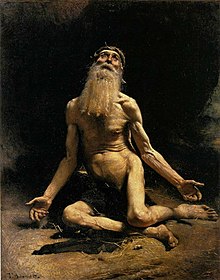
Job by French painter Léon Bonnat, 1880

Oh, that my grief was weighed,
    all of it were lifted in scales;
    for now it is heavier than the sands of the sea;
        therefore, my words are rash.
The Almighty’s arrows are in me;
    my spirit drinks their poison,
    and God’s terrors are arrayed against me.
Does a donkey bray over grass
    or an ox bellow over its fodder?
Is tasteless food eaten without salt,
    or does egg white have taste?
I refuse to touch them;
    they resemble food for the sick.

Oh, that what I’ve requested would come
        and God grant my hope;
    that God be willing to crush me,
    release his hand and cut me off.
I’d still take comfort,
    relieved even though in persistent pain;
        for I’ve not denied the words of the holy one.
What is my strength, that I should hope;
    my end, that my life should drag on?
Is my strength that of rocks,
    my flesh bronze?
I don’t have a helper for myself;
    success has been taken from me. (CEB)

The Old Testament character of Job is famous as the poster boy for suffering, grief, and sorrow. A divine and devilish drama was taking place behind the curtain of this world, of which Job had absolutely no clue about.  All he knew was that he lost everything – his family, his wealth, and his standing before others.  The only thing left was his own life – and he was in such physical pain and emotional agony that he was ready to die.

Yet, the greatest pain of all seems to be the silence of God. Job has no idea, nothing to grab ahold of no earthly sense of why he was going through such intense and terrible suffering. His cries, tears, pleas, and expressions of deep hurt seemingly go un-noticed. Job felt truly alone in his horrible pain of body and spirit.

“We must learn to regard people less in the light of what they do or omit to do, and more in the light of what they suffer.”

Dietrich Bonhoeffer

Job’s story is as old as time – probably having taken place 4,000 years ago. And here we are, all these millennia later, knowing the story of why Job suffered, as well as the end of the story. But Job himself never knew why he suffered, even when God spoke and restored his health and wealth.

It is so extremely easy and normal to ask the question, “Why!?”  When we are in the throes of emotional pain and our prayers seem to bounce off the ceiling, there is only trust left for us. We do what is unthinkable to others who have never known God – place our complete reliance and hope on the God for whom we know is not really sleeping or off on a vacation. We believe, even know, God is there. For whatever reasons which we might never know this side of heaven, God chooses to remain silent.

The genuineness of faith is not determined by giving the right answers to a theology questionnaire. Genuine faith is made strong through the trials, sufferings, pain, and lack of understanding in this life. We all suffer in some way. How we choose to respond to that suffering, either by cursing God and becoming bitter, or holding to God even tighter and becoming better, is totally up to you and me.

God of all creation, you see and survey all your creatures here on this earth. Sometimes I just do not understand what in the world you are doing or not doing. Yet today I choose to put my faith, hope, and love in you.  I may not know what the heck I am doing, but you always work to accomplish your good purposes, through Jesus Christ, my Savior, along with the Holy Spirit.  Amen.