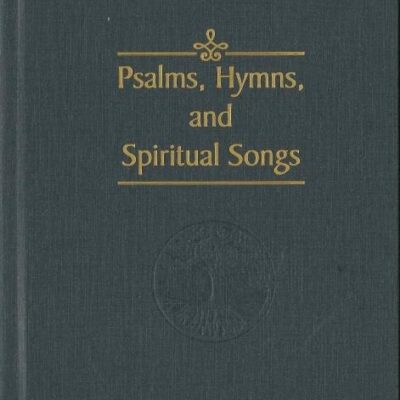
Remember God, for God Has Remembered Us (Psalm 105:1-11, 45b)

Give thanks to the Lord;
    call upon his name;
    make his deeds known to all people!
Sing to God;
    sing praises to the Lord;
    dwell on all his wondrous works!
Give praise to God’s holy name!
    Let the hearts rejoice of all those seeking the Lord!
Pursue the Lord and his strength;
    seek his face always!
Remember the wondrous works he has done,
    all his marvelous works, and the justice he declared—
    you who are the offspring of Abraham, his servant,
        and the children of Jacob, his chosen ones.

The Lord—he is our God.
    His justice is everywhere throughout the whole world.
God remembers his covenant forever,
    the word he commanded to a thousand generations,
        which he made with Abraham,
        the solemn pledge he swore to Isaac.
God set it up as binding law for Jacob,
    as an eternal covenant for Israel,
    promising, “I hereby give you the land of Canaan
    as your allotted inheritance….”

Praise the Lord! (New Revised Standard Version)

Human thoughts and actions respond to divine thoughts and actions. We remember because God remembers. We act because God acts in history. We give because the Lord first gave to us.

The psalmist calls us to act and to think – and it’s all a response to God’s merciful attention to God’s people. Notice the imperative verbs which call us to use our words, emotions, and actions, so that we press spiritual truth into our minds and hearts, and do not forget our experiences. They all, from a Christian perspective, have their fulfillment in the person and work of Jesus.

Give thanks to the Lord

Give thanks in all circumstances; for this is God’s will for you in Christ Jesus. (1 Thessalonians 5:18, NIV)

Make known God’s deeds

“Righteous Father, though the world does not know you, I know you, and they know that you have sent me. I have made you known to them, and will continue to make you known in order that the love you have for me may be in them and that I myself may be in them.” (John 17:25-26, NIV)

Sing praises to the Lord

For I tell you that Christ has become a servant of the Jews on behalf of God’s truth, so that the promises made to the patriarchs might be confirmedand, moreover, that the Gentiles might glorify God for his mercy. As it is written:

“Therefore I will praise you among the Gentiles;
    I will sing the praises of your name.”

Again, it says,

“Rejoice, you Gentiles, with his people.” (Romans 15:8-10, NIV)

Dwell on God’s works

Let the message of Christ dwell among you richly as you teach and admonish one another with all wisdom through psalms, hymns, and songs from the Spirit, singing to God with gratitude in your hearts. (Colossians 3:16, NIV)

Give praise to God’s holy name

Now on his way to Jerusalem, Jesus traveled along the border between Samaria and Galilee. As he was going into a village, ten men who had leprosy met him. They stood at a distance and called out in a loud voice, “Jesus, Master, have pity on us!”

When he saw them, he said, “Go, show yourselves to the priests.” And as they went, they were cleansed.

One of them, when he saw he was healed, came back, praising God in a loud voice. He threw himself at Jesus’ feet and thanked him—and he was a Samaritan.

Jesus asked, “Were not all ten cleansed? Where are the other nine? Has no one returned to give praise to God except this foreigner?” Then he said to him, “Rise and go; your faith has made you well.” (Luke 17:11-19, NIV)

Pursue the Lord

Flee the evil desires of youth and pursue righteousness, faith, love and peace, along with those who call on the Lord out of a pure heart. (2 Timothy 2:22, NIV)

Seek God’s face

And without faith it is impossible to please God because anyone who comes to him must believe that he exists and that he rewards those who earnestly seek him. (Hebrews 11:6, NIV)

Remember God’s works and God’s justice

“Why do you look for the living among the dead? He is not here; he has risen! Remember how he told you, while he was still with you in Galilee: ‘The Son of Man must be delivered over to the hands of sinners, be crucified and on the third day be raised again.’” (Luke 24:5-7, NIV)

We are to remember because God remembers. The Lord has an ongoing reminder in the divine day timer: Fulfill the promises I made. Keep the covenant I initiated with the people, even when they are stinkers and forget who I am.

God does not forget. The Lord keeps divine promises.

For the Christian, all God’s promises are remembered and fulfilled in the person and work of Jesus Christ.  Deliverance from sin, death, and hell; the gift of the Holy Spirit; and, ongoing divine presence and provision are given to us graciously and freely by the God who loves and cares for people. 

For Christians everywhere, remembering means coming to the Lord’s Table, entering into the once for all loving sacrifice of Christ on our behalf. It is here that we remember to give thanks and praise, seek and sing. In doing so, we make invisible realities visible, and the divine character of God known to amongst the nations.

God and Father of all, and of Jesus Christ our Lord, as you remember your dear Son, remember us. Grant us peace in our time and a longing for the day when people of every language, race, and nation will be brought into the unity of Christ’s kingdom, where there shall be endless praise, singing, thanksgiving, and joy in the Holy Spirit. This we ask in your holy Name, because of your great glory, and for the sake of Christ’s rule and reign over the earth, now and forever. Amen.

Ephesians 5:15-20 – Speak to One Another with Psalms, Hymns, and Spiritual Songs

Be very careful, then, how you live—not as unwise but as wise, making the most of every opportunity, because the days are evil. Therefore, do not be foolish, but understand what the Lord’s will is. Do not get drunk on wine, which leads to debauchery. Instead, be filled with the Spirit, speaking to one another with psalms, hymns, and songs from the Spirit. Sing and make music from your heart to the Lord, always giving thanks to God the Father for everything, in the name of our Lord Jesus Christ. (New International Version)

As you likely well know, an inebriated person tends to say and do things that they do not typically say or do when they’re sober. The Apostle Paul’s point about being filled with the Spirit is that, instead of doing and saying stupid things, we are so filled with God that we do things and say things that we would not typically do and say if we were not filled with God – that is, good things. 

Apart from being full of God’s Spirit, we tend toward mumbling, not singing; worry, not making music in our hearts; and complaining and arguing, not giving thanks. Half-filled Christians practice a half-hearted Christianity. They’re only half-baked in their service and devotion to Christ.

Why sing? 

Because singing is part of being filled with the Spirit of God. Singing happens when we experience God’s overflowing grace in our lives through the blessings of being chosen, adopted, and redeemed into God’s new community. (Ephesians 1:3-11)

Music is powerful. It’s not only a means of expressing praise and commitment to Christ and each other, it is also a powerful means of being impressed. For example, when we first teach kids the alphabet, we teach it in a song. Trying to teach letters in a rote fashion typically doesn’t work well for pre-school kids. Words set to music is why we still remember words from old TV shows, because those words were set to a catchy tune.  Music is why an Alzheimer’s patient cannot remember her daughter’s name but can flawlessly sing all four verses of Amazing Grace.

Singing is an offering and a sacrifice of praise to God (Hebrews 13:15). And singing is also a vehicle whereby we are taught, encouraged, and built up in the community of believers. We sing to God, one another, and even ourselves.

Church music, then, is to be both a means of praising God and a practice of encouraging each other. We do it through psalms, hymns, and spiritual songs.

Psalms

The word “psalm” helps us rightly think of the biblical book of Psalms. Singing the psalms is an ancient practice, going all the way back to the Israelites singing psalms in the temple and synagogue. The early church maintained this practice, especially as a means of being faithful to praying without ceasing. 

However, over time, medieval congregations began neglecting the practice. In fact, the congregations eventually gave up most singing altogether. Almost all the singing was done by church choirs and professional musicians employed by the state (no separation of church and state) to write, compose, and perform in worship services. 

Five-hundred years ago, with the Reformation, Martin Luther reinstituted congregational singing. He gave music back to the people. One of the results of this change was putting the book of psalms to song – the Psalter.  For many Protestant denominations, the Psalter became the primary means of singing. The Psalter chiefly set prayers to song. It was both a means of expressing prayer to God and learning Scripture.


Hymns

There have always been hymns in the church. Yet, it was not until the Reformation that hymns began to be written and sung by congregations. For the Reformers, hymns were used to teach sound doctrine and theology, as well as a means of confessing the faith together

Spiritual Songs

Spiritual songs are the present day equivalent of praise and worship choruses, or what some refer to as contemporary songs. These are songs purposefully designed to be emotional expressions of praise to God and to give powerful testimony for what God has done or is doing.

So, what?

Quick review:

  • Psalms are used to pray and learn Scripture.
  • Hymns are used to teach us sound doctrine and confess the faith together.  
  • Spiritual songs are an important way of expressing praise to God and being encouraged in the faith. 

Therefore, church music is to serve as both a revelation from God, and as a response from God’s people.

There are two important deductions from this verse:

  1. A variety of songs is inferred and expected.
  2. Paul commanded their use.

The reason worship style is such a hot topic in a lot of churches is because we all have our personal preferences.  And yet, if we are to be faithful to today’s New Testament lesson, we will not just lock in on what I want. 

Truth be told, we are selfish people when it comes to music. We want what we want, and we don’t care what somebody else wants. And we will persist in that self-absorbed spirit until somebody calls us on it. That somebody is the Apostle Paul. The Word of God calls us to encompass psalms, hymns, and spiritual songs – all three of them – in our worship.

I have a good friend who is an accomplished church musician and worship pastor. I once asked him how I can lead a worship service among such a variety of preferences concerning music. He answered my question with a question: “How highly do people, including and especially your musicians, value the unity of the church?  Do they love each other so much that they can allow for a wider range of style, and do so without vocally complaining about it?”

My friend went on to say, “When I arrived at one church as their pastor, some people were in a rather bad habit of saying very openly, ‘Oh I hate that song,’ or, ‘If I hear this song one more time I’m walking out.’ What I tried to do was teach people that this is not the most loving or mature approach and does little to build up the rest of the Body of Christ.”

If a group of people are being faithful to Scripture, and doing their best musically, then – if the music seems lifeless, dull, or strange to us – the real issue isn’t style but our hearts.       

Is that heart filled with the Spirit of God? If it is, then we will speak to one another using the Psalter, using time-honored hymns, and utilizing fresh contemporary praise songs. And the result will be the Body of Christ, the Church, built up in the faith.

Gracious God, give us grace to take to heart the great dangers we are in by our unhappy divisions about music.  Take away all hatred and prejudice, and whatever else may hinder us from godly union and concord; that, as there is but one body and one Spirit, one hope of our calling, one Lord, one faith, one baptism, one God and Father of us all, so we may from this time forward be all of one heart and of one soul, united in one holy bond of peace, and may with one mind and one mouth glorify you, through Jesus Christ our Lord. Amen.