Matthew 9:2-13 – Why Jesus Came

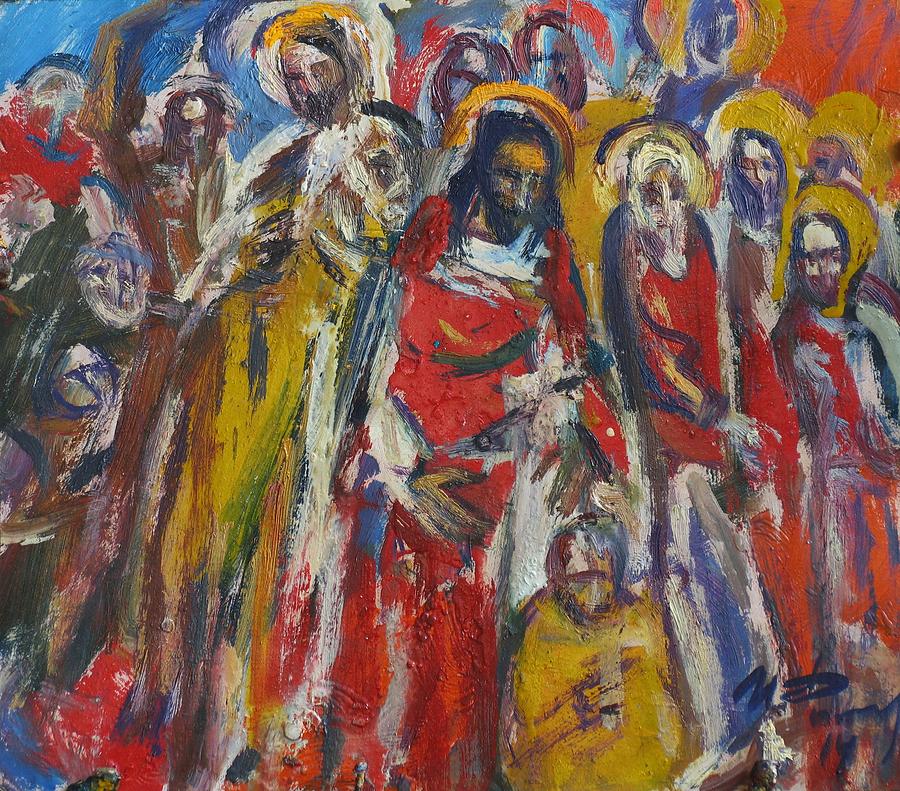
Healing by Russian painter Ivan Filichev

Some men brought to Jesus a paralyzed man, lying on a mat. When he saw their faith, Jesus said to the man, “Take heart, son; your sins are forgiven.”

At this, some of the teachers of the law said to themselves, “This fellow is blaspheming!”

Knowing their thoughts, Jesus said, “Why do you entertain evil thoughts in your hearts? Which is easier: to say, ‘Your sins are forgiven,’ or to say, ‘Get up and walk’? But I want you to know that the Son of Man has authority on earth to forgive sins.” So, he said to the paralyzed man, “Get up, take your mat and go home.” Then the man got up and went home. When the crowd saw this, they were filled with awe; and they praised God, who had given such authority to man.

As Jesus went on from there, he saw a man named Matthew sitting at the tax collector’s booth. “Follow me,” he told him, and Matthew got up and followed him.

While Jesus was having dinner at Matthew’s house, many tax collectors and sinners came and ate with him and his disciples. When the Pharisees saw this, they asked his disciples, “Why does your teacher eat with tax collectors and sinners?”

On hearing this, Jesus said, “It is not the healthy who need a doctor, but the sick. But go and learn what this means: ‘I desire mercy, not sacrifice.’ For I have not come to call the righteous, but sinners.” (NIV)

The late Abigail Van Buren, better known as the newspaper columnist, “Dear Abby,” was the person who made famous the phrase: “The church is a hospital for sinners, not a museum of saints.” That quote is an accurate reflection of what Jesus was doing and saying. We occasionally need words like Dear Abby’s to remind and reorient us toward why the church exists.  

The church of the Lord Jesus does not remain on this earth solely for our benefit, any more than a hospital exists for the benefit of the doctors or insurance companies! Rather, the church lives to extend the mission of Jesus through proclamation of good news with the restorative touch of grace. The church’s calling is not to find others who can help them with their tithing and keep warm seats in the pew. Instead, the church is the community of the redeemed, gathered and sent to be the continuing presence of Jesus on this earth.

Some who are reading this are not healthy. Some are sick with sin; others are heart-sick; yet others are plain sick-and-tired of being sick-and-tired. Jesus came neither to condemn nor heap a pile of unrealistic expectations on us. Christ points us to the source of healing and change and invites us to admit our need and come to him. 

Conversely, many others today are healthy, spiritually alive, and well. It is our job to roll up our sleeves and serve, participating fully in the mission of Jesus to the world. The question I want us to grapple with is this: Why did Jesus come to this earth? The answer to that question is to also answer the question of our own purpose and existence as followers of Christ.

Jesus came to forgive sin and transform sinners.In today’s Gospel healing, it was a case where the person’s sin was connected to his paralysis – and the paralytic found in Jesus not only physical healing, but new spiritual life.

The religious insiders observed the healing. Yet there was no rejoicing by them about the transformation. Instead, they became hung up on Jesus claiming to be God. Granted, this was a hard truth for them to get a hold of. But Jesus labeled such thinking as evil – the inability to see and perceive the situation as a divine intervention, and that Jesus really is the Lord who graciously did it. Because they wrongly discerned who Jesus is, they wrongly interpreted the situation. 

Therefore, it is important to see Jesus as the Human One who extends compassion and forgiveness. If we fail to see this about Christ, we will get caught up in all kinds of silly matters of personal preference and ridiculous power plays, based in how we think things should go, rather than the gospel.

Jesus came to forgive sin. Healing the body is good but not enough. Just focusing on the physical well-being of individuals was not why Christ came. At the heart of the human condition is spiritual brokenness, and Jesus is all about taking away guilt and shame, creating a new person and a new community. It is a radical vision which seeks to encompass all persons – which means Jesus touched many people overlooked by others.

Jesus came to call the despised people of society, the “sinners.” He called Matthew, a tax collector. Tax collectors were hated. They were corrupt characters who extorted money from innocent people. Jesus not only called the despised Matthew but had dinner with him and all his unsavory buddies. This kind of behavior by Jesus was deeply offensive to upstanding citizens.

However, Jesus did not back down. He responded by saying that it is not the healthy who need a doctor, but the sick. And he backed up his social actions with Scripture by encouraging offended folks to meditate on what this biblical phrase means: “I desire mercy, not sacrifice.” (Hosea 6:6)

For I desire mercy, not sacrifice, and acknowledgment of God rather than burnt offerings.

hosea 6:6, niv

It is possible to engage in outward rituals of worship, do all the right things, fulfill our duty, yet still miss the heart of God wants for humanity. Mercy is what God wants. Jesus knew this. So, Christ entangled himself with sinners to bring spiritual healing and restoration.

When Corrie Ten Boom sought to bring deliverance of the Jews from the Nazis during World War II, she had to entangle herself with Jewish refugees. When Christian missionaries seek to be the light of Jesus to people, they must entangle themselves with the people’s culture. If we want to see God deliver people from their situations, we must entangle ourselves with them, into complicated lives that are not pretty, with persons who have been tainted by sin. 

Lots of people are in awful predicaments. Christians, like their Lord, will need to get their hands dirty and their feet wet to extend Christ’s ministry of mercy and forgiveness. The gospel was never intended to be proclaimed from afar, but up close and personal through entanglement in people’s lives. If the merciful mission of Jesus is to occur, it requires the following three activities:

  1. Intimacy with Jesus. Engaging in the spiritual disciplines of prayer, giving, fasting, reading, and meditating on Scripture are the activities which help us to know Christ better and know and how to respond with mercy.
  2. Intimacy with fellow believers. We are hard-wired by God for community. Superficial relationships can only provide superficial community. Christians need to help one another with spiritual growth. They must hold one another accountable for the mission of Christ.
  3. Intimacy with “sinners.” This world is filled with sick, needy, hurting, lonely, unhealthy people who are locked in unhealthy patterns of living. They need a merciful change of life that comes from the merciful Jesus acting through merciful Christians. 

Mercy, not judgment, is at the heart of all change. If we desire others to be different, we will need to be acquainted with the mercy of God.

Most merciful God, we confess we have sinned against you in thought, word, and deed, and by neglect. We have not held fast to your commandments and have strayed from your teachings. We turn from our self-centered actions and pride. For the sake of your Son, Jesus Christ, have mercy on us and forgive us so that we are released from anything that seeks to keep us from delighting in your presence. Empower us with your wisdom, revelation, and discernment so that we might be your merciful hands, feet, and words to one another and those who do not yet know you. Amen.

Joel 2:1-2, 12-17 – Ash Wednesday

Blow the horn in Zion;
    give a shout on my holy mountain!
Let all the people of the land tremble,
    for the day of the Lord is coming.
It is near—
    a day of darkness and no light,
    a day of clouds and thick darkness!
Like blackness spread out upon the mountains,
    a great and powerful army comes,
        unlike any that has ever come before them,
        or will come after them in centuries ahead…

Yet even now, says the Lord,
    return to me with all your hearts,
        with fasting, with weeping, and with sorrow;
tear your hearts
        and not your clothing.
    Return to the Lord your God,
        for he is merciful and compassionate,
        very patient, full of faithful love,
            and ready to forgive.
Who knows whether he will have a change of heart
    and leave a blessing behind him,
    a grain offering and a drink offering
            for the Lord your God?
Blow the horn in Zion;
        demand a fast;
        request a special assembly.
Gather the people;
        prepare a holy meeting;
        assemble the elders;
        gather the children,
            even nursing infants.
Let the groom leave his room
        and the bride her chamber.
Between the porch and the altar
        let the priests, the Lord’s ministers, weep.
    Let them say, “Have mercy, Lord, on your people,
        and don’t make your inheritance a disgrace,
        an example of failure among the nations.
    Why should they say among the peoples,
        ‘Where is their God?’” (CEB)

Imagine you are out for a hike on a beautiful spring day and you come to a creek. You notice that someone has dumped trash into the stream—not a pretty sight. Judging by some of the empty soda cans, the trash has been there awhile. And there is an ugly film on top of the water. You do not want to leave the scene as you found it, because it would bother your conscience.

So, you stoop down and begin gathering the trash. It ends up taking several hours before you can begin to see a difference. It is amazing, you muse, on how much junk is there. You sit back, rest for a moment, and realize you will have to keep coming each day until the site is truly clean. But when you come back the next day, it is as if you did not even do any work at all.  In fact, there is more trash than the day before. It seems the garbage bred overnight. You think about the unlikelihood of someone coming to this very spot to dump their garbage just in the one measly day you were away.

Then, you realize that something smells fishy—so to speak. So, you begin to follow the creek upstream. Sure enough, there is a nasty garbage dump that has been there for years. The waste from it is emptying into the passing creek. Your cleaning job was only a small opening to a world of filth. You could try and clean every day. But if you really want your creek to be free of pollution, this means going directly to the source and dealing with the crud that is there.

Our hearts are the source from which our lives flow. Unfortunately, we spend great amounts of time, money, and energy—even in the church—doing trash removal “downstream.” But real transformation begins when we travel upstream to the source. Our real struggles and sins take place where no one sees them down deep in the heart.

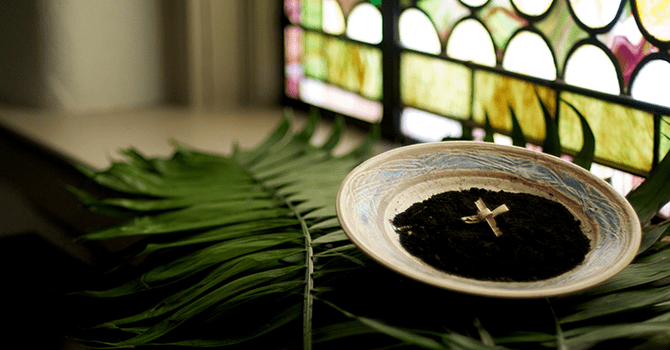
Today is Ash Wednesday, the first day in the season of Lent. Ashes remind us that we live in a polluted world full of garbage. That pollution is fouling up our lives and we must respond to the mess with a humble return to God. Lent is a 40-day cleaning project on the inside of our hearts, instead of trying to keep up dealing with all the scum on the outside of our lives. 

Entrance to confronting the dump of garbage requires fasting, self-examination, prayer, and repentance. The Lord said through the ancient prophet Joel that it is not too late to return to God with our whole hearts. To do so requires grieving and lamenting our stinky sin and turning back around to a merciful God who does not like to be angry and punish people.

We find that at the end of the Lenten journey, Jesus is there. He swallows all the massive tonnage of the world’s garbage on the cross. The refuse is so rotten that it kills him, and there is only darkness. Then, three days later, Christ is risen, having shaken off the filthy stench of death. Jesus Christ is the ultimate fulfillment of the prophet’s words, the merciful one who has taken care of the filthy source of garbage once and for all.

May you find on this day and every day that the spiritual practices of prayer, fasting, and repentance put you in a place to receive Jesus. As you lean into the mess throughout the next six weeks of Lent, may you discover the cleansing and healing agent, Jesus Christ, the Savior who scrubs the heart clean of toxic waste.

Holy God, our lives are laid open before you: rescue us from the chaos of sin and through the death of your Son bring us healing and make us whole in Jesus Christ our Lord. Amen.

1 Samuel 2:21-26 – Sin and Sinners

God was most especially kind to Hannah. She had three more sons and two daughters! The boy Samuel stayed at the sanctuary and grew up with God.

By this time Eli was very old. He kept getting reports on how his sons were ripping off the people and sleeping with the women who helped-out at the sanctuary. Eli took them to task: “What’s going on here? Why are you doing these things? I hear story after story of your corrupt and evil carrying on. Oh, my sons, this is not right! These are terrible reports I’m getting, stories spreading right and left among God’s people! If you sin against another person, there’s help—God’s help. But if you sin against God, who is around to help?”

But they were far gone in disobedience and refused to listen to a thing their father said. So, God, who was fed up with them, decreed their death. But the boy Samuel was very much alive, growing up, blessed by God and popular with the people. (MSG)

God is not okay with sin. And that is a good thing. In a world full of systemic violence, oppression, injustice, as well as personal cruelty and callousness toward others, we depend upon the Lord’s inherent character of justice and righteousness.

“Sin” is quickly becoming an antiquated word in our culture. That is likely because far too many persons and groups have created extrabiblical lists of sins to avoid – and so many understandably do not want anything to do with it. Biblically, sin is described as wrong and unjust actions (1 John 3:4), as well as failing to do right and just actions (James 4:17). 

Sin is both the breaking of God’s commands, and the lack of conforming to the teachings of Jesus. Christians throughout the ages have generally understood that the Ten Commandments (Exodus 20:1-17) and Christ’s law of love (Luke 10:27) constitute a summary of God’s holy and moral instruction for humanity. This is all based in the character of God, as a holy and loving Being. Sin, then, may be defined as anything in a person which does not express, or is contrary to, the basic character of God.

All sin, whether through overt actions of injustice or a failure to get involved in righteous causes, is rooted in attitudes and activities of self-centeredness. Such sinful attitudes bring about an obsession with lust (1 John 8:34; Galatians 5:16); a broken relationship with God (Romans 3:23; Galatians 5:17); bondage to Satan (1 Timothy 3:6-7; 2 Timothy 2:26); death (Romans 6:23; 8:6); hardening of the heart (Hebrews 3:13); and deception (1 Corinthians 3:18; James 1:22, 26) just to a name a few. There is no upside to sin.

What all this means is that we are guilty of transgressing basic morality as well as failing to live up to being ethically virtuous people on any on-going consistent basis. “Well,” you might say, “that sounds like a total Debbie-Downer.” No, it is total depravity. Being depraved does not mean we are never capable of doing good; it just means that sin has profoundly touched everything in our lives, without exception.

The ironic paradox is that experiencing true joy and comfort comes through knowing how great our sin is. We can only live above sin if we are set free from it by the grace of God in Jesus Christ. If a person is to be redeemed from sin, then a provision must be made. In Christianity, sin has been dealt with once for all through the person and work of Jesus. Christ is our representative, taking our place with the punishment we deserved (Galatians 4:4-5; Ephesians 2:5-6; Colossians 2:9-15; Hebrews 2:17-18; 1 John 2:1).

Jesus Christ is our ultimate substitute (Romans 5:8); which resulted in our redemption (Galatians 5:13); which resulted in his sacrifice for sin satisfying all justice (Romans 3:25); which resulted in our reconciliation to God (Romans 5:10). So, the person who believes in Jesus is forgiven of sin because Christ’s sacrifice is sufficient to deal with all the effects of sin. The Christian is complete in Christ (Colossians 2:10).

The sin issue has been dealt with decisively and definitively in Christ. Thus, gratitude is the order of the day.  Christians ought to be the last people on earth who walk around looking like a bunch of sourpusses who were baptized in pickle juice. Instead, Christians ought to be the most thankful and gracious people around because they are forgiven people. A lack of joy and celebration betrays a lack of Christianity (Luke 15:25-32).

Sin certainly is awful. It destroys everything it touches and can leave terrible consequences in its wake. Sin, however, does not have the last word. Christ’s crucifixion and resurrection are the decisive blows to sin’s power. The skinny on sin is that it is terribly bad. But Jesus is extremely good and overcomes the worst that sin can dish out.

If only Eli’s sons would have listened to their father and embraced grace, yet their sin was so egregiously intolerant to the point that God had had enough of their shenanigans. The contrast between the Eli’s biological sons and his spiritual son, Samuel, were quite pronounced. Old Eli blessed Samuel and his parents but had to rebuke his own sons. Indeed, unchecked sin led to death, but the gift of favor is given to the penitent.

“Work hard for sin your whole life and your pension is death. But God’s gift is real life, eternal life, delivered by Jesus, our Master.”

romans 6:23, msg

Just as Samuel grew in stature and in favor with God and others, so a thousand-years later Luke the Evangelist uses this language to describe the growth of Jesus (Luke 2:40). We, too, can enjoy the grace of God whenever we forsake the heinous nature of sin and live into the way, the truth, and the life that the Lord has waiting for us.

Almighty God, Sovereign Lord of the universe, and Creator of humanity, we, your unfaithful children, are terribly sorry for our sins and the lives we have lived apart from your grace. We sincerely believe that only through the precious blood of our Lord Jesus Christ can we obtain your forgiveness. We confess we have committed serious offences against you in thought, word, and deed against our neighbors. In laziness, despair, and lust for power, we have provoked hatred, division and hurt within our communities. In greed, deceit, and indifference, we have caused serious damage and unnecessary conflict to our brothers and sisters. In selfishness, insensitivity, and bias we have encouraged and emboldened those who inflict hurt, pain, and sorrow
on our loved ones and families. In the name of religion, doctrine, and even of Christ himself we have wounded fellow believers. In stubbornness, pride, and arrogance, we have caused division and strife within your church.

Mercifully send your Holy Spirit and cleanse us from all unrighteousness, restore in us true faith in Christ, and help us to live in peace with our ourselves and our fellow humanity, through our Lord Jesus Christ, to the glory of your holy name. Amen.

Hebrews 8:1-13 – Deliverance through a Manger

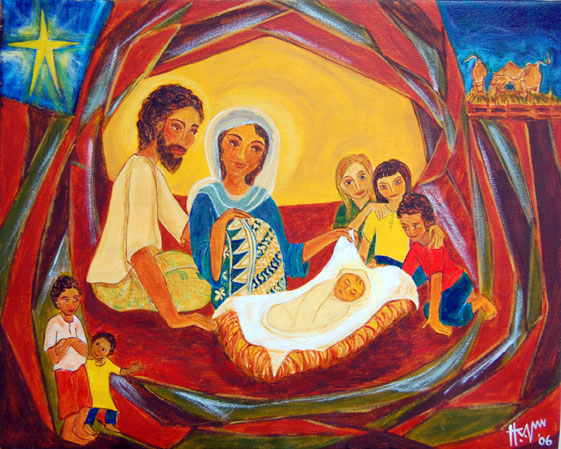
God Is With Us, by Malaysian artist Hanna Varghese, 2006

Now the main point of what we are saying is this: We do have such a high priest, who sat down at the right hand of the throne of the Majesty in heaven, and who serves in the sanctuary, the true tabernacle set up by the Lord, not by a mere human being.

Every high priest is appointed to offer both gifts and sacrifices, and so it was necessary for this one also to have something to offer. If he were on earth, he would not be a priest, for there are already priests who offer the gifts prescribed by the law. They serve at a sanctuary that is a copy and shadow of what is in heaven. Therefore, Moses was warned when he was about to build the tabernacle: “See to it that you make everything according to the pattern shown you on the mountain.” But in fact, the ministry Jesus has received is as superior to theirs as the covenant of which he is mediator is superior to the old one, since the new covenant is established on better promises.

For if there had been nothing wrong with that first covenant, no place would have been sought for another. But God found fault with the people and said:

“The days are coming, declares the Lord,
    when I will make a new covenant
with the people of Israel
    and with the people of Judah.
It will not be like the covenant
    I made with their ancestors
when I took them by the hand
    to lead them out of Egypt,
because they did not remain faithful to my covenant,
    and I turned away from them,
declares the Lord.
This is the covenant I will establish with the people of Israel
    after that time, declares the Lord.
I will put my laws in their minds
    and write them on their hearts.
I will be their God,
    and they will be my people.
No longer will they teach their neighbor,
    or say to one another, ‘Know the Lord,’
because they will all know me,
    from the least of them to the greatest.
For I will forgive their wickedness
    and will remember their sins no more.”

By calling this covenant “new,” he has made the first one obsolete; and what is obsolete and outdated will soon disappear. (NIV)

Our wait is nearly over. Christmas Day is almost here. The Messiah is coming. I genuinely believe that Jesus is the mid-point of history; everything for all time hinges upon Christ’s incarnation. The most cataclysmic event in the history of the world is a birth. The hopes of humanity are focused, of all things, in a stinky old feeding trough for animals – a manger.

Yes, Christians put a lot of focus on the cross and resurrection. Yet, the incarnation was the signature event of God’s breaking into this world. The inconceivable was conceived. God became human. Nothing would ever be the same again….

Nativity by African artist Joseph Mulamba-Mandangi, 2001

Jesus is our great high priest, the nexus between heaven and earth. All else are only mere shadows of the real Savior. Christ is the hinge upon which our own personal lives turn. The old system of law fades and gives way to the person for whom it all pointed. For the law, as important as it was, has never been able to save. In Christ there is a new covenant established by grace, taking care of the sin issue once for all.

Through the Christ child, all other means of deliverance have become obsolete. No matter how much he washed his hands, Pilate could not wash away his guilt. Despite all our efforts to hide or undo our shame, it will not go away. It is through Jesus that all guilt and shame have been banished. Human iniquity is taken away. All that we have done and left undone is forgiven – our sin is purged forever.

A new age has dawned. A new era has been inaugurated. The miracle of the Nativity explodes with continuing effect throughout history. Its continuing effects can still be felt, two-thousand years later. Nothing will ever undo the power of love and grace which was unleashed in the little town of Bethlehem.

Here is a clear and confident declaration to any and all in despondency or despair, no matter the reasons why: We may feel crushed, dejected, confused, or broken because of this past year’s events; but our salvation depends not on our mood or the constant changing of circumstances. Christ has offered himself once for all. The work is finished. Our faithful high priest is even now interceding for you and me in heaven.

Our faith is grounded not in our pedigree, our position, or our ability to produce but forever in what Christ has done in becoming human on our behalf. See the manger where he lies. Know that salvation is before us. Believe the promise of God.

May this eternal truth be always on our hearts:
That the God who breathed this world into being
Placed stars into the heavens
And designed a butterfly’s wing
Is the God who entrusted his life
to the care of ordinary people
became vulnerable that we might know
how strong is the power of Love
A mystery so deep it is impossible to grasp
A mystery so beautiful it is impossible to ignore.