Cyber-Monday Is (Not) My Master (Romans 6:1-11)

What shall we say, then? Shall we go on sinning so that grace may increase? By no means! We are those who have died to sin; how can we live in it any longer? Or don’t you know that all of us who were baptized into Christ Jesus were baptized into his death? We were therefore buried with him through baptism into death in order that, just as Christ was raised from the dead through the glory of the Father, we too may live a new life.

For if we have been united with him in a death like his, we will certainly also be united with him in a resurrection like his. For we know that our old self was crucified with him so that the body ruled by sin might be done away with, that we should no longer be slaves to sin— because anyone who has died has been set free from sin.

Now if we died with Christ, we believe that we will also live with him. For we know that since Christ was raised from the dead, he cannot die again; death no longer has mastery over him. The death he died, he died to sin once for all; but the life he lives, he lives to God.

In the same way, count yourselves dead to sin but alive to God in Christ Jesus. (New International Version)

Not many Christians can quote these verses of the Apostle Paul to the Romans, even though they encapsulate the heart of Christian theology about God, humanity, and sin. Maybe that’s why so many people have their own alternative story:

So what do we do? We get on-line and do some shopping, that’s what we do!

Should we keep on missing out on sales so that the great market economy keeps on slashing prices, so I have to compete for what I want? I should hope not! If we’ve left Black Friday, where sales is sovereign, how can we avoid Cyber-Monday? Or didn’t you realize what kind of price cuts are going on?

You were baptized into the ultimate deal. When you signed up for those holiday sale alerts, you left that old country of brick and mortar sales behind; you’ve entered into the new country of one touch shopping—a new life in a new cyber world!

That’s what baptism into the market economy means. When we are immersed into the ways of the savvy shopper, we are raised up with a whole new credit line! Each of us is raised into a light-filled computer screen world so that we can see where we’re going in our new sales-sovereign country.

Could it be any clearer? Our old way of a newspaper coupon clipping life was nailed to that old printing press, a decisive end to that miserable life—no longer captive to the mail carrier’s showing up at the mailbox!

If we get included in the on-line list, we also get included in those life-saving sales. We know that when the price drops it will eventually rise again. But never again will the end of the sale have the last word. The sale’s been brought to us; we don’t have to go to it. Think of it this way: physical stores and newspapers speak a dead language that means nothing to you; Cyber-Monday speaks your mother tongue, and you hang on every word.

Cyber-Monday. It’s no wonder Americans keep creating new holidays centered in sales events. After all, the impulse to shop runs high in most Westerners. Shopping can quite easily move from necessity to compulsion. Before you know it, we can be consuming without much restraint. 

On-line shopping, especially, is just so darn easy and can trigger the brain just as much as any addiction. There is often a very thin line between justified shopping and sinful rationalization of consumption. So, how do we say “no” in the face of competing choices? Whatever besetting sin is in our lives, how do we put it aside and rid ourselves of it? 

One of the practical ways of approaching this answer is to read Romans 6, not from a generic standpoint, but make it very personal. In other words, it could be quite helpful to make all of the pronouns personal and name the specific sin when sin is mentioned. For example, it could look something like this:

“What shall I say, then? Shall I go on shopping so that grace may increase? By no means! I died to shopping; how can I live in it any longer?  Or don’t I know that I am baptized into Christ Jesus and, so, am baptized into his death? I am therefore buried with him through baptism into death in order that, just as Christ was raised from the dead through the glory of the Father, I, too, may live a new life.”

You can put your own besetting sin or struggle into the text: 

“If I have been united with him like this in his death, I will certainly also be united with him in his resurrection. For I know that my old self was crucified with him so that shopping or gossiping or lying or overeating or alcoholism or legalism, etc. might be done away with, that I should no longer be a slave to shopping – because I have died and have been freed from the compulsive and obsessive need to shop.”

I think you get the idea. We are to count ourselves dead to all the addictions, compulsions, and activities that we use to replace the finished work of Christ. Instead, we are to reckon ourselves dead to it but alive to God in Christ. 

The struggle against sin comes down to daily affirmations of faith that we belong to God through Jesus – and not to some other master. Yes, the daily work of spiritually affirming our identity might seem mundane, but it is quite necessary to achieving practical victory.

Lord God, as we begin this season of Advent, grant us grace for seeking your kingdom first; and our fiefdom of self, last. Rather than spending more money and expending more worry, help us invest our time and treasures, talent and tears into your just and right way of life. Free us to love and serve others with joy, with the same generous love and sacrificial care you lavish on us. Amen.

The Effects of the Fall (Genesis 6:11-22)

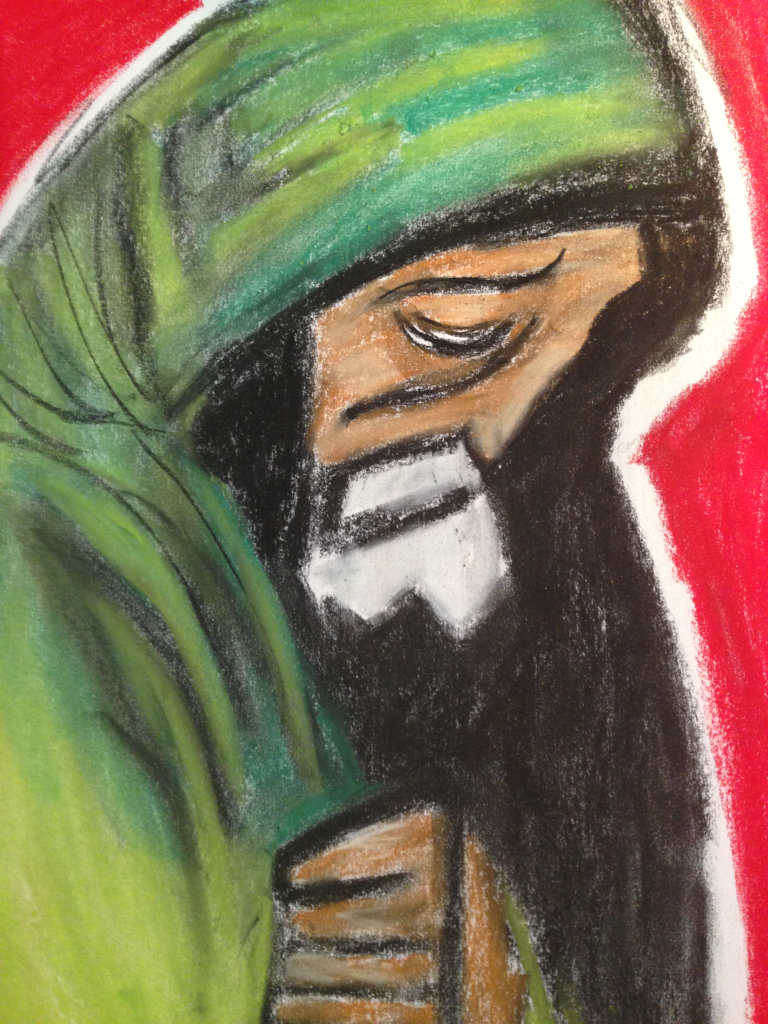
The Flood of Noah by Majd Ramadan, 2014

In God’s sight, the earth had become corrupt and was filled with violence. God saw that the earth was corrupt because all creatures behaved corruptly on the earth.

God said to Noah, “The end has come for all creatures, since they have filled the earth with violence. I am now about to destroy them along with the earth, so make a wooden ark. Make the ark with nesting places and cover it inside and out with tar. This is how you should make it: four hundred fifty feet long, seventy-five feet wide, and forty-five feet high. Make a roof for the ark and complete it one foot from the top. Put a door in its side. In the hold below, make the second and third decks.

“I am now bringing the floodwaters over the earth to destroy everything under the sky that breathes. Everything on earth is about to take its last breath. But I will set up my covenant with you. You will go into the ark together with your sons, your wife, and your sons’ wives. From all living things—from all creatures—you are to bring a pair, male and female, into the ark with you to keep them alive. From each kind of bird, from each kind of livestock, and from each kind of everything that crawls on the ground—a pair from each will go in with you to stay alive. Take some from every kind of food and stow it as food for you and for the animals.”

Noah did everything exactly as God commanded him. (Common English Bible)

The entire world is profoundly broken. 

Everywhere, people are messed-up. In one breath they can tell you they’re sorry for another’s abuse or violence against you, then turn right around and say some irrational nonsense and terribly insensitive things to you.

It doesn’t matter where you go – whether school, work, home and even church, there is institutional brokenness. Individual persons, and the human structures and systems they put in place, all contain elements of bondage instead of freedom. It doesn’t take a religious person to observe that there’s such a thing as sin.

Holy Scripture’s description of this sad reality goes all the way back to a story about the fall of humanity into sin and rebellion. Satan, the devil, led the original persons, Adam and Eve, into disobedience of God. Satan tempted Eve to doubt whether God really had her best interests at mind; to question the truthfulness of God’s Word; and, to wonder about the wisdom of listening to God (Genesis 3:1-5). Adam just flat out chose to disobey God, and, so, the entire world changed (Genesis 3:16-17). 

Immediately, everything was different in the world and with people. The choice to disobey God brought feelings of fear and shame; a loss of fellowship with God; hiding from God; a bent to pervert the truth; the propensity for the genders to try and dominate each other; expulsion from the garden; and physical death (Genesis 3:7-24). 

And the unholy tools people used against one another were violent and corrupt. People thought nothing of oppressing each other, abusing one another, attacking others – both verbally and physically. Rape, assault, theft, and murder became daily experiences. That’s some downright icky stuff. 

No wonder the world is messed up.

God saw that human evil was out of control. People thought evil, imagined evil—evil, evil, evil from morning to night. God was sorry that he had made the human race in the first place; it broke his heart. God said, “I’ll get rid of my ruined creation, make a clean sweep: people, animals, snakes and bugs, birds—the works. I’m sorry I made them.” (Genesis 6:5-7, MSG)

Noah was the only guy on the face of the earth for whom the Lord saw any good. And it was enough good worth saving. Yet, people are still in the nasty habit of turning on each other, like a bunch of sharks with blood in the water.

Unfortunately, the fall of humanity still affects us all. It has brought not only physical death, but spiritual death. That means we are alienated from God, in rebellion, and enslaved to our own passions and desires (Isaiah 1:2-6; Romans 2:14-15; Ephesians 2:1-3). 

We are also alienated from one another by having continual bents toward discord, suspicion, and jealousy instead of love and trust (Romans 1:29-31; James 3:14-16). 

We are even alienated and totally out of touch with ourselves by either loving ourselves as gods or hating ourselves with an inordinate emotional masochism (Philippians 2:21; 2 Timothy 3:2-4). In short, we are selfish people who experience separation from God, others, and self.

If this is the true reality of humanity, then it is awfully depressing, discouraging, and damaging. And we know it’s true because we’ve all been both victims and victimizers. So, who then, will rescue us from this horrific death? 

Thanks be to God who has given us the victory through our Lord Jesus Christ (Romans 7:24-25; 1 Corinthians 15:57). 

The good news is that, through the death and resurrection of Jesus, the curse has been reversed. Christ has restored us to our original place of fellowship with God. He is the way, the truth, and the life. In Christ, there is hope for humanity (John 14:6). 

To live in freedom, therefore, involves knowledge, honesty, and sincere decisions of faith and love whereby truth is applied to life.

Just as the world needed a thorough purging of evil through a cleansing worldwide flood, so we need a bath of grace, to be completely awash with the love of God in Christ, to have all the crud of evil scrubbed from our soul. And this is precisely what Christian baptism symbolizes.

Jesus offered himself for us so that we might live without violence and no longer be separated from God, others, and self. He has brought us reconciliation. In him we have been blessed with every spiritual blessing (2 Corinthians 5:16-19; Ephesians 1:3; 2 Peter 1:3).

In Christianity, the purpose of ministry is to come alongside people trapped in their awful cycles of brokenness and communicate good news of grace and forgiveness with both words and actions.

Although the world is terribly askew, God has demonstrated his love for us in that, while we were still violent and corrupt sinners, Christ died for us (Romans 5:8). 

We needed a Savior. God provided One. 

Are you in touch with the ways you are separated from God, others, and self? 

Are you aware of the ways in which your church or faith community has an unhealthy separation from the world? 

In what ways can you apply the love of God to broken people and systems in your community? What will it take to reach them?

Sin, guilt, shame, rebellion, disobedience, and violence need not define us. We can do better.

Almighty God, we have sinned against you, through our own fault, in thought, and word, and deed, and in what we have left undone. For the sake of your Son, our Lord Jesus Christ, forgive us all our offenses; and grant that we may serve you in newness of life, to the glory of your Name. Amen.

A Parable On Being Right with God (Luke 18:9-14)

The Tax Collector and the Pharisee by Peter Gallen

To some who were confident of their own righteousness and looked down on everyone else, Jesus told this parable: “Two men went up to the temple to pray, one a Pharisee and the other a tax collector. The Pharisee stood by himself and prayed: ‘God, I thank you that I am not like other people—robbers, evildoers, adulterers—or even like this tax collector. I fast twice a week and give a tenth of all I get.’

“But the tax collector stood at a distance. He would not even look up to heaven, but beat his breast and said, ‘God, have mercy on me, a sinner.’

“I tell you that this man, rather than the other, went home justified before God. For all those who exalt themselves will be humbled, and those who humble themselves will be exalted.” (New International Version)

There’s a lot to observe in Christ’s parable for today. Notice six observations of the story….

1. We Cannot Make Ourselves Right with God

I’m convinced that most Gentile Christians, standing two millennia apart from Christ’s telling of this parable, are much too hard on the Jewish Pharisees: “Well, I’m certainly glad that I am not like the Pharisee in this story!” so many tell themselves. It seems to me the Pharisees get a bad rap because of our own predilection to justify ourselves.

After all, we can only really criticize something we are already familiar with.

A temptation which every individual and community faces is the seduction toward self-justification, instead of being justified by God.

Way back in the day, when I made treadmill belts for a living, I was in charge of quality control. It was my job to make sure that the quality department provided the shipping department with a finished product, free of defects, and could stand the test of continual use. I justified the belt as being a treadmill belt of integrity; the belt did not, nor could not, justify itself, hide or fix its flaws, or make itself right.

To think that a treadmill belt could justify itself is in the same sort of crazy that believes we can make ourselves right. No, it is God alone who justifies the sinner.

The paradox of Christ’s parable is that the real sinners are those who claim to be righteous, while the truly righteous are those who recognize they cannot justify themselves and need God to make them right.

2. We Need to Be Honest about the Right Thing

In order to hear the good news about God’s ability to justify and make right, we must also hear the bad news about why we need justification to begin with. An honest look into the mirror reveals that we have been hiding behind a cosmetic façade of self-justification.

Our illusions and delusions need to be confronted and shattered. Because only then can we receive grace and realize the peace and harmony of God’s justification.

Since God justifies, I don’t have to!

I don’t need to defend myself, make myself look better than I am, nor fool myself into believing that the false façade is the true self.

The parable of Jesus is a contrast between the Pharisee who justifies himself, and the tax collector who looks to God alone for his justification.

3. The Put-Together Guy Wants to Make Himself Right

Jesus uses a Pharisee as a character in the parable because the guy represented someone who everyone else looks up to as the model of a spiritual and religious person. Christ is inviting his hearers to look beyond the façade of what we see with our physical eyes.           

We need to use our spiritual eyes to notice below the surface. Look at the attitude. The smug self-justifying disposition is flat-out sin. What’s more, self-justification is a root of all sorts of sins.

Judging ourselves to be right means that others are wrong. That attitude creates division, separates people into bad and good, fosters disharmony, and is an affront to God. 

To try and obtain what is already provided by grace is plain old-fashioned sin.

4. We’re Obsessed with the Right Lines

Adam and Eve were told by God that they could eat from any tree in the garden but were given strict instructions not to eat of the tree of the knowledge of good and evil. (Genesis 2:15-17) So, why avoid that particular tree?

Because it was a tree which spiritually and socially blinds people. Adam and Eve ate from it and their eyes were “opened” to a different reality – which was actually a “closed” view of reality that changed the way humanity deals with one another. From that point forward, people began drawing lines down the middle and placing themselves on the “good” side while vilifying those on the other side, the “bad” side.

“Apple Picking,” the fall of Adam and Eve, by Vittorio Canta

Adam and Eve immediately began justifying their actions, their attitudes, and their behavior. (Genesis 3:8-13) Adam drew a line: “That woman, Eve, gave me the fruit; she’s on the other side; it’s her fault!” Eve drew a line: “The serpent made me do it; that wasn’t really me, I’m basically good….” And ever since, the quest of making ourselves right has never stopped….

Today, we draw all sorts of lines. A popular religious line is this: “We’re good; they’re bad. Our theology is right, everybody else’s is wrong. The Bible says….” (insert a kooky interpretation of Scripture, based in self-justification and separation of people into good and bad groups)

People draw class lines, race lines, gender lines, ethnic lines, economic lines. We want clean lines, vertical lines, horizontal lines, perpendicular lines, thick lines, thin lines, any kind of line; just give me a line! Let’s go line dancing. Maybe take an airline. There are offensive lines and defensive lines. By the way, what’s the line on the Packers? We even judge the lines themselves: Long lines, short lines, front lines, back lines, and DMV lines are clearly evil, right!?

Why are we so obsessed with drawing lines? So that we can take self-justifying sides. Violence, war, and most every other sin of the world comes from the original sin project of trying to make ourselves right: “I’m okay; you’re not.”

The Pharisee (really a representative of us all) drew a very clear line between himself and the despised sinful tax collector. Notice that self-justification always compares itself with others. Those who obsessively draw lines are compulsively concerned about other people; they believe they have a right to know what’s going on with them. They remain vigilant to keep the lines drawn and distinguish themselves from those on the other side.

5. God Is On the Other Side of the Right Line

The Pharisee found that every time he drew a line, God was on the other side with the “sinners.” That makes perfect biblical sense. If God alone justifies sinners and makes them right; and if Jesus identifies with them in his life, death, and resurrection; then God is to be found on the other side of our line-drawing.  

A self-justified person sees no need for God’s justification. Therefore, God is not on their side; God is on the other side, justifying sinners by making them right.

6. The Unraveled Guy Wants To Be Made Right

“O God, Be Merciful To Me, A Sinner,” by Ronald Raab

The tax collector’s only concern was for God to show him mercy because he is a sinner. In contrast to the proud attitude of the Pharisee, the tax collector, a sinner by anyone’s definition, humbled himself and sought justification from God alone.

  • Justification by God makes us right and:
  • Lifts the curse upon humanity and reverts everything back to its original design. (Revelation 22:1-5)
  • Erases the lines. (Romans 4:7-8)
  • Restores our souls are and strengthens our faith. (Acts 16:5; Romans 4:20)
  • Enables us to rest in Christ’s finished work. (John 19:28-30)
  • Does not condemn us. (Romans 8:1-2)
  • Eliminates comparisons because Christ is sufficient for us. (Colossians 2:13-14)
  • Replaces the anxiety and fear about how we look to others with the contentment and satisfaction of God’s love in Christ. (1 John 4:16-18)

Conclusion

Self-justification separates us from people and creates distance and division. But God’s justification connects people in love and crosses the arbitrary lines created by others.

The bad news: Many religious folk, when confronted with their self-justifying attitudes, do not change. Instead, they label the person as bad and place the offending person on the other side of their line so that they can maintain their façade of righteousness.

The good news: Jesus can be found on the other side of the line because justification is a gift. Yet, until we go to him, outside our little camp, we will continue in vain to make ourselves look good and be on the right side of everything while making others look bad.

The good and the right is to humbly – and with much flavor – cry out to God for mercy because only the Lord can save us from our plight.

Lord Jesus Christ, Son of God, have mercy on me, a sinner. 

Lord Jesus Christ, Son of God, have mercy on me, a sinner. 

Lord Jesus Christ, Son of God, have mercy on me, a sinner, and grant me your peace.

Just and right God, by your mercy we were created, and by your mercy you redeemed us through your Son, the Lord Jesus. Your mercy is the light by which all people – both sinner and saint – return to you. Your divine justice and your divine mercy exist together so that you refuse to punish us as we deserve.

Lord Jesus, it was not enough for you to take on our humanity; you died for us as well. So, we humbly and gratefully receive your gracious deliverance from sin, death, and hell. Amen.

Get Rid of Sin (1 Corinthians 6:1-11)

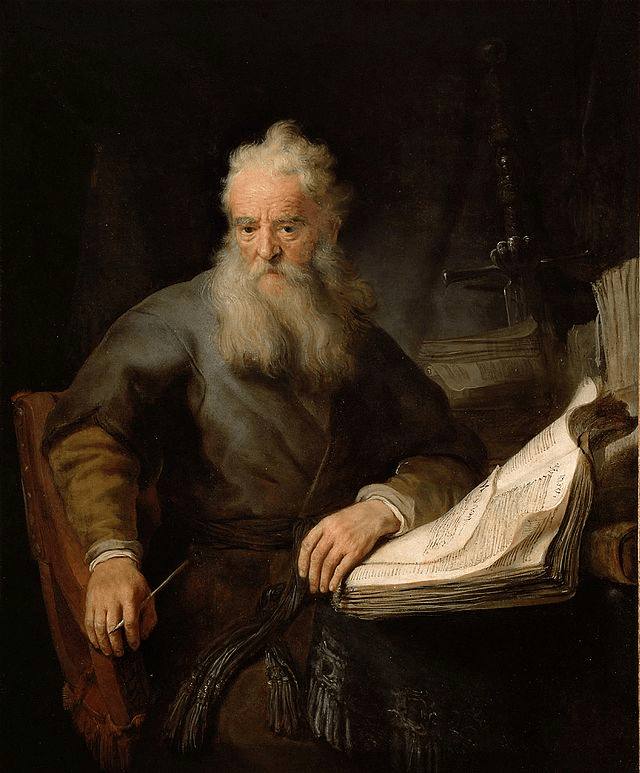
The Apostle Paul at his Desk, by Rembrandt, 1657

When any of you has a grievance against another, do you dare to take it to court before the unrighteous, instead of taking it before the saints? Do you not know that the saints will judge the world? And if the world is to be judged by you, are you incompetent to try trivial cases? Do you not know that we are to judge angels, to say nothing of ordinary matters? If you have ordinary cases, then, do you appoint as judges those who have no standing in the church? I say this to your shame. Can it be that there is no one person wise enough to decide between brothers and sisters? Instead, brothers and sisters go to court against one another, and this before the unbelievers.

In fact, to have lawsuits at all with one another is already a defeat for you. Why not rather be wronged? Why not rather be defrauded? But you yourselves wrong and defraud—and brothers and sisters at that.

Do you not know that wrongdoers will not inherit the kingdom of God? Do not be deceived! The sexually immoral, idolaters, adulterers, male prostitutes, men who engage in illicit sex, thieves, the greedy, drunkards, revilers, swindlers—none of these will inherit the kingdom of God. And this is what some of you used to be. But you were washed, you were sanctified, you were justified in the name of the Lord Jesus Christ and in the Spirit of our God. (New Revised Standard Version)

The one constant which every Church and each Christian will have to deal with until Jesus returns is the ever-present reality of sin

“Sin” isn’t a word that is much used anymore, even among many Christians. This is both good and bad. It’s good in the sense that we have expanded our vocabulary to better understand the concept and reality; and it’s bad because we sometimes label something as different than what it really is.

The Apostle Paul’s letter to the Corinthian Church confronts the presence of sin within the congregation. The reason why the letter is so long is that Paul painstakingly deals with every sin that had taken root in the community.

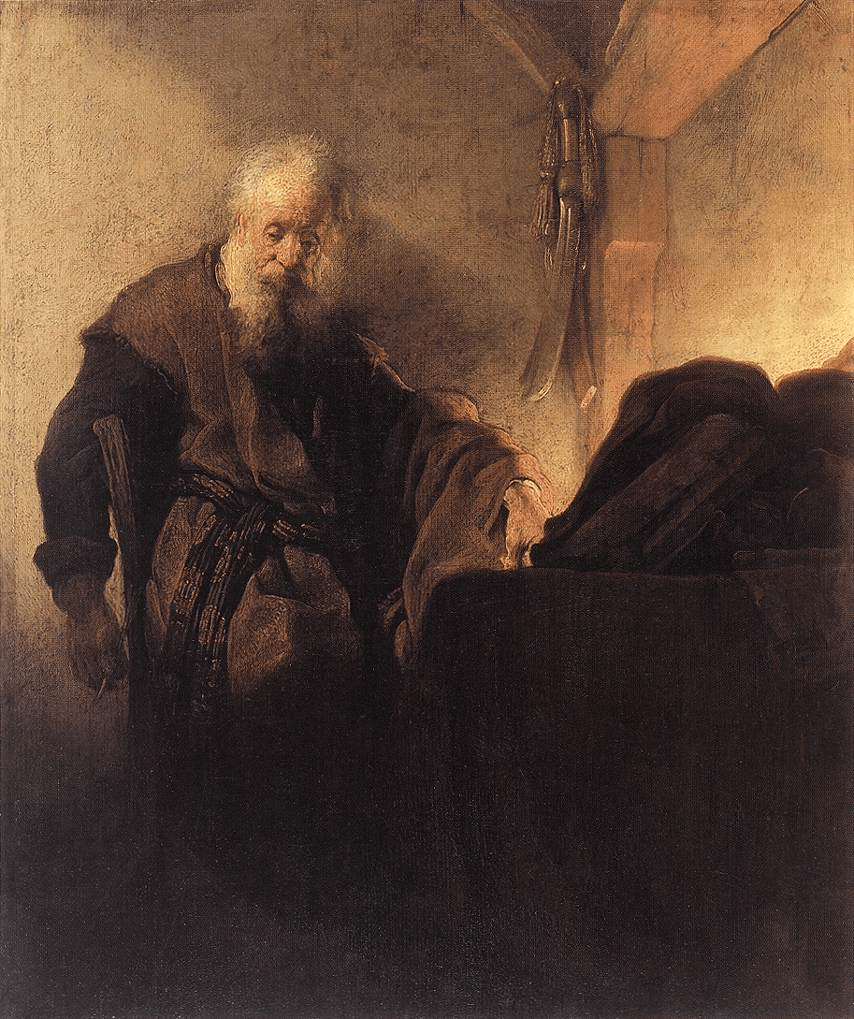
St. Paul at His Writing Desk by Rembrandt, 1630

In our New Testament lesson for today, Paul mentions some of those sins, especially tackling the unhealthy way the Christians were dealing with their internal strained relations of each other. One of the ways sin manifests itself is through confronting another’s sin with our own sin. Yeah, it gets complicated pretty quickly when that happens.

In other words, we too often try to meet a legitimate need through illegitimate means. That sort of practice is at the core of many a sinful attitude and action.

So then, there were those in the Corinthian Church who had legitimate grievances but sought to rectify the situation using secular means to handle a sacred need. Instead of focusing on restoration and relationship, utilizing the spiritual implements of gentleness and humility, they gave into the temptation for retribution through unrighteous persons who would level judgment.

None of this is intended for Christians to avoid the established court systems of the land. Rather, it is a warning not to punch somebody in the face when they slap you on the cheek. Seeking punishment isn’t the way of Christ. Reconciliation and restoration has been achieved through the cross of Christ – and Paul expected the Church to live as a new community based in mutual encouragement and accountability.

Paul clearly saw the shadowy places of the human heart and understood that light needed to come to those hidden areas. And he wasn’t about to sit back and let bitterness spread like gangrene in the Body of Christ.

Sin is both things we do (1 John 3:4), as well as things we leave undone (James 4:17). Sin is both the breaking of God’s commands, and the lack of conforming to the teachings of Jesus. 

Christians throughout the ages have generally understood that the Ten Commandments (Exodus 20:1-17) and Christ’s law of love (Luke 10:27) constitute a brief summary of God’s holy and moral instruction for humanity.  This is all based in the character of God as a holy and loving Being. 

Sin, then, may be defined as anything in a person which does not express, or is contrary to, the basic character of God. All sin, whether in our actions or inactions, is rooted in an attitude and activity of self-centeredness, of thinking about ourselves as the center of the universe, rather than God. 

The Apostle Paul, by Rembrandt, 1633

The consequence of this sin brings about an obsession with lust (1 John 8:34; Galatians 5:16); a broken relationship with God (Romans 3:23; Galatians 5:17); bondage to Satan (1 Timothy 3:6-7; 2 Timothy 2:26); death (Romans 6:23; 8:6); hardening of the heart (Hebrews 3:13); and deception (1 Corinthians 3:18; James 1:22, 26) just to a name a few.

This means that we are guilty of transgressing basic morality; we fail to live into being ethically virtuous people on any sort of consistent basis. Yes, I know this all sounds like a total Debbie-Downer. Well, actually, it’s total depravity. But being depraved doesn’t mean we are never capable of doing good; it just means that sin has profoundly touched everything in our lives, without exception.

The ironic paradox is that experiencing true joy and satisfaction comes through knowing how great our sin is. We live above sin by being set free from it through the grace of God in Jesus Christ. 

In order to be redeemed from sin, a provision must be made – and sin has been dealt with, once and for all, through the person and work of Jesus. Christ is our representative, taking our place with the retribution we deserved (Galatians 4:4-5; Ephesians 2:5-6; Colossians 2:9-15; Hebrews 2:17-18; 1 John 2:1).

Jesus Christ is our ultimate substitute (Romans 5:8); which resulted in our redemption (Galatians 5:13); which resulted in his sacrifice for sin satisfying all justice (Romans 3:25); which resulted in our reconciliation to God (Romans 5:10). 

Therefore the believer in Jesus is forgiven of sin because Christ’s sacrifice is sufficient to deal with all the effects, consequences, and origin of sin. The sin issue has been handled decisively and definitively; the Christian is now complete in Christ (Colossians 2:10).

Sin is awful. It ruins relationships and destroys everything it touches. Sin leaves terrible consequences in its wake and a bad aftertaste. Yet, sin does not have the last word; grace does. 

Christ’s crucifixion and resurrection is the decisive blow to sin’s power. The Church is built on this foundation of grace and reconciliation between God and people. Anything less is neither Christian nor a Church but a country club of people plotting to get back at others while eating tartlets and talking gossip. 

The bad news is that sin is really bad; but the good news is that Christ is really good, and overcomes the worst that sin can throw at him. Thank you, Jesus. Amen.