Who’s In Charge? (Romans 9:6-13)

I am not saying that the promise of God has failed; for not all the people of Israel are the people of God. Nor are all of Abraham’s descendants the children of God. God said to Abraham, “It is through Isaac that you will have the descendants I promised you.” This means that the children born in the usual way are not the children of God; instead, the children born as a result of God’s promise are regarded as the true descendants. For God’s promise was made in these words: “At the right time I will come back, and Sarah will have a son.”

And this is not all. For Rebecca’s two sons had the same father, our ancestor Isaac. But in order that the choice of one son might be completely the result of God’s own purpose, God said to her, “The older will serve the younger.” He said this before they were born, before they had done anything either good or bad; so God’s choice was based on his call, and not on anything they had done. As the scripture says, “I loved Jacob, but I hated Esau.” (Good News Translation)

My friend, I want to break this to you as gently as possible yet as straightforward as I can: Neither you nor I are in control or in charge! 

Any semblance of control we think we have is merely a delusion. Now, before you push back, its important to make the distinction between control and responsibility. We are to own our decisions and take responsibility for their outcome. The Bible describes this as “self-control.”

God’s saving kindness has appeared for the benefit of all people. It trains us to avoid ungodly lives filled with worldly desires so that we can live self-controlled, moral, and godly lives in this present world. (Titus 2:11-12, GW)

Attempting to control others is not our job – never was, isn’t now, and never will be – that’s God’s business. 

God makes choices. This was the Apostle Paul’s point to the church at Rome. The congregation was a volatile mix of Jew and Gentile. There was some bad history between them that stretched back centuries. Yet, here they were together in one church worshiping Jesus. 

Paul made a responsible choice to step into the mess between them and let each group know something important: It is neither their choice about who’s in and who’s out as God’s people, nor their choice about how someone gets in to start with. Those sorts of decisions are God’s choice. 

The Jews needed to know that Gentiles are in the kingdom because God does the work of choosing, calling, and including Gentiles just as much as Jews. 

The Gentiles needed to know that they were not replacing Jews as chosen people. The point? God chooses whomever he darn well pleases to choose, and the choice is not up to you or me.

This speaks on so many levels about how to conduct ourselves with one another in the church. The foundation of all good church dynamics is the recognition that God is the one who calls and gathers people together. That always needs to be the starting point in our relations with each other. The church is not a random collection of persons who happen to be in the same place at the same time. God puts us where we are.

He has made everything beautiful in its time. He has also set eternity in the human heart; yet no one can fathom what God has done from beginning to end. (Ecclesiastes 3:11, NIV)

The Church is a covenantal community. Believers in Jesus are receiving the blessings first promised by God’s covenant relationship with Abraham in the Old Testament that all nations would be blessed by grace through faith. God is committed to acting on their behalf through election, adoption, and redemption. The new covenant community, the Church, receives the promises of God and exists to follow Jesus Christ in all things. 

The Church is not a voluntary society, like every other human institution. Rather, the Church is the divinely called community of the redeemed whom God has joined through the Spirit to Christ. Therefore, an individual, theologically speaking, does not join a church; instead, God joins the Church to Jesus.

The Nicene Creed (325 C.E.) describes the Church with four identifying marks:

  1. The Church is one.  The unity of the Church comes from God’s covenant people being in fellowship with the Lord through Jesus in the Spirit. This unity is expressed through the bond of love and a common worship that includes the spiritually forming practices of preaching, liturgy, and sacraments.  Since believers serve a triune God of Father, Son, and Spirit who exists in unity, so Christians are to work toward maintaining their unity through the bond of peace.
  2. The Church is holy.  The Church is holy by virtue of Christ’s finished work. Therefore, the members of the Church are saints, called by God to live in holiness and participate with him in carrying out his purposes on earth. As God is holy, so believers are to be holy in all they do. Since Christians are holy through God’s justification in Christ, so the Church as saints must uphold justice in the world.
  3. The Church is catholic.  This means that God’s people are found in all parts of the world throughout all times in history, including every race, class, gender, and ethnicity. Since the Church includes all kinds of people from different cultures, these believers must work together. The Church, across all kinds of denominations, ought to minister together to the total life of all people through gospel proclamation and good works done in the Spirit.
  4. The Church is apostolic.  Apostolic means “to be sent.” The Church is not only a people who are gathered for worship and teaching; they are also sent into the world as salt and light to those who are in darkness. Where the Church goes, the rule and reign of Jesus goes with them so that the gospel is spread to all nations.

Sovereign God, you choose whomever you want to include in your kingdom. Allow me to see Jesus in each person you call and save so that I can love and encourage them in the faith which is mutually and graciously given to us all; through Christ our Lord, and the ministry of the Holy Spirit. Amen.

Divine Providence (Genesis 30:37-43)

Jacob with Laban’s flock, by Jusepe de Ribera, 1632

Then Jacob took some fresh branches from poplar, almond, and plane trees and peeled off strips of bark, making white streaks on them. Then he placed these peeled branches in the watering troughs where the flocks came to drink, for that was where they mated. And when they mated in front of the white-streaked branches, they gave birth to young that were streaked, speckled, and spotted. Jacob separated those lambs from Laban’s flock. And at mating time he turned the flock to face Laban’s animals that were streaked or black. This is how he built his own flock instead of increasing Laban’s.

Whenever the stronger females were ready to mate, Jacob would place the peeled branches in the watering troughs in front of them. Then they would mate in front of the branches. But he didn’t do this with the weaker ones, so the weaker lambs belonged to Laban, and the stronger ones were Jacob’s. As a result, Jacob became very wealthy, with large flocks of sheep and goats, female and male servants, and many camels and donkeys. (New Living Translation)

Jacob had been working for his father-in-law Laban for years. During that time, they both contested with each other in a chess match of trying to gain the upper hand. Mostly, Jacob had been outmaneuvered by Laban. But now he achieves a sort of coup de grace, a checkmate.

Having agreed between them that Jacob’s wages would be only the speckled and spotted sheep and goats, as well as every black lamb, Laban proceeded to remove all those animals from his flock and sent them off away from Jacob. This was yet another unfair practice in the chess game of his life.

Even if Jacob wanted to retaliate, he really had no means to do it – which is why Laban kept taking advantage of him. But Laban underestimated who he was playing against and dealing with.

Using an unusual method, something akin to sympathetic magic – a ritual using an object that resembles the sheep over which Jacob sought influence – he systematically grew his own flock of many strong sheep and goats. Jacob then separated these stronger animals from Laban’s flock. In doing this, Jacob became exceedingly wealthy.

It’s an incredible story, almost like achieving the modern day American dream of rags to riches in the face of adversity. Yet, behind all the success of Jacob, we as the readers know that this happens because God is working out divine promises to the family of Abraham, Isaac, and now Jacob.

The power, sovereignty, providence, and grace of God stand behind every good thing people have in this life. The Lord is the One who is not flummoxed by the impending moves in the chess game; God has the ability to rearrange the chess board, reorder the future, and make restoration possible.

Although separated by more than three millennia from the family of Jacob, we can relate to the ever-present human condition, the personal struggles of overcoming the past, and the wonderings of what will happen in the future.

In whatever way we want the future to shake-out, it ultimately is in the hands of God. We would like to live in a universally closed system where there is predictability with no trickery, posturing, manipulating, or anxiety about what’s next. Many people long for a life free from an uncertain and shadowy future.

But none of us can have the precise future we may wish for. So, some people despair that we are in a closed system in which nothing can change – that systemic evil, broken institutions, fragmented families, and wounded spirits are just the way it is.

There are lots of folks who continually feel the awkward push and pull of both hope and dread – wanting to believe that things can be better, but having a sinking sense that the other shoe is about to drop.

In truth, we do not live in a closed universal system; history is not yet finalized and the Lord has a few tricks up the divine sleeve. We actually live in an open system, where we can find both surety and hope. The future, although appearing bleak for some, shall be shaped and bent by God according to divine promises and good purposes.

And when we take the time to observe this grand open system, we begin to discern that no scheming of humanity nor any human machinations can do anything more than slightly delay the inevitable Day of the Lord. Justice will have its day, and it’s way on this earth; injustice shall not last forever.

In the meantime, we do the best we can with the resources we have, at this present moment. Today is all we have. God’s gracious provision for this day is enough. Tomorrow has enough worries of its own.

An open system says that there is a spiritual force outside of social interaction. A a closed system says there is no outside force influencing our actions and outcomes.

In a closed system, we have the illusion (and delusion) that control is possible because the number of variables remains static. People in this system long for simplicity and sameness – to be able to predict what will happen next. So, they focus on structures and processes that sustain control over organizations and people.

But in an open system, dynamics from other systems impact us, creating and expanding the number of variables. It’s a complex and fluid situation, but folks learn to focus on influence rather than control, knowing there are forces at play which impact the chessboard. That’s because ultimate control belongs to God; we, as people, are called to self-control.

Almighty God, Creator and Sustainer of all things: You uphold, direct, and govern all creatures, actions and objects, from the least to the greatest. Nothing escapes your sovereign and benevolent rule—not the most powerful institution or ruler imaginable, nor the least significant speck just biding its time. You sustain all things by your powerful word.

Help me to see your hand in my life specifically and in history worldwide. Although there is much that remains a mystery in your providence, there is much that is already revealed. Your providence reveals your infinite wisdom, power, justice, goodness, and mercy. To you be all glory and praise, through Jesus Christ our Lord, who with you and the Holy Spirit are one God, now and forever. Amen.

Live Into Your Calling (2 Peter 1:1-11)

Simon Peter, a servant and apostle of Jesus Christ,

To those who through the righteousness of our God and Savior Jesus Christ have received a faith as precious as ours:

Grace and peace be yours in abundance through the knowledge of God and of Jesus our Lord.

His divine power has given us everything we need for a godly life through our knowledge of him who called us by his own glory and goodness. Through these he has given us his very great and precious promises, so that through them you may participate in the divine nature, having escaped the corruption in the world caused by evil desires.

For this very reason, make every effort to add to your faith goodness; and to goodness, knowledge; and to knowledge, self-control; and to self-control, perseverance; and to perseverance, godliness; and to godliness, mutual affection; and to mutual affection, love. For if you possess these qualities in increasing measure, they will keep you from being ineffective and unproductive in your knowledge of our Lord Jesus Christ. But whoever does not have them is nearsighted and blind, forgetting that they have been cleansed from their past sins.

Therefore, my brothers and sisters, make every effort to confirm your calling and election. For if you do these things, you will never stumble, and you will receive a rich welcome into the eternal kingdom of our Lord and Savior Jesus Christ. (New International Version)

The deepest yearning in every human soul is to become whole again, to return to their spiritual source, to experience belonging and union with the Beloved.

In the beginning, all of creation was a vessel filled with divine light. Then, it broke, and the shards of holiness were strewn across the earth. Those broken pieces are all around us. Sometimes, maybe oftentimes, we don’t see them because of our own darkness.

My friends, we have a simple but profound task: To bend down, find the broken shards, and pick them up.

This work of making a real and lasting contribution to humanity confirms our vocational calling and is made possible by divine power.

And yet, so many of us feel like a tiny Who on a speck of dust, with such a small insignificant voice, that nobody can hear us.

But somebody does hear us – and that somebody has very large elephant ears which are attuned to listen.

A person’s a person, no matter how small. A person has light, no matter how dim.

A great deception which befalls humanity is the lie that we aren’t enough – that somehow we lack voice and light in our core personhood.

This leads to another deceitful thought: God is holding out on me; I got the short end of things; I was never given the sort of voice which can be heard, or the kind of light which can burn bright.

Those deceiving vampires only suck the life out of us. What we need, instead, is to imbibe deeply of robust theology which empowers us to live faithfully in this world of corruption.

We have everything we need to grow in grace; God’s provision for us is total and complete.

By grace, we can discern between truth and error; endure hostility and hardship; persevere with patience as we await the new heaven and new earth; and confront anything in this present life with confidence and hope. We can do it because we’ve been equipped for it all.

Core to all this provision is the very life of Christ. Jesus is the source of the power; and his is the grace needed to live life to the full. The same resurrection power which raised Christ from the grave is available and provided to us.

God’s supply for us is sufficient. It is enough. We have everything we need to walk with boldness through any dark alley. The believer’s confidence is in carrying the cross – which keeps the deceiving vampires of guilt, shame, doubt, and distrust at bay.

Sheer cognitive belief, however, is insufficient. It’s only half the equation. The other half is to let our light shine, be the salt of the earth, and take up the gifts given us by God and use them.

Therefore, put significant energy into your faith development through knowing your call to bless the world and not curse it.

Confidently using faith, fully participate in God’s divine power through the qualities of:

  • Goodness. Cultivation of moral excellence is both helpful and needed in all our relationships. Goodness is like a seed planted. It proper amounts of water and sun, as well as continual tending to keep the weeds away.
  • Knowledge. There are two words in the ancient Greek for knowledge: one is a reference to acquiring information; and the other refers to actively using the information provided. The Apostle Peter uses the latter – an experiential knowledge which is wise, discerning, and discreet.
  • Self-Control. This is the ability to get a grip on yourself, to avoid controlling others and focus on all things within your own control. Ultimate control belongs to God; self-control belongs to you and me.
  • Perseverance. To see the big picture, to look ahead and keep your eye on the goal, is the lived practice of endurance. Everyone has patience. The real issue is whether we will tap into it, or not.
  • Godliness. The heart of godliness is a growing awareness of self, others, and God – rightly relating to them all with wholeness and integrity.
  • Mutual Affection. Basic human kindness is the basis of any healthy community and every relationship.
  • Love. This is the Christian’s consummate virtue. Whereas affection is to be mutual, love can always be done whether someone loves us back, or not. Genuine love can be directed at the unlovely, even enemies.

Effectiveness in living a virtuous life is not a matter of more but better.

It doesn’t happen on an industrial scale with a mass production of spiritual resources for the busy Christian consumer.

Rather, it occurs in the soil of God’s grace, mostly below the surface of the ground, slowly but surely germinating with faith, rising in hope, and producing a harvest of love that blesses both church and world.

A little bit of Jesus is enough to turn the world upside-down. You don’t need a big loaf of bread; a miniscule communion wafer will do.

A tiny mustard seed of faith can move a mountain.

A kernel of goodness can produce a harvest of righteousness.

A bit of knowledge and awareness can uproot the weeds of bigotry and hate.

A grain of self-control can grow into a field of peace.

A simple insight can create a cascade of transformation.

A single act of kindness can alter the course of another’s life forever.

A few seconds of attention can change the world.

A teensy amount of love can feed everyone on the earth.

We have everything we need to realize the new society Christ has made possible. We are in want of nothing. We are enough because Christ is enough. So, live into your calling with courage and confidence.

Heavenly Father, you are the One ever-present on this earth in your only Son and through your Spirit:
May your Name be shown forth as holy through us, your people.
May your gracious and benevolent reign come, establishing peace and justice, hope and life; and may your moral and ethical will be done, here on earth, as it is always done in heaven.
Give us what we need for today; and adjust our vision into a clear 20/20 awareness of others’ needs.

Forgive us of our great and many sins, for the immoral and unethical things we have said and done, and for the good words and good deeds we have failed to say and do; forgive us, just as we forgive those who have egregiously sinned against us.

Don’t let us amble down a dark path of temptation, of hardening our hearts and closing our minds; but instead, deliver us from the machinations of evil, and set our feet upon the lighted path of righteousness.

To You, everlasting God, belongs all sovereign decrees of  justice and truth;
To You, almighty God, belongs all powerful deeds of righteousness and goodness;
To You, holy God, belongs all glorious displays of love and compassion;

Through Jesus Christ, your Son, our Lord, who with You and the blessed Holy Spirit are one God, now and forevermore. Amen.

Night Prayer (Psalm 119:49-56)

Remember your promise to me, your servant;
    it has given me hope.
Even in my suffering I was comforted
    because your promise gave me life.
The proud are always scornful of me,
    but I have not departed from your law.
I remember your judgments of long ago,
    and they bring me comfort, O Lord.
When I see the wicked breaking your law,
    I am filled with anger.
During my brief earthly life
    I compose songs about your commands.
In the night I remember you, Lord,
    and I think about your law.
I find my happiness
    in obeying your commands. (Good News Translation)

During a typical day, I keep busy and am engaged with applying an understanding of the spiritual life to my work. At bedtime, sometimes the job goes with me.

Stillness and silence can sometimes, ironically, become an alchemy of restlessness and noise. I toss and turn, the racing thoughts in my head refusing to slow down and rest.

Insomnia happens to everyone, some more than others. We all have experienced the inability to sleep. 

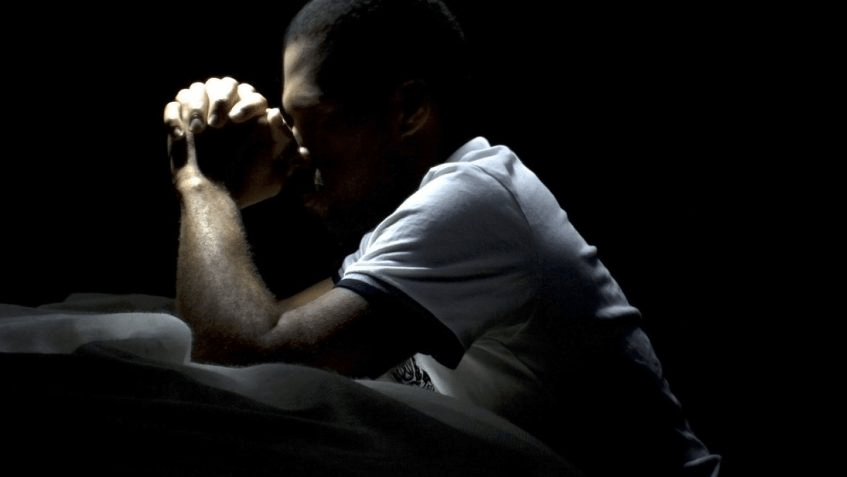
There are some who choose not to sleep. They arise in the middle of the night – not because of insomnia or sleep disorders – but because they intentionally wake for prayer. 

Yes, many monastics routinely pray in the night. Yet, there are many lay people who do so, as well. 

In my own times of trying to sleep, I often think about those persons who are purposefully trying to stay awake and deliberately keeping watch in prayer during the night. I, then, reflexively go to the biblical psalms.

Along with the psalmist, and in solidarity with my Christian brothers and sisters in this hemisphere who are maintaining a prayerful spirit, I reflect at night on the character and nature of the Lord who created both the sun to govern the day and the moon as a faithful witness in the dark.

The psalmist seems to be awake at night because he is frustrated and upset. It irks him that there are people who spurn wise instruction and aim their contempt at those trying to live according to God’s Law.

Although insomnia can certainly be the result of angry or unwanted feelings, maybe it is something else altogether. Perhaps the psalmist simply chose to be awake at night and do some theological reflection on God, others, and himself.

At various times in my life, I have decided to set my alarm for two o’clock in the morning to pray. I know it may sound crazy to some. Yet, this discipline has taught me something valuable: God is Lord over all chronological time and every season. I am a servant. I am neither lord nor master. 

This nightly exercise of weaving my life around a set time of prayer has caused me to learn that I have spent far too much of my life trying to make time bend to my wishes. 

It’s actually delusional for me to believe that I somehow control time – that I can cause the relationship between events to be fast or slow. It is all really an illusion – that I can control the clock. Time marches forward, seasons come and go, and we are a vapor which lasts only a moment.

The only control I possess is self-control. Anything beyond this is nothing but a pathetic attempt at manipulation.

Whether we find ourselves awake in the night because we cannot sleep, or intentionally choose to use the night for connecting with God, the wee hours of darkness afford us a unique opportunity to ponder the Lord’s promises, commands, attributes, and works. 

The next time you find yourself awake at night, try avoiding the television and a zombie-like state of hoping for sleep. Try using the night-time for reflecting on the Lord in ways you might not have considered during the day. Pray. Reflect. Consider. In doing so, you may find a blessing of light within the dark.

Keep watch, dear Lord, with those who work, or watch, or weep this night, and give your angels charge over those who sleep. Tend the sick, Lord Christ; give rest to the weary, bless the dying, soothe the suffering, pity the afflicted, shield the joyous; and all for your love’s sake. Amen.