
Against Exorbitant Wealth (Amos 3:9-4:5)

Proclaim to the strongholds in Ashdod
    and to the strongholds in the land of Egypt,
and say, “Assemble yourselves on Mount Samaria,
    and see what great tumults are within it
    and what oppressions are in its midst.”
They do not know how to do right, says the Lord,
    those who store up violence and robbery in their strongholds.
Therefore thus says the Lord God:
An adversary shall surround the land
    and strip you of your defense,
    and your strongholds shall be plundered.

Thus says the Lord: As the shepherd rescues from the mouth of the lion two legs or a piece of an ear, so shall the people of Israel who live in Samaria be rescued, with the corner of a couch and part of a bed.

Hear and testify against the house of Jacob,
    says the Lord God, the God of hosts:
On the day I punish Israel for its transgressions,
    I will punish the altars of Bethel,
and the horns of the altar shall be cut off
    and fall to the ground.
I will tear down the winter house as well as the summer house,
    and the houses of ivory shall perish,
and the great houses shall come to an end,
            says the Lord.

Hear this word, you cows of Bashan
    who are on Mount Samaria,
who oppress the poor, who crush the needy,
    who say to their husbands, “Bring something to drink!”
The Lord God has sworn by his holiness:
    The time is surely coming upon you
when they shall take you away with hooks,
    even the last of you with fishhooks.
Through breaches in the wall you shall leave,
    each one straight ahead,
    and you shall be flung out into Harmon,
            says the Lord.
Come to Bethel—and transgress;
    to Gilgal—and multiply transgression;
bring your sacrifices every morning,
    your tithes every three days;
bring a thank offering of leavened bread
    and proclaim freewill offerings, publish them;
    for so you love to do, O people of Israel!
            says the Lord God. (New Revised Standard Version)

Orthodox icon of the prophet Amos

The prophet Amos sought to leave no stone unturned in exposing the transgressions of God’s wayward people. He went after social injustice; personal sins; religious idolatry; and all aspects of life in which the nation practiced self-indulgent hoarding of wealth and power.

Whenever people become focused on earthly power and control, they fall out of the realm of living in God’s power. If there is ever a personal or corporate sense of losing spiritual power, the problem is never with the Lord. The more one amasses worldly power and authority, the less effective they are with spiritual power.

It is possible for a nation or a church to have great political strength, yet in reality be powerless. Impressive constructed human strongholds are totally defenseless before the all-powerful God of the universe.

It’s always been curious to me why folks who claim the name of Christ, or who make grand confessions of faith, can then turn around and be enamored with obtaining wealth, real estate, resources of all sorts, and high-level positions. Such persons don’t deserve worldly power. It’s like putting a gold ring in a pig’s snout.

Persons with lots of worldly wealth and power will eventually find that their acquisitions fail them. And if their religion is powerless, everything in their life will lack power – no matter how it looks, or what spin they put on their situation.

Ignoring grace and mercy, compassion and kindness, to the poor and needy is a surefire way of experiencing divine condemnation. Treating one’s society and social relationships as mere pawns to get what I want is a prescription for alienation from God.

Whether someone believes in an almighty God, or not, oppressing and gaslighting others breaks down a society, and compromises basic law and order. Being concerned only with one’s constituents, and turning away from the common good of all, brings about injustice for the many.

But the ones in charge simply don’t care – which is why it raises the ire of a holy God. Any person who demeans meekness and gentleness, and clearly evidences a profound lack of humility, you can be sure that person is up to no good – despite any “good” words they might say.

Violence and robbery are the tools of those who care nothing for what their actions do to others. Justifying the rounding up of people into detention centers and robbing them of their lives and livelihood doesn’t fool God.

Those who go after unjust gain through any means possible will find that there is a boomerang effect to their actions. Their violent and unjust ways will turn back on them. They themselves shall be destroyed, and not the powerless and vulnerable.

In ancient Israel at the time of Amos, it was the Gentile nations who would rise up and be their judge. Pagan nations who thought nothing of despising and abusing others were the very ones to stand up and judge Israel. That’s how bad it was, even though there was wild prosperity, exorbitant wealth, and loads of power, that is, only among the upper class.

Living below the level of grace means showing no dignity or respect to one’s fellow humanity. It is unthinkable that such persons could or would ever exercise power in a democratic form of government. Just because they were elected and appointed to office, doesn’t mean they’ll act as civil servants.

Those in power who act only in self-interest will find themselves on the bad side of a holy God:

“Why would God withdraw from such a people? Because there was nothing in their lives corresponding to a heart concern for spiritual things; their character-reference could be written without mentioning God, or prayer, or holiness; their legacy to the future was wholly a testimony to a life lived for the body. And these claimed to be the people of God!” J.A. Motyer

Unchecked covetousness is actually a form of war against the poor. And any worship disconnected from righteousness and justice is an affront to both the needy among us, and God.

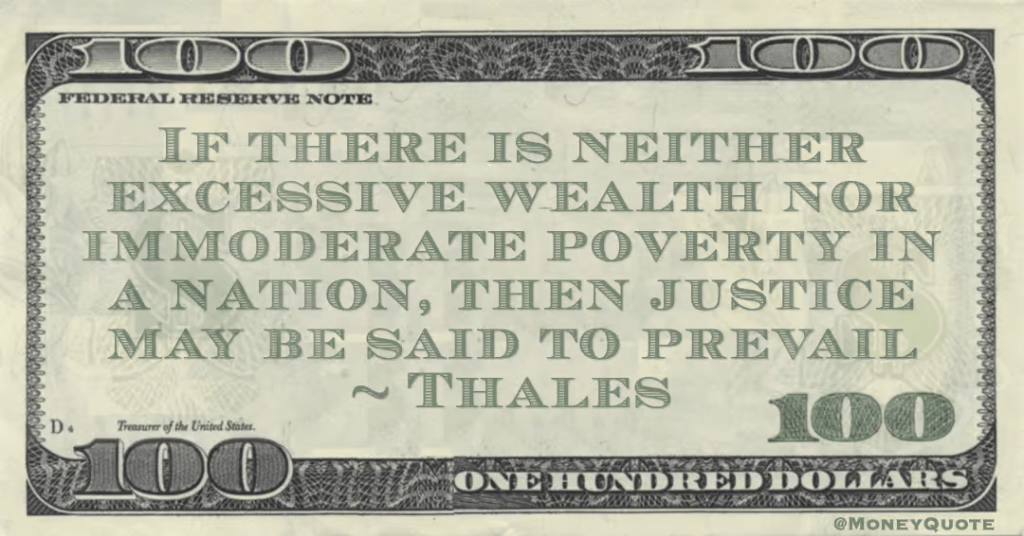
Wealth and power, in and of themselves, are neither good nor bad; they just are. But what we do with them is of vital concern. However, exorbitant riches and a lust for power, in and of themselves, are egregious sins.

In Holy Scripture, the poor are never chastised for their poverty and neediness. But the rich are continually exhorted and warned against for any sort of failing to care for the lower classes of people. (Matthew 25:14-30; Luke 12:13-21; 16:19-31)

The psalmist has a reality check for us:

Don’t be overly impressed when someone becomes rich,
    their house swelling to fantastic proportions,
    because when they die, they won’t take any of it with them.
    Their fantastic things won’t accompany them down under.
Though they consider themselves blessed during their lives,
    and even thank you when you deal well with them,
    they too will join the ancestors who’ve gone ahead;
    they too will never see the light again.
Wealthy people? They just don’t understand;
    they’re just like the animals
    that pass away. (Psalm 49:16-20, CEB)

The Teacher gives us some practical wisdom:

If you love money and wealth, you will never be satisfied with what you have. This doesn’t make a bit of sense. (Ecclesiastes 5:10, CEV)

Whoever becomes wealthy through unfair loans and interest collects them for the one who is kind to the poor. (Proverbs 28:8, GW)

And the Lord Jesus said:

“No one can serve two masters. Either you will hate the one and love the other, or you will be devoted to the one and despise the other. You cannot serve both God and money.” (Matthew 6:24, NIV)

“God blesses you who are poor,
    for the Kingdom of God is yours.” (Luke 6:20, NLT)

As for me, I’ll choose to take my cues from Jesus and the prophets, and not from those with earthly influence, riches, and power. How about you?

Almighty God, everything we possess – our time, abilities, resources, money, and material possessions – are gifts from You, and belong to You. Enable me to be a good steward of all that you have provided for me, so that I may be a blessing to the poor and needy; through Jesus Christ my Lord, in the strength of the Holy Spirit. Amen.

Build Spiritual Wealth (1 Timothy 6:11-21)

But you, man of God, flee from all this [love of money] and pursue righteousness, godliness, faith, love, endurance and gentleness. Fight the good fight of the faith. Take hold of the eternal life to which you were called when you made your good confession in the presence of many witnesses. 

In the sight of God, who gives life to everything, and of Christ Jesus, who while testifying before Pontius Pilate made the good confession, I charge you to keep this command without spot or blame until the appearing of our Lord Jesus Christ, which God will bring about in his own time—God, the blessed and only Ruler, the King of kings and Lord of lords, who alone is immortal and who lives in unapproachable light, whom no one has seen or can see. To him be honor and might forever. Amen.

Command those who are rich in this present world not to be arrogant nor to put their hope in wealth, which is so uncertain, but to put their hope in God, who richly provides us with everything for our enjoyment. 

Command them to do good, to be rich in good deeds, and to be generous and willing to share. In this way they will lay up treasure for themselves as a firm foundation for the coming age, so that they may take hold of the life that is truly life.

Timothy, guard what has been entrusted to your care. Turn away from godless chatter and the opposing ideas of what is falsely called knowledge, which some have professed and in so doing have departed from the faith.

Grace be with you all. (New International Version)

Whether we like it, or not, every one of us is a slave. I don’t mean slavery in the sense of nineteenth century antebellum black chattel slavery; but a slave in the vein of being a bondservant – one who is bound to a particular master by choice, and not by coercion.

Jesus put the matter this way:

“No one can serve two masters. Either you will hate the one and love the other, or you will be devoted to the one and despise the other. You cannot serve both God and money.” (Matthew 6:24, NIV)

Both Jesus and Paul had the assumption that we are all in service to something or someone, without exception. So, the question then becomes, “Who is your master?”

Becoming a bondservant to Master Mammon will cause a person to place their ultimate hopes and dreams in wealth and possessing financial resources. However, money will possess them, and not the other way around. Their relationships will suffer, wither, and become disconnected.

Conversely, being a bondservant to the Lord Jesus will lead a person to place their ultimate hope in God. Possessing a godly life, faith, love, endurance, and gentleness will be their way of life. They will give themselves to a spirit of generosity and the pursuit of good deeds. These servants of God will take hold of eternal life, and find themselves possessed by it.

The Apostle Paul, in writing one of his final letters on this earth, reminded his young protégé Timothy to teach his congregation the importance of being bonded in service to the right master, to build spiritual wealth in heaven, and not just financial wealth here on this earth.

The letter of Paul to Timothy is given as a relational gift, reminding the young pastor of the many things taught to him in the apprenticed relationship they enjoyed together. In this sense, it was a personal letter, designed to recall the importance of keeping tethered to Christ their Lord.

Through written language, Paul came alongside Timothy and spoke to him, saying to never become intimidated by riches or rich persons. Financial wealth is merely superficial, and holds no credit or influence in the kingdom of God.

God is far richer, and infinitely more powerful than anyone or anything in this world, Paul insisted. So, keep serving God alone; continue being bonded and united to Christ, which Paul knew was not an easy thing to do.

In a world of looking out for number one, survival of the fittest, and hyper-capitalistic economies, many succumb to the allure of trusting in Master Mammon. Instead, stay focused on the Lord Jesus, his words and his ways, and on living an exemplary life.

What is more, Paul exhorted Timothy to command those who are rich in this world to become rich in good deeds. It is possible to be wealthy and be a bondservant of Christ; yet, it is not at all easy to do so.

Which is why the rich person needs continual encouragement, exhortation, and accountability, in order to remain bound to what is most important. Such persons need the command to put their hope continually in God, and not in money or bit-coins; in Christ, and not in building a strong financial portfolio that will keep one swimming in plenty of financial resources.

Again, none of this teaching of the Apostle means that having an array of financial capital is somehow wrong or ungodly. Rather, it means that we must be quite intentional and careful to build our equity in the kingdom of God, and use our worldly wealth for good and just purposes that reflect a righteous life—a life of wonder, faith, love, steadiness, and kindness.

Guard the precious treasure given to you, that is, the great spiritual riches entrusted to you. Allow the overwhelming grace of God in Jesus Christ to keep you faithful and loving in this greedy and feckless world.

The Lord Jesus taught us in his Sermon on the Mount:

“Don’t hoard treasure down here where it gets eaten by moths and corroded by rust or—worse!—stolen by burglars. Stockpile treasure in heaven, where it’s safe from moth and rust and burglars. It’s obvious, isn’t it? The place where your treasure is, is the place you will most want to be, and end up being.” (Matthew 6:19-21, MSG)

Lord of our lives, teach us how to use our money and our possessions. Deliver us from stinginess and wasteful extravagance; inspire our giving with the spirit of true generosity. Help us always to remember your generous love for us, that we may be wise and faithful stewards of the good gifts you have given us. Amen.

Jesus Intervenes (Matthew 19:23-30)

Orthodox depiction of Jesus and the rich young ruler

Then Jesus said to his disciples, “I assure you that it will be very hard for a rich person to enter the kingdom of heaven. In fact, it’s easier for a camel to squeeze through the eye of a needle than for a rich person to enter God’s kingdom.”

When his disciples heard this, they were stunned. “Then who can be saved?” they asked.

Jesus looked at them carefully and said, “It’s impossible for human beings. But all things are possible for God.”

Then Peter replied, “Look, we’ve left everything and followed you. What will we have?”

Jesus said to them, “I assure you who have followed me that, when everything is made new, when the Human One sits on his magnificent throne, you also will sit on twelve thrones overseeing the twelve tribes of Israel. And all who have left houses, brothers, sisters, father, mother, children, or farms because of my name will receive one hundred times more and will inherit eternal life. But many who are first will be last. And many who are last will be first. (Common English Bible)

We all have a chronic struggle and relapse with some besetting shortcomings. And we compulsively do them even though they harm us.

Whether it’s an addiction (alcohol, illicit drugs, etc.) or things we don’t readily notice as addictive (gossip, food, shopping) we need to be weaned off our damaging obsessions. In Holy Scripture, the most pervasive and compulsive vice is the addiction to wealth and money.

Everyone has their own unique tussle with money. If our initial knee-jerk reactions to money issues is to think of someone else (“I don’t have as much money as…” or, “So-and-so really has a problem with this…”) then this is what we call denial. Truth be told, all of us offer some disclaimer about how our trust is not in paychecks, bank accounts, and material stuff. For me, money buys books, of which my voracious appetite is never satiated.

Even people who truly have little money and scant resources can have an addiction to money. They think about money and wish for it to an unhealthy degree, as if wealth is the thing that will make them happy. Folks in denial rarely have any idea how much they harm others, themselves, and even God. In fact, the consistent witness of the early church fathers is that the sheer accumulation of stuff is the same as stealing from the poor.

Sometimes, because of denial, people need an intervention – and to be jolted back to their senses. Intervention is a gift. Someone cares enough to intervene. Yet, many interventions don’t work because the person can walk away and refuse to change.

Jesus performed an intervention with a rich young man (literally, a twenty-something). The young man was obsessed with wealth and money, but didn’t see it. He thought of himself as godly and spiritual. It’s really a sad story because the rich man walked away unchanged by his encounter with Jesus. He failed to see himself as desperately needing to change. He held to his denial. (Matthew 19:16-22)

Jesus and the Rich Young Man by Chinese artist, 1879

Jesus exposed the rich young man’s divided loyalties of trying to serve both God and money. He would have to choose between the two masters. And this is our choice, as well.

God wants an undivided heart and loyal allegiance. Jesus is looking for those who are poor in spirit and recognize their great need for God, rather than believing they are okay and just need to add a little Jesus to their lives. God wants spiritual beggars who understand their desperate situation and do not practice denial by sugar-coating their actual spiritual state.

Just like an addict who either cannot or will not give up the addiction, the rich young man would not give up his disordered love for money and possessions. So, Jesus intervened. Christ doesn’t ask everybody to do exactly as he called the rich young man to do. For example, Jesus asked neither the wealthy Zacchaeus to do it, nor the disciple Peter to sell his fishing business.

However, Jesus does ask all of us to do what seems impossible and let God meet our needs.

Christ had the original come-to-Jesus-meeting with his disciples in debriefing about his conversation with the rich man. If it is so impossible and so difficult for a rich person to be saved because his wealth gets in the way, who then can be saved, the disciples wondered? We cannot save or redeem ourselves. We need grace. We need help.

So serious is Jesus about this business of genuine discipleship, about what it really takes to follow God, that he repeated himself using a colorful illustration: It’s easier for a camel to go through the eye of a needle than for a rich man to enter the kingdom of God. 

Jesus wants us, who have lots of stuff, bank accounts, and money to see ourselves in the illustration. Only the discouraged, the hopeless, and the helpless will see their absolute need for grace and will seek the miracle of salvation Jesus offers.

Peter, always the big mouthpiece for the disciples, blurts out that they have left everything to follow Jesus. So, what then will there be for the disciples? What’s in it for me?

We may avoid the idol of money only to find ourselves with the idol of pride. Twentieth-century theologian, Reinhold Niebuhr, once said that a person had to achieve a great deal of good to be able to commit the sin of pride.

Yet, grace always has the last word. Jesus gives grace and assures us of reward even when we are stinkers by asking prideful questions. 

“The promise of a hundredfold recompense does not seem to square with experience. Usually those who for the testimony of Christ are deprived of parents or children and other relatives, or their marriage partners, or have lost all their money, do not recover but struggle out their life in lonely and deserted exile and in poverty. But I reply that if anyone rightly assesses God’s grace by which he alleviates the miseries of His children he will confess that is to be preferred to all the riches of this world.”

John Calvin

The first step in facing any harmful compulsion is to be honest about it – without telling our story in a way that makes us look surprisingly good so that others are pleased with us.

Life is about following Jesus. To follow Jesus, we must not be in denial. Perhaps the best way to express our faith is to tell someone about our obsessions to compulsively work in order to feel better and pad our savings; or that we are afraid to charitably give because we worry about the future; or that we love to buy things we don’t really need, so that we’ll feel better.

An honest awareness of our compulsions sometimes causes us to feel awful about ourselves. We may disparage ourselves for always screwing up, never saying “no” to others, or feeling unable to stop the anxiety.

Yet, grace abundantly overwhelms any and all addictions, shortcomings, and pride when it comes money or anything else. God has unlimited patience with people; Jesus never tires of inviting us to follow him. God’s love and acceptance is not based on our screw-ups, but on Christ’s forgiveness through the cross.

Allow the words of Jesus to sink deep into your life so that you ooze the grace of God in your life.

Camels cannot pass through the needle’s eye by means of dieting, positive thoughts, or luck. It happens not because the camel can squeeze through the narrowness of the needle’s eye but because there is a wideness in God’s mercy.

God’s grace will pull you through. Unlike the rich young man, once you hear and understand that piece of delightful news, you do not walk away sad but with boundless joy.

God of wisdom, help me in the mess of my finances; in my fear of taking charge of the resources entrusted to my care; in my preference for ignorance  over honest acknowledgment of the ways I use and fail to use my wealth; in my anxiety over debt, and in all the pressures of my financial life.  

Help me to take one step at a time toward honoring you through my use of money and honoring others from whom I buy and borrow. Make me humble to seek counsel, grateful for my abundance, prudent with my limited means, and patient with myself as I seek to be a better steward of all you have given me. Amen.

A Warning about Wealth (James 5:1-6)

Pay attention, you wealthy people! Weep and moan over the miseries coming upon you. Your riches have rotted. Moths have destroyed your clothes. Your gold and silver have rusted, and their rust will be evidence against you. It will eat your flesh like fire. Consider the treasure you have hoarded in the last days. 

Listen! Hear the cries of the wages of your field hands. These are the wages you stole from those who harvested your fields. The cries of the harvesters have reached the ears of the Lord of heavenly forces. You have lived a self-satisfying life on this earth, a life of luxury. You have stuffed your hearts in preparation for the day of slaughter. You have condemned and murdered the righteous one, who doesn’t oppose you. (Common English Bible)

Everyone’s station in life has its own particular temptations.

In the church for which the Apostle James wrote his letter, the rich had completely succumbed to the temptation of using their wealth to build more wealth on the backs of the poor. And the Apostle called them out on it.

Just because you nor I might not be rich in assets and wealth, doesn’t mean today’s New Testament lesson has nothing to do with us. We all inhabit some position of influence or authority, as well as own something, even if it is not much. So, how we use what has been given to us by God is of utmost importance for everyone.

The poor are tempted to envy the rich. And the rich are tempted to trust in their money, resources, and business acumen with no thought to God. Both rich and poor can identify so closely with their respective situations that their primary identity is defined by wealth, or the lack thereof.

Hoarding Wealth

It’s not unusual for a person who appears middle or lower class to have hundreds of thousands of dollars stashed away. I have met more than a few of them in my life. Some people die millionaires, having been penny pinchers their entire lives.

Stockpiling wealth, whether hiding it or flaunting it, without the intention of using it for godly purposes, is tragic. No one is blessed by it. Money is temporary; but relationships are permanent. A wise Christian focuses on storing heavenly treasure and taking an eternal view of their resources.

Don’t hoard treasure down here where it gets eaten by moths and corroded by rust or—worse! —stolen by burglars. Stockpile treasure in heaven, where it’s safe from moth and rust and burglars. It’s obvious, isn’t it? The place where your treasure is, is the place you will most want to be, and end up being. (Matthew 6:19-21, MSG)

Fraudulent Wealth

A person can become addicted to wealth. People can also desire to be wealthy to the degree that they use illegal and dishonest ways of obtaining it and holding on to it.

Withholding wages from workers is a crime, both legally and biblically. In the ancient world, and still in many places around the globe today, workers are paid daily, at the end of the workday. To not receive their pay means their families will go hungry that night.

Don’t take advantage of poor or needy workers, whether they are fellow Israelites or immigrants who live in your land or your cities. Pay them their salary the same day, before the sun sets, because they are poor, and their very life depends on that pay, and so they don’t cry out against you to the Lord. That would make you guilty. (Deuteronomy 24:14-15, CEB)

Self-Indulgent Wealth

The person who lives completely for self is only building wealth in vain, like a hog being fattened for the slaughter. Daydreaming and fantasizing about possessing money for personal indulgence, at the expense of others, will not end well.

Jesus said, “Be careful and guard against all kinds of greed. People do not get life from the many things they own.”

Then Jesus used this story: “There was a rich man who had some land. His land grew a very good crop of food. He thought to himself, ‘What will I do? I have no place to keep all my crops.’

“Then he said, ‘I know what I will do. I will tear down my barns and build bigger barns! I will put all my wheat and good things together in my new barns. Then I can say to myself, I have many good things stored. I have saved enough for many years. Rest, eat, drink, and enjoy life!’

“But God said to that man, ‘Foolish man! Tonight, you will die. So, what about the things you prepared for yourself? Who will get those things now?’ (Luke 12:15-20, ERV)

Murderous Wealth

Whenever the rich and powerful are bent on accumulating and hoarding wealth, they step all over workers to get what they want. And the poor laborers possess neither the ability nor the authority to handle the injustice. They are helpless.

By withholding wages and resources, or purposefully paying a non-living wage, the neglect puts people in poverty. Then, the poor struggle to survive. They may starve, even die, through no fault of their own. And the ones who put them in such a position will have to answer to a higher authority – God. (1 Kings 21)

Stewarding Wealth

The Lord gives us money, resources, even wealth, for us to enjoy and give to others. We are stewards, accountable for the time, assets, and relationships, given us by God in this life. So, then, we must emulate godly models of asset allocation and thoughtful stewardship.

Command those who are rich in this present world not to be arrogant nor to put their hope in wealth, which is so uncertain, but to put their hope in God, who richly provides us with everything for our enjoyment. 

Command them to do good, to be rich in good deeds, and to be generous and willing to share. In this way they will lay up treasure for themselves as a firm foundation for the coming age, so that they may take hold of the life that is truly life. (1 Timothy 6:17-19)

May we all use whatever resources, gifts, abilities, and time we have to bless others and contribute to the common good of all persons. Amen.