Messages of Hope (Zechariah 8:1-17)

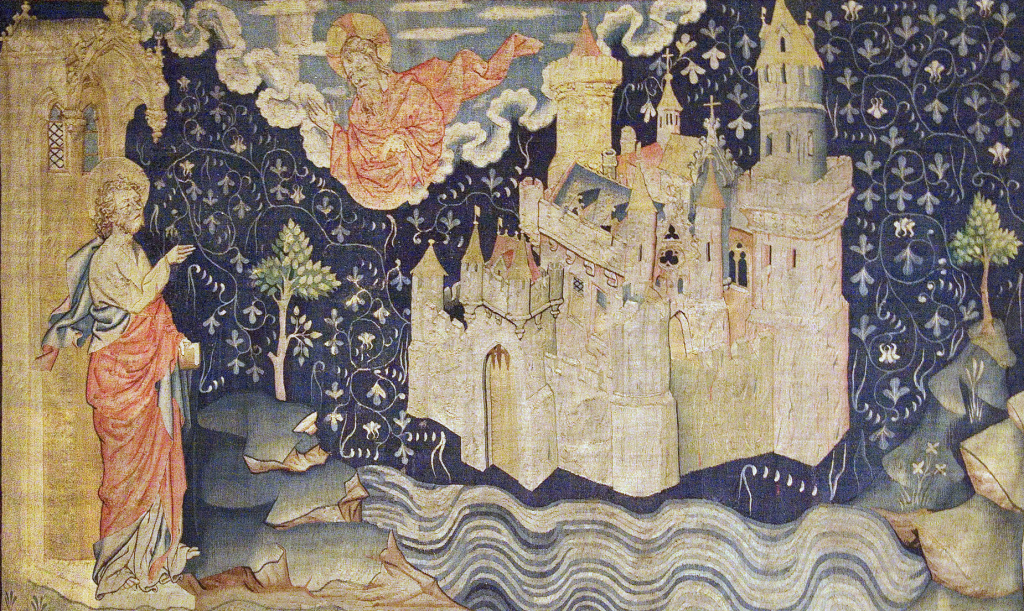
A 14th century tapestry of the Apostle John’s vision of the New Jerusalem

The word of the Lord Almighty came to me.

This is what the Lord Almighty says: “I am very jealous for Zion; I am burning with jealousy for her.”

This is what the Lord says: “I will return to Zion and dwell in Jerusalem. Then Jerusalem will be called the Faithful City, and the mountain of the Lord Almighty will be called the Holy Mountain.”

This is what the Lord Almighty says: “Once again men and women of ripe old age will sit in the streets of Jerusalem, each of them with cane in hand because of their age. The city streets will be filled with boys and girls playing there.”

This is what the Lord Almighty says: “It may seem marvelous to the remnant of this people at that time, but will it seem marvelous to me?” declares the Lord Almighty.

This is what the Lord Almighty says: “I will save my people from the countries of the east and the west. I will bring them back to live in Jerusalem; they will be my people, and I will be faithful and righteous to them as their God.”

This is what the Lord Almighty says: “Now hear these words, ‘Let your hands be strong so that the temple may be built.’ This is also what the prophets said who were present when the foundation was laid for the house of the Lord Almighty. Before that time there were no wages for people or hire for animals. No one could go about their business safely because of their enemies since I had turned everyone against their neighbor. But now I will not deal with the remnant of this people as I did in the past,” declares the Lord Almighty.

“The seed will grow well, the vine will yield its fruit, the ground will produce its crops, and the heavens will drop their dew. I will give all these things as an inheritance to the remnant of this people. Just as you, Judah and Israel, have been a curse among the nations, so I will save you, and you will be a blessing. Do not be afraid, but let your hands be strong.”

This is what the Lord Almighty says: “Just as I had determined to bring disaster on you and showed no pity when your ancestors angered me,” says the Lord Almighty, “so now I have determined to do good again to Jerusalem and Judah. Do not be afraid. These are the things you are to do: Speak the truth to each other and render true and sound judgment in your courts; do not plot evil against each other, and do not love to swear falsely. I hate all this,” declares the Lord. (New International Version)

The name “Zechariah” means “Yahweh remembers.” The Lord indeed remembers the divine covenant which was established. And God will fulfill all promises made.

The Lord is determined to do good – not really because people so much deserve it but because it is God’s character to be good, and thus, do good, even when there is little goodness on the earth to be found.
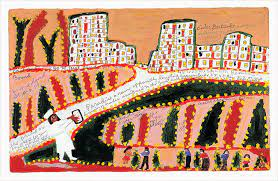
New Jerusalem by Sister Gertrude Morgan (1900-1980)

God’s judgment is but for a moment; but the Lord’s promise, salvation, and peace shall endure forever. God’s wrath is quite real and certain, yet it is a brief extension of the Lord’s steadfast love. Rebellion and judgment are never the last words; forgiveness and grace are:

Many times he [Yahweh] delivered them [the Israelites],
    but they were rebellious in their purposes
    and were brought low through their iniquity.
Nevertheless, he regarded their distress
    when he heard their cry.
For their sake he remembered his covenant
    and showed compassion according to the abundance of his steadfast love.
He caused them to be pitied
    by all who held them captive. (Psalm 106:43-46, NRSV)

All of the Old Testament prophets end their message of impending judgment with the final note of hope. That is, it won’t always be this way. There are better days ahead. The Lord’s coming is not all wrath; it’s mercy and hope. Notice the five brief messages of hope which Zechariah gives the people:

1. Yahweh burns with jealousy for Zion

Throughout the Bible, God likens the relationship to the Israelites much like a lover – as if the Lord were married to them. God’s covenant relationship with people is at the heart of understanding the whole of Scripture. Whenever they stray from divine promises, Yahweh is offended and hurt. 

God is an emotional Being, which is why we have emotions as people created in his image. Early humanity strayed so far from God that it hurt:

The Lord saw that humanity had become thoroughly evil on the earth and that every idea their minds thought up was always completely evil. The Lord regretted making human beings on the earth, and he was heartbroken. (Genesis 6:5-6, CEB)

Yet, God was gracious, sparing Noah and his family. The Lord took a group of Noah’s descendants, Abraham’s family, and set godly covenant affection on them. Through the Israelites, God hoped to lead the entire world to right relations. Yet, they, too, came to fail the gracious covenant made and set their affections on others.

Like a jilted lover, God longed for Israel to remain faithful, and, at the same time, was hurt and angry. Just as the prophet Hosea did not give up on his wife, even though she was brazenly unfaithful, so God looked at Israel as a spouse and could not bear to give her up.

2. Yahweh returns to Zion  

Jerusalem will be known as a faithful city and a holy mountain. The presence of God is what makes that happen. Because even though people can be fickle, inconsistent, complacent, and unfaithful, Yahweh remains true to the divine character of steadfast and immovable love for people.

You will never again be called ‘The People God Left.’
    Your land will never again be called ‘The Land God Destroyed.’
You will be called ‘The People God Loves.’
    Your land will be called ‘God’s Bride,’
because the Lord loves you,
    and your land will be his. (Isaiah 62:4, ERV)

3. The streets of Jerusalem will be full of children playing

The elderly will be sitting there watching the kids play, full of delight at the scene. Much too often we Westerners measure both the significance and success of our cities by its industry, businesses, buildings, wealth, and culture.

Methinks we may be misguided with such measurements. Instead, I suggest, along with the prophet, that we gage our cities by their effect on both the old and the young – because long life and children are signs of blessing from God.

4. Nothing is impossible with Yahweh

Is anything too hard for God? That, my friends, is a rhetorical question. If the Lord can cause old women to bear children (Genesis 18:10-14) and large armies to evaporate (Judges 7:1-25) then there is nothing more preposterous than to always view everything from our puny human perspective. Mary gained such a vantage and believed. We, too, have such an Advent hope within us.

“You will conceive and give birth to a son, and you are to call him Jesus. He will be great and will be called the Son of the Most High. The Lord God will give him the throne of his father David, and he will reign over Jacob’s descendants forever; his kingdom will never end.”

“How will this be,” Mary asked the angel, “since I am a virgin?”

The angel answered, “The Holy Spirit will come on you, and the power of the Most High will overshadow you. So the holy one to be born will be called the Son of God. Even Elizabeth your relative is going to have a child in her old age, and she who was said to be unable to conceive is in her sixth month. For no word from God will ever fail.”

“I am the Lord’s servant,” Mary answered. “May your word to me be fulfilled.” (Luke 1:31-38, NIV)

5. Yahweh renews and restores

Separation, diaspora, and disconnection will become a thing of the past. The Lord sets all things right again, brings people together, and heals, so that everything exists as it is meant to exist.

Deliverance from sin, death, and hell is the means of bringing renewal to the earth and its people. Salvation belongs to God. Righteousness and justice will characterize the future.

For the word of the Lord is upright,
    and all his work is done in faithfulness.
He loves righteousness and justice;
    the earth is full of the steadfast love of the Lord. (Psalm 33:4-5, NRSV)

Hope is fully realized when people put their trust in God and do their part by having strong hands and faithful hearts. We must be truthful and gracious whenever we speak. The Lord expects us to do the right thing by one another, both personally and publicly. We are to never cook up plans to take unfair advantage of others. Instead, we need to keep our lives simple and honest.

The promise of blessing is assured by God. However, the timing of that blessing is conditioned by our response. And there is no better time than the Christian season of Advent to recall what the Lord will do, as well as what God wants us to do.

May we be people of hope and let hope live in our hearts now and always, to the glory of God. Amen.

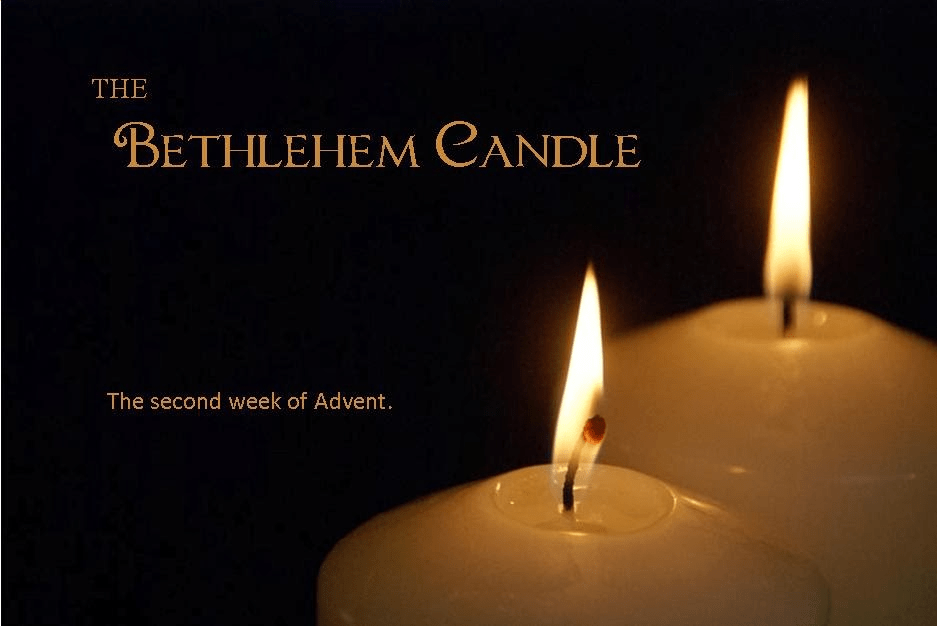
The Bethlehem Candle of Love (Luke 2:1-7)

In those days Caesar Augustus issued a decree that a census should be taken of the entire Roman world. (This was the first census that took place while Quirinius was governor of Syria.) And everyone went to their own town to register.

So Joseph also went up from the town of Nazareth in Galilee to Judea, to Bethlehem the town of David, because he belonged to the house and line of David. He went there to register with Mary, who was pledged to be married to him and was expecting a child. While they were there, the time came for the baby to be born, and she gave birth to her firstborn, a son. She wrapped him in cloths and placed him in a manger, because there was no guest room available for them. (New International Version)

The Christian season of Advent is a time of preparation and expectant waiting for the promised Savior. Each Sunday this month, we will focus on the theme of the Advent candle for that day. Today, we look at the Bethlehem candle, love. Next week, we consider joy, then peace, and on Christmas Day, light.

Advent Love

Jesus was born in Bethlehem and placed in a humble manger, a feeding trough, because of love. The Lord was quite literally conceived in love – a love which originated within the Trinity of Father, Son, and Spirit, and mediated through a virgin, Mary, whose own love for God enabled her to raise the Messiah in love. The world revolves on the axis of love. Without love, we do not exist. With love, there is deliverance, there is a Savior. It’s all about love, my friends, and always has been from the beginning….

God’s Love

God’s loving plan for us started, not with the incarnation, but with the very first act of creation. Out of nothing, and out of sheer love, humanity was created in God’s own image. Since God is Love, we were made to receive love and give love. (Genesis 1:26-30)

However, the first humans, Adam and Eve, began to doubt the truth of God’s goodness and love for them. And so, they disobeyed their Creator, believing that God was withholding love from them.

Yet, despite humanity’s fall into sin, God’s loving mercy did not abandon them altogether. God did not destroy Eve and Adam. Even as they began to experience the serious consequences of their sin, God made a promise of future redemption: that Eve’s own offspring would one day crush the head of the serpent who tempted them. (Genesis 3:15)

God’s Loving Plan

The Lord had no intention of simply leaving people in their wretched state of separation and rebellion. God promised that Abraham’s descendants would be a blessed people who, in turn, would bless the world. (Genesis 12:2-3)

God foretold of the One, born of a virgin, who would free the captives, bear our transgressions, suffer in our place, redeem people, and usher in a peace unlike anything ever known.

Though the mountains be shaken
    and the hills be removed,
yet my unfailing love for you will not be shaken
    nor my covenant of peace be removed,”
    says the Lord, who has compassion on you. (Isaiah 54:10, NIV)

The Bible is a long, extended, and unfolding drama of redemption spanning several centuries. Even though the plan of redemption takes time, God lovingly walks with people through their suffering, temptation, loss, grief, and trials.

The Nativity by Japanese artist Sadao Watanabe (1913-1996)

When the Lord heard the cries of the ancient Israelites under their cruel yoke of slavery, God led them out of Egypt (Exodus 3:18). When the Jews were exiled from their land, God reminded them of the ongoing plan of redemption:

But now thus says the Lord,
    he who created you, O Jacob,
    he who formed you, O Israel:
Do not fear, for I have redeemed you;
    I have called you by name; you are mine.
When you pass through the waters, I will be with you,
    and through the rivers, they shall not overwhelm you;
when you walk through fire you shall not be burned,
    and the flame shall not consume you.
For I am the Lord your God,
    the Holy One of Israel, your Savior.
I give Egypt as your ransom,
    Cush and Seba in exchange for you. (Isaiah 43:1-3, NRSV)

For generations, God has remained faithful to people even when they doubt and have weak faith; and even though they question God’s motives and power and turned away from the Lord. The plan of God is simply an extension of the character of God:

They refused to obey and were not mindful of the wonders that you performed among them, but they stiffened their necks and appointed a leader to return to their slavery in Egypt. But you are a God ready to forgive, gracious and merciful, slow to anger and abounding in steadfast love, and you did not forsake them. (Nehemiah 9:17, NRSV)

Love Is with Us

Revisiting the big picture of God’s love for people during Advent helps us understand the significance of the first advent, the coming of a Savior. The incarnation of Christ is the hinge of a larger story of God’s good love and redemption for us. Love, incarnated in the form of a vulnerable baby, came to fulfill a promise God made centuries before.

Christ was truly God.
But he did not try to remain
    equal with God.
Instead he gave up everything
    and became a slave,
when he became
    like one of us.

Christ was humble.
He obeyed God and even died
    on a cross. (Philippians 2:6-8, CEV)

The motivation for the first advent of Jesus, the incarnation of Christ, was because of love:

For God so loved the world that He gave His only begotten Son, that whoever believes in Him should not perish but have everlasting life. (John 3:16, NKJV)

True love is God’s love for us, not our love for God. He sent his Son as the way to take away our sins. (1 John 4:10, ERV)

Advent Love Is Our Calling

In remembering that first advent, we know that a new era of God’s restoration has been ushered in. And we await a second advent when Christ returns to judge the living and the dead. Now, living in between these two advents, God’s people are called to love others as Christ has loved us and gave himself for us.

“‘Love the Lord your God with all your heart, with all your soul, and with all your mind.’ This is the greatest and the most important commandment. The second most important commandment is like it: ‘Love your neighbor as you love yourself.’ The whole Law of Moses and the teachings of the prophets depend on these two commandments.” (Matthew 22:37-40, GNT)

This Advent season, let us ask how we can love God and love our neighbor more fully, so that we might fulfill the call of Jesus Christ.

Let us pray with the encouragement of Scripture (adapted from 1 John 4:7-12):

Loving God, help us to love each other since love comes from You. We understand that everyone who loves is born again and experiences a relationship with You. The person who refuses to love doesn’t know the first thing about You, because You, God, are Love itself—no one can know You if they don’t know love.

Merciful God, we give you unending thanks that You showed Your love for us by sending Your only Son into the world so that we might live through him. While we were still sinners, Christ died for us; and that is the kind of love You are all about—not that we once upon a time loved God, but that You loved us and sent the Son as a sacrifice to clear away our sins and the damage they’ve done to our relationship with You.

Gracious God, since You loved us like this, we pray that You will enable us to love each other. No one has seen You, ever. But if we love one another, You will dwell deeply within us, and love becomes complete in us. May it be so, to the glory of Jesus Christ in whose Name we pray. Amen.

Spiritual Renewal (Isaiah 30:19-26)

People of Zion, who live in Jerusalem, you will weep no more. How gracious he will be when you cry for help! As soon as he hears, he will answer you. Although the Lord gives you the bread of adversity and the water of affliction, your teachers will be hidden no more; with your own eyes you will see them. Whether you turn to the right or to the left, your ears will hear a voice behind you, saying, “This is the way; walk in it.” Then you will desecrate your idols overlaid with silver and your images covered with gold; you will throw them away like a menstrual cloth and say to them, “Away with you!”

He will also send you rain for the seed you sow in the ground, and the food that comes from the land will be rich and plentiful. In that day your cattle will graze in broad meadows. The oxen and donkeys that work the soil will eat fodder and mash, spread out with fork and shovel. In the day of great slaughter, when the towers fall, streams of water will flow on every high mountain and every lofty hill. The moon will shine like the sun, and the sunlight will be seven times brighter, like the light of seven full days, when the Lord binds up the bruises of his people and heals the wounds he inflicted. (New International Version)

Better days are ahead.

In this time of year, there are many people who simply don’t have to think twice about purchasing and giving gifts for Christmas. They have blessings, both material and spiritual. And they can always identify other persons who are in much more need than them. Some of them may even believe that those in need are in that position because of unwise individual choices. 

But we must maintain a focus on our own lives. We need to recognize the maladies of our hearts. The state of our lives is as important, and is just as real and needy, as someone else’s life who is in more humble circumstances. 

There are specific conditions in our lives that leave us in bondage and in need of restoration, renewal, and revitalization, just like all kinds of other people. 

Being a vital part of a local church does not automatically immune one from having serious needs. And having a good steady income doesn’t inoculate one from need or privation.

We must not suppress those realities and needs, but instead, name the conditions which are packed away in a closet of our heart deep inside us – such things as the love of possessions and money; broken relationships; old grudges; hidden addictions; domestic violence; denial of depression; secret affairs; cutting; fear; anger; greed; hatred; and much more. 

Outward smiles and small talk conversations may hide the truth from others, but they do nothing to hide from a God for whom everything is laid bare.

The good news is not just something for someone else who has “obvious” needs; the gospel must touch our lives and bring us freedom.

Only then can we pass on the good news to the legion of social ills that make our world sick. There are people all around us who need spiritual, emotional, and material help. Yet, we will not have eyes to see them, or have hearts to help, if we are stuffing our own burdens so deep within that we are blind to others.

Far too many Christians, especially the church-going kind, have become expert emotional stuffers and deniers of need. 

We may believe “those other people” need ministries of justice and help. But the truth is: Many of us are one paycheck, one prodigal kid, one mental health diagnosis, one serious illness, one drink, one affair, or one bad decision away from being one of “those people” – the people we typically identify as in need – the ones that bad things happen to – the ones we do not want next door to us.

We may not yet be vulnerable enough to admit our situation; and so, we keep practicing the denial of our spiritual poverty. 

What to do? Turn from the things that have caused us to be in poverty and be prisoners (not just secretly!) and hope in the Lord’s restorative grace. God takes all sorts of seemingly impossible situations of destruction and death, creating fresh new growth in the form of a little green sprout. 

God will rebuild our ruined souls; restore the places of our lives that have been devastated; and renew the places that have not seen renewal for generations. 

It begins with you and me allowing the justice of God to work within us, not just others. 

If we want comfort, we need to mourn. If we desire joy, then there needs to be some lamenting of a dire situation. If we hope for an oak of righteousness, there must be a confession of despair. For there to be a resurrection, there has to be a death.

What is your real situation and the true realities of your life that need to be named? 

Where will you go to address those needs and truths? 

Will you keep stuffing them, or will you become able to voice your inner personal needs? 

How might you be vulnerable enough to allow others to minister grace to your needy soul?

Let us have a vision of Jesus coming into our lives and replacing a tattered hat of grief with a crown of beauty. 

Let us picture the Lord placing on us a garment of praise to replace our stinky clothes of grumbling. 

Let us allow our lives to display the grace of God in Christ because we have been profoundly touched by the justice of God. 

Let us herald the coming of the Christ child as the hope of us all.

Soli Deo Gloria

Build It Now! (Haggai 1:1-15a)

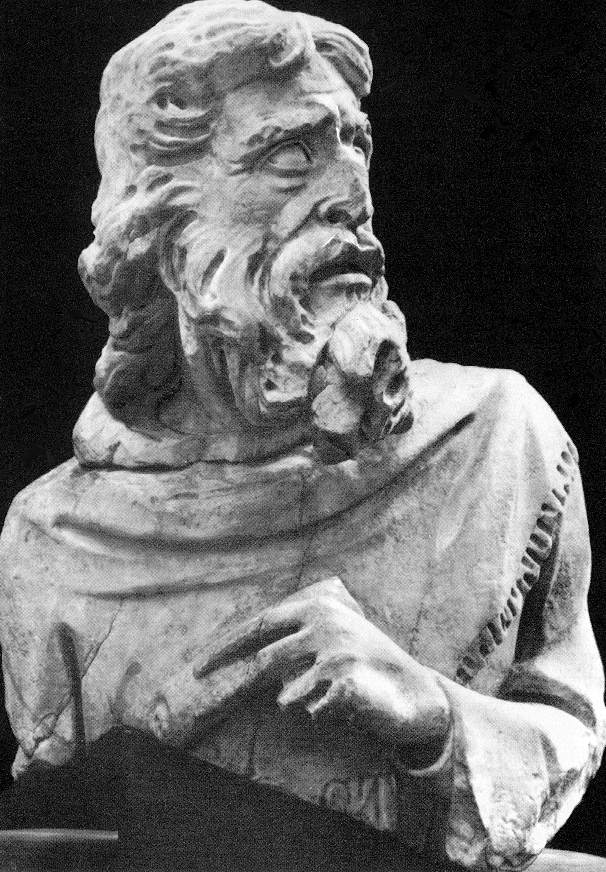
Statue of the prophet Haggai, by Giovanni Pisano, c.1290 C.E., Siena, Italy

In the second year of King Darius, on the first day of the sixth month, the word of the Lord came through the prophet Haggai to Zerubbabel son of Shealtiel, governor of Judah, and to Joshua son of Jozadak, the high priest:

This is what the Lord Almighty says: “These people say, ‘The time has not yet come to rebuild the Lord’s house.’”

Then the word of the Lord came through the prophet Haggai: “Is it a time for you yourselves to be living in your paneled houses, while this house remains a ruin?”

Now this is what the Lord Almighty says: “Give careful thought to your ways. You have planted much but harvested little. You eat, but never have enough. You drink, but never have your fill. You put on clothes but are not warm. You earn wages, only to put them in a purse with holes in it.”

This is what the Lord Almighty says: “Give careful thought to your ways. Go up into the mountains and bring down timber and build my house, so that I may take pleasure in it and be honored,” says the Lord. 

“You expected much, but see, it turned out to be little. What you brought home, I blew away. Why?” declares the Lord Almighty. “Because of my house, which remains a ruin, while each of you is busy with your own house. 

Therefore, because of you the heavens have withheld their dew and the earth its crops. I called for a drought on the fields and the mountains, on the grain, the new wine, the olive oil and everything else the ground produces, on people and livestock, and on all the labor of your hands.”

Then Zerubbabel son of Shealtiel, Joshua son of Jozadak, the high priest, and the whole remnant of the people obeyed the voice of the Lord their God and the message of the prophet Haggai, because the Lord their God had sent him. And the people feared the Lord.

Then Haggai, the Lord’s messenger, gave this message of the Lord to the people: “I am with you,” declares the Lord. So the Lord stirred up the spirit of Zerubbabel son of Shealtiel, governor of Judah, and the spirit of Joshua son of Jozadak, the high priest, and the spirit of the whole remnant of the people. They came and began to work on the house of the Lord Almighty, their God, on the twenty-fourth day of the sixth month. (New International Version)

Timing is everything.

There is a time to ponder and plan and there’s a time to move and act. If the time is ripe for action, then the lack of initiative is plain old procrastination. But how do you know when to act?

If the Lord says it’s time, well then, it’s time!

God’s people wouldn’t have described their inaction in rebuilding God’s house as dragging their feet. They perceived their inertia as a sensible delay.

Yet, the Lord saw the people’s approach as inexcusable enough to send a prophet with a specific message and call to action: Build the house now!

Let’s get a feel for why God’s call for immediacy comes when it does. In the ancient world, it had always been the practice of armies to assimilate conquered peoples into the culture of the conquering king. 

In the eighth century B.C.E., the Assyrian Empire conquered the northern kingdom of Israel. The Assyrians took most of the people into captivity, left the poorest of the people alone, and resettled the land with some of their own Assyrian people. The inevitable intermarriages resulted in their progeny being known as the Samaritans in the New Testament Gospels, as the Samaritans.

Two-hundred years after Assyria conquered Israel, Nebuchadnezzar besieged the southern kingdom of Judah and took over Jerusalem. He carried Daniel and all the other educated and professional people to Babylon. In the course of taking the city, Nebuchadnezzar tore down the wall and destroyed the temple that Solomon had made.

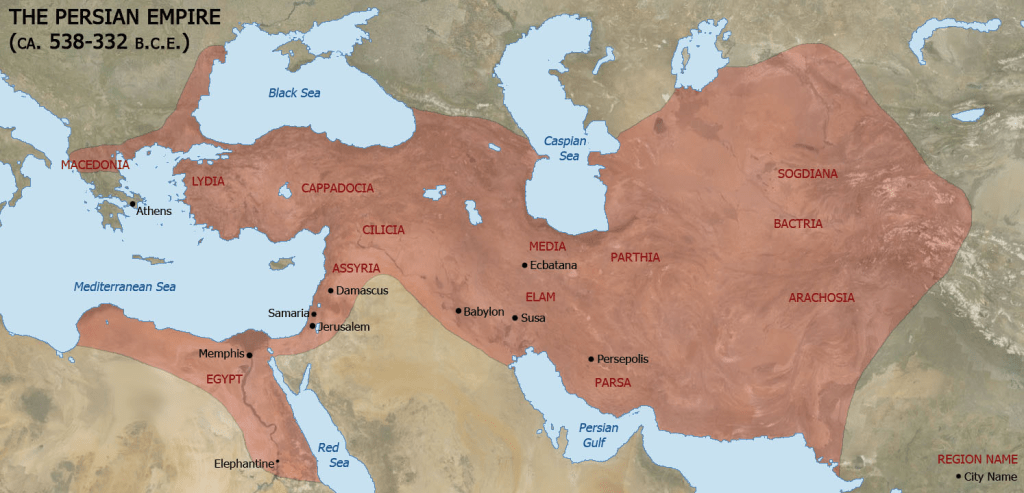
During the Babylonian exile, the Persians conquered Babylon and became rulers of a large geographical empire. Because the massive Persian Empire was in control of so many different kinds of people across such a vast territory, they were not able to operate as previous empires did by assimilation and resettlement. 

Instead, the Persians did something new and different: They encouraged and enabled their conquered peoples to keep their religion and their culture. The only caveat was that they had to give tribute and allegiance to the empire and pray for the king. This is why Nehemiah, Ezra, and Haggai were able to return to Jerusalem and given royal authority to rebuild the wall and the temple. 

But, from the git go, there was opposition to the rebuilding from the old Canaanite inhabitants of the land. After many years, the wall was rebuilt but the temple restoration bogged down. The people slowly became discouraged and lost enthusiasm to do the work. 

Understandably, the people got caught up in taking care of their own homes and just plain neglected working on the temple. Over time, they just forgot about the entire project. But God didn’t.

The prophet Haggai made it clear that the people’s mental distraction and physical neglect was taken as disrespect by the Lord. Haggai insisted that the reason the people were not experiencing blessing on their land was because they simply did not have their priorities straight. 

Thus, God sent the prophet Haggai to preach a sermon entitled: Build the house now! 

To the people’s credit, they responded to the call of God and started rebuilding God’s house. The work was completed. However, there seemed to be a problem. 

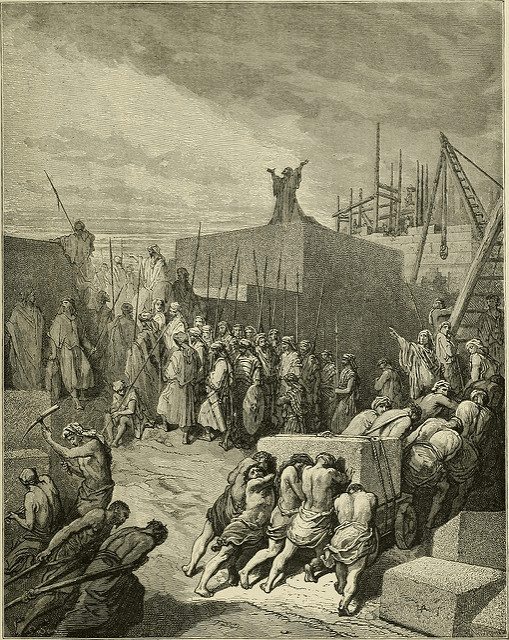
Rebuilding the Temple, by Gustave Doré, 1866

Moving into the rest of Haggai’s prophecy, the newly restored temple didn’t look anything like Solomon’s grand and glorious temple. Many of the older worshipers could still remember Solomon’s temple; to them, the rebuilt temple seemed like a bologna sandwich compared to the T-bone steak of the past. 

So, God sent Haggai again to encourage the people. The Lord will be with them. The restored temple may not look the same, but what makes the temple great is God’s glory.

An important takeaway from the prophecy of Haggai is that the Lord is a jealous God; God’s people are to worship the Lord with all of their heart, soul, mind, and strength. 

We also learn that the Lord is sovereign and supreme over all creation. God owns everything and will use it all to accomplish divine purposes on this earth. 

In addition, we see that God calls people to new work and fresh ministry. The Lord was behind the destruction of the old temple; and when the time was right, God called the people to build a new ministry.

And we learn something about ourselves, as well. God’s people need to hear and respond to God’s call. Haggai put a God-sized vision before the people; he helped them imagine what the new temple would be like – full of God’s glory.

God is doing a new thing. The Lord continues calling people to:

  • Seek first the kingdom of God. (Deuteronomy 4:29; Psalm 63:1; Matthew 6:33; Hebrews 11:6)
  • Love God with whole hearts. (Deuteronomy 6:5, 11:1-22, 19:9, 30:16-20; Matthew 22:37)
  • Love neighbor as we love ourselves. (Leviticus 19:18; Matthew 22:38; Romans 13:9; Galatians 5:14)
  • Make disciples of Christ from all nationalities. (Matthew 28:18-20)
  • Be witnesses to God’s glory in Christ. (Psalm 66:16; Acts 1:8; 2 Timothy 2:2)
  • Obey the Holy Spirit. (Acts 5:31-33; Romans 6:17; Hebrews 5:8-9)

It is good to remember and celebrate past ministries; and it is also good to throw ourselves into the new ministries which God calls us and to build them for God’s glory.

My friends, build it now.

Glory to you, O God, the One who is able to do far beyond all that we could ask or imagine by your divine power at work within us; glory to you, blessed God, in the church and in Christ Jesus for all generations, through the empowering Holy Spirit, forever and always. Amen.