Remember… (1 Thessalonians 2:9-13)

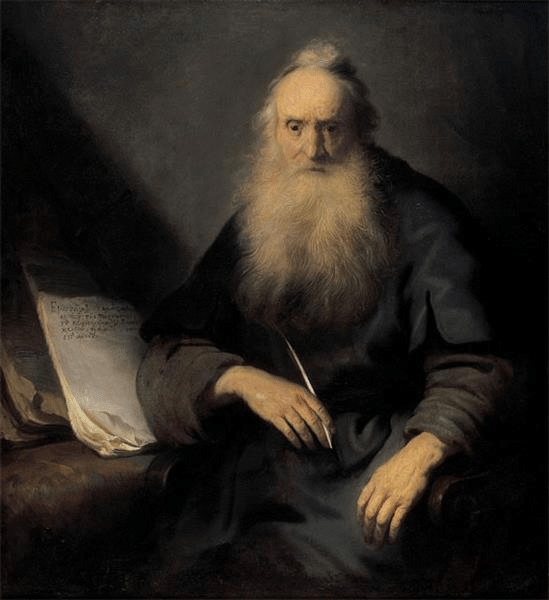
St. Paul writing to the Thessalonians, by Jan Lievens, c.1629

Surely you remember, brothers and sisters, our toil and hardship; we worked night and day in order not to be a burden to anyone while we preached the gospel of God to you. You are witnesses, and so is God, of how holy, righteous and blameless we were among you who believed. For you know that we dealt with each of you as a father deals with his own children, encouraging, comforting and urging you to live lives worthy of God, who calls you into his kingdom and glory.

And we also thank God continually because, when you received the word of God, which you heard from us, you accepted it not as a human word, but as it actually is, the word of God, which is indeed at work in you who believe. (New International Version)

The Christian believers in Thessalonica were becoming discouraged. The church sincerely believed that Jesus was coming soon… any day he could show up!

But as time went on, and Jesus was still nowhere to be seen…

the Thessalonians began losing their spiritual resolve…

started wondering if they had missed out on something…

began doubting if it was all real…

started slipping spiritually.

Missed expectations can be difficult to deal with. Maybe we have been praying for someone or something for so long that we wonder if it will really happen; or secretly question if something is wrong with us. Yet, maybe God simply wants us to wait… to be patient and to persevere… maybe the answer is closer than we think.

Since the church was becoming discouraged, the Apostle Paul reminisced with them. He wanted them to remember and not forget about what God had done in their lives. The Thessalonians desperately needed a faith for the long haul.

Remembering is a prominent theme in Scripture. Well over a hundred times we are told to remember:

  • God’s covenant and actions on behalf of people
  • Those less fortunate than us
  • Important people in our lives who influenced us in our journey of faith

In order to steel the church for a faith that lasts a lifetime, Paul reminded them of his own example, his own character, his ministry among them, and how they initially came to faith.

Paul was trying to inspire the believers with his own model of faithfulness, so that they would persevere in their Christian lives and not give up. He reminded them of his hard work in order to preach the gospel to them. The picture that Paul painted for them is having done whatever it took to make the good news of Jesus Christ known to the Thessalonians. 

Who were the people in your life that went out of their way to communicate the gospel to you both with words and with actions? 

Who were those persons who labored behind the scenes in prayer so that you and others would know Jesus? 

If any of those persons are still around, and you know where they are, remember them. Drop them a note. Express to them a simple thank you for their influence in your life. In doing so, you will not only encourage that person, but it will help you remember and re-engage with something in your life that you may have forgotten or taken for granted.

Paul was not shy about reminding the Thessalonians concerning the way in which he interacted with them. He did this not because he was trying to illicit some praise for himself, but because he wanted the church to emulate his character. 

That particular character is described as holy, righteous, and blameless. And we are to emulate Paul in these character qualities. These three words refer to the full range of relationships we encounter on a daily basis: with God, the church, and the community. 

Holiness in our relationship with God means that we have been set apart completely in Christ, so that we say and do nothing impure. 

Righteousness in our interactions with fellow believers in Jesus means we are in right relationship with them, so that there is nothing that hinders or stands between us. 

Blamelessness in our relations with the world means that the ways we live and work among outsiders are ethical and consistent with being a Christian.

Paul described his ministry as one of encouraging, comforting, and urging the believers to live lives worthy of God. He expected the Thessalonians to live into their callings as believers in Jesus. 

Encouragement refers to the ministry of coming alongside others and telling them what they need to do both in teaching and by example. Comfort refers to consoling others with the gospel. The word “urge” in the NIV is the word for “witnessing” which is a reference to the reality that Paul was constantly living his life in such a way that proclaimed Jesus to others.

The Thessalonians had received the Word of God; and this was an occasion to thank God for it. Each time we recall and remember what God has done for us through others and through God’s Word, we need to offer thanks. God’s Word is implanted within us, then takes root, grows, and produces a harvest of righteousness for those who have been disciplined by it.

We must remember those who brought us the Word of God; and to remember how they treated us, and what they did for us. Then, we must be obedient to what we learn. 

There are several needs we have as followers of Christ: 

  • intimate relationships in the church
  • to be mentored, and mentor others, in the faith
  • the power of God’s Word
  • our callings as Christians 

We forget these needs too easily – which is why repetition is a good thing. For example, each time we celebrate a baptism, it causes us to remember our own baptisms, and to live into our callings as Christians. Or when we move through the worship liturgy, we remember our sinfulness, God’s forgiveness, and our responsibility to live according to God’s Word. 

Our lives, our work, and our worship might seem plain and ordinary. However, the majority of life is lived in the mundane. The tangible reminders we can put in front of us are important, so that we never forget the spiritual experiences God has given us. (i.e. Deuteronomy 27:2-3)

We are meant to live our Christian lives in a vital connection with Christ and other believers. We will continue to persevere and thrive in the faith, when we remember those who have gone before us, and allow those here in the present to journey with us along this road of faith.

Blessed God, continue the good work begun in me; that increasing daily in wholeness and strength, I may rejoice in your goodness; and so order my life always to think and do that which pleases you, through Jesus Christ our Redeemer. Amen.

Remember and Learn (Psalm 78:1-4, 12-16)

My people, hear my teaching;
    listen to the words of my mouth.
I will open my mouth with a parable;
    I will utter hidden things, things from of old—
things we have heard and known,
    things our ancestors have told us.
We will not hide them from their descendants;
    we will tell the next generation
the praiseworthy deeds of the Lord,
    his power, and the wonders he has done….

He did miracles in the sight of their ancestors
    in the land of Egypt, in the region of Zoan.
He divided the sea and led them through;
    he made the water stand up like a wall.
He guided them with the cloud by day
    and with light from the fire all night.
He split the rocks in the wilderness
    and gave them water as abundant as the seas;
he brought streams out of a rocky crag
    and made water flow down like rivers. (New International Version)

Every day I read in the biblical psalms. There are two reasons I do this. First, the psalms are the church’s prayer book. They are more than reading material; the psalms are designed to be owned by us as prayers. And second, I need their reminders – a lot!

Remembering is a major theme throughout the entirety of Holy Scripture. It’s just part of the human condition, fallen and forgetful as we are, to lose sight of what has taken place in the past. Today’s psalm invites us to seek the Lord through remembering all the good and wonderful works he has done.

For Israel, remembering meant continually having the events of Passover in front of them. God redeemed the ancient Israelites out of Egyptian slavery and into a good Promised Land. They were to never forget God’s miracle through the Red Sea, God’s protection over them from other nations, and God’s provision of food and necessities in the desert.

We are to remember because we are made in God’s image and likeness. God remembers. God has an ongoing reminder in a divine day timer – Fulfill the promises I made and keep the covenant I initiated with the people, even when they’re stinkers and forget who I am and what they are supposed to be about.

As old as God is, there is no danger of the Lord getting some sort of divine dementia. God doesn’t forget. The Lord always keeps promises made to people.

For the Christian, all God’s promises are remembered and fulfilled in the person and work of Jesus Christ. Deliverance from sin, death, and hell; the gift of the Holy Spirit; and ongoing presence and provision are given to us graciously and freely by the God who loves and cares for people.

For Christians, remembering means coming to the Lord’s Table, entering the once for all loving sacrifice of Christ on our behalf.

We remember the past action of the cross – the once for all sacrifice of Jesus for all the world.

We are mindful of Christ’s continuing presence now in the person of the Holy Spirit.

And remembering these things helps us to look forward with confidence when the Lord shall return and we will eat with him at a grand heavenly banquet table.

One of the reasons I write and journal about my life and Scripture is to remember. Sometimes I forget. There are times when I’m overwhelmed with life and it feels as if God has forgotten me. In such times, I look back into my journal and see what God has done.

And I peer into the psalms and see that the Creator God is active in the big, created world, always attentive to working what is just, right, and good – bending twisted circumstances and evil machinations back toward the great arc of love.

Psalm 78 is designed to recall historical events for the theological education of ourselves and the next generation. Through passing on eventful stories from the past to future generations, God’s people continue to remember and realize the incredible action of God in the world.

In recalling stories of care and deliverance, God’s commandments are kept. Putting trust in the powerful and benevolent God of all brings assurance and encouragement.

Using the psalms as a means of recollecting past events is a wise way of edifying God’s people and living into the command of the Law. As the Israelites were about to enter the Promised Land, Moses restated the Law for them, and then said:

These are the commands, decrees and laws the Lord your God directed me to teach you to observe in the land that you are crossing the Jordan to possess, so that you, your children and their children after them may fear the Lord your God as long as you live by keeping all his decrees and commands that I give you, and so that you may enjoy long life. Hear, Israel, and be careful to obey so that it may go well with you and that you may increase greatly in a land flowing with milk and honey, just as the Lord, the God of your ancestors, promised you.

Hear, O Israel: The Lord our God, the Lord is one. Love the Lord your God with all your heart and with all your soul and with all your strength. These commandments that I give you today are to be on your hearts. Impress them on your children. Talk about them when you sit at home and when you walk along the road, when you lie down and when you get up. Tie them as symbols on your hands and bind them on your foreheads. Write them on the doorframes of your houses and on your gates.

When the Lord your God brings you into the land he swore to your fathers, to Abraham, Isaac and Jacob, to give you—a land with large, flourishing cities you did not build, houses filled with all kinds of good things you did not provide, wells you did not dig, and vineyards and olive groves you did not plant—then when you eat and are satisfied, be careful that you do not forget the Lord, who brought you out of Egypt, out of the land of slavery. (Deuteronomy 6:1-12, NIV)

Since psalms are meant to be recited repeatedly throughout one’s spiritual life, doing so inoculates worshipers from faithless rebellion; and it counteracts the temptation toward trusting in idols. It’s a preservative which gives life, purpose, and wholeness.

Regular spiritual consumption of the psalms provides a pattern of instruction which molds and maintains the soul so that, when hard situations arise, the supports are there to hold us up under the adversity.

The life that is truly life – and the life of those who will come after us – happens through intentional remembrance and learning. Today’s psalm is a fitting invitation to set our hope in God, remember God’s wonderful works, and keep God’s commands.

O God and Father of our Lord Jesus Christ:
Give me strength to live another day;
Let me not turn coward before its difficulties or prove recreant to its duties;
Let me not lose faith in other people;
Keep me sweet and sound of heart, in spite of ingratitude, treachery, or meanness;
Preserve me from minding little stings or giving them;
Help me to keep my heart clean, and to live so honestly and fearlessly that no outward failure can dishearten me or take away the joy of conscious integrity;
Open wide the eyes of my soul that I may see good in all things;
Grant me this day some new vision of your truth;
Inspire me with the spirit of joy and gladness;
and make me the cup of strength to suffering souls;
in the name of our Deliverer, Jesus Christ, in the power of the Holy Spirit. Amen.

God Is Both Near and Far (Psalm 145:1-5, 17-21)

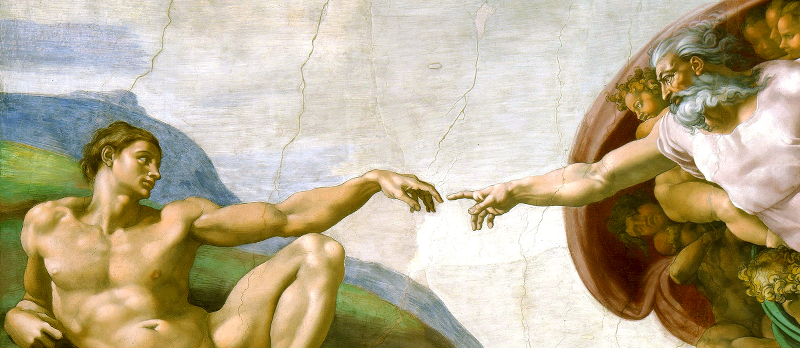
God giving life to Adam, by Michelangelo (1475-1564) on the ceiling of the Sistine Chapel, Rome

I will exalt you, my God the King;
    I will praise your name for ever and ever.
Every day I will praise you
    and extol your name for ever and ever.

Great is the Lord and most worthy of praise;
    his greatness no one can fathom.
One generation commends your works to another;
    they tell of your mighty acts.
They speak of the glorious splendor of your majesty—
    and I will meditate on your wonderful works….

The Lord is righteous in all his ways
    and faithful in all he does.
The Lord is near to all who call on him,
    to all who call on him in truth.
He fulfills the desires of those who fear him;
    he hears their cry and saves them.
The Lord watches over all who love him,
    but all the wicked he will destroy.

My mouth will speak in praise of the Lord.
    Let every creature praise his holy name
    for ever and ever. (New International Version)

The Lord is both near and far. The God of Holy Scripture is, at the same time, both:

  • approachable and aloof
  • close and distant
  • beside us and beyond us
  • available and elusive
  • revealing and remote
  • warm and cool
  • knowable and mysterious
  • readily at hand and at arm’s length
  • a good neighbor next door and a politician over in a city you’ve never been

The technical theological terms for describing God in such a way is that the Lord is both immanent and transcendent. And that is a good thing. We need the Lord to be both.

This psalm is a hymn of praise to God. The psalmist, David, celebrates the attributes and the actions of the Lord. David understood, better than most, that God is so far above humanity in divine majesty that miracles are always possible. Because God is God, the Lord’s arm is never too short to extend help and deliverance.

David knew that God’s powerful ability and God’s loving affection go hand-in-hand together; God’s mighty strength and God’s compassionate spirit work together harmoniously for our benefit.

They did not conquer the land with their swords;
    it was not their own strong arm that gave them victory.
It was your right hand and strong arm
    and the blinding light from your face that helped them,
    for you loved them. (Psalm 44:3, NLT)

God’s interventions, wonders, and miracles are never done dispassionately; the Lord’s arm is extended with deep concern and loving care for people.

The Lord acts as a close relative, like a parent, exhibiting qualities of both father and mother. God is close enough to not only hear our verbal prayers but to also hear our faint whispers. Indeed, the Lord is so close that we don’t even have to speak for the prayers of our heart to be heard.

The righteous call to the Lord, and he listens;
    he rescues them from all their troubles.
The Lord is near to those who are discouraged;
    he saves those who have lost all hope.

Good people suffer many troubles,
    but the Lord saves them from them all. (Psalm 34:17-19, GNT)

In the New Testament Gospels, Jesus gave us instruction on how to address God: “Our Father in heaven.” Not just “my” Father, but “our” Father. We are to pray with the mindful sense of our union with the Lord, as well as our connection with one another as believers.

The Lord sits in heaven as the Most High God, the transcendent Lord of me, you, and all people – watching over and protecting all whose hearts are in the right place, and effectively guarding us from a lofty divine vantage point.

My shield is God Most High, who saves the upright in heart. (Psalm 7:10, NIV)

Clap your hands, all you nations;
    shout to God with cries of joy.

For the Lord Most High is awesome,
    the great King over all the earth.
He subdued nations under us,
    peoples under our feet. (Psalm 47:1-3, NIV)

With our transcendent God always having a watchful eye over us, we need not fear anything or anyone. The Lord knows the score of how things are going in the world and in your life. And, what’s more, God knows the ropes in providing for us, protecting us, and powerfully handling any and all enemies to our souls.

Yet, at the same time, all the time, God is both our high holy King, and our close intimate Friend. Indeed, the Lord is graciously immanent as my Abba – the Father who is near and dear to our hearts.

Because you are [adopted] sons and daughters, God sent the Spirit of his Son into our hearts, crying, “Abba, Father!” Therefore, you are no longer a slave but a son or daughter, and if you are his child, then you are also an heir through God. (Galatians 4:6-7, CEB)

Christians everywhere in the world, and throughout the ages, gather together and repeat the Lord’s Prayer, every Sunday, as well as in weekly small groups, and daily individual prayers. We cry out, “Our Father in heaven” as the most used phrase over the course of our Christian lives.

And that sort of repetition is a good thing. It is important to verbalize that God is transcendent – far above all earthly powers as the sovereign Lord of the universe; and to vocalize that God is immanent – near to us as a father to a child.

Just because a phrase can become vain repetition doesn’t mean that repeating it is a bad thing. Using our words to reiterate both the far distance and the close relation of God is a worthy activity which fortifies our faith, and which passes truth to successive generations of the faithful.

The best way I know of cultivating a healthy sense of God’s transcendence and immanence (outside of reading scripture and praying) is through clouds and kids – both of which require mature adults to practice some much needed humility.

There is nothing quite like putting clocks and schedules aside, stretching out a blanket on a hill, laying back, and watching the clouds roll by. The perspective of massive highness reminds us that our problems are neither as daunting nor as important as we thought.

In contrast to the high clouds, there’s also nothing quite like forgetting your age and getting on the ground to be eye level with a kid. Fortunately, I have rambunctious and curious grandsons who continually remind me that, the lower I get, the better I understand what’s truly most important.

Neither my kids nor my grandkids care all that much about the what’s in my life – what I do – my work, my hobbies, my angst, my daily activities. But they do care a great deal about who I am and why I’m with them.

Intentionally developing a sense of God as both far and near, helps us remember who we are and why are here.

Ironically, the closer I get in touch with the reality that I’m mere dust, and will return back to the ground, the better I’m able to see the Most High God. And, conversely, the more I gaze into the sky, the greater awareness I have of the people around me. I learn to love God and neighbor, as I ought.

There’s no better time than now to get out there and take advantage of the clouds and the kids. It will likely help you to know God better; and it will probably bring a greater awareness, clarity, and connection to the truly significant which is always around us.

Father God, you formed us from the dust of the earth. Remind us of our place as your creatures at home in your creation. Forgive us when we forget our connection to the earth, and our dependence upon the goodness of your world. Lord have mercy.

Brother Jesus, you were born into this world, and made your earthly home in Nazareth. Help us to know and love the people and places where you have set us. Forgive us when we fail to care for our homes, our communities, and your creation. Christ, have mercy.

Blessed Holy Spirit, you desire to grow in us your fruit of love, joy, peace, patience, kindness, goodness, faithfulness, gentleness, and self-control. Forgive us when our roots are so shallow, and our hearts so restless, that our lives fail to bear fruit. Enable us to find our home in you, and in the places to which you call us. Lord have mercy.

Blessed Holy Trinity – Father, Son, and Spirit – the God who is both far and near: Forgive us our sins, settle us in a place of belonging, and enable us to bear fruit for your kingdom. Amen.

Psalm 119:9-16 – How Can a Young Person Live a Pure Life?

How can a young person live a pure life?
    By obeying your word.
I try with all my heart to serve you.
    Help me obey your commands.
I study your teachings very carefully
    so that I will not sin against you.
Lord, you are worthy of praise!
    Teach me your laws.
I will repeat the laws we have heard from you.
I enjoy following your rules
    as much as others enjoy great riches.
I will study your instructions.
    I will give thought to your way of life.
I enjoy your laws.
    I will not forget your word. (ERV)

Pornography is a multi-billion-dollar a year industry and is steadily growing. The younger generation is particularly susceptible in this internet age of easy access and multiple porn websites.

  • 35% of all internet downloads worldwide are related to pornography.
  • Teen-aged boys are the largest consumers of pornographic internet sites. 

The following percentages of children report having seen pornography in some way:

  • 50% of 11-13-year-olds
  • 65% of 14-15-year-olds
  • 78% of 16-17-year-olds
  • 75% of parents believe their children have not seen pornography online.
  • 53% of the children said that they had seen pornography online.

Into this terrible muck of impurity an impropriety enters the biblical psalmist with his ancient, yet truly relevant question for us today: How can a young person live a pure life? 

The answer the psalmist gives is this: By guarding the heart through obedience to God’s Holy Word. The psalmist himself stored up the commands and teachings of Scripture in his heart so that he might not sin against God.

A solid tried-and-true activity parents can do for themselves (the statistics for adult use of porn are staggering) and for their kids in this area of purity is for the entire family to do some old school Bible memorization. Yes, I mean getting down to rote memory work. 

This is to be neither a legalistic practice nor some fetish that will keep evil away. Instead, memorizing verses and large sections of the Bible provides a solid foundation from which to construct of base of operations for the work of meditation. When temptation occurs, there will be something to stand upon in the heat of the moment.

Today’s lesson from Psalm 119 is a great place to begin. Expand to memorize the entire psalm, all 176 verses of it. When faced with the decision of viewing pornography or not, it would be wise to dedicate the time to memorizing Scripture so that there will be a delight in God’s statutes rather than a depressed guilt over another fall into impure thoughts and/or actions.

Now, I can feel the pushback from some folks. You might not have memorized anything your entire life, or so you think. One of the reasons many people can freely quote lines from movies is that they have watched their favorites repeatedly. Ah, so we are on to something, right!?

I have been reading the Holy Bible for over forty years, every day. I have large chunks of Scripture memorized – mostly because of all that reading. So far in my life I’ve read the entire Old Testament around 100 times and the New Testament about 300 times – not because I ever had the goal of doing all that reading but because I need God’s Word.

What’s more, I take the further step of spending some time in reflection and ongoing meditation on Scripture, especially at night before retiring. This might seem over the top to some. However, the reading and reflection of Scripture is about a 30-minute venture for me on most days. The goal is engrafting the message of the Bible into the heart and life. Memorization is simply the means of helping that to happen.

There are some memorization tips I use and have picked up along the way to aid in pressing Scripture firmly into my soul:

  • Sleep on it. Studies show that our brains process and store information while we sleep. Try to review some Scripture just before you go to sleep—even if it’s only for a few minutes—and see if it helps embed the information in your memory.
  • Repeat it. There is no substitute for consistent and repetitive reading or listening to Scripture being read to you. This one practice alone has been key to my own ability to memorize. 
  • Write it out. Writing helps deeply encode biblical truth we’re trying to learn because there is a direct connection between our hand and our brain. To increase recall, speak the Scripture out loud and visualize the concepts as well.
  • Sing it. Singing is what got my middle daughter through school. Songs or jingles use your brain’s right hemisphere, helping us to remember. There are already plenty of songs out there for all kinds of biblical passages. And, of course, you can always try making your own music.
  • Sense it. Use as many of the five senses as possible. Our senses enable us to use more parts of our brains and retain information better. For example, when I read Scripture, I use a physical Bible to hold and often use a pointer when reading (touch); have a cross in front of me (sight); read out loud, sometimes with worship music in the background (hearing); light a candle (smell); and, I always have a cup of coffee to sip while reading! (taste)

The biblical psalms are meant to be prayed. So, using them for that purpose has the effect of shaping our prayers and desires in a good direction, as well as helping us to live into the commands of God to “repeat the laws I have heard from you.” In a world of spiritual impurity, emotional assault, and mental adultery, we need the purifying work of God’s Word to wash our souls clean.

May it be so, to the glory of God.

Merciful God, thank you for providing your Word to me so that I might read it, use it, memorize it, meditate upon it, and engraft it into my soul.  Fortify my spirit against the demons of impurity by the power of your Holy Spirit, to the glory of Jesus Christ.  Amen.