It’s Time for a Change (Matthew 12:38-42)

Later a few religion scholars and Pharisees cornered him. “Teacher, we want to see your credentials. Give us some hard evidence that God is in this. How about a miracle?”

Jesus said, “You’re looking for proof, but you’re looking for the wrong kind. All you want is something to titillate your curiosity, satisfy your lust for miracles. The only proof you’re going to get is what looks like the absence of proof: Jonah-evidence. Like Jonah, three days and nights in the fish’s belly, the Son of Man will be gone three days and nights in a deep grave.

“On Judgment Day, the Ninevites will stand up and give evidence that will condemn this generation, because when Jonah preached to them they changed their lives. A far greater preacher than Jonah is here, and you squabble about ‘proofs.’ On Judgment Day, the Queen of Sheba will come forward and bring evidence that will condemn this generation, because she traveled from a far corner of the earth to listen to wise Solomon. Wisdom far greater than Solomon’s is right in front of you, and you quibble over ‘evidence.’ (The Message)

I believe the greatest miracle and the best evidence of God’s work in the world is a changed life.

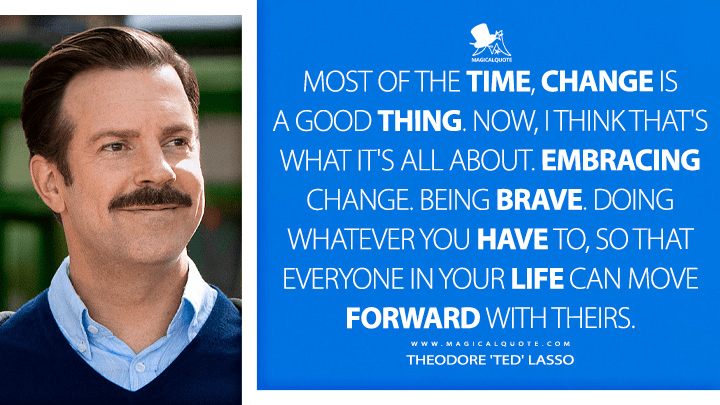
I’m not talking about rearranging a few things or tweaking some habits – but a wholesale renovation of the heart. A transformed life is a new life, and not a reconstituted life.

Far too many people put their focus on others changing. They’ve bought into the belief that other people need to see things how they seem them – that everyone else must bend their lives to how they believe things ought to be. But this is really nothing more than sinful pride and hubris, as if the world revolves around me.

Change is for everyone, not just a select few, or for others for whom we believe need to get right or get left. Jesus made a lot of waves with the religious establishment by hobnobbing with the least, the lost, and the lowly of society.

Christ actively sought out the marginal folks, healing many of them from sickness, disease, and sin so that they could be united with God and no longer remain on the fringes of society.

If you’re not in the transformation business, then healing a bunch of low-life people means nothing to you. For the religious leaders of Christ’s day, Jesus was not flexing any real Messiah muscle for them; he was not beating up Roman gentiles and kicking them out of Palestine. So, they wanted a sign from heaven that would authenticate the proper Messiah credentials of Jesus.

But a sign already exists: The sign of Jonah. As Jonah was three days and three nights in the belly of a big fish, so Jesus would be in the earth for three days and nights. The death and resurrection of Jesus is needed, and when faced with this information, the only appropriate response is to change, to do a complete U-turn in life.

Jonah was all but dead. But God caused the great fish to belch up Jonah onto the land. He went forth a changed man. The experience of having stomach fluids work on a person for three days and nights will certainly change you! Jonah was spiritually and physically different – bleached completely white and an incredible sight to see.

Yet another sign exists: The Queen of Sheba’s sign. When she encountered King Solomon, she was overwhelmed with the experience. It changed her. So therefore, how much more ought we to change when encountering Jesus?

The appropriate response to Jesus is a changed life. Jesus was looking for status quo malcontents, for a desire to change. The process of change is hardwired into creation – from seasons of the year to the seasons of people’s lives – all are designed for a sustained process of time to revolutionize us.

Jesus modeled this for us. He switched his address of heaven and moved into our neighborhood in order to bring us new life. Jesus continually extends the invitation to change. All he asks is to let God do the work of change within us, to be patient with the construction of the soul he is doing, and to persist with daily routines of faith.

Yes, it’s time for a change. But change for change’s sake is not the point. Change that reflects godly values is the point. And in order to realize this good sort of change, we must be attentive and hear Holy Scripture, seek the mind and heart of God, and be willing to let Jesus come and have the run of the house.

We must unlearn before we learn. We need to let go so that we can take up. Change involves the humility to admit when we are lost, ask for help, and go in a different direction. New life is not rebranding oneself but is akin to being born again.

Almighty God, we desire to be transformed by you and allow the life of Jesus to be expressed in and through us. We desire to walk in the light of your Spirit. Reveal to us those things in our lives that need to change. Allow us to discern between flesh and spirit so that we can choose a healthy holy path.

Continue to give us spiritual awareness. Transform us into something new altogether. May our old life and old ways disappear, and may new life emerge that will bless both the church and the world, through Jesus Christ our Lord, in the power of the Holy Spirit. Amen.


The Age of the Spirit (Joel 2:18-29)

“Come, Holy Spirit,” by Mary Anne Durnin

The Lord was deeply concerned
about his land
    and had pity on his people.
In answer to their prayers
    he said,
“I will give you enough grain,
wine, and olive oil
    to satisfy your needs.
No longer will I let you
    be insulted by the nations.
An army attacked from the north,
but I will chase it
    into a scorching desert.
There it will rot and stink
from the Dead Sea
    to the Mediterranean.”

The Lord works wonders
    and does great things.
So tell the soil to celebrate
and wild animals
    to stop being afraid.
Grasslands are green again;
fruit trees and fig trees
    are loaded with fruit.
Grapevines are covered
    with grapes.

People of Zion,
celebrate in honor
    of the Lord your God!
He is generous and has sent
the autumn and spring rains
    in the proper seasons.
Grain will cover
    your threshing places;
jars will overflow
    with wine and olive oil.

I, the Lord your God,
will make up for the losses
    caused by those swarms
and swarms of locusts
    I sent to attack you.
My people, you will eat
    until you are satisfied.
Then you will praise me
for the wonderful things
    I have done.
Never again will you
    be put to shame.

Israel, you will know
    that I stand at your side.
I am the Lord your God—
    there are no other gods.
Never again will you
    be put to shame.

Later, I will give my Spirit
    to everyone.
Your sons and daughters
    will prophesy.
Your old men
    will have dreams,
and your young men
    will see visions.
In those days I will even give
my Spirit to my servants,
    both men and women. (Contemporary English Version)

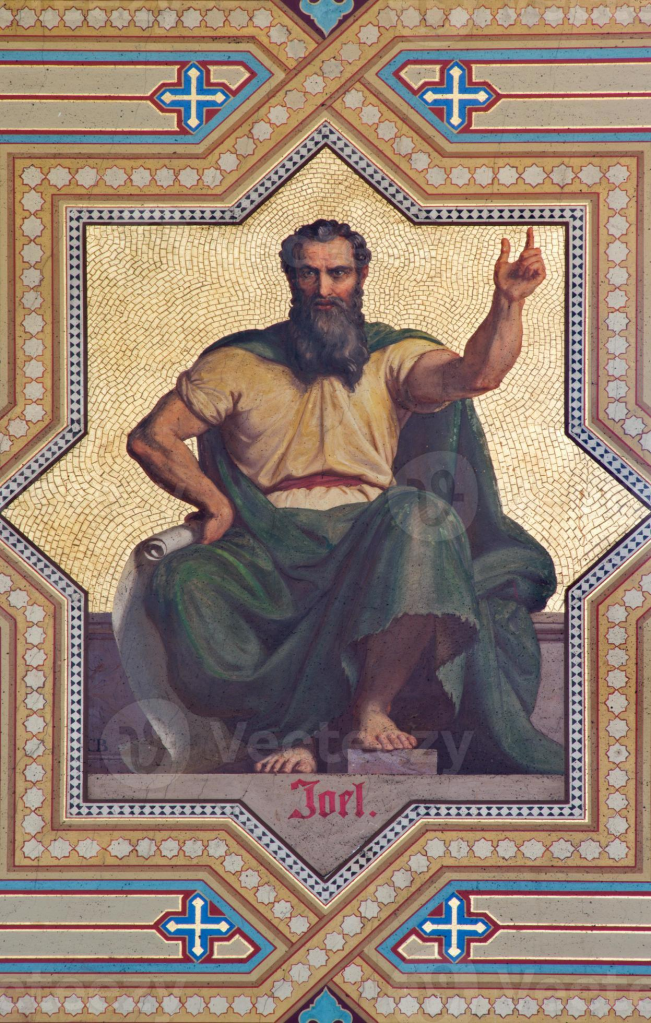
Fresco of the prophet Joel in the Altlerchenfelder Church, Vienna, Austria

We are in the wake of Pentecost Day. But it ought not to have come as a surprise. There were prophetic rumblings of the Spirit’s future tornadic activity, long before the time of Jesus.

The prophet Joel, along with all the Old Testament prophets, had both a message of grace and of judgment. And so, this prophetic book falls naturally into those two parts.

Within the first part of the prophecy, Joel speaks of a terrible locust plague that came over Israel as a judgment from God. The people had strayed from their spiritual and religious ways of covenant with God. The locusts, destroying every plant in their path, reflected the people’s lack of spiritually thriving and growing in grace. They, too, were vulnerable to destruction. They needed to repent and to return to their God.

Yet, the Lord’s anger lasts only a moment, but God’s mercy and blessing endure forever. So, words of grace were offered to the people. There is a time coming, Joel insisted, when God will pour out the divine Spirit far and wide to bless the people and contend with the nations who oppose the covenant community.

Put another way, the first part of the prophecy describes how God fought against God’s own people, to bring them back to their spiritual senses. And the second part of the prophecy describes how the Lord will fight against the nations who fight against God and God’s people.

The people’s affections and allegiance became attached to other things rather than God. So, the Lord sent an army of locusts to oppose them, to challenge their milquetoast and half-hearted attempts at following divine instructions.

Joel foresaw two things coming as the great Day of the Lord approaches: a great outpouring of the Holy Spirit; and a terrible time of divine judgment. 

Let’s take a few things to heart as a response to Joel’s prophecy:

Be aware of God’s purpose in history

From grasshopper swarms to world-wide judgment, to the dissolving of sun and moon—God’s purpose is to reveal divine glory to all the world.

“You will know that I am in the midst of Israel,
        and that I am the Lord your God—no other exists;
        never again will my people be put to shame.” (Joel 2:27, CEB)

“Father, the hour has come; glorify your Son so that the Son may glorify you.” Jesus (John 17:1, NRSV)

Stay close to the Lord

Don’t wander from God. But, if you do, the Lord will spend all kinds of energy in bringing us back and restoring us.

“But even now,” declares the Lord,
“return to me with all your heart—
with fasting, crying, and mourning.” (Joel 2:12, GW)

And the God of all grace, who called you to his eternal glory in Christ, after you have suffered a little while, will himself restore you and make you strong, firm and steadfast. (1 Peter 5:10, NIV)

Change the inside, not the outside

Repentance and faith are to be a way of life, and not simply a one time event. The way we present ourselves on the outside is a projection of what we want others to see. But God sees the heart, so we must go there and focus on the inner person.

Don’t rip your clothes
    to show your sorrow.
Instead, turn back to me
    with broken hearts.
I am merciful, kind, and caring.
I don’t easily lose my temper,
    and I don’t like to punish. (Joel 2:13, CEV)

Endure what you suffer as being a father’s punishment; your suffering shows that God is treating you as his children. Was there ever a child who was not punished by his father? If you are not punished, as all his children are, it means you are not real children, but bastards. In the case of our human fathers, they punished us and we respected them.

How much more, then, should we submit to our spiritual Father and live! Our human fathers punished us for a short time, as it seemed right to them; but God does it for our own good, so that we may share his holiness. When we are punished, it seems to us at the time something to make us sad, not glad. Later, however, those who have been disciplined by such punishment reap the peaceful reward of a righteous life. (Hebrews 12:7-11, GNT)

Earnestly seek the outpouring of the Holy Spirit

On the Day of Pentecost, the Apostle Peter said that the coming of the Holy Spirit was a fulfillment of Joel’s prophecy (Acts 2:16). That was just the beginning of the blessing. The Holy Spirit is still operative and active in the church and the world. The prophecy is far from complete.

In reply to those who were concerned about others prophesying and thereby possibly challenging authority, Moses said:

“Are you concerned what this might do to me? I wish the Lord would give his Spirit to all his people so everyone could be a prophet.” (Numbers 11:29, CEV)

And those who observed and heard the Spirit being poured out, exclaimed with slack jawed amazement:

“Aren’t these all Galileans? How come we’re hearing them talk in our various mother tongues?

Parthians, Medes, and Elamites;
Visitors from Mesopotamia, Judea, and Cappadocia,
    Pontus and Asia, Phrygia and Pamphylia,
    Egypt and the parts of Libya belonging to Cyrene;
Immigrants from Rome, both Jews and proselytes;
Even Cretans and Arabs!

“They’re speaking our languages, describing God’s mighty works!” (Acts 2:7-11, MSG)

The age of the Spirit is here. It hasn’t gone away. So, let’s pursue the spiritual life with all the energy given us, to the glory and praise of God. Amen.

It’s Not Over Till It’s Over (Ezekiel 33:10-16)

The Lord said:

Ezekiel, son of man, the people of Israel are complaining that the punishment for their sins is more than they can stand. They have lost all hope for survival, and they blame me. Tell them that as surely as I am the living Lord God, I don’t like to see wicked people die. I enjoy seeing them turn from their sins and live. So if the Israelites want to live, they must stop sinning and turn back to me.

Tell them that when good people start sinning, all the good they did in the past cannot save them from being punished. And remind them that when wicked people stop sinning, their past sins will be completely forgiven, and they won’t be punished.

Suppose I promise good people that they will live, then later they start sinning and believe they will be saved by the good they did in the past. These people will certainly be put to death because of their sins. Their good deeds will be forgotten.

Suppose I warn wicked people that they will die because of their sins, and they stop sinning and start doing right. For example, they need to return anything they have taken as security for a loan and anything they have stolen. Then if they stop doing evil and start obeying my Law, they will live. Their past sins will be forgiven, and they will live because they have done right. (Contemporary English Version)

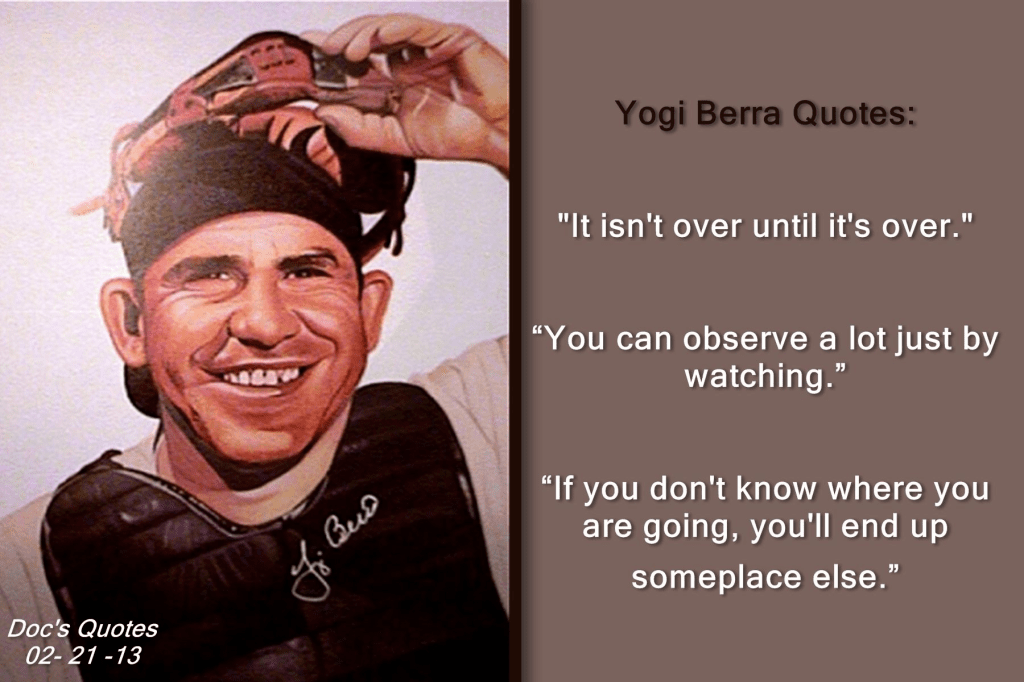
“It ain’t over till the fat lady sings,” is an old adage which means one should not presume to know the outcome of something that’s still in progress. In more contemporary language, we might say, “It’s not over till it’s over.”

Those sorts of proverbs are asking us, “What are you doing today? How are you living your life, right now?”

We need to be present to the time we are inhabiting at this moment. There are two opposite temptations for us in relating to time.

  1. “I did a lot of good things in the past. I worked hard. I was generous. Now it’s time for me to do whatever the heck I want. Nobody is going to tell me what to do or how to live my life.”
  2. “I did a lot of bad things in the past. I partied hard. I took advantage of people. Now it’s time for me to do good. I don’t know, though, whether it will ever be enough.”

In other words, the temptations are either to rely on all the good I’ve done, earning me a license to do what I want; or to believe I can never overcome my bad past. In both cases, it’s to keep thinking our past is the controlling factor.

But it’s not.

Just as there was a flip-flop of living, it could very well happen again. The guy who did good in the past, then didn’t, now responds to overtures to stop living a selfish life. He begins doing the good he used to do. And the guy who had a sordid past, then changed and did good, now goes back to his old life, like a dog returning to its vomit.

It’s never over, till it’s over. As long as we’re still breathing on this earth and walking on it, the outcome of life is still yet to be determined. There is always the opportunity for new life. And it begins with identifying and confessing where we are in this present time.

If we confess our sins, God is faithful and just to forgive us our sins and cleanse us from everything we’ve done wrong. (1 John 1:9, CEB) 

Being right with God means assessing our relationship at all times. Forgiveness and reconciliation are activated by admitting one’s true condition. Secret sins tucked away deep in the soul will only fester and boil. The result of un-confessed sin is spiritual blindness, darkness, and death. 

There cannot be new life and renewal, revival, or revitalization of life and ministry apart from real honest tell-it-like-it-is biblical confession. 

If this scares the hell out of you, it really should. Dealing with sin in a radical straightforward manner is what Jesus talked about in his Sermon on the Mount, in saying we should pluck our eyes out if they offend, and cut our hands off if they cause us to sin; because it’s better to be in God’s kingdom with no eyes and hands than to burn in hell with our parts intact. (Matthew 5:29-30) 

Confession is more than simply mouthing some words about not being perfect and a sinner like everybody else; it is to lead to a complete turn-around and change of how we live our lives. We can change. We are neither fated to be a screw-up forever nor a good person till the end.

Instead, we have to put the work in – mentally, emotionally, and spiritually.

Change is what the biblical word “repentance” means. It happens by dealing squarely with our past thinking, choices, and behavior. This is why some form of a prayer of confession really needs to happen at every church worship service. 

Ignoring such a vital liturgical prayer and practice will, at best, leave people with no guidance for confronting sin; and, at worst, will teach people that confession is not necessary to Christianity and leave them a spiritual mess. 

Yet a carefully constructed prayer of confession can lead believers to unburden the things they have done, and the things they have left undone – which opens us to the advocacy of Jesus Christ who speaks on our behalf because of his once-for-all atoning sacrifice for sins.

Confession, repentance, and change are more than single events; they are a way of life for the believer. As long as you are still able to read this, there’s still the opportunity to live the good life and forsake the wicked life.

Today, if you hear his voice, do not harden your hearts. (Hebrews 4:7, NIV)

It ain’t over till it’s over.

Creator God, you made us in your image: may we discern your goodness in all that we see, and serve you with all goodness in everything we do, through Jesus Christ our Lord. Amen.

Listen and See (Isaiah 42:14-21)

For a long time, I, the Lord,
    have held my temper;
now I will cry out and groan
    like a woman giving birth.
I will destroy the mountains
    and what grows on them;
I will dry up rivers and ponds.

I will lead the blind on roads
    they have never known;
I will guide them on paths
    they have never traveled.
Their road is dark and rough,
    but I will give light
to keep them from stumbling.
    This is my solemn promise.

Everyone who worships idols
as though they were gods
    will be terribly ashamed.

You people are deaf and blind,
but the Lord commands you
    to listen and to see.
No one is as blind or deaf
as his messenger,
    his chosen servant,
who sees and hears so much,
    but pays no attention.

The Lord always does right,
and so he wanted his Law
    to be greatly praised. (Contemporary English Version)

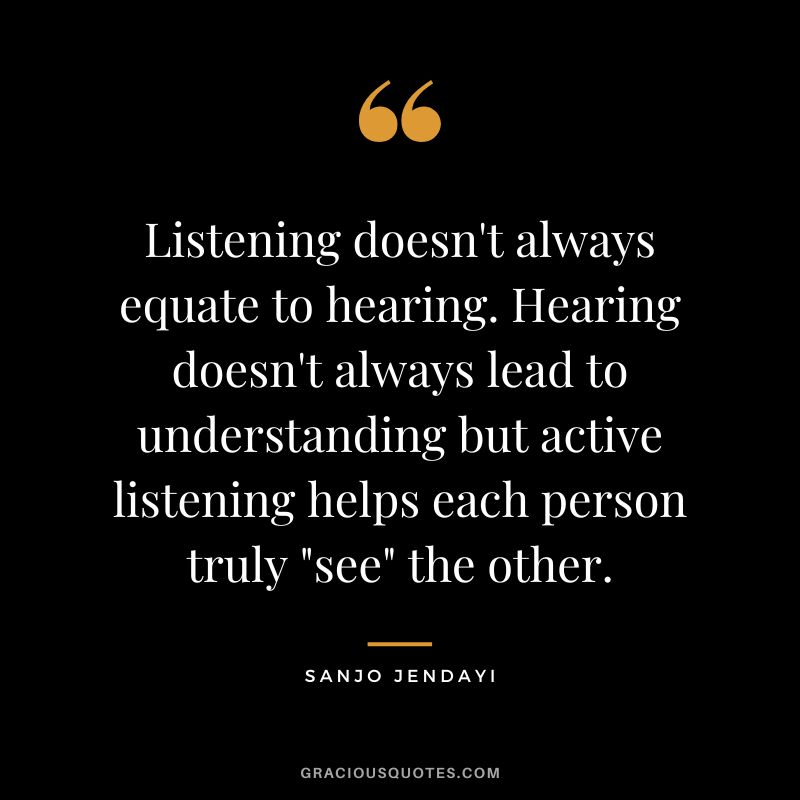
The Christian season of Lent serves to remind us that we must cultivate awareness by opening our eyes and unstopping our ears. Spiritual blindness and deafness are the result of failing to pay attention, ignoring the moral vision of God, and not listening to God’s voice.

It’s not unusual for people to complain about God being silent and ignoring them. But do we ever consider how the Lord feels about us living our lives as functional atheists? There may be expressions of belief, yet God doesn’t factor into the daily life of many. And the Lord is not okay with this.

At least we have assurances throughout Holy Scripture that the Lord is attentive to us, even when silent or seemingly not there. However, when it comes to us, our silence and lack of being present to the Lord is outright spiritual blindness and deafness on our part.

Today’s Old Testament lesson almost seems as if Yahweh is like the person trying to get your attention in a crowded place – jumping up and down, waving his arms, yelling our name – doing whatever it takes for us to see and hear, listen and look up. Yet, alas, we don’t.

Maybe we need to remember what God’s divine eyes and ears have already seen and heard. The Lord heard the awful groanings of the Israelites in Egypt under their harsh slavery. And God took notice of them and saw what was happening. (Exodus 2:24-25)

Perhaps we must recall all the times the Lord heard the cries of the people and sent a deliverer (Judges 2:16-19); and looked from heaven, saw those in bondage, and freed them. (Psalm 102:18-20)

If we put our fingers in our ears, and cover our eyes for too long, our hearts will become hard, and we shall be unable to turn from unhealthy ways of living. We’ll become so obtuse and clueless that we cannot repent and be healed.

Then I heard the voice of the Lord saying, “Whom shall I send? And who will go for us?” And I said, “Here am I. Send me!” He said, “Go and tell this people:

“‘Be ever hearing, but never understanding;
    be ever seeing, but never perceiving.’
Make the heart of this people calloused;
    make their ears dull
    and close their eyes.
Otherwise they might see with their eyes,
    hear with their ears,
    understand with their hearts,
and turn and be healed.” (Isaiah 6:8-10, NIV)

This might seem rather hard. And yet, none of us can truly know comfort and consolation apart from facing the hard truth in front of us and the hard heart inside us. Everyone wants happiness without pain. However, we cannot have a rainbow without a storm, and a resurrection without a cross.

We can have a different experience of God. It’s not too late. The message of Lent is that we can prepare ourselves for the Lord’s deliverance – and it is likely to come in the form of great sorrow and great joy of which we could not have anticipated.

The wisdom I proclaim is God’s secret wisdom, which is hidden from human beings, but which he had already chosen for our glory even before the world was made. None of the rulers of this world knew this wisdom. If they had known it, they would not have crucified the Lord of glory. However, as the scripture says,

“What no one ever saw or heard,
    what no one ever thought could happen,
    is the very thing God prepared for those who love him.” (1 Corinthians 2:7-9, GNT)

We humans struggle with the hard things of life. Yet, what we don’t always see or hear is how those adversities are shaping and forming us as a people.

For how would we ever know the Lord as our:

  • Deliverer unless we were in bondage?
  • Comforter unless we were in trouble?
  • Helper unless we were weak?
  • Healer unless we were broken?
  • Provider unless we were poor?
  • Protector unless we were in danger?
  • Warrior unless we were under attack?
  • Rock unless we were being tossed about?

Every day is a fresh opportunity to experience the presence, power, provision, and protection of a God who sees and hears us. Believers are to honor and respect the Lord by listening to God’s voice and obeying God’s words.

So, let us use this season to offer prayers of repentance and faith:

O God, whose glory it is always to have mercy: Be gracious to all who have gone astray from your ways,
and bring them again with penitent hearts and steadfast faith to embrace and hold fast the unchangeable truth of your Word, Jesus Christ your Son; who with you and the Holy Spirit lives and reigns, one God, forever and ever. Amen.