The Bethlehem Candle of Love (Luke 2:1-7)

In those days Caesar Augustus issued a decree that a census should be taken of the entire Roman world. (This was the first census that took place while Quirinius was governor of Syria.) And everyone went to their own town to register.

So Joseph also went up from the town of Nazareth in Galilee to Judea, to Bethlehem the town of David, because he belonged to the house and line of David. He went there to register with Mary, who was pledged to be married to him and was expecting a child. While they were there, the time came for the baby to be born, and she gave birth to her firstborn, a son. She wrapped him in cloths and placed him in a manger, because there was no guest room available for them. (New International Version)

The Christian season of Advent is a time of preparation and expectant waiting for the promised Savior. Each Sunday this month, we will focus on the theme of the Advent candle for that day. Today, we look at the Bethlehem candle, love. Next week, we consider joy, then peace, and on Christmas Day, light.

Advent Love

Jesus was born in Bethlehem and placed in a humble manger, a feeding trough, because of love. The Lord was quite literally conceived in love – a love which originated within the Trinity of Father, Son, and Spirit, and mediated through a virgin, Mary, whose own love for God enabled her to raise the Messiah in love. The world revolves on the axis of love. Without love, we do not exist. With love, there is deliverance, there is a Savior. It’s all about love, my friends, and always has been from the beginning….

God’s Love

God’s loving plan for us started, not with the incarnation, but with the very first act of creation. Out of nothing, and out of sheer love, humanity was created in God’s own image. Since God is Love, we were made to receive love and give love. (Genesis 1:26-30)

However, the first humans, Adam and Eve, began to doubt the truth of God’s goodness and love for them. And so, they disobeyed their Creator, believing that God was withholding love from them.

Yet, despite humanity’s fall into sin, God’s loving mercy did not abandon them altogether. God did not destroy Eve and Adam. Even as they began to experience the serious consequences of their sin, God made a promise of future redemption: that Eve’s own offspring would one day crush the head of the serpent who tempted them. (Genesis 3:15)

God’s Loving Plan

The Lord had no intention of simply leaving people in their wretched state of separation and rebellion. God promised that Abraham’s descendants would be a blessed people who, in turn, would bless the world. (Genesis 12:2-3)

God foretold of the One, born of a virgin, who would free the captives, bear our transgressions, suffer in our place, redeem people, and usher in a peace unlike anything ever known.

Though the mountains be shaken
    and the hills be removed,
yet my unfailing love for you will not be shaken
    nor my covenant of peace be removed,”
    says the Lord, who has compassion on you. (Isaiah 54:10, NIV)

The Bible is a long, extended, and unfolding drama of redemption spanning several centuries. Even though the plan of redemption takes time, God lovingly walks with people through their suffering, temptation, loss, grief, and trials.

The Nativity by Japanese artist Sadao Watanabe (1913-1996)

When the Lord heard the cries of the ancient Israelites under their cruel yoke of slavery, God led them out of Egypt (Exodus 3:18). When the Jews were exiled from their land, God reminded them of the ongoing plan of redemption:

But now thus says the Lord,
    he who created you, O Jacob,
    he who formed you, O Israel:
Do not fear, for I have redeemed you;
    I have called you by name; you are mine.
When you pass through the waters, I will be with you,
    and through the rivers, they shall not overwhelm you;
when you walk through fire you shall not be burned,
    and the flame shall not consume you.
For I am the Lord your God,
    the Holy One of Israel, your Savior.
I give Egypt as your ransom,
    Cush and Seba in exchange for you. (Isaiah 43:1-3, NRSV)

For generations, God has remained faithful to people even when they doubt and have weak faith; and even though they question God’s motives and power and turned away from the Lord. The plan of God is simply an extension of the character of God:

They refused to obey and were not mindful of the wonders that you performed among them, but they stiffened their necks and appointed a leader to return to their slavery in Egypt. But you are a God ready to forgive, gracious and merciful, slow to anger and abounding in steadfast love, and you did not forsake them. (Nehemiah 9:17, NRSV)

Love Is with Us

Revisiting the big picture of God’s love for people during Advent helps us understand the significance of the first advent, the coming of a Savior. The incarnation of Christ is the hinge of a larger story of God’s good love and redemption for us. Love, incarnated in the form of a vulnerable baby, came to fulfill a promise God made centuries before.

Christ was truly God.
But he did not try to remain
    equal with God.
Instead he gave up everything
    and became a slave,
when he became
    like one of us.

Christ was humble.
He obeyed God and even died
    on a cross. (Philippians 2:6-8, CEV)

The motivation for the first advent of Jesus, the incarnation of Christ, was because of love:

For God so loved the world that He gave His only begotten Son, that whoever believes in Him should not perish but have everlasting life. (John 3:16, NKJV)

True love is God’s love for us, not our love for God. He sent his Son as the way to take away our sins. (1 John 4:10, ERV)

Advent Love Is Our Calling

In remembering that first advent, we know that a new era of God’s restoration has been ushered in. And we await a second advent when Christ returns to judge the living and the dead. Now, living in between these two advents, God’s people are called to love others as Christ has loved us and gave himself for us.

“‘Love the Lord your God with all your heart, with all your soul, and with all your mind.’ This is the greatest and the most important commandment. The second most important commandment is like it: ‘Love your neighbor as you love yourself.’ The whole Law of Moses and the teachings of the prophets depend on these two commandments.” (Matthew 22:37-40, GNT)

This Advent season, let us ask how we can love God and love our neighbor more fully, so that we might fulfill the call of Jesus Christ.

Let us pray with the encouragement of Scripture (adapted from 1 John 4:7-12):

Loving God, help us to love each other since love comes from You. We understand that everyone who loves is born again and experiences a relationship with You. The person who refuses to love doesn’t know the first thing about You, because You, God, are Love itself—no one can know You if they don’t know love.

Merciful God, we give you unending thanks that You showed Your love for us by sending Your only Son into the world so that we might live through him. While we were still sinners, Christ died for us; and that is the kind of love You are all about—not that we once upon a time loved God, but that You loved us and sent the Son as a sacrifice to clear away our sins and the damage they’ve done to our relationship with You.

Gracious God, since You loved us like this, we pray that You will enable us to love each other. No one has seen You, ever. But if we love one another, You will dwell deeply within us, and love becomes complete in us. May it be so, to the glory of Jesus Christ in whose Name we pray. Amen.

2 Kings 4:32-37 – But That Is Not the End of the Story

Elisha and the Shunammite woman by Dutch painter Gerbrand van den Eeckhout (1621-1674)

Elisha entered the house and found the boy stretched out on the bed dead. He went into the room and locked the door—just the two of them in the room—and prayed to God. He then got into bed with the boy and covered him with his body, mouth on mouth, eyes on eyes, hands on hands. As he was stretched out over him like that, the boy’s body became warm. Elisha got up and paced back and forth in the room. Then he went back and stretched himself upon the boy again. The boy started sneezing—seven times he sneezed!—and opened his eyes.

He called Gehazi and said, “Get the Shunammite woman in here!” He called her and she came in.

Elisha said, “Embrace your son!”

She fell at Elisha’s feet, face to the ground in reverent awe. Then she embraced her son and went out with him. (The Message)

Life sometimes feels like a roller coaster. Our emotions go up and down alongside the circumstances which bring them forth.

Elisha was one of the all-time great prophets in ancient Israel. He developed an ongoing friendship with a woman from the town of Shunem. It was her simple hospitality to a stranger that brought about the enduring relationship.

Whenever Elisha passed through on his prophetic business, he would stop in and have a meal or spend the night in a special room set aside just for him.

But that is not the end of the story….

The woman was about to have a big change of life, a life she could not have ever seen coming and only dreamed of.

The Shunammite woman had no children and was not able to conceive. Yet, on one of his visits, Elisha promised her she would hold her very own infant child… which she eventually did. A year after Elisha’s pronouncement, the woman and her husband had a son.

The woman went from discouraged to elated. The child grew. The Shunammite and her family were content and living well.

But that is not the end of the story….

In today’s Old Testament lesson, we pick up the narrative as the child is a small boy, the family happy and healthy… until they weren’t.

One day the boy was playing, as he did every day. Whatever happened, he developed such a terrible headache that his dear mother rocked him for hours, trying to comfort him. The worst case scenario happened. The boy died.

The woman went from joy to despair in a matter of hours.

But that is not the end of the story….

The grieving mother refused to let death have the last word on her son. She saddled her donkey and went directly to Elisha. The Shunammite lamented to him about her son, and in her grief, cried out how Elisha had gotten her hopes up, only to be dashed by that dark enemy of death.

The prophet responded to the woman’s plea and set off  post haste to her home, which had now become a sort of funeral parlor. Elisha went into the room by himself with the dead boy. In an odd process similar to what Jesus would do centuries later, Elisha did some physical actions in bringing about a miraculous resurrection.

The boy sneezed, got up, and was given back to his mother. Her lowest of the low grinding sadness of distress and despair now turned to the highest of the high elation of joy and gratitude.

But that is not the end of the story….

The story continues because the larger overarching story of God’s gracious intervention into this world to bring about the redemption of all creation.

Along the way, across the millennia, the Lord continues to use faithful people to bring about renewal, restoration, and redemption. In the Christian tradition, the apex of this merciful work is fulfilled in the person of Jesus Christ.

God himself was pleased
    to live fully in his Son.
And God was pleased
    for him to make peace
by sacrificing his blood
    on the cross,
so that all beings in heaven
    and on earth
would be brought back to God. (Colossians 1:19-20, CEV)

The resurrection of the boy, and all risings from death before Jesus, prefigured and foretold the ultimate resurrection of Christ. And because Christ is risen, we too, shall rise from death – both spiritually and bodily.

Therefore, we have been buried with him through baptism into death, in order that just as Christ was raised from the dead through the glory of the Father, so we too may live a new life. For if we have become united with him in the likeness of his death, we will certainly also be united in the likeness of his resurrection. (Romans 6:4-5, NET)

The end of the grand narrative story is moving to a climax. Jesus is coming again to judge the living and the dead. All things shall be restored. All will be made right. We may sorrow in the night, but joy comes in the morning.

Then I saw a new heaven and a new earth, for the first heaven and the first earth had passed away, and the sea was no more. And I saw the holy city, the new Jerusalem, coming down out of heaven from God, prepared as a bride adorned for her husband. And I heard a loud voice from the throne saying,

“See, the home of God is among mortals.
He will dwell with them;
they will be his peoples,
and God himself will be with them and be their God;
he will wipe every tear from their eyes.
Death will be no more;
mourning and crying and pain will be no more,
for the first things have passed away.”

And the one who was seated on the throne said, “See, I am making all things new.” Also, he said, “Write this, for these words are trustworthy and true.” Then he said to me, “It is done! I am the Alpha and the Omega, the Beginning and the End. To the thirsty I will give water as a gift from the spring of the water of life. (Revelation 21:1-6, NRSV)

Our past grief and our present troubles will give way to a future hope – an ending to the story we can barely imagine, a glorious existence with our God which will have no end.

May the Lord come soon.

I pray the Lord Jesus will be kind to you.

May faith, hope, and love surround everyone who belongs to Christ Jesus. Amen.

Acts 4:23-31 – Why Not Us?

Hear My Plea by Rochelle Blumenfeld

The apostles Peter and John were arrested for preaching the good news about Jesus. After warning and threatening them to stop doing this, the ruling council of the Jews released them. This was the apostles’ response….

On their release, Peter and John went back to their own people and reported all that the chief priests and the elders had said to them. When they heard this, they raised their voices together in prayer to God. “Sovereign Lord,” they said, “you made the heavens and the earth and the sea, and everything in them. You spoke by the Holy Spirit through the mouth of your servant, our father David:

“‘Why do the nations rage
    and the peoples plot in vain?
The kings of the earth rise up
    and the rulers band together
against the Lord
    and against his anointed one.’

Indeed, Herod and Pontius Pilate met together with the Gentiles and the people of Israel in this city to conspire against your holy servant Jesus, whom you anointed. They did what your power and will had decided beforehand should happen. Now, Lord, consider their threats and enable your servants to speak your word with great boldness. Stretch out your hand to heal and perform signs and wonders through the name of your holy servant Jesus.”

After they prayed, the place where they were meeting was shaken. And they were all filled with the Holy Spirit and spoke the word of God boldly. (NIV)

The early believers in Jesus turned to God in a time of persecution. They found comfort in how God had worked in the past. The ancient church claimed the strength to carry on with speaking about Christ in their everyday lives. When they heard about threats against the apostles, the believers did not get angry or upset about how terrible things were. Instead:

The church decided to concentrate on corporate prayer together.

God is going to do what God is going to do. No government, nation, institution, group of people, or individual person can thwart God’s agenda for the church and world. God is sovereign over everything. We are not. Our place is to participate in God’s agenda through the ministry of prayer and speaking the word of God.

God acted in the past, on behalf of those first believers who came to Jesus and worshiped him with all their hearts. God is still transforming lives. It happened in ancient Jerusalem, throughout the history of the church, and in places today around the world. It can also happen with us.

Prayer is like breathing – inhaling more of God and exhaling less of me. Prayer takes the form of first remembering what God did in the past. Then, we pray specifically for our current situation which connects to the larger purposes of what God is doing. All the while we anticipate God will hear and act, just as has been done throughout history.

Remembrance is an important dimension to biblical prayer. Memory is necessary because we have a tendency toward forgetfulness. The older we get the more we tend to forget (probably because we have so much to remember!). So, continually rehearsing what God has done keeps us grounded in Scripture and tethered to what God can do now.

Remembering God’s saving actions and finding our own personal stories in the grand story of redemption helps us to pray in biblical ways.

The prayer of the early believers was a rehearsal of God’s mighty reputation, from creation to King David, to the redemptive events of Jesus. They reminded God of when, in the past, there was divine intervention. The church collectively quoted Psalm 2 about the Messiah. That psalm declares how the nations of the earth plot in vain because the Lord is the One who shall prevail over every hard circumstance. 

God bends each malevolent action toward the redemption and transformation of humanity. God will work out benevolent plans and purposes, even using people who have no acknowledgment of God. God is not surprised by our troubles and our tough situations.

God is never frustrated by people acting badly, because divine providence and guidance is in control, even if we cannot always perceive it or see it in the moment.

Remembering and rehearsing what God has done in the past helps us realize that, during any trouble, God is in control and will accomplish good plans on this earth. The prayer of the believers in Acts made the connection between what God has done and what they needed.

Photo by Pixabay on Pexels.com

Interestingly, the believers did not pray for relief from oppression or for God to judge their persecutors. Instead, they prayed for boldness to speak the word of God in the middle of their trouble. They rightly discerned that they needed to pray for courage to speak about Jesus. So, the church prayed for God to act in power, for God’s Word to go forth, and for Christ’s Name to be glorified.

God’s response to the prayer was immediate. The place where the church was praying shook. God did exactly what they asked for – filling them up with the Spirit, so that they spoke boldly about Jesus. Just as God empowered people for service in the past, so it was done in the present. What’s more, God will empower us with the same courage.

It is completely normal to simultaneously yearn for bravery while being afraid of getting a prayer for boldness answered. This is more than trying to overcome feelings of awkwardness or shyness. For the early believers, a very real and immediate danger to speaking up about Jesus was present.

It seems to me we need more people who know how to ask good questions and have the patience and attention to listen well and respond thoughtfully. It does no good to simply dispense answers to questions people aren’t asking. Speaking about Jesus does not mean making spiritual cold calls on strangers. And it certainly doesn’t involve being obnoxious or acting like a spiritual pester pup.

Discussing Jesus mostly means speaking casually, one-on-one, with a friend, co-worker, neighbor, or family member you already know. Too often we might try to fly under the radar and avoid people because we think talking about Jesus is going to be too hard, or out of our league.

Confidence and courage are not telling people what they ought to believe. It is rather like sharing a precious gift with someone. It begins in relationships with people we care about and extends to a relationship with God. It is about discovering God together, and not arm-twisting others to personal ethics or churchgoing.

Yet, it may still all sound too scary. So, maybe we start with this: “Tell me what’s going on.” Then listen. After listening, say, “I’ll pray for you.”  The next time you encounter the person, ask how that situation went.  Express that you’ll pray again. Keep doing it and watch what God will do through you.

When we pray for boldness, and courageously make ourselves available to God, then we are living sacrifices. This is our spiritual act of worship. (Romans 12:1-2) Who knows? Why not here? Why not now? Why not us? After praying, we might find our meeting places shaken, lives transformed, and everyone filled with God’s Holy Spirit.

God almighty, as you sent the Son, send us into the world with your compelling love. Help us by means of your Spirit, to share your good news of love, forgiveness, justice, peace, compassion, and care. Revive your Church, o Christ. Gracious God, work everywhere reconciling, loving, and healing your people and your creation. Open our eyes to your mission in the world. Send us to serve with Christ, taking risks to give life and hope to all people and all your creation. Amen.

A Drama of Redemption

Tiger Woods

There was a time in my life (a long time ago!) when I played at least 9 holes of golf every day.  While married and raising kids, I did a lot less of it.  Yet, some of my best “visits” with parishioners were on the golf course.  In 2005, that all changed when I was in a car accident.  My back has never been the same.  I’ve never been able to twist and torque my body to swing a golf club.  It’s possible that I could try and reinvent my swing.  However, it hasn’t been a priority for me with all of life’s responsibilities.

So, I have mostly taken to the occasional weekend watching golf on TV.  I enjoy both the competition and skill of the professionals, and the stunning beauty of the courses they play.  This weekend was the Masters, which is probably the greatest and the best of the four major golf tournaments played each year.  Yesterday was an amazing final day of the tournament.  Tiger Woods, who hadn’t won a major tournament in over ten years, and had not won the Masters since 2005, came out of the pack to win.

I found myself unusually glued to the TV watching him.  As the holes progressed, I became more and more vested into Tiger’s performance.  By the time the final three holes were played, I was hanging on every stroke.  And when he putted on the 18th green, I went nuts.  Seeing him hug his kids and everyone congratulating him brought a well of tears to my eyes.  So, I am now asking, why did I have such an emotional reaction?

Because I know the story of Tiger Woods.  He was a golf prodigy at a young age.  He won his first of his five Masters tournaments at age 21.  It looked as though he was going to completely shatter every golf record in the books.  Then, his life began to unravel.  He was arrested for drunken driving; multiple affairs were discovered as many women came forward; divorce from his wife; years of competitive golf ravaged his body with several knee and back surgeries.  Tiger didn’t even play one round of golf in a nearly two-year stretch.  Indeed, it appeared he was done with golf.

Yesterday’s victory was more than winning a golf tournament.  Tiger’s victory was an incredible comeback story.  That, however, was not really what brought me to tears.  It was what I observed from him as he walked and played the course yesterday.  This was clearly a different Tiger Woods.  The younger Tiger approached golf with a must-win attitude.  I heard him, quite often, swear at himself before the censors could catch it on televised tournaments.  He moved about with a steeled compulsion as if he must win; must be better; must be on top; must be the best.  It resulted in more victories; more prestige; more money; more women; more everything.  It was an almost demoniacal obsession to play flawless and victorious golf.  Even when he was the golf’s world number one, Tiger set about reinventing his swing in the attempt to be an even better golfer.

Then, Tiger experienced a hard fall from grace; which was inevitable when the compulsive and neurotic self is in the driver’s seat.  However, yesterday I saw a much more relaxed Tiger.  He was incredibly composed and extremely patient in how he approached his round of golf.  He had a very different look in his eye.  Yes, he wanted to win. Yet, he didn’t seem to be obsessed; as if just being on the course and in the mix of competition again was enough for him.  Tiger’s creativity around the course seemed spontaneous and free, as opposed to his earlier years where his imagination could only seem to picture conquering the golf course.

This was a story of redemption played-out in front of us all while we watched the Masters.  So, when Tiger Woods won, without the neurotic need to do so, the tears came.  Truth be told, I relate to the neurotic self.  I resonate with the younger years of driving to be the best preacher in the world and the compulsion to read, study, and learn everything I could to be on the very top of my game as a minister of the gospel.  I never experienced a fall to the degree of Tiger, yet I know the feeling of being toppled through years of ministry wear and tear; of wondering if my body and soul would be able to do pastoral work again.

I am curious as to how Tiger Woods changed.  I suspect through all his inner crap and outer conflict that he eventually discovered the real Tiger underneath all the compulsion and drive.  Yesterday was his greatest triumph, in more ways than winning a golf tournament.  He was unusually calm.  He had determination, yet it did not seem to dominate his actions.  I saw a person enjoying the experience.  In the post-victory interviews, Tiger indeed acknowledged his profound gratitude for the ability to play and to play at a high level.

USP PGA: MASTERS TOURNAMENT - FINAL ROUND S GLF USA GA

I don’t know if Tiger will win again.  I don’t know how much golf he has in him.  At 43-years-old with his body ramshackled together through so many surgical interventions, it is quite possible that retirement is near.  Yet, whatever happens, I feel privileged to have watched not only a phenomenal golfer; I have observed a real transformation of a person.

I suppose I see a lot of myself in Tiger Woods.  There are, certainly, many ways we are dissimilar.  There are also ways we are similar.  I relate to being on a journey of self-transformation.  I can look back in hindsight and see myself driven to perform, as if some other person were at the wheel of my life; obsessed with being a successful and competent pastor (whatever the heck that really looks like); and, living with a compulsion for more knowledge, more insight, more skill.  Conversely, I now find myself moving about the hospitals I serve with a bit of what I saw in Tiger yesterday – a patient and calm demeanor of being present to patients, and, with greater challenge, present to my own emotions and self.

So, today, and every day, I hope to be present.  I don’t want to force myself to do ministry in that old compulsive sort of way, as if sheer willpower and dogged determination could bring about accomplishment of goals.  No, I want to feel the freedom of spontaneous compassion and allow the Spirit to send me to patient rooms; to be relaxed and fully attentive to the person in front of me without thinking about lunch, the next visit, or anything else.  I want to go home and be fully present to my wife, even to the ridiculous pester pup dog in front of me.  I want to be present to my girls and my grandsons without them seeing that look on my face that tells them I’m still at work, or off somewhere deep in my brain conniving ideas and forming thoughts for some future project or deadline.  I want to be present to the God who is ever-present with me; who is always and fully attentive to the entire scope of my life – who joins me on the two-steps-backward-three-steps-forward herky-jerky personal walk – always exhibiting grace, patience, and demonstrating a calming presence with me.

I saw a glimpse of the divine in Tiger yesterday, which is perhaps why so many people later in the day commented that they responded with tears welling-up in their eyes, too.  For we together saw connection, not compulsion; and, relationship, not self-retribution.  Maybe that’s why I see so many patient tears.  Maybe they see with me some of that divine presence.  If so, I thank God for it.

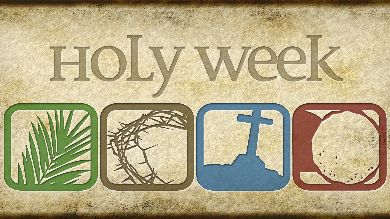
Holy Week

There is a reason that a redemption story compels us and brings us to tears.  We have a Redeemer who has displayed for us the ultimate drama of redemption.  In this Christian Holy Week, believers in Jesus across the world remember that the King of all creation, the One to whom all things hold together, was humiliated, berated, tortured, and killed.  He was laid in a tomb.  His followers were beside themselves with grief, loneliness, and wondering what was going on and what was going to happen.  Yet, death did not have the last word.  Love conquered the grave.  Suffering led to glory.  The care of the One led to the care of the many.

As we journey together through this Holy Week, may we pay attention to the story of Jesus.  May we be present in how our own individual stories fit into God’s grand narrative in the world.  May we know the grace of redemption and of the Redeemer who makes it possible.