Christ’s Beatitudes (Matthew 5:1-12)

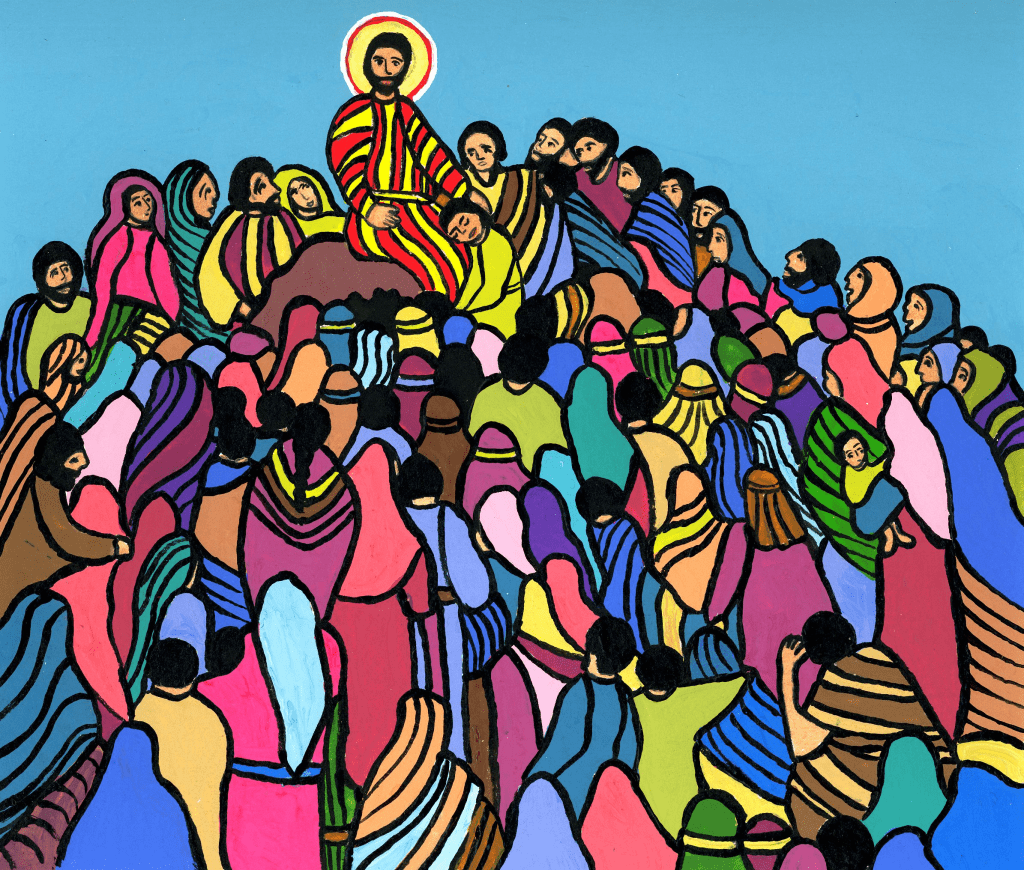
Sermon on the Mount by Gisele Bauche

When Jesus saw the crowds, he went up the mountain, and after he sat down, his disciples came to him. And he began to speak and taught them, saying:

“Blessed are the poor in spirit, for theirs is the kingdom of heaven.

“Blessed are those who mourn, for they will be comforted.

“Blessed are the meek, for they will inherit the earth.

“Blessed are those who hunger and thirst for righteousness, for they will be filled.

“Blessed are the merciful, for they will receive mercy.

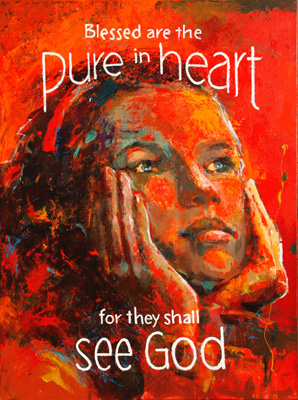
“Blessed are the pure in heart, for they will see God.

“Blessed are the peacemakers, for they will be called children of God.

“Blessed are those who are persecuted for the sake of righteousness, for theirs is the kingdom of heaven.

“Blessed are you when people revile you and persecute you and utter all kinds of evil against you falsely on my account. Rejoice and be glad, for your reward is great in heaven, for in the same way they persecuted the prophets who were before you. (New Revised Standard Version)

God’s Law (The Ten Commandments) was given on a mountain. That Law was restated and reframed on a mountain by Jesus in his Sermon on the Mount.

I believe that arguably one of the most important and impactful portions of Holy Scripture are the Beatitudes of Jesus, which serve as the foundation to all of Christ’s teaching.

Christ’s Beatitudes are not simply a random collection of pithy phrases from Jesus on what constitutes approval and blessing from God. They intentionally build upon each other and describe the nature of true righteousness.

The Poor in Spirit

Spiritual poverty, not wealth, is the spiritual base to the Christian life. Most of the original crowd listening to Jesus thought they were on the outside of the kingdom, on the margins of true religion. But Jesus told them they have a place in God’s reign as poor and pitiable people.

To be “poor in spirit” is to be a spiritual beggar who recognizes they have nothing to offer God. It is seeing oneself, one’s sin, and one’s life as spiritually bankrupt apart from God.

Beggars have neither the leverage nor the ability to strike deals with anybody; and so, they do one thing: beg continually.

The proud person would never be caught begging for anything. Yet, the humble spiritual beggar constantly prays because they need God. They discern that without God there is no hope. The kingdom of heaven belongs to the penitent and not to the proud.

The Mourners 

Mourning is the emotional response of acknowledging one’s spiritual poverty. 

Grief and lament have a central place in Christian theology and life. To avoid it, work around it, or short-circuit its process is to refuse Christ; there is no righteousness apart from mourning over sin. Crying, weeping, and even intense tears are important and necessary.

To experience personal grief over one’s sins and the sins of the church and the world is a Beatitude of Jesus. You neither need position, power, privilege, nor pedigree to be a mourner. All can mourn. This is the door by which we enter the kingdom of God.

The Meek

A meek and gentle spirit is the result of realizing poverty of spirit and practicing lament.

At the heart of what it means to be meek is a spirit of non-retaliation. Whenever we are flat on our backs before God, there is no place to look but up. Thus, there is no ability to look down on others.

To be meek is to be broken and moldable before God. A meek person takes personal responsibility for their attitudes and actions. The meek have no need to retaliate, even when egregiously wronged, because they fully entrust themselves to God alone who judges the living and the dead.

Ironically, brokenness is the path to righteous wholeness.

The Hungry and Thirsty

Only those who know their poverty of spirit, personally grieve over sin, and are gentle, end up longing for righteousness.

The desire for righteousness is a recognition that without God I will not make it. I cannot be righteous without Jesus. Simply put, righteousness is a right relationship with God and others.

Those who hunger and thirst for God’s righteousness know they cannot make things right by themselves; they need God’s help.

If we think we can live most days of our lives without God, we do not yet know true righteousness. People who understand their great need for Jesus are easy to spot. They crave and devour God’s Word as their daily food; and they cannot stop blabbering on about Jesus.
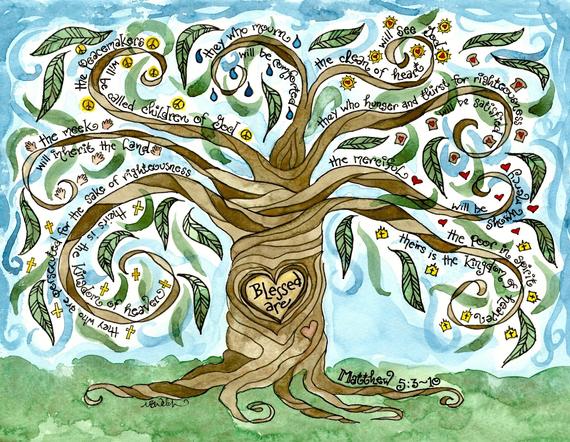
There are three practices of living that arise from being filled with God’s righteousness: mercy, purity, and peacemaking. These Beatitudes cannot be conjured up by our own will; instead, they organically grow within us and are freely expressed because of what God is doing in our lives.

You cannot force them any more than you can force a stalk of corn to grow on your terms. Rather, you work with the unforced rhythms of God’s grace and allow righteousness to take root in you.

Down below in the soil, spiritual poverty, mourning, and humility germinate. Then, when the plant breaks the soil and flowers, it produces mercy, purity, and peace-making.

The Merciful 

Mercy begins with a heart that seeks to be generous; it is a loving response to someone or a group of people in misery. We accept them and help them because we ourselves have been there.

The merciful person looks for ways to come alongside others and help, rather than pile expectations and burdens on others without mentoring them in the ways of God.

The Pure In Heart

Purity also results from true righteousness. A stalk of corn might look good, but if you shuck it and it’s filled with worms, it’s not worth much. Legalistic righteousness is concerned to look good; it’s obsessed with performance, perfection, and possessions.

Conversely, the righteousness of God fills our hungry hearts and makes us pure and holy, set apart for good use.

The Peacemakers 

Those who make peace intentionally put themselves in the middle of trouble because they want to live righteously with the mercy and purity that God has provided for them.

Peace is realized through peacemakers. It seems we all desire peace, and yet, peacemakers are hard to come by. It’s a tough gig. To achieve peace, one must first be at peace with God and self – which is why we need the cross of Jesus Christ.

The Persecuted 

Living righteously, as presented by Jesus, tends to bring persecution; and the persecuted consider it a small price to pay for realizing God’s justice in the world.

Folks who are offended by even slight criticisms are usually the ones who are privileged and in power. They have not yet learned the ways of Jesus. Pettiness is nothing more than a sign of unrighteousness.

Yoking up with Jesus, following him, and living into his words and ways has always been risky and dangerous. The Beatitudes of Jesus are not characteristics that lead to power, prestige, or possessions, but likely just the opposite.

“The Beatitudes, spoken with the community of Jesus’ disciples in view, are paradoxes – the standards of the world are turned upside down as soon as things are seen in their right perspective, which is to say, in terms of God’s values, so different from those of the world. It is precisely those who are poor in worldly terms, those thought of as lost souls, who are truly fortunate ones, the blessed, who have every reason to rejoice and exult in their suffering. The Beatitudes are promises resplendent with the new image of the world and humanity inaugurated by Jesus.”

Pope Benedict XVI

Truly righteous persons become living Beatitudes; they are walking, talking blessings to the world. They abide with Christ and are witnesses to a subversive, yet wonderful, way of life, where the last are first and the greatest are the least.

O Lamb of God, that takes away the sins of the world, have mercy upon me.

O Lamb of God, that takes away the sins of the world, have mercy upon me.

O Lamb of God, that takes away the sins of the world, grant me your peace.

Don’t Be Stupid (2 Timothy 2:14-26)

Keep reminding God’s people of these things. Warn them before God against quarreling about words; it is of no value, and only ruins those who listen. Do your best to present yourself to God as one approved, a worker who does not need to be ashamed and who correctly handles the word of truth. 

Avoid godless chatter because those who indulge in it will become more and more ungodly. Their teaching will spread like gangrene. Among them are Hymenaeus and Philetus, who have departed from the truth. They say that the resurrection has already taken place, and they destroy the faith of some. Nevertheless, God’s solid foundation stands firm, sealed with this inscription: “The Lord knows those who are his,” and, “Everyone who confesses the name of the Lord must turn away from wickedness.”

In a large house there are articles not only of gold and silver, but also of wood and clay; some are for special purposes and some for common use. Those who cleanse themselves from the latter will be instruments for special purposes, made holy, useful to the Master and prepared to do any good work.

Flee the evil desires of youth and pursue righteousness, faith, love and peace, along with those who call on the Lord out of a pure heart. Don’t have anything to do with foolish and stupid arguments because you know they produce quarrels. And the Lord’s servant must not be quarrelsome but must be kind to everyone, able to teach, not resentful. 

Opponents must be gently instructed, in the hope that God will grant them repentance leading them to a knowledge of the truth, and that they will come to their senses and escape from the trap of the devil, who has taken them captive to do his will. (New International Version)

Stupidity doesn’t have to do with intellect; it is a matter of character. A fool is stupid. A wise person is smart. One can be a “genius” yet still be as dumb as a bowling ball. And someone who never gets a “A” in school just might be the most knowledgeable person in the room.

Whoever loves discipline loves knowledge, but whoever hates correction is stupid.

Proverbs 12:1, NIV

The Apostle Paul understood this – which is why he put the focus on cultivating and communicating character instead of sheer intelligence. Anytime we purposefully neglect and forget this, we land into Paul’s “stupid” category of people.

Much of church ministry needs to be a memory care unit experience. That’s because too much spiritual dementia happens. There must be continual reminders about the importance of Christian character. It seems believers in Jesus too easily forget their identity and what they are supposed to be doing. This is most certainly not a new issue; it is one that has been endemic throughout the ages. It’s a problem as old as sin itself.

In the Gospels, Jesus miraculously fed a great crowd of people not once, but twice. The second time he called his disciples to remember what had happened the first time in order to understand the second. 

In the Epistles, Paul kept on reminding the Jewish believers to remember the ancient covenant; and he called the Gentile believers to keep in mind that they were once estranged from that very same covenant. Both Jews and Gentiles together needed to collectively remember the death of Christ that unites them into a new covenant community. And much like them, we are to remember Jesus Christ, raised from the dead, descended from David. (2 Timothy 2:8)

Whenever we forget who we are, whose we are, and what it is we are really all about, we get downright stupid. We get lost majoring on the minors and wagging our tongues like a bunch of foolish simpletons.

It’s stupid to say bad things
    about your neighbors.
If you are sensible,
    you will keep quiet.
A gossip tells everything,
but a true friend
    will keep a secret. (Proverbs 11:12-13, CEV)

Christians are blood-bought people of God, belonging to Jesus Christ, and given a mission to make disciples and participate with God in the redemption of all creation through remembering the poor, seeking justice, and being peacemakers in the church and the world. 

And what’s more, we are not to put up with letting others stand around and endlessly argue about lesser things, making every doctrine and dogma a battleground – as if the fine China and paper plates were exactly the same.

“Remember the height from which you have fallen!  Repent and do the things you did at first.” (Revelation 2:5, NIV)

There is a difference between the brains of dementia patients and Christian folk – the mind overtaken by dementia will only worsen, yet the church can recover its collective memory by listening again to the ancient Word of God; any and every congregation can be constantly refreshed with the promises and covenant of God. 

We must neither rely on mere pragmatism nor doing things the way we always have done them without any understanding of why we do it. 

Yet, we must understand that even when we point out what to remember and why we are to remember it to others, they aren’t always going to respond like we want them to – which is why instruction needs to be gentle so that another does not stumble on the messenger instead of the message.

A person of great understanding is patient, but a short temper is the height of stupidity. (Proverbs 14:29, GW)

It takes no effort to be stupid; but it takes a great deal of will and energy to keep learning and growing in the Christian life. Too many persons have unwittingly fallen into the trap of the devil, believing themselves to be godly because of their defense of the faith. Sadly, they’ve been defending their own interpretation of faith instead of the actual faith itself.

Please, don’t do that. Don’t be stupid. Better to focus on having a pure heart of your own rather than always pointing out the impurities of others.

Almighty God, to you all hearts are open, all desires known, and from you no secrets are hid. Cleanse the thoughts of our hearts by the inspiration of your Holy Spirit, that we may perfectly love you, and worthily magnify your holy Name, through Jesus Christ our Lord. Amen.

Matthew 5:8 – Blessed Are the Pure in Heart

“Blessed are the pure in heart,
    for they will see God.” (NIV)

“You’re blessed when you get your inside world—your mind and heart—put right. Then you can see God in the outside world.” (MSG)

“What bliss you experience when your heart is pure. For then your eyes will open to see more and more of God.(TPT)

“A pure heart means a single heart, a heart in which only one desire lives: love.”

Peter Kreeft

An Impure Scenario

Suppose a young man courts a young woman. They get to know one another, fall in love, and get married. On their wedding day, as they leave the church building and speed away, the young couple reminisce about love and life.

But when the groom begins to speak about a future together, the bride, with a smile on her face says, “Okay, you can pull over now.” The groom, completely smitten with his new bride, does exactly what she asks. The young woman gets out of the car and, blowing a kiss, says, “This was fun. Maybe I’ll see you around sometime.”

“I don’t think this is funny,” says the groom. “Hey, we had a great time, right!?” the perky bride says. “Yes, responds the groom, “and it will last forever.” “Oh, you are such a darling,” the bride says, and with a wry smile, “but I’ll be in touch.”

“Huh, what!?” the confused groom says. “Yeah, I’ll call. We’ll get together,” says the bride without flinching. The groom, now also feeling heartsick says, “I don’t understand. What’s going on?”

“Dear, I just need my space. It’s not like I don’t care! I have other things to do. Other men to see….”

Yes, a ridiculous and improbable scenario. Yet one which is repeated every day, multiple times a day. For the groom is the Lord God almighty; and the bride is the church….

Purity and God

Purity is a big deal to God. The phrase, “pure in heart,” is Christ’s way of upholding the biblical call to holiness. To be pure is to have no mixed motives, no hidden agendas, and no side job of moonlighting with the world while being an upstanding kingdom citizen during the day. It isn’t letting Jesus court us and marry us, only to have us walk away and do whatever the heck we want. It’s not only impure and unholy. It’s plain wrong and messed up.

Through blessing the pure in heart, Jesus was connecting us to the Old Testament ethic of being holy. The book of Leviticus, rarely the focus of any preacher or parishioner alike, is completely given to the topic of holiness. The detailed laws about daily life, including what to wear and not wear, what to eat and not eat, even who to marry and not marry, were given for a reason.

God wanted the ancient Israelites to have daily reminders that they are a holy people. So, there was to be no mixing of fabrics, no meat and cheese together, no impurities introduced into any part of life. Everything about the Jewish lifestyle was to be holy, set apart to God, reminding the people that God is their husband, committed to them with responsibilities on the part of both. It was called a “covenant.”

Leviticus 19 leaves no stone unturned on the activities of life:

The Lord said to Moses, “Speak to the entire assembly of Israel and say to them: ‘Be holy because I, the Lord your God, am holy’….

Do not steal. Do not lie. Do not deceive one another. Do not swear falsely by my name and so profane the name of your God. I am the Lord. Do not defraud or rob your neighbor….

Do not pervert justice; do not show partiality to the poor or favoritism to the great but judge your neighbor fairly….

Do not go about spreading slander among your people. Do not do anything that endangers your neighbor’s life. I am the Lord. Do not hate a fellow Israelite in your heart. Rebuke your neighbor frankly so you will not share in their guilt. Do not seek revenge or bear a grudge against anyone among your people but love your neighbor as yourself. I am the Lord.

Do not mate different kinds of animals. Do not plant your field with two kinds of seed. Do not wear clothing woven of two kinds of material.” (Leviticus 19:1-2, 11-13, 15-19, NIV)

Yes, indeed, purity is a big deal to God. The “Holy” Spirit is the Divine Person completely devoted to doing only the will of the Father and Son – never going rogue. The Spirit is the One who effects sanctification, becoming holy, within the life of the believer. Each year we celebrate “Holy” Week, a stretch of days designed to be different than the rest – devoted to journeying with Jesus and not mixing with the fickle crowd who would scream at the end of the week, “Crucify him! Crucify him!”

Purity and Us

To follow Jesus in true righteousness is to be pure in heart, that is, set apart wholly and completely for him. Purity of heart is a fruit from the trunk of righteousness, which grew up in the soil of God’s grace, with roots of humility and meekness – all watered by the tears of godly mourning.

The pure in heart are those who acknowledge their sin, deal with it, and live with a clear and clean conscience before God and the world. They have an awareness of their wrongs and shortcomings without succumbing to self-criticism because of an equal awareness of God’s grace. They keep short accounts with others concerning what they have done or what they should have done. They are holy. They are sanctified. They are pure in heart.

The pure in heart will see God. They know they cannot make themselves pure, so they keep looking to Jesus for their forgiveness because they hunger for righteousness.

One cannot whitewash a wishy-washy commitment with Jesus and be pure. This blessed Beatitude has to do with our motives and what takes place in our thinking and in our hearts.  What do you think about when your mind slips into neutral?  Is it coveting after things or people, or does thinking go toward what is true, noble, right, pure, lovely, and admirable?  Sometimes we struggle with purity of heart because we are focused not on Jesus, but on our own performance and perfection instead of letting God fill our hungry hearts.

Purity results from true righteousness.  A stalk of corn might look good, but if you shuck it and it’s filled with worms, it isn’t going to be worth much. Legalistic righteousness and empty promises of doing better are concerned to look good, not to mention they are obsessed with performance, perfection, and possessions. 

But the righteousness of God fills our hungry hearts and makes us pure and holy, set apart for divine use and divine purposes. How, then, shall we live? What will we do?

The earth is the Lord’s, and everything in it,
    the world, and all who live in it;
for he founded it on the seas
    and established it on the waters.

Who may ascend the mountain of the Lord?
    Who may stand in his holy place?
The one who has clean hands and a pure heart,
    who does not trust in an idol
    or swear by a false god.

They will receive blessing from the Lord
    and vindication from God their Savior.
Such is the generation of those who seek him,
    who seek your face, God of Jacob. (Psalm 24:1-6, NIV)

The person with integrity shall see God. Those made pure with the cleansing blood of Jesus Christ will someday stand before God at the Last Judgment and there find mercy and acceptance.

So, for now, until that time, we daily have the opportunity to focus on our one true love with loyalty and commitment, enjoying God’s presence continually. Because the Lord will never leave us, nor forsake us, even when we sometimes forsake him.

Almighty God, to you all hearts are open, all desires known, and from you no secrets are hidden. Cleanse the thoughts of our hearts by the inspiration of your Holy Spirit, that we may perfectly love you, and worthily magnify your holy name, through Christ our Lord. Amen.

Psalm 51:1-12 – Sin, Sinners, and God

Have mercy on me, O God,
    according to your steadfast love;
according to your abundant mercy
    blot out my transgressions.
Wash me thoroughly from my iniquity,
    and cleanse me from my sin.

For I know my transgressions,
    and my sin is ever before me.
Against you, you alone, have I sinned,
    and done what is evil in your sight,
so that you are justified in your sentence
    and blameless when you pass judgment.
Indeed, I was born guilty,
    a sinner when my mother conceived me.

You desire truth in the inward being
    therefore teach me wisdom in my secret heart.
Purge me with hyssop, and I shall be clean;
    wash me, and I shall be whiter than snow.
Let me hear joy and gladness;
    let the bones that you have crushed rejoice.
Hide your face from my sins,
    and blot out all my iniquities.

Create in me a clean heart, O God,
    and put a new and right spirit within me.
Do not cast me away from your presence,
    and do not take your holy spirit from me.
Restore to me the joy of your salvation,
    and sustain in me a willing spirit.
(New Revised Standard Version)

Sin. The word is rarely used anymore in places outside of churches. And when it is used within the church, sometimes it is grossly misrepresented, as if humanity’s identity is sin.

Although everyone has sinned and fallen short of God’s glory, our inherent personhood is not sinful. Every human is made in the image and likeness of God. Sin is like a permanent putrid abscess which never seems to go away.

Sin is everywhere – in our hearts, in our world, in our institutions, and in our families. It is on television, the internet, social media, and moves in and out of smartphones. Sin, apparently, is even in our desserts (oh, the decadence of chocolate!). If it takes one to know one, we are all experts on being sinners.

From a biblical vantage, sin is serious business. It is both the things we do (1 John 3:4), as well as the things we leave undone (James 4:17). Sin is both the breaking of God’s commands, and the lack of conforming to the teachings of Jesus.

Christians throughout the ages have generally understood that the Ten Commandments (Exodus 20:1-17) and Christ’s law of love (Luke 10:27) constitute a brief summary of God’s holy and moral instruction for humanity.  This is all based in the character of God as both holy and loving. 

Sin, then, might be defined as anything present within a person which does not express, or is contrary to, the basic character of God.

All sin, whether in actions or inactions, has at its root an attitude and activity of self-centeredness. It is a selfish bent of thinking, feeling, and acting. And, oh my, the consequences!

Sinful attitudes bring about an obsession with lust (1 John 8:34; Galatians 5:16); a broken relationship with God (Romans 3:23; Galatians 5:17); bondage to Satan (1 Timothy 3:6-7; 2 Timothy 2:26); death (Romans 6:23; 8:6); hardening of the heart (Hebrews 3:13); and deception (1 Corinthians 3:18; James 1:22, 26) just to a name a few.

Sin lurks in the shadows of the heart, drips from the tongue of the wicked, and lingers in the actions of the selfish and proud. Sin is not something to trifle with, dabble in, or even manage. No, sin, at its core, is a rebellion against God, a stiff-arm to the Lord that claims we know better than God about how to run our lives. 

Sin will eventually break us.  It may initially look good and meet a quick emotional need, but in the end it is like a poisonous snake bite that will kill unless treated.

People are guilty of transgressing basic morality, as well as failing to be ethically virtuous people on any on-going consistent basis. 

Well, that sounds like a total Debbie-Downer. Actually, it’s total depravity. Being depraved people does not mean we are never capable of doing good; it just means that sin has profoundly touched everything in our lives, without exception.

God is faithful and reliable. If we confess our sins, he forgives them and cleanses us from everything we’ve done wrong.

1 John 1:9, GW

When we come to the realization that we are in dire straits, then it is high time we blurt out a prayer of confession along with David. The book of Psalms is the Christian’s prayer book, and there is no better prayer to pray when we come to the end of ourselves than the psalmist’s plea for mercy, based in the steadfast love of God.

The ironic paradox of all this is that experiencing true joy and comfort comes through knowing how great our sin is. 

We can live above sin by being set free from it by the grace of God in Jesus Christ. If a person is to be redeemed from sin, then a provision must be made. Sin has been dealt with once for all through the person and work of Jesus. Christ is our representative, taking our place with the punishment we deserved (Galatians 4:4-5; Ephesians 2:5-6; Colossians 2:9-15; Hebrews 2:17-18; 1 John 2:1).

Jesus Christ is our ultimate substitute (Romans 5:8) which resulted in: our redemption (Galatians 5:13); satisfying all justice (Romans 3:25); and reconciliation to God (Romans 5:10). 

Therefore, the person who believes in Jesus is forgiven of sin because Christ’s sacrifice is sufficient to deal with all the effects of sin.  The Christian is complete in Christ (Colossians 2:10).

A genuine prayer of confession asks for mercy based upon God’s character and ability to heal, rather than trusting in the attempted quality of our petition. In other words, neither the eloquence nor the sheer word structure itself is the proper basis for confession; utterances of a broken and contrite heart, submitted to God, trusting solely in his grace to transform, are the only kind of words appropriate for approaching God with our sin. 

Such prayers are not to be few and far between; they are to be a regular regimen, engaged on a daily basis. Just as we take pills each day for all that ails us, so we need to take in the mercy of God through prayers of confession that link us to the true healing power which brings spiritual health and life.

Create a clean heart for me, God; put a new, faithful spirit deep inside me! Please don’t throw me out of your presence; please don’t take your holy spirit away from me. Return the joy of your salvation to me and sustain me with a willing spirit. Amen.