
Confronting Spiritual and Emotional Pain (Psalm 79)

The Scream, by Edvard Munch, (1863-1944)

God! Barbarians have broken into your home,
    violated your holy temple,
    left Jerusalem a pile of rubble!
They’ve served up the corpses of your servants
    as carrion food for birds of prey,
Threw the bones of your holy people
    out to the wild animals to gnaw on.
They dumped out their blood
    like buckets of water.
All around Jerusalem, their bodies
    were left to rot, unburied.
We’re nothing but a joke to our neighbors,
    graffiti scrawled on the city walls.

How long do we have to put up with this, God?
    Do you have it in for us for good?
    Will your smoldering rage never cool down?
If you’re going to be angry, be angry
    with the pagans who care nothing about you,
    or your rival kingdoms who ignore you.
They’re the ones who ruined Jacob,
    who wrecked and looted the place where he lived.

Don’t blame us for the sins of our parents.
    Hurry up and help us; we’re at the end of our rope.
You’re famous for helping; God, give us a break.
    Your reputation is on the line.
Pull us out of this mess, forgive us our sins—
    do what you’re famous for doing!
Don’t let the heathen get by with their sneers:
    “Where’s your God? Is he out to lunch?”
Go public and show the godless world
    that they can’t kill your servants and get by with it.

Give groaning prisoners a hearing;
    pardon those on death row from their doom—you can do it!
Give our jeering neighbors what they’ve got coming to them;
    let their God-taunts boomerang and knock them flat.
Then we, your people, the ones you love and care for,
    will thank you over and over and over.
We’ll tell everyone we meet
    how wonderful you are, how praiseworthy you are! (The Message)

The temple was destroyed. The conquering army gloats over their victory. That’s the context of today’s psalm. It’s a prayer, an angry cry for God to step in and act on behalf of the humiliated people. The prayer is more than a simple plea for help; it’s a deeply passionate appeal, that says in 1960’s terms, “God, stick it to the man!”

In the face of evil, when there is destruction all around and violence everywhere, prayer does not become some sort of polite knock at the side door of God’s house. Instead, prayer is a pounding on the front door with a demand for God to do something about this terrible trouble.

For the psalmist, the incongruence between who God is and what has happened to God’s people is inconceivable and unacceptable. To profane God’s temple is to profane God; and to kill and maim God’s people is to flip the middle finger at God. The psalmist is beside himself and overwhelmed with emotion.

There is something very instructive here that we ought not miss. When we have been brutalized, victimized, and/or demoralized, we just want someone, especially the Lord we serve, to take notice and feel what we are feeling. Never underestimate the power of empathy and solidarity. To feel alone and bereft of help is an awful feeling.

Perhaps the psalmist’s prayer offends some sensibilities. I wonder, for those who find the language difficult, have ever had a daughter raped, or a house destroyed by fire, or seen a person killed without mercy in front of their own eyes. Methinks they have not. The feelings of helpless despair and sheer anger defy human words. These are not casual affronts; they are malicious destructions of property and people.

We need someone to affirm the raw ruthlessness of it all, to have some understanding of the impossible place we are in, with having to deal with such wanton cruelty. When our very support is ripped from our lives, the madness within is too much to bear. Who will rescue us from this body of death?

God is big enough to handle our rage and our hurt. The Lord is available and hears our desperate voice of prayer. Yet, God is not always going to directly and immediately answer on the terms we stipulate. God acts out of God’s own providence and justice, and not from our expectations. And that is a good thing, not a bad thing.

God sees. The Lord knows. And the Sovereign of the universe feels it all with us. The realization of this divine empathy enables us to recenter and reorient ourselves around faith, hope, and love. New life is never a gift in a vacuum; it comes out of agonizing struggle in having to reckon with the existence of evil.

So, when someone goes through a hellish experience, let us exercise our capacity to listen and witness the horrible spiritual pain of the person. Healing hurts: it is not a pleasant affair. So, hang in there and walk alongside another in their hour of need, even when their vitriol seems over the top to us. For only in telling our story to another will any of us find relief and renewed hope.

The biblical psalms permit us to use language appropriate to what has happened. They also allow us to move beyond the venom to the God who restores broken lives.

Lord Jesus Christ, by your patience in suffering you hallowed earthly pain and gave us the example of obedience to your Father’ will: Be near me in my time of weakness and pain; sustain me by your grace, that my strength and courage may not fail; heal me according to you will; and help me always to believe that what happens to me here is of little account if you hold me in eternal life.

My Lord and my God, as Jesus cried out on the cross, I cry out to you in pain, O God my Creator and Sustainer. Do not forsake me. Grant me relief from this suffering and preserve me in peace, through Jesus Christ my Savior, in the power of the Holy Spirit. Amen.

Dealing with Grinding Pain (Psalm 79:1-9)

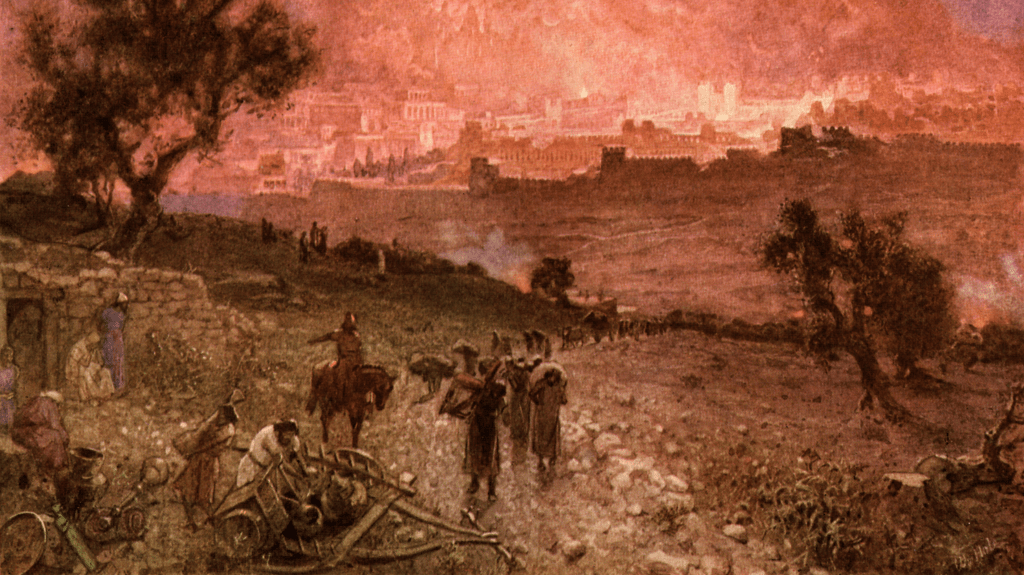
The Babylonian conquest of Jerusalem, by William Hole (1846-1917)

God, nations have come against your chosen people.
    They have ruined your holy Temple.
    They have turned Jerusalem into ruins.
They have given the bodies of your servants as food to the wild birds.
They have given the bodies of those who worship you to the wild animals.
They have spilled blood like water all around Jerusalem.
    No one was left to bury the dead.
We are a joke to the other nations;
    they laugh and make fun of us.

Lord, how long will this last?
    Will you be angry forever?
    How long will your jealousy burn like a fire?
Be angry with the nations that do not know you
    and with the kingdoms that do not honor you.
They have gobbled up the people of Jacob
    and destroyed their land.
Don’t punish us for our past sins.
    Show your mercy to us soon,
    because we are helpless!
God our Savior, help us
    so people will praise you.
Save us and forgive our sins
    so people will honor you. (New Century Version)

I don’t like evil. And I really don’t like arrogant people who want what they want and leave a path of destruction behind them.

The setting behind today’s Psalm is the destruction of the temple. It was razed by a conquering army who proudly gloated over their victory. This psalm, as all psalms, is a prayer. It’s a bitter and angry cry for God to step in and act on behalf of the humiliated people.

The psalm is more than a simple plea for help; it is a deeply passionate appeal. As a child of the 1960’s, my phrase for the psalmist’s entreaty is, “God, stick it to the man!”

There is no polite knock at the side door of God’s house in the face of such evil. This is a pounding on the front door with the demand for God to do something about this terrible trouble. For the psalmist, the incongruence between who God is and what has happened to God’s people is inconceivable and unacceptable.

To profane God’s temple is to profane God; and to kill and maim God’s people is to flip the middle finger at God. The psalmist is beside himself and overwhelmed with emotion.

There is something very instructive here that we ought not miss. When we have been brutalized, victimized, and/or demoralized, we just want someone, especially the Lord we serve, to take notice and feel what we are feeling.

Never underestimate the power of empathy and solidarity. To feel alone and bereft of help is an awful feeling.

Perhaps the psalmist’s prayer offends some sensibilities. I wonder, for those who find the language difficult, have ever had a daughter raped or a house destroyed by fire or seen a person killed without mercy in front of their own eyes. Methinks they have not. The feelings of helpless despair and sheer anger defy human words. These are not casual affronts but malicious destructions of property and people.

We need someone to affirm the raw ruthlessness of it all, to have some understanding of the impossible place we are in with such wanton cruelty. When our very support is ripped from our lives, the madness within is too much to bear.

Who will rescue us from this body of death?

God is big enough to handle our rage and our hurt. The Lord is available and hears our desperate voice of prayer. Yet, God is not always going to directly and immediately answer on the terms we stipulate. God acts out of God’s own providence and justice, and not from our expectations. And that is a good thing, not a bad thing.

God sees, knows, and feels with us. This realization enables us to recenter and reorient ourselves around faith, hope, and love. New life is never a gift in a vacuum; it comes out of agonizing struggle in reckoning with existing evil.

So, when someone goes through a hellish experience, we are to exercise our capacity to listen and witness their horrible spiritual pain. Healing hurts: it is not a pleasant affair. We are to hang in there and walk alongside another in their hour of need, even when their vitriol seems over the top to us.

For only in telling our story to another will any of us find relief and renewed hope.

The psalms permit us to use language appropriate to what has happened to us. They also allow us to move beyond the venom to the God who restores broken lives.

Lord Jesus Christ, by your patience in suffering you hallowed earthly pain and gave us the example of obedience to your Father’ will.

Be near me in my time of weakness and pain; sustain me by your grace, that my strength and courage may not fail; heal me according to you will; and help me always to believe that what happens to me here is of little account if you hold me in eternal life, my Lord and my God.

As the Lord Jesus cried out on the cross, I cry out to you in pain, O God my Creator. Do not forsake me. Grant me relief from this suffering and preserve me in peace, through the power of the Holy Spirit. Amen.

Psalm 79 – Facing Trauma

Raise Up by Hank Willis Johnson in the Nova Southeastern University Art Museum, Fort Lauderdale, Florida

Our God, foreign nations
    have taken your land,
    disgraced your temple,
    and left Jerusalem in ruins.
They have fed the bodies
of your servants
    to flesh-eating birds;
    your loyal people are food
    for savage animals.
All Jerusalem is covered
    with their blood,
    and there is no one left
    to bury them.
Every nation around us
    sneers and makes fun.

Our Lord, will you keep on
    being angry?
    Will your angry feelings
    keep flaming up like fire?
Get angry with those nations
that don’t know you
    and won’t worship you!
They have gobbled down
Jacob’s descendants
    and left the land in ruins.

Don’t make us pay for the sins
    of our ancestors.
    Have pity and come quickly!
    We are completely helpless.
Our God, you keep us safe.
    Now help us! Rescue us.
    Forgive our sins
    and bring honor to yourself.

Why should nations ask us,
    “Where is your God?”
Let us and the other nations
    see you take revenge
    for your servants who died
    a violent death.

Listen to the prisoners groan!
Let your mighty power save all
    who are sentenced to die.
    Each of those nations sneered
    at you, our Lord.
Now let others sneer at them,
    seven times as much.
    Then we, your people,
    will always thank you.
We are like sheep
    with you as our shepherd,
    and all generations
    will hear us praise you. (CEV)

Yes, you are in the right place. No, this is not yesterday’s post. The Revised Common Lectionary Daily Scripture readings include a psalm reading every day. What is more, the same psalm is read three days in a row. This is because psalms are designed to be repeatedly used. So, today, I continue reflecting on this psalm….

The psalmist was full of emotion as he crafted his words. Reflecting on the tragic and horrific takeover of Jerusalem and its destruction, he cried out in spiritual and emotional pain concerning the trashing of God’s temple and Name, and the physical and verbal violence executed on the people. The psalmist wanted the victimization to stop and the victimizers to feel God’s wrath.

This psalm is raw and real, an expression of the true self. Here there is no pie-in-the-sky positive thinking with singing about always looking on the bright side of life. It is agonizing grief in all its misery and disgrace. Thus, therein lies the path to healing: To connect with the true self, refusing the pretensions of the false self, expressing the real lived feelings and thoughts of honest wounds.

Illumination by American sculptor Paige Bradley

The alternative only presses further pain into the soul. The false self, seeking to takeover and make one feel better, engages in a devil’s pact by ignoring the aching spiritual doubt and emotional injury within to have temporary reprieve from the troubled spirit. The road to renewed and lasting happiness comes not through the false self but the true self’s recognition of the event(s) in all their foulness and degradation. It is a hard road to walk, yet we must travel it if we are to live in the light of truth, joy, and peace.

You and I will not find God in the false self. One of the great tragedies of the human condition is that, when having experienced trauma, we hustle to obtain something we already possess. We might believe God is not there, or simply does not care. As one becomes alienated from the Lord, there increasingly becomes self-distancing. Disconnected from life-giving divinity, self-loathing gradually replaces self-awareness, and thus, self-compassion.

If at any point, we begin to associate and then fuse self with our traumatic experience(s) then the inner person weakens and becomes detached from the spiritual resources needed to heal. We are not our events. We are people created in God’s image and inherently worthy of love, compassion, kindness, goodness, and healing. We were not made for death and destruction but for life and connection.

The demonic termites of contempt might eat away at our humanity, yet there is always a way to exterminate them – through telling our story, as the psalmist did, with emotional flavor and full honesty. The true self is there; we just might need to dig a little deeper to find her.

So, if you notice that you tend to avoid planning for self-care; engage regularly in self-pity; or, swear at yourself under your breath with self-hatred; then it is high time for the false self to quit calling the shots and to bring up the true self. Internal conflict is not resolved through avoidance; it comes through external voicing of one’s story to another who listens with care.

The psalmist spoke to both God and God’s people. His story came from the gut, the place where both deep loathing and deep compassion come from. If one has already been tortured by a traumatic experience, the torture will continue from the false self unless the true self asserts herself and seeks awareness, mercy, and healing.

Stories are meant to be told. And they need to be uttered when the storyteller is ready and not when the listener is. Through the voicing of their ordeal, victims of human-inflicted suffering need to hear that God is just and will right the wrong things in this world. They need some hope of healing and some assurance that their injury will not go unanswered.

This can be tricky business because the act of proclaiming one’s story and the reception of that message by another might easily become a vengeful justification for intolerance and malicious retribution. Therefore, the psalmist appealed to God, not fellow humans, for justice. We are to leave room for God’s wrath without taking matters into our own hands. (Romans 12:17-21)

So, avoid isolation from God, others, even yourself. Seek help, both divine and human. Tell your story when you are ready. Face the terrible pain. These are the things the psalmist did to deal with his own trauma. The true self acknowledges this and, with full awareness, steps into the future with faith.

Lord Christ, you came into the world as one of us, and suffered as we do. As I go through the trials of life, help me to realize that you are with me at all times and in all things; that I have no secrets from you; and that your loving grace enfolds me for eternity. In the security of your embrace I pray. Amen.

Psalm 79 – Unbearable Pain

The nations have come into your inheritance, God!
    They’ve defiled your holy temple.
    They’ve made Jerusalem a bunch of ruins.
They’ve left your servants’ bodies
    as food for the birds;
    they’ve left the flesh of your faithful
    to the wild animals of the earth.
They’ve poured out the blood of the faithful
    like water all around Jerusalem,
    and there’s no one left to bury them.
We’ve become a joke to our neighbors,
    nothing but objects of ridicule
    and disapproval to those around us.

How long will you rage, Lord? Forever?
    How long will your anger burn like fire?
Pour out your wrath on the nations
        who don’t know you,
    on the kingdoms
        that haven’t called on your name.
They’ve devoured Jacob
    and demolished his pasture.
Don’t remember the iniquities of past generations;
    let your compassion hurry to meet us
    because we’ve been brought so low.
God of our salvation, help us
    for the glory of your name!
Deliver us and cover our sins
    for the sake of your name!
Why should the nations say,
    “Where’s their God now?”
Let vengeance for the spilled blood of your servants
    be known among the nations before our very eyes!
    Let the prisoners’ groaning reach you.
With your powerful arm
    spare those who are destined to die.
Pay back our neighbors seven times over,
    right where it hurts,
    for the insults they used on you, Lord.
We are, after all, your people
    and the sheep of your very own pasture.
We will give you thanks forever;
    we will proclaim your praises
    from one generation to the next. (CEB)

The setting behind today’s Psalm is the destruction of the temple and a conquering army who proudly gloats over their victory. This is a prayer, an angry cry for God to step in and act on behalf of the humiliated people. The psalm is more than a simple plea for help; it is a deeply passionate appeal. As a child of the 1960’s, my phrase for the psalmist’s entreaty is, “God, stick it to the man!”

There is no polite knock at the side door of God’s house in the face of such evil. This is a pounding on the front door with the demand for God to do something about this terrible trouble. For the psalmist, the incongruence between who God is and what has happened to God’s people is inconceivable and unacceptable. To profane God’s temple is to profane God; and to kill and maim God’s people is to flip the middle finger at God. The psalmist is beside himself and overwhelmed with emotion.

There is something very instructive here that we ought not miss. When we have been brutalized, victimized, and/or demoralized, we just want someone, especially the Lord we serve, to take notice and feel what we are feeling. Never underestimate the power of empathy and solidarity. To feel alone and bereft of help is an awful feeling.

Perhaps the psalmist’s prayer offends some sensibilities. I wonder, for those who find the language difficult, have ever had a daughter raped or a house destroyed by fire or seen a person killed without mercy in front of their own eyes. Methinks they have not. The feelings of helpless despair and sheer anger defy human words. These are not casual affronts but malicious destructions of property and people.

We need someone to affirm the raw ruthlessness of it all, to have some understanding of the impossible place we are in with such wanton cruelty. When our very support is ripped from our lives, the madness within is too much to bear. Who will rescue us from this body of death?

God is big enough to handle our rage and our hurt. The Lord is available and hears our desperate voice of prayer. Yet, God is not always going to directly and immediately answer on the terms we stipulate. God acts out of God’s own providence and justice, and not from our expectations. And that is a good thing, not a bad thing.

God sees, knows, and feels with us. The realization of this enables us to recenter and reorient ourselves around faith, hope, and love. New life is never a gift in a vacuum; it comes out of agonizing struggle in reckoning with the existing evil.

So, when someone goes through a hellish experience, we are to exercise our capacity to listen and witness the horrible spiritual pain of the person. Healing hurts: it is not a pleasant affair. We are to hang in there and walk alongside another in their hour of need, even when their vitriol seems over the top to us. For only in telling our story to another will any of us find relief and renewed hope.

The psalms permit us to use language appropriate to what has happened to us. They also allow us to move beyond the venom to the God who restores broken lives.

Lord Jesus Christ, by your patience in suffering you hallowed earthly pain and gave us the example of obedience to your Father’ will: Be near me in my time of weakness and pain; sustain me by your grace, that my strength and courage may not fail; heal me according to you will; and help me always to believe that what happens to me here is of little account if you hold me in eternal life, my Lord and my God. As the Lord Jesus cried out on the cross, I cry out to you in pain, O God my Creator. Do not forsake me. Grant me relief from this suffering and preserve me in peace, through Jesus Christ my Savior, in the power of the Holy Spirit. Amen.