Learn To Do Good (Isaiah 1:1, 10-20)

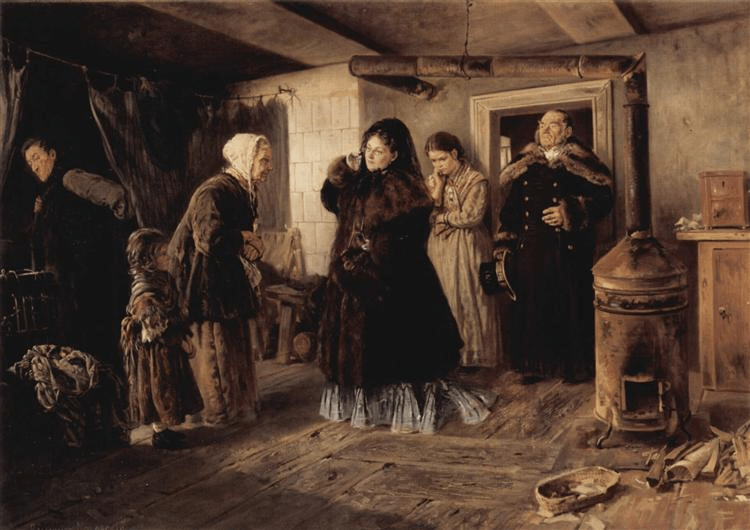
Visiting a Poor People, by Vladimir Makovsky, 1874

The vision of Isaiah son of Amoz, which he saw concerning Judah and Jerusalem in the days of Uzziah, Jotham, Ahaz, and Hezekiah, kings of Judah…

Hear the word of the Lord,
    you rulers of Sodom!
Listen to the teaching of our God,
    you people of Gomorrah!
What to me is the multitude of your sacrifices?
    says the Lord;
I have had enough of burnt offerings of rams
    and the fat of fed beasts;
I do not delight in the blood of bulls
    or of lambs or of goats.

When you come to appear before me,
    who asked this from your hand?
    Trample my courts no more!
Bringing offerings is futile;
    incense is an abomination to me.
New moon and Sabbath and calling of convocation—
    I cannot endure solemn assemblies with iniquity.
Your new moons and your appointed festivals
    my soul hates;
they have become a burden to me;
    I am weary of bearing them.
When you stretch out your hands,
    I will hide my eyes from you;
even though you make many prayers,
    I will not listen;
    your hands are full of blood.
Wash yourselves; make yourselves clean;
    remove your evil deeds
    from before my eyes;
cease to do evil;
    learn to do good;
seek justice;
    rescue the oppressed;
defend the orphan;
    plead for the widow.

Come now, let us argue it out,
    says the Lord:
If your sins are like scarlet,
    will they become like snow?
If they are red like crimson,
    will they become like wool?
If you are willing and obedient,
    you shall eat the good of the land,
but if you refuse and rebel,
    you shall be devoured by the sword,
    for the mouth of the Lord has spoken. (New Revised Standard Version)

Today’s Old Testament lesson is a stout and ancient warning against an age-old problem: Worshiping properly on a high holy day, yet living an evil and unjust life the rest of the days. It’s the mentality of “I give to God what’s required on the Sabbaths and festivals, so I can therefore do what I want the rest of the time, because that’s my stuff and my time.”

Just to be clear: That sort of evil thinking and behavior will raise the ire of the Lord every time. It’s dichotomous messed-up thinking. It’s the wrongheaded notion of believing that my financial and professional success is obviously a validation of God’s blessing upon me.

However, motives of gaining more wealth, rather than being motivated by humility, meekness, righteousness, purity, mercy, and peacemaking, will end badly, no matter who we are.

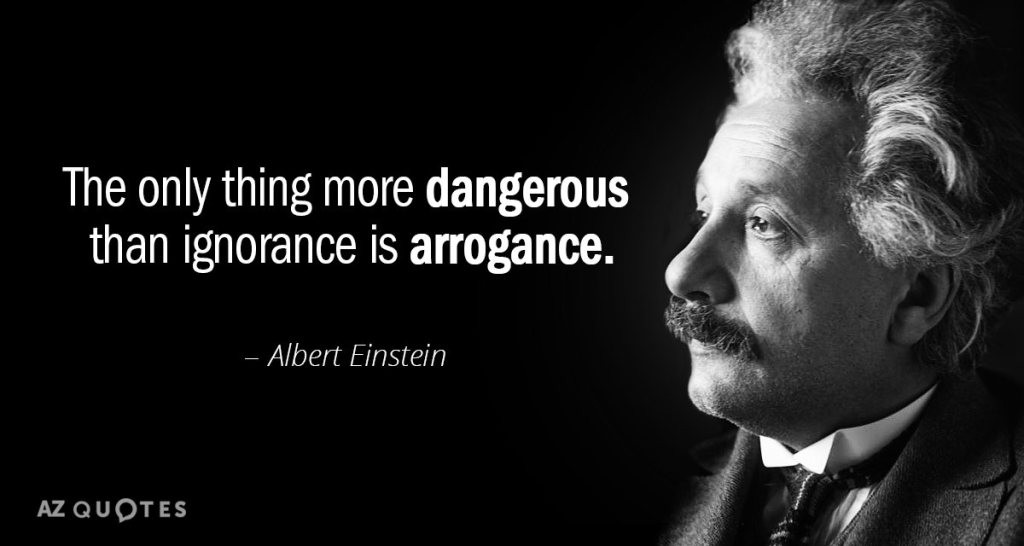
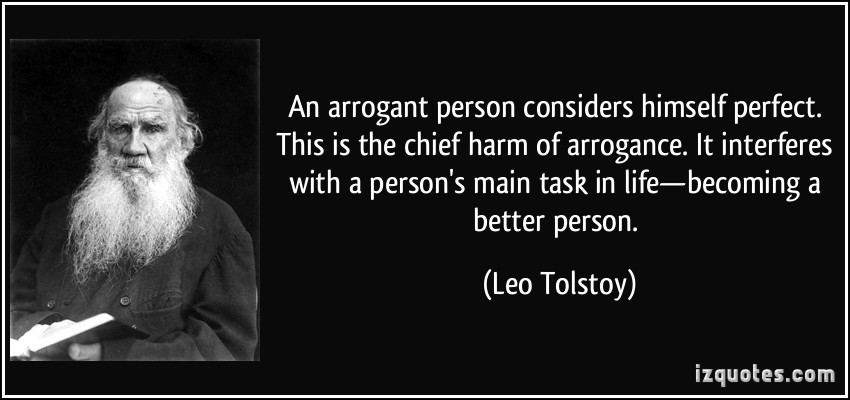
One of the problems here is an arrogant assumption that we’re right in what we are doing. We feel justified in living a duplicitous life. I have power, authority, and wealth; you do not. Thus, I’m right; you’re wrong; and I can do whatever the heck I want because God is on my side, not yours.

In terms of contemporary Christianity, this is the megachurch mentality: Since there are so many church attenders and money being placed in the offering plates, this is an unquestioned sanction from God of our rightness.

Then, when Sunday passes and Monday comes, both parishioner and pastor feel justified in using their wealth in ways that are inconsistent with the ways and words of Jesus.

Indeed, many times the name of Jesus is rarely (if ever) used in justifications of living the rich life. A blind eye is turned away from the poor and needy. When pressed, far too many parishioners admit to the belief that the poor are underprivileged because of their own personal sin.

Such “Christians” get away with their injustice before God, largely because there is a mass of churchgoers who honor the wealthy and give them places of authority and power.

They think God has shown favor by “blessing” particular people and communities with wealth (because God would never bless someone with poverty!). This can even go so far as to elect a leader of a nation because he is exorbitantly rich. Never mind his daily immorality, meanness, and lying; God has blessed him, right?

Wrong! So says the prophet Isaiah. Judah and Jerusalem, in their hubris, claimed special status. They are God’s people; others are not. They believed they had divine immunity from judgment. After all, only the Judeans worshiped the Lord; all other nations were pagan worshipers.

But their worship and sacrifices, in Isaiah’s day, were offered with no concern for justice and righteousness. So, God called them to repent; and gave them a chance to learn how to please the Lord.

And what pleases God is removing evil and learning to do good.

“Good” is defined by God as seeking to meet the needs of the common people; rescuing those who are oppressed; defending the cause of the orphan, and pleading the case of the widow. There’s no mention of wealth as a sign of divine blessing.

In reality, Judah’s situation before God was pitiful. They failed, even refused, to do justice, love mercy, and walk humbly. Therefore, the Lord called them to repentance and reformation.

Just because Jerusalem had the temple, this sacred space didn’t inoculate the people from judgment. The bald fact of the matter is that the people were living with self-destructive habits of stupidity. And God had enough of it.

In essence, the Lord said to Judah, “Let’s get serious about this.” Despite all the disobedience, God was willing to entertain the people’s change of heart and life – that is, if they themselves were willing to do so.

It’s important for all of us to “have it out with God,” to engage the Lord forthrightly, passionately, intelligently, and realistically.

There are really only two choices: Choose life or choose death. Choose to connect in meaningful, right, good, and just ways with God and neighbor; or choose to disconnect from others and do whatever the heck you want.

Each of our choices impacts what will happen tomorrow and into the future.

Decisions consistent with justice, righteousness, and goodness will ultimately go well for us. Decision-making borne of selfishness, a lack of mercy, and callousness toward others will create all sorts of problems.

Judah’s practical and existential decision came down to whether they wanted a just and productive society, or an invading Assyrian army. Which would you rather have?

To have a public daily life of disrespect and disregard for the needs of others (and of God!) is to invite being up a stinking creek without a paddle, and no one around to hear the yells for help.

Nothing can ever replace good old-fashioned turning away from hate, unforgiveness, bitterness, and pride; and turning toward what is good, right, just, and godly – and then ordering our collective public life around caring for the least and the lost among us.

May it be so, to the glory of God.

God of judgment and grace, you ask not for sacrifices but lives of trusting faith that acknowledge Your power and mercy. Give us a deep belief in Your sovereign goodness, so that we may follow You all the days of our lives, as did Jesus Christ our Savior and Lord. Amen.

Truth Stumbles In the Public Square

In these past few months, as an American citizen, I have often wondered what God thinks about the current political situation and climate of the United States.

I must say that with a serious reading of the biblical prophets, it’s rather easy to imagine what the Divine stance likely is:

Justice is far from us,
    and deliverance does not reach us;
we wait for light, but there is only darkness;
    and for brightness, but we walk in gloom.
We grope like the blind along a wall,
    groping like those who have no eyes;
we stumble at noon as in the twilight,
    among the vigorous as though we were dead.
We all growl like bears;
    like doves we moan mournfully.
We wait for justice, but there is none;
    for salvation, but it is far from us.
For our transgressions before you are many,
    and our sins testify against us.
Our transgressions indeed are with us,
    and we know our iniquities:
transgressing and denying the Lord
    and turning away from following our God,
talking oppression and revolt,
    conceiving lying words and uttering them from the heart.
Justice is turned back,
    and deliverance stands at a distance,
for truth stumbles in the public square,
    and uprightness cannot enter.
Truth is lacking,
    and whoever turns from evil is despoiled.

The Lord saw it, and it displeased him
    that there was no justice. (Isaiah 59:9-15, NRSV)

These days, many of my prayers echo the complaint of the ancient prophet Isaiah. I too, have an expectation that God will grant justice and righteousness; and that the Lord will take pity upon us for our ignorance of what is just, right, and good.

And like the prophet Isaiah, I grieve a situation of profuse lying, political malpractice, and socio-economic illiteracy. Many, if not most, Americans and the world community alike, lacks things it needs to live a viable and joyous life. So, I mourn, like a bear growling for a long-awaited meal.

It seems to me that we are failing one another. Our collective vice, and lack of virtue, have led us on a path of injustice. We are a flawed people; we need Divine help.

Perhaps you believe I am being something of a curmudgeon, being too negative – that I’m seeing the glass darkly as only half empty. But no, I’m actually seeing the glass as completely empty, for we are a bereft people.

But just maybe this emptiness can be filled with justice and righteousness, and not shallowness and lack of education, nor gaslighting and manipulative selfishness. Just maybe we can filled to the full in truth.

Our public life together depends upon ethics of accountability.

This insipid business of people stating that they are “being transparent” is nothing but a red flag letting us know that they are doing just the opposite.

We need a new community – a fresh vision of what life can be together. And we are getting anything but that. Instead, in the U.S., we get entrenched yelping from both Republicans and Democrats. And in the face of injustice, we receive an eerie silence from those who ought to know better.

This is not simply a struggle for a political party and its policies. What is happening now transcends each party’s vision of how to live together as a people.

Historically, the Democratic party has generally believed that government ought to raise money through a fair system of taxation. The funds then are to be used to provide basic services that serve the common good of all persons, i.e. ensuring a living wage, protection through laws, maintenance of infrastructure, equal access to healthcare and education, etc.

The Republican party has approached a more individualistic vision of government, believing that each person should manage their own money to make the best use of a market economy. Then, they can create economic growth without reliance upon government regulation of business. Private philanthropy and non-profit organizations are relied upon to provide social services. Private companies are called upon to handle infrastructure needs.

In essence, at the core, Democrats have a vision of community and caring for one another, whereas Republicans have a vision of each person living prosperously under their own fig tree without the interference of others.

This is why things like tax increases and tax cuts become such visceral issues, because they get at the practical outworkings of each party’s vision of how to live together.

But the stakes are even higher than an American two-party system. There is presently leadership in the United States that is openly antagonistic, belligerent, bullying, rude, and frankly, unbiblical and unvirtuous. There is nothing that comes out of the current president’s mouth that reflects the words of Jesus; and there is nothing he does which is consistent with the ways of Jesus.

Many, if not most, “Christian” Republicans are woefully out of touch with their own Bibles; and, at the very least, are complicit in retraumatizing the already traumatized people in the nation (and the world) through supporting unjust leadership.

In the time of the prophet Isaiah, not only was there injustice (common citizens not receiving what they need to build a good life and flourish) but there was no one willing and available, no one engaged and at work to turn around an unjust system so that the government would respect basic human rights for the poor and the needy, the least and the lost in society.

So, the prophet was on the scene to announce that Yahweh, the God of Judah, has noticed. Yahweh has seen that the leadership would not accept responsibility for implementing the Law of God (namely, a set of just, right, and good laws which were to frame all of Jewish society).

Nobody cared. No one bothered to help those without a voice and without hope. And Yahweh knew it. Therefore, a sorry state existed which eventually turned into the people losing their land through an active judgment of God.

Truth matters. And when it is suppressed in the public square, God’s eyebrow is raised.

Lips that speak lies, tongues that mutter wickedness, attitudes which are dishonest, hands that work only for self, and feet which run to violence are all anti-truth practices. (Isaiah 59:3-4)

There is no way on this earth and in this life to get along without government. And because of that, government’s legitimate duty to its people is to provide necessary order, safety, peace, and ensure justice – which means making sure that all citizens have what they need to grow, thrive, and prosper.

Both survival and prosperity must have the glue of truth holding society together – which means that a nation’s government needs to have the basic fundamentals of justice in mind and at heart.

A telltale sign that leaders do not have the best interests of their own people is how they speak to and treat others outside their own nation, people in differing circumstances in different places.

“They did not want to consider their duty. They have distorted their intelligence so as to not understand what ought to be done… They have distanced themselves so far from the truth that they openly combat those who turn away from perversity and choose the good.”

Theodoret (393-457 C.E.)

I cannot think of a better way to describe our current failure of leadership in this world.

Lord, have mercy upon us.

Instead of selfishness we need self-discipline. Rather than a personal concern for earthly wealth and profit, we need to seek first the kingdom of God and God’s righteousness.

Instead of simply loving those who love us, we can  love our enemies and seek to do good. We can actively walk alongside beleaguered people who have had quite enough of belligerent bullying and bogus bellicosity in their lives.

To God belongs the ability to save, deliver, redeem, and judge. To you and I belongs the responsibility for treating our fellow humanity with justice, equity, goodness, and humility with a gentle spirit, holding one another accountable for our attitudes and actions. In short, it means living the truth.

That includes every politician and political party.

“Truth is difficult to reach and endure, but it is always the doorway to new freedom and life.”

John O’Donohue

If you yet are looking for some sort of positive outlook, some kind of hope, it is this: Our present suffering of spirit can serve to burn away any illusions (and delusions) that a politician or political process will save us.

Any disillusionment we may have becomes an opportunity to discover both old and new ways living the truth. It often takes suffering to teach us what is truly most important to us.

Our current malaise, national anxiety, and world troubles can become the means of future possibility, if we will let it. Worrisome circumstances can open to us the light of undiscovered truth about ourselves and our world.

We may stumble, yet there is always the chance to catch ourselves and not fall. So, what does God think of this present national and world situation? The prophet Isaiah insisted:

Let the wicked forsake their way
    and the unrighteous their thoughts;
let them return to the Lord, that he may have mercy on them,
    and to our God, for he will abundantly pardon.
For my thoughts are not your thoughts,
    nor are your ways my ways, says the Lord.
For as the heavens are higher than the earth,
    so are my ways higher than your ways
    and my thoughts than your thoughts. (Isaiah 55:7-9, NRSV)

No matter what happens on this earth, Isaiah’s perspective insists upon the truth and reality of God’s ultimate authority. We shall not always understand divine authority, yet at its core, is full of justice and righteousness. And nothing can stop from it breaking out into the public square.

May it be so, to the glory of God.

Living In the Tension of Life (Isaiah 54:1-13)

Shout for joy, O barren one who has borne no children;
    burst into song and shout,
    you who have not been in labor!
For the children of the desolate woman will be more
    than the children of the one who is married, says the Lord.
Enlarge the site of your tent,
    and let the curtains of your habitations be stretched out;
do not hold back; lengthen your cords
    and strengthen your stakes.
For you will spread out to the right and to the left,
    and your descendants will possess nations
    and will settle desolate towns.

Do not fear, for you will not be ashamed;
    do not be discouraged, for you will not suffer disgrace,
for you will forget the shame of your youth,
    and the disgrace of your widowhood you will remember no more.
For your Maker is your husband;
    the Lord of hosts is his name;
the Holy One of Israel is your Redeemer;
    the God of the whole earth he is called.
For the Lord has called you
    like a wife forsaken and grieved in spirit,
like the wife of a man’s youth when she is cast off,
    says your God.
For a brief moment I abandoned you,
    but with great compassion I will gather you.
In overflowing wrath for a moment
    I hid my face from you,
but with everlasting love I will have compassion on you,
    says the Lord, your Redeemer.

This is like the days of Noah to me:
    Just as I swore that the waters of Noah
    would never again go over the earth,
so I have sworn that I will not be angry with you
    and will not rebuke you.
For the mountains may depart
    and the hills be removed,
but my steadfast love shall not depart from you,
    and my covenant of peace shall not be removed,
    says the Lord, who has compassion on you.

O afflicted one, storm-tossed and not comforted,
    I am about to set your stones in antimony
    and lay your foundations with sapphires.
I will make your pinnacles of rubies,
    your gates of jewels,
    and all your wall of precious stones.
All your children shall be taught by the Lord,
    and great shall be the prosperity of your children. (New Revised Standard Version)

Judgment and Grace

Throughout all of the Old Testament prophets, there is a consistent theme within each of them of both judgment and grace.

People continually wax and wane in their faithfulness to God. However, the Lord does not change in being faithful to divine promises and keeping the divine covenant toward Israel.

Judgment comes in order to set things right, and provides justice for oppressed and underprivileged people. The judgment, however, only lasts for a while; whereas grace is continually operative.

Today’s text is one of grace. In the movement and rhythm of God’s judgment and grace, these verses return to the call for celebration and joy in response to divine mercy.

The metaphor of the barren woman refers to the years the city of Jerusalem sat in ruins because of divine judgment. Yet, it will not remain this way. The prophet assures the people that Jerusalem will grow once again. The city will spread out and increase, like a mother with many children.

There is no need for fear, because the Lord is not only the Creator and Maker; God is also Jerusalem’s redeemer and husband. The metaphor is meant to convey the attention and intimacy that God shows to people through divine grace.

Reconciliation and Restoration

Even though the city was like a wife forsaken by her husband, reconciliation is initiated by God through compassion and steadfast love. The Lord will honor the covenant, and not completely toss the people away, never to be seen again.

The Lord scatters; and the Lord gathers. The Lord gives; and the Lord takes away. The Lord extends judgment; and the Lord shows mercy. Blessed be the name of the Lord.

The word “abandon” is not even in God’s lexicon. The Lord is unfamiliar with the concept. There may be natural disasters, terrible diseases, and dilapidated places, but none of these can ever separate us from God’s steadfast immovable love.

Restoration is happening. No matter how bad things get – and things can get awfully bad – nothing can stop the divine band wagon of restoration from coming into town and changing everything.

Renewal and restoration may not happen today, or tomorrow; yet, it is happening, sooner or later. Nothing and no one can stand against the right, good, and just purposes of the almighty and everlasting God.

Redemption and Hope

In Christianity, this hope is focused in the birth of the Christ child. Redemption and new life is a reality in Jesus Christ our Lord. This is the reason for the Christian’s joy and celebration in this season.

On one end of our rubber-band like tension in this present life are the disappointments, brokenness, suffering, and pain we experience. At the other end, is the promise of future glory that is yet to come.

All believers, and every church, lives in this tension between the already and the not yet. We live in an in-between time, an awkward liminal space, that makes hope a sheer necessity in order to make it through the Christian life.

“There is a birth from before the ages, and a birth from a virgin at the fulness of time. There is a hidden coming, like that of rain on fleece, and a coming before all eyes, still in the future.”

St. Cyril of Jerusalem (313-386, C.E.)

The biblical writers, along with the early church fathers and mothers, understood the sacred tension of life:

Without any doubt, the mystery of godliness is great:

He was revealed in flesh,
    vindicated in spirit,
        seen by angels,
proclaimed among gentiles,
    believed in throughout the world,
        taken up in glory. (1 Timothy 3:16, NRSV)

The one who testifies to these things says, “Surely I am coming soon.”

Amen. Come, Lord Jesus!

The grace of the Lord Jesus be with all the saints. Amen. (Revelation 22:20-21, NRSV)

Almighty God, give all of us grace to cast away the works of darkness, and put on the armor of light, now in the time of this mortal life in which your Son Jesus Christ came to visit us in great humility, so that in the last day, when he shall come again in his glorious majesty to judge both the living and the dead, we may rise to the life immortal; through him who live and reigns with you and the Holy Spirit, one God, now and forever. Amen.

Delivery and Deliverance (Isaiah 66:7-11)

Before she was in labor
    she gave birth;
before her pain came upon her
    she delivered a son.
Who has heard of such a thing?
    Who has seen such things?
Shall a land be born in one day?
    Shall a nation be delivered in one moment?
Yet as soon as Zion was in labor
    she delivered her children.
Shall I open the womb and not deliver?
    says the Lord;
shall I, the one who delivers, shut the womb?
    says your God.

Rejoice with Jerusalem, and be glad for her,
    all you who love her;
rejoice with her in joy,
    all you who mourn over her—
that you may nurse and be satisfied
    from her consoling breast,
that you may drink deeply with delight
    from her glorious bosom. (New Revised Standard Version)

Conception. Happiness. Wondering. Uncomfortable. Preparation. Pain. More pain. Delivery. Exhaustion. Joy. Celebration. New life. Bringing children into this world is a process. And its hard work.

Feeding. Pooping. Sleeping. Exhaustion. More feeding. Lots more pooping. Thank God, more sleeping. Still exhausted. So, when does the mother ever get to eat, go to the bathroom by herself, and sleep? Maybe tomorrow, or maybe in another life….

Despite all of this, there are still words which keep mothers (and fathers) going: Satisfaction. Delight. Awe. Praise. Love. Hope. Faith. Yes, faith. Lots of faith. So much faith that it’s as if the parent puts all their weight on it, and leans into it, perhaps more out of sheer necessity than anything else.

The Christian season of Advent has been growing over the past weeks. It is now large and very ready for Christmas Day and the celebration of the Christmas season (the 12 days from December 25 to the Day of Epiphany on January 6).

But we aren’t quite there yet. There is still the anticipation of birth. The Christ child is coming.

It’s quite something to imagine that God would be so humble as to become humiliated. What a wonder it is, that there is such a thing as an incarnation, that Jesus entered this world as both a human baby and a divine king.

God came to this world for us, on our behalf, to redeem, renew, and restore lost humanity. That’s a lot of love. If you think about it, the mother’s incredible love had to come from somewhere.

Love is what sustains the world. So, love must be nurtured. The feelings of it are not always there within us.

Yet, if we will continually seek to maintain the godliness which is love inside of us, we can find ourselves being little incarnations of Jesus walking about this earth providing succor, without any withholding or hatred.

To love is to love. Without conditions. To love a friend but hate an enemy is to cancel out the love. It must be all love, or it isn’t love, at all.

The person, group, organization, institution, community, or church in a miserable and wretched state is in need of restoration. That is, they are in a great need of receiving love and giving love.

If they have responsibilities toward others, and have been neglectful, they must come to the breast of God. And those who did not receive their due justice and fair recompense must also come.

Advent is more than a season in the year to recognize. And Christ’s incarnation is much more than a doctrine to believe. Advent and incarnation are powerful realities which we must live into.

The good news of this season is that God intervenes effectively to do good for those who are faithful. It’s a newness as sudden and as wonderful as the birth of a baby. The Lord does away with barrenness and hopelessness, and brings new life.

It is this good news that brings out joy. Where once there was mourning and sadness, there is now satisfaction, comfort, and consolation. God is the One who brings it about.

Therefore, it is helpful to remember and recall the words of Jesus to his disciples:

Very truly, I tell you, you will weep and mourn, but the world will rejoice; you will have pain, but your pain will turn into joy. When a woman is in labor, she has pain because her hour has come. But when her child is born, she no longer remembers the anguish because of the joy of having brought a human being into the world. So you have pain now, but I will see you again, and your hearts will rejoice, and no one will take your joy from you. (John 16:20-22, NRSV)

The joy and celebration of this first advent will lead to a second advent, the return of Christ. The peace and satisfaction we may enjoy now is only here in part. The fullness of peace will be ushered in at the end of time.

This is the sort of tension that we must continually maintain, holding together in both hands our sorrow and joy, disappointment and hope, hardship and love, at the same time, all the time, until that day when there is not only a delivery, but a deliverance from all evil.

Lord God, we adore you because you have come to us in the past.
You have spoken to us in the Law of Israel.
You have challenged us in the words of the prophets.
You have shown us in Jesus what you are really like.

Lord God, we adore you because you still come to us now.
You come to us through other people and their love and concern for us.
You come to us through people who need our help.
You come to us as we worship you with others.

Lord God, we adore you because you will come to us at the end.
You will be with us at the hour of death.
You will still reign supreme when all human institutions fail.
You will still be God when our history has run its course.

We welcome you, the God who comes.
Come to us now in the power of Jesus Christ our Lord. Amen.