Care For the Flock (Ezekiel 34:1-16)

The Lord God said:

Ezekiel, son of man, Israel’s leaders are like shepherds taking care of my sheep, the people of Israel. But I want you to condemn these leaders and tell them:

I, the Lord God, say you shepherds of Israel are doomed! You take care of yourselves while ignoring my sheep. You drink their milk and use their wool to make your clothes. Then you butcher the best ones for food. But you don’t take care of the flock! You have never protected the weak ones or healed the sick ones or bandaged those that get hurt. You let them wander off and never look for those that get lost. You are cruel and mean to my sheep. They strayed in every direction, and because there was no shepherd to watch them, they were attacked and eaten by wild animals. So my sheep were scattered across the earth. They roamed on hills and mountains, without anyone even bothering to look for them.

Now listen to what I, the living Lord God, am saying to you shepherds. My sheep have been attacked and eaten by wild animals because you refused to watch them. You never went looking for the lost ones, and you fed yourselves without feeding my sheep. So I, the Lord, will punish you! I will rescue my sheep from you and never let you be their shepherd again or butcher them for food. I, the Lord, have spoken.

The Lord God then said:

I will look for my sheep and take care of them myself, just as a shepherd looks for lost sheep. My sheep have been lost since that dark and miserable day when they were scattered throughout the nations. But I will rescue them and bring them back from the foreign nations where they now live. I will be their shepherd and will let them graze on Israel’s mountains and in the valleys and fertile fields. They will be safe as they feed on grassy meadows and green hills. I promise to take care of them and keep them safe, to look for those that are lost and bring back the ones that wander off, to bandage those that are hurt and protect the ones that are weak. I will also slaughter those that are fat and strong because I always do right. (Contemporary English Version)

We have a pastoral duty to care for one another. Individuals need not have the title of “Pastor” in order to function as pastoral people who seek the welfare of the flock. A part of our responsibility (and privilege) is to know the flock well enough in discerning when there are some lost ones out there. Whenever that happens, we care about them enough to go after them.

If we either ignore the flock, fail to care for it, or seek to fleece them for our own benefit, we will have to contend with a God who has no tolerance for unnecessarily putting the sheep at risk. And we are to be attentive to the ones who have strayed and are lost.

Caring about the lost, enough to go after them, has always been, unfortunately, a scandalous activity for Christians who do it. In the Gospels, the religious leaders had a big problem with how Jesus was spending his time (Luke 15:1-3). From their perspective, Christ was guilty by association. Many of the people Jesus pursued and hung-out with were unsavory characters; there was really no doubt about their bad character. 

But we must come back to why Christ made the decisions he did: Jesus did not come to earth to make already righteous people feel good about being around him; he came to rescue sinners and restore them to God. 

Jesus never wavered from this fundamental mission. With everything he said and did, Jesus, the Good Shepherd, communicated that lost people matter to God – and that practice eventually got him killed.

Early in my Christian life, I adopted a practice, on most Friday nights, of going to a certain bar known for its less than virtuous clientele. I typically ordered a bowl of chili gumbo, and simply sat and talked with fellow students. I learned a lot about people – their hopes, fears, and spiritual inclinations. 

I learned even more about God. I saw the terrible brokenness of many people’s hearts, and saw that the heart of God was pained in longing to restore such persons to a place of spiritual abundance, peace, and joy.

One Friday night, in the middle of winter, as I was walking back from the bar with a friend at about midnight, we encountered a guy so drunk that he could not walk straight. He wasn’t wearing any pants, nor did he have a coat. In below freezing temperatures, he was in only a shirt and underwear. 

All the people who passed by him laughed and kept walking. But we stopped. It took several minutes to get some semblance of a story out of him about what happened, where he came from, and where he lived. The poor guy couldn’t remember losing his pants, which had his wallet and keys. 

He lived far enough away that there was no way he would have ever made it home. It’s quite probable that without someone helping him he would have passed out somewhere and died. We got him home, found a way to get into his place, and tucked him in his bed.

The next day I went and checked on him. Even though he had a bad hangover, we still had a good conversation about what happened and why I helped him. We ended up meeting several times together and talked a great deal about God, guilt, grace, Jesus, and salvation. 

Meanwhile, however, not everyone was happy about my practice. Some of the people in my church were not pleased with me spending time in a bar with “sinners.” They told me things like, “Bad company corrupts good character” and “it doesn’t look good.” I merely matter-of-factly responded, “I like the way I’m reaching out to lost people better than the way you’re not.”

We are in danger of becoming encrusted with so much insulation from lost people, and their very real hurts, that we do not know God’s heart for them. 

Jesus, better than any of us could ever imagine, knows how awful and horrific sin really is. That’s because he suffered by taking on the shameful baggage of every person who ever lived. Since Jesus understands how awful guilt and shame is, it’s God who goes uncorked with joy and celebration when just one lost sheep is restored to the flock.

Grace lies at the center of God’s heart – a scandalous grace that defies all earthly sense. God’s deepest desire, greatest yearning, and most passionate dream is that lost people return home. (Luke 15:11-32) 

In light of the reality that God’s heart burns for lost people, we as churches, faith communities, Christian ministries, and believers everywhere really need to: 

  • Put away all petty concerns and realize there are lost people, far from the flock, at risk and dying apart from God
  • Put all worries about the future in biblical perspective – because there are people with no hope and no God all around us
  • Put aside all pre-occupations with optics and marketing, numbers and money; and instead have a holy obsession with people knowing Jesus Christ, and him crucified, risen, and coming again 

We are to make it our aim in this life to pray for, long for, look for, run after, and pursue lost people and restore them to life.

For what does it profit a person to gain the world but lose their life because they was too pre-occupied with everything but caring for the flock? And what does it profit a church to have buildings, budgets, and butts in the pew, but never see a lost soul come to Jesus?

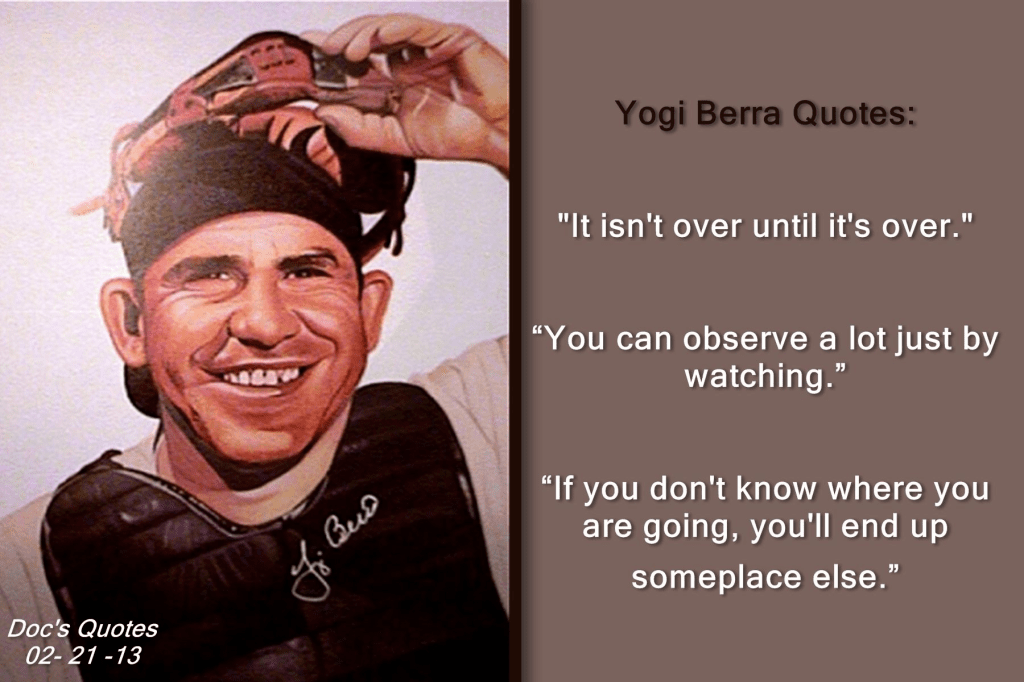
It’s Not Over Till It’s Over (Ezekiel 33:10-16)

The Lord said:

Ezekiel, son of man, the people of Israel are complaining that the punishment for their sins is more than they can stand. They have lost all hope for survival, and they blame me. Tell them that as surely as I am the living Lord God, I don’t like to see wicked people die. I enjoy seeing them turn from their sins and live. So if the Israelites want to live, they must stop sinning and turn back to me.

Tell them that when good people start sinning, all the good they did in the past cannot save them from being punished. And remind them that when wicked people stop sinning, their past sins will be completely forgiven, and they won’t be punished.

Suppose I promise good people that they will live, then later they start sinning and believe they will be saved by the good they did in the past. These people will certainly be put to death because of their sins. Their good deeds will be forgotten.

Suppose I warn wicked people that they will die because of their sins, and they stop sinning and start doing right. For example, they need to return anything they have taken as security for a loan and anything they have stolen. Then if they stop doing evil and start obeying my Law, they will live. Their past sins will be forgiven, and they will live because they have done right. (Contemporary English Version)

“It ain’t over till the fat lady sings,” is an old adage which means one should not presume to know the outcome of something that’s still in progress. In more contemporary language, we might say, “It’s not over till it’s over.”

Those sorts of proverbs are asking us, “What are you doing today? How are you living your life, right now?”

We need to be present to the time we are inhabiting at this moment. There are two opposite temptations for us in relating to time.

  1. “I did a lot of good things in the past. I worked hard. I was generous. Now it’s time for me to do whatever the heck I want. Nobody is going to tell me what to do or how to live my life.”
  2. “I did a lot of bad things in the past. I partied hard. I took advantage of people. Now it’s time for me to do good. I don’t know, though, whether it will ever be enough.”

In other words, the temptations are either to rely on all the good I’ve done, earning me a license to do what I want; or to believe I can never overcome my bad past. In both cases, it’s to keep thinking our past is the controlling factor.

But it’s not.

Just as there was a flip-flop of living, it could very well happen again. The guy who did good in the past, then didn’t, now responds to overtures to stop living a selfish life. He begins doing the good he used to do. And the guy who had a sordid past, then changed and did good, now goes back to his old life, like a dog returning to its vomit.

It’s never over, till it’s over. As long as we’re still breathing on this earth and walking on it, the outcome of life is still yet to be determined. There is always the opportunity for new life. And it begins with identifying and confessing where we are in this present time.

If we confess our sins, God is faithful and just to forgive us our sins and cleanse us from everything we’ve done wrong. (1 John 1:9, CEB) 

Being right with God means assessing our relationship at all times. Forgiveness and reconciliation are activated by admitting one’s true condition. Secret sins tucked away deep in the soul will only fester and boil. The result of un-confessed sin is spiritual blindness, darkness, and death. 

There cannot be new life and renewal, revival, or revitalization of life and ministry apart from real honest tell-it-like-it-is biblical confession. 

If this scares the hell out of you, it really should. Dealing with sin in a radical straightforward manner is what Jesus talked about in his Sermon on the Mount, in saying we should pluck our eyes out if they offend, and cut our hands off if they cause us to sin; because it’s better to be in God’s kingdom with no eyes and hands than to burn in hell with our parts intact. (Matthew 5:29-30) 

Confession is more than simply mouthing some words about not being perfect and a sinner like everybody else; it is to lead to a complete turn-around and change of how we live our lives. We can change. We are neither fated to be a screw-up forever nor a good person till the end.

Instead, we have to put the work in – mentally, emotionally, and spiritually.

Change is what the biblical word “repentance” means. It happens by dealing squarely with our past thinking, choices, and behavior. This is why some form of a prayer of confession really needs to happen at every church worship service. 

Ignoring such a vital liturgical prayer and practice will, at best, leave people with no guidance for confronting sin; and, at worst, will teach people that confession is not necessary to Christianity and leave them a spiritual mess. 

Yet a carefully constructed prayer of confession can lead believers to unburden the things they have done, and the things they have left undone – which opens us to the advocacy of Jesus Christ who speaks on our behalf because of his once-for-all atoning sacrifice for sins.

Confession, repentance, and change are more than single events; they are a way of life for the believer. As long as you are still able to read this, there’s still the opportunity to live the good life and forsake the wicked life.

Today, if you hear his voice, do not harden your hearts. (Hebrews 4:7, NIV)

It ain’t over till it’s over.

Creator God, you made us in your image: may we discern your goodness in all that we see, and serve you with all goodness in everything we do, through Jesus Christ our Lord. Amen.

Water Is Life (Ezekiel 47:1-12)

Now he brought me back to the entrance to the Temple. I saw water pouring out from under the Temple porch to the east (the Temple faced east). The water poured from the south side of the Temple, south of the altar. He then took me out through the north gate and led me around the outside to the gate complex on the east. The water was gushing from under the south front of the Temple.

He walked to the east with a measuring tape and measured off fifteen hundred feet, leading me through water that was ankle-deep. He measured off another fifteen hundred feet, leading me through water that was knee-deep. He measured off another fifteen hundred feet, leading me through water waist deep. He measured off another fifteen hundred feet. By now it was a river over my head, water to swim in, water no one could possibly walk through.

He said, “Son of man, have you had a good look?”

Then he took me back to the riverbank. While sitting on the bank, I noticed a lot of trees on both sides of the river.

He told me, “This water flows east, descends to the Arabah and then into the sea, the sea of stagnant waters. When it empties into those waters, the sea will become fresh. Wherever the river flows, life will flourish—great schools of fish—because the river is turning the salt sea into fresh water. Where the river flows, life abounds. Fishermen will stand shoulder to shoulder along the shore from En Gedi all the way north to En-eglaim, casting their nets. The sea will teem with fish of all kinds, like the fish of the Great Mediterranean.

“The swamps and marshes won’t become fresh. They’ll stay salty.

“But the river itself, on both banks, will grow fruit trees of all kinds. Their leaves won’t wither, the fruit won’t fail. Every month they’ll bear fresh fruit because the river from the Sanctuary flows to them. Their fruit will be for food and their leaves for healing.” (The Message)

Jesus said, “Let the one who believes in me drink. As the Scripture has said, ‘Out of the believer’s heart shall flow rivers of living water.’”

John 7:38, NRSV

The coming of the Lord is what Advent is all about. It means that God is about to show up. And when God shows up, there are rivers of blessing and an abundance of salvation.

We need water

Just as we need water to survive, so we also need the living water which grants us eternal life.

Every living cell of our body contains water. 65% of your body is water. Up to 90% of plant tissue is water. Water defines our environment and shapes our landscape. We need at least two liters of fresh water to drink every day to stay healthy.

Just as each person on earth ought to have clean, safe, fresh water each day, but don’t, so every person also should have the living water of salvation and blessing flowing from God, yet they don’t.

Water constantly moves around the planet – on, above and below the earth’s surface. The cycle from rainfall to evaporation to rainfall is powered by energy from the sun. Water falls as rain, snow, and sleet. It collects in ice, rivers, groundwater, and the oceans. The water cycle naturally cleans the water.

Just as the natural processes of the water cycle give life and health to the planet, so the unseen spiritual processes working above, below, and on the earth exist to provide the life that is truly life.

Water in the Bible

Water is mentioned 722 times in the Bible. Water flows throughout Holy Scripture, reminding us of its importance, both spiritually and physically. Water is such an essential component of life that God created it on the very first day (Genesis 1:2). And water shows up at the very end of the Bible:

The Spirit and the bride say, “Come!” And let the one who hears say, “Come!” Let the one who is thirsty come; and let the one who wishes, take the free gift of the water of life. (Revelation 22:17, NIV)

Naaman the Syrian was cured from his leprosy in the waters of Jordan River (2 Kings 5:1-14). Water is used as a sign and a seal to purify and provide deliverance, as in Christian baptism (Romans 6:3-4; 1 Peter 3:18-22). And the power of water can also be a destructive force (Genesis 6:17; Exodus 14:1-15:21).

Living Water

Jesus, the source of Living Water, extends an invitation to all who thirst.

“But those who drink the water I give will never be thirsty again. It becomes a fresh, bubbling spring within them, giving them eternal life.” (John 4:14, NLT)

Christ uses water for redemptive purposes, to bring comfort and help.

Jesus got up from the meal, took off his outer clothing, and wrapped a towel around his waist. After that, he poured water into a basin and began to wash his disciples’ feet, drying them with the towel that was wrapped around him. (John 13:4-5, NIV)

“O Christ, He is the fountain,

The deep, sweet well of love;

The streams on earth I’ve tasted

More deep I’ll drink above.

There to an ocean fullness

His mercy doth expand,

And glory, glory dwelleth

In Immanuel’s land.”

The Sands of Time Are Sinking by Sam Rutherford and Anne Cousin

From a Christian perspective, the water flowing from the temple finds its fulfillment in the person and work of Jesus Christ. He is the living water that gives eternal life. We would do well to ensure that all people have access to clean physical water, as well as access to purified spiritual water.

Lord Jesus, Son of God, Savior of humanity, there is a river flowing straight from your heart into mine — replenishing, renewing, sustaining. 

May you, as Living Water, be persistent in me, breaking through every barrier in its path.

Send this hydropower through the dark crevices of my heart like a mighty flood overcoming and pushing everything out of the way that blocks its path.

I want my heart to be washed clean of any debris cluttering and blocking your life-giving flow.

May your love overflow onto your people — your grace, your mercy — into the lives of those we encounter, to your glory and honor, in spirit, and in truth. Amen.

Ezekiel 2:8-3:11 – Use the Head-Butt

Rufus R. Jones (1933-1993)

Son of man, listen to what I say to you. Do not join them in their rebellion. Open your mouth and eat what I give you.”

Then I looked and saw a hand reaching out to me. It held a scroll, which he unrolled. And I saw that both sides were covered with funeral songs, words of sorrow, and pronouncements of doom.

The voice said to me, “Son of man, eat what I am giving you—eat this scroll! Then go and give its message to the people of Israel.” So, I opened my mouth, and he fed me the scroll. “Fill your stomach with this,” he said. And when I ate it, it tasted as sweet as honey in my mouth.

Then he said, “Son of man, go to the people of Israel and give them my messages. I am not sending you to a foreign people whose language you cannot understand. No, I am not sending you to people with strange and difficult speech. If I did, they would listen! But the people of Israel won’t listen to you any more than they listen to me! For the whole lot of them are hard-hearted and stubborn. But look, I have made you as obstinate and hard-hearted as they are. I have made your forehead as hard as the hardest rock! So don’t be afraid of them or fear their angry looks, even though they are rebels.”

Then he added, “Son of man, let all my words sink deep into your own heart first. Listen to them carefully for yourself. Then go to your people in exile and say to them, ‘This is what the Sovereign Lord says!’ Do this whether they listen to you or not.” (New Living Translation)

When I was a kid, my brother and I watched “All-Star Wrestling” on television every Saturday. One of our favorite wrestlers was Rufus R. Jones. Like all wrestlers, he had a signature move, a lights-out-nobody-is-getting-up maneuver that always ended the match. 

Rufus’ move was the head-butt. Slamming his hard forehead into the head of his opponent always brought raucous behavior from me and my brother. Then, as the boys we were, we acted out the head-butt scene over and over. The hardest head always won…. I usually lost…. That probably explains a lot.

God gave a message to the prophet Ezekiel concerning the stubborn hearts and hard heads of the Israelites. The Lord was looking for repentance, for the people to turn their hearts and minds back to true worship and an authentic humble relationship with their God. 

The prospect of facing such a task, such an opponent, seemed daunting to Ezekiel. So, the Lord assured the prophet that his forehead would be harder than that of Rufus R. Jones. So, there is no need to be afraid of the opponent. They may be hard, but they’re no match for the rock-hard head of the prophet.

In essence, God told Ezekiel to pull-out the signature wrestling move and do the lights-out head-butt maneuver. And the promise from God that backed up Ezekiel was this: There’s absolutely no way you’re going to lose the match with the kind of head I’m giving you.

Like Ezekiel, we are to speak the Word of God with the promise of not losing. Prideful ungodly stubbornness will get us knocked-out. But conversely, gracious bold stubbornness, which determines to do the will of God, shall always win the day.

The only catch is: The Word needs to sink down deeply into our own hearts through listening well – before we can effectively speak to others.

God provides us with spiritual giftedness. Yet, that doesn’t mean we never need to develop that gift or engage in any spiritual practices to make it better. We are to use that which God gives us, no matter the response from others.

There is often a fine line between sinful obstinate stubbornness and godly persevering tenacity. We are never to use our abilities to slam people, obnoxiously and persistently, upside the head with an oversized King James Version of the Bible – in the wrongheaded notion that the Word doesn’t come back without effect.

That kind of effect, however, is harmful spiritual bruising that is devoid of grace. It’s really nothing more than an individual working out their own anger and frustration on somebody else.

Rather, we are to carefully, deliberately, consistently, and daily internalize God’s Word so that what comes out of us is helpful, not harmful. Only by a constant use of solitude and silence, in truly listening well for the voice of God, can we effect the sort of positive ministry which is needed for the present moment.

Put another way, whenever we head-butt an opponent, the grace and mercy ought to be uncompromising. It’s not our job to be the judge; our task is to communicate effectively and humbly without giving in or giving up. The message may be hard, but it should always be sweet.

Almighty and ever-living God, we pray that you would give us the Spirit of wisdom and discernment so that we may know you better and love you more. Give us an understanding heart so that we may be open in hearing your voice of grace and guidance.

Use us, your people, not to be unthinking and unfeeling tools of bludgeoning others, but to be your hands and feet – your voice and heart so that we may be a channel through which you pour out your grace to help others – may we decrease to nothing so that only Christ is seen in our lives – we ask this in the power of the Spirit and in the name of Jesus. Amen.