Colossians 4:2-5 – Devoted to Prayer

Lord's Prayer

Devote yourselves to prayer, being watchful and thankful. And pray for us, too, that God may open a door for our message, so that we may proclaim the mystery of Christ, for which I am in chains. Pray that I may proclaim it clearly, as I should. Be wise in the way you act toward outsiders; make the most of every opportunity. (NIV)

I’ve always been fascinated with circular breathing ever since I first picked up a musical instrument.  It’s a technique used by the instrumentalist or singer to produce a continuous tone without interruption. In other words, you can keep blowing or singing without doing the traditional stopping to inhale.  By breathing in through the nose while simultaneously pushing air out through the mouth using air stored in the cheeks, the person can maintain the sound.  Circular breathing is not so much difficult; it just takes lots of practice.  The hard part is unlearning how you typically breathe.  I have done it a few times in my life.  I’ve made the personal observation that it doesn’t happen unless you can be very relaxed while feeling very connected to your body and grounded in what you’re doing.

I imagine that we all sometimes feel like admonitions to devote ourselves to prayer, pray continually, and never give up praying are something like circular breathing.  Maybe best left to the experts and the professionals, we think.  Yet, the Apostle Paul encouraged the entire Colossian church to keep up the praying, both leaders and laity.

“Never give up praying,” (Colossians 4:2, CEV) might sound unattainable.  It isn’t.  However, the catch is that you’ll need to unlearn a few things before devotion to prayer is realized.  The ancient Colossians had fallen into the wrongheaded belief that Christianity could be reduced to a nice neat packaged formula of do’s and don’ts.  Do the right things.  Say the right things.  Don’t do the list of the terrible ten or the nasty nine, or whatever checklist you are using to live by your form of “Christianity.”  Paul was telling the Colossians to completely jettison such an approach to the Christian life.  Instead, persevere in prayer without knowing the outcome.  Pray relying on God and the mystery of Christ.  Pray with uncertainty instead of continually believing you need sure answers to everything for everyone.

The Christian life cannot be made into some geeky algorithm so that we can avoid suffering, know all the right things to say in a conversation, and always keep God happy.  God is not some algebra equation to figure out.  He is not a gumball machine to put a quarter in and get what you want.  He is not Santa God.  Christianity requires living in the tension of not knowing everything and yet having cogent answers for others who inquire about our faith.  It is a dynamic relationship in which we continually interact in prayer to God as we largely improvise our lives, spontaneously applying what understanding we have for each situation we face.  Breathing in and breathing out at the same time.

Paul wanted to keep the church vigilant in prayer with an ongoing dialogue with the God who answers in his own good time, according to his own good will.  He wanted a kind of circular praying whereby Christians make good use of the time God has given through choosing our words wisely as we simultaneously carry on a silent prayer conversation with God.  This is Christianity that’s far above rules and laws and checklists.  It is Christianity as it’s meant to be lived, depending on Jesus, and relaxed in the Spirit.

This takes practice, practice, practice.  Failure is both inevitable and expected.  And that’s okay.  We’re not living by lists and human contrived rules.  We’re living a new life in the power of Christ’s resurrection.

God of Mystery, the One who conceals and reveals, forgive me for my attempts at reducing faith to a few spiritual rules to keep.  Help me to speak in ways which are gracious, loving, and redemptive.  May the person and work of Jesus come tumbling out of my mouth while I inhale the breath of your Holy Spirit.  Amen.

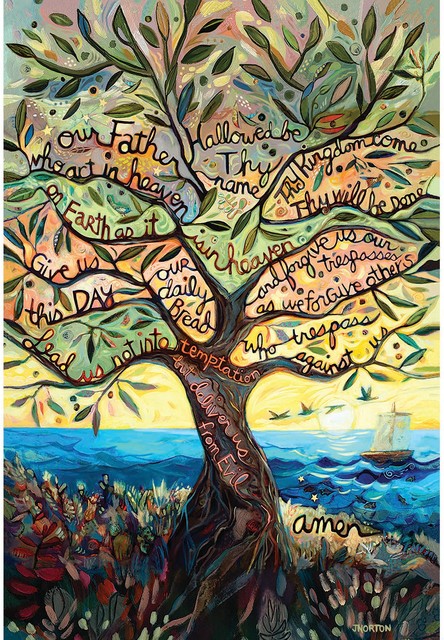
The Lord’s Prayer is perhaps the best prayer you could be praying.  It is sung here by Andrea Bocelli.

And if you have not heard Bocelli’s gift of singing to the world on Easter Sunday, here is a link to it: Amazing Grace

Psalm 118 – “A Spiritual Pilgrimage”

Welcome, friends!  On this Palm Sunday, let us give thanks to the Lord, for he is good; his love endures forever.  Click on the video below to join in the joyful procession….

The following links are for your use and enjoyment:

If you are having any difficulty with the video on this site, you can click TimEhrhardtYouTube to view and listen.

To learn more about the Labyrinth, click How to Walk a Labyrinth for a short guided tour.

Click Give Thanks and allow Filipino singer Janella Salvador to lead you in song.

May we walk and feel the ground of the coming week, that is Holy Week, for it is on this sacred soil that we live and run, work and play, praise and lament.

A Spiritual Pilgrimage

b9793-palm2bsunday

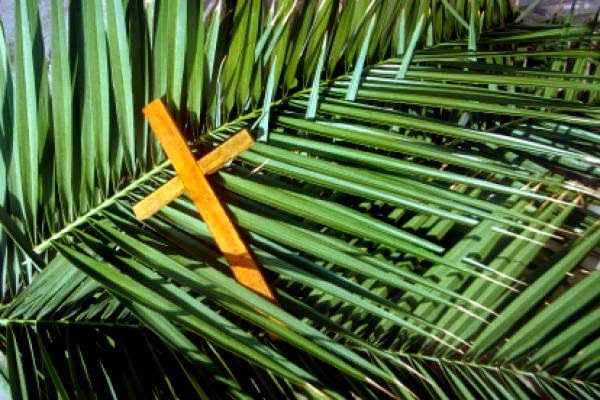
It seems strange sitting here in my home with no anticipation of being around children waving palm leaves.  It feels awkward facing the beginning of Holy Week with the prospect of no physical gatherings of Christian believers.  Perhaps with the exception of this year, every year on Palm Sunday thousands of Christians, from all over the world, gather in the small town of Bethphage, located just two miles outside of Jerusalem – to walk to Jerusalem like Jesus did in his triumphal entry on a donkey.  Many of those pilgrims carry palm and olive branches.  All the people sing hymns as they walk up the Mount of Olives, down into the Kidron Valley, and then up Mount Moriah into the Old City of Jerusalem. It is a worship experience filled with gratitude. “Give thanks to the Lord, for he is good; his steadfast love endures forever!” (Psalm 118:1)

Every year there are others along the pilgrim path appearing out of place for such a joyous journey.  Spread out along the way are Israeli military soldiers wearing full combat gear, carrying automatic weapons over their shoulders and gazing on the spectacle of worshiping Christians before them. Other Israeli Jews look on with a mix of indifference or concern.  Maybe we can imagine that Jesus encountered a similar experience with people laying palm branches along his path; Roman soldiers all around; and, Jews looking on with curiosity.  It might have been easy for Jesus to avoid Jerusalem and not face the cross that he knew was coming at the end of the week.  It might be easy for us to avoid adversity and suffering. Yet, Jesus continued his journey into Jerusalem because of joy and gratitude. Psalm 118 ends like it begins: “O give thanks to the Lord, for he is good, for his love endures forever.”

Joy and gratitude can be our strength in times of adversity.  Yet, it will only come as we join the spiritual pilgrimage.

Psalm 118 is a liturgy for worshipers coming to Jerusalem and the temple from all parts of Israel in order to celebrate Passover.  Like the Christian pilgrims on Palm Sunday, the ancient Jewish worshipers ascended Jerusalem with great anticipation.  They sing of God’s love and remember the deliverance from Egypt and slavery into the freedom of the Promised Land.

The word for “love” throughout Psalm 118 is my favorite word in the Old Testament.  It is a rich word which is difficult to translate in English because the term is so dense with meaning.  The Hebrew word is “chesed” and the New International Version translates it in various ways:  grace, covenant loyalty, mercy, compassion, kindness, and consistently translated in Psalm 118 as “love.”  It is the kind of love that is graciously given despite whether a person deserves it or not.  It is a steadfast love that holds on and does not let go.

God is a God who consistently gives grace when we fall short; shows unflagging commitment where we are fickle; gives unbounded mercy when we are broken; provides constant compassion when we have been hurt; provides kindness even when we are unkind; and, dispenses enduring love which, for the Christian, finds its ultimate expression in the person of Jesus Christ, our Savior, who embodied “chesed” for us so that we might experience life to the full.  Give thanks to the LORD, for he is good; his love endures forever.

We may be under directives to stay at home, yet, we have the gracious opportunity to walk on a spiritual pilgrimage every day to the very heart of God and meet love face to face. How might you and I do that?

Labyrinth

One way is through walking a Labyrinth.  This is an ancient practice of the Church meant for spiritual centering, contemplation, and prayer. Entering the serpentine path of a labyrinth, one walks slowly while quieting the mind and focusing on a spiritual question or prayer.  A labyrinth is not a maze. It has only one winding path to the center and back out.  The wisdom of the Labyrinth is that it reflects life, that is, our lives are not about the destination – life is about the long circuitous journey.  The Christian life is consistently described in the New Testament as a road or a way.  We walk with Jesus.

Although many Labyrinths are typically found within churches, church grounds, or in park spaces (and many or most of these are currently closed) we can utilize “finger” Labyrinths.  Rather than physically walking, you can slowly trace the path with your finger.  You might also get creative and make your own homemade Labyrinth in a space of your home or yard.  Click The Labyrinth Society to get free printable Labyrinths, as well as take a virtual Labyrinth walk.

ChartresLabyrinth

The Labyrinth is not meant to be a race to the center; it only “works” if we move at a pace which enables us to meditatively pray, paying attention to what God is doing within us.  Generally, there are four stages to the walk:

  • Releasing on the way toward the center – letting go of all that weighs us down in the Christian life.  “Let’s throw off any extra baggage, get rid of the sin that trips us up, and fix our eyes on Jesus, faith’s pioneer and perfecter.” (Hebrews 12:1-2, CEB)
  • Receiving in the center – accepting the love God has for you.  Jesus said, “Ask and you will receive, so that your joy may be complete.” (John 16:24, NRSV)
  • Returning through following the path back out – integrating what you have received for the life of the world.  “I will give them a heart to know me, God. They will be my people and I will be their God, for they will have returned to me with all their hearts.” (Jeremiah 24:7, The Message)
  • Responding to the love of God through gratitude – thus finding joy, even in the most troubling of circumstances.  “O give thanks to the Lord, for he is good; his steadfast love endures forever!” (Psalm 118:1, NRSV)

The penitent heart will resonate deeply with the psalms as worship liturgy.  This is because liturgical practices impress the spirit and bring spiritual freedom.  We will only find this odd if we have nothing to repent of.  Turning from sinful liturgies of life and turning to a new liturgy of following Jesus is like walking through a gate into a new reality and rejoicing with all the other redeemed pilgrims who are walking the road to Jerusalem to be with Jesus.  Our Lord himself said,

“I am the gate; whoever enters through me will be saved.  He will come in and go out and find pasture.  The thief comes only to steal and kill and destroy; I have come that they may have life and have it to the full” (John 10:9-10, NIV).

In this time of virtual presence and electronic communication, I take comfort in the reality that we do not need to text or email God and hope he answers – we have the joyous opportunity of walking the pilgrim way and crawling into the lap of God.

Just like everything else, what you put into something is going to affect what you get out of it. If we go into the Labyrinth half-hearted, we will leave half-hearted. If we go into prayer or worship thinking only of the obligation, we will only fulfill the obligation. Yet, if we come ready to meet God, if we come ready to receive his grace, if we come expectantly – Who knows what God can do?

So, let us enter prayer, reading of Scripture, virtual fellowship, and the worship of God each day with the heart of a pilgrim. Let us enter with a song on our lips and joy in our hearts. Let us enter knowing that worship is the place where we connect with the love of God through the Son of God. Let us enter expecting to come out of worship changed, carrying in our hearts the anticipation of great things to happen.

Psalm 143

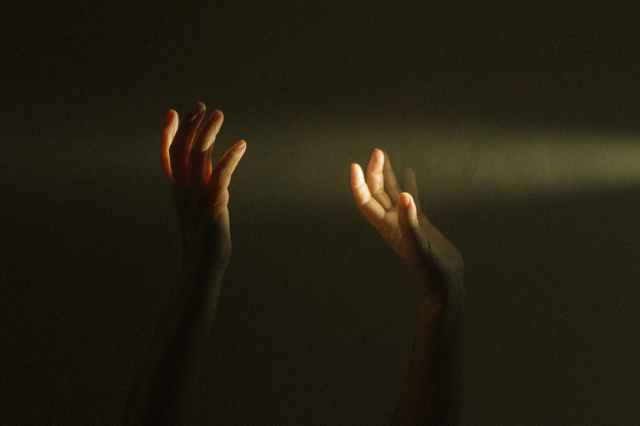
persons raising hands
Photo by Luis Dalvan on Pexels.com

The Old Testament Psalms are the Church’s prayer book.  For this reason, the Revised Common Lectionary includes a psalm for each daily reading.  What’s more, the lectionary typically repeats the psalm for three consecutive days.  This is to emphasize both the need to internalize biblical prayers as well as to allow us to linger with the problems, feelings, grief, praise, and situation within the psalm.  This allows us to not jump to hasty solutions and to act with careful and deliberate spiritual resolve.

Psalm 143 was crafted by David during a difficult time in his life.  David never was one to shy away from giving vent to God about his complaint; and, in equal measure, his confidence in God to handle the situation.

Since psalms are meant to be slowly imbibed, I began a practice several years ago of translating many of them for my own devotional purposes.*  For today’s translation, I am taking a few liberties with the text by deliberately changing the pronouns from singular to plural; and, naming the mentioned enemy specifically as COVID-19 so that this becomes a communal prayer for a specific circumstance:

Listen to our prayer, Lord!
Because of your faithfulness, bend your gracious ear to our requests for mercy!
Out of the vast storehouse of your righteousness, answer us!
Please don’t bring your people to judgment,
because, compared to you, not one person on the face of the earth is righteous before you.

You full well know that COVID-19 is hunting us down,
crushing life in the dirt,
forcing us to live sequestered
as if we are already in the grave.
Our spirits are growing weary—
our minds are a desert.

We remember the days when we were free of this scourge;
we chatted You up to others about all your awesome deeds;
we would talk about Your divine action in the world.
We did not hesitate to lift holy hands in prayer;
we were like dry earth, soaking up Your presence.

Answer us, Lord—and make it quick! Our fortitude needs to get bolstered.
Don’t hide your face from us
or that will be the end of us, for sure! We’ll die of the virus!

When we wake up in the morning, assure us of Your faithful love

because we’ve pinned our full trust on You.
Show us the next steps we need to take,
because we are looking up to You.
Deliver us from COVID-19, Lord!
We seek protection from you.
Teach us what we’re supposed to learn, what pleases you,
because you are our God.
Guide us by your good spirit
into good green pastures.
Give us life, Lord, for Your name’s sake.
Bring us out of this intense stress because of Your righteousness.
Wipe out COVID-19 because of your faithful love.
Destroy every germ which attacks us,
because we are Your people.

Amen.

We are truly in this together.  Click “Oh My Soul” by Casting Crowns to be reminded that we are not alone; and, that there is a God who listens.


*The translation of the psalm is based on an understanding of the Hebrew text and not a transliteration from English.