The Jews answered him, “Aren’t we right in saying that you are a Samaritan and demon-possessed?”
“I am not possessed by a demon,” said Jesus, “but I honor my Father and you dishonor me. I am not seeking glory for myself; but there is one who seeks it, and he is the judge. Very truly I tell you, whoever obeys my word will never see death.”
At this they exclaimed, “Now we know that you are demon-possessed! Abraham died and so did the prophets, yet you say that whoever obeys your word will never taste death. Are you greater than our father Abraham? He died, and so did the prophets. Who do you think you are?”
Jesus replied, “If I glorify myself, my glory means nothing. My Father, whom you claim as your God, is the one who glorifies me. Though you do not know him, I know him. If I said I did not, I would be a liar like you, but I do know him and obey his word. Your father Abraham rejoiced at the thought of seeing my day; he saw it and was glad.”
“You are not yet fifty years old,” they said to him, “and you have seen Abraham!”
“Very truly I tell you,” Jesus answered, “before Abraham was born, I am!” At this, they picked up stones to stone him, but Jesus hid himself, slipping away from the temple grounds. (New International Version)
I am a recovering perfectionist. There was a time in my life when I believed that I could attain perfection in all things. And, what’s more, I thought that if I could be perfect in everything I said and did, I would never face any opposition.
It took me awhile to realize that Jesus, the perfect Son of God, handled life on this earth as well as anybody ever did or could, and yet he still faced continual opposition. Then, at the end of his life, Jesus was ridiculed, tortured, and killed by people who should have known better.
The religious leaders, at the time of Christ, leveled on Jesus their worst accusations by calling him a Samaritan and demon possessed. But Jesus handled it. He wasn’t surprised by it. Nothing they said threw him off.
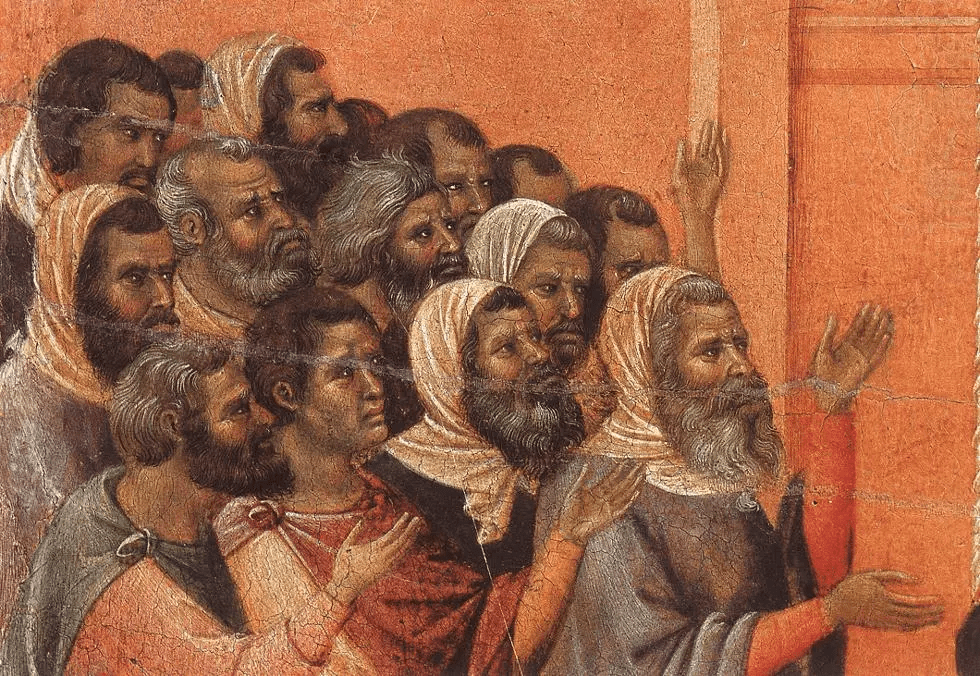
There is a way to deal with opposition. There’s a path to dealing effectively with the meanness of others. And there’s a way to face the trouble, as well as your Anfechtung (spiritual oppression and depression) about what’s happening.
The road ahead, however, may be counter-intuitive to how you think. And the way forward might be so far off your radar that you may dismiss what I’m about to say to you. Maybe you’ll even call me a Samaritan.
But before I get to that, I’ll say this: Opposition, even oppression, is endemic to the human condition. Everyone, at times, suffers this way; none of us are immune to affliction, nor can we insulate ourselves from pain. If you are not currently suffering in some way, it means you are either coming off a time of hardship, or are about to enter a new period of distress.
Holiness and godliness don’t keep suffering at bay. Just ask Jesus. In fact, the Lord Jesus himself promised that following him involves a sort of oppression that those who are not Christians will never face. (John 16:33)
Christ’s disciple, Peter, came to understand the reality that since Jesus experienced opposition, so will his followers. (1 Peter 4:12).
The Lord’s brother, James, understood that everyone faces difficulty; and he wisely discerned that opposition is a teacher, from which we learn maturity, perseverance, and patience. (James 1:2).
Jesus’ greatest follower, Paul, continually dealt with opposition from others, more than any follower of Jesus in history. And he insisted that anyone who belongs to Christ will have trouble; and that suffering enables us to persevere and be in solidarity with Jesus. (2 Timothy 3:12; Romans 5:3-5; Philippians 1:29)
Yes, in this world you will have trouble. But take heart. Jesus has overcome the world. (John 16:33)
Now, back to the topic of handling opposition from others. Here’s the truth:
Dealing with opposition, oppression, and suffering comes through Christ, and not from us. And the practice of overcoming trouble doesn’t come from fighting against it, but by sitting with it and learning from it.
Stated differently: Jesus has overcome the world through his death, resurrection, and ascension. On the cross, he absorbed all the sin and suffering of everyone. This means that your suffering, no matter it’s source, will be subdued whenever you invite it to take a seat with you and have a conversation with it.
Said yet another way: Quit fighting against your suffering. Stop kicking and screaming long enough to look your feelings square in the face and learn from them.
The opposition is trying to tell us something. But if we keep taking the stance of a pugilist, trying to punch it away, it will just keep moving forward and never topple.
Oppression isn’t something you beat; it’s something you learn from. Jesus already did the beating and the winning.
And we’ll only learn from suffering and overcome it when we embrace it. Therefore, the counter-intuitive, counter-cultural practice is: Submit to suffering. When we do that, like Jesus, we simply slip away from the oppressors. They no longer have any power over us.
Don’t hear what I’m not saying. I’m not an advocate for sanitizing your troubles or trauma with a positive spin. Evil is evil, bad is bad, and no amount of saying otherwise will change the leopard’s spots.
And yet, only through submitting to the process of what opposition teaches us, can we hope to break its power over us.
Let’s liken our opposition to encountering a bear in the wilderness. The National Park Service gives us this advice if facing a bear while out hiking: “Once a bear has noticed you and is paying attention to you, these strategies can help prevent the situation from escalating:”
- Identify yourself by talking calmly so the bear knows you are a human and not a prey animal. Remain still; stand your ground but slowly wave your arms. Help the bear recognize you as a human. It may come closer or stand on its hind legs to get a better look or smell. A standing bear is usually curious, not threatening.
- Stay calm and remember that most bears do not want to attack you; they usually just want to be left alone. Bears may bluff their way out of an encounter by charging and then turning away at the last second. Bears may also react defensively by woofing, yawning, salivating, growling, snapping their jaws, and laying their ears back. Continue to talk to the bear in low tones; this will help you stay calmer, and it won’t be threatening to the bear. A scream or sudden movement may trigger an attack. Never imitate bear sounds or make a high-pitched squeal.
- Hike and travel in groups. Groups of people are usually noisier and smellier than a single person. Therefore, bears often become aware of groups of people at greater distances, and because of their cumulative size, groups are also intimidating to bears.
- If the bear is stationary, move away slowly and sideways; this allows you to keep an eye on the bear and avoid tripping. Moving sideways is also non-threatening to bears. Do not run, but if the bear follows, stop and hold your ground. Bears can run as fast as a racehorse both uphill and down. Like dogs, they will chase fleeing animals. Do not climb a tree. Both grizzlies and black bears can climb trees.
Fighting against someone’s oppression is about as useful as taking on a bear. Both bears and oppressors can be dangerous. We don’t blame bears if they act like bears. Likewise, let’s not be surprised when opposition arises.
I suggest we treat opposition as if we are facing a bear in the wilderness of trouble:
- Calmly identify yourself. Doing the big freak-out is only going to encourage suffering to do damage. Oppression will pass, but you must be patient and calm.
- Talk in low tones to the opposition.
- Remember who you are; you belong to God.
- Handle oppression as if it is curious about you.
- Walk with others. You’re not John Wayne. Community is necessary, not optional.
- Keep your eye on opposition. Don’t ignore it, or pretend it isn’t there. Don’t run. Face it and keep it in front of you.
Jesus was calm, honest, and forthright. He was, therefore, able to speak and handle himself with wisdom in the face of opposition and trouble. Christ knew who he was, who the opposition was, and what his purpose was; and we can know those same things, as well.
Grant us patience, O Lord, to follow the road you have taken. Let our confidence not rest in our own understanding but in your guiding hand; let our desires not be for our own comfort, but for the joy of your kingdom; for your cross is our hope and our joy now and unto the day of eternity. Amen.