Leave and Go (Genesis 8:13-19)

In the six-hundred-first year of Noah’s life, on the first day of the first month, the flood had dried up. Noah opened the hatch of the ship and saw dry ground. By the twenty-seventh day of the second month, the Earth was completely dry.

God spoke to Noah: “Leave the ship, you and your wife and your sons and your sons’ wives. And take all the animals with you, the whole menagerie of birds and mammals and crawling creatures, all that swarming extravagance of life, so they can reproduce and flourish on the Earth.”

Noah disembarked with his sons and wife and his sons’ wives. Then all the animals, crawling creatures, birds—every creature on the face of the Earth—left the ship family by family. (The Message)

The ancient story of Noah recounts a devastating universal flood—a story that began with problems akin to those in our present contemporary world. (Genesis 6:5-7:24)

Violence, in the days of Noah, had become so common and widespread, that the very heart of God was pained.

The Lord saw how evil humans had become on the earth. All day long their deepest thoughts were nothing but evil. The Lord was sorry that he had made humans on the earth, and he was heartbroken. (Genesis 6:5-6, GW)

So, God decided to bring judgment, and laid plans to rid the earth of humanity. To start over, God instructed Noah to build an ark to preserve his family and a few of every animal species.

And then, it rained, day and night, for weeks on end. The flood destroyed everything. Yet, God remembered Noah and all the animals, and the waters eventually receded. Noah sent out a raven, and then a dove, to see if they could find land.

Finally, the day came when they could step out of the ark, and the Lord told Noah to step off the big ark of a ship, set the animals free, and start repopulating the Earth.

There are, indeed, a lot of ethical questions that bubble up for us as readers about the entire flood narrative. Why kill everyone, including children too young to know better, and animals who apparently weren’t the problem to begin with? And, if things are so bad, why spare anyone or anything? After all, people started the violence, and they don’t seem very changed after the flood. What’s up with that?

Yet, honestly, just asking those questions puts us on some supposed high ground of morality – something we cannot claim – as if we know better than God.

Perhaps we humans still do not yet have a collective sense of our depravity, that is, of our awful potential for acts of violence (both physical and psychological) as well as our penchant for saying and doing nothing in the face of such evil. We keep offloading the issue onto God, as if the Lord is the problem.

Keep in mind, that by God’s grace, the Lord promised to never again destroy the Earth, as in the days of Noah, and still preserved a remnant of humanity. Yet sadly, that hasn’t stopped us humans from keeping up our violent and destructive ways. Throughout the whole of human history, we seem to have to keep learning the same lesson over and over again: that our actions (and in-actions) have far-reaching consequences for both us and all the rest of creation.

The violence humans do to one another and the violence we do to the natural world come from the same place in the human heart. A good and wise God created us good. And although we are capable of great evil, as the flood story says, and as we know every day, God means for us to be transformed.

God promised not to destroy the world. Now it’s our turn to promise the same.

How can we keep such a promise? I believe we can do it by being obedient to leave the ship and step off the ark. In other words, it’s important that we leave where we presently are, and go where God calls us.

Realizing a better world, a changed life, and a blessed Earth involves our movement to leave something behind, and go to a place we’ve not been before.

The Lord said to Abraham:

Leave your country, your family, and your relatives and go to the land that I will show you.” (Genesis 12:1, CEV)

God said to Moses:

“I have heard the cry of the people of Israel. I have seen how the Egyptians are oppressing them. Now, go! I am sending you to Pharaoh so that you can bring my people Israel out of Egypt.” (Exodus 3:9-10, GW)

And, as a result of Moses obeying God, Pharaoh (eventually) said to the Israelites:

“Get out, you and your Israelites! Leave my country; go and worship the Lord, as you asked.” (Exodus 12:31, GNT)

Later, God clarified the instructions for heading to the Promised Land:

“Leave this place, you and the people you brought out of Egypt, and go to the land that I promised to give to Abraham, Isaac, and Jacob and to their descendants.” (Exodus 33:1, GNT)

Jesus instructed:

“So, what if you are offering your gift at the altar and remember that someone has something against you? Leave your gift there and go make peace with that person. Then come and offer your gift.” (Matthew 5:23-24, ERV)

Jesus said to his disciples:

“All authority in heaven and on earth has been given to me. Therefore go and make disciples of all nations, baptizing them in the name of the Father and of the Son and of the Holy Spirit, and teaching them to obey everything I have commanded you. And surely I am with you always, to the very end of the age.” (Matthew 28:18-20, NIV)

Why does God repeatedly tell us to leave and go? Because we tend to hunker down in our entrenched ways of bigotry and idolatry, which are the fodder for human violence, and refuse to see other people created in the image and likeness of God.

Leaving and going opens us to the possibility of connection, and thus, love. And love is the heat source which melts the polar ice cap of hate and violence.

Almighty Father, who gave your only Son to die for our sins and to rise for our justification: Give me grace to leave malice and wickedness behind, so that I may go and serve you in truth and holiness, through Jesus Christ, your Son, my Lord, who lives and reigns with you and the Holy Spirit, one God, now and forever. Amen.

Build It Now! (Haggai 1:1-15a)

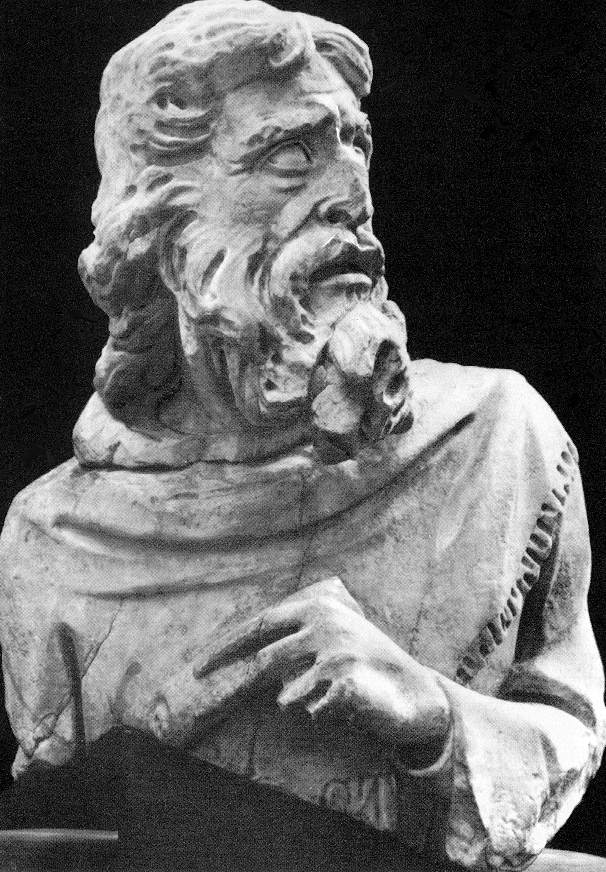
Statue of the prophet Haggai, by Giovanni Pisano, c.1290 C.E., Siena, Italy

In the second year of King Darius, on the first day of the sixth month, the word of the Lord came through the prophet Haggai to Zerubbabel son of Shealtiel, governor of Judah, and to Joshua son of Jozadak, the high priest:

This is what the Lord Almighty says: “These people say, ‘The time has not yet come to rebuild the Lord’s house.’”

Then the word of the Lord came through the prophet Haggai: “Is it a time for you yourselves to be living in your paneled houses, while this house remains a ruin?”

Now this is what the Lord Almighty says: “Give careful thought to your ways. You have planted much but harvested little. You eat, but never have enough. You drink, but never have your fill. You put on clothes but are not warm. You earn wages, only to put them in a purse with holes in it.”

This is what the Lord Almighty says: “Give careful thought to your ways. Go up into the mountains and bring down timber and build my house, so that I may take pleasure in it and be honored,” says the Lord. 

“You expected much, but see, it turned out to be little. What you brought home, I blew away. Why?” declares the Lord Almighty. “Because of my house, which remains a ruin, while each of you is busy with your own house. 

Therefore, because of you the heavens have withheld their dew and the earth its crops. I called for a drought on the fields and the mountains, on the grain, the new wine, the olive oil and everything else the ground produces, on people and livestock, and on all the labor of your hands.”

Then Zerubbabel son of Shealtiel, Joshua son of Jozadak, the high priest, and the whole remnant of the people obeyed the voice of the Lord their God and the message of the prophet Haggai, because the Lord their God had sent him. And the people feared the Lord.

Then Haggai, the Lord’s messenger, gave this message of the Lord to the people: “I am with you,” declares the Lord. So the Lord stirred up the spirit of Zerubbabel son of Shealtiel, governor of Judah, and the spirit of Joshua son of Jozadak, the high priest, and the spirit of the whole remnant of the people. They came and began to work on the house of the Lord Almighty, their God, on the twenty-fourth day of the sixth month. (New International Version)

Timing is everything.

There is a time to ponder and plan and there’s a time to move and act. If the time is ripe for action, then the lack of initiative is plain old procrastination. But how do you know when to act?

If the Lord says it’s time, well then, it’s time!

God’s people wouldn’t have described their inaction in rebuilding God’s house as dragging their feet. They perceived their inertia as a sensible delay.

Yet, the Lord saw the people’s approach as inexcusable enough to send a prophet with a specific message and call to action: Build the house now!

Let’s get a feel for why God’s call for immediacy comes when it does. In the ancient world, it had always been the practice of armies to assimilate conquered peoples into the culture of the conquering king. 

In the eighth century B.C.E., the Assyrian Empire conquered the northern kingdom of Israel. The Assyrians took most of the people into captivity, left the poorest of the people alone, and resettled the land with some of their own Assyrian people. The inevitable intermarriages resulted in their progeny being known as the Samaritans in the New Testament Gospels, as the Samaritans.

Two-hundred years after Assyria conquered Israel, Nebuchadnezzar besieged the southern kingdom of Judah and took over Jerusalem. He carried Daniel and all the other educated and professional people to Babylon. In the course of taking the city, Nebuchadnezzar tore down the wall and destroyed the temple that Solomon had made.

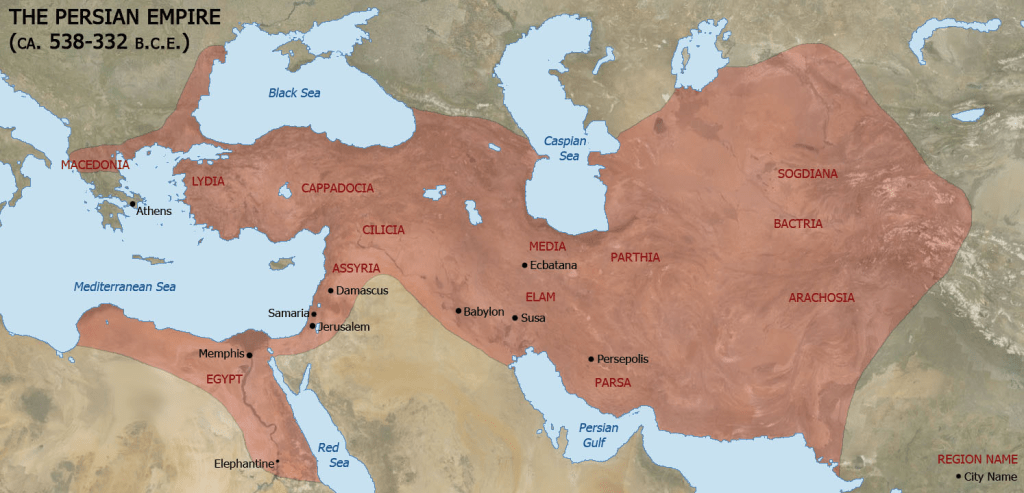
During the Babylonian exile, the Persians conquered Babylon and became rulers of a large geographical empire. Because the massive Persian Empire was in control of so many different kinds of people across such a vast territory, they were not able to operate as previous empires did by assimilation and resettlement. 

Instead, the Persians did something new and different: They encouraged and enabled their conquered peoples to keep their religion and their culture. The only caveat was that they had to give tribute and allegiance to the empire and pray for the king. This is why Nehemiah, Ezra, and Haggai were able to return to Jerusalem and given royal authority to rebuild the wall and the temple. 

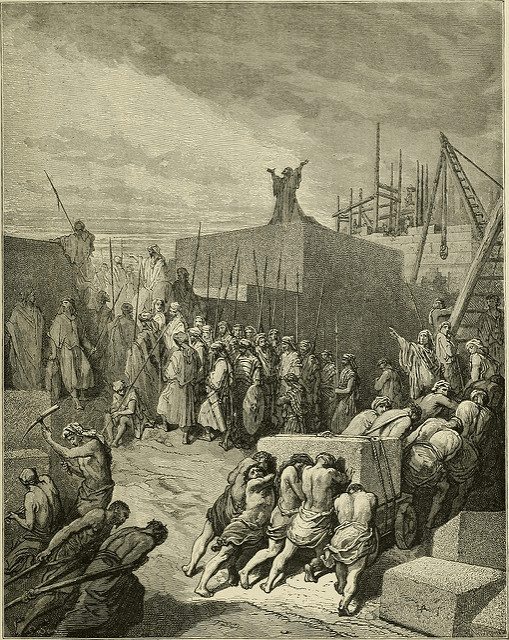
But, from the git go, there was opposition to the rebuilding from the old Canaanite inhabitants of the land. After many years, the wall was rebuilt but the temple restoration bogged down. The people slowly became discouraged and lost enthusiasm to do the work. 

Understandably, the people got caught up in taking care of their own homes and just plain neglected working on the temple. Over time, they just forgot about the entire project. But God didn’t.

The prophet Haggai made it clear that the people’s mental distraction and physical neglect was taken as disrespect by the Lord. Haggai insisted that the reason the people were not experiencing blessing on their land was because they simply did not have their priorities straight. 

Thus, God sent the prophet Haggai to preach a sermon entitled: Build the house now! 

To the people’s credit, they responded to the call of God and started rebuilding God’s house. The work was completed. However, there seemed to be a problem. 

Rebuilding the Temple, by Gustave Doré, 1866

Moving into the rest of Haggai’s prophecy, the newly restored temple didn’t look anything like Solomon’s grand and glorious temple. Many of the older worshipers could still remember Solomon’s temple; to them, the rebuilt temple seemed like a bologna sandwich compared to the T-bone steak of the past. 

So, God sent Haggai again to encourage the people. The Lord will be with them. The restored temple may not look the same, but what makes the temple great is God’s glory.

An important takeaway from the prophecy of Haggai is that the Lord is a jealous God; God’s people are to worship the Lord with all of their heart, soul, mind, and strength. 

We also learn that the Lord is sovereign and supreme over all creation. God owns everything and will use it all to accomplish divine purposes on this earth. 

In addition, we see that God calls people to new work and fresh ministry. The Lord was behind the destruction of the old temple; and when the time was right, God called the people to build a new ministry.

And we learn something about ourselves, as well. God’s people need to hear and respond to God’s call. Haggai put a God-sized vision before the people; he helped them imagine what the new temple would be like – full of God’s glory.

God is doing a new thing. The Lord continues calling people to:

  • Seek first the kingdom of God. (Deuteronomy 4:29; Psalm 63:1; Matthew 6:33; Hebrews 11:6)
  • Love God with whole hearts. (Deuteronomy 6:5, 11:1-22, 19:9, 30:16-20; Matthew 22:37)
  • Love neighbor as we love ourselves. (Leviticus 19:18; Matthew 22:38; Romans 13:9; Galatians 5:14)
  • Make disciples of Christ from all nationalities. (Matthew 28:18-20)
  • Be witnesses to God’s glory in Christ. (Psalm 66:16; Acts 1:8; 2 Timothy 2:2)
  • Obey the Holy Spirit. (Acts 5:31-33; Romans 6:17; Hebrews 5:8-9)

It is good to remember and celebrate past ministries; and it is also good to throw ourselves into the new ministries which God calls us and to build them for God’s glory.

My friends, build it now.

Glory to you, O God, the One who is able to do far beyond all that we could ask or imagine by your divine power at work within us; glory to you, blessed God, in the church and in Christ Jesus for all generations, through the empowering Holy Spirit, forever and always. Amen.

Ephesians 4:17-24 – Put Off the Old, Put On the New

So, I tell you this, and insist on it in the Lord, that you must no longer live as the Gentiles do, in the futility of their thinking. They are darkened in their understanding and separated from the life of God because of the ignorance that is in them due to the hardening of their hearts. Having lost all sensitivity, they have given themselves over to sensuality so as to indulge in every kind of impurity, and they are full of greed.

That, however, is not the way of life you learned when you heard about Christ and were taught in him in accordance with the truth that is in Jesus. You were taught, with regard to your former way of life, to put off your old self, which is being corrupted by its deceitful desires; to be made new in the attitude of your minds; and to put on the new self, created to be like God in true righteousness and holiness. (New International Version)

What breeds ignorance and immorality amongst people?

I’m sure if you asked that question to a dozen people you might get a dozen different responses.

According to the Apostle Paul, it comes from a disconnection from truth. And biblically, since the very character of God is truth, then ignorance and a closed heart also result from estrangement from God.

The Christian tradition informs us that Jesus is the way, the truth, and the life. Life together is to be shaped around the person and work of Christ. Since Christians share a common confession of Jesus, we are to share a common life together. That life is to revolve around the truth of Jesus.

That means we will put off non-Christian ways of relating to each other and put on a Christian way of relating to each other. 

We will, then, speak truthfully and live honestly, because we belong to each other – we are responsible for one another.

Just as Jesus so closely identified with us in his life, death, and resurrection, so we are to so closely identify with each other that we take responsibility for each other and hold one another accountable. My problems are your problems – your issues are my issues. This is a stance of connection, not division.

Believers are firmly moored to Christ and to Christian community. With the enablement of the Holy Spirit, they are able to forsake the old life with its unhealthy routines of living and embrace a new life with good healthy habits of daily life.

Some people continually struggle to overcome bad habits. In part, it’s because they are living a half-truth life. They might be connected to Jesus as Truth yet remain stubbornly independent. Such persons remain disconnected from Christ’s Church.

One never realizes sustainable holiness over a lifetime apart from Christian community. In other words, real and lasting change comes from both the truth of Christ and the truth of Christ’s Church.

“No one can have God as his father who does not have the Church as his mother,” said both St. Augustine and St. Cyprian.

The magisterial Reformer, John Calvin, upheld the ancient teaching of the Church:

“The Church is our mother, inasmuch as God has committed to her the kind office of bringing us up in the faith. This method of education is not to be despised…. She has the milk and the food by which she continually nourishes her offspring. This is why the Church is called the mother of believers. And certainly, the one who refuses to be a child of the Church desires in vain to have God as Father.”

John Calvin

This is a consistent understanding throughout Christian history. That’s because the ancient church fathers (and mothers!) knew people are hard-wired for community. What’s more, truth is located not only in the Head of Christ but also in the Body of Christ. Decapitating head from body is to sever the truth in half. Head and Body, Christ and Church, have always been meant to go together as one.

To know the truth intellectually and cerebrally is only half of personal transformation. There also must be a bodily living of the truth – and to do that takes the Body of Christ. Life in Christ is life together as Christians.

Just as it was not our choice to be born into our biological family, so we are born again into a spiritual family, the Church. And just as that crazy uncle, obnoxious cousin, bossy big sister, and the entire family system can be difficult in our biological family, so it is the same in our spiritual family.

We might choose to be estranged from Church, but this in no way diminishes the truth that we need a faith family and a spiritual community.

I very much understand that both biological family and spiritual family can be (and are) toxic for many people. I am not suggesting we passively remain in abusive relationships. What I am saying is that doing away with community altogether is an awfully bad idea.

As much as I, in the past, have wished to run away and live alone in the woods with only bears and raccoons as my friends, I didn’t do it, mainly because I knew better. I knew I needed a supportive community of redeemed people if I was every going to truly honor God and experience becoming holy as God is holy.

If we want to participate in the life of God, it comes with community.

It is, therefore, necessary to hold one another accountable, as well as help each other to be truly holy.

We need to embrace the teachings of the New Testament toward one another:

  • Love one another (John 13:34)
  • Be devoted to one another (Romans 12:10)
  • Encourage one another (1 Thessalonians 5:11)
  • Exhort one another (Hebrews 3:13)
  • Confess your sins to one another (James 5:16)

A lack of self-awareness, empathy, and understanding comes from being disconnected from community. Yet, when we embrace the truth of Christ and Christ’s Church, we aren’t fooled by evil, and we discover the strength of life together in the Spirit.

So, like a new set of clothes, take off the old tattered ones and put on the mind of Christ.

Grant, almighty God, that all who confess your Name may be united in your truth, live together in your love, and reveal your glory in the world. Guide the people of all nations in the ways of justice and peace; that we may honor one another and serve the common good. And guide us to live together as countercultural models of goodness and reconciliation, in our neighborhoods and beyond, through Jesus Christ our Lord. Amen.

Breakfast In the Liminal Space

Welcome, friends! John 21:1-19 is a story of Jesus and the disciples in the six weeks between Christ’s resurrection and ascension. It’s an awkward time for the disciples, as they try and come to grips with a new reality in which all the old rules have changed. Click the videos below and let’s help each other move into a new reality….

Pastor Tim Ehrhardt, John 21:1-19

Before us it is blessed, behind us it is blessed,
below us it is blessed, above us it is blessed,
around us it is blessed as we set out with Christ.
Our speech is blessed as we set out for God.
With beauty before us, with beauty behind us,
with beauty below us, with beauty above us,
with beauty around us, we set out for a holy place indeed. Amen. –A traditional Navajo blessing