What Do You Value? (Matthew 6:1-6, 16-21)

The Sermon on the Mount, by Beryl Lewis (1939-2021)

“Be careful not to practice your righteousness in front of others to be seen by them. If you do, you will have no reward from your Father in heaven.

“So when you give to the needy, do not announce it with trumpets, as the hypocrites do in the synagogues and on the streets, to be honored by others. Truly I tell you, they have received their reward in full. But when you give to the needy, do not let your left hand know what your right hand is doing, so that your giving may be in secret. Then your Father, who sees what is done in secret, will reward you.

“And when you pray, do not be like the hypocrites, for they love to pray standing in the synagogues and on the street corners to be seen by others. Truly I tell you, they have received their reward in full. But when you pray, go into your room, close the door and pray to your Father, who is unseen. Then your Father, who sees what is done in secret, will reward you….

“When you fast, do not look somber as the hypocrites do, for they disfigure their faces to show others they are fasting. Truly I tell you, they have received their reward in full. But when you fast, put oil on your head and wash your face, so that it will not be obvious to others that you are fasting, but only to your Father, who is unseen; and your Father, who sees what is done in secret, will reward you.

“Do not store up for yourselves treasures on earth, where moths and vermin destroy, and where thieves break in and steal. But store up for yourselves treasures in heaven, where moths and vermin do not destroy, and where thieves do not break in and steal. For where your treasure is, there your heart will be also. (New International Version)

Spiritual Disciplines

In Christ’s day, there were three spiritual disciplines that were especially important: giving, prayer, and fasting. For the Jewish faithful, these three practices were meant to work together in helping them to know God and serve others. 

Yet, over time, although the disciplines were maintained, they were observed for all the wrong reasons. Jesus was concerned to communicate that not only are people to do the right thing, but that they do the right things for the right reasons.

To do any less, is to be a hypocrite who maintains an outward form of religion, but is inwardly motivated by the praise and recognition of others. Such a person is, in reality, far from God. 

Ash Wednesday is the beginning of Lent on the Christian Calendar. This season is a time devoted to spiritual disciplines, especially fasting.

Fasting

Those who truly hunger and thirst for righteousness take the time eat spiritual food in order to pursue God and seek right relationships in this world. It’s not a matter if we fast, but when.

The Bible has a great deal to say about fasting:

  • Fasting is a sign of humility and brokenness before God in recognizing both personal and corporate guilt. (1 Samuel 7:2-6)
  • Fasting is a means of preparation for ministry. Jesus used fasting in the desert as preparation for his ministry, and to face down the devil (Matthew 4:1-2). And the apostles fasted when seeking God’s direction about a new ministry. (Acts 13:2-3)
  • Fasting is meant to connect with God and serve others; and not to simply go through the motions. (Isaiah 58:3-7)

Therefore, fasting is a time to get in touch with God, to know the divine will, and then to do it. 

God doesn’t operate on a point system. If we only go through the motions of a spiritual discipline, or do it so that others will notice that I am doing my duty, then we have come under the condemnation of Jesus and are proved as hypocrites.

True fasting in an outward practice reflecting an inner attitude of heart; it’s an expression of devotion in order to connect with God and do good works of service to others.

Framing the topic another way: Why don’t we fast? Because it’s culturally okay not to? Because nobody cares whether I do, or don’t?

The spiritual disciplines of giving, praying, fasting, and other Christian practices have changed my life because they are a vital means of connecting with God and engaging the world.

A farmer disciplines himself to plow, plant, and cultivate – not because he wants to impress others (“Y’all see my big ol’ tractor and my implements!?”) but so that he will receive the reward of reaping a harvest at the proper time. 

So, we also, can engage in spiritual disciplines, like fasting, in order to see a harvest of righteousness.

Earthly vs. Heavenly Treasure

Do not store up for yourselves treasures on earth. What are earthly treasures? It’s stuff, money, possessions, as well as control, power, position, and recognition from others.

You may rightly ask, “Is this really, in and of itself, wrong?” No, it’s not. The real question is not whether we possess earthly treasure (because we all do) but rather:

Do I use my earthly treasure to build heavenly treasure? Do I hoard earthly treasure for my own purposes apart from Christ’s kingdom values?

Jesus once illustrated the difference:

Someone in the crowd said to him, “Teacher, tell my brother to divide the inheritance with me.” 

Jesus replied, “Man, who appointed me a judge or an arbiter between you?” 

Then he said to them, “Watch out! Be on your guard against all kinds of greed; life does not consist in an abundance of possessions.” 

And he told them this parable: “The ground of a certain rich man yielded an abundant harvest. He thought to himself, ‘What shall I do? I have no place to store my crops.’ “Then he said, ‘This is what I’ll do. I will tear down my barns and build bigger ones, and there I will store my surplus grain. And I’ll say to myself, “You have plenty of grain laid up for many years. Take life easy; eat, drink and be merry.”’  “But God said to him, ‘You fool! This very night your life will be demanded from you. Then who will get what you have prepared for yourself?’ 

“This is how it will be with whoever stores up things for themselves but is not rich toward God.”(Luke 12:13-21, NIV)

Again, earthly possessions are tools to be used; and not for accumulating personal wealth, esteem, and success for the sake of security in money. Rather, everything the Christian has is for the advancement of God’s kingdom values. 

Why do this? Because earthly treasure is temporary, and heavenly treasure is permanent. 

Is what you are pursuing today really going to matter in 50 billion millennia?

Heavenly treasure is righteousness as defined by Jesus: right relationships with both God and other humans.  Humility, peace, grace, mercy, purity, forgiveness are all relational values. The only thing that we will take with us when we die is relationships.

If I am genuinely committed to God’s kingdom, my most cherished values will be established by God. 

Our real values consume our thoughts and our efforts; what is in our hearts directs our work. And our ultimate values derive from how we perceive our identity. 

For a great many Americans, the primary noun that characterizes and defines us is not American Christians, not American citizens, not American workers; we are known primarily as American Consumers. 

Jesus is not necessarily advocating that we take vows of poverty, or that we ought not to enjoy the good things we have; what he is asking of us is to make a decision where your loyalty is placed.

Spiritual disciplines such as fasting help us to maintain our most cherished values, to see them clearly, and to choose wisely based upon those values.

May it be so, to the glory of God. Amen.

The Model Prayer (Matthew 6:7-15)

The Lord’s Prayer, by He Qi

And when you pray, do not use vain repetitions as the heathen do. For they think that they will be heard for their many words.

“Therefore do not be like them. For your Father knows the things you have need of before you ask Him. In this manner, therefore, pray:

Our Father in heaven,
Hallowed be Your name.
Your kingdom come.
Your will be done
On earth as it is in heaven.
Give us this day our daily bread.
And forgive us our debts,
As we forgive our debtors.
And do not lead us into temptation,
But deliver us from the evil one.
For Yours is the kingdom and the power and the glory forever. Amen.

“For if you forgive men their trespasses, your heavenly Father will also forgive you. But if you do not forgive men their trespasses, neither will your Father forgive your trespasses. (New King James Version)

God knows what we need before we even ask, which means the Creator of the universe has the divine ear inclined to listen to us. The Lord desires, even longs for us to pray to him.

Since this is God’s daily disposition, Jesus communicated for us a model way of prayer which exemplifies the values of Christ’s Beatitudes and reflects the priorities of God’s kingdom.

The Lord’s Prayer is meant to be prayed often, mindfully, and with flavor.

Jesus gave us six petitions to guide us in our prayers: The first three petitions are priorities of God that set the tone for the next three petitions, which are centered in our problems of living in this fallen world.

Addressing God

Jesus gave us instruction of how to address God: “Our Father in heaven.” All the pronouns in the Lord’s Prayer are plural, not singular. We are to be concerned for both our own individual issues, and for the needs of the community, and of the problems of the world.

“Father” is an endearing and relational word. “In heaven” balances the closeness and nearness of our heavenly Father with his sovereign and transcendent nature. Our God is both near and far – a close friend as well as a holy king. So, we address our prayers with a proper understanding of who God is.

First Petition: “Hallowed be your name.”

“Hallow” comes from the root word for holiness; it is to sanctify and set apart. God is concerned that we know the distinction between the Creator is holy, and so, the creatures are also to be holy. 

As He who called you is holy, you also be holy in all your conduct, because it is written, “Be holy, for I am holy.” (1 Peter 1:15-16, NKJV)

Notice the use of the verb: not hallowed “is” your name, but hallowed, or holy “be” your name. Jesus guides us to pray that God’s name would be shown as holy through us by the way we live. The world sees a holy God when God’s people walk in holiness, reflecting the Lord’s benevolent nature. 

Second Petition: “Your kingdom come.”

We live in a fallen world that has come under the domain of dark forces. The unfolding drama of Holy Scripture is that God is on a mission to restore creation to a benevolent rule.

Jesus is the King, we are the subjects, and God’s realm exists wherever his subjects go.  And where his subjects go, they are to pierce the darkness by embodying the good news that King Jesus has overcome the demonic realm and brought us into God’s kingdom. The prayer and proclamation of this good news is of utmost priority to God.

Third Petition: “Your will be done on earth as it is in heaven.”

God’s ethical will has been revealed to us by Jesus in the Sermon on the Mount; the Beatitudes are the cornerstone of his teaching (Matthew 5-7). God’s will is that Christ’s followers be humble; grieve over sin in the world; act with gentleness instead of prideful condescension; hunger for true righteousness instead of legalistic self-righteousness; show mercy; be pure in heart; pursue peace; and, rejoice when persecuted. All of this results in being salt and light in this dark world. (Matthew 5:3-16)

Jesus spells out God’s will in his sermon. Christ’s followers are to:

  1. reconcile with others instead of hold grudges
  2. deal with lust through accountability instead of making excuses for mental adultery
  3. cherish our spouse instead of taking the easy way out when problems arise in marriage
  4. tell the truth at all times instead of shading it
  5. love, not retaliate when personally hurt or insulted.

If God’s will seems an impossible task, that’s because we need divine resources to live a Christian ethic; we need to pray!

The first three petitions are priorities for God. They are asking the same thing – that the full manifestation of God’s reign on earth be realized. 

Therefore, our prayers are not primarily to receive goods and services from God, but for us to render service to God. These prioritized petitions are a desire to see God honored on earth as God is already honored in heaven.

Fourth Petition: “Give us today our daily bread.”

Our bodies enable us to do God’s will, and so we must be concerned for them. Daily, we must have the basic necessities of life to carry out God’s priorities for the church and the world.

In the ancient world, people were paid at the end of each day. Folks also shopped every day at the marketplace for their food because there was no refrigeration. Whenever there was a flood or a drought, it meant much more than high grocery prices; people faced starvation and death.

They needed to trust God for today, and not worry about tomorrow. Even though contemporary people may not always readily perceive their great dependence on God, we still are in divine hands and need faith.

Fifth Petition: “Forgive our debts, as we also have forgiven our debtors.”

Sin is pictured as a debt. If someone has sinned (trespassed) against us, we must forgive them, thus releasing them from their debt. To forgive does not mean to forget. Rather, we do not hold the debt (the sin) over someone’s head for the rest of their life. 

The person who is forgiven by God is a forgiving person. Our own forgiveness implies that we have done the hard work of repentance through identifying our sin and renouncing it. So, if we fail to forgive, it demonstrates a lack of change on our part. We cannot be forgiven if we spurn God’s freely offered grace. 

Forgiveness is important to Jesus. Thus, we are to squarely face our bitterness. Simply sweeping our hurt under the rug and not extending forgiveness only gives the darkness a foothold into our lives – which is why we are to pray the final petition:

Sixth Petition: “And lead us not into temptation but deliver us from evil.”

Just as we must trust God for our physical necessities, we also must trust God for our spiritual needs – which hinge on the issue of forgiveness – our forgiveness from God through Christ, and the forgiveness we extend to others who have hurt or offended us. 

An unforgiving heart is a major temptation to hate, seek revenge, and retaliate. If we have spent days, weeks, months, years, or even decades harboring an unforgiving spirit through anger, bitterness, and avoidance of facing our past trauma, we have embraced the dark side and need deliverance from evil. 

Freedom comes through acknowledging the offense, receiving grace and forgiveness from God, and passing that same forgiveness and grace to those who hurt us. This is not about whether they deserve it or not; it’s a matter of what I need to do.

Conclusion

The truth sets us free; telling our secrets brings freedom. Apart from naming our shame, we will remain bound and in need of liberation. Tell your secrets to God in the prayer closet, and then tell them to a trusted friend(s). We pray, and we act on what God tells us in prayer.  

The Lord’s Prayer is a model prayer. That means we use the six petitions of Jesus to frame our prayers in our own words, as well as say the words in our favorite translation of the Bible.

Praying this prayer daily shapes our everyday lives, serves as a guide for how to live, and provides discernment in making life’s many decisions. So, let us daily and in every way make use of our Lord’s Prayer.

Our Father in heaven, the One who is both near and far,

May your Name be shown as holy through us, your people.

May others submit to your lordship and become holy, too.

Help us to know your will and to do it.

We need you God, so provide our necessities for today.

Forgive us of our great and many sins, just as we forgive those who have sinned egregiously against us.

Lead us in paths of righteousness, which shoo the devil away.

For you are the Ruler, the Mighty One, forever full of glory and grace. Amen!

Ash Wednesday (Matthew 6:16-34)

“When you fast, do not look somber as the hypocrites do, for they disfigure their faces to show others they are fasting. Truly I tell you, they have received their reward in full. But when you fast, put oil on your head and wash your face, so that it will not be obvious to others that you are fasting, but only to your Father, who is unseen; and your Father, who sees what is done in secret, will reward you.

“Do not store up for yourselves treasures on earth, where moths and vermin destroy, and where thieves break in and steal. But store up for yourselves treasures in heaven, where moths and vermin do not destroy, and where thieves do not break in and steal. For where your treasure is, there your heart will be also.

“The eye is the lamp of the body. If your eyes are healthy, your whole body will be full of light. But if your eyes are unhealthy, your whole body will be full of darkness. If then the light within you is darkness, how great is that darkness!

“No one can serve two masters. Either you will hate the one and love the other, or you will be devoted to the one and despise the other. You cannot serve both God and money.

“Therefore I tell you, do not worry about your life, what you will eat or drink; or about your body, what you will wear. Is not life more than food, and the body more than clothes? Look at the birds of the air; they do not sow or reap or store away in barns, and yet your heavenly Father feeds them. Are you not much more valuable than they? Can any one of you by worrying add a single hour to your life?

“And why do you worry about clothes? See how the flowers of the field grow. They do not labor or spin. Yet I tell you that not even Solomon in all his splendor was dressed like one of these. If that is how God clothes the grass of the field, which is here today and tomorrow is thrown into the fire, will he not much more clothe you—you of little faith? So do not worry, saying, ‘What shall we eat?’ or ‘What shall we drink?’ or ‘What shall we wear?’ For the pagans run after all these things, and your heavenly Father knows that you need them. 

But seek first his kingdom and his righteousness, and all these things will be given to you as well. Therefore do not worry about tomorrow, for tomorrow will worry about itself. Each day has enough trouble of its own. (New International Version)

Traditional Ash Wednesday services focus on the brevity of life and remind worshippers that they came from dust and will soon enough return back to the earth, dust once more. For our many of our parents in the faith, Lent was typically a sad season in which they gave up something in order to prepare themselves for eternal life.

The salvation promised and hoped for led them to look away from the joys of Spring and the beauties of the earth. Faithful Christians, in generations past, trained their eyes on heaven, forsaking time for eternity.

Yes, life is serious and risky business, and no one gets out alive. Yet is salvation really all about escaping this world of constant grief and death? Or is it seeing everlasting beauty in each passing moment?

It could be that you struggle with Ash Wednesday services and the season of Lent precisely because of its focus on giving up something, or because when you were a kid this time of year seemed like such a downer. Maybe your typical approach to Lent in the past has been a shoulder shrug and a response of “meh.”

So, therefore, I want us to get a different take on the meaning of Ash Wednesday and look at it from a different angle.

I will take away the ashes on their head, and I will give them a crown. I will take away their sadness, and I will give them the oil of happiness. I will take away their sorrow, and I will give them celebration clothes. 

Isaiah 61:3, ERV

The uncertainty of life can invite us to praise and wonder, to seize the moment—for this is the day the Lord has made and I will rejoice in it! All that I love and care for is mortal and fleeting, but mortality is the inspiration to celebration and love.

This is the sort of approach I saw in a dear friend who died fifteen years ago from a very long struggle with cancer. Bea always found ways to rejoice in her suffering, to be attentive to the working of God around her, and to bless those who needed God’s grace more than she did. More than once I found Bea, in one of her many hospital stays, out of the bed and in someone else’s room playing her dulcimer (she had once been a music teacher) and singing a hymn of praise to a fellow patient.

This Ash Wednesday, I’m not only fasting and giving up a few meals a week; I’m also letting go of everything that keeps me from rejoicing in the passing beauty of the earth.

Yes, we are dust, but we are real earthly sacred dust. Dust is good, after all, emerging from God’s intergalactic creativity. We are frail, but we are also part of a holy adventure reflecting God’s love over thousands of years.

Ash Wednesday is a time for us to pause, notice, wake up, and discover that God is in this place. This day invites us to take a much needed break and open up to the precarious yet beautiful world in which we live. So in this season of Lent, I plan on considering the lilies and the birds of the air.

In some Christian traditions, the imposition of ashes is accompanied by the words, “repent and believe the gospel.” And that I plan to do this year. I plan to turn around and be more present to the moment, appreciating God’s grandeur, and believing the good news—the embodied, everlasting, beautiful, wondrous, and gracious good news of walking with the Lord who is with me, surrounds me, and goes before me and after me.

Pastor and author, Jan Richardson, lost her husband to cancer several years ago during the season of Lent. She chose to cremate her husband so that his ashes might remind her and her family that there is beauty in the dust.  She wrote the following poem at her first Ash Wednesday without him:

Blessing the Dust

All those days
you felt like dust,
like dirt,
as if all you had to do
was turn your face
toward the wind
and be scattered
to the four corners

or swept away
by the smallest breath
as insubstantial—

did you not know
what the Holy One
can do with dust?

This is the day
we freely say
we are scorched.

This is the hour
we are marked
by what has made it
through the burning.

This is the moment
we ask for the blessing
that lives within
the ancient ashes,
that makes its home
inside the soil of
this sacred earth.

So let us be marked
not for sorrow.
And let us be marked
not for shame.
Let us be marked
not for false humility
or for thinking
we are less
than we are

but for claiming
what God can do
within the dust,
within the dirt,
within the stuff
of which the world
is made
and the stars that blaze
in our bones
and the galaxies that spiral
inside the smudge
we bear.

Amen.

Matthew 6:19-24 – Where Is Your Loyalty Placed?

Jesus said, “Do not store up for yourselves treasures on earth, where moths and vermin destroy, and where thieves break in and steal. But store up for yourselves treasures in heaven, where moths and vermin do not destroy, and where thieves do not break in and steal. For where your treasure is, there your heart will be also.

“The eye is the lamp of the body. If your eyes are healthy, your whole body will be full of light. But if your eyes are unhealthy, your whole body will be full of darkness. If then the light within you is darkness, how great is that darkness!

“No one can serve two masters. Either you will hate the one and love the other, or you will be devoted to the one and despise the other. You cannot serve both God and money. (New International Version)

Nobody can pursue two diametrically opposed commitments. 

Trying to live in both worlds of pursuing earthly treasure and heavenly treasure is not possible. 

Jesus has no place for any of his followers to ride the fence between those two worlds.

We cannot practice God’s will, and at the same time have a moonlighting job with the world.

As followers of God, we must have a single-minded loyalty to kingdom values. 

We are to do the will of God, from a right and sincere heart, and follow Christ’s teaching alone. 

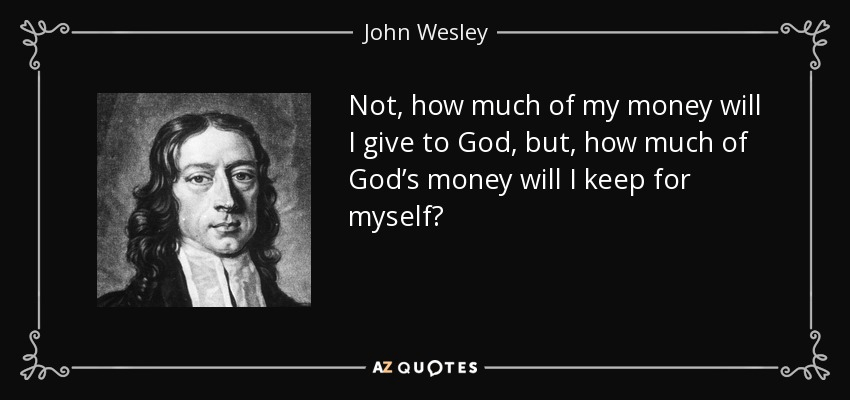
We may give of ourselves, and give of our money, with sincerity, but if we walk away from that and believe the rest of my money, time, talents, and resources are mine to use as I want (since I fulfilled my duty) then we have a divided loyalty between the kingdom of God and the domain of darkness.

Jesus, as he typically does in the Gospels, used metaphors to communicate that we must have an unswerving loyalty to God’s kingdom values.

The Treasure Metaphor

Do not store up for yourselves treasures on earth. So, what are earthly treasures? 

Stuff, money, possessions, control, power, position, and recognition from others. 

You may rightly ask in response, “Is any of that really, in and of itself, wrong?” 

No. However, that’s not the real issue. The real question is this:

Do we use our earthly treasure to build heavenly treasure, or do we hoard earthly treasure for our own purposes apart from Christ’s kingdom values?

A man in a crowd said to Jesus, “Teacher, tell my brother to give me my share of what our father left us when he died.”

Jesus answered, “Who gave me the right to settle arguments between you and your brother?”

Then he said to the crowd, “Don’t be greedy! Owning a lot of things won’t make your life safe.”

So, Jesus told them this story:

A rich man’s farm produced a big crop, and he said to himself, “What can I do? I don’t have a place large enough to store everything.”

Later, he said, “Now I know what I’ll do. I’ll tear down my barns and build bigger ones, where I can store all my grain and other goods. Then I’ll say to myself, ‘You have stored up enough good things to last for years to come. Live it up! Eat, drink, and enjoy yourself.’ ”

But God said to him, “You fool! Tonight, you will die. Then who will get what you have stored up?”

“This is what happens to people who store up everything for themselves but are poor in the sight of God.” (Luke 12:13-21, CEV)

Earthly possessions are tools to be used. Jesus warns that we must not accumulate personal wealth, esteem, and success for the sake of placing ultimate security in money, but for advancing God’s kingdom values. 

Why do that? 

Because earthly treasure is temporary, and heavenly treasure is permanent. 

Heavenly treasure is righteousness; it’s right and just relationships. Humility, peace, grace, mercy, purity, and forgiveness are all relational values. The only thing that we will take with us when we die is relationships; it’s the only thing that’s permanent.

If I am genuinely committed to God’s kingdom, my most cherished values will be established by God. 

Whatever it is that we value, those values consume our thoughts and our efforts. In other words, what’s truly in our hearts directs our work.

And what we value derives from how we perceive our identity. For many Americans, we are defined primarily not as citizens or workers, but consumers. Jesus is neither advocating that we take vows of poverty, nor that we ought not to enjoy the good things in life. Rather, Jesus wants us to define where our loyalties truly lie.

The Light Metaphor

In the ancient world, the eye represented what you fixed your gaze on, or what your focus was. In our culture, we could replace the word “eye” with the word “goal.” The word “body” represents the entirety of one’s life.  So, we may interpret Christ’s words in this way: 

A goal is the focus of a life. If your goals are good, your whole life will be full of proper focus. But if your goals are bad, your whole life will be full of blindness. If then, the focus within you is only really blindness, how great is that darkness!

If the goals and dreams of life are toward earthly treasure, you will blindly move in that direction and your life will end up in disordered love and misplaced values. At death, you will have nothing to take with you because all the eggs have been put in the temporal basket.

The Slavery Metaphor

Jesus flatly stated that we cannot simultaneously serve God and money. Pick and choose. You must go one way or the other; there is no middle ground. 

The question Jesus is posing is: “Who’s your Master?” 

  • When deciding between two jobs, or two homes, or how to spend your time or your money, what set of values comes into play?… values that define me as a follower of Jesus?… or values that define me as an American consumer? 
  • Will I be a bondservant of Jesus, or a slave to credit card debt? 
  • Will I serve God, or serve the lifestyle that I believe I deserve?

Conclusion

None of us are immune from the temptations of all the world’s shiny things, of ambling into misdirected goals.  If you find that you are slave to the wrong god, then there is good news: There is an infinite storehouse of grace that flows from the very heart of God through Jesus Christ. 

If we confess our sins, he is faithful and just to forgive us our sins and cleanse us from everything we’ve done wrong. (1 John 1:9, CEB)

Choose this day whom you will serve.

Our Father in heaven,
may your name always be kept holy.
May your kingdom come
and what you want, be done,
    here on earth as it is in heaven.
Give us the food we need for each day.
Forgive us for our sins,
    just as we have forgiven those who sinned against us.
And do not cause us to be tempted,
but save us from the Evil One.

The kingdom, the power, and the glory are yours forever. Amen. (Matthew 6:9-13, NCV)