The Parable of the Two Sons (Matthew 21:28-32)

Wheatfield with Crows, by Vincent van Gogh, 1890

“What do you think about this? A man had two sons. He went to the first and said, ‘Son, go to work in the vineyard today.’

“His son replied, ‘I don’t want to!’ But later he changed his mind and went.

“The father went to the other son and told him the same thing. He replied, ‘I will, sir,’ but he didn’t go.

“Which of the two sons did what the father wanted?”

“The first,” they answered.

Jesus said to them, “I can guarantee this truth: Tax collectors and prostitutes are going into God’s kingdom ahead of you. John came to you and showed you the way that God wants you to live, but you didn’t believe him. The tax collectors and prostitutes believed him. But even after you had seen that, you didn’t change your minds and believe him. (God’s Word Translation)

I once cheated on a college exam. It was a required class for which I was not much interested, so my grade was rather tenuous going into the final exam of the semester. When the professor stepped out of the classroom for a few minutes during the final, my fellow students began sharing answers. I gave in and went with the others.

I got an “A” on the exam and passed the class easily. However, I royally flunked God’s test. After a few days of misery, I went to the professor’s office and confessed what I had done. I was prepared to take a failing grade for both the exam and the class, yet I think the professor was so shocked that I would come and admit such a thing that he worked up my grade right there in front of me… I passed, but just barely.

I originally said “no” to what was right, but then said “yes” and made it right.  For those who practice repentance, there is a God of grace waiting for them. God has no tolerance for those who profess truth with a big “yes” on the outside but are passive-aggressive on the inside and say “no,” undermining the truth by how they live. 

The Sower, by Vincent Van Gogh, 1888

Today’s Gospel lesson highlights entrance into the kingdom of God – and the people entering might surprise us. Turns out, there are spiritual insiders on the outside of the kingdom, and spiritual outsiders as the ones who really inherit the kingdom.

Christ’s parable is a warning to all the spiritually serious: Beware, lest our insider energies be spent in correctness, conformity of belief, and cockiness rather than following Jesus. At the same time, the parable encourages outsiders with the wonderful possibilities of a changed life. 

Jesus was warning those who arrogantly assume they have the inside track by what they believe, and not by doing God’s will. It may be challenging for us to imagine how truly offensive Christ’s story was to the original hearers of the parable, so I restate it in a more contemporary form:

There was a man who was well respected in the community and had two sons. One son grew up and became a respectable member of the community, too. He was a successful businessman and gave lots of money to causes in his community, including new lights for the school football field – which was no small cost.  He only asked that appropriate and prominent recognition be given him with a plaque bearing his name on each of the light poles. 

The other son was not so successful.  He was the one in school who the teachers said, “Why can’t you be more like your brother?”  There was nothing spectacular about this son.  In fact, he lived an ‘alternate lifestyle’ and people murmured behind his back. 

One day the father said to this son: “Son, go and work at my place of business today; I am going away and need you to do some of the tedious paperwork I have gotten behind on.” “No way!” he answered, but later felt heartsick about the way he spoke to his father and decided to go and do all the grunt work his father needed done.

The father went to the well-respected son and said the same thing about needing him to do all the thankless paperwork that was piled up. That son answered, “Yes, sir, I will; anything you need I will do.” But that son did not go. Instead, he chose to go golfing with some people whom he was trying to coy favor with.

After telling the story, Jesus asked all the upstanding faith leaders and the people listening: “Which of the two did what his father wanted?” “The first,” they answered.

Jesus said, “I tell you the truth, folks with different sexual orientations, unemployed persons on the low rung of society, and the religiously different with esoteric beliefs are entering the kingdom of God ahead of you. For you have had heard thousands of sermons about grace and the way of righteousness, yet you did not believe by putting God’s Word into practice; but the others did. And even after you saw how God can change a person’s life from the inside-out, you yourselves did not repent and believe.

For Jesus to tell such a story was so scandalous that, frankly, it got him killed. Specifically, the scandal is this: Merely believing rightly and living as an upstanding citizen is not the way of salvation. Tax collectors and prostitutes were some of the most despised people in Christ’s time. It was assumed they were outside of God.

However, the proof of genuine belief is not lip service but actively obeying God when no one is looking:

My friends, what good is it to say you have faith, when you don’t do anything to show that you really do have faith? Can that kind of faith save you? If you know someone who doesn’t have any clothes or food, you shouldn’t just say, “I hope all goes well for you. I hope you will be warm and have plenty to eat.” What good is it to say this, unless you do something to help? 

Faith that doesn’t lead us to do good deeds is all alone and dead! Suppose someone disagrees and says, “It is possible to have faith without doing kind deeds.” I would answer, “Prove that you have faith without doing kind deeds, and I will prove that I have faith by doing them.” You surely believe there is only one God. That’s fine. Even demons believe this, and it makes them shake with fear. (James 2:14-19, CEV)

The Christian life comes down to obedience, not cheap talk. Jesus wants to bless a lost world in need of God’s love and grace.

If we have ears to listen, we can hear numerous lost souls crying in the dark. If we have eyes to see, there are people caught in addictions standing in front of us. If we have hands willing to labor, needy folks surround us who can neither help themselves nor ask for it.
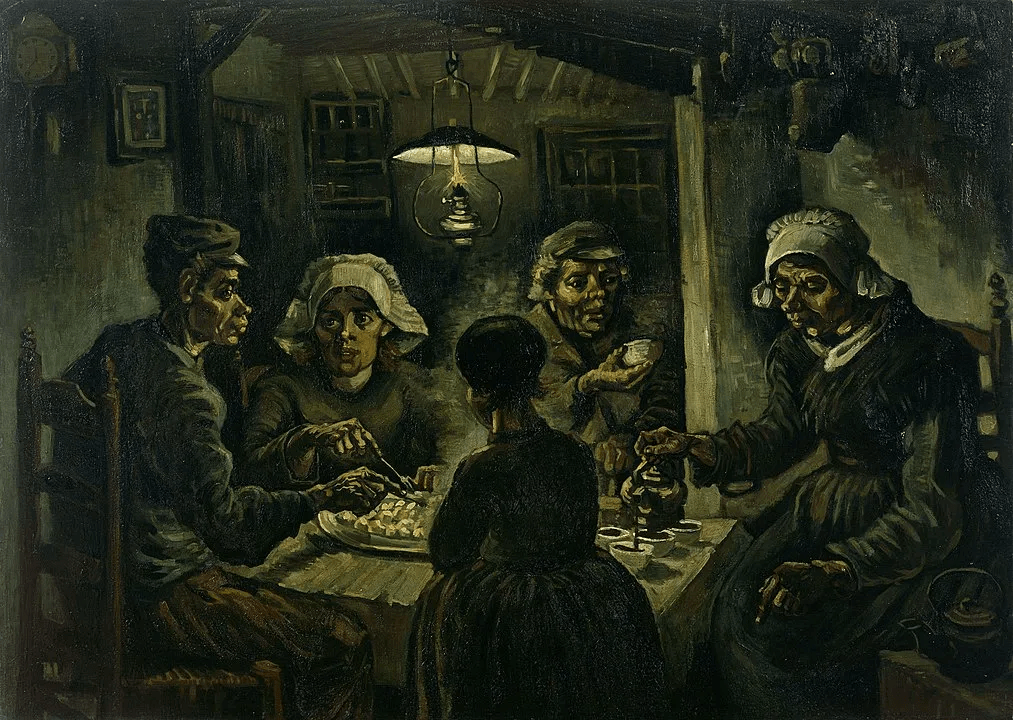
The Potato Eaters, by Vincent Van Gogh, 1885

Honestly, I am heartsick over the grinding loneliness of so many people; the boatloads of shame which thousands secretly carry; and the silent pain experienced by individuals everywhere. I feel this way because I genuinely believe my Lord feels the same. Jesus is looking to activate grace through his people to a world sinking in the depths of incredible human need.

Christ’s parable, however, is more than a warning; it is a story that opens the door of mercy for unlikely people seemingly far from God – people who ruined their lives by saying “no” to God. The parable is an invitation for all the screw-ups and those with little faith to come to Jesus.

There is a rather obscure Scripture reference, tucked away in the Old Testament. David was on the outside looking in. King Saul was on the inside trying to capture and kill him, even though David had done nothing wrong. Here is what happened:

David got away and escaped to the Cave of Adullam. When his brothers and others associated with his family heard where he was, they came down and joined him. Not only that, but all who were down on their luck came around—losers and vagrants and misfits of all sorts. David became their leader. There were about four hundred in all. (1 Samuel 22:1-2, MSG)

This rag-tag group of outsiders in Israel became Israel’s insiders as David eventually became king and these were the “mighty men,” the ones who helped bring Israel into prominence. 

Jesus Christ came into this world and identified himself as the Savior to the outsider when he quoted the prophet Isaiah:

Jesus went to the synagogue on the sabbath day, as was his custom. He stood up to read, and the scroll of the prophet Isaiah was given to him. He unrolled the scroll and found the place where it was written:

“The Spirit of the Lord is upon me,
    because he has anointed me
        to bring good news to the poor.
He has sent me to proclaim release to the captives
    and recovery of sight to the blind,
        to let the oppressed go free,
to proclaim the year of the Lord’s favor.”

And he rolled up the scroll, gave it back to the attendant, and sat down. The eyes of all in the synagogue were fixed on him. Then he began to say to them, “Today this scripture has been fulfilled in your hearing.” (Luke 4:16-21, NRSV)

In Christ, there are no lost causes and no persons too far on the outside to be redeemed. Therefore, now is the time to act on what we believe – to not only affirm right doctrine, but to live out that doctrine in obedience to God’s call.

May it be so, to the glory of God.

The Parable of the Tenants (Matthew 21:33-46)

Illustration of the parable of the vineyard workers, in the Codex Aureus of Echternach, c.1040 C.E.

“Listen to another parable: There was a landowner who planted a vineyard. He put a wall around it, dug a winepress in it and built a watchtower. Then he rented the vineyard to some farmers and moved to another place. When the harvest time approached, he sent his servants to the tenants to collect his fruit.

“The tenants seized his servants; they beat one, killed another, and stoned a third.Then he sent other servants to them, more than the first time, and the tenants treated them the same way. Last of all, he sent his son to them. ‘They will respect my son,’ he said.

“But when the tenants saw the son, they said to each other, ‘This is the heir. Come, let’s kill him and take his inheritance.’ So they took him and threw him out of the vineyard and killed him.

“Therefore, when the owner of the vineyard comes, what will he do to those tenants?”

“He will bring those wretches to a wretched end,” they replied, “and he will rent the vineyard to other tenants, who will give him his share of the crop at harvest time.”

Jesus said to them, “Have you never read in the Scriptures:

“‘The stone the builders rejected
    has become the cornerstone;
the Lord has done this,
    and it is marvelous in our eyes’?

“Therefore I tell you that the kingdom of God will be taken away from you and given to a people who will produce its fruit. Anyone who falls on this stone will be broken to pieces; anyone on whom it falls will be crushed.”

When the chief priests and the Pharisees heard Jesus’ parables, they knew he was talking about them. They looked for a way to arrest him, but they were afraid of the crowd because the people held that he was a prophet. (New International Version)

I once saw a guide dog gently pressing on his blind owner to go a certain way. But the man didn’t go that way. The dog kept pressing until the blind man kicked his dog. And then, the guy walked smack into a parked car on the street.

We can sometimes think too much of ourselves; and tend to believe that what we say and do and think are right – until we walk into a parked car, looking like a fool.  We need, of course, to listen to God. Yet, because we cannot see God, it’s too easy to treat the Lord as if he were an absentee landowner.

Today’s parable is about who will inherit the kingdom of God. The religious establishment of Christ’s day were not characterized by Christ’s Beatitudes. They thought they were okay. But they were really like a blind man kicking the guide dog, believing their way was right.

There are five truths illustrated in this parable that we need to grasp. The point of the parable is that Christ is looking for people who do God’s will and produce righteous fruit. Before we get into those truths, let’s get the cast of characters straight:

  • the landowner is God
  • the vineyard is Israel, God’s people
  • the tenants that the landowner put in charge are the religious leaders
  • the servants are the Old Testament prophets of God
  • the Son is Jesus

God is patient and longsuffering

God is like the guide dog who gently and lovingly keeps nudging, trying to get the person’s attention. In the parable, God’s people are likened to a vineyard. Jesus drew much of his teaching from the prophet Isaiah.

In Isaiah chapter 5, Israel is likened to a vineyard that God carefully takes care of, looking for fruit, but not getting any. For Jesus to tell the parable about a vineyard, gained the attention of people who knew the Scriptures.

Like Isaiah, Jesus pictured God as having a persistent, patient love for people, even when the tenants rebel and try and throw God out. The landowner, God, has:

  • planted
  • put in a wall
  • dug a winepress
  • built a watchtower
  • rented it out
  • sent the servants 

All these verbs describe a God who put a lot of time and energy into the vineyard. Even today, God still fusses over the vineyard and is looking for people to produce fruit in keeping with a genuine sense of righteousness. 

Humanity, especially the religious insiders, are sinful

In contrast to God’s love and care, is humanity’s persistent rebellion. The picture is of people who are hell-bent on rejecting the love of God. God’s patient love is met each time with a heightened hardness of heart on the part of the tenants. Jesus wanted the crowd to feel the situation of the landowner who goes beyond normal conventions in continuing to send servants; and the tenants’ violence in response.

God feels the weight of human sinfulness. Because the landowner is absent and we cannot see him, we may forget or not realize that God feels the full range of emotions. Each person who goes their own way and refuses God’s love; does not respond to God’s efforts to see fruit produced; and any system that is imposed contrary to God’s good order and care, all grieves God. Jesus later expressed his own grief and longing:

“Jerusalem, Jerusalem, you who kill the prophets and stone those sent to you, how often I have longed to gather your children together, as a hen gathers her chicks under her wings, and you were not willing.” (Matthew 23:37, NIV)

The Son was sent as the final act

Any “normal” landowner would throw the tenants out after the first sending of servants that didn’t go well. Yet God the landowner knew what he was doing. Jesus actually summarized the plot line of the Old Testament, and of our lives, as well. The history of salvation moves like this through Scripture:

  • God loves people
  • people keep rebelling against that love
  • God keeps pursuing peoiple
  • then, God does the unthinkable by becoming one of us 

Jesus, stepped into this messy, bloody and violent world, full of hatred and hardness of heart. Then, the Son was killed and thrown outside.

God’s judgment is awful

Jesus drew his listeners into the story, and invited a response to what the landowner would do after all of the overtures to the tenants. The listeners responded that “he will bring those wretches to a wretched end.” And in a sense Jesus says, “You are them.” 

Jesus invited them to remember and realize the Scripture by looking at it as the Son who was killed. He let the crowd know that rejection of the Son results in the Son becoming the most prominent person. Jesus wanted them to look at their bibles and see Christ. He was rejected by his own – which will result in a pulverizing judgment, like a stone falling on a person.

God replaces the whole crew

God is transferring the kingdom of God from the proud and hard-hearted religious insiders to the repentant, soft-hearted outsiders. The self-righteous people failed to accept Jesus because of their insistence on being right; the spiritual beggars accept Jesus and God’s love and are the true subjects of the kingdom. The supposedly spiritual people who had all the religious traditions failed to see what those traditions really point to. 

We don’t own the kingdom; God does. God calls the shots, and has every right to expect people to produce the fruit of mercy, purity, and peacemaking in keeping with a humble heart that desires genuine righteousness.

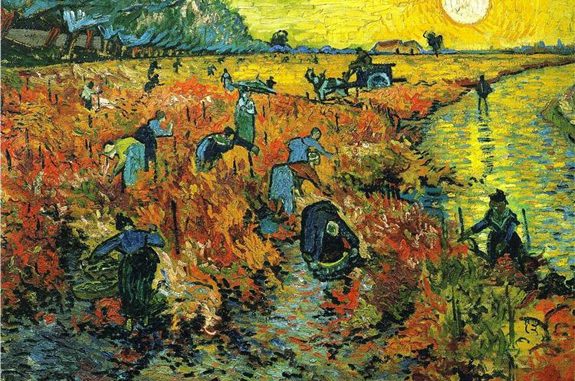
The Red Vineyard by Vincent Van Gogh, 1888

Maybe this parable seems a bit distant from us. To help us hear the story of Jesus as his original hearers heard it, I now restate the parable in a contemporary form:

Listen to another story about who is really a Christian. There was a landlord who built an upscale apartment building. The landlord spared no expense in creating apartments that were comfortable and homey. Everything he designed and built was with the care of someone who thought about what people would need and like most about a place to live. He included a host of amenities to his apartments because he really wanted the people to have as much joy living there as he did designing and building them. 

The owner put a gate around the complex so that the apartment community would be safe and secure. He hired a security firm to keep watch over the apartment complex. Then, when every detail was in place, the landlord rented out his apartments. But he didn’t just rent them out; he wanted to see the joy on the faces of the renters when he made a contract with them that included an entire year’s free rent. After that first year, when it came time for the first rent to be due, the landlord did not receive a single rent check. He was puzzled about this, so he decided to send some of his employees to collect the rent in person.

While the renters were in one of the large common lounges enjoying being together, they saw the landlord’s employees coming from a distance. So, they hatched a devious plan. Over their year of living in the beautiful apartments, they began to think they were especially special, and not like other people who lived in places that weren’t as nice as where they lived.  They gained such a twisted idea of their own importance that they believed they didn’t need to pay rent; and no one was going to tell them what to do. After all, they deserved to live where they did. They have a right to it. They don’t need to answer to anyone, including this supposed landlord who they have never seen in this last year, anyway.

Then the renters took the landlord’s employees and beat one, killed another, and took a baseball bat to a third. They took the bodies and threw them in the dumpster behind the building. Then the landlord, not wanting to evict his renters even after such a terrible experience, sent some other employees, more than the first time. But the renters had no guilt about what they had done, and did the very same thing to the second group of employees.  Even after this, the landlord was reluctant to let the law take over and decided to send his own son to collect the rent so that the renters could keep living in his apartments.

But when the renters saw the son, they said to each other. “Look! The guy sent his son. If we kill him, then we can forget about the old man and claim the whole apartment complex for ourselves.” 

After telling this story, Jesus asked all the church people listening, “When the owner of the apartment complex comes, what do you think he will do to those renters?” The crowd was into the story and replied, “He’s going to judge those ungrateful murderers, and replace the whole bunch of them with all new renters.” 

Jesus then said to them, “Have you never read in your bibles that the son who was rejected and killed has become the most important person of all? The Scriptures are all about the Son.”

“So, I am telling you that even though you have been in the Church all your life, it isn’t yours. I’m going to replace the whole lot of you with people who are humble and sensitive to sin; people who know they don’t deserve the nicest place to live in the world. If you persist in ignoring the Son, all you have to look forward to is God’s judgment.”

When all the important church people heard Jesus’ stories, they knew he was talking about them. And, even though they saw themselves in the story, they still wanted to do their own thing. They didn’t change one bit. Instead, they decided to be sneaky and try and do away with Jesus in their lives without getting in trouble. 

The kingdom of God and Christ’s Church is not an entitlement. And it does not inoculate us from God’s judgment. We must produce fruit in keeping with repentance. God is gently nudging us, like a guide dog. Will we respond in humility and turn where the Lord wants us to turn?

The Gentle King (Matthew 21:1-11)

The Triumphal Entry, by He Qi

As they approached Jerusalem and came to Bethphage on the Mount of Olives, Jesus sent two disciples, saying to them, “Go to the village ahead of you, and at once you will find a donkey tied there, with her colt by her. Untie them and bring them to me. If anyone says anything to you, say that the Lord needs them, and he will send them right away.”

This took place to fulfill what was spoken through the prophet:

“Say to Daughter Zion,
    ‘See, your king comes to you,
gentle and riding on a donkey,
    and on a colt, the foal of a donkey.’”

The disciples went and did as Jesus had instructed them. They brought the donkey and the colt and placed their cloaks on them for Jesus to sit on. A very large crowd spread their cloaks on the road, while others cut branches from the trees and spread them on the road. The crowds that went ahead of him and those that followed shouted,

“Hosanna to the Son of David!”

“Blessed is he who comes in the name of the Lord!”

“Hosanna in the highest heaven!”

When Jesus entered Jerusalem, the whole city was stirred and asked, “Who is this?”

The crowds answered, “This is Jesus, the prophet from Nazareth in Galilee.” (New International Version)

A Humble Leader

Gentle humility and strong leadership are not mutually exclusive concepts. They can and should co-exist together.

Los Angeles County traffic cops receive plenty of complaints about their work. After all, most motorists don’t think they deserve a ticket. Each complaint gets documented and placed in the officer’s personnel file. One officer, however, Deputy Sheriff Elton Simmons, made 25,000 traffic stops over a span of 20 years, without a single complaint on his record.

When his supervisor started looking through Simmons’ file, he was stunned to find plenty of commendations, but not a single complaint. It was so unusual, that a CBS News crew was assigned to follow Simmons in an attempt to learn his secret. They described Deputy Simmons as having a “pitch-perfect mix of authority and diplomacy” without a trace of arrogance or self-righteousness.

Although handing out plenty of tickets, they never came with a guilt trip.  Deputy Simmons described his mentality: “I’m here with you. I won’t look down at you.” 

One driver who got a ticket from Simmons said, “It’s his smile. How could you be mad at that guy?”  “Apparently, you can’t,” concluded the CBS News team. “Time after time, ticket after ticket, we saw Officer Simmons melt away a polar ice cap of preconceptions.”

A Meek Celebrity

As Jesus entered Jerusalem for the last week of his life, he was at the height of his fame. Christ’s teaching and healing ministry touched thousands of people. Jesus was the most famous celebrity to come into town since David captured the city a thousand years before. 

But Jesus did not ride into Jerusalem as a great and mighty warrior who conquered Jerusalem in a military battle. There is coming a time, at the end of the age, when Jesus will take on this role, but that was not his purpose on this occasion. 

Hosanna in the Highest, by Malaysian artist Hanna-Cheriyan Varghese

One of the challenges for people in every era is to properly balance scriptural truth. Many Jews emphasized King David’s victories in battle, and his great political dynasty, and so, tended to overlook that David was also a humble servant. 

King David showed steadfast love and kindness to his subjects and submitted himself to God in such a way that, even with opportunities to seize the kingship from Saul who was trying to take his life, he left vengeance to God alone.

Christ’s triumphal entry portrays Jesus as King, the Son of David, but as a gentle king. He embodied both powerful authority and gentle humility. Jesus wanted the crowd to understand that he was not like most kings – he was a lowly king. 

Jesus as a meek celebrity seemed so odd that many people saw that combination of gentle authority as being wishy-washy. Jesus didn’t fit any of the typical labels that people expected. They wondered, “Is he a Pharisee? Or a Zealot? What’s his position on the Romans?  How is he going to lead us out from under Gentile rule?” There was lots of anxiety and concern over Jesus; the people could not nail down exactly what kind of guy he was.

A Servant Pastor

Over the years, as a Pastor, many people have wanted to label me as something, but have had a hard time doing it. Am I liberal or conservative? liturgical or non-liturgical? open or closed to particular people or groups? e.g. LGBTQ folks, Black Lives Matter, etc.

The problem with all this is that it assumes you cannot be both, as if life is all either/or, instead of both/and. It makes ministry about choosing sides, instead of breaking down barriers.

Meekness and strength, gentleness and authority, humility and leadership, grace and truth, love and anger, are all meant to be together – not compartmentalized in sequestered ghettos of the mind.

Jesus sought to hold kingly authority and divine righteousness together, at the same time, all the time. Christ came into Jerusalem to face the cross and take upon himself the sin of the whole world. He came as a gentle king.

Yet, many people do not want this kind of leader because they think leadership is all about power – taking charge with strong authority, telling people what to do, and controlling every aspect of the realm.  

Jesus, at times, acts like a decisive and absolute authority. He knocks over the tables of the money changers in the temple, curses fig trees, and refuses to answer direct questions. But then he turns around and goes against the people’s expectations of him as a leader by riding on a lowly donkey, inviting tax collectors and prostitutes to join him, going after the lost, and embracing the least persons in society.

A Donkey Lord

Jesus displayed a combination that seemed confusing and wishy-washy to many. Christ is both sovereign lord, and humble servant. Jesus riding on a donkey seemed a strange fusion of authority and humility. 

On the one hand, a donkey was the beast of burden for most working class poor people. Donkeys are ordinary, and not like war horses. Kings didn’t ride into conquered cities on donkeys. But, on the other hand, the donkey is also linked to Messiah’s power and authority.

Rejoice, rejoice, people of Zion!
    Shout for joy, you people of Jerusalem!
    Look, your king is coming to you!
He comes triumphant and victorious,
    but humble and riding on a donkey—
    on a colt, the foal of a donkey.

The Lord says,

“I will remove the war chariots from Israel
    and take the horses from Jerusalem;
    the bows used in battle will be destroyed.
Your king will make peace among the nations;
    he will rule from sea to sea,
    from the Euphrates River to the ends of the earth.” (Zechariah 9:9-10, GNT)

Jesus is the ultimate leader who uses his authority for the benefit of others, to bring peace. Jesus did not use his authority to consolidate power and squish enemies, but instead, gave his life so that others might live. 

Gentle and meek does not mean being a washrag or a limp noodle. Rather, it means to have power under control, e.g. a broke horse; it is power for useful purposes to serve people, not like other kings who were concerned with getting, consolidating, and keeping power, at all costs.

Jesus is the crucified Messiah; the modest leader; the lowly Lord; the God Man. We must hold it all, not emphasizing one aspect above another, so that we have the complete picture of Christ.

A Gracious Royal

Believers and followers of Jesus are royal children of the King. That means we live in the way of Jesus by bestowing grace to others. What does this “look like?”

  • In our families, Christian parents do not merely bark orders at kids, but love and support them by humbly and gently coming alongside and helping. 
  • In our neighborhoods, Christian citizens pray for the welfare of their neighbors, even and especially the ones who we may not like very well.   
  • In our work, Christian workers use their skills and abilities to serve others, transforming what we do from a secular job to a sacred vocation. 
  • In our daily life, Christians scan the horizon to seek people whom we might show God’s kindness, instead of just waiting for something to fall into our laps, if it ever does.

A Talking Donkey

From the Old Testament, we know that donkeys can talk (Numbers 22:21-38). If Christ’s donkey could speak, I imagine him saying: 

“King Jesus, why did you choose a lowly donkey like me to carry you to ride in your parade? Didn’t you have a friend who owned a horse – a spirited royal mount, fit for a king to ride? Why choose me, a small unassuming beast of burden, trained to plow and not to carry kings?”

It is a privilege to be a Christian. Perhaps you will say: 

“King Jesus, why did you choose me, a lowly unimportant person to bear you in my world today? I am poor and unimportant, trained to work, and not to carry kings – let alone the King of kings; and yet, you’ve chosen me to carry you in triumph in this world’s parade. King Jesus, keep me humble, so everyone may say, ‘Blessed is he who comes in the name of the Lord,’ and not ‘what a great Christian he is.’”

God of all, you gave your only begotten Son to take the form of a servant, and to be obedient, even to death on a cross: give us the same mind that was in Christ Jesus that, sharing in his humility, we may come to be with him in his glory, who lives and reigns with you and the Holy Spirit, one God, now and forever. Amen.

A Parable of Two Sons (Matthew 21:28-32)

The Lord of the Parables by Argentine artist Jorge Cocco Santángelo

“What do you think? A man had two sons. Now he came to the first and said, ‘Son, go and work in the vineyard today.’

“‘No, I don’t want to,’ he replied. But later he changed his mind and went.

“The father said the same thing to the other son, who replied, ‘Yes, sir.’ But he didn’t go.

“Which one of these two did his father’s will?”

They said, “The first one.”

Jesus said to them, “I assure you that tax collectors and prostitutes are entering God’s kingdom ahead of you. For John came to you on the righteous road, and you didn’t believe him. But tax collectors and prostitutes believed him. Yet even after you saw this, you didn’t change your hearts and lives and you didn’t believe him. (Common English Bible)

Contemporary persons aren’t the only ones who want to know whose in and whose out; it’s been around forever.

In the ancient world of Jesus, people were always concerned about conformity to the established system and society of the way things are. For religious folk, who gets in and who gets left out was an important issue .So, Jesus decided to tell a parable about entrance into the kingdom of God.

Turns out, there are spiritual insiders on the outside of the kingdom, and spiritual outsiders who are the true inheritors of the kingdom.

The parable, at its core, is a warning to all the spiritually serious insiders: Beware, lest your energies be spent in correctness of behavior, conformity of belonging, and cockiness of belief rather than following Jesus. And, at the same time, the parable encourages spiritually estranged outsiders with the wonderful possibilities of a changed life. 

Far too many people arrogantly assume they have the inside track by what they believe, and not by doing God’s will.

It may be challenging for us to imagine how truly offensive Christ’s story was to the original hearers of the parable, so I restate it in a more contemporary form:

There was a man who was well respected in the community and had two sons. One son grew up and became a respectable member of the community, too. He was a successful businessman and gave lots of money to causes in his community, including new lights for the school football field – which was no small cost. He only asked that appropriate and prominent recognition be given him with a plaque bearing his name on each of the light poles. 

The other son was not so successful. He was the one in school who the teachers said, “Why can’t you be more like your brother?” There was nothing spectacular about this son. In fact, he lived an “alternative lifestyle” and people murmured behind his back. 

The Parable of the Two Sons by Jorge Cocco Santángelo

One day the father said to this son: “Son, go and work at my place of business today; I am going away and need you to do some of the tedious paperwork I have gotten behind on.” “No way!” he answered, but later felt heartsick about the way he spoke to his father and decided to go and do all the grunt work his father needed done.

The father went to the well-respected son and said the same thing about needing him to do all the thankless paperwork that was piled up. That son answered, “Yes, sir, I will; anything you need I will do.” But that son did not go. Instead, he chose to go golfing with some people whom he was trying to coy favor with.

After telling the story, Jesus asked all the upstanding faith leaders and the people listening: “Which of the two did what his father wanted?” “The first,” they answered.

Jesus said, “I tell you the truth, folks with different sexual orientations, unemployed persons on the low rung of society, the religiously different with esoteric beliefs, immigrants from other countries, ex-convicts living in half-way houses, and persons with addictions are all entering the kingdom of God ahead of you.

For you have had heard thousands of sermons about grace and the way of righteousness, yet you did not believe by putting God’s Word into practice; but the others did. And even after you saw how God can change a person’s life from the inside-out, you yourselves did not repent and believe.

It was parables like this that created a religious scandal and eventually got Jesus killed.

The offense for many upstanding citizens is this: that their right doctrine and clean living is not the way of salvation.

Tax collectors and prostitutes were some of the most despised people in Christ’s time. It was simply assumed they were on the outside and would be judged by God.

However, the proof of genuine faith is not lip service but actively obeying God when no one is looking:

My friends, what good is it to say you have faith, when you don’t do anything to show that you really do have faith? Can that kind of faith save you? 

If you know someone who doesn’t have any clothes or food, you shouldn’t just say, “I hope all goes well for you. I hope you will be warm and have plenty to eat.” What good is it to say this, unless you do something to help? 

Faith that doesn’t lead us to do good deeds is all alone and dead!

Suppose someone disagrees and says, “It is possible to have faith without doing kind deeds.” I would answer, “Prove that you have faith without doing kind deeds, and I will prove that I have faith by doing them.” 

You surely believe there is only one God. That’s fine. Even demons believe this, and it makes them shake with fear. (James 2:14-19, CEV)

The Christian life comes down to obedience, not cheap talk. Jesus wants to bless a lost world in need of God’s love and grace.

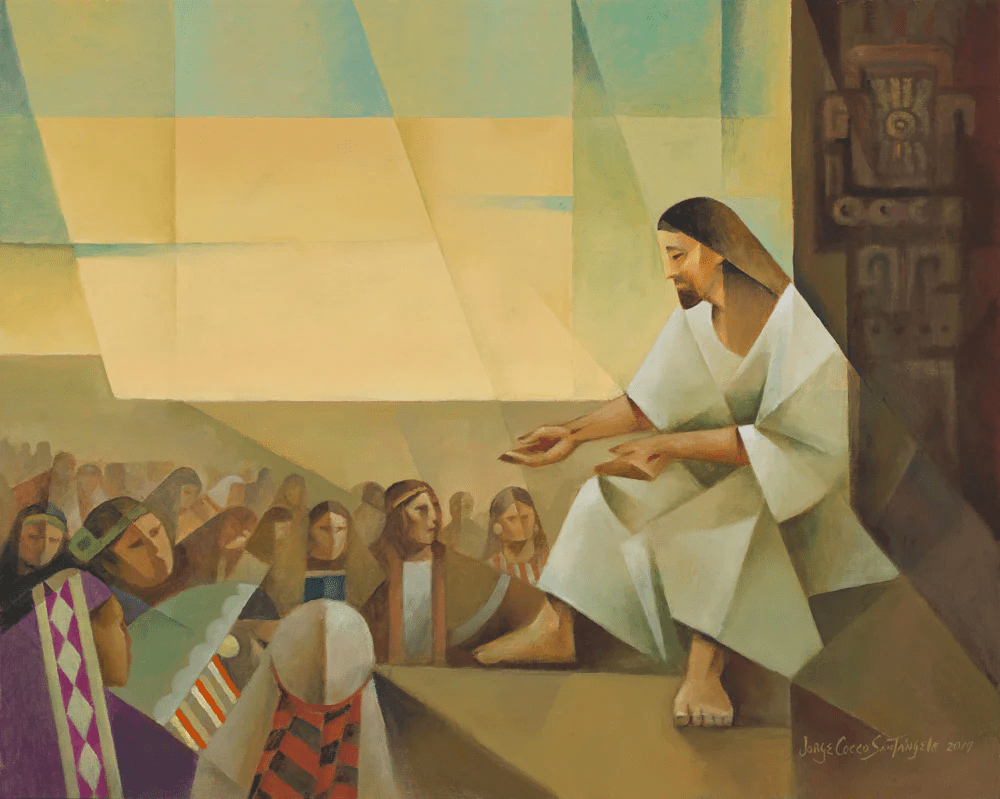
Jesus Preaching to the Multitude by Jorge Cocco Santángelo

If we have the spiritual ears to listen, we can hear numerous lost souls crying in the dark.

If we have the spiritual eyes to see, we can observe people overwhelmed with life circumstances standing in front of us.

If we have the spiritually strengthened hands willing to labor, we can support needy folks around us who can neither help themselves nor ask for it.

Whenever we take the focus off who is in and who is out, then without judgment and a heart full of compassion, we can address the:

  • Loneliness of so many people living alone and dying alone.
  • Shame which thousands secretly carry every day.
  • Pain of broken bodies, broken hearts, broken spirits, and broken minds experienced by individuals everywhere.

The Lord Jesus feels the loneliness, shame, and pain of people – which is why he told a parable like he did. Christ is looking to activate grace through his people, the church, to a world sinking in the depths of incredible human need.

Christ’s parable, however, is more than a warning; it is a story that flings open the door of mercy for unlikely people seemingly far from God – people who ruined their lives by saying “no” to God. The parable is an invitation for all the screw-ups and those with little faith to come to Jesus.

There is a rather obscure Scripture reference, tucked away in the Old Testament. David was on the outside looking in. King Saul was on the inside trying to capture and kill him, even though David had done nothing wrong. Here is what happened:

David got away and escaped to the Cave of Adullam. When his brothers and others associated with his family heard where he was, they came down and joined him. Not only that, but all who were down on their luck came around—losers and vagrants and misfits of all sorts. David became their leader. There were about four hundred in all. (1 Samuel 22:1-2, MSG)

This rag-tag group of outsiders in Israel became Israel’s insiders as David eventually became king and these were the “mighty men,” the ones who helped bring Israel into prominence. 

Jesus Christ came into this world and identified himself as the Savior to the outsider when he quoted the prophet Isaiah:

“The Spirit of the Lord is upon me,
    because he has anointed me
        to bring good news to the poor.
He has sent me to proclaim release to the captives
    and recovery of sight to the blind,
        to let the oppressed go free,
to proclaim the year of the Lord’s favor.”

And he rolled up the scroll, gave it back to the attendant, and sat down. The eyes of all in the synagogue were fixed on him. Then he began to say to them, “Today this scripture has been fulfilled in your hearing.” (Luke 4:18-21, NRSV)

In Christ, there are no lost causes and no persons too far on the outside to be redeemed.

Therefore, now is the time to act on what we believe – to not only affirm right doctrine, but to live out that doctrine in obedience to God’s call. Amen.