Matthew 22:36-40 – Who Do We Minister To?

“Teacher, which is the greatest commandment in the Law?”

Jesus replied: “‘Love the Lord your God with all your heart and with all your soul and with all your mind.’ This is the first and greatest commandment. And the second is like it: ‘Love your neighbor as yourself.’ All the Law and the Prophets hang on these two commandments.” (New International Version)

I love my three daughters. I think God made them beautiful to compensate for all the ornery things they did as kids so I would not go crazy. Once the oldest was at the top of the stairs with the youngest (who was two years old at the time). She put her in a laundry basket and pushed her down with the middle kid at the bottom to catch her. 

I love my wife with all my heart and soul. Yet, she always thought it would be a good idea to have an open-door policy for the girls to come into our bed at night whenever they needed us. I have been puked on, peed on, kicked on and pushed out of bed. Sometimes it was like living with a bunch of drunks. Raising this girl version of “Malcom in the Middle” was often stressful. However, I gladly dealt with it all because I love my girls with all my heart, soul, mind, and strength.

Who do we minister to? The short answer: everyone. The reason we are to pay attention to everyone within our orbit is that God does. The way of loving our neighbor is to experientially know the heart, soul, mind, and strength of our great God.

Love God with All Your Heart

God has children across planet earth, and the Lord loves them all. To love God with all our heart is to begin seeing God’s big expansive heart for people all around the world. God’s compassionate heart is close to the broken-hearted, near to those in need. In fact, God’s wrath is a response of love to make things right in this fallen world. As early as the book of Genesis, just a few chapters in, it says:

The Lord saw that the human beings on the earth were very wicked and that everything they thought about was evil. He was sorry he had made human beings on the earth, and his heart was filled with pain. (Genesis 6:5-6, NCV)

God is disturbed with violent and evil hearts. God is heartbroken about the dark places within the human heart. God is deeply concerned for suffering, injustice, oppression, and death.

Every year fifteen-million children die of starvation. Human trafficking of women and girls has increased six-fold over the past five years resulting in forty-million victims of forced sex worldwide. Five and a half million people worldwide have died from COVID-19 Hundreds of millions are locked in grinding poverty, have no clean water to drink, and face a lifetime of illiteracy and poor wages.

The breadth and depth of human need and suffering goes on and one and on….

This is just a small glimpse of what God sees every day. And God knows each one of their names. For us, people need to move from being numbers to being names. God wants us to champion vital causes and aim our collective love toward people in need of Christ’s compassion and deliverance.

Love is a deliberate decision to meet a need in another person. One who fails to see the needs of others will suffer a shrinking heart. But the one close to God’s heart and aware of another’s need will gain an expansive heart. God also sees the good and the beautiful: every obedient act done in secret, each prayer uttered in the privacy of our closet, and all the places of selfless love toward another.

Love God with All Your Soul

I believe the world will experience a mass turning to God whenever Christians reclaim the soul of Christianity by experiencing a newfound sense of God’s wonder and beauty.

If loving God with all my heart means my heart breaks for the things that break God’s heart, then loving God with all my soul has my life flooded with God’s glory – awed by Divine majesty, mystery, and beauty. Loving God with all my soul is to perceive the glory and wonder of God all around me. It is to be profoundly grateful for everything – even and especially for the lessons learned from personal hardship and suffering.

Without a divine perspective, we only see the world as we are and not as it is. The ways to cultivate a beautiful love for God with all my soul is to meditate on Scripture and creation. Literally take time to smell the roses. If we walk or drive the same route every day, be mindful to observe one thing you have never seen before. Then, praise God for it. Each time Holy Scripture is read, do it slowly and carefully, noticing one thing you have never seen before. Then, praise God for that perception.

Take the extra step of sharing your wonderful and beautiful observations with others, especially unbelievers. It does no good to try and scare or cajole people into the kingdom of God. It makes all the difference when the world can see Christians captivated by the beauty and majesty of Christ.

Love God with All Your Mind

True love has an insatiable desire to know more and more about the object of its affection. To love God with all our mind is a desire to learn and experientially know more about the Lord. It is to have a constant curiosity about God.

Loving God takes our full faculties. God wants all our brains, not just one half of it.

Left-brain dominant people rely on the logical, analytical, practical, and think chiefly in concrete ways. Right-brain dominant folks are artistic, intuitive, creative, imaginative, humorous, even sarcastic, often speaking poetically and with satire or metaphor. Loving God with all our minds means we will use all our brains, both the right and the left hemispheres.    

One obstacle to loving God with our brains is that the mind of sinful humanity is death (Romans 8:6). A sinful mind is a small brain; it is not interested in genuine critical thinking – only in stubbornly expressing opinions. Such individuals are merely using a ridiculously small part of their brains. God, however, wants to sanctify our whole brains, to transform us by the renewing of our minds (Romans 12:2). 

We are to use our full cognitive capacities to love God – meaning we will value the left brain hemisphere of order and discipline, using all the tools of reason and logic, learning critical thinking skills, and pursuing the life of the mind.

We will also value the right brain hemisphere of mystery, paradox, and gray areas, enjoying the process of discovery, and probing the deepest issues of divinity and humanity – being comfortable with asking questions and not always having the answers.

Love God with All Your Strength

God loves the smell of your sweat. You might stink to high heaven from hard work but for God it is a sweet aroma and sacred incense. Love is measured not only by words spoken but by calories burned. Using our hands and our effort is as valuable to God as using our brains. 

Go hard after God with all your strength! Yet also be mindful that we all have a finite amount of energy. Because of this, we need to ensure we do not inordinately waste our energy pursuing power and control. Pride, anger, and selfishness saps our strength. Guilt, shame, and regret follow it up by draining our spiritual stamina. So, we need to keep busy doing the right things.

Our priorities need to reflect God’s values. Therefore, we will worship the Lord with all our strength, pray like there is no tomorrow, read Scripture like its our favorite food, fellowship with others as if they are adored old friends, and engage in mission with a continual sense that today could be the day of the Lord’s return.

Loving God with all our strength requires helping others in need whether they believe in Jesus, or not.

Since the Lord is truly concerned for all people’s welfare, putting our energy into sponsoring a refugee family, helping someone with their budget or their bills, providing for at-risk children, or organizing the neighborhood to work together, we let people know we care about them – and not just about whether they end up attending church, or not.

At the same time, we never need to ignore genuine opportunities to share our faith with folks we have connected with. Even if we are functioning with tangible help, we can make the extra effort of connecting people with Jesus.

Conclusion

The power of the gospel is strongest when people experience the full life that God desires for their entire existence. That will happen, I firmly believe, when people are in relationships with believers and with Christ.

When a church or faith community pays attention to the holistic needs of all persons within their sphere of influence, the effect on an individual, a family, a neighborhood, and a city is dramatic.

We love God by being obedient to his great command to love the world through meeting needs and establishing caring relationships. We can do this. It’s what we were saved from sin to do.

Gracious God, we give you thanks that you did not leave us in our misery and suffering, but that in love and mercy, you reached out to us. Thank you that while we were still sinners, Christ died for us. Thank you that Jesus humbled himself, even to death on a cross. Thank you for your heart that seeks the lost. We were once lost, desperately needing you, and going our own way. We are sorry for having hearts that rebelled against you and sought darkness. Thank you for saving us from ourselves.

Please give us hearts that care for the people who are in darkness. Teach us to care for them as you do. Thank you for including us in the mission of reaching other people for your Name. Grow us to care for humanity, both believers and unbelievers. We pray our conversations will be seasoned with salt and full of grace. We pray our friends will see the love of Jesus in us. Enlarge our hearts and make them passionate to see people delivered from their guilt and shame, through Jesus Christ, our Savior and Lord, in the mighty strength of your Holy Spirit. Amen

Romans 12:9-21 – Live in Harmony with One Another

Don’t just pretend to love others. Really love them. Hate what is wrong. Hold tightly to what is good. Love each other with genuine affection and take delight in honoring each other. Never be lazy but work hard and serve the Lord enthusiastically. Rejoice in our confident hope. Be patient in trouble and keep on praying. When God’s people are in need, be ready to help them. Always be eager to practice hospitality.

Bless those who persecute you. Don’t curse them; pray that God will bless them. Be happy with those who are happy, and weep with those who weep. Live in harmony with each other. Don’t be too proud to enjoy the company of ordinary people. And don’t think you know it all!

Never pay back evil with more evil. Do things in such a way that everyone can see you are honorable. Do all that you can to live in peace with everyone.

Dear friends, never take revenge. Leave that to the righteous anger of God. For the Scriptures say,

“I will take revenge;
    I will pay them back,”
    says the Lord.

Instead,

“If your enemies are hungry, feed them.
    If they are thirsty, give them something to drink.
In doing this, you will heap
    burning coals of shame on their heads.”

Don’t let evil conquer you but conquer evil by doing good. (New Living Translation)

God’s Word is applied by God’s Spirit through God’s people.

In other words, we all need community. To live in isolation from others, doing our own thing and only keeping to ourselves, is to be spiritually unhealthy – not to mention contra God’s will. We are meant to be close enough to one another to rejoice with those who rejoice and mourn with those who mourn.

Living in harmony with others means we possess both an attitude and action of unity. Put another way, we are to regard everyone as equals by not playing favorites or looking down on some in a condescending way. We are to avoid sticking up our noses at others.

We need a willingness to interact with and minister to every kind of person. We aren’t just supposed to hob-nob with people who can help us get where we want to go, or who feed our ambitions. Rather, we are expected to treat everyone with respect and attention. 

Unity, harmony, and working together aren’t things that simply materialize out of thin air. There must be a great deal of effort expended to maintain healthy relations. 

Be completely humble and gentle; be patient, bearing with one another in love. Make every effort to keep the unity of the Spirit through the bond of peace.

Ephesians 4:2-3, NIV

True harmony is a humble willingness to associate with everyone, not just family and friends. This takes patience and a willingness to lovingly tolerate people’s quirks and idiosyncrasies. Every one of us is unique and distinctive, and, so, we must not think that everyone has to be like me, or that my way is the only way.

Unity and harmony are not natural to us in our fallen state. Left to our own devices, apart from the grace of God, we keep to ourselves and only interact with those whom we like, or look like us. It takes a great deal of energy to maintain harmony and good relations.

If you’ve gotten anything at all out of following Christ, if his love has made any difference in your life, if being in a community of the Spirit means anything to you, if you have a heart, if you care—then do me a favor: Agree with each other, love each other, be deep-spirited friends. Don’t push your way to the front; don’t sweet-talk your way to the top. Put yourself aside, and help others get ahead. Don’t be obsessed with getting your own advantage. Forget yourselves long enough to lend a helping hand. (Philippians 2:1-4, MSG)

Conducting ourselves in a manner worthy of the gospel is to kick up a sweat for harmonious living. To do it, there must be genuine conversation, listening, and dialogue. Only spouting personal opinions at each other won’t cut it.

Holy Scripture calls us to unity and harmony because we have a nasty tendency to think better of ourselves than what is really true, and of others what is not so good. 

We often inflate our positive qualities and abilities, especially in comparison to other people. For instance, when one research study asked a million high school students how well they got along with their peers, none of the students rated themselves below average. As a matter of fact, 60% of students believed they were in the top 10%; and 25% rated themselves in the top one percent.

Well-educated college professors were just as biased about their abilities. In the study, 2% rated themselves below average; 10% were average and 63% were above average; 25% rated themselves as truly exceptional. Of course, this is statistically impossible. Turns out, the average person believes he is a better person than the average person.

Christian psychologist Mark McMinn contends that this study reveals our pride. He says, “One of the clearest conclusions of social science research is that we are proud. We think better of ourselves than we really are, we see our faults in faint black and white rather than in vivid color, and we assume the worst in others while assuming the best in ourselves.”

The acid test of harmonious love is how we treat the lowly and underprivileged people among us.

“If a poor man comes into your church, behave like him and do not put on airs because of your riches. In Christ there is no rich or poor. Do not be ashamed of him because of his outward dress but receive him because of his inward faith. If you see him in sorrow, do not hesitate to comfort him, and if he is prospering, do not feel shy about sharing in his pleasure. If you think you are a great person, then think others are also. If you think they are humble and lowly, then think the same of yourself.”

St. John Chrysostom (347-407, C.E.) Bishop of Constantinople

People cannot function without harmony. Consider a tuning fork. It delivers a true pitch by two tines vibrating together. Muffle either side, even a little, and the note disappears. Neither tine individually produces the pure note. Only when both tines vibrate is the correct pitch heard. 

Harmony is not a matter of give and take and compromise to make each other happy or satisfied. Rather, harmony comes through a joint mission, a common purpose, and shared values. If we wholeheartedly pursue these values together, not in isolation, but with one another, then we will experience harmony. 

A divided community is a group which has lost its sense of mission and is confused about what values they are to embrace. However, a harmonious group of people knows why they exist, who they are, and what they will do together.

But what if someone offends or hurts me? Then, we bless and do not curse those who persecute us.

“Love to God disposes people to see his hand in everything; to own him as the governor of the world, and the director of providence; and to acknowledge his disposal in everything that takes place. And the fact that the hand of God is a great deal more concerned in all that happens to us than the treatment of people is, should lead us, in great measure, not to think of things as from others, but to have respect to them chiefly as from God – as ordered by his love and wisdom, even when their immediate source may be the malice or heedlessness of another person. And if we indeed consider and feel that they are from the hand of God, then we shall be disposed meekly to receive and quietly to submit to them, and to own that the greatest injuries received from other people are justly and even kindly ordered of God, and so be far from any ruffle or tumult of mind on account of them.”

Jonathan Edwards (1703-1758)

Nobody needs to get all up in someone else’s grill about something they did or didn’t do, but to realize that God is working behind the scenes, providentially accomplishing divine purposes. We are to take solace and comfort in that truth, and not create division where there is to be harmony.

We are all in this life together. We are our brother’s and our sister’s keeper. So, let’s work together in a common purpose of loving God, loving one another, and loving our neighbor.

Heavenly Father, you have called us to continue Christ’s work of reconciliation and reveal you to the world. Forgive us the sins which tear us apart. Give us the courage to overcome our fears and to seek that unity which is your gift and your will, through Jesus Christ your Son our Lord, who is alive and reigns with you, in the unity of the Holy Spirit, one God, now and forever. Amen.

Psalm 36:5-10 – Steadfast Love

Your steadfast love, O Lord, extends to the heavens,
    your faithfulness to the clouds.
Your righteousness is like the mighty mountains,
    your judgments are like the great deep;
    you save humans and animals alike, O Lord.

How precious is your steadfast love, O God!
    All people may take refuge in the shadow of your wings.
They feast on the abundance of your house,
    and you give them drink from the river of your delights.
For with you is the fountain of life;
    in your light we see light.

O continue your steadfast love to those who know you,
    and your salvation to the upright of heart! (New Revised Standard Version)

Love suffers. Every parent knows this. Because of a parent’s committed and faithful love toward a child, they feel not only the joys but also the sorrows and pain of their children. I can say that this feeling does not go away, even with adult children. And it is compounded with grandchildren. Just as our love is big enough to hold multiple children and grandchildren, so our capacity for experiencing deep emotion for their welfare is equally large.

True love is sacrificial. It is willing to suffer anything on behalf of the beloved. God’s steadfast love is immensely large, holding both the joy of witnessing our lives as well as the pain of watching us make unhealthy decisions which damage us and each other.

God’s people, walking in the way of love, quickly discover that it is simultaneously walking in the way of suffering. From Old Testament times through the New Testament and into the present day, the faithful have always experienced suffering as a central part of their piety and devotion in showing steadfast love. 

The medieval mystics of the Church understood well the connection between suffering and love. They could not imagine a Christian life without hardship, difficulty, and persecution. Thomas à Kempis, a sort of pastor to pastors, wrote in the fifteenth century these words:

“Sometimes it is to our advantage to endure misfortunes and adversities, for they make us enter into our inner selves and acknowledge that we are in a place of exile and that we ought not to rely on anything in this world.  And sometimes it is good for us to suffer contradictions and know that there are those who think ill and badly of us, even though we do our best and act with every good intention….  When men ridicule and belittle us, we should turn to God, who sees our innermost thoughts, and seek His judgment….  It is when a man of good will is distressed, or tempted, or afflicted with evil that he best understands the overwhelming need he has for God, without whom he can do nothing….  It is in such times of trial that he realizes that perfect security and full peace are not to be found in this world.”

Thomas à Kempis, The Imitation of Christ

And yet, it is because of love that suffering is transformed and endured as something wholly other than sheer pain or hurt. Thomas à Kempis went on to say:

“Love is a mighty power, a great and complete good; Love alone lightens every burden and makes the rough places smooth. It bears every hardship as though it were nothing and renders all bitterness sweet and acceptable. The love of Jesus is noble and inspires us to great deeds; it moves us always to desire perfection. Love aspires to high things and is held back by nothing base. Love longs to be free, a stranger to every worldly desire, lest its inner vision become dimmed, and lest worldly self-interest hinder it, or ill-fortune cast it down…. Love knows no limits, but ardently transcends all bounds. Love feels no burden, takes no account of toil, attempts things beyond its strength; love sees nothing as impossible, for it feels able to achieve all things. Love therefore does great things; it is strange and effective; while he who lacks love faints and fails.”

Thomas à Kempis, The Imitation of Christ

In this season of Epiphany, we remember that Jesus is the light of the world. God became flesh and blood to experience the full range of the human condition – both joys and sorrows in a love so committed to us that it led to a cruel cross of suffering.

Salvation has come to all peoples because of God’s steadfast love – a love that never lets go no matter the circumstances.

Almighty God, whose Son our Savior Jesus Christ is the light of the world: Grant that your people, illumined by your Word and Sacrament, may shine with the radiance of Christ’s glory, that he may be known, worshiped, and obeyed to the ends of the earth; through Jesus Christ our Lord, who with you and the Holy Spirit lives and reigns, one God, now and forever. Amen.

1 John 5:13-21 – We Know

I write these things to you who believe in the name of the Son of God so that you may know that you have eternal life. This is the confidence we have in approaching God: that if we ask anything according to his will, he hears us. And if we know that he hears us—whatever we ask—we know that we have what we asked of him.

If you see any brother or sister commit a sin that does not lead to death, you should pray, and God will give them life. I refer to those whose sin does not lead to death. There is a sin that leads to death. I am not saying that you should pray about that. All wrongdoing is sin, and there is sin that does not lead to death.

We know that anyone born of God does not continue to sin; the One who was born of God keeps them safe, and the evil one cannot harm them. We know that we are children of God, and that the whole world is under the control of the evil one. We know also that the Son of God has come and has given us understanding, so that we may know him who is true. And we are in him who is true by being in his Son Jesus Christ. He is the true God and eternal life.

Dear children, keep yourselves from idols. (New International Version)

In a world of constant change, the need for people to experience meaning and stability in their lives is more pronounced than ever. 

COVID-19 currently grips the world in a terrible reality of disease, death, and disruption. Just when we think there might be a light at the end of the tunnel, new strains of the virus arise. Meanwhile, life goes on with all it’s typical changes, losses, and devastating natural disasters.

There are people wondering if they will have a job tomorrow – or if they will ever get called back to one. Many parents are anxious about what kind of world their kids will have when they become adults. Others feel adrift in a fast-paced society, glutted with so much news and information that they have little sense of what is real or true. Discouragement and/or depression may seem to never end.

Whenever there are uncertainties all around us, it’s necessary to return to the knowable, to hang our hat on some solid bedrock certainties we are convinced are always there. That’s why the Apostle John wrote his letter, to remind the church of the known and the knowable:

  • “I write these things to you who believe in the name of the Son of God so that you may know that you have eternal life.”
  • “If we know that he hears us—whatever we ask—we know that we have what we asked of him.
  • “We know that anyone born of God does not continue to sin.”
  • “We know that we are children of God.”
  • “We know also that the Son of God has come and has given us understanding, so that we may know him who is true.” 

In English, we have only one word for “know.” Yet, in the ancient Greek of the New Testament there are two different words for “know.” Throughout today’s lesson, the Apostle consistently uses one of those words, then shifts to another at the end. 

All of the “knows” John used refer to an objective knowledge – an information-based understanding which anyone could discover, learn, or know. Then, the Apostle switched to a different word at the end – to know him (Christ) who is true. That particular word has to do with a subjective or experiential knowledge. In other words, it is an inner witness and knowing of objective knowledge.

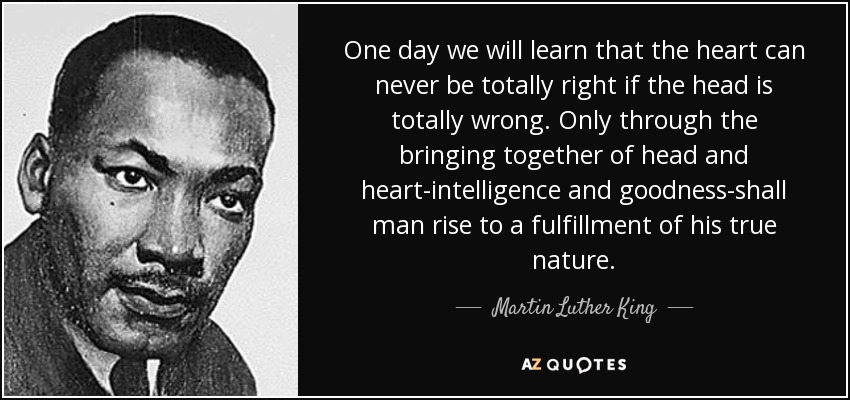
In American society, we frame the distinction between the two words by saying we need to know something in our heart (subjective knowledge) and not only in our head (objective knowledge).

Cerebral understanding, combined with heartfelt experience, results in a new confidence in prayer, a new attitude toward the world, and a new awareness of God. These are the impact of knowing Jesus Christ, and him crucified, risen, ascended, and coming again.

Knowing God takes both the head and the heart. Only being concerned for sound doctrine creates theological eggheads who dispassionately connect with God and others as if they were merely brains on a stick figure. Conversely, only being concerned for how religion makes us feel causes a kind of spiritual schizophrenia which is unstable and constantly seeks for a new or better experience in worship.

Love and obedience are the sacred pathways to personal and corporate knowledge and peace. Whenever the supreme ethic of love takes place in the believer’s life, through receiving it from God and giving it to others, it brings a sense of divine assurance in a sea of worldly uncertainty. 

Security in God will always outdo the insecurities of life.

Loving God, I know that you listen to me. I pray your love and assurance will fill me to such a place that I have peace amidst the vicissitudes of this life. May I rest in Jesus Christ through the work of your Holy Spirit. Amen.